After 17 years, 3G has just been officially retired...
China's 3G network has officially retired across the board.
According to an announcement from Zhejiang Unicom, on June 15th, China Unicom's 3G network in Zhejiang Province will fully withdraw from service.
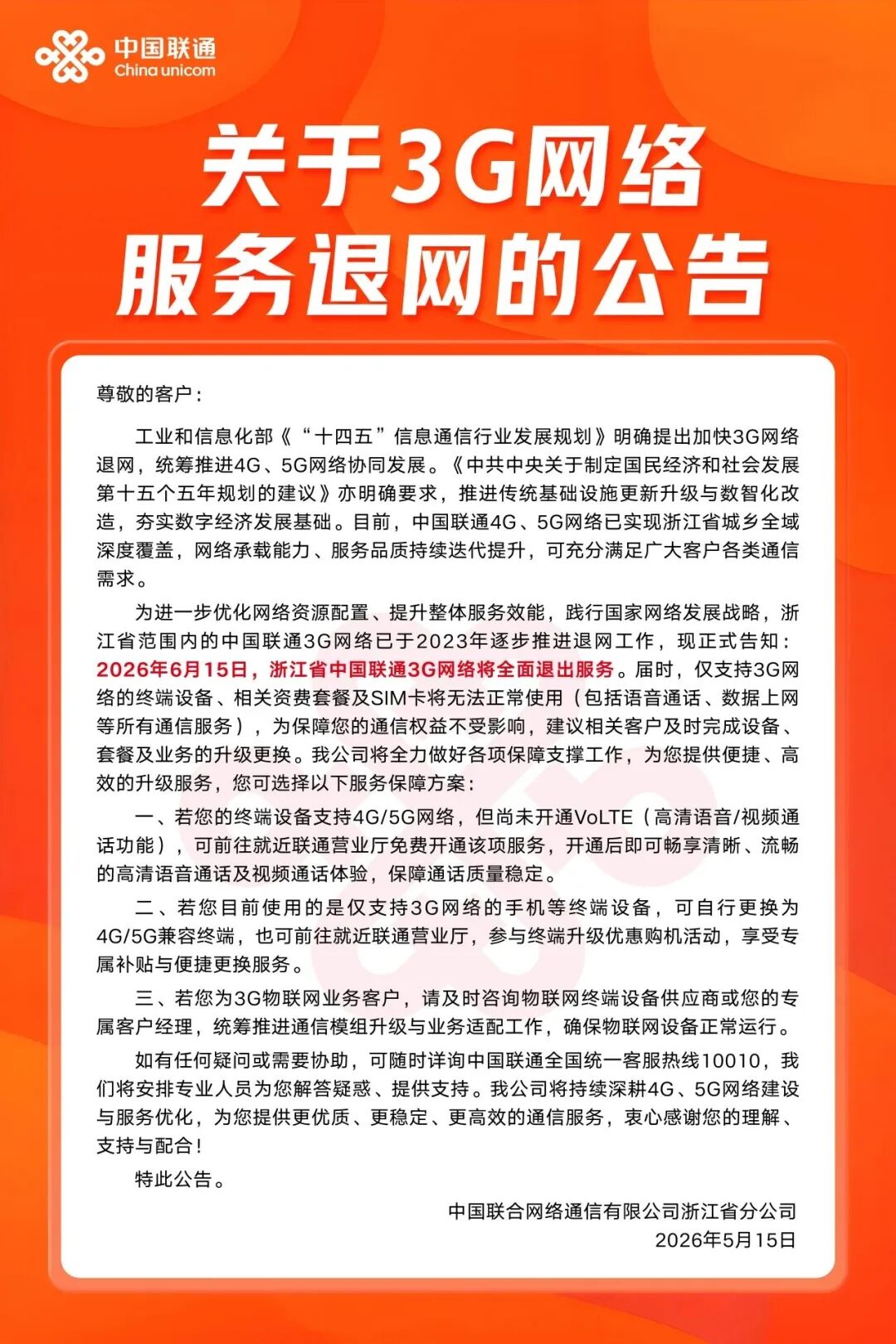
This means that old mobile phones, old packages, and old SIM cards that only support 3G will no longer work for making calls, sending text messages, or accessing the Internet.
Many people's first reaction: What? Is 3G still around?
It's still around, but it's almost as good as gone. Its presence has become so low that you hardly ever think about it in your daily life.
But if we rewind a decade or more, the take - off of China's mobile Internet actually started with this "forgotten 3G".
In 2009, Unicom obtained the WCDMA license.
What did this mean at that time? It was like having the answer key in an open - book exam when the whole class didn't.
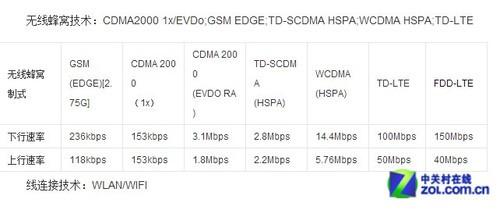
WCDMA is the most mature 3G standard in the world, with a large number of terminals, a good ecosystem, and high speed.
Without hesitation, Unicom built the world's largest WCDMA network within a year.

Then, a major move came: Unicom introduced the iPhone to China.
From then on, having a Unicom 3G card and an iPhone was the most "decent" configuration on the streets for those years.
Seeing "3G" or the mysterious letter "H" on the signal bar gave a feeling of satisfaction that was even more exciting than getting a new - style folding screen phone today.
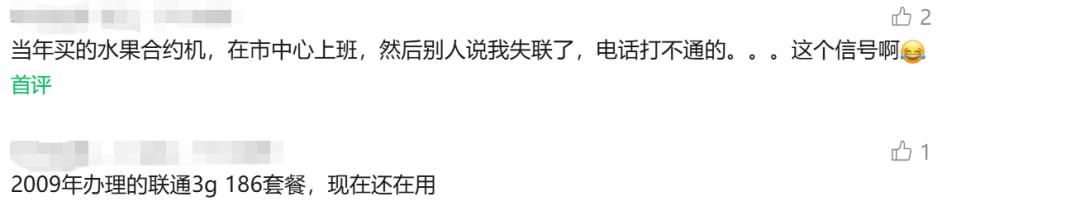
Many people later recalled that era and felt that it wasn't that the mobile phones suddenly became more powerful, but that the network finally matched the capabilities of the phones.
At that time, WeChat had just been launched (in 2011), the Xiaomi 1 had just been released (in 2011), and Weibo was extremely popular.
The predecessors of mobile payment, food delivery, and short - video services that you can't live without today all originated in the "barely functional" environment built by 3G.
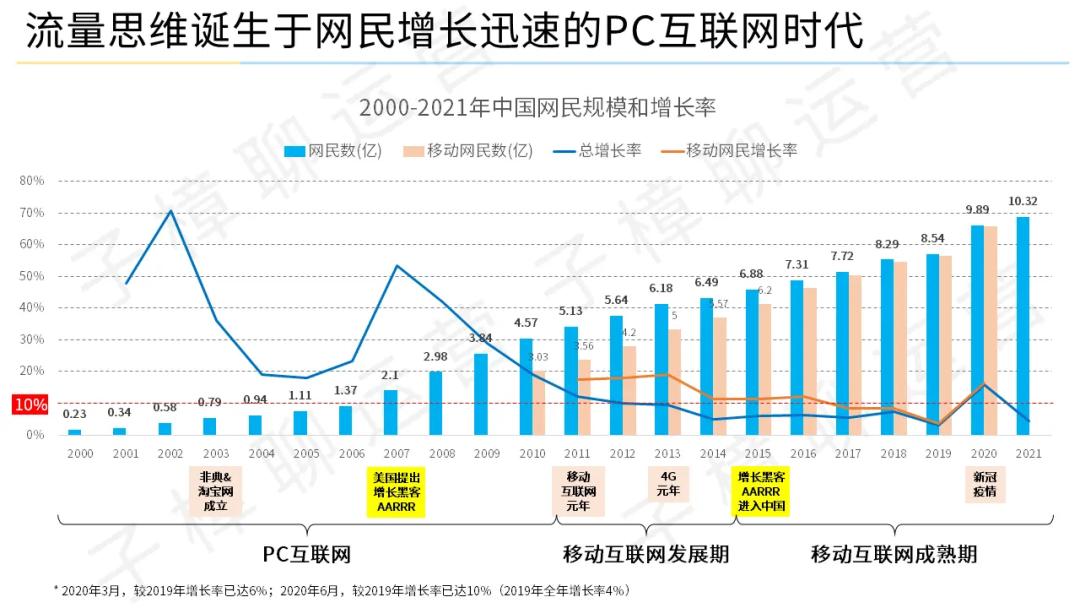
Some people say that 4G is an accelerator, 5G is an amplifier, and 3G is the "door - opener". Without it, everything that followed could only be done on computers.
Of course, 3G also has a rather complicated history in China.
The world's three major 3G standards are WCDMA from Europe, CDMA2000 from the United States, and TD - SCDMA developed by China.
The three major operators each got a license: Unicom got WCDMA, China Telecom got CDMA2000, and China Mobile got TD - SCDMA.
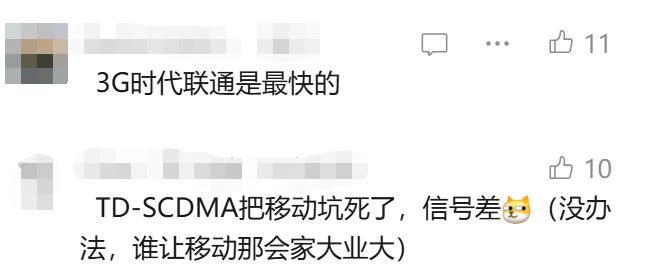
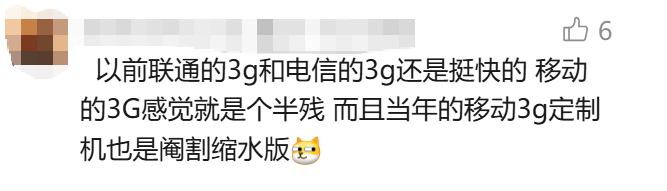
As a result, China Mobile's 3G experience was criticized for an entire era. The network speed was slow, there were few terminals, and the signal was unstable. But precisely because of this "frustrating" experience, China Mobile later made great efforts to get ahead in 4G and finally overtook others.
So, the 3G era was like a large - scale role - playing game. Some started with a full - level character, while others had to grind to level up. In the end, no one could have predicted the outcome.
In the 4G era, the global standard was finally unified to LTE, but there were two formats: FDD - LTE and TD - LTE.
At the end of 2013, the first batch of 4G licenses issued by the Ministry of Industry and Information Technology were only for the TD - LTE format.
Unicom was stunned on the spot. Its WCDMA could not be smoothly upgraded to TD - LTE, which was like having a "save file incompatibility" message after reaching the full level.
By the time Unicom finally got the FDD - LTE license it wanted in 2015, China Mobile had already built 4G base stations across most of China. This 14 - month window period directly changed the rankings of the three major operators.
However, Unicom later took a rather tough measure: it completely stopped new investments in the 2G and 3G networks and devoted all its resources to 4G.
This is called "cutting off an arm to survive", or "changing the track when you can't win".
So why does 3G have to be phased out? The answer is: spectrum.
The spectrum resources used in communication networks are like prime real - estate in a city.
3G is like an old and low - rise building with a decreasing occupancy rate. 4G and 5G are like skyscrapers. On the same piece of land, the output is vastly different.
The operators' approach is simple: take back the prime land occupied by 3G and let 4G and 5G build taller buildings.
This is not just China's own move. Almost all global operators are doing the same thing.
AT&T in the United States shut down its 3G network as early as 2022, and Verizon and T - Mobile followed suit. Japan, South Korea, and Europe have basically entered the final stage of phasing out 2G/3G networks.
The Ministry of Industry and Information Technology stated as early as 2023 that phasing out 2G/3G networks is an inevitable choice for the upgrading of mobile communication networks and is also the mainstream international practice.
But it also made it clear that it's not a one - size - fits - all approach and that user rights and interests should be protected. So, Zhejiang Unicom's network shutdown this time was not a sudden move.
It started reducing the frequency and migrating users as early as 2023, providing a buffer period of nearly three years. The announcement also kindly reminded that if your phone only supports 3G, you can go to the business hall to get a cheaper new phone.
By the way, Apple users don't have to worry much.
Since the iPhone 5S, iPhones have supported the LTE baseband, so the 3G network shutdown has little to do with you.
Those who might be really disappointed are probably the old collectors who still have the cellular versions of iPad 1 and iPad 2. These two devices only support 3G and have now become "bricks that can only play Fruit Ninja".
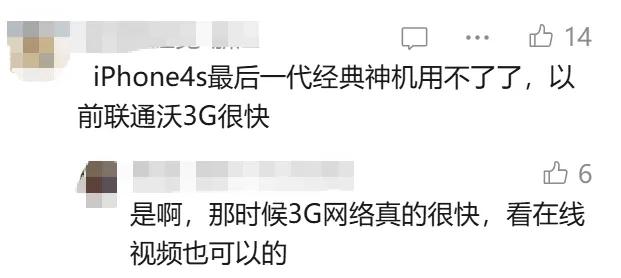
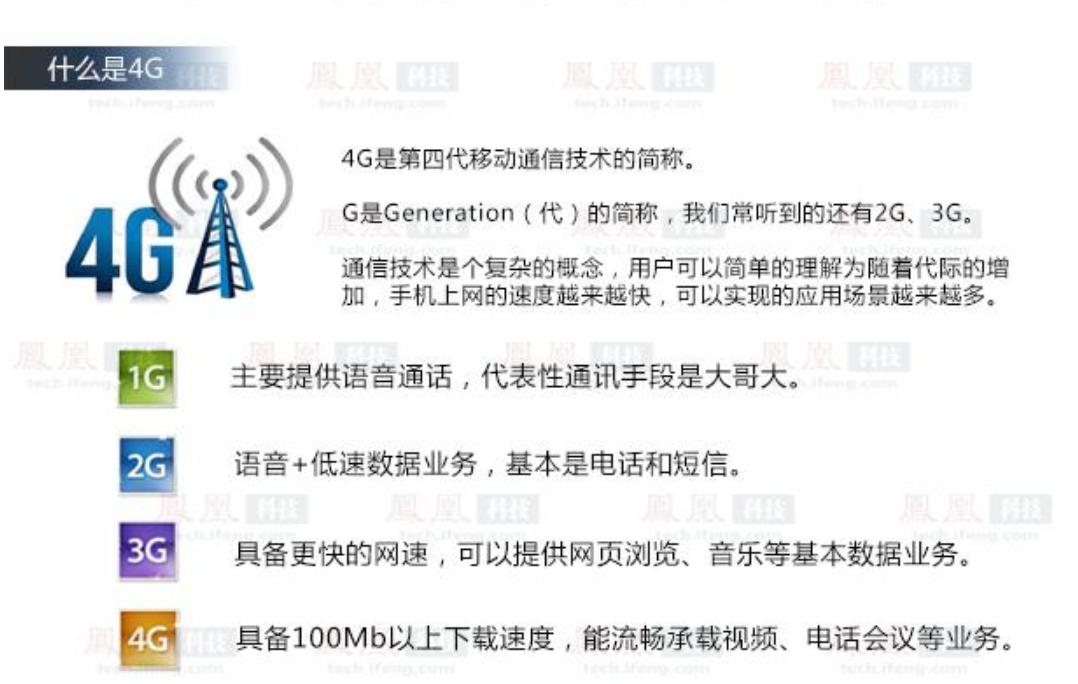
Looking back, the iteration speed of communication technologies has actually been getting faster and faster.
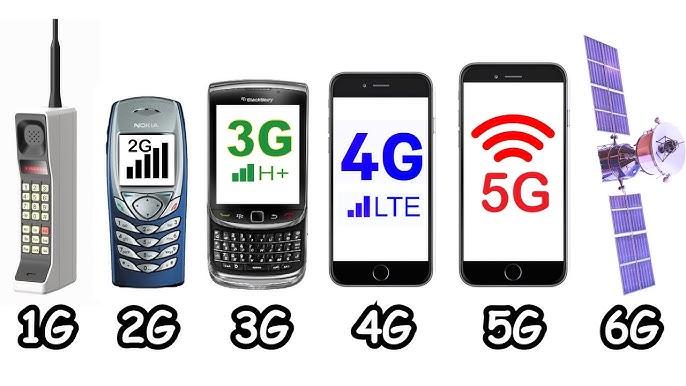
1G (the era of mobile phones like the "Big Brother") lasted for about a decade, 2G (the era of Nokia's classic phones) lasted for about two decades, and 3G has been in commercial use in China since 2009, which is about 17 years at most.
Since the issuance of 4G licenses at the end of 2013, although it is still the most widely - covered network layer, its successor is already on the way.
Some people worry: Now that 3G is gone, how long can 4G last?
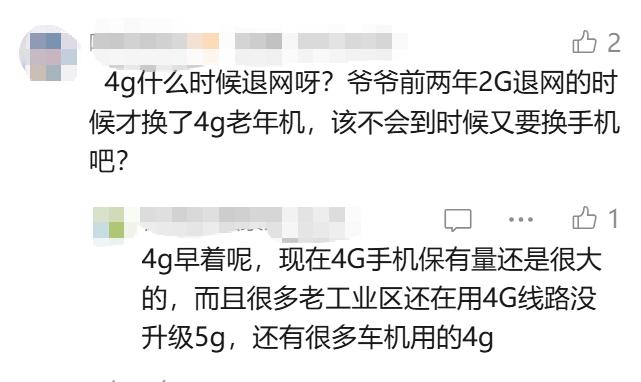
Don't worry. 4G is still the most stable and widely - covered basic network layer at present.
It won't be phased out in the short term, but in the long run, no generation of technology can stay in the spotlight forever.
The story of technology is always the same. One generation after another takes the stage, each with its own script, and then bows out after the performance.
This article is from the WeChat official account "Tech Fox" (ID: kejihutv), written by Lao Hu, and is published by 36Kr with authorization.