Apple and Google upgrade Thread 1.4, making Matter no longer an empty framework
As the post - 90s and post - 00s start to get married and establish their careers, the intelligentization of the family scene has gradually become a rigid demand. Since the smart home market is extremely large, from home appliance giants to consumer electronics manufacturers are all trying to get a share of this market. As a result, when many friends are preparing to build a whole - house smart system, they find that smart home devices from different brands are almost incompatible. They can only choose a full - set solution from a certain manufacturer instead of selecting different products according to personal preferences.
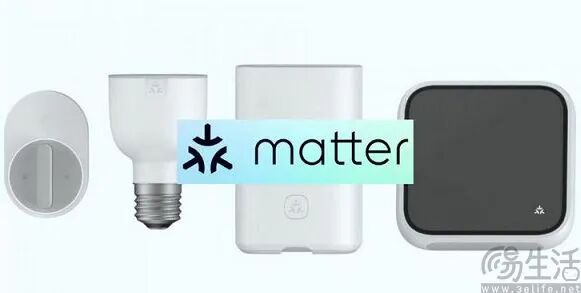
In view of this, the Connectivity Standards Alliance (CSA) composed of large companies such as Amazon, Google, and Apple launched the Matter standard in the autumn of 2022, aiming to unify the smart home ecosystem. It attempts to make protocols such as WiFi, Bluetooth, ZigBee, and Z - wave work under the same framework, enabling consumers to get rid of the dilemma of "choosing a platform or choosing a product". However, Matter itself is a product of compromise among manufacturers, so its implementation has also been a bit bumpy.
Four years after the emergence of the Matter protocol, it has finally taken a substantial step recently. Recently, the smart home devices of Apple and Google have been upgraded synchronously, and both now support the credential sharing function of the Matter core communication protocol Thread 1.4, thus achieving the goal of the Matter ecosystem to realize the linkage control of smart home devices from different brands.
Thread is a low - power, low - bandwidth wireless communication protocol based on the IEEE 802.15.4 standard. It is designed for Internet of Things devices and can build a decentralized mesh network (Mesh Network). The relationship between Thread and Matter is like that between a road system and traffic rules. The mesh network built by Thread provides an efficient and reliable channel for data transmission between smart home devices, while Matter provides a unified communication standard to ensure that devices from different manufacturers can follow the same set of rules on the Thread network.
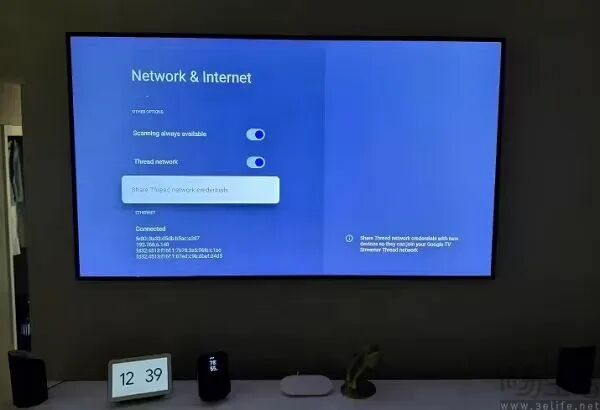
The key to building a network in the home scene with Thread is the "border router". In the CSA's vision, users' Google TV Streamer, Apple iPhone, and Amazon Echo speakers can all be connected to each other as border routers to build a large network for the users themselves. If a border router fails, other border routers will serve as backups to ensure the continuous operation of the smart home system in the user's home.
However, the shared network feature of Thread is precisely the key factor that hinders the popularization of Matter. Before Thread 1.4, border routers from different brands had to share a "credential" to join the same Thread network. However, large companies such as Amazon, Google, and Apple have their own ideas, which makes the devices of different brands as border routers unable to communicate effectively.
It wasn't until the Thread 1.4 protocol that a unified credential sharing specification was established for border routers. Since both Apple TV and Google TV Streamer support Thread 1.4, it means that Google and Apple have put aside their differences, thus activating a large number of existing devices and enabling them to have collaborative capabilities under the Matter standard.
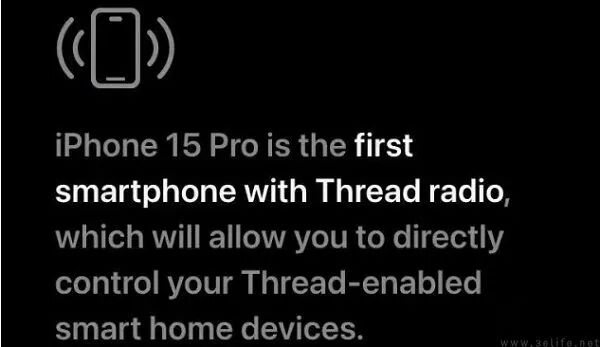
Of course, solving the network connection problem is only the first step in the long journey of Matter. The real challenge next is "controlling all devices with one app". Which app will become the "only one" will be the focus of controversy among future participants in the Matter ecosystem. Since smartphones are currently the commonly used general - purpose computing devices, it means that whoever controls the mobile ecosystem will be the biggest beneficiary.
If you are an iOS user, there is no reason not to use Apple Home; if you are an Android user, obviously Google Home will be more suitable. So in fact, Apple and Google have become the biggest winners after the popularization of Matter. As beneficiaries, how could Google and Apple not promote Matter?
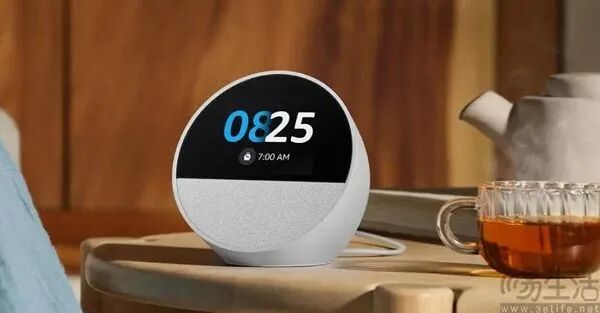
However, in this situation, traditional home appliance manufacturers have naturally lost control over users. Due to the lukewarm attitude of manufacturers such as Philips towards Matter and their lack of interest in transforming their products into border routers compatible with Thread, the popularization of Matter has been extremely slow. Now, Apple and Google have changed their strategies. They no longer wait for their partners to adapt but try to make all their own devices compatible with Thread.
For users, using mobile phones, smart speakers, and smart TVs to form a Thread network is basically sufficient. In short, marked by the upgrade of the Thread 1.4 protocol for Apple and Google's smart home devices, the Matter ecosystem is about to enter a period of rapid expansion. However, the current Matter is quite different from the one when it was first introduced.
This article is from the WeChat official account "3eLife" (ID: IT - 3eLife), written by 3eLife, and is published by 36Kr with authorization.