Chinese partners collectively rescue foreign brands
There is a painting hanging on the wall of Zhang Yichen's office. The facial texture of a rabbit is outlined by black lines, which is his Chinese zodiac sign.
Those who are familiar with the status of CITIC Capital in the PE industry know that this "rabbit" is more ferocious than a tiger when dealing with business.
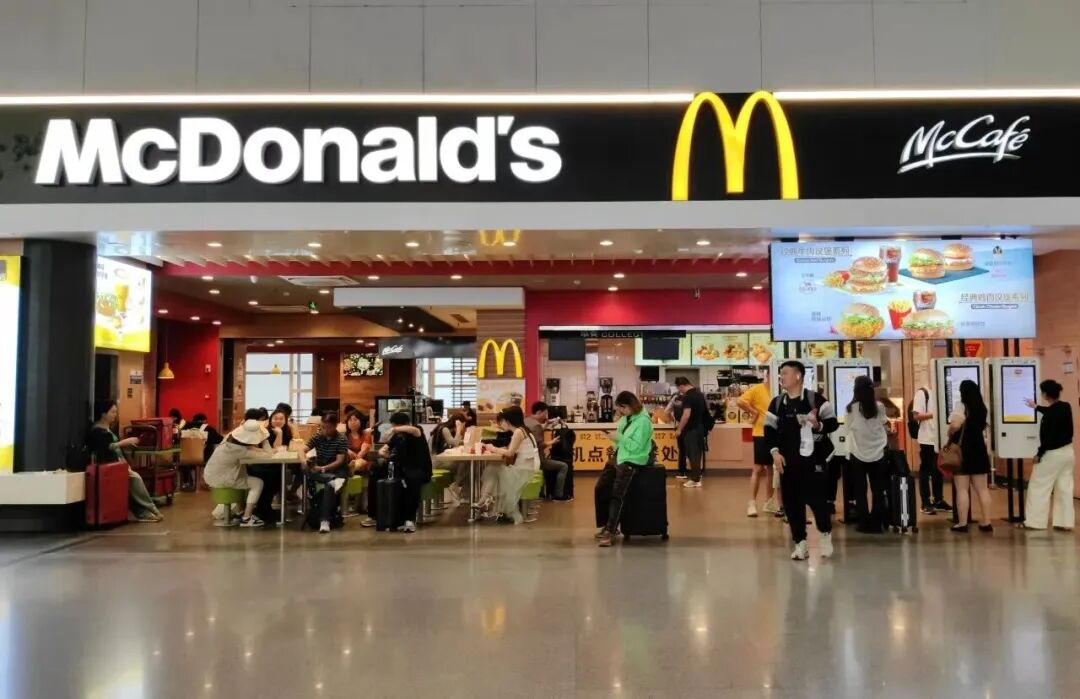
In 2017, Zhang Yichen and his old friend Yang Xiangdong, representing CITIC Capital and Carlyle, jointly won the 20 - year franchise of McDonald's China. The negotiation lasted a long time. They negotiated clause by clause and argued rationally, and finally won the recognition of McDonald's global and Chinese executives.
Business stories are often full of unpredictable details. Thirty - five years before this acquisition, in 1982, when Yang Xiangdong first arrived in the United States, his first meal was at McDonald's, and the host was Zhang Yichen, who had arrived at MIT one year earlier. At that time, the United States was experiencing a new round of merger and acquisition wave, and the well - known Blackstone Group was established then.
Two young Chinese students would never have thought that one day, they would sit on the same side of the negotiation table, facing the world - famous golden arches, and buy its entire market in China.
They would even less have thought that their business initiative of acquiring McDonald's China would, in another dimension, become the beginning of the subsequent decade - long global dumping of catering assets:
In November 2025, Boyu Capital acquired 60% of the equity of Starbucks China for $4 billion; in the same month, CPE Yuanfeng took control of Burger King China with $350 million; in March 2026, Dazheng Capital acquired all the global stores of Blue Bottle Coffee from Nestle for less than $400 million; in the same month, Unilever announced the sale of its food business to McCormick for about $45 billion; in May, Jardine Matheson put up for sale the KFC business in five Asia - Pacific regions, and Yum China participated in the bid; in June, General Mills sold the Chinese store business of Häagen - Dazs to Ningji...
From paying for brand authorization from multinational companies to now acquiring the Chinese businesses of global giants, from fast food to coffee, from ice cream to condiments - the former "franchisees" have become today's "controlling parties".
What exactly happened in these short decades?
Intensive asset sales are for survival
The intensive asset sales of global giants point to a core reason: for survival, it has reached the critical moment of "having to sell".
However, the intentions of "having to sell" are also divided.
One type is represented by fast - moving consumer goods giants such as Unilever and Nestle, which shift from heavy - asset to light - operation by selling or spinning off food or offline businesses.
This is not difficult to understand.
When the once - proud diversification and multi - brand matrix of these fast - moving consumer goods giants hit an era of stagnant growth, the heavy - asset and low - margin food and catering businesses became the first target for the giants to cut and shed their burdens.
Nestle's global CEO, Mark Schneider, once said: "If we can't win market share in the long term, we will re - examine these businesses."
As early as 2020, Nestle sold the Chinese business of "Yinlu" peanut milk and "Yinlu" canned eight - treasure porridge. In addition, it also sold its candy business and bottled water business in some countries.
Most notably, Nestle sold its premium coffee brand, Blue Bottle Coffee, to Dazheng Capital, the major shareholder of Luckin. This deal is also regarded as an embodiment of Nestle's "light - asset" strategy.
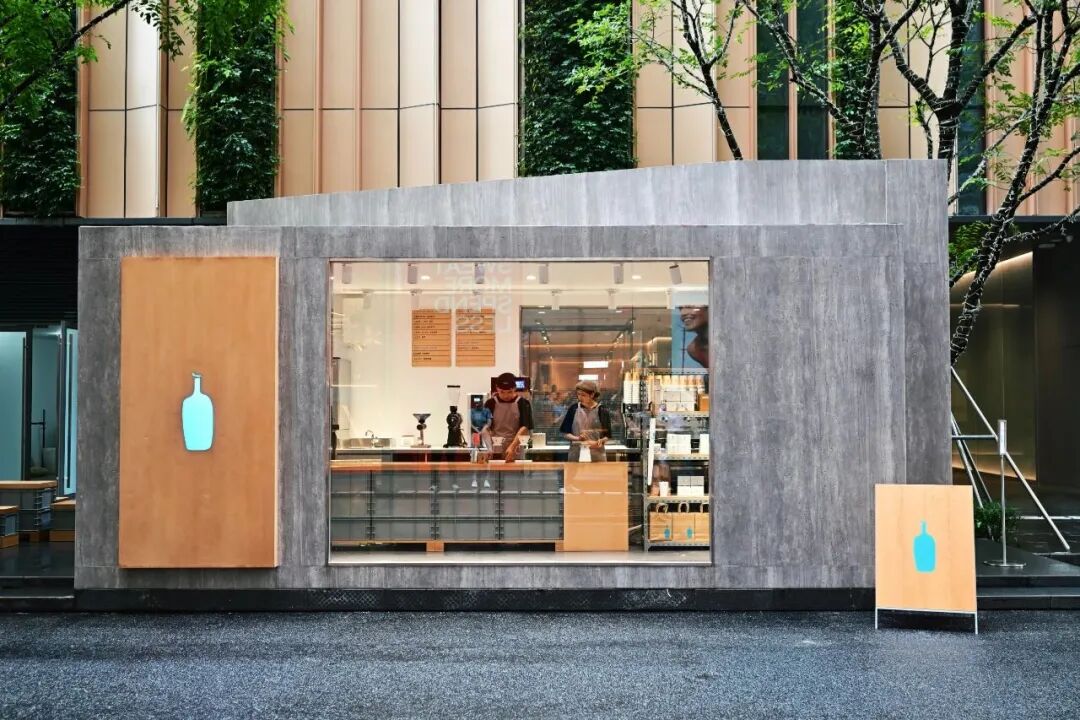
Unilever also chose to "sell, sell, sell".
In Unilever's four major business departments, the food sector has always been at the bottom in terms of growth. In the past few years, from Lipton to Magnum, this century - old giant has obtained cash flow and further released asset value by spinning off or selling its food business.
The most typical case is the ice - cream business, Magnum, which was "first spun off and listed, and then rumored to be sold". Unilever completed the three - place listing of the Magnum ice - cream company in December last year. However, after the independent listing, Magnum's stock price and performance were both below expectations, and recently there have been rumors that it will be acquired by institutions such as Blackstone and CD&R.
Accelerating the process of "decluttering" is not only to cut costs but also to tell a new story to the capital market.
Unilever tells a technology story by focusing on its beauty and health and personal care businesses. Nestle aims at the core track of nutrition and health care to enhance its growth space. These businesses with higher margins and higher valuations are obviously not compatible with the food business.
The other type consists of giants that face "strangling" competition in the Chinese market and have under - performed in terms of localization.
If the "light - asset" strategy is an active choice for some century - old giants to sell off their assets, then the fierce competition in the Chinese market is the straw that breaks the back of another group of players.
Price wars, channel sinking, digital transformation, and supply - chain localization. The brutal competition in the Chinese consumer market in the past few years has put forward extremely high requirements for every business link of multinational giants. Refined local operation and rapid response speed are exactly what international brands accustomed to standardized and centralized operation are least good at.
Take Burger King China as an example. Before CPE Yuanfeng acquired 83% of the controlling stake, Burger King, which had been in China for more than 20 years, was caught in a pincer movement.
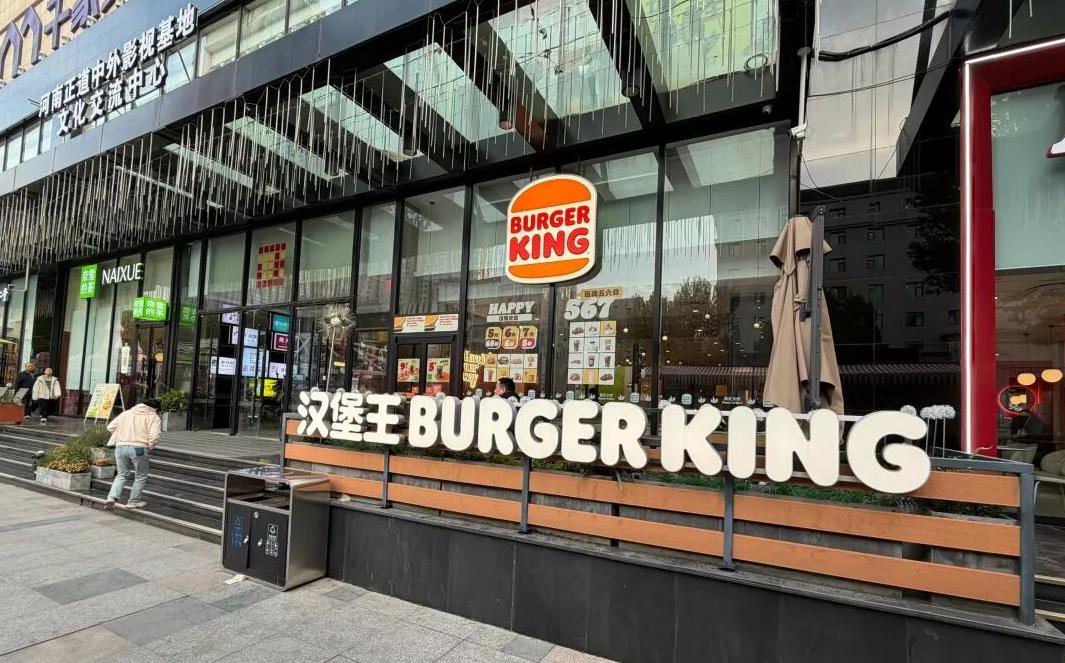
On one hand, in front of the local veteran, KFC, Burger King's scale of thousands of stores and marketing voice are both inferior to its predecessor. On the other hand, local burger brands such as Tastin and Wallace have also emerged. The former has found a way through the product micro - innovation of "freshly baked hand - rolled burger buns", while the latter has become the king of the sinking burger market by offering affordable prices.
In contrast, the high - end Burger King has no obvious advantages in terms of price and products. Relying solely on the high - end American burger concept, it is difficult to succeed in the Chinese market.
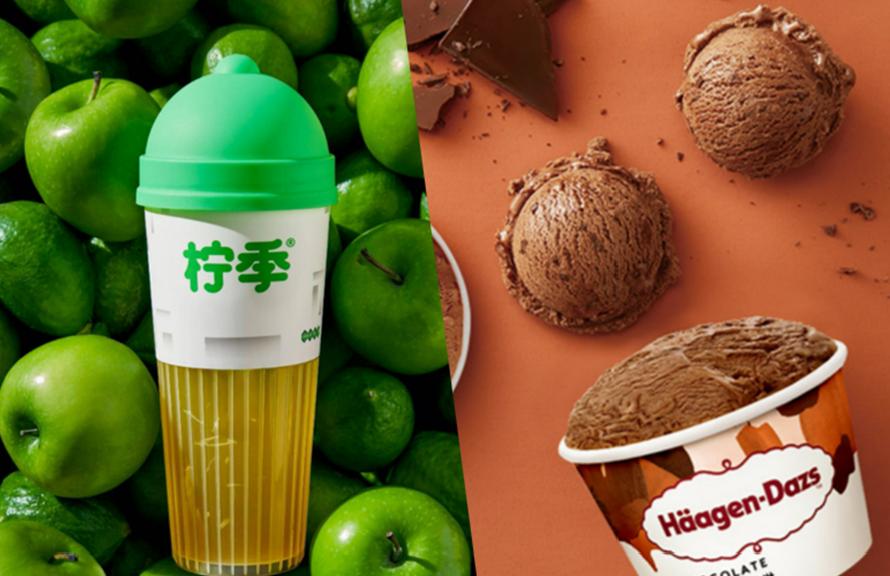
A similar story also happened to Häagen - Dazs, which has just announced the transfer of its ice - cream stores in the Chinese mainland to the Chinese tea - drink player, Ningji.
As the pioneer of high - end ice - cream in China, Häagen - Dazs was once looked up to by Chinese brands. However, in recent years, under the siege of new and old players such as DQ and Mr. Wildman, Häagen - Dazs has not only closed more and more stores but also lost its high - end image. Finally, it was sold by General Mills to players who understand China better through an agreement.
It can be seen that whether it is active slimming or passive selling, it indicates the end of an era: By relying on global standardized operation, giants can no longer achieve a complete victory.
Chinese buyers who are bottom - fishing have changed from learning from others to being learned from
If you make a list of the acquirers of foreign brands in the past two years, you will find that the "Chinese buyers" who have acquired the targets occupy a remarkable position.
Whether it is the experienced CFB Group in local catering operation, the Boyu Capital that quietly outflanks on the consumer side, or the Dazheng Capital and Ningji that have incubated local giants in China, these "Chinese partners" obviously did not acquire these targets just for bottom - fishing.
From the perspective of acquisition purposes, the "overt strategies" of Chinese buyers do not stop at financial arbitrage but can be summarized into two categories:
One type is the "capability output" type. Mainly private equity giants, their main purpose of acquisition is to output the operation capabilities, such as supply chain, digitalization, product innovation, and marketing, that have been honed in domestic market operation cases to the acquired brands to achieve brand revival and scale expansion.
The other type is the "strategic layout" type. For example, the tea - drink giant Ningji and Dazheng Capital mainly fill the brand or product matrix through acquisition, integrate the original upstream and downstream resources, and build long - term competitive barriers.
Looking deeper, we find that the trend is that Chinese buyers have obviously jumped out of the path of "learning from others" and formed a systematic approach to "reverse - rescue foreign brands".
To some extent, the "Chinese partners" are becoming the brains of foreign brands.
Zhang Yichen, the chairman of CITIC Capital, once commented on the transformation of McDonald's China: "The overall assets of multinational enterprises are good, and the management is also professional. We often say that when these enterprises encounter problems in the Chinese market, it is generally the 'brain' that has problems, not the 'body'."
In this regard, the "Chinese brains" do not offer any miraculous tricks but provide more solid approaches.
First, on the financial side, they are not satisfied with minority equity investment but seek control to dominate the main decision - making power for localization.
CPE acquired 83% of the equity of Burger King China for $350 million, and Boyu Capital acquired 60% of the equity of Starbucks China. More typically, after CITIC Capital reached a cooperation with McDonald's China in 2017, it made multiple subsequent capital injections.
Second, on the operation side, they give full play to their respective differentiated integration capabilities.
After the CITIC Group acquired McDonald's China, by investing in take - out, digitalization, and the localization of the supply chain, it not only helped McDonald's China reduce costs and increase efficiency but also helped it establish cooperation relationships with many real - estate developers through its own real - estate resources. As a result, McDonald's enjoyed the dividend of opening stores in China, and the number of its stores in China tripled in eight years.
CFB is better at helping foreign brands achieve a counter - attack in its "big enjoyment category" through digitalization and a set of "tough execution capabilities". Xu Weilun, the CEO of CFB Group, once mentioned that there is a unique bottom - up mechanism within the company: "We are the only enterprise in the market that dares to let all colleagues and even employees send messages at any time. We don't block or delete posts." Such efficient execution has enabled DQ to launch new products at an average rate of three per week.
The approaches of Dazheng Capital and Boyu Capital are even more aimed at the synergistic integration of high - end assets.
Luckin, which has established the public's perception of coffee, has accumulated a lot of experience and advantages in Internet private - domain marketing and the coffee industry chain. These systematic capabilities need a new profit curve to be realized, and the high - end coffee brand, Blue Bottle, is undoubtedly the best choice.
Before Boyu Capital reached a cooperation with Starbucks China, it acquired about 42% - 45% of the equity of Beijing SKP through its affiliated funds. The investment combination of SKP + Starbucks hides Boyu's ambition for high - end retail.
Different from the previous exploratory mergers and acquisitions, in the new round of mergers and acquisitions, Chinese buyers are essentially the overflow of the brand operation capabilities of Chinese partners. They have experienced the most brutal competition in the domestic market and have accumulated a localization operation methodology far beyond that of multinational giants. Now they are trying to output these capabilities to more brands.
A "cross - sea eastward" of global business power
Jumping out of the game between brands and capital providers and looking from a more macro perspective, the essence of this round of financing wave is more like a reconstruction of the global capital allocation logic.
In the past thirty years, multinational giants have believed in an expansion philosophy of "standardized replication":
By moving hamburgers from New York, coffee from Seattle, and chocolates from Brussels to Shanghai, Mumbai, and São Paulo without any changes, they could reap the growth dividends of emerging markets. At that time, the Chinese market was the most dazzling growth point in their global map: every new McDonald's store in China was a success, and a single ice - cream ball of Häagen - Dazs could command a premium that made domestic brands astonished.
However, with the end of the incremental era, the simultaneous arrival of anti - globalization, geopolitical conflicts, high inflation, and slow growth, multinational enterprises have to re - examine their global balance sheets. The market businesses that require in - depth local operation, heavy capital investment, and have under - performed in terms of growth are the first to be "optimized".
And China has exactly stepped on these three "landmines":
It has extremely high operational complexity, requires continuous capital investment, and the dividend period of consumer growth has passed.
For the headquarters executives in New York and Brussels, the Chinese market is changing from a "profit engine" to a "trouble - maker" - the price war is endless, the digital iteration speed is overwhelming, the operation logic of the sinking market is elusive, and local competitors are lurking around like wolves.
The value of the Chinese market has never disappeared, but just as Chris Turner, the CEO of Yum Brands, said meaningfully when evaluating the future of Pizza Hut:
This value release "may be better implemented outside the framework of Yum Brands".
For multinational headquarters, rather than "fighting hard" in China, it is better to transfer the operational decision - making power to Chinese partners who understand the local market better and just sit back and enjoy the profits.
In the long run, this is not only a rational choice of "risk outsourcing" but also a fundamental shift in the global capital allocation logic.
The premise of this shift and the transfer of power is that Chinese operators have proven that they are "stronger".
Mixue Bingcheng has opened more than 4,700 stores in 12 countries around the world with its 4 - yuan lemonade; Cha Ji has been listed on the NASDAQ with its oriental aesthetic narrative and entered the US market; the number of Heytea's overseas stores has increased by six times in one year...
