13 yuan for four stir-fried dishes, 29.9 yuan for a body scrub: Why are prices in Northeast China so low?
It is said that people in Northeast China have their own currency system.
In the past two years, topics such as "Spend 100 yuan to enjoy all the snacks in the night market", "Buy a house in Hegang for 50,000 yuan", and "The prices in the morning markets in Northeast China are incredibly low" have been continuously popular on social media.
On Douyin, many bloggers have been shocked by the prices in Northeast China. They didn't expect that in 2026, 100 yuan could still go so far.
One blogger went to a morning market in Northeast China with his granddaughter and couldn't help sighing: "You just can't spend all your money, not even close."
In any random breakfast stall, almost everything costs only 1 yuan: a leek box as big as your face. It's even more cost - effective if you buy more. Buy five and get one free; a bag of soybean milk as long as your forearm. You can buy 20 bags with the money for a cup of milk tea; deep - fried dough sticks cost 7 yuan per catty, and each stick is only 1 yuan; a big bowl of coarse cereal porridge also costs 1 yuan, and you can even get the porridge soup for free...
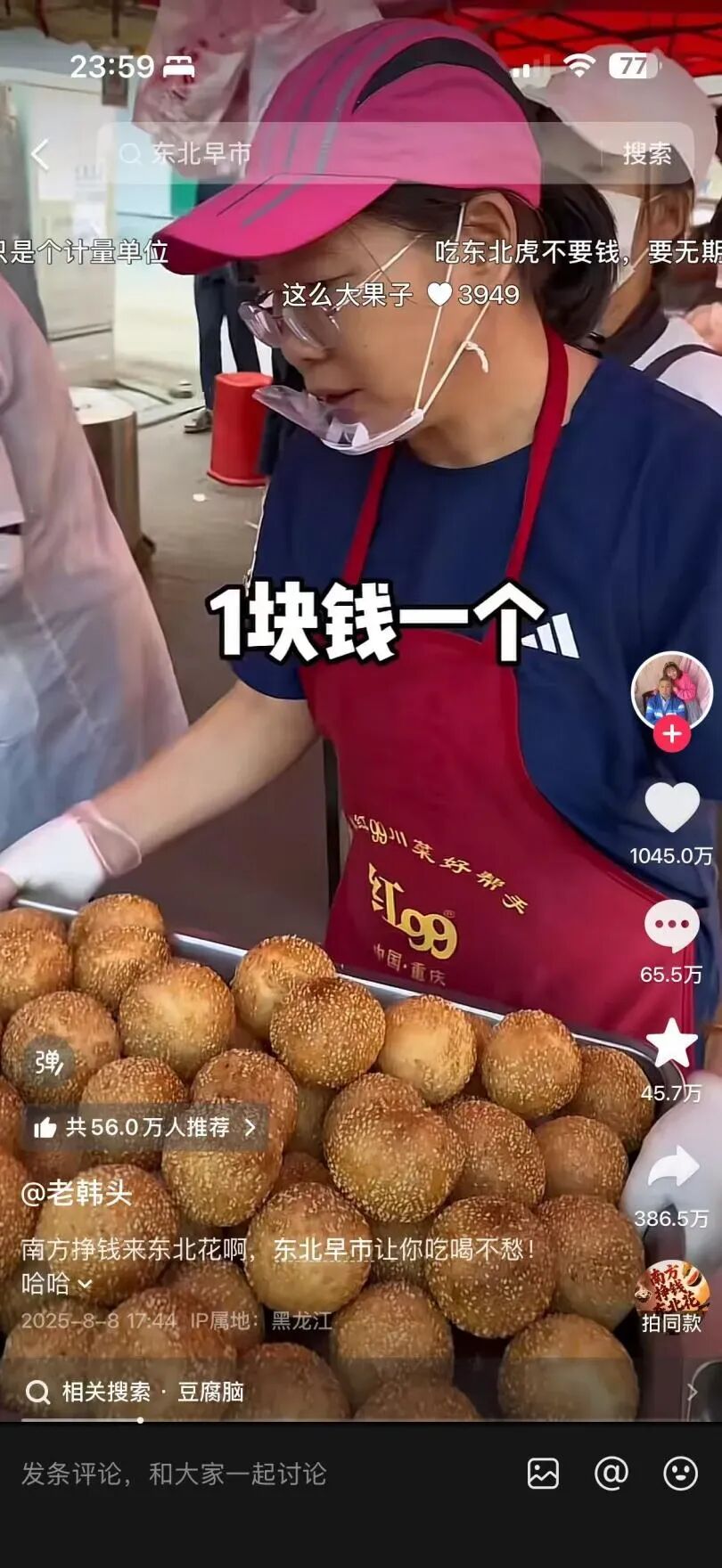
A big fried dough ball costs only 1 yuan in Northeast China.
With 15 yuan in hand, two people can easily buy a table full of breakfast. It's like having the illusion of achieving breakfast freedom.
As the word spreads about the high - quality and low - priced goods in Northeast China, and the prices are so unbelievably low, Northeast China has become a synonym for "affordability".
Why are the prices in Northeast China so low?
01 Northeast China has its own "currency system"
It is well - known that in the past, many families lived a hard life, and they tried to make every cent count.
Nowadays, although the living conditions have improved, the prices in Northeast China still make people across the country envious.
On the Internet, some netizens once described it like this: "Northeast China has its own exclusive currency system. One yuan here can be worth three yuan elsewhere."
Perhaps this statement is a bit of an exaggeration, but the low prices in Northeast China are obvious to all.
In a small restaurant in Northeast China, for less than 100 yuan, the boss can serve you a whole table of "Man - Han Banquet". The variety of dishes is so rich that it will dazzle you: Deep - fried pork strips cost 15 yuan, stir - fried bean sprouts cost 8 yuan, Kung Pao Chicken costs 16 yuan, Mapo Tofu costs 9 yuan, Sour and Spicy Shredded Potatoes cost 9 yuan, Three - Delicacy Dish (eggplant, potato and green pepper) costs 10 yuan, Cumin Chicken Hearts cost 18 yuan, and a large plate of cold salad costs 8 yuan. These eight dishes are served quickly, and the total cost is only 93 yuan. If you order some staple food, you might even get two or three yuan in change.
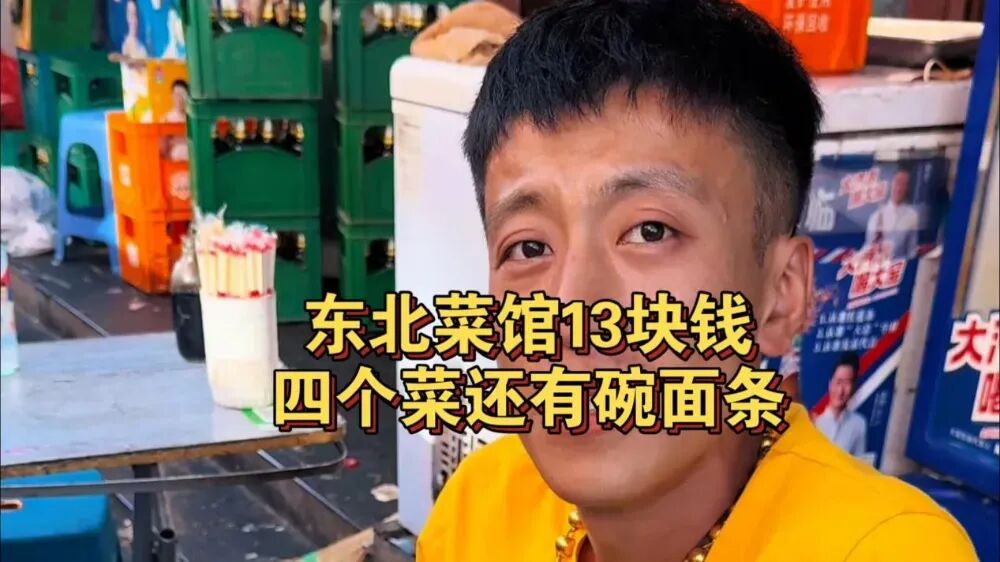
What's even more remarkable is that although the prices of Northeast Chinese cuisine are low, the dishes are not skimpy. Each dish is quite generous in portion. You don't have to worry about not being full. If there are few people, you may even have to take the leftovers home. A table of such dishes can easily feed six or seven people.
Therefore, many southerners will find that when they first come to a restaurant in Northeast China, most waiters are not worried about persuading customers to order more dishes. Instead, they are afraid that customers will order too much and waste food. Once the customers have ordered enough, the shopkeeper will usually stop them and say, "That's enough. Don't order any more. You won't be able to finish it and it will be a waste!"
You know, the saying "Spend 50 yuan per person to enjoy barbecue, cold noodles and beer" is not an exaggerated marketing slogan. It is actually the daily life of ordinary people in Northeast China.
In fact, in addition to the affordable food, the living prices in Northeast China have been stable for decades.
Especially the fares of public transportation have remained unchanged for a long time: The starting fare of the subway in Changchun and Shenyang is 2 yuan, and most buses in Harbin cost 1 yuan. Some tourists have even tried it themselves. With only 20 yuan, you can take a taxi anywhere in Shenyang urban area.
Even the unique bathing culture in Northeast China allows people to experience "the price of a commoner but the enjoyment of a millionaire".
Nowadays, there are about 1,200 bathing places in Shenyang. From the 9.9 - yuan children's ticket to high - end consumption with no upper limit, they can basically meet the consumption needs of all kinds of people.
For just a few dozen yuan, you can enjoy a package service of sauna, bathing and body scrubbing, and you can lie around leisurely for a whole day. For many residents in first - tier cities who are used to paying hundreds of yuan for an hour of massage, this is a kind of luxurious "extravagance".

Although the bathing places in Northeast China are luxuriously decorated, the prices are quite reasonable.
Even the prices of housekeeping, haircuts, repairs and even pet care are significantly lower than those in first - tier cities.
The low prices of these high - frequency and small - amount service consumptions allow people to have the leisure to go to barbecue stalls, parks and square dance after work, creating a more relaxed and lively real - life social scene.
02 The confidence given by "China's Granary"
As we all know, Northeast China is the most important granary in China, mainly producing crops such as corn, rice and soybeans.
Among them, Heilongjiang Province has ranked first in grain production in the country for 16 consecutive years. In 2025, its grain output reached 82.003 million tons.
Due to the rich variety and sufficient supply of grains, the prices are relatively stable and low.
Compared with the South, the climate in Northeast China is cold, so the growth cycle of crops is long, with only one harvest a year. Therefore, the listing time of agricultural products in Northeast China is also more concentrated.
During the listing period of agricultural products, the purchase prices in the market are mostly very low, which also enables merchants to set reasonable prices according to the annual output and market conditions.
Obviously, as basic agricultural products, the low prices and high self - sufficiency rate of grains will directly affect the costs of the downstream food processing industry and even the prices of various foods.
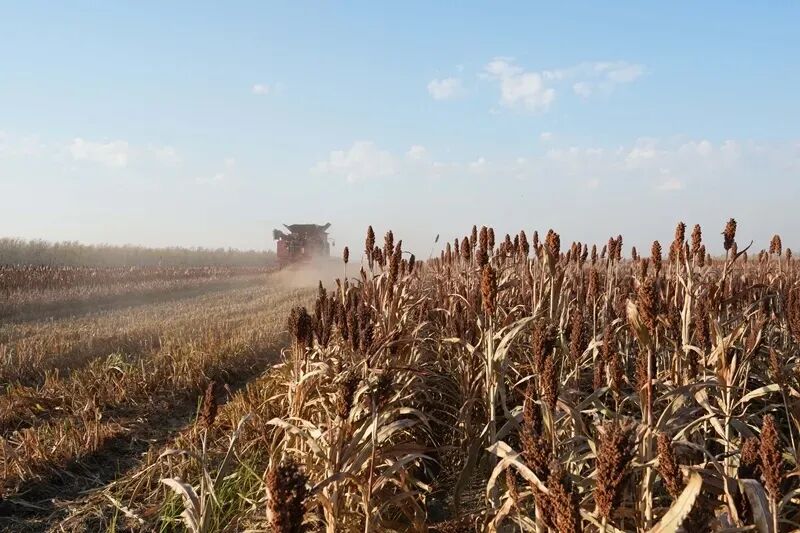
Grain crops planted in various reclamation areas of Heilongjiang Province, the top grain - producing province in China.
In addition, most of the vegetables in Northeast China are grown in greenhouses and are sold locally; the rice and corn from the black soil also mostly flow directly into the provincial market, with a very short processing chain.
In the past two years, the average retail price of Harbin rice in the market has been 3.04 yuan per catty, and that of high - grade flour has been 2.60 yuan per catty. The prices are basically the same as those of the same period last year, and even cheaper than during the Spring Festival last year.
This kind of local consumption structure of "eating what is produced locally" greatly compresses the space for logistics and product premium.
In addition to being a real commodity grain base, the animal husbandry in Northeast China is also very developed. Whether it is large livestock such as pigs, cattle and sheep, or poultry such as chickens, ducks and geese, the meat sources are very abundant.
In many local farmers' markets in Changchun, the price of pork is less than 20 yuan per catty, and the price of beef is only about 34 - 35 yuan per catty. It's definitely cost - effective.
In fact, in addition to the cheap local products in Northeast China, products from all over the country are also sold very cheaply in Northeast China. Even fresh prawns cost only 27 - 28 yuan per catty.
What's more worth mentioning is that this is not a short - term promotion. In fact, it is determined by the unique industrial structure of Northeast China.
The sufficient energy supply and stable power grid in Northeast China also provide support for the low - cost operation of the entire food supply chain.
As the "eldest son of the Republic", Northeast China established the most complete industrial system in China during the planned economy era. Although it is in the process of transformation in recent years, the foundation of infrastructure is still there, with a stable power grid, a perfect heating pipeline network and a dense railway network.
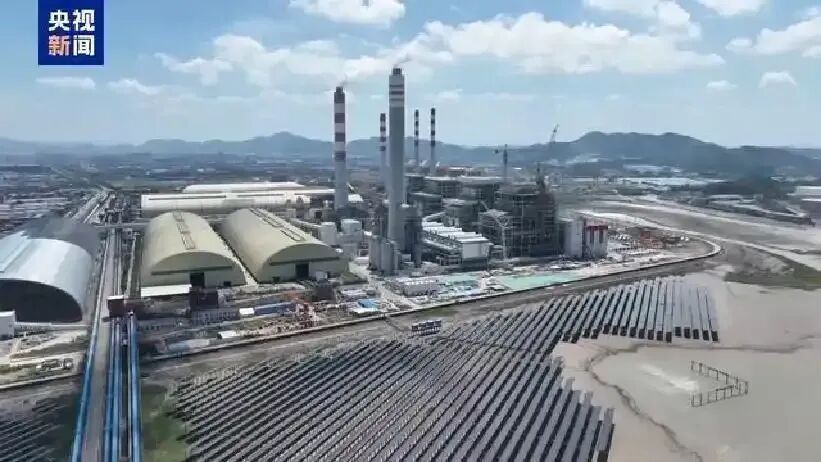
A thermal power project in Northeast China.
Behind the ultra - low inflation is the complete basic supporting facilities from energy to logistics in the entire region playing a role.
03 Behind the low prices, the sense of happiness is also increasing
Behind the "down - to - earth" prices in Northeast China actually lies the life attitude that people in Northeast China have always adhered to. They don't care about the vain appearance but just want to live a down - to - earth life.
For many years, Northeast China has been criticized for the lack of development opportunities, and it is difficult for young people to have better career paths. However, at the same time, it also greatly reduces the living pressure.
Objectively speaking, the debt pressure of people in Northeast China is actually much lower than that in first - and second - tier cities. When young people in economically developed areas need to "empty the savings of six wallets" to pay the down payment and bear a 30 - year mortgage, young people in Northeast China usually only need to pay a few hundred thousand yuan to buy a house in full or with a low - monthly - payment mortgage.
Since the monthly mortgage payment is not high, even if the absolute amount of the remaining disposable income is not high, they can still "spend money leisurely".
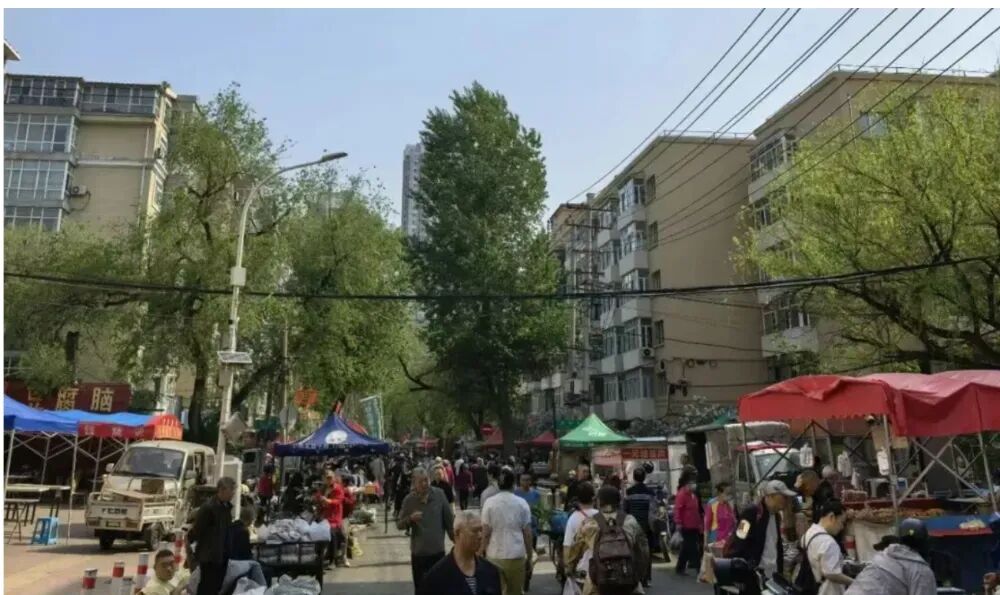
There is a natural sense of relaxation in life in Northeast China.
In 2025, the per - capita disposable income of urban residents in Shenyang reached 58,297 yuan, higher than the national average.
Obviously, when young people don't have to worry about paying the mortgage, life becomes more relaxed.
In addition to young people, more and more elderly people also like to come to Northeast China for retirement.
With a pension of 3,000 yuan in Northeast China, one can live a decent life, but in a southern city of the same level, it may only be enough for basic necessities.
This gap has also made many retired southern elders "migrate in the opposite direction" and choose to retire in the coastal cities of Northeast China.
Coastal small cities such as Xingcheng and Bayuquan in Liaoning have attracted many retired elders from the Beijing - Tianjin - Hebei region and even the Yangtze River Delta with their low housing prices, low living costs and comfortable climate.
Retiring in Northeast China with the pension from a first - tier city, you can live as comfortably as you want.
Therefore, on many social media platforms, Northeast China has become a synonym for "a place with a high sense of happiness". Here, the prices are low, the pace of life is slow, but the human touch is very strong.
When living in Northeast China, you don't have to live a tense life for the so - called "refined life". You can be satisfied with a meal for just a dozen yuan, and you can even buy an afternoon of relaxation for just a few yuan.
The low prices in Northeast China have attracted a large number of southerners to visit, so the cultural and tourism economy in Northeast China has been extremely booming in recent years.
After Harbin became popular in 2024, combined with the effect of the 2025 Asian Winter Games, the ice and snow economy in Heilongjiang is being deeply upgraded from a phenomenal "tourism traffic" to a sustainable "industrial retention".
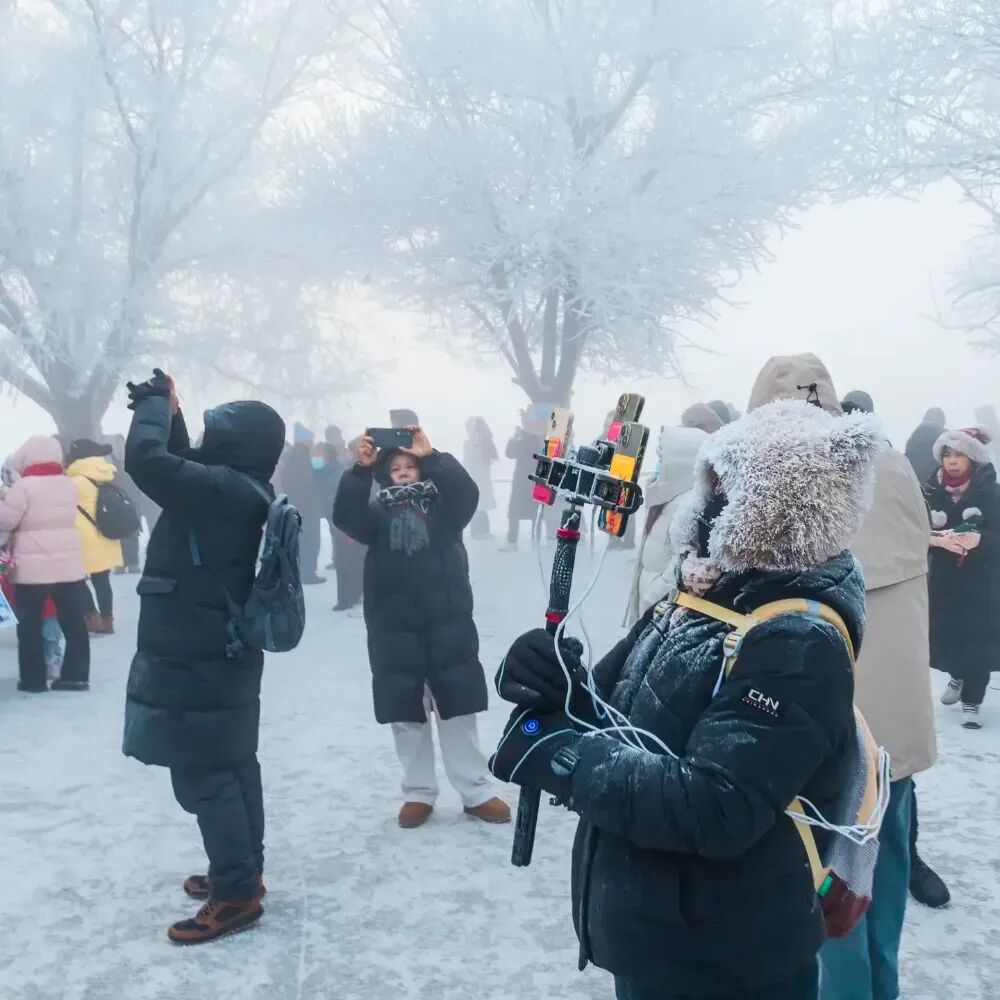
Many southerners come to see the rime in Jilin.
Relevant statistical data shows that in 2025, the number of tourists received and the total tourist spending in the province increased by 10.3% and 16.5% respectively, and 11,000 new cultural and tourism business entities were registered.
During the New Year's Day holiday in 2026, Heilongjiang received a total of 8.637 million tourists and achieved a total tourist income of 9.16 billion yuan.
In addition, there is also progress at the industrial level. The old industrial base in Northeast China is developing in an orderly manner.
In 2025, the revenue of the core digital economy industries in Heilongjiang increased by 10.9%. 50 first - set products, 98 provincial key new products and 122 provincial - level green factories were recognized.
In September 2025, Changchun, Songyuan and Baicheng in Jilin Province became the first batch of hydrogen - energy regional pilots in the country. The green hydrogen production capacity of the whole province reached 86,700 tons per year, accounting for about half of the country's