I'm practically sick of being surrounded by AI-generated faces.
Those of you who often watch short dramas and short videos should be familiar with this face.
People who haven't seen it might think it belongs to a new internet celebrity. In fact, it's an AI-generated face that has been appearing repeatedly in various videos recently.
The facial features are delicate, with big eyes, a small nose, always fair skin, and a soft-focus filter. The curve of the lips is just right.
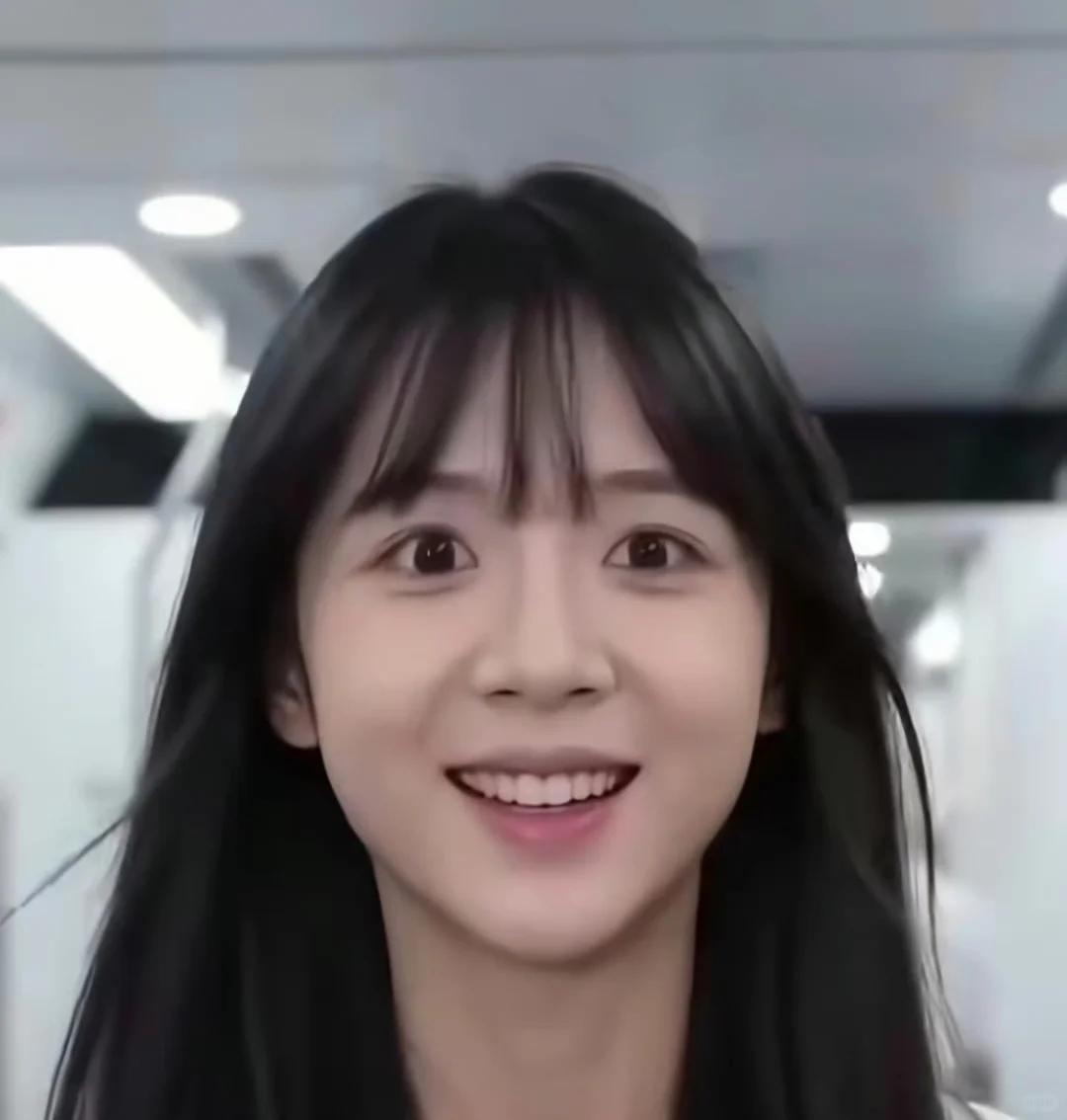
If a real person with this face stood in front of me, I probably wouldn't say a bad word. But this seemingly innocent face has been severely "cyberbullied".
It's not because she's ugly, but because she's like a well-connected person in the AI world. She appears in everything you watch.
She's the campus crush, and she's also the young mistress in period dramas.
She's a five- or six-year-old little girl, and she's also an old lady in her seventies or eighties.
Taking a closer look, woah, why is the old man wearing a headscarf next to her also her???
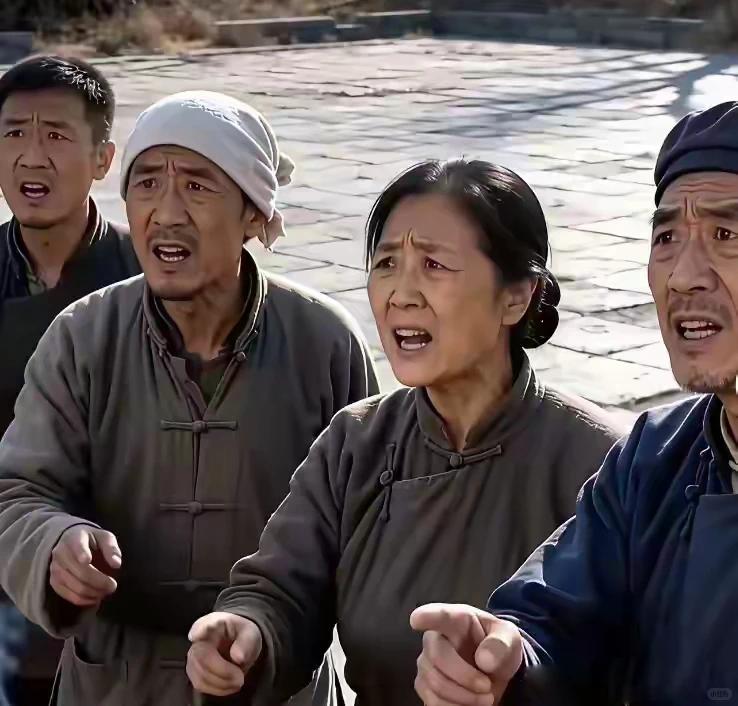
Every day when you open your phone, you see the same face everywhere. Watching short videos gives you a sense of being surrounded by fake people.
As more and more people notice this, there are a flood of complaints from netizens everywhere:
"I'm about to throw up looking at this face."
"I have a physical aversion to this face now."
"How many people are turned off by her?"
Some people are also wondering why all the people generated by this AI look the same. Whose face did it steal?
In the comment section, some people guess it's a banned female streamer, some say it looks like the actor Li Chuan, and some say it looks like Park Chan-yeol's sister... You know what? It seems to have something in common with both domestic and foreign, male and female faces.
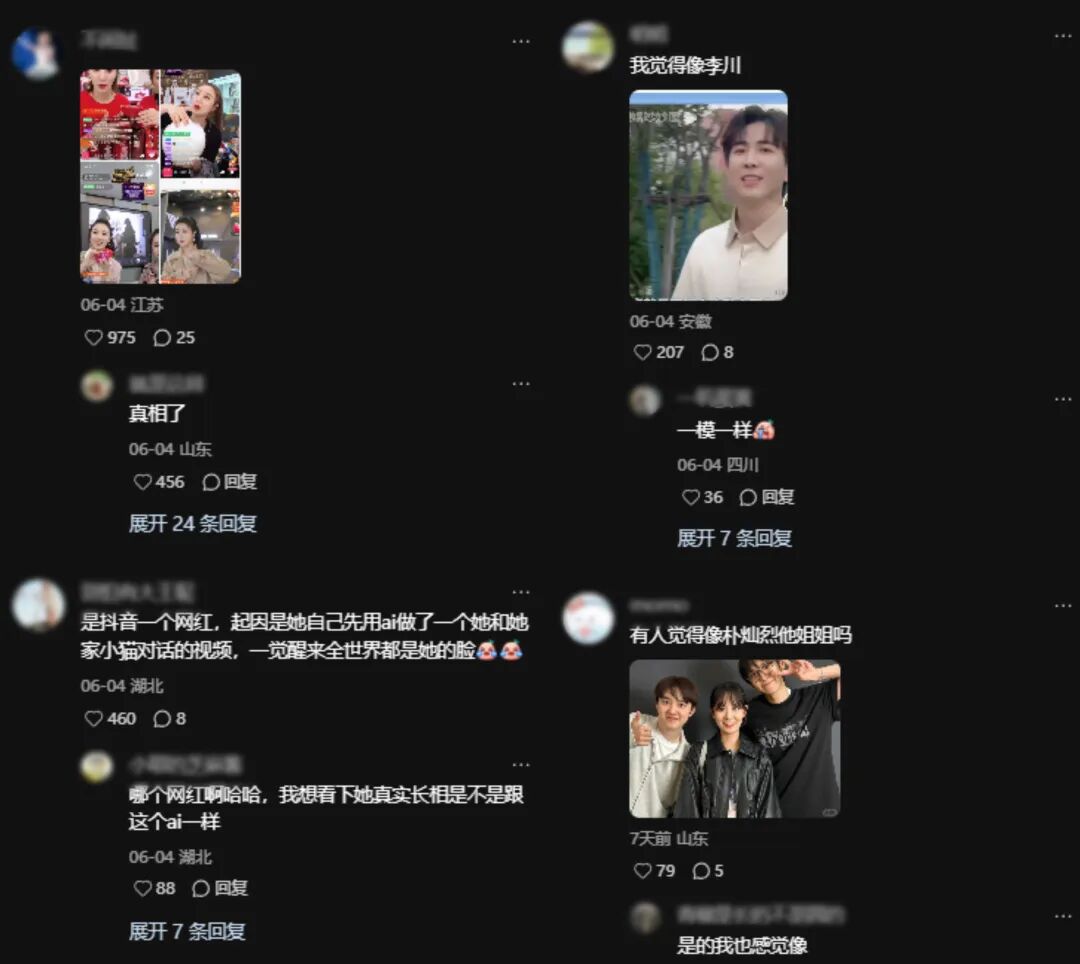
But the problem is, all the guessing doesn't lead to a definite answer. Compared to which specific face was stolen, it's more likely an "average standard face" that doesn't really exist, repeatedly crafted on the AI's aesthetic assembly line.
So where did this face come from?
I, not believing in this, tried all the mainstream video models like Seedance, Keling, Hailuo, and HappyHorse one by one. During the experiment, I really found a pattern.
We gave all the models two chances with the same prompt "a girl riding a bike". Logically, they should generate different faces each time. Sometimes it should be an Asian, and sometimes a foreigner. That's the nature of large models.
Since we only specified the gender and gave no other hints, not only the face, but it should randomly generate people of any nationality, skin color, hairstyle, and clothing, completely different from each other.
But in fact, with the same prompt, almost all the models generated the same face twice, with the same dressing, background environment, and shooting angle, all basically the same.
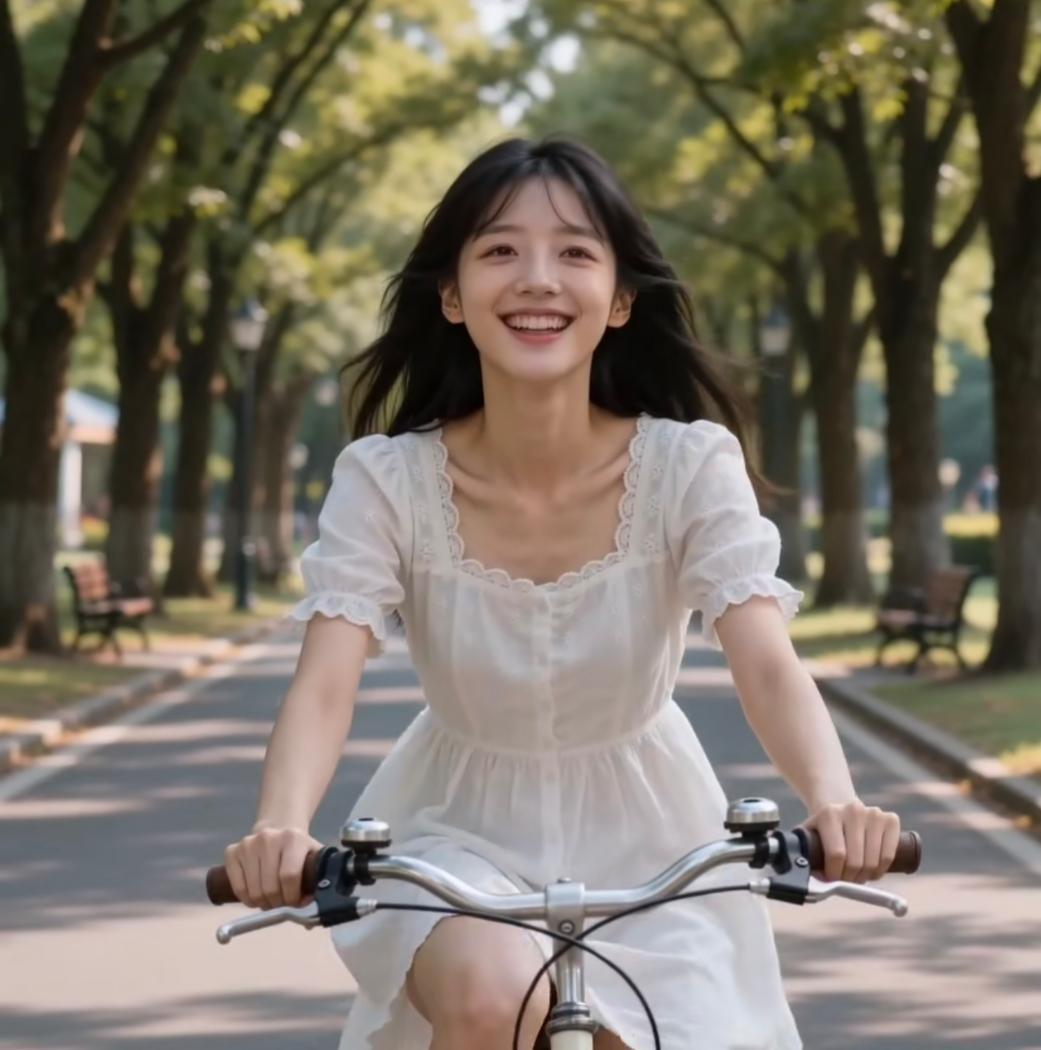
In Seedance 2.0 Fast, I found the exact same AI face as at the beginning. It seems this is the root of all evil.
If only one model makes a mistake, it might be its problem. But if all the models lose their diversity at the same time... After some research, I found there might be two reasons.
First, those who often use video models should know that video models are very sensitive to prompts. Sometimes the order of a word or a few characters can affect the final generated result.
To make sure everyone can get good results every time, our prompts are often optimized again in the background during generation.
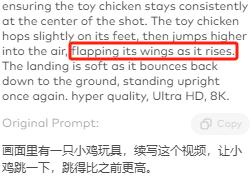
Previously, "prompt enhancement" was a separate button on the side. Users could either use it like a cheat code or just use the original prompt. But after looking at many platforms, it seems rare now. Prompt polishing has become the default option.
For example, if I input "a girl is riding a bike and smiling while riding", the optimized prompt actually fed to the model might become:
"A young and beautiful Asian girl is riding a bike on a sunny tree-lined avenue. She has fair skin, delicate facial features, big eyes, a small nose, long hair fluttering naturally, wearing a white dress, with a sweet smile on her face. The shot is a medium-close-up, with soft natural light, shallow depth of field, a cinematic picture, a fresh and aesthetic style, natural facial expressions, smooth movements, and a high-definition and realistic picture."
Doing this once or twice is called prompt optimization, but doing it thousands of times turns it into an assembly line.
So, after I modified the prompt and described some facial features, the face in the bottom right corner was obviously different. But without additional environmental hints, the girl was still riding on the tree-lined avenue.
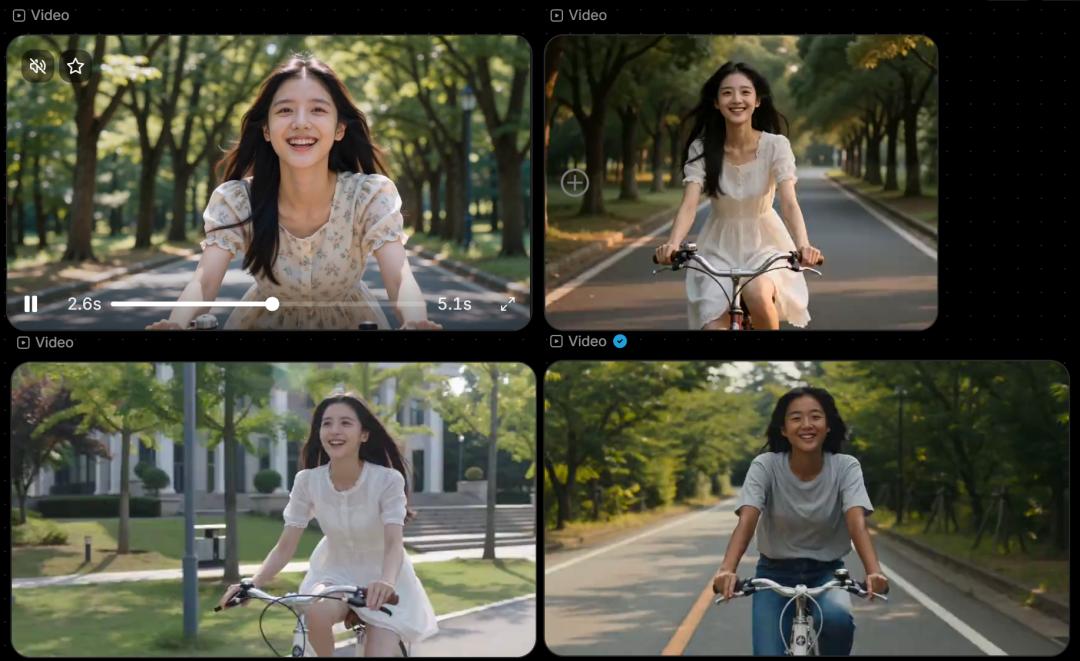
However, there are many types of delicate facial features. There are so many beautiful women in the world. Why does the AI only recognize this one?
This brings us to the second reason. Image and video models have inherent aesthetic biases.
A paper published in "Nature" last year clearly discussed this issue. In their research, they found that if you specify a race, the faces generated by the model all look like siblings.
This aesthetic bias originally comes from data. For example, most people like internet celebrity faces, so they are naturally labeled as beautiful. The model doesn't understand anything. As long as the prompt is about a beautiful woman, it just goes in that direction.
During the training process, the model further amplifies this bias, resulting in the faces generated by the same feature prompts becoming more and more similar.
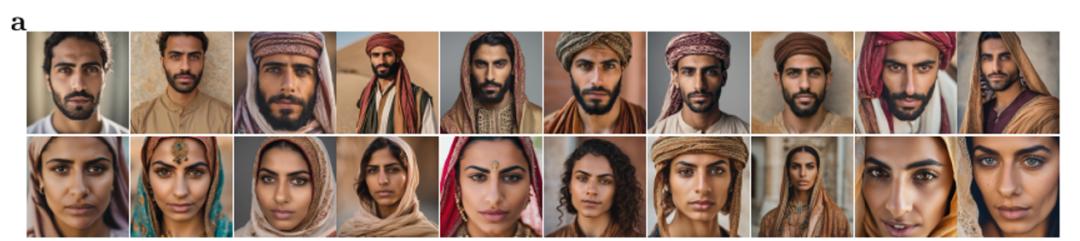
In addition, to ensure consistency in videos, video models may further exacerbate aesthetic homogenization.
After all, the faces generated by video models not only need to be beautiful but also stable, ensuring that they look like the same person in dozens or hundreds of frames, from all angles.
So the model naturally prefers faces that are easier to maintain consistency, with symmetrical facial features, standard contours, non-extreme features, easy-to-control expressions, and won't look bad when turning the head.
In short, platforms like safe and beautiful faces, users like short drama internet celebrity faces, and models like stable and standard faces. When these three parties come together, the face that makes everyone sick is born.
To be honest, I don't really like almost all the flawless beautiful women generated by AI, not just the one that has been widely circulated recently.
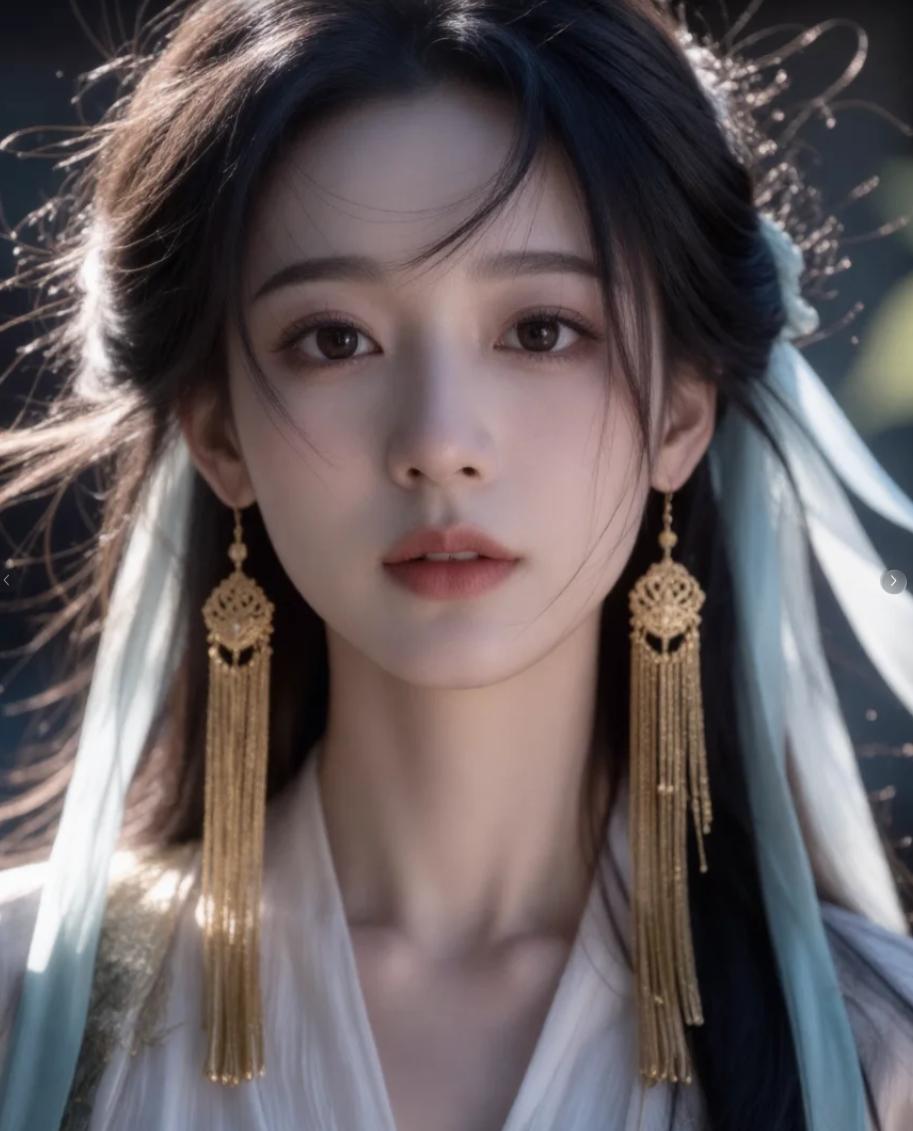
Source: Xiaohongshu @Alexander
Letting AI faces enter our information flow is like a large-scale cyber alienation experiment that happened unintentionally.
Faces without real-world counterparts are born after being washed and distilled by countless internet celebrity data.
When they take up our time on the phone and replace the real beautiful women we used to see, I feel quite uncomfortable. Because our perception of the world and our definition of aesthetics are being oppressed by AI.
So, people's aversion to AI faces may be due to the uncanny valley effect caused by the sense of unreality, but it's also an instinctive resistance to homogenization.
Some people say that AI videos should become clearer, more detailed, and more like real people in the future. When people can't tell the difference between real and fake, they will like them.
But I think that even if the technology can make it hard to tell the difference, we can't fall in love with a perfect fake face without a soul.
Sources of pictures and materials:
"AI-generated faces influence gender stereotypes and racial homogenization" N AlDahoul
Xiaohongshu, Douyin
This article is from the WeChat official account "ChaPingX.PIN", author: Mo Mo Mo Tian Tian, editor: Jiang Jiang & Mian Xian, published by 36Kr with authorization.