Big Techs' AI Battle for the 618 Shopping Festival
In previous years, the top priority during the 618 shopping festival was to master the full - reduction formulas. The rule of "minus 50 for every 300 across stores" turned consumers into temporary Olympiad math exam - takers. Social media platforms were filled with "math classes" and "copying homework" posts. Everyone calculated repeatedly based on their shopping carts, fearing to overpay.
This year's 618 is somewhat different.
In terms of the start time, the event still has a long duration as usual: Douyin kicked off on May 15th, Pinduoduo lasted from May 21st to June 30th, Tmall started selling on May 21st, and JD.com launched at 8 p.m. on May 30th. However, the rules have been significantly simplified. Although traditional promotions like cross - store full - reduction and deposit inflation still exist, platforms no longer focus on promoting them. Instead, AI has taken the center stage.
Qianwen is fully integrated with Taobao. By opening the Qianwen APP, users can let AI help them select Taobao products. The Doubao APP is connected to the Douyin Mall, and the built - in "Ask Doubao before Buying" function allows users to place orders directly. JD.com's AI digital human anchors are still introducing products at 3 a.m......
In fact, this is not the first time that AI has been involved in major promotions. During last year's Double 11, major platforms had already tried to use AI to generate product descriptions, provide intelligent customer service, and create digital human anchors for live - streaming. At that time, it was more like "icing on the cake," but during this year's 618, AI has almost appeared in every aspect.
The platforms' battle reports also emphasize its presence. In the first four hours of JD.com's 618, the sales volume of AI digital human anchors exceeded 70 million yuan. Taobao upgraded its AI customer service "Dian Xiaomi" and launched an "AI fake image recognition model," with an average success rate of over 20% in preventing refund requests.
Although these figures are not the main highlight in the trillion - level GMV of the major promotion, they are a new signal against the backdrop of the price war that has been going on for several years with diminishing marginal effects. However, is AI really a "magic weapon" or just a new prop for platforms to boost their image?
01. AI Joins 618: Non - stop Live - streaming, Instant Customer Service, and Faster Logistics
To describe the role of AI in this year's 618, the phrase "ubiquitous but not omnipotent" might be the most appropriate. From the moment consumers open the APP to the last mile of product delivery, AI has almost penetrated into all aspects. According to the shopping process, it can be divided into three stages: pre - purchase, during - transaction, and post - purchase.
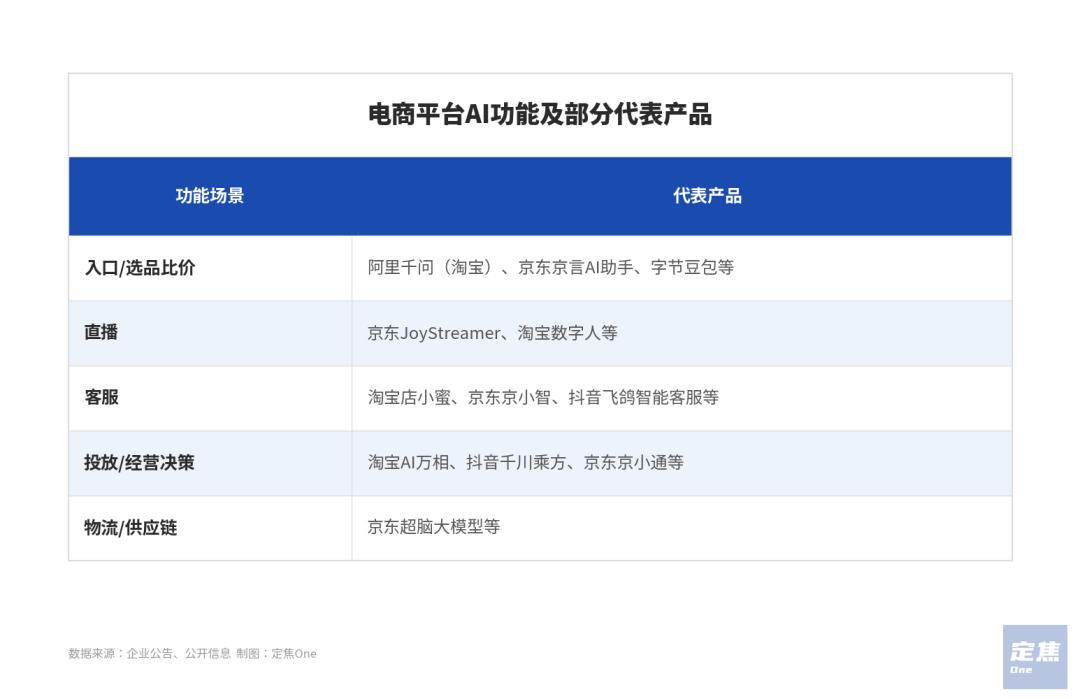
Before purchasing, the most obvious change is at the entry point. In the past, the starting point of shopping was the search box: users entered keywords, the system retrieved a list of products, and then they had to filter by themselves. During this year's 618, many platforms have integrated AI assistants with shopping entrances, shifting the starting point from "search" to "dialogue."
Taobao is fully integrated with Qianwen. Users can state their needs in the Qianwen APP, and Qianwen can complete product selection, price comparison, coupon collection, and even order placement. Douyin has connected the Doubao APP with its mall, and the built - in "Ask Doubao before Buying" function allows users to directly jump to the purchase page after the Q&A, without leaving the Douyin ecosystem.
However, the use of AI assistants is currently mainly by early adopters and has not yet become the mainstream shopping method.
During the transaction, merchants feel the most direct impact, and AI is mainly reflected in live - streaming, customer service, and business decision - making.
Live - streaming is one of the key areas where each platform is making efforts. During this year's 618, the number of live - streaming sessions of JD.com's digital human "JoyStreamer" increased by 6 times year - on - year, and more than 70,000 merchants are using it. These digital human anchors can be online 24/7 and can introduce products, promote orders, and issue coupons even at 3 a.m. Taobao, Pinduoduo, and Vipshop have also opened access to digital human live - streaming. Taobao has also introduced incentive policies for digital human live - streaming, including traffic support and technical assistance. However, different platforms have different attitudes and implementation scales towards digital humans. After the "Regulations on the Supervision and Administration of Live - streaming E - commerce" came into effect in February this year, all digital human live - streaming rooms on all platforms must prominently mark the "AI - generated" label; otherwise, they will face traffic restrictions or even bans.
AI is also used in customer service. Taobao's "Dian Xiaomi" has been upgraded from an automatic reply service to a "shopping - guide - type" customer service, which can actively recommend products. It has also launched an "AI fake image recognition model" to intercept malicious refund requests. Merchant test data shows that the average success rate of preventing refund requests exceeds 20%. JD.com's AI customer service "Jing Xiaozhi" has served more than one million merchants. Douyin's Feige intelligent customer service is available to merchants for free for a limited time, and the official disclosure shows that it can save about 70% of labor costs.
In addition, AI tools have begun to be involved in deeper - level business decision - making. For example, Taobao's "AI Wanxiang" connects demand insight, content production, and advertising optimization through multi - agent collaboration. Douyin's "Qianchuan · Chengfang" provides intelligent advertising services. Many platforms have also opened AIGC tools to help small and medium - sized merchants generate short videos and product images and texts with one click.
All of the above are the "visible" aspects. After the purchase, the logistics and supply chain are the areas where consumers feel the least impact, but this is exactly where AI is most solidly applied.
JD.com Logistics is focusing on promoting the "Super Brain Big Model" this year, which covers more than 1,000 core supply chain scenarios, improving inventory turnover efficiency by 30% to 40% and reducing trunk transportation costs. E - commerce platforms such as Taobao and Pinduoduo, as well as major logistics systems, also use AI for intelligent scheduling and dynamic inventory allocation.
After you place an order, AI will predict the inventory demand in your area, automatically transfer goods from the nearest warehouse, and plan the optimal delivery route. This is why some consumers can receive their goods within a few hours after placing an order during the major promotion, which is silently supported by the supply prediction chain.
Overall, AI is indeed changing every aspect of 618. The entry point is smarter, live - streaming never stops, customer service responds instantly, and logistics is faster. However, most of these changes are only at the efficiency - improvement level. The original processes have become faster, but the business model remains unchanged. There may still be a gap between the impressive figures in the platforms' battle reports and the real experiences of consumers and merchants.
02. Does AI Make Business Easier?
On the consumer side, AI customer service is the most obvious and controversial aspect.
On social media platforms, topics like "AI customer service is driving people crazy" are filled with complaints. Consumer Xixi's reaction is particularly intense. She told "Focus One" that during the major promotion, the consultation volume soared, and AI customer service was at the forefront, but it could solve very limited problems. "It can answer standard questions such as size, inventory, and delivery time. However, once it comes to promotional activities, price protection, and complaints, AI either gives irrelevant answers or uses clichés in a loop." She sent more than a dozen messages saying "transfer to human service" but failed to connect with a real - life customer service representative.
As for AI shopping guides and AI - assisted product selection, she has never used them. "I'm a consumer with weak purchasing purposes and I like the feeling of 'window - shopping'. If I have a clear purpose, I'll directly search and buy the most cost - effective product. I don't need AI to make decisions for me."
This kind of mindset is not an exception. A 618 preview survey shows that when it comes to specific expectations for AI - empowered consumption, the top three are all focused on efficiency improvement. 51.7% of people hope that "AI can improve merchants' efficiency and reduce costs to benefit consumers", 50.3% hope that "AI can optimize the supply chain to reduce out - of - stock situations and order cancellations", and 44.0% hope that "AI can improve the efficiency of after - sales customer service".
In particular, the acceptance rate of consumers for tool - based functions such as "organizing information, comparing prices, calculating discounts, and identifying price changes" is between 65% and 70%, but the acceptance rate for "AI directly giving purchase suggestions or placing orders automatically" drops to between 37% and 48%.
It seems that currently, not many consumers are willing to follow AI's suggestions.
For merchants, the situation is more complicated: on one hand, there are the impressive data provided by service providers; on the other hand, there are the real concerns of front - line operators.
First, looking at the cost, AI has indeed lowered the threshold.

An AI digital human service provider said that currently, their quotation for AI digital human live - streaming is as low as 12 yuan per hour. This means that 24 - hour non - stop live - streaming costs less than 300 yuan per day, which is far lower than the hourly wage of a real - life anchor. Moreover, one account can be used across multiple platforms such as JD.com, Taobao, and Pinduoduo. JD.com has even opened digital human live - streaming to merchants for free, but there are differences in functions compared with the external paid version.
The same goes for AI customer service. The basic functions of the official AI customer service of e - commerce platforms are usually free or come with a free quota, but advanced functions, excessive usage, or enterprise - level customization will incur fees.
The quotation sheet provided by an external AI customer service provider to "Focus One" shows that the annual fee for the entry - level version is 16,800 yuan. Adding the platform access fee (this fee is charged by e - commerce platforms, and the prices vary among different platforms), such as the Taotian access fee of 360 yuan per year per account, the actual annual cost is about 17,160 yuan. This is obviously far lower than the annual salary of a full - time customer service representative, and it can also provide 24/7 service.
However, the seemingly cost - effective option in theory is not so ideal in real - world scenarios.
On one hand, the scope of application is limited, and the progress of AI live - streaming varies among different platforms. The above - mentioned AI digital human service provider told "Focus One" that currently, among e - commerce platforms, JD.com, Taobao, Tmall, Pinduoduo, and Vipshop can connect to external digital human live - streaming, while Douyin, Kuaishou, and Xiaohongshu cannot. Some merchants even reported that there is a risk of traffic restrictions or bans for digital human live - streaming on some platforms.
On the other hand, in some scenarios, even if AI is used, it doesn't mean that real - life customer service is no longer needed. The above - mentioned AI customer service provider revealed that using AI for pre - sales consultation can significantly reduce costs, but for after - sales issues, AI is not as accurate and needs human intervention. Especially during major promotions when the consultation volume surges, it is when AI is most likely to expose its shortcomings.
What makes merchants more hesitant is the issue of responsibility.
An e - commerce merchant in the snack category told "Focus One" bluntly: The data captured by AI is based on the existing competitiveness of your products. If your products are good, they can be captured by AI. So, "AI doesn't play a significant role in cost reduction, but it does improve efficiency."
She is familiar with the AI tools of e - commerce platforms, but she doesn't trust many of them. "After all, AI doesn't need to bear the consequences." If an AI customer service gives a wrong answer and causes a dispute, the merchant will still be held responsible.
Then, who will ultimately benefit from the cost savings and efficiency improvements brought by AI?
Merchants have indeed reduced labor costs, but they have also handed over some data and decision - making power. The more convenient the tool is, the higher the migration cost will be.
Consumers bear some hidden costs. AI customer service saves money for merchants, but it traps users in an endless loop of "transfer to human service." The so - called "fake price cuts" still exist, and the efficiency savings from AI have not translated into lower prices.
In contrast, platforms benefit more obviously. In addition to earning tool fees, they can also obtain data and build ecological barriers. The smarter AI becomes, the more data it needs to be fed. The more concentrated the data is, the more powerful AI will be. This is a cycle where the strong get stronger, which ultimately strengthens the platforms' moats.
03. Platforms Bet on AI: Overestimated in the Short Term, Promising in the Long Term
The actual effect of AI during this year's 618 is still mediocre. Why do platforms still collectively bet on it? This can be analyzed from two aspects.
On one hand, the attractiveness of major promotions is declining, and platforms need a new story.
A senior e - commerce operator told "Focus One" that the category he is in charge of still had a 70% growth during the 618 in 2025, but this year's data is similar to that of normal days, with almost no obvious growth. In his opinion, part of the reason is the change in the overall situation, "which cannot be solved by operations."

Image source / pexels
However, the deeper reason lies in the major promotion model itself. "Platforms like major promotions. Merchants aim for profits, and consumers look for discounts. It's difficult to meet the needs of both sides simultaneously, and merchants are caught in the middle."
He told "Focus One" that in order to participate in the platform's major promotion activities while maintaining profits, some merchants will "raise the price first and then lower it." Suppose there is a 20% discount if participating in the platform's activities throughout the year. Merchants will raise the price first and then return to the normal price through the promotion. Especially, as promotional activities become more frequent and the duration gets longer, consumers are becoming more sensitive to prices. Merchants have to resort to "fake price cuts," which is a vicious cycle.
As the marginal effect of subsidies weakens and the major promotion model falls into internal strife, platforms urgently need a new growth story, and AI has been pushed to the forefront.
On the other hand, the significance of AI to platforms goes far beyond "cost reduction and efficiency improvement," which can be seen from the layout of each platform.
During this year's 618, platforms have different investment intensities and strategies regarding AI, but they share the same direction. Alibaba and ByteDance have similar ideas, using their own large - scale models to lock the consumption decision - making loop within their own ecosystems. JD.com focuses on full - process integration to strengthen its advantages in fulfillment efficiency and supply chain costs. Pinduoduo is the most low - key, not chasing the AI concept but quietly optimizing price matching and