Musk's benefactor: an investment that reaps a 4000x return
The grand occasion is still vivid in our minds: SpaceX went public on the NASDAQ, with a market value exceeding $2.1 trillion, and Elon Musk became the world's first trillionaire overnight.
Such a phenomenal IPO can easily make people forget SpaceX's difficult situation in the past - the rocket failed to launch three times, and the company was once on the verge of bankruptcy.
At a critical moment, Founders Fund came to the rescue with a $20 million investment. To this day, the book return of this investment has reached an astonishing 4,000 times, making it one of the most remarkable investments in the history of venture capital.
Behind Founders Fund stands Elon Musk's old friend, Peter Thiel, known as the "godfather" of the "PayPal Mafia." The two have similar habits and have achieved great success together, like a never - ending fountain of vitality, creating a beautiful story in the business world.
Step in during difficult times and create a 4,000 - fold return
If you really want to go to space, no one can stop you.
On the day of the listing ceremony, Musk recalled that the story of SpaceX began in a warehouse. In June 2002, SpaceX was born in a warehouse - the company initially had only a few compartments, about a dozen employees, and a very flat organizational structure.
There is a saying in the US aerospace industry: "To become a millionaire in this industry, you first need to have $1 billion." At that time, Musk's net worth was only $180 million, mostly from selling his PayPal shares - the pressure was imaginable.
From 2006 to 2008, the first three launches of the Falcon 1 all failed, and each rocket was worth tens of millions of dollars. At the same time, Musk was also dealing with problems at Tesla on the ground. The mass - production of the Roadster was not going well, and the financing environment was hit hard by the financial crisis.
At this time, Founders Fund appeared like a knight in shining armor.
Founders Fund was founded by Peter Thiel in 2005. Most of the team members are former comrades from the PayPal gang, who have worked with Musk for a long time. Thiel is also an old friend of Musk, and they have a natural understanding and trust in each other.
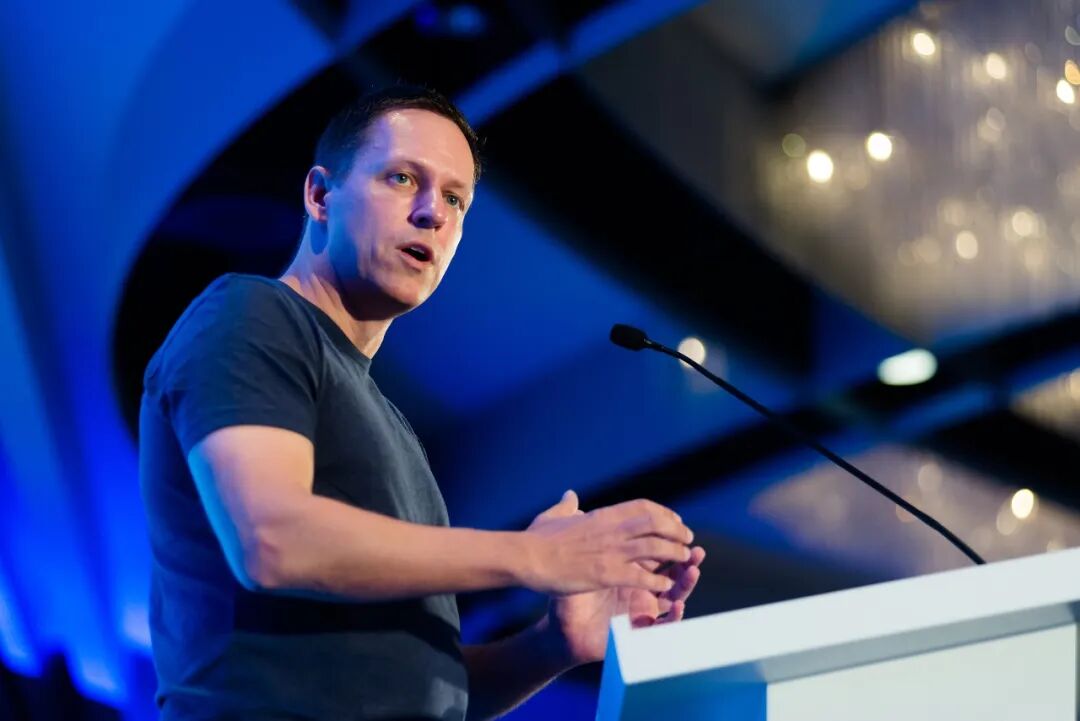
Peter Thiel
At that time, the valuation of SpaceX in crisis was less than $500 million. But in the eyes of most VCs, a company that had blown up three rockets in a row and was one step away from bankruptcy was not worth a second look.
Great investments often come from non - consensus views. Founders Fund has always taken an unconventional approach. Different from Silicon Valley venture capital firms that focus on risk diversification, their investment strategy is concentrated and pure - they invest the most money in the best companies at the best possible price. In this style, the founder becomes the only variable.
"He can serve as both the CEO and CTO at the same time. There is no one else in the world who can really make a company like SpaceX succeed," former Founders Fund partner Brian Singerman once said of Musk.
So in August 2008, Founders Fund invested more than $20 million and became the first external equity investor in SpaceX. Three months later, there was a turning point. SpaceX won a $1.6 billion contract from NASA and truly survived.
Thiel once reviewed this investment: "We studied in depth why the second launch failed and found that all the details were almost perfect, but it failed at the last moment. We all believed at that time that a successful launch was just around the corner."
We all know the subsequent story: the first successful return of the Falcon 9 to the ground, the birth of Starlink, and the test flight of the Starship. Finally, space computing power was written into the prospectus, and at the moment of the $1.8 trillion market - value listing, it left endless imagination for millions of shareholders.
Founders Fund increased its stake significantly. In the past two decades, Founders Fund has cumulatively invested about $600 million in SpaceX, with a shareholding ratio of about 3%. Based on the IPO issue price of $135 per share, the market value of its holdings has exceeded $50 billion.
Just considering that life - saving investment back then, the return has exceeded 4,000 times.
A rebellious Silicon Valley tycoon, the earliest investor in Facebook
Elon Musk is widely regarded as a "madman," but in fact, Thiel is just as crazy.
In 1967, Peter Thiel was born in Frankfurt, Germany. He started learning chess at the age of 6 and entered Stanford University at 18, where he obtained a bachelor's degree in philosophy and a doctorate in law. After graduation, he worked as a lawyer and traded derivatives. In 1996, he founded Thiel Capital Management, thus starting his venture - capital career.
At that time, the global Internet boom was just emerging, and traditional payment methods could no longer meet the needs of rapid transactions. Thiel and several entrepreneurs co - founded Fieldlink, initially to develop security software for handheld devices, and then quickly switched to online payment services and renamed the company Confinity.
Almost at the same time, Musk founded X.com and entered the online payment market. The two companies merged in 2000, and this is the well - known PayPal.
PayPal went public successfully in 2002, but was acquired by eBay for $1.5 billion just a few months later. A group of young people with huge checks went their separate ways. No one knew that this breakup would give rise to the most spectacular business miracle.
After that, Thiel co - founded Palantir Technologies with PayPal engineers, focusing on big - data analysis in the government intelligence field. The name Palantir comes from the "Palantír" in "The Lord of the Rings" - a magical crystal ball that can see through everything.
Mainstream VCs were not interested in this story at all. A business relying on government contracts seemed to have no prospects. Only the investment department of the CIA, In - Q - Tel, provided the initial $2 million. To date, Palantir's market value has exceeded $300 billion, becoming the most remarkable achievement in Thiel's entrepreneurial history.
Equally impressive are his many brilliant investment decisions.
In 2004, when social media was still regarded as a "virtual toy," Thiel defied the odds and invested $500,000 in the little - known Facebook. This investment later earned Thiel hundreds of millions of dollars, becoming one of the most praised investments in Silicon Valley's investment history.
In 2005, Thiel founded Founders Fund with a group of former PayPal colleagues, specifically investing in niche sectors ignored by mainstream VCs. From SpaceX, Airbnb to Stripe, Anduril, they are all Silicon Valley giants today.
Looking at the other members of PayPal, their stories are also extremely exciting -
YouTube was founded in 2005 by three former PayPal employees, initially because it was too troublesome to share party videos; Reid Hoffman founded LinkedIn, which connects professionals around the world and was eventually acquired by Microsoft for $26.2 billion; Keith Rabois revolutionized the real - estate transaction process in North America... Some media call them the "PayPal Mafia." Among them, Thiel can be regarded as the soul of the organization, like a "godfather."
In the past two decades, Thiel and his Founders Fund have been like a cold light, spending their whole lives looking for something beyond the surface.
Break the mainstream narrative and look for things that can change the fate of humanity
Wealth is not enough to describe Thiel.
Palantir is often regarded as a manifestation of Thiel's investment philosophy - like a prophet's transparent crystal ball, it first perceives and then shapes, turning the blueprint into reality through investment.
As early as his student days, such characteristics were already evident. He "has always been interested in the grand picture of the world." He chose philosophy as his undergraduate major and would abstract business cases into grand, future - oriented questions. It's more accurate to say that he is verifying his beliefs rather than just doing venture capital.
Some media once described this "godfather" as follows: "He is a bit shy, which makes him seem serious. He hardly smiles in public and doesn't have that charismatic sense of humor. He is more like a philosophy professor, always delving into a systematic analysis of a problem."
In this way, whether it's Facebook or SpaceX, the amazing investments are not accidental but the inevitable result of long - term observation of things from the "first - principles" perspective.
Influenced by his teacher Girard's theory, Thiel regards imitation as the enemy of innovation. This spirit is fully presented in his book "Zero to One" - a truly valuable company must create a new market rather than compete in the red ocean, and must create something completely new rather than improve and replicate.
"I don't like competition. I was the only one interested in investing in Musk. No one was interested in SpaceX." Looking back, there were not many people who could see the hidden value of SpaceX back then.
Based on this concept, Thiel only focuses on projects with long - term cycles, high risks, and the ability to solve fundamental problems.
"There are two forms of progress. One is horizontal progress, which is to replicate known models; the other is vertical progress, which is to explore new possibilities." Just like Liang Wenfeng's large - scale model and Zhang Xue's motorcycle, they started from scratch outside the system and broke the inertia of the mainstream narrative with their own efforts.
He has never stopped brainstorming - he likes to read books about the future, loves fantasy novels and "Star Wars," and will call out when the post - modern society loses its goal: Why can't we believe that there are still secrets to be discovered?
Thiel once felt sorry that for decades, most technological progress has occurred in the information field, while there has been "no progress" in the atomic world. He pointed out painfully in his book: "We wanted flying cars, but instead we got 140 - character tweets."
However, today, with satellites being launched into space and robots gradually entering every corner, the future that Thiel dreams of may just be a matter of time.
"Wait for ten or twenty years and bet on a story that may change the fate of humanity." Such an investment logic is more than just romantic. Perhaps, the next great empire is hidden in an unassuming check.
This article is from the WeChat official account "Investment World" (ID: pedaily2012), author: Yu Mengying, published by 36Kr with authorization.