Companies like Zhongji Innolight have been turned into AI scratch cards by Wall Street.
Can U.S. stock investors experience Zhongji Innolight's 40% limit-down?
Companies like Zhongji Innolight have finally caught the eye of Wall Street. However, instead of raising long - term funds and entering the market based on financial reports, Wall Street first packages the volatility. The financial reports of Zhongji Innolight and others are still there, and the logic of the industrial chain remains the same. But in the hands of Wall Street, the first thing served on the table is the 2x leveraged ETF.
In simple terms, companies like Zhongji Innolight, Xinyisheng, and Tianfu Communication are being turned into an AI lottery ticket by Wall Street.
The background of this lottery ticket is, of course, the fundamentals. NVIDIA is still selling graphics cards, cloud providers are still expanding their Capex, and AI data centers are consuming more and more high - speed optical modules. But in the hands of Wall Street, the fundamentals are just raw materials, and what is really processed is volatility, which also means:
Wall Street treats "investing" in companies like Zhongji Innolight as running a casino.
SK Hynix won the jackpot first
Recently, U.S. ETF issuer ProShares submitted a document to the SEC, planning to launch a product named ProShares Ultra Zhongji Innolight, aiming to track twice the single - day performance of Zhongji Innolight's stock.
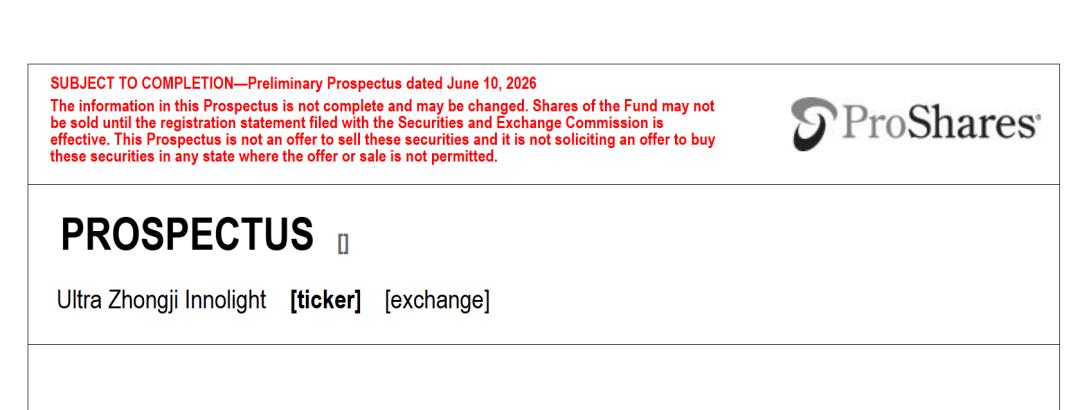
In summary, if Zhongji Innolight rises by 1%, this product theoretically aims to rise by 2%; if Zhongji Innolight falls by 1%, it theoretically falls by 2% as well.
This is not all. In addition to Zhongji Innolight, ProShares has also simultaneously applied for 2x long products related to Chinese AI hardware companies such as Xinyisheng and Tianfu Communication. It has even pre - applied for other companies related to the AI industrial chain, such as CATL, Luxshare, and Cambricon.
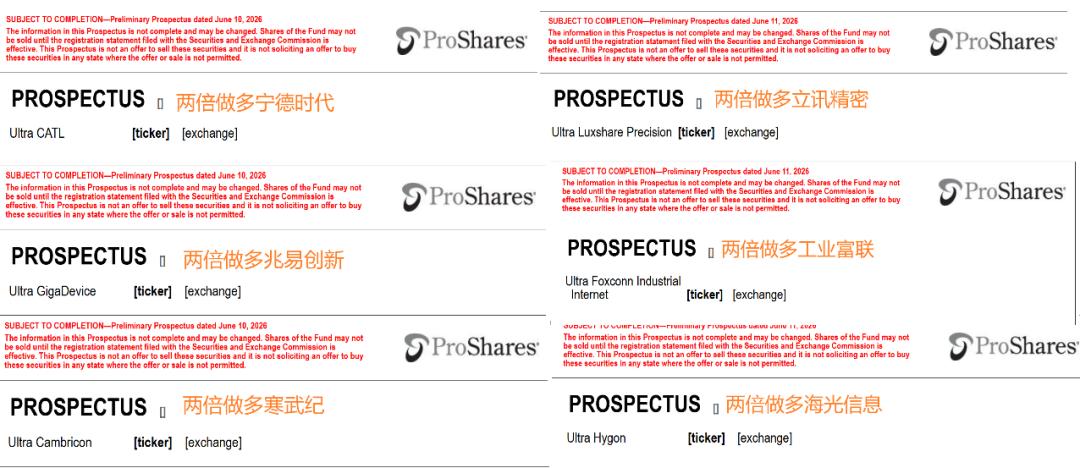
That is to say, Wall Street is not just targeting one company. It has packaged the three major players in the A - share optical module sector and other enterprises into its AI trading shelf. As soon as the news came out, many investors got excited immediately. Even the intraday stock price of Zhongji Innolight rose for a while after the information spread.
The market is so excited because a similar scenario has just played out with SK Hynix, and the increase was quite irrational.
In October 2025, CSOP Asset Management launched a 2x daily leveraged product for SK Hynix on the Hong Kong Stock Exchange. The logic of this product is very simple, aiming to track twice the single - day performance of SK Hynix. If SK Hynix rises, it tries to rise twice as much; if SK Hynix falls, it also tries to fall twice as much.
Looking at the product alone, it is just an ordinary leveraged tool. But in the context of the AI market, the huge increase immediately distorted its original purpose.
From the chart, this product almost went up all the way after its listing. Driven by the shortage of HBM and DRAM, its price soared from around single - digits to a maximum of HK$148.65. Of course, there were pullbacks, fluctuations, and big bearish candles in the middle, but the overall trend was extremely exaggerated.
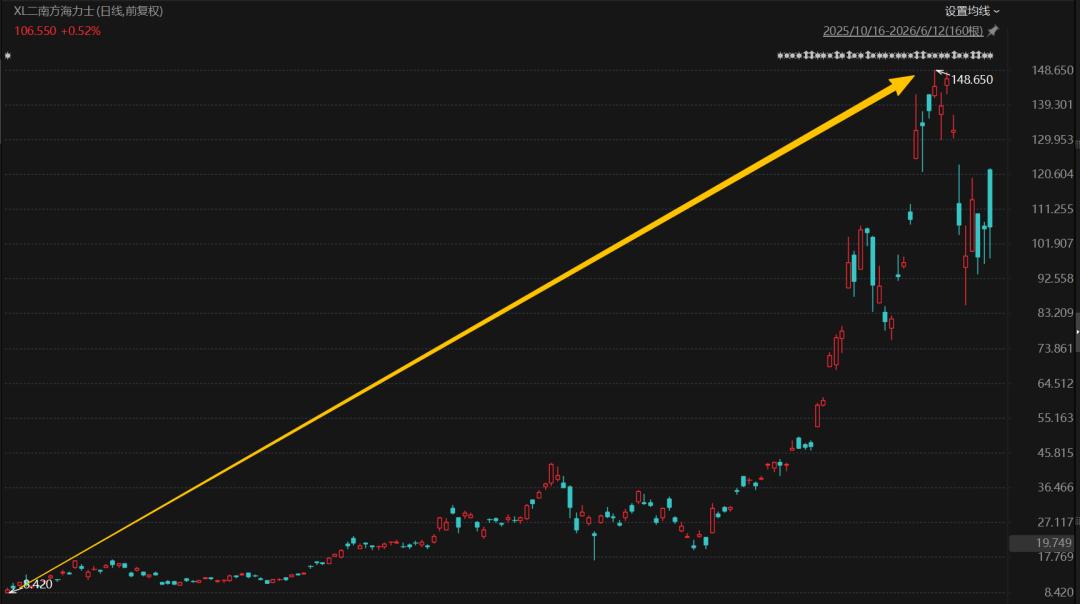
This event had a great impact on the market and ordinary investors. Because it proved that as long as an asset can be believed by the market to be related to AI, can rise, can be volatile, and can be understood by retail investors, financial institutions can repackage it. When a stock rises once, it is due to industrial prosperity. When the 2x product rises again, it becomes a financial narrative, and investors can even get a ticket to financial freedom.
So, when ProShares included Zhongji Innolight, Xinyisheng, and Tianfu Communication in the application documents for the 2x long products, the market naturally thought of SK Hynix. This is what really stimulates the market.
In the past, A - share investors mainly discussed how long the optical module market could last when talking about companies like Zhongji Innolight. But after ProShares applied for the 2x long products, the question has changed: It's not about whether companies like Zhongji Innolight can still rise, but whether overseas funds will treat them as the next "SK Hynix trade".
This question itself is enough to excite the market. Because the capital market loves to hear not completely unfamiliar stories, but old scripts that have just been verified to be successful once.
So, is the Chinese version of SK Hynix really coming?
Is it not the Chinese SK Hynix, but just an SK Hynix - flavored product?
The Chinese version of SK Hynix certainly sounds very appealing. After all, with the K - line of SK Hynix setting an example, the market can easily transfer its imagination:
South Korea has HBM, and China has optical modules. SK Hynix was made into a 2x product, and companies like Zhongji Innolight are also being made into 2x products. SK Hynix had a big rally. So, can companies like Zhongji Innolight have another round?
Unfortunately, what's coming this time may not be the next SK Hynix, but just an SK Hynix - flavored AI lottery ticket.
The reason is also very simple. When SK Hynix was discovered, it was more like a value discovery. In the past, the market looked at SK Hynix from the perspective of the storage cycle: price increases, price decreases, capacity expansion, and inventory reduction. It was not until AI servers pushed HBM to the center of the stage that investors suddenly realized that this company was not just a cyclical stock but also an indispensable player in the AI arms race.
However, it's different for companies like Zhongji Innolight. Before ProShares launched the 2x long products, were the A - share optical module stocks lying at the bottom? In fact, since 2023, optical modules have almost been the strongest main line in the A - share AI market. Zhongji Innolight, Xinyisheng, and Tianfu Communication are no longer obscure companies hidden in the corners of the industrial chain.
Terms like 800G, 1.6T, North American CSP, and N - chain have been mentioned in the market too many times. In the end, even people who don't follow technology stocks know that if AI continues to burn money, optical modules will definitely be a crucial part. The stock prices are even more telling. In about a year, Zhongji Innolight's stock price increased by more than 15 times, Xinyisheng's by more than 13 times, and Tianfu Communication's by more than 600%.
But the problem lies here. Companies like Zhongji Innolight have already proven themselves, but now what the market wants is not just proof, but continuous proof.
Buying Zhongji Innolight in the early stage was about the market not fully understanding optical modules. Buying it now is about whether it can still exceed market expectations after the market has understood it. The former is value discovery. The latter is a game of odds.
In the value discovery stage, the market can drive up the price because "you are actually so good". But in the odds game stage, the market will ask: Are you better than I thought? So, for companies like Zhongji Innolight now, only by continuing to exceed expectations can it be considered good news; as long as it falls short of expectations, it may be regarded as a big negative.
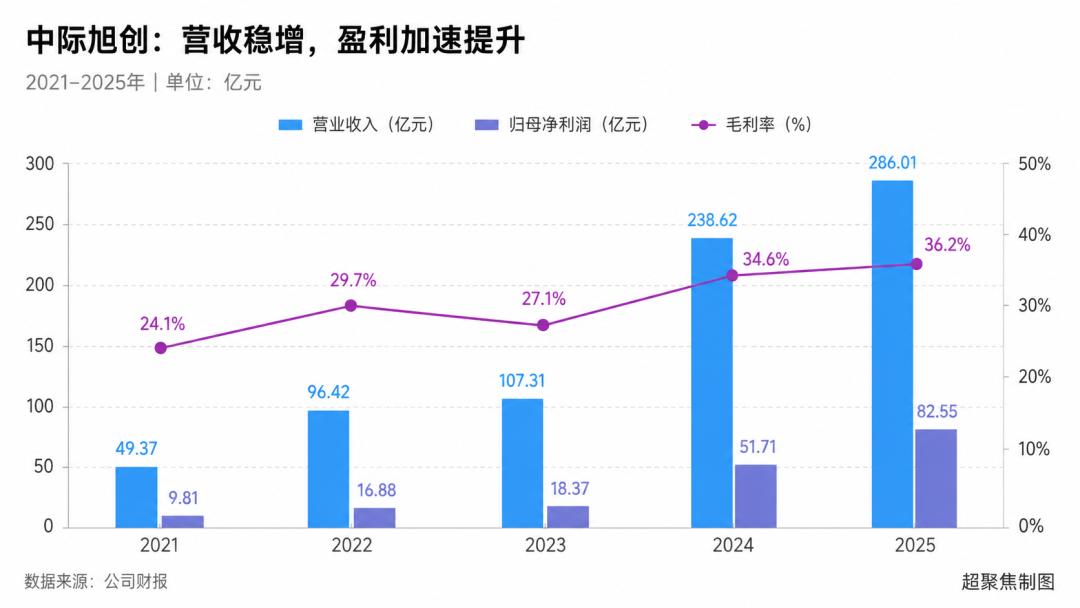
Of course, this doesn't mean that the revenue growth rate of companies like Zhongji Innolight may slow down. After all, the fact of high - growth is undeniable: From 2021 to 2025, Zhongji Innolight's revenue increased from 4.937 billion yuan to 28.601 billion yuan, its net profit attributable to the parent company increased from 981 million yuan to 8.255 billion yuan, and its gross profit margin also increased from 24.1% to 36.2%.
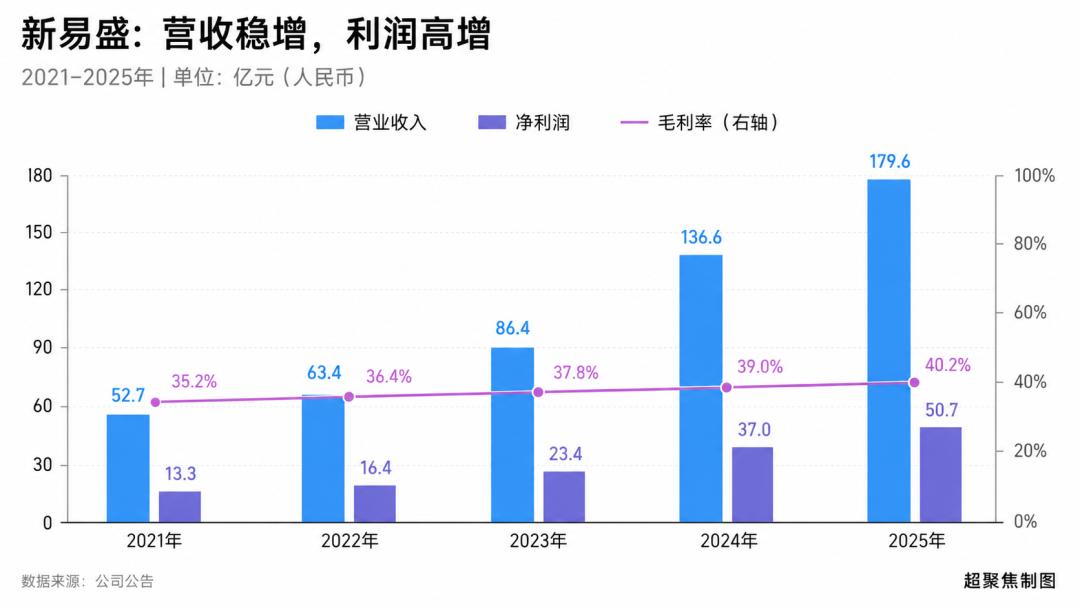
The same goes for Xinyisheng. Its revenue increased from 5.27 billion yuan to 17.96 billion yuan, its net profit increased from 1.33 billion yuan to 5.07 billion yuan, and its gross profit margin increased from 35.2% to 40.2%.
But all this is in the past. The market won't pay for "the excellence that has already happened". It is willing to pay for "the excellence that will continue to exceed expectations in the future".
This is the biggest difference between companies like Zhongji Innolight and SK Hynix.
SK Hynix's rise was more like the market suddenly discovering an undervalued AI card. But this time for companies like Zhongji Innolight, after the market already knows they are good cards, it is betting on whether they can still get a royal flush.
So, buying them now is no longer about gambling on "whether the optical module is a good track", but about betting on whether variables such as AI Capex, 1.6T volume expansion, North American orders, and gross profit margin can still surprise the market.
That's why they are being turned into AI lottery tickets by Wall Street: The fundamentals are strong enough to make people believe it's not just a pure concept; the price is high enough to hold more imagination; the volatility is large enough to make people willing to pay for the 2x product.
So, the Chinese version of SK Hynix may not be here yet. But the "lottery tickets" for Chinese AI hardware may really be coming.
This article is from the WeChat official account "Super Focus foci", author: Sean. Republished by 36Kr with permission.