On the Eve of the "Warranty Withdrawal Wave" for New Energy Vehicles: Range Anxiety Behind Private Battery Modifications Costing Tens of Thousands of Yuan
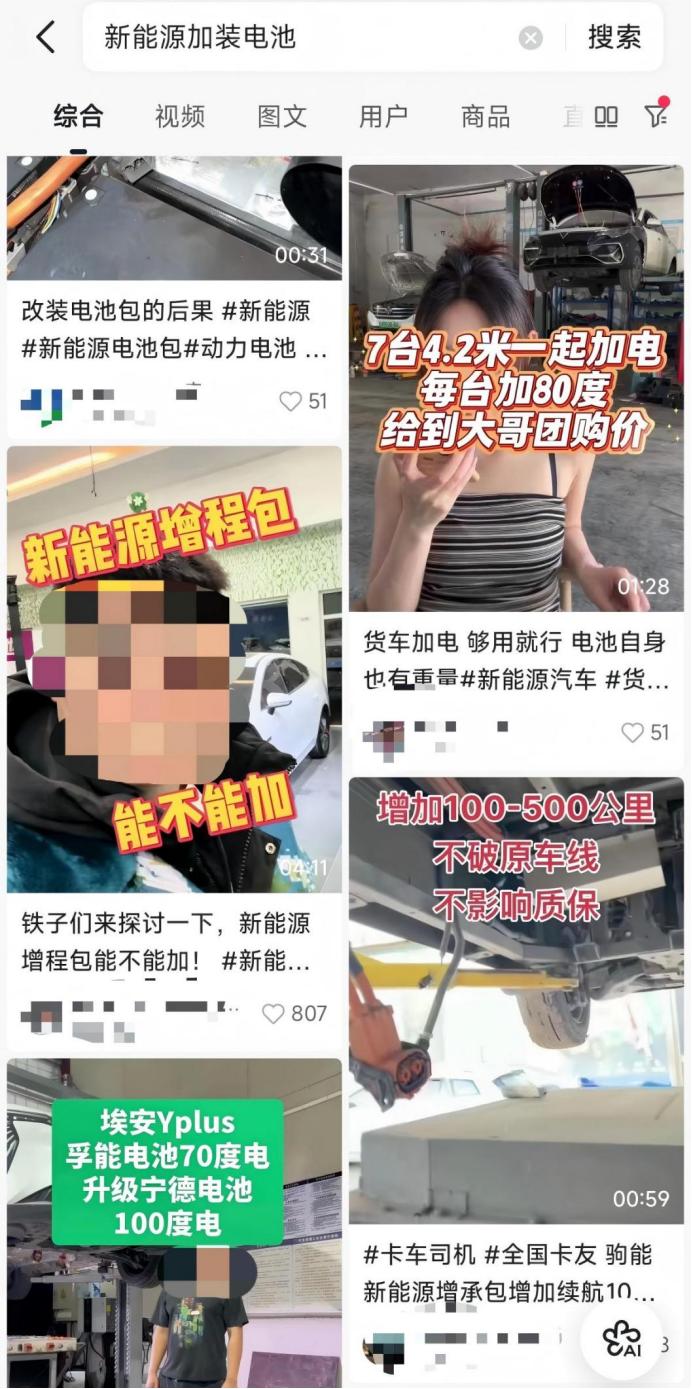
If you search for "adding batteries to new energy vehicles" on some short - video platforms now, it's easy to come across videos like this: The person on camera skillfully opens the trunk of a new energy vehicle and shows a newly - wired black square battery pack. The caption reads, "Without removing the original vehicle battery, add 20 kWh of electricity and immediately restore a 400 - kilometer range, only costing 15,000 yuan." In the comment section, online car - hailing drivers from all over the country flood the screen with dialect abbreviations. For example, "For a vehicle with a Guangdong A license plate, how much does it cost to add 20 kWh of electricity?" "Can you come to my place to install it for a vehicle with a Zhejiang B license plate?"
In recent years, the number of new energy vehicles in China has continued to grow rapidly. By the end of 2025, the number of new energy vehicles in the country had reached 43.97 million, and the penetration rate of new energy vehicles in the new car market had exceeded 50%. While the industry was expanding at a high speed, a batch of new energy vehicles purchased earlier began to enter the stage where the warranty expired. Many car owners faced the problem of a significant decline in battery range, but the cost of replacing the battery through official channels remained high.
Against this background, some videos about "adding batteries" and "upgrading range - extender packs" appeared on social platforms. A gray industrial chain of privately modifying batteries, relying on online customer acquisition and offline workshop construction, gradually emerged.
The market for privately modified batteries is gradually emerging
Currently, active modification merchants online attract customers on short - video platforms and social networks with names like "range - extender packs" and "battery upgrades." They provide services for car owners to install lithium batteries in the trunk or chassis. They can even increase the pure - electric driving range for hybrid car owners, thus reducing fuel consumption.
From the supply side, the rise of the modification business is inseparable from a basic fact - some "out - of - warranty" vehicles are pouring into the secondary market. By the end of 2025, the number of new energy vehicles in the country had reached 43.97 million, accounting for 12.01% of the total number of vehicles. In 2026, this number had exceeded 45 million. According to reports from "Wu Xiaobo Channel" and "Yipin Auto," the number of out - of - warranty new energy vehicles will reach 980,000 in 2028 and soar directly to 7.2 million in 2032.
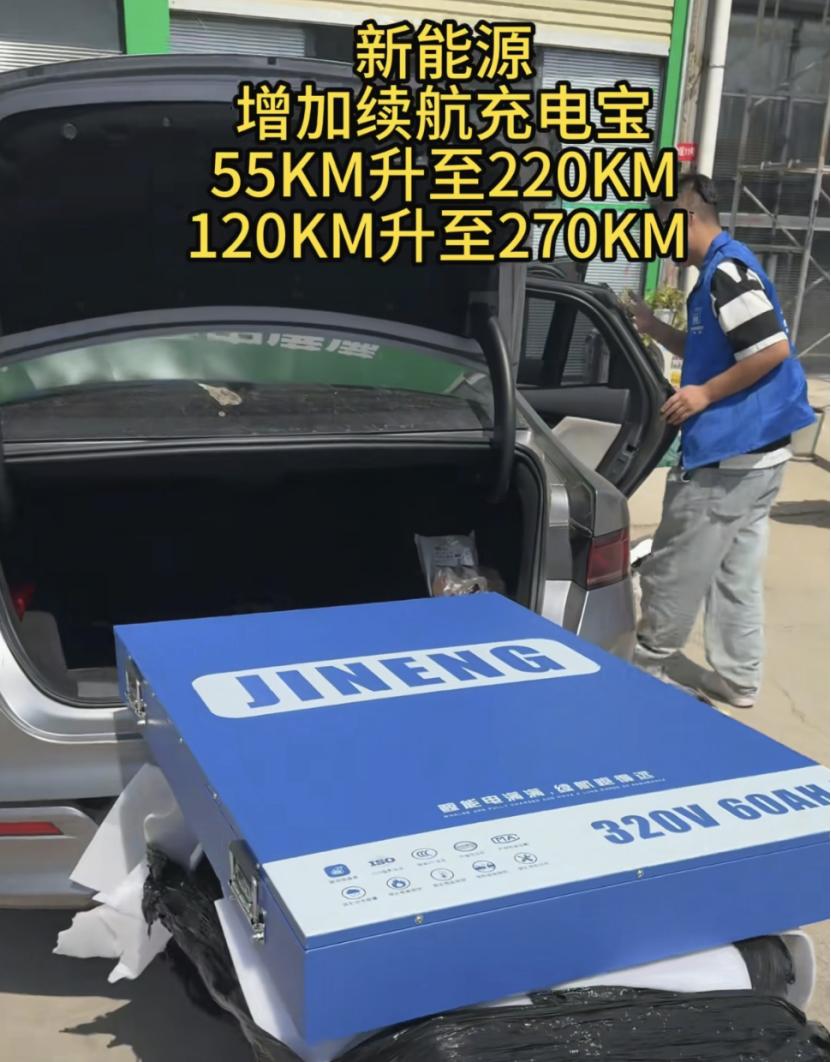
Among them, the first batch of online car - hailing and taxi vehicles put into large - scale operation in 2018 are crossing the official warranty threshold of "8 years or 120,000 kilometers." The high - intensity operation of commercial vehicles, with an average annual mileage of 80,000 to 100,000 kilometers, makes the battery decay rate much faster than that of private cars. The battery of commercial vehicles may decay by 30% to 40% in 3 to 4 years, and the battery health of some vehicles may even drop below 60%. For operating drivers, the overall condition of the vehicle can still be used, but the insufficient range directly affects the ability to receive orders and income levels.
Private car owners also have the demand for battery modification. In the past two years, more and more long - range pure - electric extended - range vehicles, hybrid vehicles, and pure - electric vehicles (with a range of over 600 kilometers) have been launched one after another, and the prices are becoming more affordable. This puts some early car owners who paid a high price in a somewhat unfair situation: they spent more money at that time but did not get a long - enough driving range. Owners of some entry - level pure - electric vehicles (with a range of about 300 kilometers) and hybrid vehicle owners have also joined the ranks of modifiers.
Another factor that leads car owners to choose private modification channels is the high cost of official maintenance channels. The 20th Auto Parts - to - Whole Ratio Research Report released by the China Insurance Research Institute of Automobile Technology shows that the average single - part ratio of power batteries for 70 pure - electric vehicle models is 49.59%, which is at a high level. This figure means that the price of an original battery accounts for nearly half of the vehicle's selling price.
In contrast, the private modification market seems "very attractive" just from the quoted price. Cheshi Ruijian learned from multiple merchants that the unit price of adding batteries to common vehicle models is currently about 500 to 800 yuan per kWh, depending on the battery cells used. You can choose battery cells from CATL, EVE Energy, Hive Energy, etc. The total cost of a conventional 20 - kWh battery pack installation is about 15,000 yuan, including wiring harnesses, other accessories, and installation. It can increase the driving range by more than 100 kilometers. The modification plan basically involves installing the battery in the trunk, which will take up a certain amount of trunk space.
In terms of short - term expenditure, private modification does reduce the operating costs of car owners. However, from the perspective of subsequent consequences, this "cost - saving" is likely just a superficial phenomenon - because it avoids a fundamental question: Who will be responsible for the safety risks after modification?
Multiple risks of privately modified batteries and co - governance of industry supervision
Privately modifying batteries seems to solve the range problem at a low cost, but in fact, it brings risks to car owners in three aspects: legal, safety, and rights. At the same time, regulatory authorities and the industry are promoting governance work from multiple dimensions.
From a legal perspective, privately modifying batteries is a clear illegal act. Article 16 of the Road Traffic Safety Law of the People's Republic of China stipulates that no unit or individual may assemble a motor vehicle or change the registered structure, construction, or characteristics of a motor vehicle without permission. When a vehicle is registered and licensed, the battery capacity, weight, and layout are all registered technical parameters. If a car owner privately installs a battery pack, whether in the trunk or on the chassis, it changes the original structure and technical parameters of the vehicle, which violates the above - mentioned legal provisions.
In addition, safety risks are the most prominent hidden danger of privately modified batteries. The original battery pack has a complete BMS battery management system and thermal management system. The consistency of the battery cells has been strictly matched, and the shell structure has also undergone collision safety tests. It is difficult for a privately installed battery pack to meet the safety standards of the original factory. If the installed battery is an independent pack, there will be a problem of how the two BMS systems work together. If it is directly integrated into the original vehicle battery, there is no guarantee for the connection method and matching degree. The mismatch of the thermal management system can easily lead to thermal runaway and fire accidents.
The quality of battery cells is also an invisible "trap." Most merchants claim that they use brand - new battery cells from CATL and EVE Energy, but ordinary car owners have no way to verify the authenticity. Industry insiders point out that battery packs from non - regular channels are likely to contain B - grade defective cells, C - grade inventory cells, or even second - hand cells disassembled from waste batteries. Mixing cells with different production dates and different charge - discharge times together cannot guarantee consistency. After using for a period of time, the decay problem is likely to occur again, and even safety accidents may be triggered.
At the same time, since privately installing a battery belongs to the clear category of illegal modification, once an accident occurs, commercial insurance basically will not pay compensation. The compulsory traffic insurance only compensates for third - party losses and will then recover the compensation from the car owner. All losses related to the vehicle's own damage, personal casualties, and third - party property may need to be fully borne by the car owner.
In response to these problems, the regulatory authorities have issued a number of policies, and the governance is mainly promoted in three directions.
First, open up maintenance technical information. The Interim Measures for the Recycling and Comprehensive Utilization of Used Power Batteries for New Energy Vehicles, which came into effect on April 1, 2026, requires car manufacturers to open up battery technical information to compliant third - party maintenance enterprises. If car owners choose qualified and regular third - party institutions to maintain their batteries, it will not affect the original three - electric warranty. This policy breaks the car manufacturers' monopoly on maintenance technology, helps reduce maintenance costs, and gives car owners a more affordable and regular choice.
Second, strengthen annual inspection screening. The national standard, Inspection Regulations for the Operational Safety Performance of New Energy Vehicles, which was officially implemented on March 1, 2025, for the first time included power batteries, drive motors, and electronic control systems in the mandatory inspection items of the annual inspection. The annual inspection equipment will read parameters such as the battery's temperature, voltage difference, and insulation resistance. Privately modified batteries can hardly pass the inspection.
Third, establish a full - life - cycle traceability system for batteries to block the circulation of inferior battery cells from the source. The national standard, Coding Rules for Lithium - Ion Batteries, which came into effect on November 1, 2025, assigns a unique identity code to each newly produced battery, achieving full - life - cycle traceability with "one code for one battery." With this coding system, it is difficult for B - grade cells and disassembled cells to pretend to be brand - new genuine products and flow into the modification market.
The emergence of the gray industrial chain of privately modified batteries is a phenomenon in the development of the new energy vehicle industry to the stock stage. Its root lies in the gap between the demand for battery decay and the supply of regular maintenance, and it also reflects the economic difficulties of car owners under the high parts - to - whole ratio. From the perspective of governance direction, simultaneously promoting the opening of maintenance technology, the cultivation of the third - party market, the construction of the battery traceability system, and the annual inspection screening mechanism, and at the same time guiding battery manufacturers to directly participate in after - market services can gradually narrow the supply - demand gap. As relevant policies are implemented and the market system is improved, regular and affordable battery maintenance services will become more and more popular, and the motivation for car owners to choose private modification will also weaken accordingly. This process takes time, but the overall direction is clear.