Humanoid robots go global: from "performers" to "workers"
On June 11th local time, the 2026 FIFA World Cup officially kicked off.
This World Cup not only features the largest - ever lineup of 48 participating teams but also serves as the largest real - world test field for artificial intelligence and robotics technology in the history of human sports. FIFA officials have clearly stated that the Atlas humanoid robots and Spot quadruped robot dogs developed by Boston Dynamics will be deployed for practical tasks at multiple World Cup stadiums, including event operation assistance, fan interaction, and security patrols.
The first batch of customized Boston Dynamics Spot robots has been stationed at three core venues: the Dallas International Broadcasting Center, New York Stadium, and New Jersey Stadium, to perform autonomous patrols and real - time venue monitoring tasks.
Robots transforming into "workers" has become a new trend in the humanoid robot field in 2026. In fact, not only overseas companies but also domestic robots have appeared in the loading and unloading areas of Tokyo Haneda Airport to "handle goods", tightened screws on the production lines of Texas Instruments' US factories, and made coffee in foreign supermarkets.
Actually, traditional industrial robots serving humans have been developed for decades, but the global annual installation volume still hovers around 500,000 units. It's not that the robotic arms (hands) are not mature enough; rather, traditional automation is too heavy, too expensive, and lacks flexibility. For the flexible operations truly scattered in the "capillaries" of factories, such as flexible sorting, complex assembly, and intelligent quality inspection, robotic arms (hands) can hardly complete them fully autonomously and still rely heavily on manual labor.
These processes seem simple, but it's difficult for traditional automation systems to cover them at a low cost. The increasingly mature AI technology and embodied intelligence technology have largely solved the adaptation problems in various scenarios.
So, in 2026, we can see that more and more humanoid robots are experiencing a transformation from "performers" on the stage to "workers" in the factory.
The "Qualitative Change" Behind the Data
Customs data provides the most direct evidence.
In the first four months of 2026, China exported a total of 8.145 million various types of robots, with a value of 15.79 billion yuan. Both the export scale and trade volume have reached record highs, and the products are sold to more than 150 countries and regions around the world.
The speed of humanoid robots going overseas is even more astonishing. In the first quarter of 2026, China's humanoid robot exports increased by 210% year - on - year, and Europe, Southeast Asia, and the Middle East have become the main markets. Morgan Stanley predicts that China's humanoid robot sales will double in 2026, reaching 28,000 units.
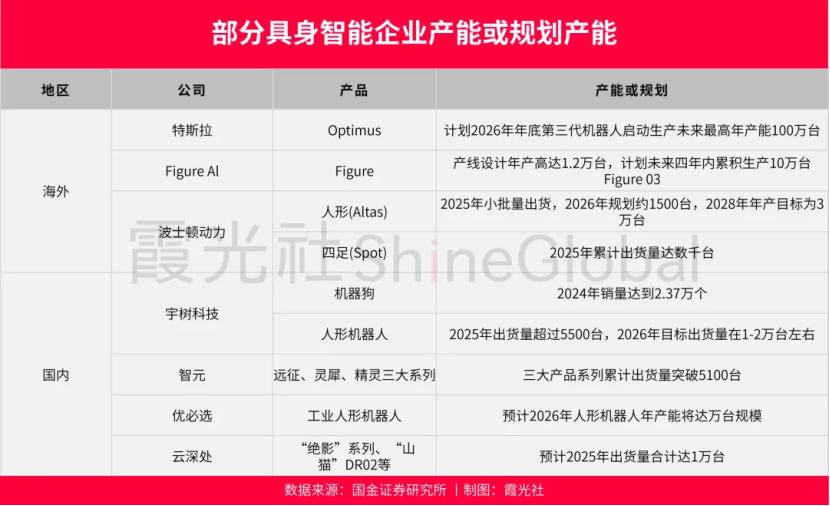
Judging from the mass - production plans announced by several domestic companies, this year is also a crucial point for capacity and shipment.
Unitree Technology plans to ship 10,000 - 20,000 units in 2026; Zhipu Robotics plans to achieve a production capacity of 10,000 units in 2026. If the delivery goes smoothly, the revenue is expected to double; the total order amount of Ubtech's humanoid robots in 2025 was nearly 1.4 billion yuan, and the production capacity will reach the scale of 10,000 units in 2026; Deep Robotics expects the robot shipment to exceed 10,000 units in 2025 and will further increase the production capacity in 2026.
Meanwhile, the smooth arrival of financing has further accelerated the speed of production and implementation.
Let's first look at the financing side. According to data statistics, in the first quarter of 2026, there were more than 100 financing events in the entire domestic humanoid robot industry chain. The highest single - financing amount reached 2.5 billion yuan, and there were a total of 15 large - scale financings of 1 billion yuan and above.
On the other hand, since January, more than 20 embodied intelligence companies have clearly announced their listing plans. In addition to Unitree Technology, which has passed the review, the listing guidance filings of Leju Robotics, Fourier Intelligence, and Deep Robotics have been accepted. Zhipu Robotics, Galaxy General, Zhongqing Robotics, Xinghaitu, and Songyan Power have completed the shareholding reform.
Cao Wei, a partner at BlueRun Ventures, believes that the embodied intelligence industry is currently in the tail stage of a typical expansion period. Once the leading enterprises complete their listings, a clear valuation benchmark system will be formed in the secondary market, which will bring significant valuation pressure to second - and third - tier enterprises and further accelerate the differentiation of the industry pattern.
From the Stage to the Factory
If the data represents a quantitative change, then the evolution of the implementation scenarios is the real qualitative change.
Ubtech is the most typical example of this transformation.
According to Ubtech's annual report, its revenue in Hong Kong and overseas in 2025 was 475 million yuan, and its products have entered more than 50 countries and regions. Compared with "selling hardware first", Ubtech seems to be establishing "overseas recognition" first and then gradually expanding. Its Walker C served at the China Pavilion of the Osaka World Expo and was deployed in public scenarios such as Paris Charles de Gaulle Airport, which in essence belongs to "entering the overseas public awareness first".
After establishing recognition, Ubtech's products have gradually entered the "worker role". Texas Instruments, a global semiconductor giant, has purchased Ubtech's humanoid robot Walker S2 and deployed it on its semiconductor production line for debugging and application. ROSSMANN, one of Europe's largest chain drugstore retailers, has purchased the first batch of dozens of Ubtech full - size humanoid robots and deployed them in its retail stores and logistics centers. Recently, Hitachi, a Japanese electrical machinery manufacturing giant, has also introduced Ubtech's Walker S2, mainly for elevator manufacturing and assembly scenarios.
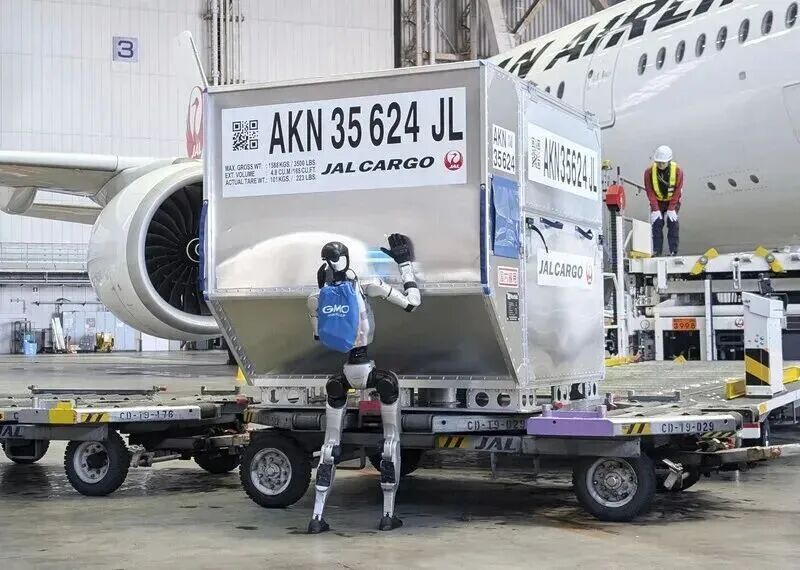
Caption: Unitree G1 robot
Unitree Technology's path is similar to Ubtech's, focusing on both public scenarios like airports and industrial implementation. In May this year, Unitree's G1 robot, wearing a blue vest with the GMO logo, appeared at Tokyo Haneda Airport as the latest "ground crew" employee, mainly responsible for luggage handling, cargo transfer, and conveyor belt coordination. In April, Warsaw, Poland, officially introduced the Unitree G1 robot and named it "Edward" to help drive away the wild boars that are rampant on the streets of Warsaw. Even earlier, in 2023, Unitree Technology established an exclusive strategic partnership with Saudi local enterprise QSS, and its industrial quadruped robot B2 was applied to the relevant facilities of Abu Dhabi National Oil Company (ADNOC) to be responsible for inspections and gas detections in high - temperature and high - risk environments.
Techman Robot has emerged as a rising star in the collaborative field. Its 2025 performance report shows that its annual revenue increased by 31.7% year - on - year, and the shipment volume of its collaborative robots ranked first in the world. It serves more than 80 Fortune Global 500 companies such as BYD, CATL, Mercedes - Benz, and Samsung, and its business covers 15 major industries and more than 200 specific scenarios such as new energy vehicles, 3C electronics, semiconductors, medical surgery, and new retail.
In the commercial service field, coffee robots equipped with Techman Robot's Nova series collaborative robotic arms have been operating stably in more than 20 places such as airports, high - speed railway stations, and supermarkets, setting a record of hundreds of thousands of cups without failures. Techman robots can be seen in Coca - Cola's unmanned beverage stations along the Mediterranean coast, the mobile coffee stations in the UAE that can serve a cup in 45 seconds, and the unmanned food trucks in Singaporean malls.
Geek+ Technology, also a listed company, has set its sights on Europe. In 2025, Geek+ Technology and SEC Group jointly built an intelligent warehouse project for a leading electrical distributor in the UK; together with AMH Material Handling, it successfully put into operation an intelligent warehousing center in the UK for Nisbets, a leading European catering equipment company; through cooperation with Watsons Group, it deployed a large - scale shelf - to - person robot solution in the Benelux region. At the end of the year, it made more intensive efforts, and its robot solutions were successively implemented in the intelligent warehouse of Coolshop, a Nordic e - commerce giant in Denmark, and the logistics center of Arvato, a global logistics service provider in Poland.
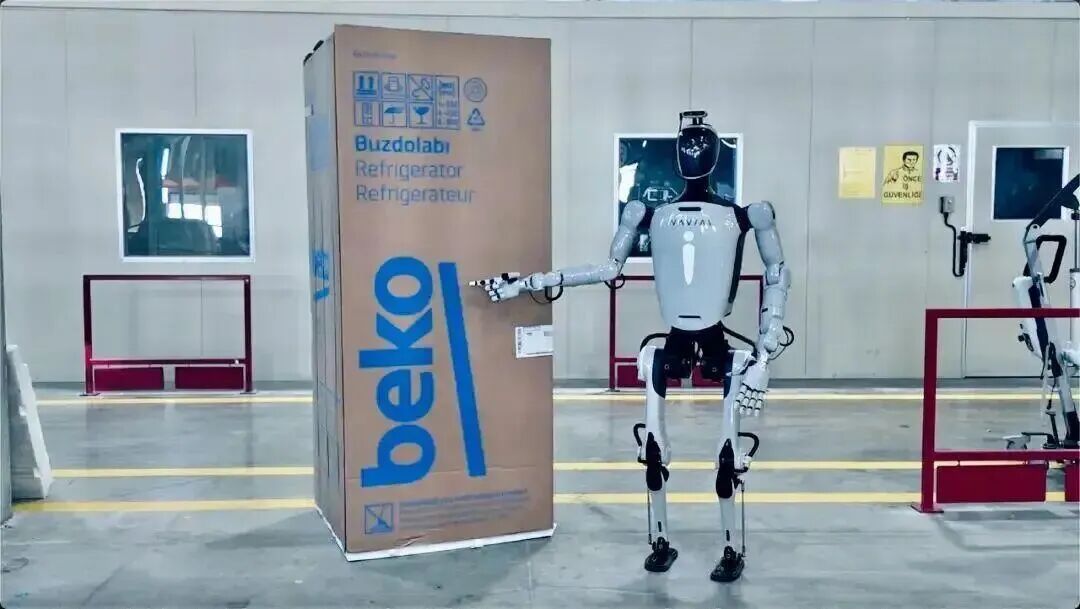
Caption: Navigator 2 NAVIAI
In addition to the above - mentioned enterprises, "Navigator 2 NAVIAI" of the Zhejiang Humanoid Robot Innovation Center has entered the production base of BEKO, a European home appliance giant in Turkey. Zhipu Robotics has cooperated with Minth Group, an automobile parts manufacturer. Their common goal is to enter the supply chains of automobile companies such as Mercedes - Benz and BMW and directly work in factories. Wujie Power has chosen to cooperate with ZF LIFETEC, a global automotive parts giant, focusing on the precise assembly of automotive passive safety components and the operation of soft objects. Pasini has cooperated with Neuromeka, a listed Korean robot company, to launch a "tactile + vision" dual - mode dexterous hand, which can handle delicate operations such as 3C electronics assembly and logistics sorting. Leju's humanoid robots have entered German automobile parts factories, with each unit working more than 12 hours a day on average, helping customers reduce the work - related injury rate by 60%.
These cases paint a clear picture. Chinese humanoid robots are "breaking out" comprehensively - from airports to factories, from logistics to manufacturing, from services to production, and are embedding themselves in every link of the global industrial chain as "workers".
Zhang Zhengtao, a researcher at the Institute of Automation of the Chinese Academy of Sciences, has made a clear judgment on the commercial implementation scenarios of humanoid robots in the next three years. He believes that there will be a parallel development pattern from industry to households, but relatively speaking, industrial manufacturing and warehousing logistics are easier to implement.
For a long time in the past, the humanoid robot industry seemed to be distracted by various "show - off skills". Somersaulting, dancing, and running marathons can indeed easily attract traffic. However, what really determines the industry's dividing line has never been the video playback volume but who can enter real scenarios, especially industrial scenarios, first.
"Being able to screw a screw ten thousand times without error is more important than being able to perform a hundred kinds of actions. The core requirements of industrial scenarios for hardware are load - carrying capacity, precision, and battery life. Algorithms value generalization operation and visual servoing ability more; warehousing logistics emphasizes battery life, movement stability, and navigation and obstacle - avoidance ability, requiring long - term autonomous operation and adaptation to dynamic environments." Zhang Zhengtao said.
Actually, overseas enterprises have always had a higher demand for robots than domestic ones. According to data from the International Federation of Robotics (IFR), as of 2023, the countries with the highest density of manufacturing robots in the world are South Korea (1,012 units) and Singapore (770 units), followed by China, the European Union, and the United States.
From this data, we can see that countries such as South Korea, Singapore, and the European Union have a greater demand for robot labor and more mature deployment. At the same time, with the intensification of the global aging population, more and more countries and enterprises have an increasing demand for robots.
However, it should be noted that the highest - quality manufacturing implementation scenarios, such as those in the automotive, aviation, and digital home appliance industries, have already been targeted by their own giants. Manufacturing giants such as Tesla, Toyota, BYD, XPeng, and Xiaomi have all developed their own robots. Even Foxconn's self - developed humanoid robots have been deployed in its Houston factory. The closed - loop ecosystems of these giants in terms of "scenario - data - algorithm" are more imaginative.
This means that the largest and most in - demand industrial application scenarios may close their doors to "outsiders" like Unitree.
On the other hand, economy and reliability are still one of the bottlenecks for large - scale implementation.
Data from the GGII shows that in the first quarter of 2026, the unit cost of humanoid robots has dropped to 100,000 yuan, but this is only the purchase price of the basic model. When the robots are implemented in specific process segments, their total cost of ownership (including operation and maintenance) will double or even more compared to the purchase price. The actual total cost of a robot that can "work" in a factory may be close to 500,000 - 600,000 yuan.
Calculated based on a robot costing 500,000 yuan and replacing a worker with an annual salary of 100,000 yuan, it will take five years to recover the cost.
The "Goldman Sachs Research Report on Chinese Robot Companies" introduces the long - cycle and complexity of a typical implementation process. Generally, POC verification usually takes 3 - 6 months, with an average of 2 to 3 rounds; then it enters the small - batch testing phase, and each factory order usually does not exceed 50 units; after about a 12 - month verification period; at the pilot deployment stage, the order scale begins to approach 50 - 100 units per customer.
This means that it often takes two years or even longer from the first time a customer seriously looks at the solution to the actual formation of a stable deployment.
Most industry players believe that the window for large - scale deployment will be from 2027 to 2029. So, the current implementation news we see is more like a "showroom", with a greater demonstration effect than real monetization ability.
A New Round of Elimination Competition Begins
The differences in implementation scenarios are behind the differences in technical routes, but they will ultimately be reflected in business models.
Currently, there are mainly three monetization paths for humanoid robot companies.
The first path is the "hardware sales model". Represented by Unitree Technology, they focus on single - unit sales, with prices ranging from tens of thousands to hundreds of thousands of yuan. Their core competitiveness comes from the extreme control of supply - chain costs. The advantage of this approach is that the funds can be recovered quickly and it does not rely on a few large customers; however, the disadvantages are also obvious. It must rely on the shipment volume to support the overall revenue, and the establishment and maintenance of the after - sales system is a long - term investment.
However, Unitree has verified the feasibility of this path, with a gross profit margin of 60% and a non - recurring net profit of 600 million yuan in 2025, which is a rare profitable example in the industry.
The second path is the "overall solution model". Ubtech, Techman Robot, and Zhongqing Intelligence are the main players in this camp. Their target customers are concentrated in automobile manufacturers and large - scale manufacturing enterprises. The order amounts are large, but the delivery cycle is long, the degree of customization is high, and the gross profit margin fluctuates greatly.
In other words