Google CEO Booed Again at Stanford, Forced to Avoid Mentioning AI
In the U.S. graduation season of 2026, talking about AI has become a dangerous thing.
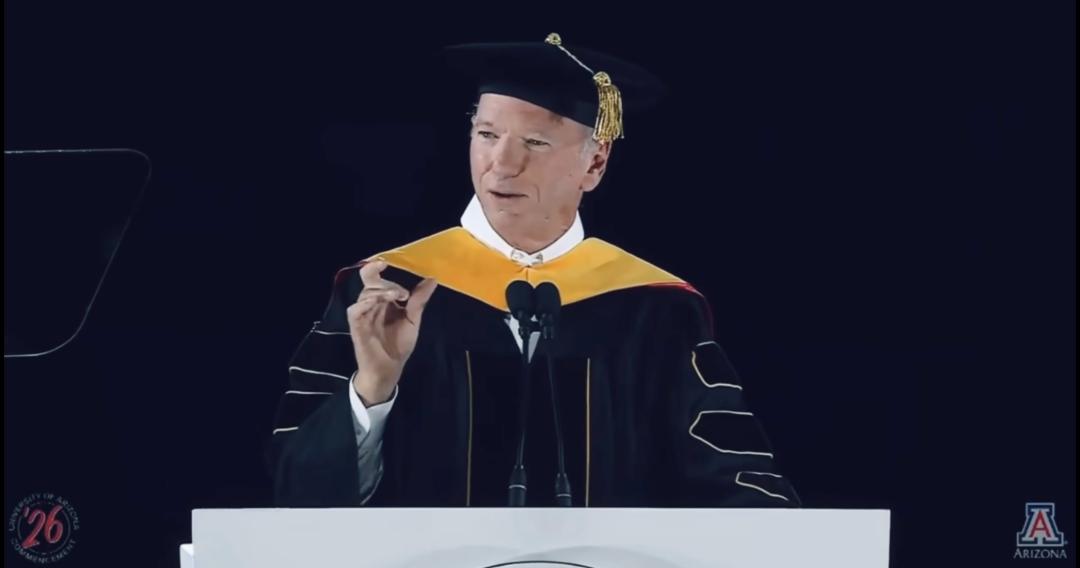
Eric Schmidt, the former CEO of Google, stood on the podium at the University of Arizona and said to tens of thousands of graduates, "AI will touch everything."
Before his voice faded, boos rang out one after another. Schmidt's facial expression froze at that moment.
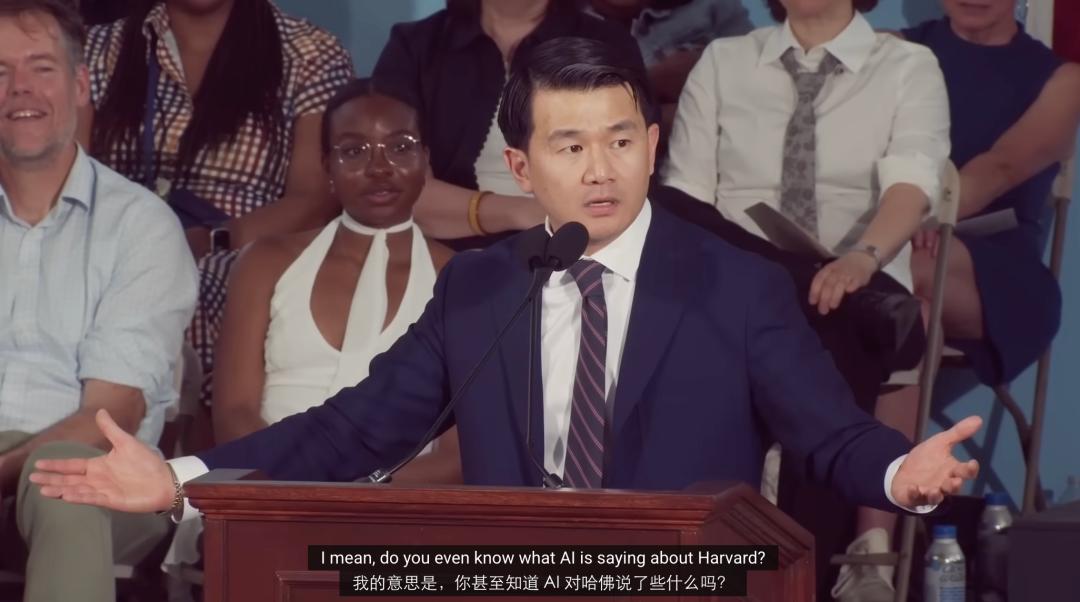
At the Harvard Commencement, Ronny Chieng, the host of The Daily Show and a stand-up comedian, shouted "F**k AI" three times to the whole audience, and there was thunderous applause.
He even told the graduates, "The mission of your generation is to eliminate AI and kill it."
There were cheers from the audience below.
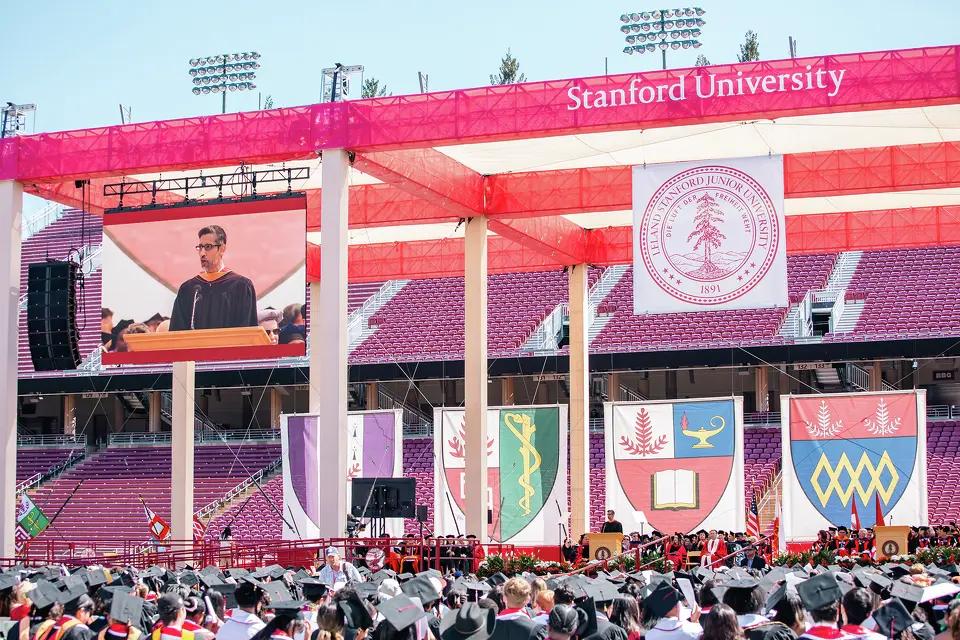
So on June 14th, when Sundar Pichai stepped onto the podium at the Stanford Commencement, everyone stared at him -
The head of Google, the leader of the AI revolution, standing in front of the graduates of the top school in Silicon Valley, how could he handle this hot potato?
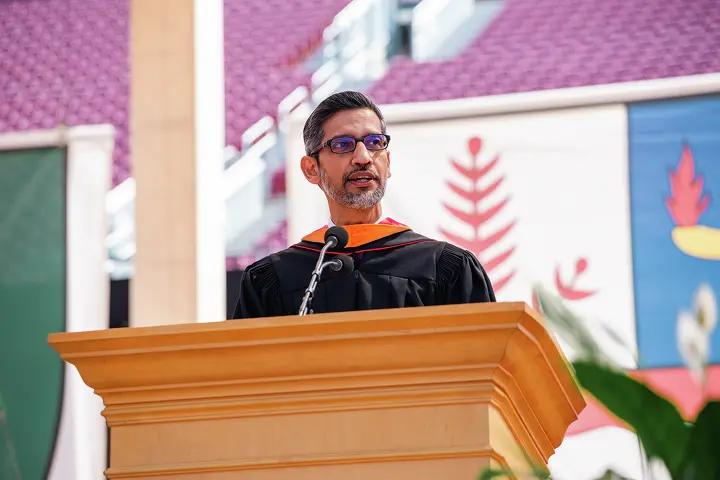
As a result, he chose not to mention AI.
Even so, Pichai's speech was still booed.
Everyone Be Quiet
Throughout the speech, the only time Pichai mentioned AI was when he made a joke at the beginning.
He said, "Everyone has been giving me advice on what to say today. Actually, everyone gives the same advice - what not to say."
People think it's especially difficult for me. After all, AI are the last two letters of my surname (Pichai).
The audience laughed. Then he completely put aside the word "AI".
He talked all about his own life. In the early 1990s, when he first came to California, his father spent a whole year's salary to buy him a plane ticket.
He thought California would be full of greenery, but outside the car window, it was all brown and yellow. He blurted out that it was a bit "brown", but unexpectedly, the wife of the host family gently corrected him and said, "We call this 'golden'."
Pichai used this story to talk about a word: Choose to be optimistic.
"I saw brown, but she saw gold. This small shift in perspective changed the way I see the world."
It sounds like a cliche.
But every graduate understands what he is avoiding: I know your fear of AI, but I'm not going to talk about it directly.
Why not talk about it?
42% of Young People Aren't Convinced
The latest Axios-Harris poll shows that about 42% of Generation Z in the United States believe that AI will harm the employment and wages of their generation - this proportion is much higher than the 33% of millennials and 37% of baby boomers.
The job - hunting data is even more disheartening: Among Americans aged 15 to 34, only 43% think it's a good time to look for a job, while for those over 55, this figure is 64%, a full 21 percentage points difference.
This is not unfounded anxiety.
A large - scale survey (Anthropic Public Record) covering nearly 52,000 Americans recently released by Anthropic painted a clearer picture of the national sentiment: Unemployment caused by AI is the most common fear across the United States, and 64% of people are worried about this.
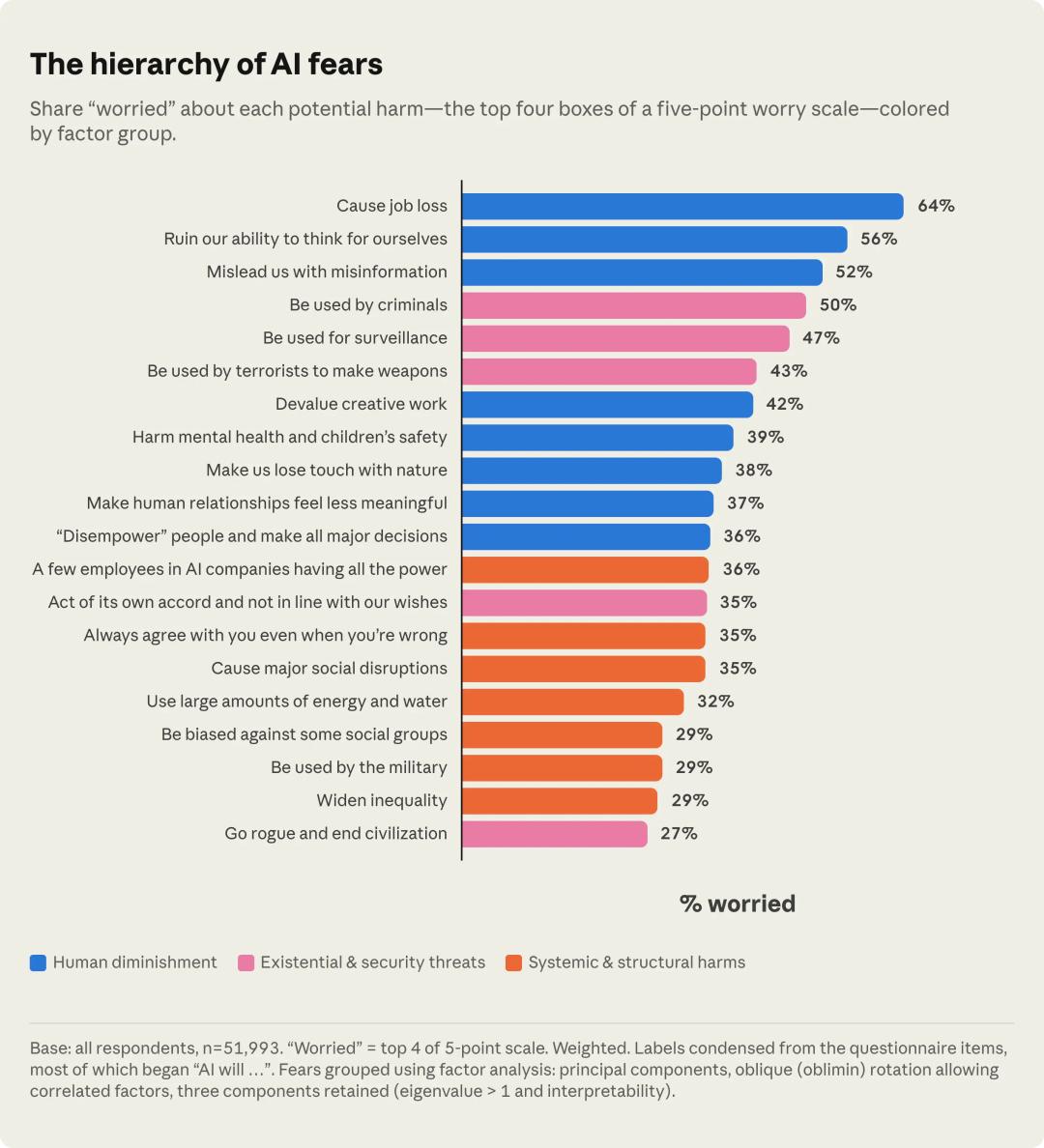
Interestingly, this fear is not divided by traditional political parties, educational backgrounds, or regions.
Both Democrats (67%) and Republicans (62%) are afraid of losing their jobs; families with children (59%) and those without children (66%) are also afraid.
Even people with higher education are more worried - the proportion of post - graduate degree holders who are worried is nearly 10 percentage points higher than that of high - school degree holders. The reason is easy to understand: The higher the education level, the greater the overlap between the work content and AI capabilities.
Putting all these together, it's not hard to understand the boos at the graduation ceremony - students from top universities know better than anyone what AI can do, and precisely because they know, they are angry.
The Narrative of "Technological Victory" Begins to Fail
Not everyone was booed.
Jensen Huang, the CEO of NVIDIA, also talked a lot about AI at Carnegie Mellon University, saying that it will change every industry, but no one booed him.
He also left a widely - spread gold sentence: "AI probably won't replace you, but someone who is better at using AI than you will."
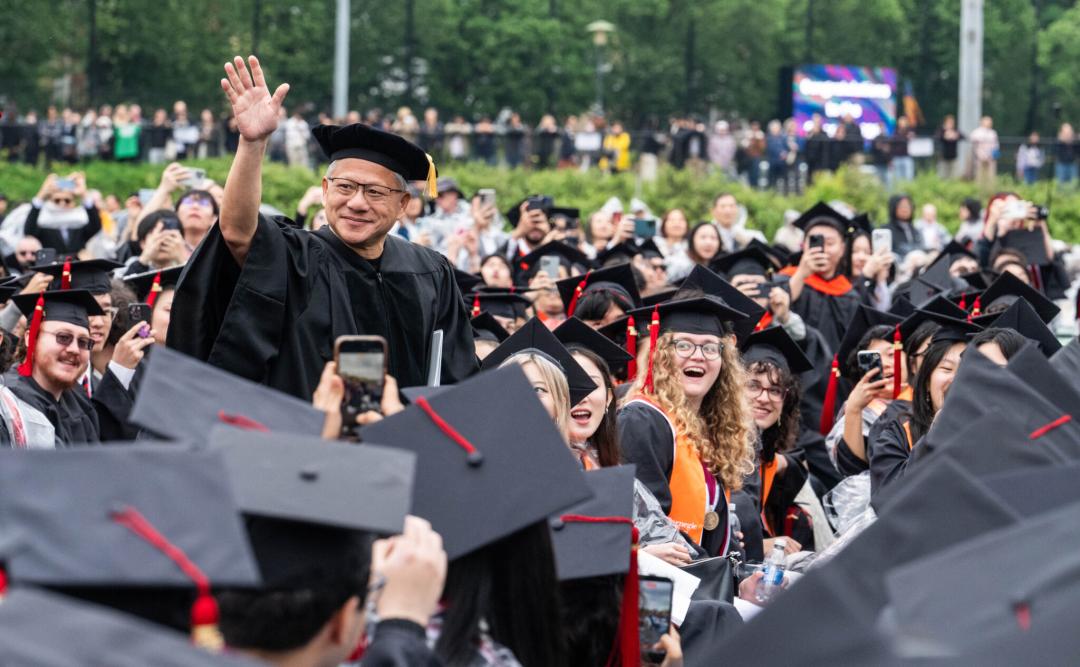
When talking about AI, why did Jensen Huang pass safely while Schmidt was in an awkward situation?
The difference lies not in AI itself, but in attitude.
Jensen Huang talked about "how you can make good use of it", giving the choice back to the young people; Schmidt and those booed executives talked about "it's irresistible, you have to get on board", putting the young people in a position to be crushed.
The former is empowering, the latter is just informing.
This is the real highlight of Pichai's "silent speech" - The "technological victory" narrative of AI companies in front of young people begins to fail.
In the past few years, Silicon Valley has been good at selling visions - the next industrial revolution, the era of abundance, and rocket ships.
This kind of rhetoric is invincible in front of investors and gets thunderous applause at press conferences.
But when it comes to a group of graduates about to enter the job market, it becomes an offense.
When you tell investors "this is a once - in - a - century opportunity", investors will invest money after hearing it. When you say the same thing to graduates, what graduates hear is "my job is the thing to be disrupted".
Silence Itself Is the Answer
Pichai's shrewdness lies in that he realized this earlier than anyone else.
When he was asked about the strategy to deal with boos during the recording of The New York Times podcast "Hard Fork",
he frankly said that these graduates "will not only become the driving force for AI progress but also bear the impact brought by AI."
But the problem is that he has to face a group of young people who have just received their diplomas and are still worried about job offers - about 200 students got up and left when he took the stage.
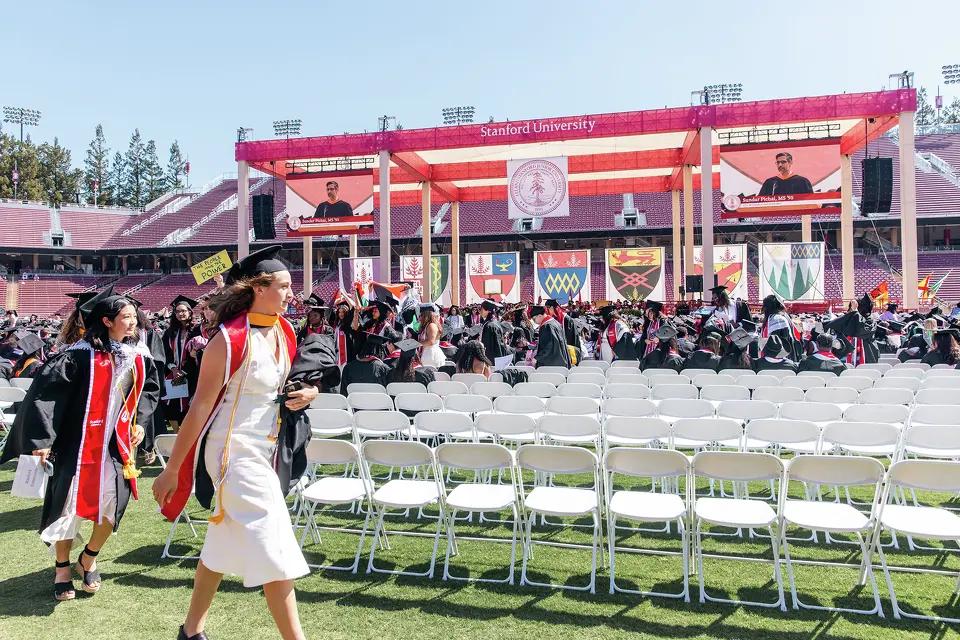
Perhaps, Pichai's silence itself is a kind of answer.
References:
https://www.businessinsider.com/google - ceo - sundar - pichai - stanford - graduation - speech - ai - 2026 - 6
https://www.sfgate.com/tech/article/sundar - pichai - stanford - commencement - 22304888.php
https://www.theguardian.com/us - news/2026/may/18/eric - schmidt - ai - university - commencement - speech - booed
https://www.axios.com/2026/05/19/college - graduates - ai - commencement - speech
This article is from the WeChat official account “New Intelligence Yuan”. Author: ASI Apocalypse. Republished by 36Kr with authorization.