Nearly one million units sold in a year, the once outdated business has made a strong comeback, and young people are falling in love with "a single thread" all over again.

Since the beginning of this year, a digital product that had long faded from the mainstream - wired headphones - has suddenly appeared frequently on the ears and collars of young people, even becoming the finishing touch of their overall outfits.
In the past few years, the trend labels in the headphone industry have been wireless, noise cancellation, and intelligence. Looking at the entire category, wireless headphones have been the main battlefield for major mobile phone manufacturers and new brands. Over-ear headphones have made a comeback on the streets thanks to their ambient atmosphere and noise cancellation capabilities. Bone conduction headphones have entered the sports scene, and AI headphones are trying to turn the ears into a new intelligent entrance.
However, in recent months, the unexpected growth for many merchants has come from an old category that doesn't seem very advanced.
Data from research institution Circana shows that after five consecutive years of sales decline, wired headphones rebounded in 2025. In the first six weeks of 2026, sales increased by 20% year-on-year.
Tmall platform data shows that in April this year, searches for wired headphones increased by 65% year-on-year, with a 104% year-on-year increase in searches in the highest week. In May, searches continued to increase by 14% year-on-year, with a 17% year-on-year increase in the most recent week.
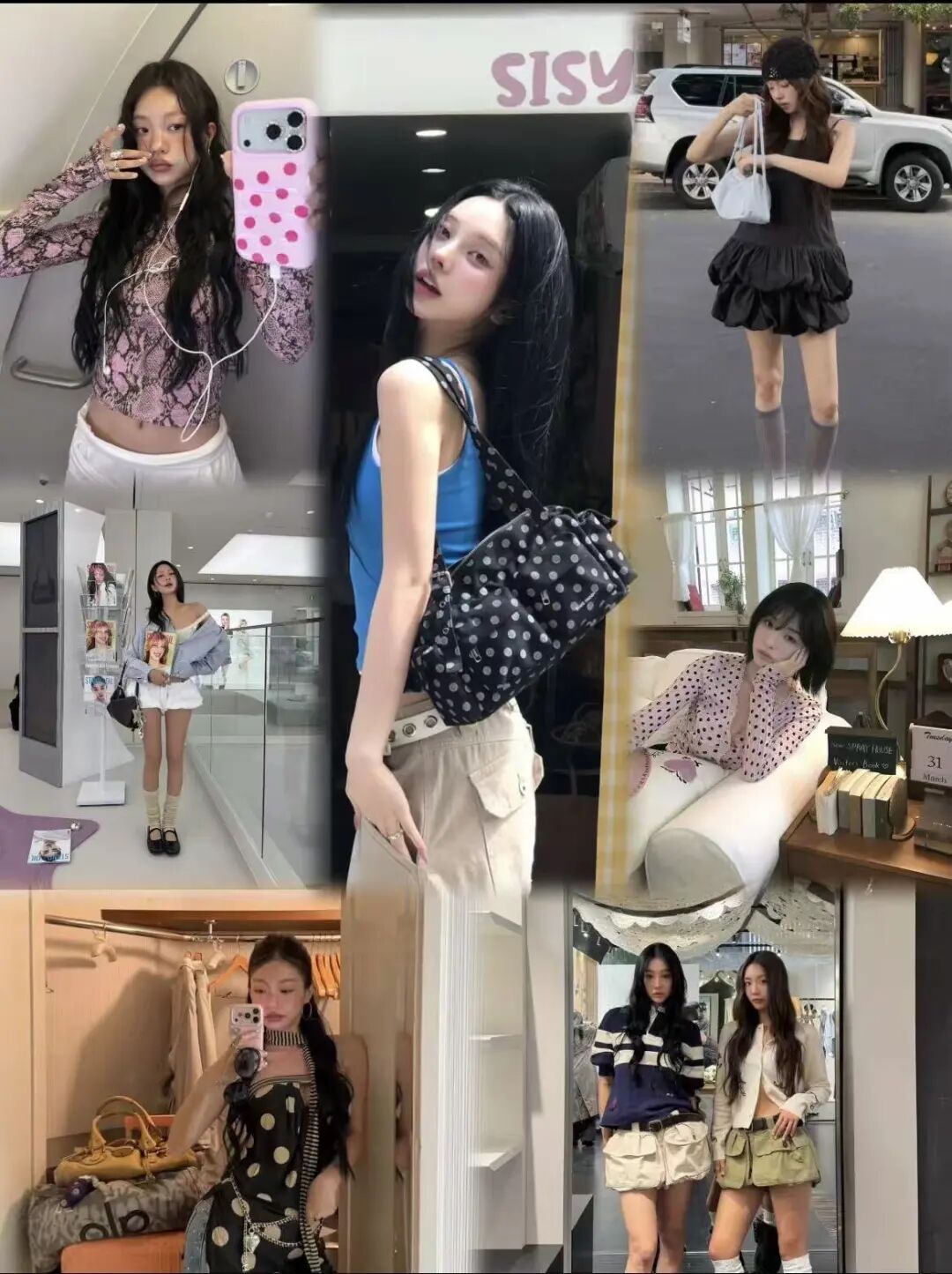
Image from Xiaohongshu
Young people have dug out wired headphones from the depths of their schoolbags and the corners of their drawers and paired them with new looks. Some trendy boutiques and general stores have also hung rows of wired headphones in prominent positions at the front desk, selling them alongside socks, canvas bags, and sunglasses. A clerk at a lifestyle collection store in Tianmuli, Hangzhou, told Tianxia Wangshang that they tried to stock a batch of colored wired headphones in mid-March this year, with unit prices ranging from 49 to 99 yuan. Originally, they were just used as decorations for the store display, but they sold more than 100 pairs in two weeks.
The popularity of wired headphones doesn't mean that young people have abandoned wireless headphones. More accurately, it's like a sudden resurgence in the consumer market: when technology becomes more advanced and connections become more seamless, young people are starting to need some tangible and noticeable small items.
A small business driven by aesthetics, price, and the supply chain has seen a surge in sales.
From old items in the drawer to fashionable accessories, why do young people fall in love with this wire again?
"The resurgence of wired headphones is not due to technological upgrades but to a shift in usage scenarios," a person in the 3C digital field told Tianxia Wangshang. The renewed popularity of wired headphones was actually first driven by fashion.
The origin of this trend can be traced. Since last year, South Korean girl group members have frequently worn wired headphones at airports and in daily photos. Several members of BLACKPINK were photographed wearing white EarPods with baseball caps and loose sweatshirts, which directly put this white wire on the hot search. Then, domestic fashion bloggers began to produce a large number of wired headphone styling tutorials on Xiaohongshu and Douyin.
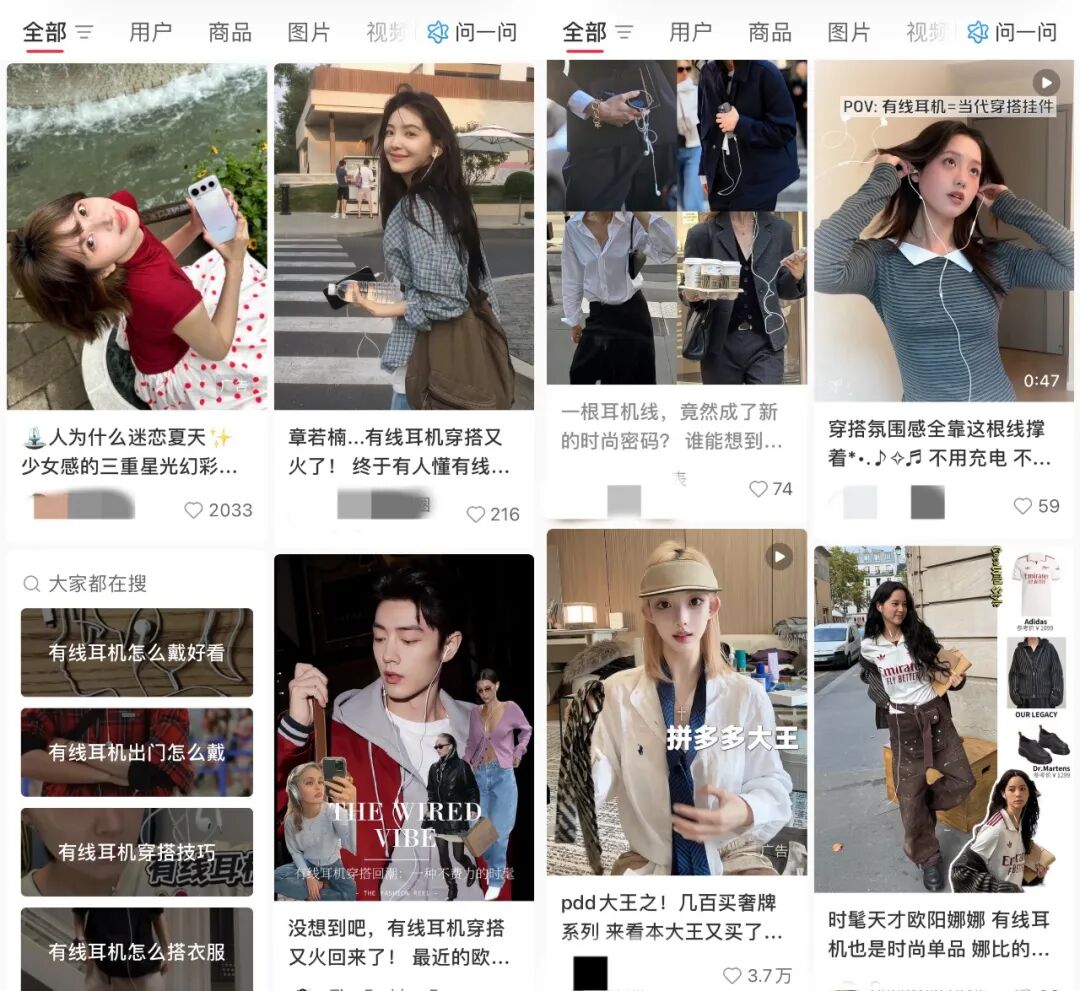
Image from Xiaohongshu
The content trend has changed rapidly. In the past, headphone reviews couldn't avoid discussing noise cancellation and sound quality, but now the highly praised posts are discussing how to let the colored headphone cables hang down to match sweatshirts and jeans. Beyond transmitting sound, wired headphones have regained visual significance.
For many young consumers, the decision-making cost of buying a pair of wired headphones is similar to buying a cup of coffee or an accessory, but it can immediately change the details of a commuting outfit.
"The logic of the category has changed. Wired headphones are now targeting the fashion and daily necessities market, not the digital market, and the demand is actually greater," he said. In his view, this round of purchases is not entirely driven by low-cost white-label products.
Tmall platform data shows that brands such as Apple, Shuiyuanyu, Sony, Huawei, and Sennheiser have all seen a significant increase in the popularity of wired headphones, and the demand is being segmented.
Apple's EarPods, with its classic white wire and perfect millennium symbol attributes, have almost become a standard for retro outfits. Domestic brands like Shuiyuanyu and Xingge, which were only known in the audiophile circle, have had their entry-level wired headphones unexpectedly discovered by fashion bloggers because of their transparent casings, replaceable cables, and affordable prices.
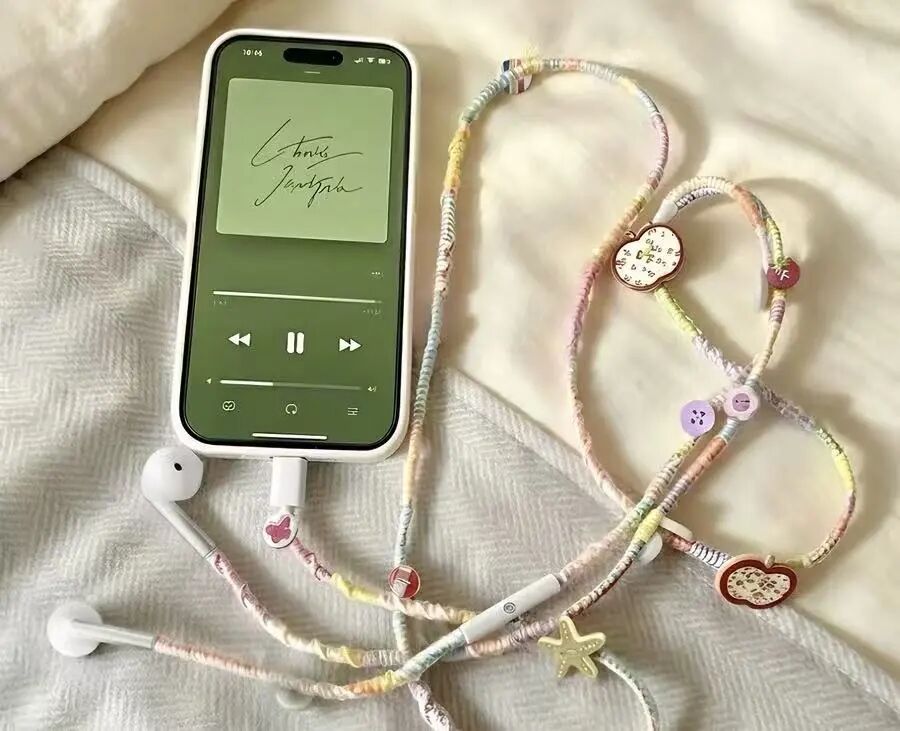
Image from HP's official Tmall store
Accessory brands like UGREEN and Baseus have priced their wired headphones at around 20 to 30 yuan, firmly meeting the rigid demand for daily commuting and video calls. The combination of these demands has driven this wave of popularity.
In addition to using them as fashion accessories, some young people have picked up wired headphones again because they have been frustrated by wireless headphones. Losing a single earbud or finding that the battery is only 5% charged before going out can ruin a whole day's mood.
A consumer told Tianxia Wangshang that they lost two single AirPods and one charging case within a year, and the cost of replacement exceeded 500 yuan.
The mainstream position of wireless headphones has not been shaken, but when these small pain points accumulate over time, some people will naturally lean towards options with lower burdens.
Wired headphones don't need to be charged, don't need to be paired, and don't disconnect. They work as soon as they are plugged in. These features, which were once considered backward, have become a reassuring certainty in the uncertain daily life.
The combination of being an accessory and having a very low cost of trial and error has finally spread this trend to a wider market.
Single product sales exceed 60,000 pieces, and stall merchants seize this "beauty business"
While fashion bloggers were wearing wired headphones as accessories on social platforms, a group of people in the Yiwu International Trade City had already caught the business opportunity in advance.
In mid-May this year, Tianxia Wangshang visited the mobile phone accessory area of the Yiwu International Trade City. The corridors were filled with cartons ready to be shipped. In many stores, several samples of wired headphones were lined up, in colors such as transparent tea, milky green, taro purple, and cherry blossom pink.
"Since the second half of last year, many live-streaming agencies and trendy collection stores from Hangzhou and Guangzhou have come to inquire and purchase. Some even ask for thousands or even tens of thousands of pairs at once, and the demand for colors has also increased," a stall owner who has been in the headphone wholesale business for seven or eight years told us. In the past few years, this category was recognized as a sunset product, and the stall mainly dealt with TWS (true wireless headphones). She kept some samples only to maintain orders from some fixed foreign trade customers in Southeast Asia and Africa. The business was stable but had little growth.
The change started in the second half of last year. Domestic scattered orders gradually increased. By March this year, the monthly domestic order volume exceeded the total of last year. In April, the production schedule was extended until mid-June.
As orders poured in, customers' requirements also changed. In the past, when wholesaling wired headphones, black and white were the mainstream. Color cards such as macarons and bright colors were mainly used for the Middle East and South American markets, and domestic customers rarely asked about them.
Now the situation is reversed. Domestic orders are chasing these colors. For example, mint green, rose pink, and polka-dot colors are big hits this year. Sometimes, when a color is out of stock, customers would rather wait than switch to black or white.

Image from Edifier's official Tmall store
In addition to colors, customers also have new requirements for the specifications of the headphones themselves. In the past, the common model was black and white headphones. Now, most orders are concentrated on semi-transparent casings, frosted cables, braided cables, and colored Type-C interfaces. Domestic customers require new color schemes every quarter, and the factories have to keep up with the new rhythm.
This year, she has opened four new color molds for domestic customers. For one of the light pink gradient models, an additional order was placed less than two weeks after the first batch of 50,000 pieces was shipped. Currently, the annual sales of the wired headphone category have reached nearly one million yuan.
This merchant also admitted that the profit margin of wholesale is thin, relying on high volume. However, the premium space for downstream retail is higher than that of traditional digital channels. The wholesale price of wired headphones is less than 10 yuan, but when they are packaged with a well-designed piece of cardboard at the terminal, the price can be raised to 30 - 50 yuan. Color and packaging are the keys to the deal.
The brand side has also responded quickly.
According to a report by National Business Daily, taking Baseus as an example, from 2025 to early 2026, the demand for Baseus wired headphones was generally stable. In March 2026, sales increased significantly, with a month-on-month increase of over 80% in all channels. Some popular models were even out of stock. This wave of growth was mainly driven by students aged 18 to 24, who use them for learning, daily entertainment, and fashion matching.
In terms of product strategy, Baseus is also re-evaluating its wired headphone product line. Currently, the brand has launched five products, basically covering the mainstream interfaces, forms, and price ranges. In the future, it will also optimize the color design and storage accessories.
It's not just Baseus. Accessory brands such as UGREEN, PISEN, and Edifier have also quickly launched wired headphones.
Tianxia Wangshang contacted a wired headphone seller ranked high on the 1688 platform sales hot list. A merchant said that a Type-C braided cable headphone priced at around 15 yuan in the store has sold more than 60,000 pieces in the past year, and the total annual sales of wired headphones in the store have exceeded 150,000 pieces. Most of the repeat customers are women.
The headphone category has been iterating for a decade, from TWS to AI
How long the popularity will last is a question that everyone can't avoid. In the interviews, some merchants are also taking a wait-and-see attitude towards the sustainability of this wave of market conditions.
In their view, at least half of the current popularity of wired headphones is supported by the mood on social networks. No one knows when the next popular symbol will emerge. Moreover, wired headphones are not high-tech now, and the threshold is lower than that of TWS. Once the demand recedes, the risk of idle production capacity will come faster. Currently, they only dare to accept domestic orders on a cash-and-carry basis and dare not prepare materials in advance.
This caution is not without reason. Four or five years ago, true wireless headphones were the hottest track in consumer electronics.
After Apple launched AirPods in 2016, mobile phone manufacturers, audio brands, and white-label factories all flocked in. By around 2022, there were thousands of well-known TWS models on the market, with prices ranging from "9.9 yuan free shipping" to two or three thousand yuan. The channel profit was squeezed to the limit, and growth became more and more dependent on device replacement rather than new users.
In the later stage of the competition, the market began to look for new growth points. Around 2023, over-ear headphones unexpectedly became popular again. With active noise cancellation, spatial audio, and celebrity street photos, they crossed from functional products to fashion items. Sony, Bose, AirPods Max, Edifier, and Baseus all benefited.

Image from Xiaohongshu
At about the same time, bone conduction and open-back headphones entered the sports scene. Brands like AfterShokz have made bone conduction headphones a standard for running and cycling enthusiasts. They don't block the ear canals, are not easy to fall off during sports, and allow users to hear environmental sounds at the same time, accurately meeting the safety needs of outdoor sports enthusiasts.
Open-back headphones have further broadened this niche track. They don't go into the ears, don't squeeze the ear canals, and cause no burden when worn for a long time, attracting a group of users who are uncomfortable with traditional in-ear headphones. Although the volume of these two categories is not as large as that of TWS and over-ear headphones, their growth rate is remarkable, and they were once the most active growth areas in the entire headphone market.
In the past two years, AI headphones have become a new direction. iFlytek, ByteDance, Samsung, etc. have successively entered the market, trying to redefine headphones as a portable AI entrance. Currently, it is still in the concept stage and the early trial phase.
Behind the rotation of these categories, the pattern is clear: the hotspots in the headphone market at each stage target different scenarios and user groups.
However, in the interviews, Tmall industry insiders and many brand merchants also expressed similar judgments: the current popularity of wired headphones is more of a supplement to the current headphone market and is unlikely to shake the mainstream position of TWS and bone conduction headphones.
In terms of user base and usage scenarios, TWS headphones are still the absolute main force in daily commuting, office, and sports scenarios.
From this perspective, the commercial value of the resurgence of wired headphones lies in the fact that it has found a niche ecological position through being an accessory. It doesn't compete directly with any other category. With its extremely low decision-making cost, visual presence, and retro sentiment, it has captured a market that combines digital and fashion trends. That's why brand merchants are willing to make minimal investments without worrying about making the wrong bet.
As for how long this trend will last, the Yiwu wholesale merchant put it simply: "At least this summer, wired headphones with nice colors won't have any trouble selling. We'll worry about next year when it comes."
(The cover is generated by AI)