Hillhouse has invested in a consumer-grade flexible robot company, aiming to bring "Baymax" from the movie into real families | 36Kr Exclusive
Author | Huang Nan
Editor | Yuan Silai
Yingke learned that SoulX, a consumer-grade flexible robot company, recently completed an angel round of financing worth tens of millions of yuan. The investor is Hillhouse Ventures, and Xiangyang Capital served as the exclusive financial advisor. The funds will be mainly invested in continuous product iteration, technological R & D, and accelerating the establishment of the supply chain and large-scale delivery system. The first robot product, MoYa, will be officially launched in the second half of 2026.
SoulX belongs to Shenzhen Honghuo Intelligent Technology Co., Ltd. The team has long been focused on flexible robot technology and the care of sleep, stress, and family health. The company uses the sleep scenario as an entry point and independently developed the sleep soothing robot MoYa. This product integrates robot technology, neuroscience, and psychology. It adopts a camera - free design and helps users relieve physical and mental stress by simulating hugs.
In the family scenario, the emotional and health care has long faced a fundamental problem in the design of the "human - machine relationship": In scenarios where both physical and mental comfort are needed, in what way should the machine "be present"?
In the past few years, different products have provided answers from multiple dimensions. Smart mattresses and white noise machines are good at improving the environment and physical comfort; wearable devices are proficient in continuous monitoring of sleep data; plush toys have a natural advantage in emotional projection and the establishment of a sense of security; emerging AI dialogue robots are rapidly iterating in more natural expression and promoting communication.
Tactile comfort conveys a sense of security at the physical level, and language counseling achieves psychological release. Sleep disorders and emotional burnout often require the two to work together at the same time and in the same scenario: physical relaxation creates conditions for psychological release, and psychological release in turn further reduces physiological tension. However, for a long time, these two paths have been split into independent product systems, each responding to one aspect of the user's physical and mental comfort.
Zheng Qian, the founder and CEO of SoulX, captured this functional gap. Instead of choosing more complex movements or smarter conversations, he started from tactile neuroscience and used a flexible robot as a carrier to integrate the two major functions of "tactile comfort" and "cognitive unloading" into its first sleep soothing robot product, MoYa.
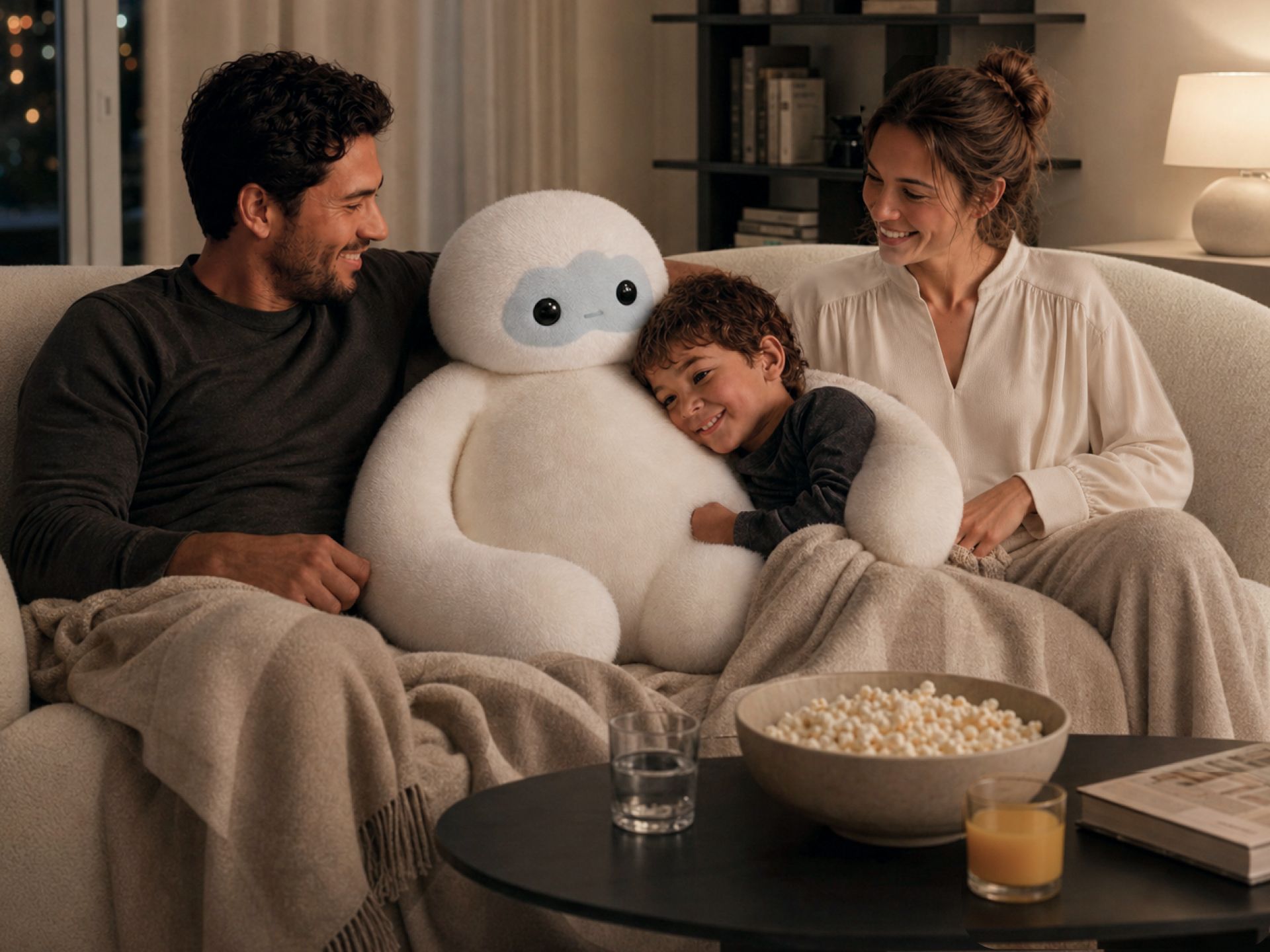
Sleep soothing robot product MoYa (Source/Enterprise)
"Most sleep problems are not about temperature, support, or duration, but rather that the nervous system is always in a state of tension and alertness," Zheng Qian told Yingke. "When people's brains can't stop and the prefrontal lobe is overloaded, not only will it be difficult to fall asleep for a long time, but in the long run, it may even form a somatic reaction." In response to this physiological pain point, the R & D team determined the core function definition of MoYa: not to stay at the level of optimizing the physical parameters of sleep, but to help users complete the neural switch from a high - arousal state to a relaxed state.
Tactile comfort is the key path to achieve this switch. Gentle pressing and rhythmic patting can activate the vagus nerve and reduce cortisol. But how can a robot safely "hug" a person at home? The SoulX team chose to implant a self - developed flexible pneumatic material, structure, and control algorithm into MoYa.
Different from traditional motor - driven robots, MoYa uses an air pump to drive instead of a motor. There is almost no noise during operation, and the force is easier to control. Even when the user presses the whole body on it, the risk of pinching or bumping can be effectively avoided. This natural safety makes it more suitable for use in sleep scenarios.
It has no motor joints but a soft - body system that can precisely control inflation and deflation. Among them, multiple tactile sensors are distributed on the chest and back of the robot, which can monitor the changes in pressure and area in real - time and provide closed - loop feedback for air pressure adjustment. When the user says "hug tighter", the air pump increases the air pressure, and the robot's body expands from multiple directions, generating a large - area and uniform deep pressure.
In addition to adjusting the strength during a hug, MoYa is also equipped with a rhythm soothing and physiological synchronization algorithm. It will soothe and pat according to the user's breathing rhythm, relieving stress without disturbing sleep. This synchronization is not a fixed rhythm, but through sensors to sense the user's breathing frequency and dynamically adjust the interval and strength of patting, so that the robot's movements are naturally in sync with the user's body.
What seems like a natural hug is not a simple hardware function behind it. Flexible robots need to solve problems such as the body structure, material characteristics, non - linear motion control, tactile feedback, consumer - grade pump valves, noise and vibration, durability, and mass - production consistency at the same time. SoulX has formed multi - layer technological accumulation around the flexible body, underlying control, and consumer - grade pneumatic supply chain.
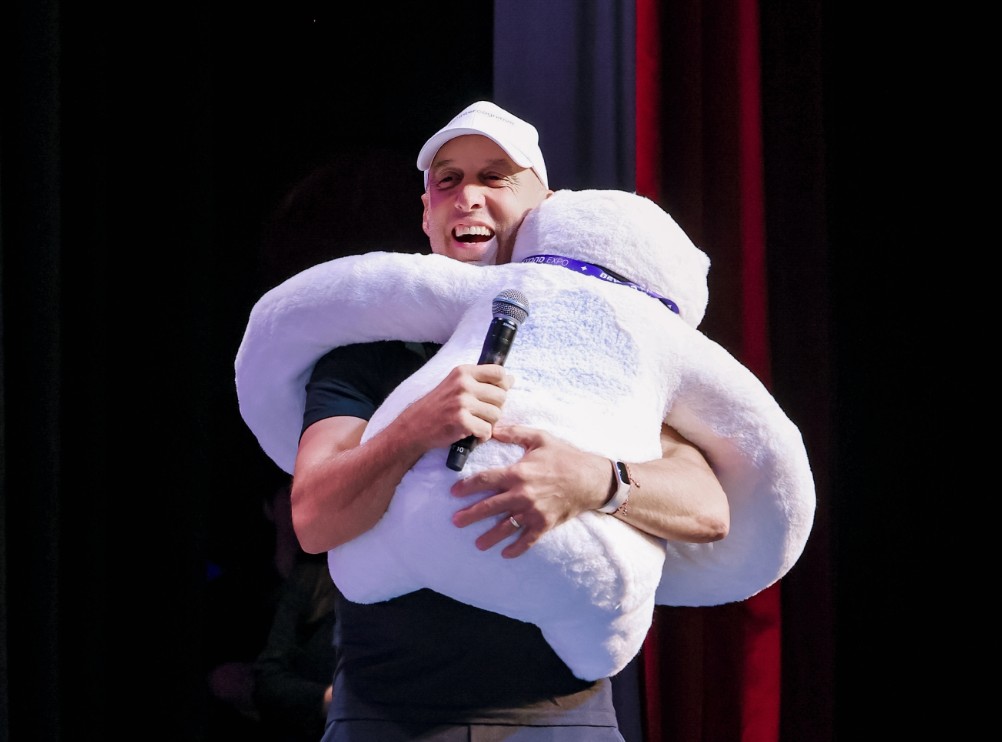
Sleep soothing robot product MoYa (Source/Enterprise)
At the interaction level, MoYa follows the principle of "passive trigger", which is determined by the particularity of the sleep scenario. MoYa will not initiate actions actively but will respond when the user touches it or issues a voice command.
"There is a psychological cognitive barrier when transitioning from a static plush toy to a soothing robot. Is a person really ready to get along with a robot? I think users need time to recognize and accept it," Zheng Qian said. "So when defining the product, we determined that MoYa should be passive, have few degrees of freedom, and not add complex behavior patterns. Users don't need a manual. When they see the product, they will naturally know how to interact with it: hug it, pat it, and talk to it. Only then will it respond, thus minimizing the cognitive barrier."
Yingke learned that the first - generation system of MoYa has completed the verification of the key links, and small - scale batch testing is in progress. This means that flexible robots are showing a clear and feasible path from technology demonstration to consumer products. Also, because the body, control, supply chain, and experience are highly coupled, this is a path that is difficult to replicate quickly relying on single - point capabilities.
And safely entering the family is the premise of all technological decisions.
Zheng Qian told Yingke that the product iteration also needs to gradually "reduce the role of cotton" and let the flexible robot body itself bear more wrapping, support, and action expression.
On the basis of verifying the feasibility of a technological solution, SoulX's ambition is not limited to making a sleep robot product.
MoYa is the first step in the family care robot. The longer - term direction is a rigid - flexible coupling robot for close - range family interaction: being flexible when it should be and rigid when it should be.
The core entry point for family care does not lie in adding more functions but in re - understanding the meaning of "being present". The sleep scenario provides a high - frequency, necessary, and low - invasive verification environment, and the combination of flexible pneumatic technology and mental agents constitutes an expandable technological base from sleep to the bedroom and then to the whole - house care.
Relying on existing perception capabilities such as behavior tracking and RPPG non - contact heart rate monitoring, the product has long broken through the limitations of ordinary sleep ornaments. It can accurately capture the user's physiological and emotional fluctuations, actively provide gentle companionship suitable for the current scenario, effectively improve the sleep state, and gradually guide a healthy schedule.
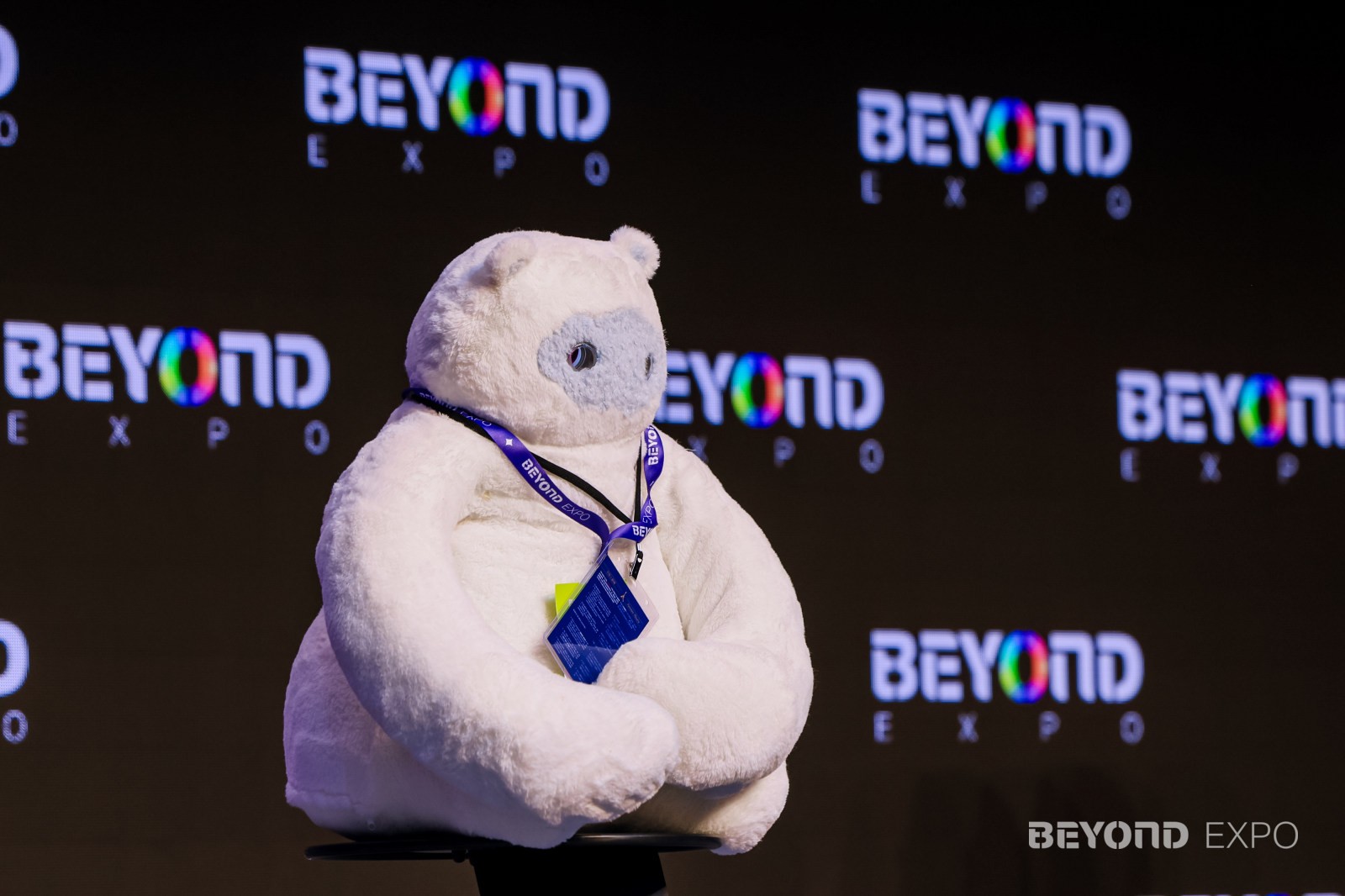
Sleep soothing robot product MoYa at the BEYOND Expo (Source/Enterprise)
As the future vision - touch multimodal interaction ability continues to be implemented and iterated, SoulX will extend from a sleep companion to a bedroom emotional butler and then to a whole - house care center, completely getting rid of the traditional logic of passive response. Based on all - around real - time perception, it will actively capture the user's potential needs and further expand the ability boundary of the family intelligent care robot.
The deeper value comes from the cognitive ability formed by long - term multimodal data precipitation. Zheng Qian calls this system the "family dynamic mental archive". It is not just about adding chat memory but continuously recording life clues, emotional cycles, and interaction patterns between family members, gradually building a "mental world model" with predictive ability, and becoming an intelligent family member that can understand "what happened today".
In an era when technology is constantly pursuing greater power and intelligence, it can be said that what MoYa does is not complicated. It learns to give gentle and soothing hugs, remembers the user's worries, and silently accompanies the user at the right moment.
When night falls, when a person hugs a soft body and feels the soothing pats and listens to the comforting words that fit the current state of mind, this kind of peaceful companionship may be closer to the essence of care than any sophisticated algorithm.
The following is an excerpt from an interview between Yingke and Zheng Qian, the founder and CEO of SoulX (slightly edited):
Yingke: Many companion products on the market pursue high degrees of freedom and active interaction, while MoYa adopts a passive trigger design. What is the logic behind this choice? How to avoid the problem of users losing their short - term freshness and leaving the product idle?
Zheng Qian: This is a key choice at the level of core scenario adaptation. There are natural variables in sleep and bedroom rest scenarios. There is no fixed standard for the user's posture of placing and holding the device, and the position and orientation of the device can change at any time. If a high - degree - of - freedom autonomous movement structure is added, if the robot suddenly turns its head or makes other abnormal movements when the user approaches, it is easy to trigger the uncanny valley effect and bring strong discomfort to the user.
Humans have a natural psychological cognitive threshold for dynamic intelligent carriers. There is an obvious gap in psychological acceptance when transitioning from a static plush object to an autonomously moving robot, which is also a key experience problem ignored by most current products.
For close - range home scenarios such as beds and sofas, we choose a low - degree - of - freedom, passive - response architecture, which only triggers feedback when the user touches, hugs, or has a voice interaction, minimizing the user's psychological gap. Off - line actual tests can also confirm this logic. Users can naturally understand the interaction methods of hugging, patting, and talking without reading the manual, and the learning cost is almost zero.
We are not worried about user retention and usage stickiness, mainly for three reasons. First, the product size is relatively large, 60 cm, and it has a strong visual presence when placed on the bed, so it is difficult to be ignored; second, tactile comfort has an innate physiological addiction, which stems from people's attachment psychology since childhood. The soothing physical sensation brought by hugs and pats can form a stable usage habit; third, the device is equipped with the ability of continuous memory dialogue. As a home - exclusive companion carrier, users have the interaction requirement of pouring out emotions and sharing daily life.
Preliminary tests on seed users show that the peak usage of MoYa is concentrated in three scenarios: putting down electronic devices before going to bed, in the morning when getting up, and when returning home to rest.
In a two - week small - scale test, users initiated about 3 to 4 hugs or rhythm soothings per day on average, and a single interaction usually lasted for several minutes; some active users would have more in - depth communication with MoYa before going to bed. According to user feedback, about 70% of users felt that it was easier to gradually relax from a tense state after using it; more than 60% of users thought that the sense of security before going to bed or the sleep experience had improved.
Currently, we are also expanding the test sample and conducting further verification by combining subjective scales and physiological indicators such as HRV.
Yingke: MoYa's long - term memory is not simply storing the conversation history but building a "family mental map". What specific information will this system capture? In what aspects does its differentiated design differ from the memory ability of conventional dialogue robots?
Zheng Qian: The underlying logic of the two is completely different. This mental map we developed does not store standardized statistical labels. It will not simply record isolated parameters such as the user's sleep duration and work - rest numbers. The precipitated memory is about your personal life clues, completely retaining the fragmented life narratives and emotional clues in the user's daily life, including various details such as getting along with friends and family and work trivia. We call it the "mental portrait".
For an intuitive example, the system will not only mark "the user is under great pressure and has insomnia" but will completely retain the context of the conversation, such as having a conflict with the supervisor, consuming a large amount of coffee on that day, the user's pet being unwell, and long - term difficulty falling asleep. All information will be connected into a complete narrative context from the user's perspective, rather than fragmented data.
This also creates a unique continuous interaction ability. When the user mentions a related topic again, the device will actively take over the past details to organize the narrative map and actively care about "Is your cat better?" "Do you still drink so much coffee today?" This memory coherence is precisely the core of closing the emotional gap and establishing a sense of intimate companionship.
At the same time, its perception is not limited to the content of a single conversation but continuously tracks the user's emotional ups and downs, stress sources, and sleep changes, forming a dynamic and multi - dimensional complete user perception. In the past, those who could completely remember all our fragmented worries and pay long - term attention to our physical and mental states were often family members or close friends, and the SoulX team hopes to implement this long - term empathy memory ability in the robot. This is also the biggest difference between it and general chatbots.