Is SaDou a fallback option for Seres?
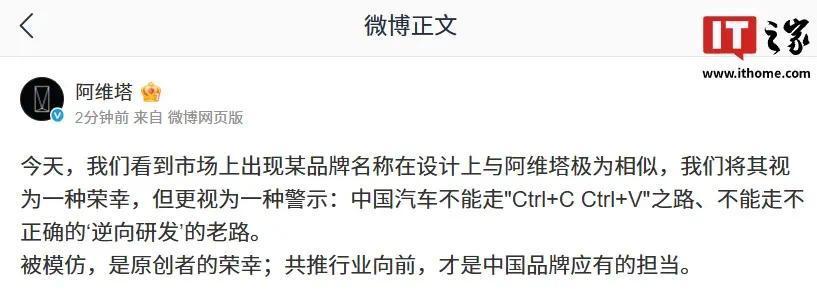
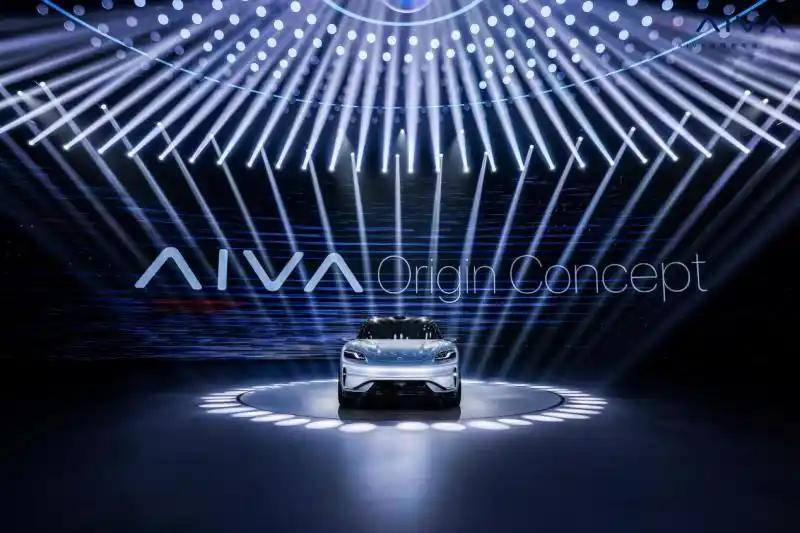
On the evening of June 9th, Saitou Technology launched a new automotive brand, AIVA, in Beijing. That afternoon, Avatr's official Weibo account was the first to speak up: "Chinese cars should not follow the 'Ctrl+C Ctrl+V' path," and "being imitated is an honor for the original creator." Everyone could see that the four letters of AIVA resemble both AVATR of Avatr and AITO of Wenjie.
The war of words was quite lively, but it just happened to cover up the biggest problem of the Seres brand: A brand that claims to be de-Huawei still has a name that is very Huawei-like.
One may say no with the mouth, but the body is still quite honest.
Compared with the brand storm of AIVA itself, what is more worthy of attention is that Seres has quietly completed its structural adjustment, and Saitou has become a backup plan left by Zhang Xinghai for the entire group.
Zhang Zhengyuan, Proving Himself for the Third Time
At a small-scale communication meeting before the press conference, Zhang Zhengyuan, the chairman of Saitou Technology, first clarified one thing: "The statement that Saitou Technology is the second brand of Seres is wrong."
Zhang Zhengyuan is the nephew of Zhang Xinghai, the founder of Seres. He was born in 1981. If we look at Zhang Zhengyuan's resume alone, he is a very typical person from the sales side: General Manager of the Procurement Center of Dongfeng Xiaokang, General Manager of Chongqing Xiaokang Import and Export, General Manager of the Sales Company, and then a director of Seres Group. He has long been in charge of sales and the market and has never been involved in product definition.
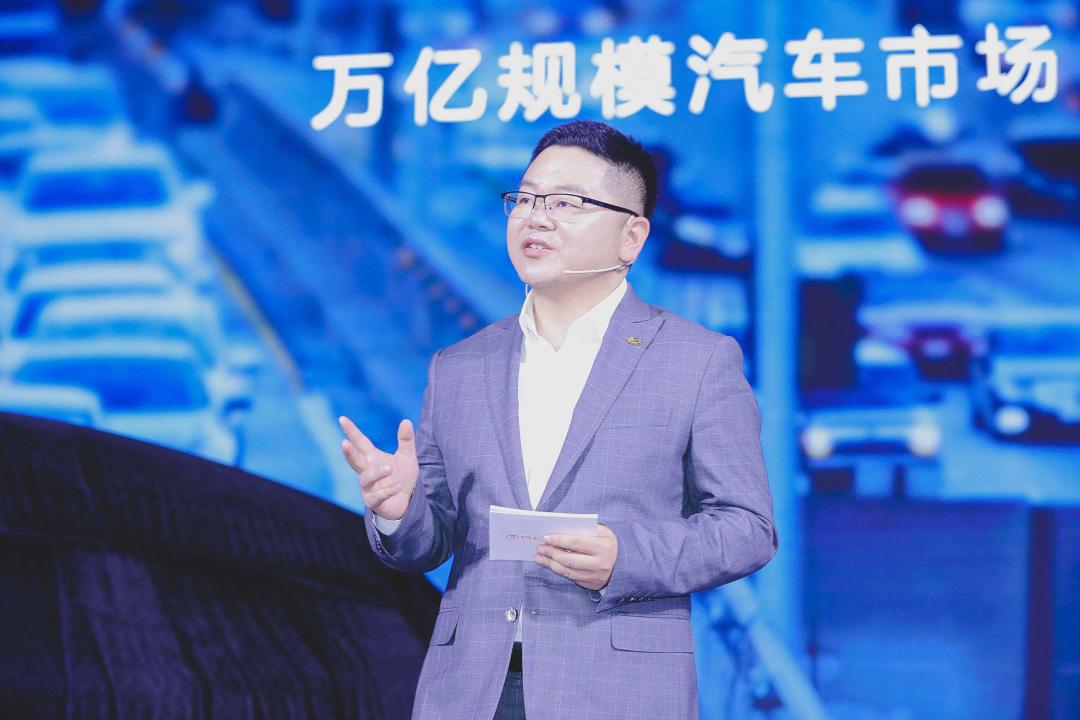
Before the launch of Saitou cars, Seres had already completed its family-based deployment: On June 5th, Zhang Xinghai stepped down as the chairman of Seres Automobile, and his son Zhang Zhengping, born in 1989, took over. On June 9th, his nephew Zhang Zhengyuan launched AIVA. Within a week, the Zhang family had arranged their formation - the son guards Wenjie, and the nephew tries the days without Huawei.
Interestingly, Zhang Zhengyuan's resume and the glory of Wenjie are intertwined. The biggest victory in his career was to promote the cooperation between Seres and Huawei since 2021 and build the sales and service system of Wenjie from scratch. The sales network of Wenjie with a monthly sales volume of 40,000 vehicles was led by him, which is destined to be the most glorious part of his resume.
However, all the battles he independently commanded were lost: For the Landian brand, he served as the chairman, manager, and legal representative. In 2023, when the first model was launched, it sold 21,600 vehicles. Seeing that Wenjie was popular, Landian promoted that it "uses Huawei technology," but in fact, it was only HiCar mobile phone mapping, which was recognized by consumers. In the first half of 2025, the retail sales were 10,300 vehicles, a year-on-year decline of 34%, and it further shrank in 2026. In three years, Landian changed three sets of technical narratives - the foundation of Dongfeng, the marginal technology of Huawei, and now Doubao.
This has formed an inescapable public opinion whirlpool: Is the success of Wenjie due to Zhang Zhengyuan's business ability or the innate advantages brought by Huawei?
This is his third time to prove himself and the first time to get full military power.
This is also why he said that Saitou is not the second brand of Seres. Saitou needs to "cut off ties" with Seres and make as much separation as possible.
There are three reasons. The first is the financial statements: Landian is a headache within the listed company. The monthly sales of a few hundred to a few thousand vehicles drag down the overall performance. The second is resources: Wenjie occupies most of the production capacity and marketing budget. Landian will never get the nutrients for development within the company. Moreover, the entire Wenjie series uses the Hongmeng cockpit. Developing a second set of cockpit solutions within the company is equivalent to an open diversion of resources. Third - a person from a joint-venture automobile company pointed out to 21st Century Business Herald: The independent legal person status can avoid the exclusivity constraints in the cooperation agreement with Huawei. If it stays within the company, de-Huawei cannot be achieved contractually.
However, the benefits of going independent are also substantial: A capital increase of 6.67 billion yuan. The "Shaci Zhiyuan" state-owned asset fund in Shapingba, Chongqing, holds 34.5% as the major shareholder. Wending Investment under CATL holds about 9.89%. The employee stock ownership platform holds 16.48%. Seres contributes with its existing assets and retreats to 32.96%. The performance is no longer consolidated. After going independent, Saitou can plan its own production lines, supply chains, and channels without being restricted by the internal distribution of the group.
Zhang Zhengyuan must prove that his ability has nothing to do with Huawei and Seres.
No Free Agents in the Alliance
The reason why Seres needs this off-body experiment is clearly written in the ledger.
From 2022 to the first half of 2025, Seres made cumulative purchases of more than 75 billion yuan from its largest supplier, including 42 billion yuan in 2024 alone. The advertising and channel expenses soared from 4 billion yuan in 2022 to 18.1 billion yuan in 2024. What these money bought is real: The Wenjie M9 has dominated the sales champion of the 500,000-yuan-level SUV for 21 consecutive months. In 2025, the revenue was 165.05 billion yuan, with two consecutive years of profitability, and it was listed on both the A and H shares.
However, there is a colder set of numbers in the first-quarter report of 2026: The revenue was 25.746 billion yuan, a year-on-year increase of 34.46%; the net profit attributable to the parent company was 754 million yuan, only a year-on-year increase of 0.89%; the non-recurring profit and loss was 103 million yuan, a year-on-year decrease of 73.87%. There was 652 million yuan of non-recurring gains in the net profit, and government subsidies alone accounted for 628 million yuan. That is to say, after excluding subsidies and one-time gains, this company with quarterly sales of more than 25 billion yuan only earned 100 million yuan from its main business, with a non-recurring net profit margin of 0.4%. The shadow of increasing revenue but not increasing profit not only has not dissipated but is deepening. The better Wenjie sells, the more it proves one thing: In its most successful business, Seres has no right to profit distribution.
This is not just a math problem for Seres. Under the intelligent selection vehicle model, Huawei deeply dominates product definition, design, core technology, channels, and brand marketing, and the host factory is responsible for vehicle manufacturing and the supply chain. All second-tier host factories that enter this model are facing the same bill.
Avatr fired the first shot, and three voices can be heard from this shot.
The first is brand self-defense: The dilution of the AVATR name is a real loss. Moreover, Avatr itself is under pressure in terms of sales, and riding on the wave of popularity to gain more attention is a real gain. The second is a warning from an agent: Huawei itself cannot speak out - Wenjie is the face of the intelligent selection vehicle. Publicly accusing Seres is equivalent to exposing the cracks in the alliance. And Avatr and Seres happen to be two 10% shareholders of Yinwang. Another member of the alliance fires in the name of "original vs. plagiarism," aiming the firepower at the name and the deterrence at the act of leaving. The third is just a coincidence.
No source can confirm the second one. But the characteristic of alliance politics is precisely: It doesn't matter whose gun it is. All members hear the same message - leaving has corresponding costs.
There is also a more awkward detail in this gunfight: CATL is not only a shareholder of Avatr but also an investor in Saitou. Behind the one who fires the shot and the one who gets shot sits the same battery factory. Loyalty in this alliance has always been contractual, not strategic.
The Quality of Going Solo
Now, let's examine the quality of this "independence." Saitou's configuration list is as follows: The cockpit interaction is from ByteDance, with Doubao and Volcano Engine "jointly defining and designing." The high-level intelligent driving is the NOA solution from Yuanrong Qixing, not using Huawei's Kunlun. Behind the battery stands CATL. Most of the money comes from the state-owned assets in Chongqing.
The entire result of de-Huawei is that the list of suppliers has changed from one line to four lines.
At the general meeting of shareholders of SAIC in June 2021, Chairman Chen Hong said a famous sentence when rejecting Huawei's overall solution: In that way, Huawei would become the soul, and SAIC would become the body. "We must keep the soul in our own hands." Seres took the opposite path back then - it handed over its soul to Huawei in exchange for its first pot of gold. Now, what it is doing is using this pot of gold to buy four new souls in the market.
What about the problem of self-research? In 2024, Seres invested 7.053 billion yuan in R & D, accounting for 4.86% of the revenue. A considerable part of it was the adaptive development of Huawei's intelligent selection vehicle solution. Landian changed three sets of technical narratives in three years, and each time it changed the supplier, but never changed itself.
At this point, we can read those "smart moves" in the first chapter again: Giving up the controlling stake, taking the performance off the balance sheet, having the state-owned assets as the major shareholder, binding employees with stock ownership, and ensuring that a failure will not stain the listed company's financial statements. Each item alone is a textbook operation, but when read together, it is a confession - how a company hedges reveals what it really believes. Seres doesn't even dare to bet on a single consolidation for its confidence in "without Huawei." It designed this experiment in such a way that if it succeeds, it will hold 32.96%; if it fails, it has nothing to do with the listed company.
This is also Zhang Zhengyuan's real dilemma. He needs to prove that "without Huawei, Seres and I can still do it." But in the situation he has set up - the cockpit, intelligent driving, battery, and funds are all from external sources - there is still no link that doesn't need external support.
The mass-produced vehicle AIVA ME7 will be launched this year, and the official target is the market above 200,000 yuan, directly competing with Xiaomi SU7, Model 3, and XPeng P7+. The way Seres escapes from Huawei is to find four substitutes for Huawei. If ME7 can answer the question of "product definition" correctly for the first time, all the smart moves in this structure will count - Zhang Zhengyuan only has about half a year left.
This article is from the WeChat official account "Xiangxianzhi," written by Aka, and is published by 36Kr with authorization.