Why has The Ritz-Carlton Yacht Collection become a money-losing proposition?
01
Recently, the Ritz-Carlton Yacht Collection has been in deep trouble.
This cruise company, which boasts the prestigious luxury hotel brand, has recently been forced to complete a very difficult debt restructuring negotiation, barely avoiding the cliff of a broken capital chain.
According to a report by the Financial Times last week, Crédit Agricole, the largest creditor of the Ritz-Carlton Yacht Collection, recently chose to compromise and reluctantly agreed to delay the repayment of $171 million of its debt. Subsequently, a Spanish banking consortium led by CaixaBank also showed leniency. They relaxed some of the strict borrowing restrictions and chose not to push this cash-strapped cruise company into the abyss of bankruptcy.

However, the mercilessly exposed financial statements have completely torn the veil of the Ritz-Carlton's dreamy luxury life at sea.
Since the project was launched in 2017, over the past decade, this cruise operating company has accumulated a staggering net loss of nearly $700 million. Years of hard work and maneuvering have not brought real returns, leaving only a tattered ledger.
In order to prevent the three high-cost small luxury cruise ships from completely breaking down halfway, the controlling shareholders behind them can only continuously dig into their own pockets.
The major shareholder, Oaktree Capital Management, which holds a 55% stake, in conjunction with the Government of Singapore Investment Corporation and the capable Mohari Hospitality consortium partners, have poured more than $1 billion into this bottomless pit.
Meanwhile, without the forced capital injection from European bank financiers, this maritime business simply could not have survived until today.
However, the capital injection has not completely saved the critical situation. Instead, the heavy debt burden has been growing like a snowball.
Currently, the total net debt of this cruise company has exceeded $1.5 billion. The huge repayment pressure has left the cruise management with no confidence in front of major financial institutions.
The continuous state of deficit has caused the capital credit of the entire cruise project to plummet to rock bottom.
What's even more distressing for those investors who are numb to losses is that the entire global cruise industry is actually experiencing an explosive period of prosperity.
Since the end of the pandemic, the cruise industry has not declined overall. Almost every company is sharing the huge dividends brought by the recovery of tourism consumption. Unfortunately, only the Ritz-Carlton has become an outlier in this prosperous market.
Carnival's revenue in fiscal year 2025 reached $26.6 billion, setting a new record. Its adjusted net profit exceeded $3.1 billion. Viking Cruises achieved $6.5 billion in annual revenue, and 95% of its ships were full in the fourth quarter. Royal Caribbean's occupancy rate has consistently remained above 108%.
Even the newly launched Four Seasons Yachts had a hot sale for its maiden voyage in early 2026. The company's CEO said it was the most successful start he had ever seen in his career.
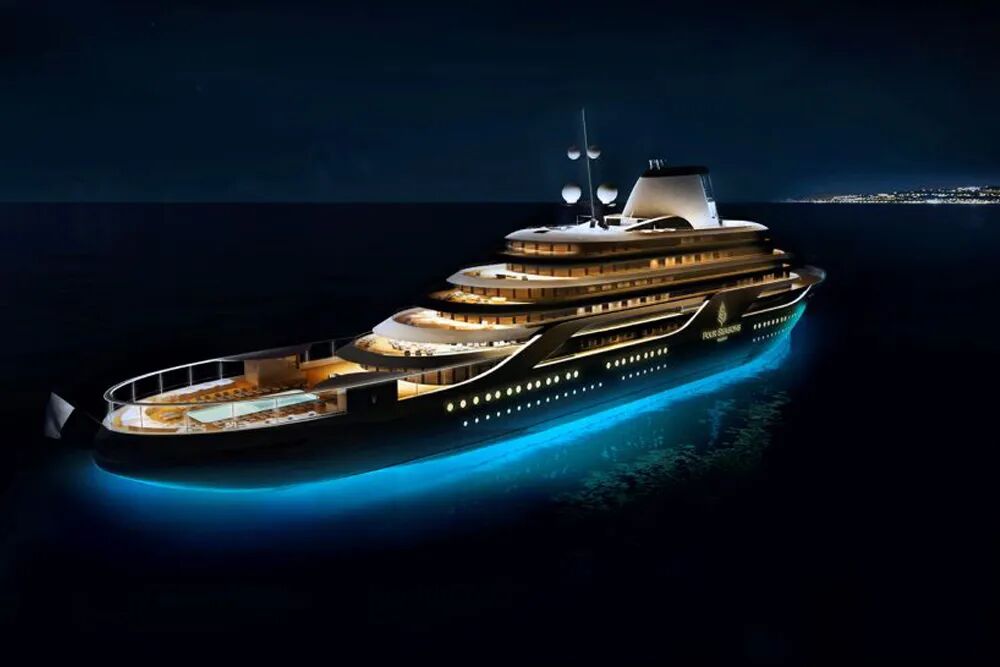
Four Seasons Yachts expected to be launched in 2026
In this blue ocean full of gold and opportunities, the famous Ritz-Carlton Yacht Collection has become a lonely drowning man.
Even though they spent more than $100 million on expensive marketing and promotion in 2025 alone, they still couldn't fill the empty luxury cabins. The guests' cold attitude forms a sharp contrast with the huge marketing investment.
This seemingly lucrative business has ultimately turned into a raging black hole that devours capital.
02
To understand this major maritime defeat, we need to first analyze the role played by Marriott International, the owner of the Ritz-Carlton brand, in this game.
Perhaps many people think that Marriott is making a heavy-asset foray into the ocean. In fact, it's just a copy of Marriott's familiar light-asset management model used in land-based hotels.
Public information shows that Marriott only licenses the Ritz-Carlton trademark to this cruise operating company and sits back to collect a fixed brand management fee.
In other words, the glory of the prestigious brand belongs to the hotel giant, while the heavy construction costs and the bottomless pit of losses are left to those investment institutions full of expectations.
Judging from the booking prices, the Ritz-Carlton Yacht Collection's pricing is astonishingly high, with an average daily fee per guest approaching $1,900. This high price has placed it at the top of the entire cruise industry pyramid.
According to multiple foreign media reports, in the vision of the Ritz-Carlton Yacht Collection management, as long as the ship occupancy rate is maintained between 85% and 90%, this money-making machine at sea can easily achieve profitability.
The real feedback from the market is a resounding slap in the face. In the first half of 2025, only half of the rooms on the three small luxury cruise ships under the Ritz-Carlton were occupied on average.
In the first quarter of 2026, the situation still didn't improve substantially, and the occupancy rate remained at an embarrassing 51%.
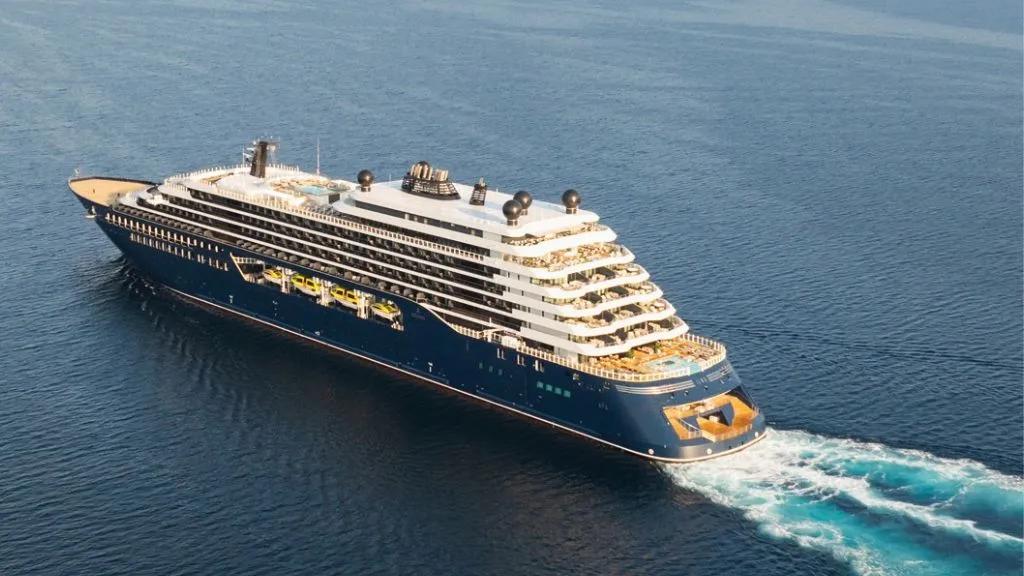
The newly launched Evrima of the Ritz-Carlton Yacht Collection
Facing the empty corridors, the expensive cruise ships are operating at a loss at sea every day, continuously burning the shareholders' hard-earned money.
In order to fill the empty luxury cabins, the Ritz-Carlton Yacht Collection management took a desperate gamble in 2025 and spent $104 million on advertising and marketing.
The overwhelming and expensive publicity failed to arouse the purchasing desire of high-net-worth individuals. Instead, the cash flow gap has become even larger.
According to information disclosed by the Financial Times, the company originally promised the capital market that it would turn a profit in 2027.
With the continuous low occupancy rate, the time point for profitability has been continuously postponed on the financial statements and has now been forced to be moved to the distant year of 2029, mercilessly exhausting the investors' patience.
Ironically, the ultra-luxury cruise business is not a bad business that can't make money.
Take the long-established Silversea Cruises as an example. Backed by the powerful Royal Caribbean Group, Silversea can seamlessly share the parent company's huge maritime supply chain and has unparalleled scale advantages in global route allocation and port resource negotiations.

Silversea Cruises' polar routes are highly profitable
The competitive edge of traditional cruise giants has made the independently exploring Ritz-Carlton look pale in comparison. It's difficult for a brand-labeled player lacking maritime genes to compete with regular players in cost control.
In fact, as cross-border attempts by hotel brands, the approaches of Four Seasons and Aman are smarter and more practical.
When launching its cruise project, Four Seasons chose to deeply cooperate with a professional shipping consortium with rich maritime construction experience. Aman, on the other hand, tried to use its unique luxury community stickiness to precisely guide its loyal land-based customers to its super cruise ships at sea.
The Ritz-Carlton has miscalculated the conversion rate of its land-based members. They underestimated the commercial gap between the ocean and land. Relying solely on selling brand premium cannot make up for the natural shortcomings in maritime operations.
The essence of business is a competition of efficiency. If a balance cannot be found between cost and passenger flow, even the most dazzling land-based crown will become a heavy anchor at sea.
03
What debt extension brings is never a cure, but just an extended period of time.
When the next extended debt is due, if the ship is still not full, the same negotiation will happen again. In other words, time is not the cure for the root cause of the low occupancy rate.
What's even more worrying for the Ritz-Carlton Yacht Collection is that the sea is becoming increasingly crowded.
In the past two years, luxury brands queued up to enter the cruise market. The Orient Express yacht has been launched, and Aman's first ship, Amangati, is scheduled to set sail from the Mediterranean in spring 2027.
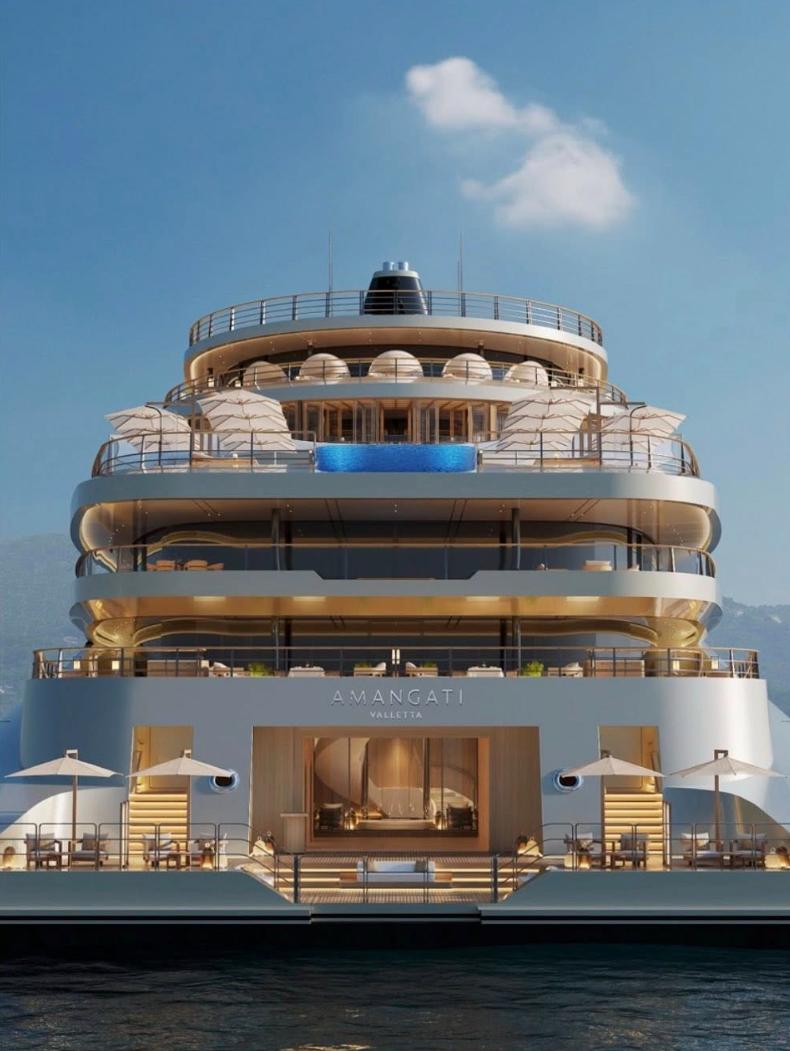
Aman at Sea is set to sail in 2027
Moreover, according to the latest industry forecast report released by the International Cruise Lines Association, more newly customized super-luxury ships focusing on ultra-luxury experiences will be launched intensively between 2026 and 2027.
They are targeting the same Mediterranean Sea and the very few global guests willing to spend thousands of dollars for a night on a cruise ship.
Looking ahead to the global high seas, this battle for the wallets of top billionaires is rapidly turning into a ruthless elimination race with no turning back.
The Ritz-Carlton pinned its hopes on Marriott's more than 100 million members, thinking that it could find enough people to fill the ship. However, after several years, this plan has not translated into full cabins. Although the membership list is long, not many people are willing to board the ship.
The numbers on the list are completely different from the people on the deck.
In the next few years, this sea will probably first become crowded and then undergo a reshuffle.
The patience of capital will become the dividing line for small luxury cruise ships. Aman is backed by the capital of the Aman Group and Saudi Arabia. Such players are not in a hurry to recoup their investment and can endure the long uphill period.
For cruise ships relying on private equity funds for capital injection, there is always a ticking clock hanging over their heads. The shareholders' patience will eventually run out.
After all, in the luxury business, it's not just about who is more expensive, but also about who can afford to wait.
Regarding the Ritz-Carlton itself, our outlook is not optimistic.
The cards in its hand are unlikely to improve in the next few years. The debt hole remains, new competitors are emerging, and the window period for it to fill the ship is narrowing year by year.
Meanwhile, its awkward situation of being neither high-end enough nor low-end enough means that the Ritz-Carlton Yacht Collection will be very vulnerable to systemic risks when facing unknown industry storms.
Since it couldn't even share a sufficient amount of profits during the overall prosperous period of the industry due to high internal consumption, once the growth of the entire cruise industry slows down in the future due to factors such as the US-Iran war and the sharp increase in fuel costs, it will surely be the first to be mercilessly abandoned by the capital market.
In front of the ancient and honest business touchstone of the sea, land-based hegemony is just a mirage. Whether it's a good horse or a bad one will be revealed once it takes to the water.
This article is from the WeChat official account "Travel Industry", author: theodore Xi Shao. Republished by 36Kr with permission.