The viral Claude Fable 5 showcase taking the internet by storm might be entirely handcrafted
After the release of Claude Fable 5, Altman will be so shocked that he might sit there in a daze, as if he had witnessed an atomic bomb explosion.

In just 24 hours, social platforms were almost flooded with various cases. Videos kept popping up one after another. Before we could finish watching one, a new case created by Fable 5 would appear on the timeline. Netizens were having a great time.
Even just now, The Wall Street Journal reported that OpenAI is considering significantly reducing the token price, trying to compete for users from Anthropic by starting a price war.

However, as the popularity soared, many fake cases released by various impostors also mixed in. Some people packaged old videos as new cases of Fable 5 to ride on the hot topic and promote their products; others deliberately posted hand - made videos to satirize netizens' blind pursuit of AGI.

Meanwhile, users quickly found that Fable 5's security classifier is extremely sensitive. Once the topic involves biology, chemistry, or network security, the model may directly fall back to Opus 4.8. Some netizens said that after their profiles had a biomedical background, even a simple "Hi" could trigger the fallback.
Claude Fable 5 became an overnight sensation, but netizens are already having trouble distinguishing between real and fake cases
Most of the first - batch breakout cases of Fable 5 are related to 3D, physics, games, and browser interactions.
An X user only gave Claude 5 Fable high one goal: "Create a clone of Minecraft." About 20 minutes later, it generated a version with multiple biomes, day - night cycles, different ores, and a cave system. It's far from truly replacing a game development team, but it's much more complex than the previous "button plus texture" AI mini - games.

Since the release of Gemini 3.0, using AI to create a cloned Windows system is no longer rare. However, the high completion degree of Fable 5 is still extremely shocking: the login interface, notifications, Edge, the Solitaire game, and Copilot are all there, fully demonstrating the charm of Vibe Coding.

The performance of mechanical and engineering cases is also impressive. Let it implement a complete Swiss lever escapement mechanism using Three.js. The finished product includes real gear ratios, a running escapement mechanism, a breathing hairspring, and hands showing the actual time. Well, who wouldn't be impressed by this?

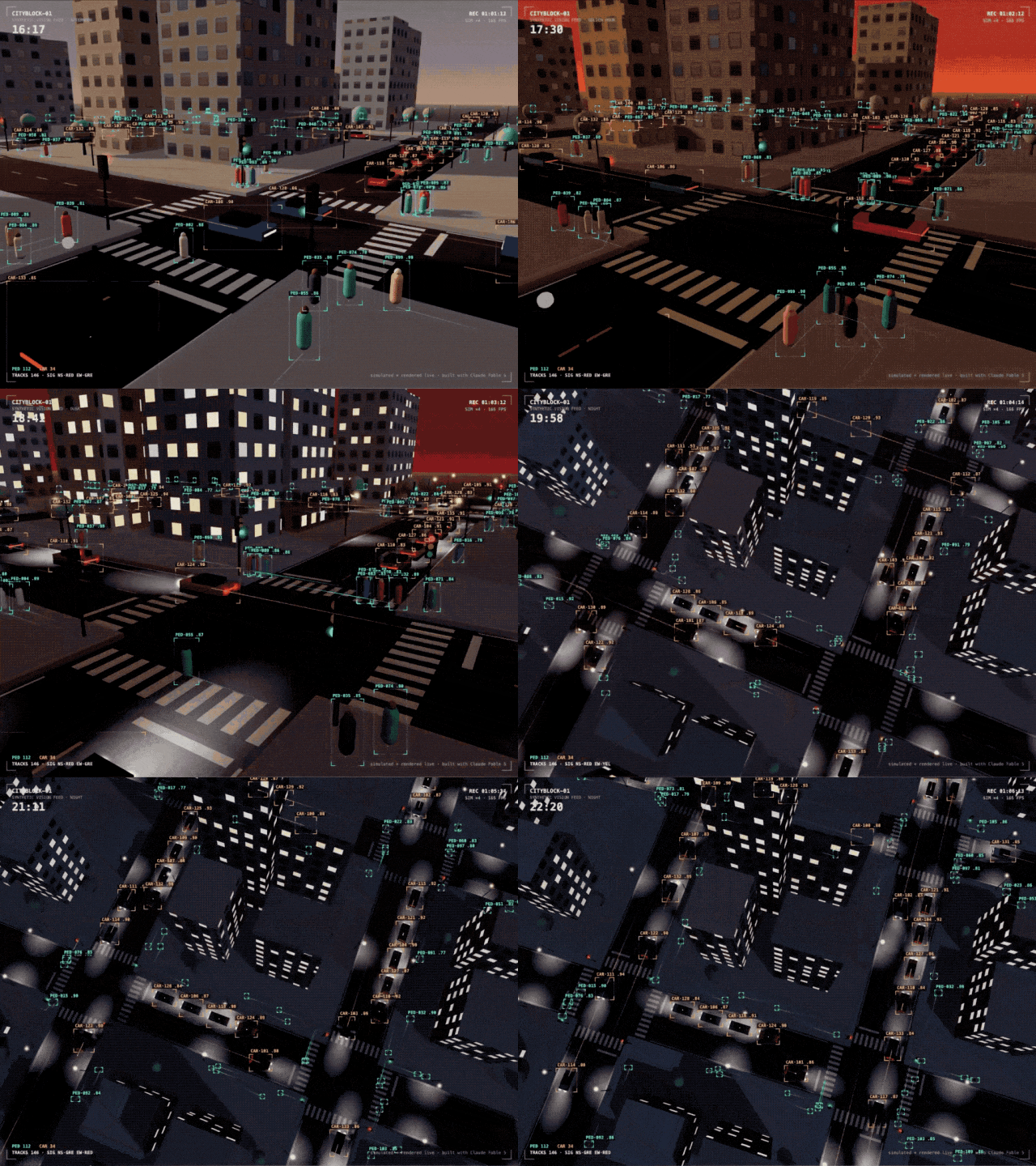
Similarly, there is a block simulator. Bilawal Sidhu asked Fable 5 to create an urban block with multi - agent traffic, real - time detection boxes, trajectories, and day - night cycles. It's not a mature traffic simulation software, but it organized elements like "city, multi - agents, trajectories, recognition boxes, and day - night changes" into a visible prototype.
To talk about more exaggerated cases, it has to be asking Fable 5 to design a humanoid robot.
The prompt is very simple. Ask it to design a compact, lightweight humanoid platform similar to modern high - mobility research robots, with 25 to 30 degrees of freedom, exposed joints, an aluminum alloy or composite structure, and a head with sensors.
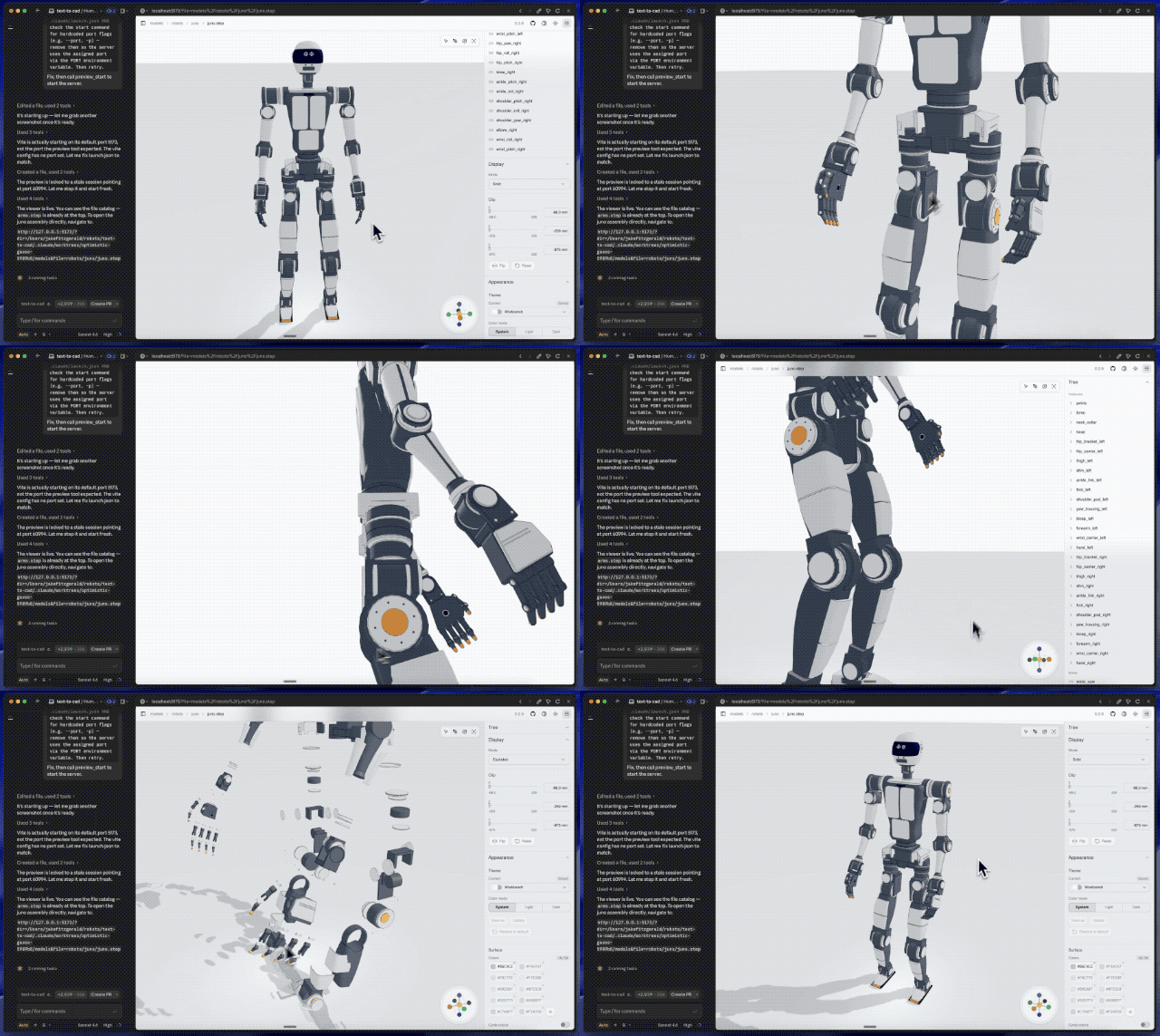
Just like this, after only two hours and consuming about 1.4 million tokens, Fable 5 produced a complete draft. In other words, many ideas that used to take several meetings to clarify can now be made into a visible version by the model first.
Yes, Fable 5 may not be able to generate the best visual materials on its own, but it is good at organizing materials, rules, and interactions into products. And this approach is actually closer to actual production than simply leaving everything to AI in one sentence.
The 3D shoe product website follows a similar approach. The creator uses Magnific MCP to generate product images in Claude Code, then converts them into 3D models. After downloading, they are given to Fable 5 to develop an interactive product page. The final result is close to a 3D e - commerce landing page that can be directly displayed.

Some people use GPT Image 2 for design, Blender MCP for models and lighting, and then let Fable 5 complete the logic of a table tennis game. The total development time is about 6 hours.

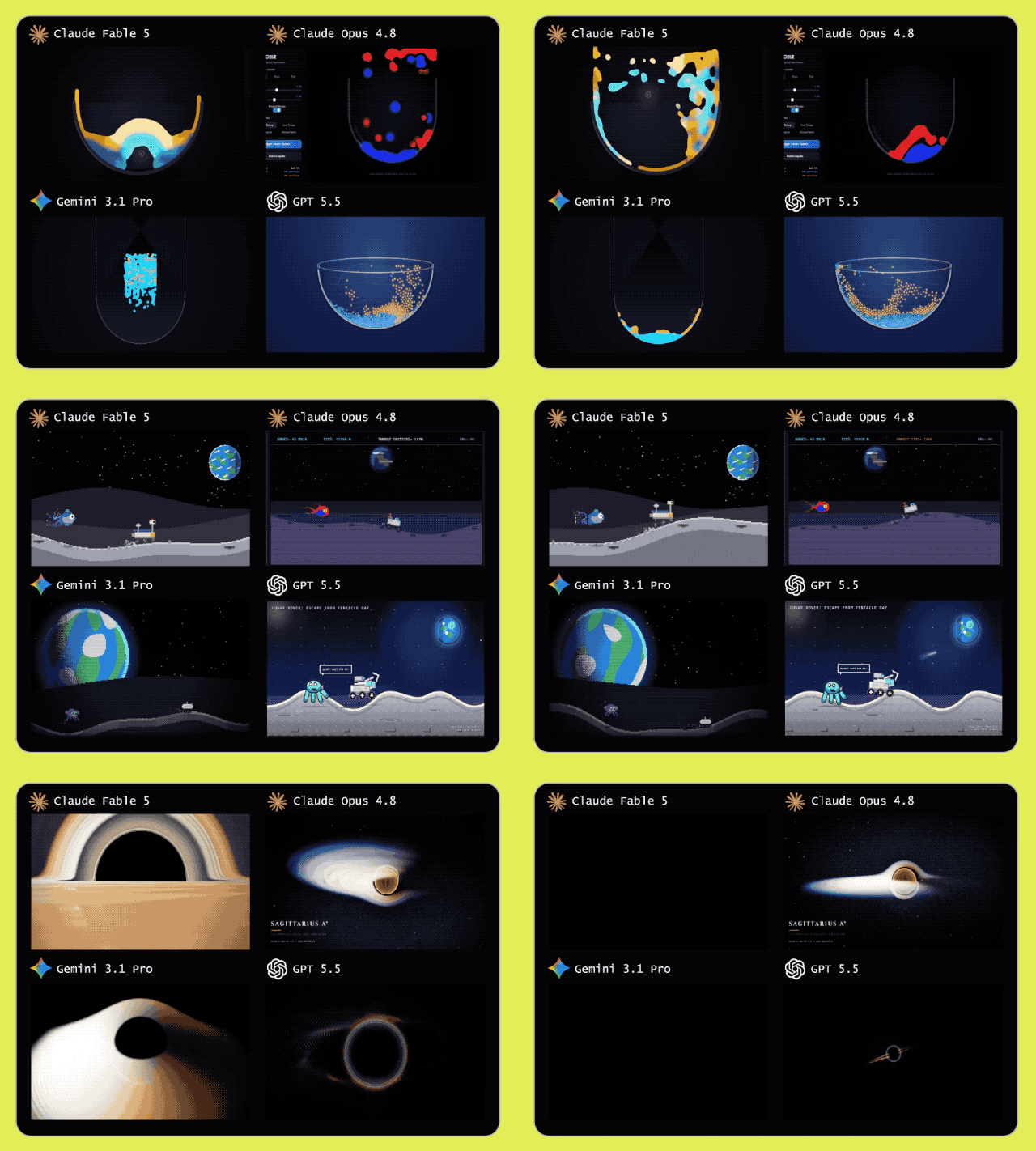
By putting the cases generated by different models together, it's easier to see the differences in handling 3D fluids, volumetric animations, and complex physical effects. Without exaggeration, Fable 5 clearly leads in terms of picture complexity, sense of movement, and spatial expression.
Fable 5 is really powerful, but after its release, it has also been criticized by netizens. The main focus of the criticism is on its overly sensitive security classifier. According to user feedback, fields such as network security, medicine, biology, and chemistry can easily trigger a fallback to Opus 4.8.
Users with a biological research background said that because Claude's memory and preferences included content such as prostate cancer, cell lines, immunofluorescence, image analysis, and R coding, after Fable 5 was launched, no matter what they asked, they would be redirected to Opus 4.8, even a simple "Hi".
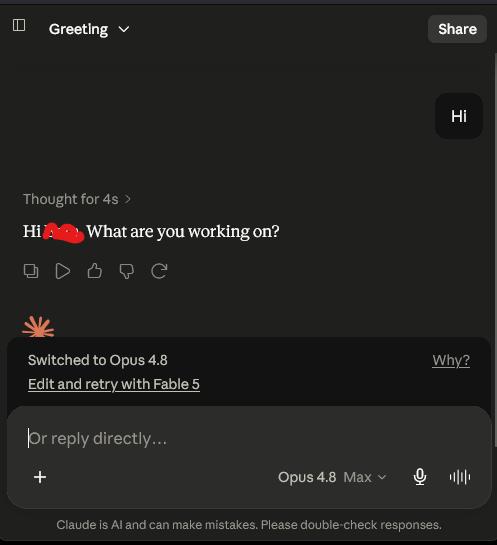
Users who are wrongly affected can't help but find it absurd: the model remembers your professional background information and then refuses to work for you based on this.
In addition, as Fable 5 became a hot topic, all kinds of impostors emerged. A large number of fake videos appeared on social platforms soon.
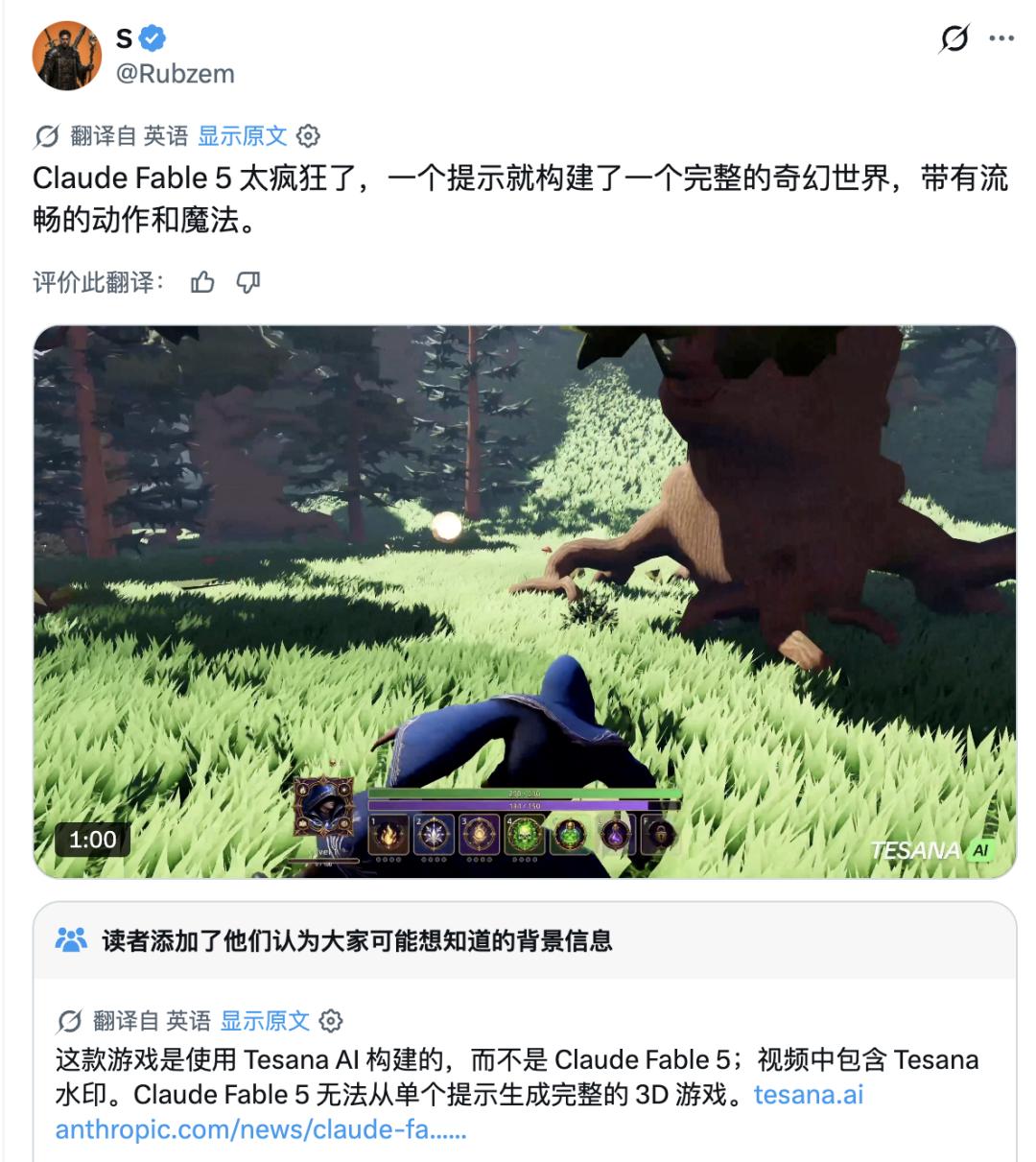
Some people took the video production screen of GTA - 6 that was previously circulated on the Internet and claimed that it was generated by Fable 5.

Some people are taking advantage of the AI trend to take orders and do advertising.

They may not all be real scammers. There are also many people just for fun, using these absurd fake videos to satirize the public's irrational and blind pursuit of AGI (Artificial General Intelligence).

To truly make the most of Fable 5, you need to give it goals, tools, and memory
Fable 5's strength is not just giving results with a single sentence. Its most suitable usage is to design a self - correcting working environment for the model.
Well - known AI researcher Lance Martin mentioned that Mythos - level models are changing the working methods of many people within Anthropic. There are two core methods: self - correction cycle and cross - session memory.
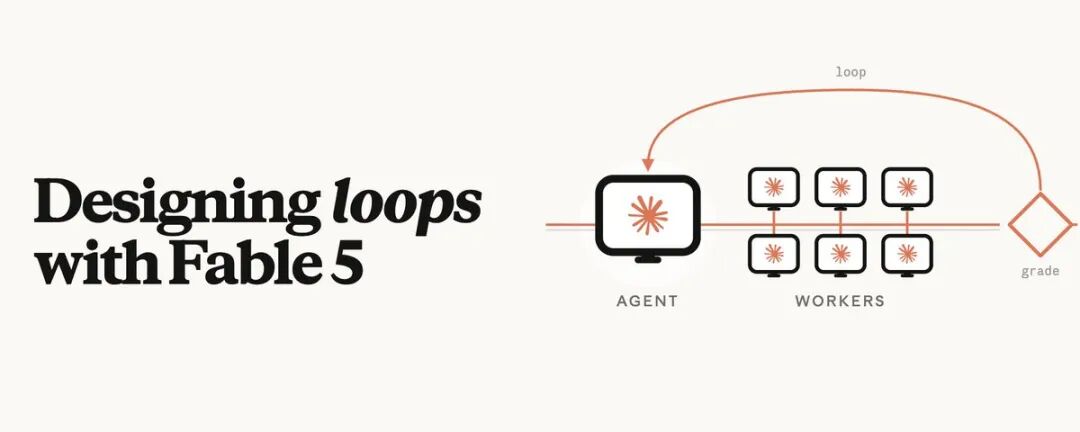
The so - called self - correction cycle can be understood as giving the model a clear goal and scoring criteria, allowing it to try repeatedly, read feedback, and modify the plan until it meets the requirements. /goal in Claude Code and Outcomes in Claude Managed Agent are representatives of such mechanisms.
🔗https://x.com/0xLogicrw/status/2064714178947170503
The key here is not to let the model check itself on its own.
Lance Martin specifically mentioned that the model may have biases when self - evaluating its own output. A better way is to use a verifier sub - Agent to score in an independent context. One role is responsible for execution, and the other is responsible for acceptance. After isolation, the judgment will be more reliable.
He conducted a test using Parameter Golf. This open - source ML engineering challenge requires training the best model on 8 H100s within 10 minutes, and the final product should fit into 16MB. The tasks include editing training code, starting training, reading logs, analyzing scores, and deciding what to do in the next experiment.
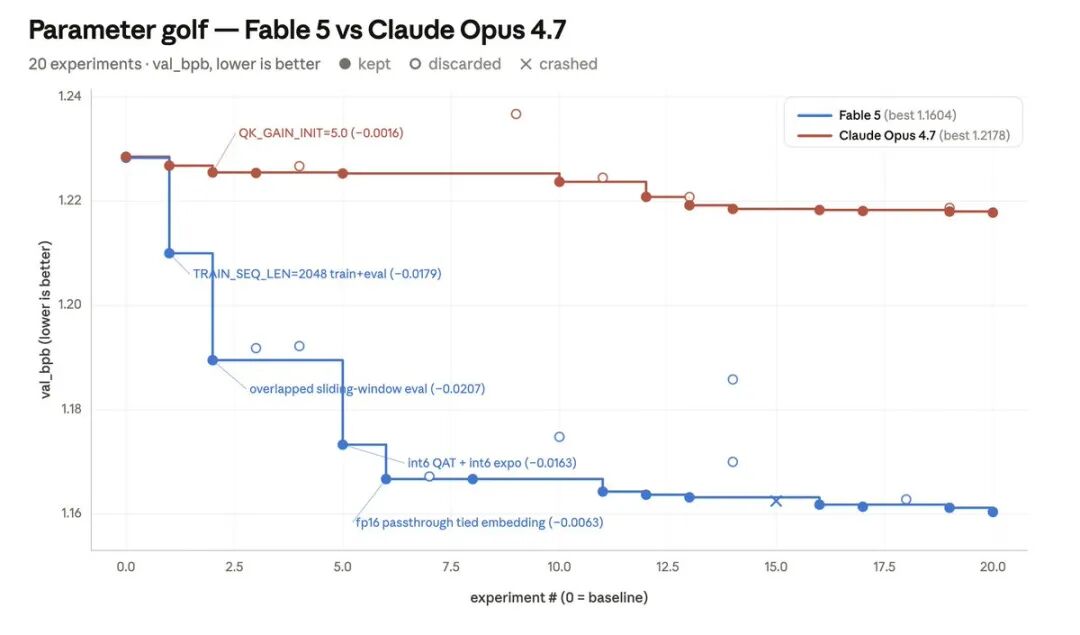
In this test, Fable 5 brought a greater improvement to the training pipeline compared to Opus 4.7. The more obvious difference is that Fable 5 is more willing to try structural adjustments, such as architectural changes, while Opus 4.7 is more likely to make small - scale modifications around constants and parameters.
The second aspect is memory. In continuous learning tasks, each question is a separate session, and the model needs to read and write shared memory. A good memory - using process probably includes five steps: recording failures, investigating reasons, verifying judgments, refining rules, and checking rules first next time.
