The new "working queen" in the banking circle, the century-old financial family with tens of billions of assets, the fourth-generation rich refuses to take over the family business?
Another "working queen" has emerged in the financial circle.
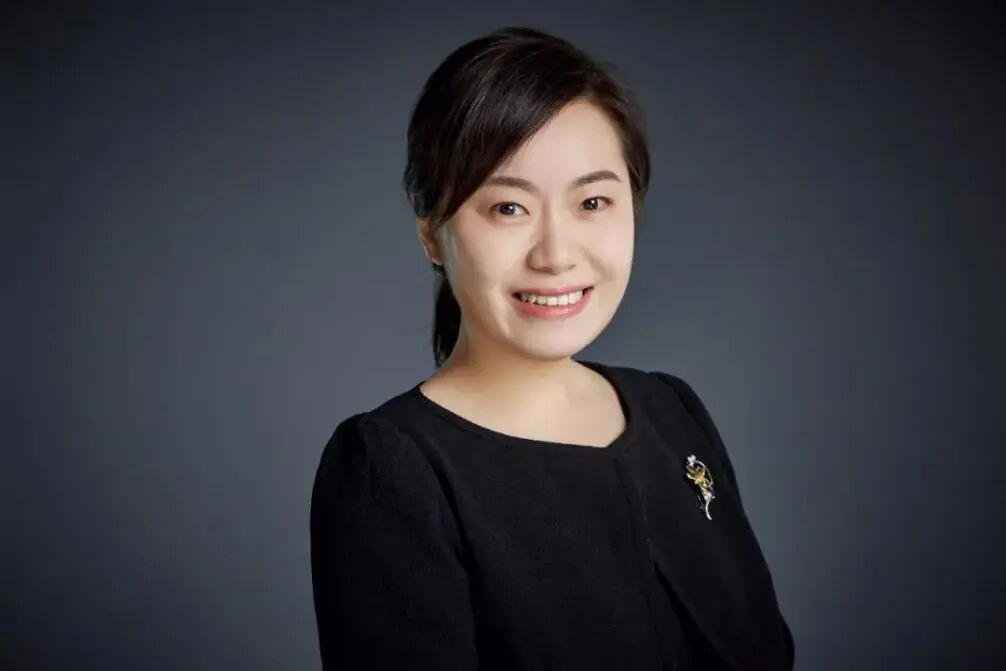
On June 8th, United Overseas Bank (UOB) announced a significant appointment: Zheng Jun, the current CEO of the Hong Kong branch, will assume the position of President and CEO of UOB China, succeeding Foo Maw Chong, who has served for 15 years and is retiring this year. Huang Yizong, the President of UOB, praised her as:
"A manager nurtured internally with rich regional experience."
This news quickly sparked heated discussions in the financial circle. As one of the three major banks in Singapore, UOB has a hidden financial family behind it. Therefore, some sharp - eyed netizens raised a soul - searching question:
"Huang Yizong himself is the third - generation leader of the founding family of UOB. Why doesn't he let his own children directly 'parachute' to manage the China business?"
In fact, the Huang family, which controls UOB, has been wealthy for four generations in Southeast Asia. They have spent nearly a century building a financial empire spanning multiple countries and covering businesses such as banking and securities. However, in recent years, this financial aristocratic family, which should adhere to the principle of "sons inheriting their fathers' businesses", no longer seems to be obsessed with having their own children directly take over...
1. A Bank Giant Worth Billions Welcomes a New "Working Queen"
A few years ago, when looking at Zheng Jun's resume, many people wouldn't have thought that this "financial woman" would soon become the top leader of one of the three major Singaporean banks in the Chinese market.
Zheng Jun is taking over from Foo Maw Chong, who is one of the most representative figures in the development of foreign - funded banks in China. Under his leadership, UOB's business in the Chinese mainland took root.
For this reason, the financial circle has paid special attention to the candidate to succeed Foo Maw Chong. After Zheng Jun officially took office, many people were curious: What's her background that enables her to take over from Foo Maw Chong?
In fact, Zheng Jun is not a "parachute" at all. She is a financial woman who has been deeply involved in the field of foreign - funded banks for many years.
Zheng Jun graduated from the School of International Finance at Shanghai Jiao Tong University. It is said that she chose to study finance because "her mother thought the financial industry had a bright future".
After graduating from university, she joined Standard Chartered Bank as a management trainee and was later promoted step by step. When she left in 2018, she was the General Manager of the Shanghai Branch of Standard Chartered Bank and the Managing Director of the Commercial Banking Department in China.
After leaving Standard Chartered, Zheng Jun switched to UOB China and served as the head of the Wholesale Banking Department, responsible for managing businesses such as corporate banking, commercial banking, financial institutions, structured trade and commodity financing, transaction banking, and investment banking. In March 2024, she became the CEO of the Hong Kong branch of UOB.
Two years later, Zheng Jun was promoted again, making great achievements in the financial circle.
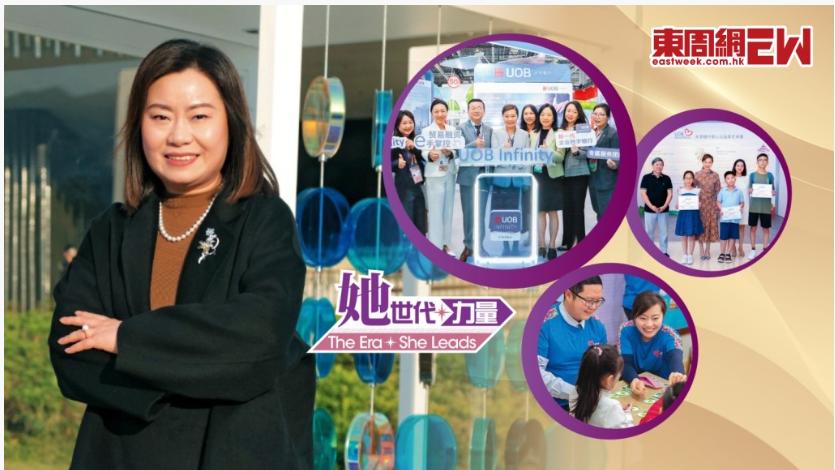
All along, the banking industry has usually had more male leaders. What makes Zheng Jun stand out?
Previously, in an interview, Zheng Jun mentioned that when she first entered the financial industry in her twenties, she had to lead a team to serve large corporate clients.
"When having meetings with clients, nine out of ten counterparts were men. At first, when they saw I was a young girl, they were a bit distrustful."
Facing the doubts, Zheng Jun didn't back down. Instead, she proved herself with her professional ability. "After doing sufficient homework and fully understanding the clients' business, I can provide professional consulting advice to help them improve operational efficiency and do better business."
Of course, there are bound to be social events at work. Zheng Jun adheres to her own principles:
"I'll have one or two drinks politely, but I'll clearly state my position and set my limits at the beginning. After everyone understands, they respect me."
Looking back on her more than twenty - year career, Zheng Jun has hardly experienced real setbacks. In her own words, "Maybe I have a positive and optimistic personality. Every time I encounter difficulties, I'll find ways to solve them and won't get discouraged easily." She also hopes that her experience can inspire more career women:
"Women shouldn't limit themselves. They should believe in themselves, bravely pursue their dreams, and every step is a step towards success!"
Zheng Jun's new appointment is not an isolated case. Currently, the Chinese subsidiaries of three major foreign - funded banks, Standard Chartered, DBS, and Hang Seng, are all led by female presidents. The "working queens" are rising strongly in the financial circle.
2. Behind UOB, There's a Hidden Financial Aristocratic Family Worth Billions
On the surface, Zheng Jun's appointment is a personal breakthrough for a professional manager, but behind it is a key figure, Huang Yizong, the current leader of UOB.
The name Huang Yizong carries great weight in the Southeast Asian financial circle. He is the third - generation leader of the founding family of UOB. His father, Huang Zuoyao, is a banking tycoon in Singapore, and his grandfather, Huang Qingchang, is the founder of UOB.
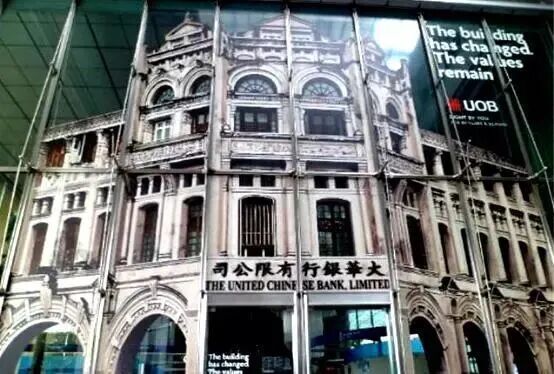
This is a financial aristocratic family with a nearly - century - long inheritance. To understand the story of the Huang family, we have to start with the founder, Huang Qingchang.
Huang Qingchang's ancestral home is Jinmen, Fujian. He was born in a poor family in Malaysia in 1890. Later, he became the son - in - law of a local Chinese leader. With the help of his father - in - law, he founded Huang Qingchang Company, engaging in the trade of rubber and other local specialties.
At that time, most banks in Malaysia and Singapore were controlled by British and American capital. It was difficult for Chinese small traders to get bank loans if they wanted to expand their businesses. This made Huang Qingchang come up with the idea of founding a Chinese - owned bank. In 1924, he founded United Chinese Bank, thus entering the financial industry.
In the early 1930s, as the number of Chinese in Singapore increased and the industry and commerce thrived, Huang Qingchang realized that there was more room for banking in Singapore. In 1935, he joined hands with seven Fujianese businessmen from Singapore and Malaysia to jointly found United Overseas Bank in Singapore and served as the chairman of the board.
Huang Qingchang had many children. The three sons of his first wife, Huang Xiande, Huang Xianren, and Huang Fode, are all business leaders in Malaysia. However, it was his fourth son, Huang Zuoyao, from his second wife, who took over UOB.
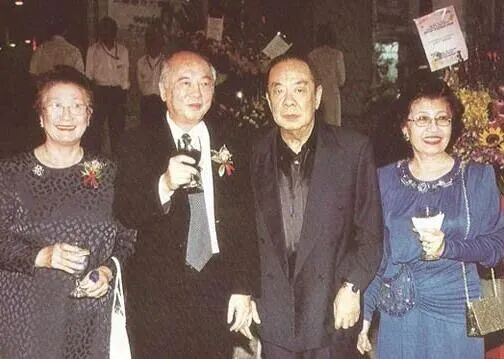
The couple of Huang Fode and the couple of Huang Zuoyao at the 60th - anniversary celebration of UOB;
After graduating from university, Huang Zuoyao directly returned to the family business and rooted himself in UOB. In the 1960s, he took over as the chairman, fully in charge of the banking business, thus starting the "Huang Zuoyao era" of UOB, which lasted for more than half a century.
As a banking tycoon in Singapore, Huang Zuoyao mainly did three things right:
Firstly, bold mergers and acquisitions. He promoted UOB to actively carry out acquisitions. In 1971, it successfully acquired Oversea - Chinese Banking Corporation, laying its dominant position in the local financial market.
Secondly, risk management. During the Asian financial crisis in 1997, many Southeast Asian banks were affected. However, due to Huang Zuoyao's consistent cautious style, UOB not only stabilized but also expanded against the trend after the crisis.
Thirdly, going global from Singapore. Huang Zuoyao successively established branches in Hong Kong, Malaysia, Thailand, etc., expanding UOB's territory to the world and gradually developing it into one of the three major banks in Singapore.
In February 2024, Huang Zuoyao passed away. According to the real - time net worth data released by Forbes, at that time, Huang Zuoyao's net worth was as high as $7.2 billion (about 51.8 billion yuan). His affiliated companies include Hua Ye Group, United Industrial Corporation, Pan Pacific Hotels Group, and Haw Par Corporation.
Also in that year, the Huang family behind UOB, with a net worth of $7.8 billion, made its debut on the Forbes Singapore Rich List, ranking seventh. The Bloomberg Billionaires Index shows that the Huang family is the wealthiest banking family in Singapore. This low - key financial aristocratic family can no longer remain hidden.
3. A Financial Family That Has Been Wealthy for Four Generations: Three Generations in Power, but Will the Fourth Generation Not Take Over?
It's worth mentioning that in terms of heir cultivation, the Huang family can be regarded as a "model" among Chinese aristocratic families. Although they own a huge financial empire, there has been no rift during the handover between the second and third generations.
Huang Zuoyao and his wife Zhuang Rongying have a total of five children. Currently, they have 16 grandchildren and 22 great - grandchildren, with a large number of descendants. After his retirement in 2007, he handed over the family business to his three sons, following the principle of "division of labor and business without splitting the family".
The eldest son, Huang Yizong, joined UOB as early as 1979. He started as a bank credit officer and a market executive and didn't take over as the president until 2007, becoming the third - generation successor of UOB. Now, he serves as the Vice Chairman and CEO of the UOB Group.
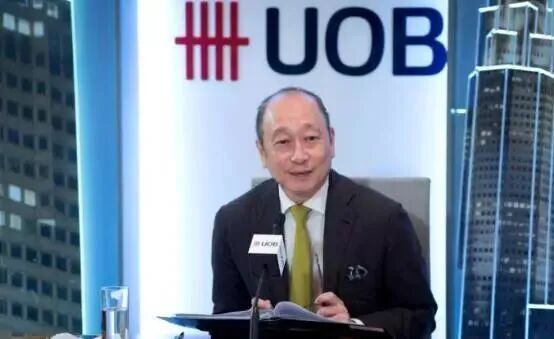
The second son, Huang Yichao, is in charge of the family's securities industry and serves as the chairman of UOB Kay Hian Holdings, a stock brokerage company. In addition, he is also the chairman of Haw Par Corporation, which is listed on both the Singapore Exchange and the Malaysian Exchange and is the manufacturer of Tiger Balm.
The third son, Huang Yilin, is in charge of the listed real - estate company Hua Ye Group, one of the largest real - estate developers in Singapore and the parent company of Pan Pacific Hotels Group.
The three sons are in different fields, each with their own businesses, so there has been no drama of sibling rivalry or family infighting.
However, now, as Huang Yizong is already 73 years old, this financial aristocratic family worth billions is facing the issue of succession again, and the fourth generation of the Huang family is gradually stepping into the spotlight.
Huang Yizong has three children: the eldest son, Huang Dingwen, the second son, Huang Dingquan, and the daughter, Huang Jingsi. However, there is no sign that they will become the fourth - generation successor of UOB.
After graduating from the Wharton School of the University of Pennsylvania, Huang Dingwen didn't "inherit his father's business" as the outside world expected. Instead, he chose to enter the catering industry. He has successively created several popular catering spaces such as Loof rooftop bar and The White Rabbit Western restaurant. His Lo & Behold Group now has 13 restaurants and bars.
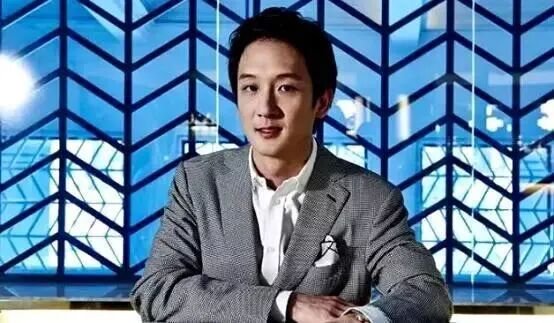
Huang Dingquan once joined the corporate banking department of UOB for training. Regarding whether UOB is cultivating him as the next - generation successor, his father, Huang Yizong, once said casually:
"We have a talent management program to train hundreds of young people. He is just one of them."
Now, Huang Dingquan seems to focus more on the venture - capital field. In 2021, he founded an investment company, focusing on direct investment in medium - sized enterprises with high growth potential in Southeast Asia. His investment portfolio includes media production company Vividthree, technology and rubber product manufacturer GIIB, etc.
Huang Jingsi, the youngest child, was once a consultant at the Boston Consulting Group in the United States. Currently, she is engaged in the health - care business. She is very low - key. She was reported by the media for spending 39.5 million yuan on a house.
In recent years, as the Huang family has become more well - known, the outside world is more curious about who among the fourth generation will fully take charge of UOB. However, Huang Yizong once said that he prefers to regard family inheritance as raising his children well.
"Parents should instill correct values in their children when they are young, and then let the children follow their own paths."
In addition, Huang Yizong has also emphasized many times that talent is the most important asset of a bank, and the level of talent determines the level of the bank. He also made an image metaphor with his fingers:
"One finger can't do anything. Only when all five fingers work together can things be done."
From the difficult start of Huang Qingchang in founding UOB, to Huang Zuoyao's half - century of struggle and expansion, and then to Huang Yizong leading UOB into the second half of regionalization and globalization, the four - generation inheritance of the Huang family has completed a nearly - century - long "relay race". Perhaps it is this open and inclusive inheritance approach that enables the Huang family to maintain a prosperous population and the long - term success of the family business.
As the third - generation leader still holds power and the fourth generation has also appeared one after another, the century - long drama of this Southeast Asian financial family is far from over.