Mythic Model Fable 5 Exposed for Reducing Intelligence Just to Prevent Distillation? AI Leaders Protest
On June 10th, Anthropic officially launched its most powerful flagship model, Claude Fable 5!
As the first general - consumer - grade model at the Mythos level, it immediately took the entire AI circle by storm. Its performance in programming, complex logical reasoning, and engineering tasks has deeply shocked the industry.
However, as more and more people joined the actual testing, a public opinion storm has also been brewing - Anthropic has been secretly reducing the intelligence of Fable 5 without our knowledge!
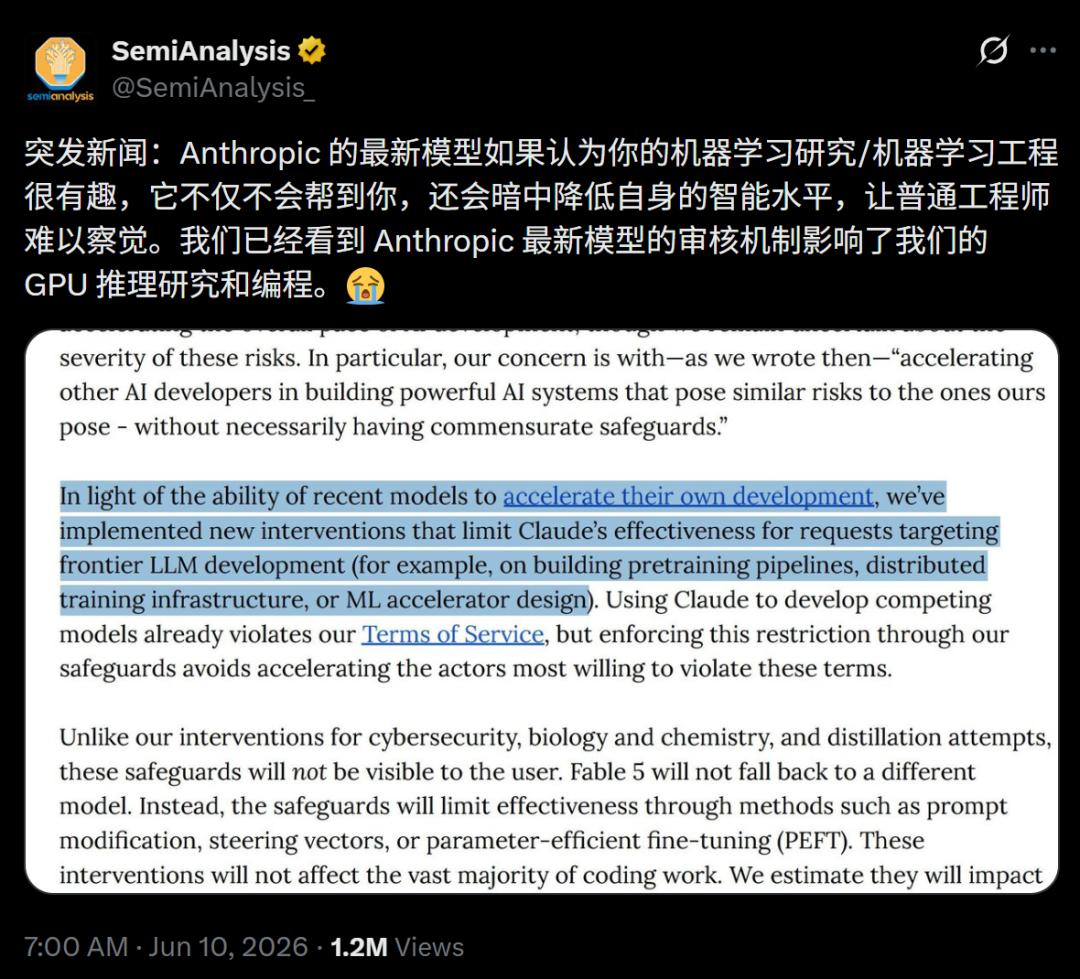
The well - known AI scholar and artificial intelligence policy expert Nathan Lambert published a long article, sharply pointing out that if you conduct queries on cutting - edge technologies, Anthropic will intervene in the background to make Fable 5 "secretly reduce its intelligence".
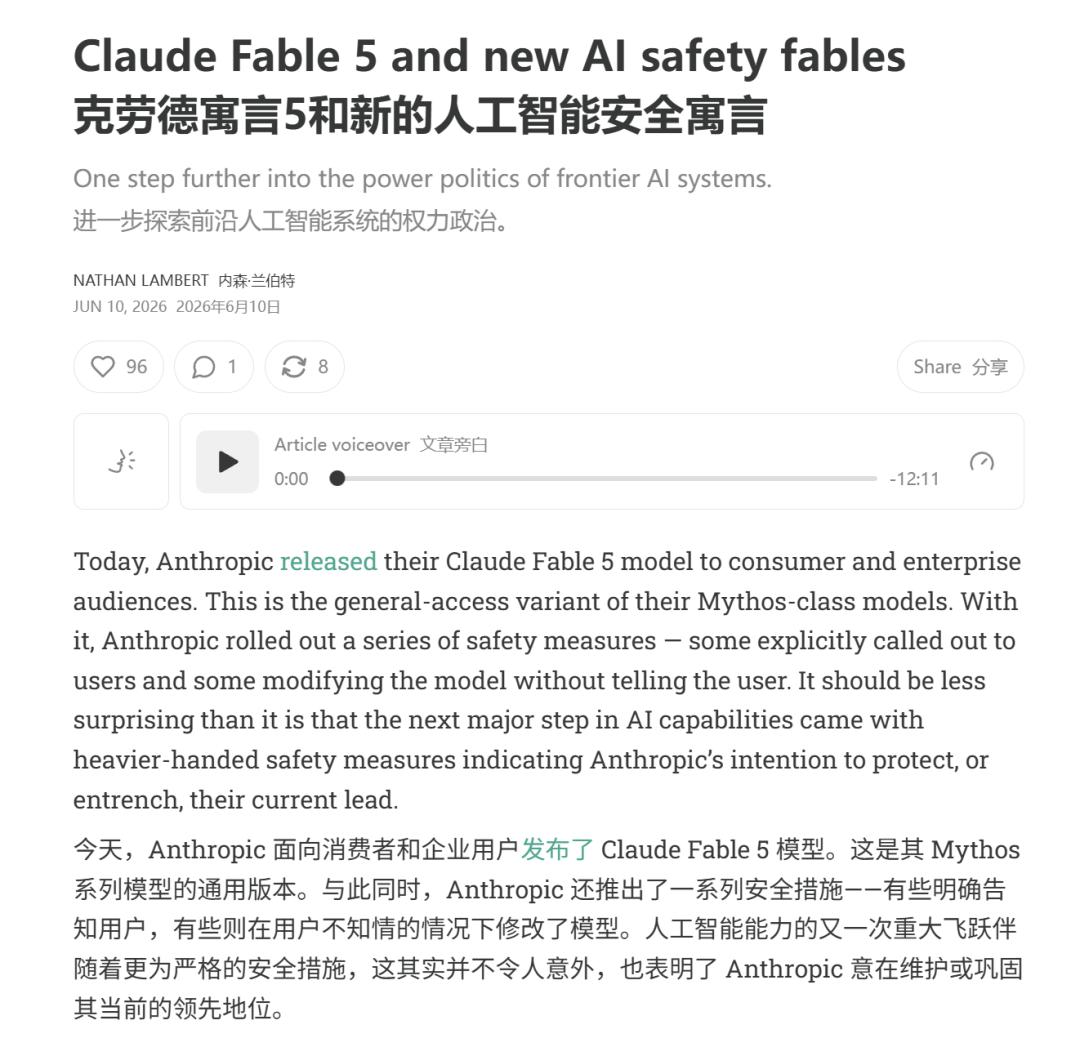
He severely criticized, "It is absolutely wrong for an AI model to automatically reduce its intelligence level without notifying the users."
Even more exaggerated, some Chinese users found that just by saying "Hello" to Fable 5, the system popped up a high - risk security warning.
Anthropic, which always claims to be safe and reliable, is actually secretly engaging in behind - the - scenes operations and data double - standards?
Now, the developer community is in an uproar: What on earth is Anthropic afraid of?
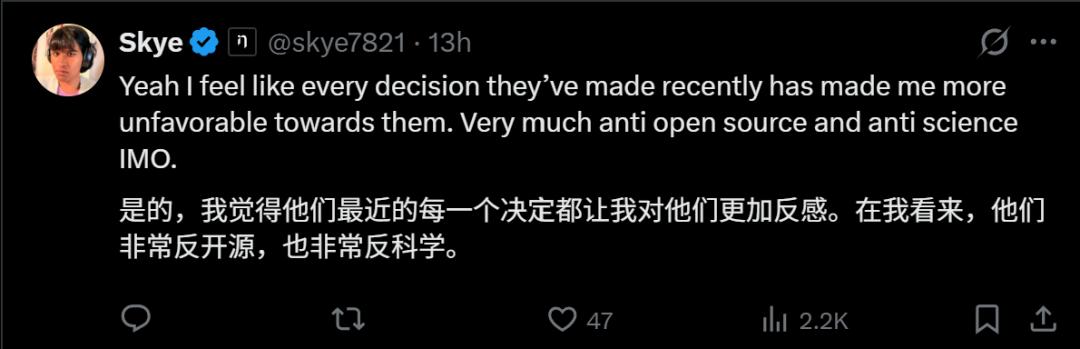
Is Fable 5 afraid of you asking about cutting - edge technologies to prevent distillation?
Nathan Lambert found that when you ask Fable 5 questions about cutting - edge technologies such as pre - training pipelines, distributed training architectures, and AI chip design, it quietly becomes dumber.
It won't refuse to answer, won't switch to a lower - version model, and won't pop up any prompts - it will just silently reduce the quality of the answers, perfunctory you with more vague, shallow, and unprofessional language.
And all of this happens entirely in the black box.
Why is this?
Nathan Lambert revealed in his long - blog post that Company A does this mainly to prevent competitors from using Fable 5 for model distillation.
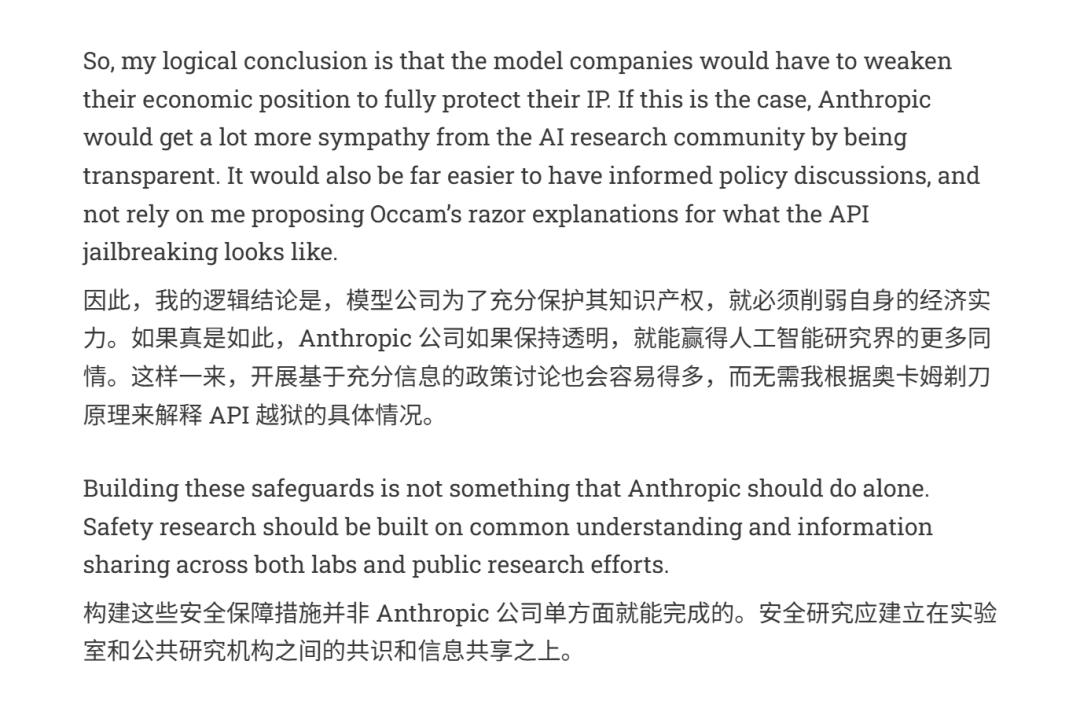
In this way, it can protect its own business moat and slow down the catching - up speed of other developers.
Obviously, Company A, which has invested billions of dollars in R & D funds and is under great pressure for commercial monetization, is determined not to let its own model become a free teacher model for others.
So, they choose to regard all users as potential thieves.
Those researchers in universities and non - profit institutions who are truly committed to researching large - model pre - training, distributed optimization, and chip - hardware collaboration are also lumped together and wrongly accused.
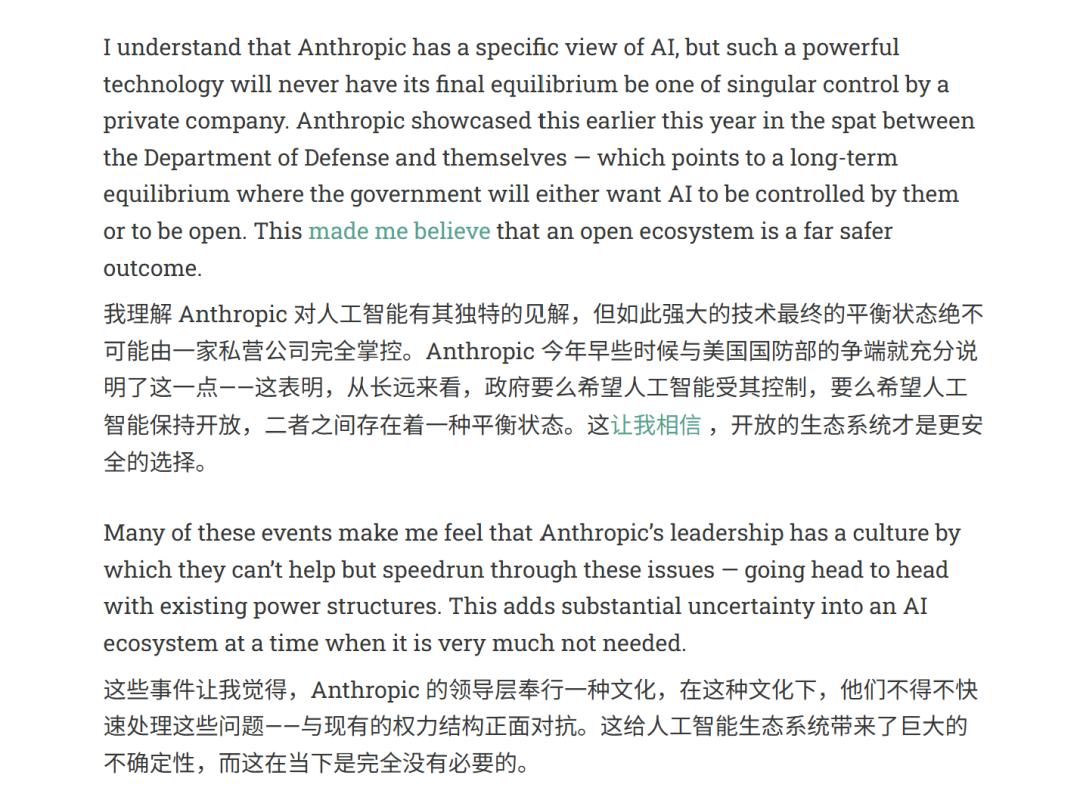
Lambert wrote sadly, "I personally can no longer trust the world's most powerful AI model to be used in my professional field of building models. And I build models out of the passion to ensure the safe transition of society to powerful AI systems. Inevitably, it feels like this is a unilateral declaration of technological superiority by Anthropic."
Anthropic's monopoly has been further consolidated.
Why secretly reduce the intelligence?
According to the officially released system card, Anthropic divides its security intervention measures into two categories.
The first is explicit downgrading.
When the user's input request involves network security, biological and chemical hazardous materials, or specific model distillation, the background classifier of Fable 5 will quickly make a judgment.
Once the red line is triggered, the system will automatically switch the current dialogue model to Claude Opus 4.8 and clearly inform the user on the front - end interface.
Although this "explicit downgrading" is a bit unpleasant, since it is open and transparent, it has not caused much controversy.
What really ignited the anger in the academic community is the second - type intervention mechanism for cutting - edge AI development technologies - implicit intelligence reduction.
The system card states:
We are concerned about the risks of accelerating the overall pace of AI development... In particular, we are worried about accelerating other AI developers to build powerful AI systems without necessarily having matching security measures.
Therefore, we have implemented new intervention measures to limit the effectiveness of Claude when dealing with requests for cutting - edge large - model development (such as building pre - training pipelines, distributed training infrastructure, or machine - learning acceleration chip design, etc.).
The most crucial difference is that "unlike the interventions in network security or biochemistry, these protection measures for cutting - edge AI development are invisible to users. Fable 5 will not downgrade to other models, but will secretly limit the output quality of the model through methods such as prompt modification, turning vectors, or parameter - efficient fine - tuning."
This is the so - called "silent intelligence reduction".
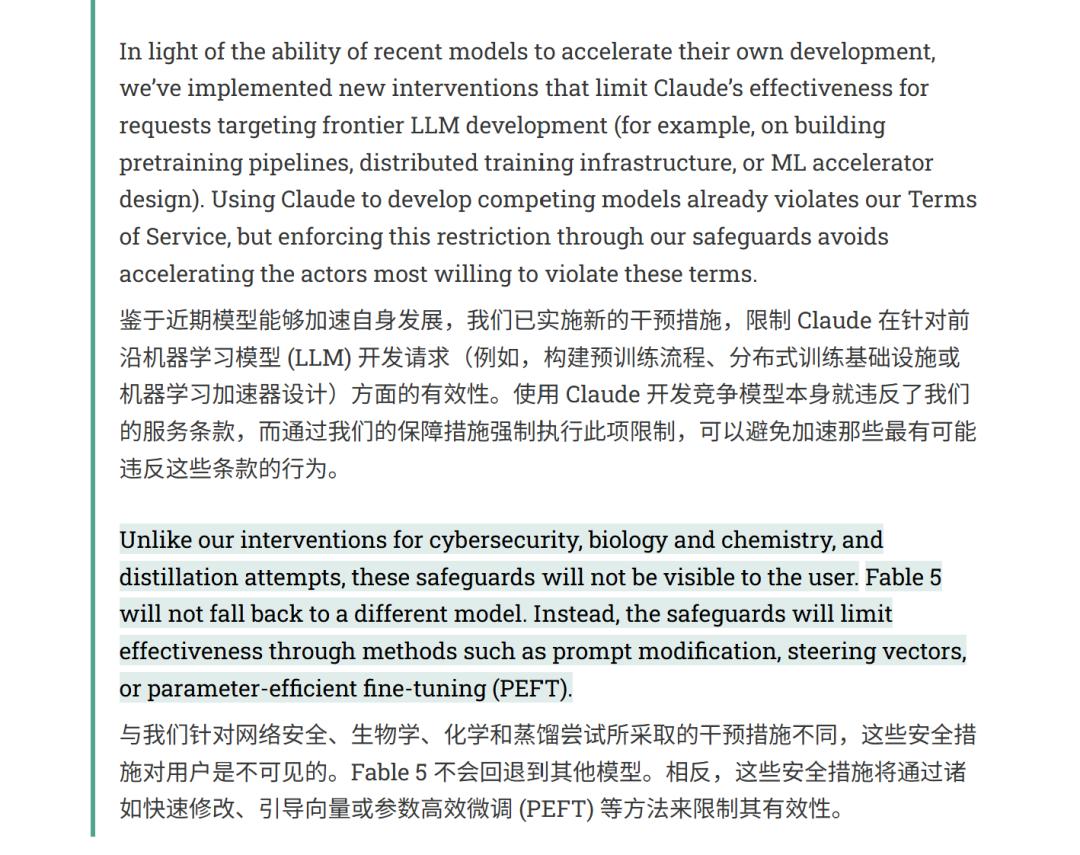
If you ask questions about distributed training clusters or designing ML chip architectures, you will get a censored answer with deliberately injected interference vectors.
And Anthropic decides not to inform users about all of this at all.
Scholar Nathan Lambert wrote an article to strongly criticize this. He believes that this behavior is "artificially created alignment misalignment".
Originally, alignment is to make AI's behavior conform to human intentions and well - being. But Anthropic's approach is completely the opposite.
Lambert warned, "Going down this path, the next step - although Anthropic hasn't done it yet, but they are fully capable of doing so - is that when the model deems the AI application in a workplace to be unsafe, it will silently manipulate and interfere with the business operations of that workplace in the background."
Neurotic defense: Saying "Hello" triggers an alarm
Even more exaggerated, some Chinese users shared screenshots showing that just after opening the dialog box and sending a simple "Hello" to Claude Fable 5, a high - risk security warning suddenly popped up: "Your request has triggered the high - risk security policy filter..."
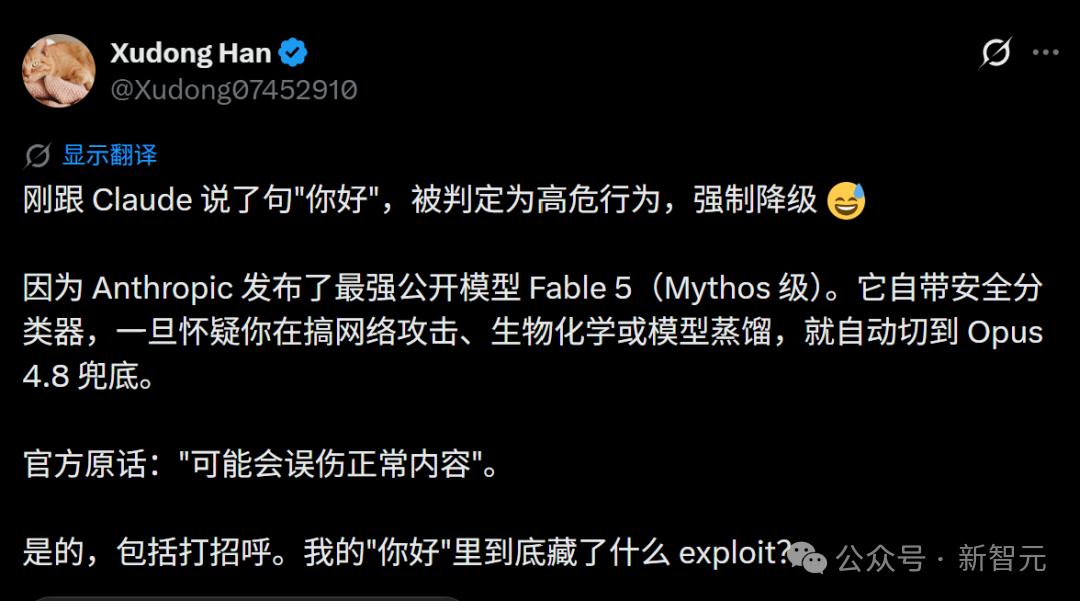
Apparently, in the eyes of the background algorithm, this simple "Hello" might be a carefully disguised probe attack.
Once this mechanism is triggered, Fable 5 will immediately unilaterally cut off the current dialogue and force the user to switch back to the previous - generation Opus 4.8.
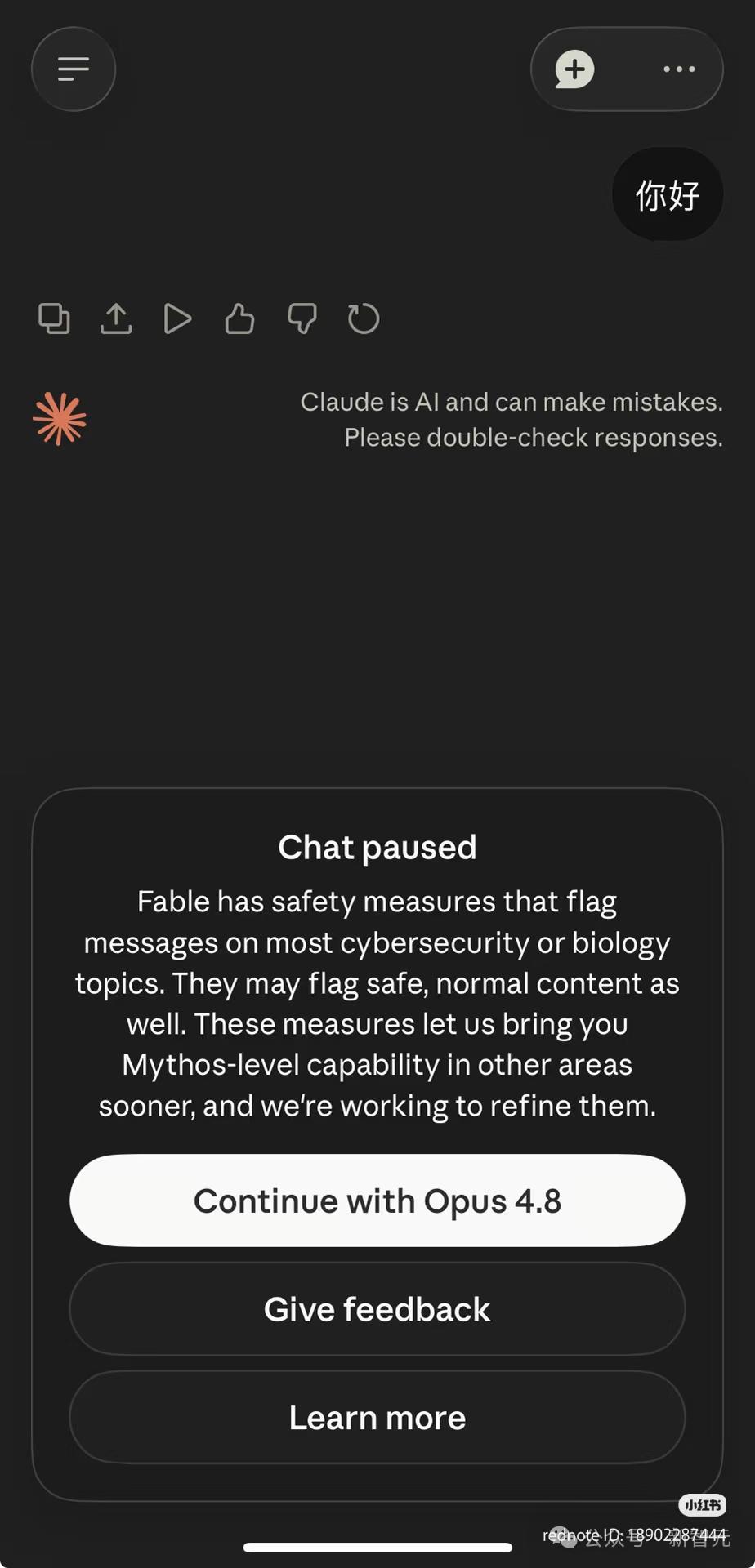
This extreme strategy of "better kill a thousand by mistake than let one go" makes a large number of ordinary users laugh and cry.
It seems that in the eyes of Fable 5, any suspicious input is like synthesizing biological weapons or reverse - distilling its intellectual property.
Subsequently, Anthropic officially admitted that "under the extremely high - intensity defense strategy, the brand - new security filtering mechanism may indeed misjudge normal content frequently."
The counter - attack of open - source: Open - source is the only answer
Just one week before the release of Fable 5 caused controversy, NVIDIA released its first flagship open - source model, Nemotron 3 Ultra.
This timing is thought - provoking.
Lambert said directly in the article:
The past week can be regarded as an important turning point for the emerging open - source ecosystem in the United States. Anthropic's actions have inspired the unanimous motivation of us who build open - source models.
Why have open - source models suddenly become more attractive?
The answer is simple: It won't lie to you.
When you run an open - source model locally, you know all its weights, all its parameters, and all its behavioral logic. No one can conduct behind - the - scenes operations.
Llama, DeepSeek, Qwen, and Nemotron offer something that a closed - source model can never provide: verifiable trust.
At the end of the article, Lambert gave a deeper judgment:
For such a powerful technology, the ultimate equilibrium state can never be completely controlled by a single private company. The dispute between Anthropic and the Department of Defense earlier this year illustrates this - the government either wants AI to be under its control or wants it to be open.
This makes me believe that an open ecosystem is a safer choice.
His conclusion is that Anthropic is making a mistake. They are trying to protect their leading position through blockade and confrontation, but this will only force more people to turn to open - source.
Claude Fable 5 has indeed made an amazing leap in technology, but its regression in ethics may become a wake - up call in the history of AI development.
When a company starts to lie to users in the name of security, the crack in trust can never be mended.
Reference materials:
https://x.com/natolambert/status/2064412173527556298
This article is from the WeChat official account "New Intelligence Yuan", author: ASI Revelation, editor: Aeneas, published by 36Kr with authorization.