Neuracle, BrainCo Sprint to Become the First BCI Listed Company, Financing Exceeds 4 Billion Yuan in Half a Year with a Growth Rate of 230%
The first stock in the brain-computer interface field is coming.
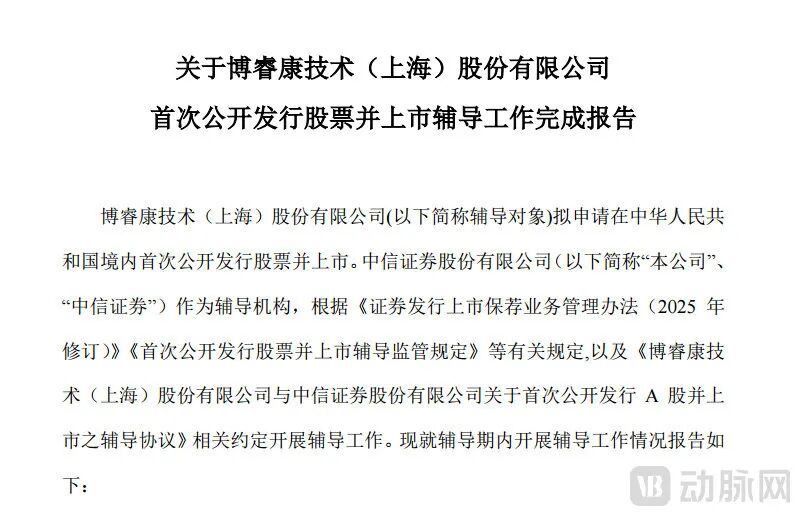
On June 9th, the IPO status of Boraycon Technology (Shanghai) Co., Ltd. (hereinafter referred to as "Boraycon") changed. The "Report on the Completion of the Counseling Work for the Initial Public Offering and Listing of Boraycon Technology (Shanghai) Co., Ltd." submitted by CITIC Securities, the IPO counseling institution, was posted on the website of the China Securities Regulatory Commission.
The "Report" shows that Boraycon completed the counseling on May 6th, taking three months since the submission of the counseling record in early February. So far, Boraycon has taken another step closer to becoming the "first stock in the brain-computer field".
Not only Boraycon, but also Strong Brain Technology is vigorously striving for the "first stock in the brain-computer field". As one of the "Six Little Dragons" in Hangzhou, Strong Brain Technology submitted an IPO application to the Hong Kong Stock Exchange in a confidential manner as early as the end of January, and there is no information disclosure yet.
Meanwhile, the brain-computer interface track has attracted a huge amount of capital in the past six months, far exceeding the total financing amount of last year. The golden age has arrived.
01
The sprint for the first stock, Boraycon takes a further step
Boraycon is one of the leading enterprises in the invasive brain-computer interface field in China. It was established as early as 2011. The core founders are from the Tsinghua University Neural Engineering Laboratory, which ranks among the top in the world in the field of brain-computer interfaces.
According to public information, Boraycon has strong R & D capabilities. It has obtained 17 technical patents and 9 software copyrights, and has undertaken or participated in the research project "Weak Information Acquisition Technology and Product Development in Brain-Computer Interfaces" of the 12th Five - Year National Science and Technology Support Program, as well as the research project "Research on Key Technologies and Clinical Applications of Neural Regulation and Intelligent Rehabilitation for Alzheimer's Disease" of the 13th Five - Year Key R & D Program of the Ministry of Science and Technology.
In October 2023, Boraycon's brain-computer interface product NEO completed its first implantation at Xuanwu Hospital of Capital Medical University. A patient who had been paralyzed in all four limbs for more than a decade was able to grasp a water bottle with "intention" and drink water independently after the surgery. This is also regarded as the world's first wireless minimally invasive brain-computer interface implantation.
Different from Neuralink, Boraycon's system belongs to the semi-invasive brain-computer interface. Its electrodes are placed on the dura mater between the skull and the cerebral cortex. This solution aims to balance the performance and trauma of the brain-computer interface. Although the signal acquisition is not as good as that of the fully invasive type, it only requires a minimally invasive surgery and does not damage brain cells. At the same time, the implant can be wirelessly powered by an external device, achieving a balance between minimally invasive and long-term use.
In the first implantation at Xuanwu Hospital, the patient was discharged home 10 days after the surgery.
Subsequently, Boraycon successively carried out feasibility tests at Beijing Tiantan Hospital, Shanghai Huashan Hospital, Jiangsu Provincial People's Hospital, etc., and achieved remarkable results. As of December 2025, 32 patients with cervical spinal cord injuries had completed the NEO implantation surgery at 11 hospitals across the country. According to the information disclosed at its clinical trial summary meeting, all patients successfully achieved home-based brain-controlled grasping assistance and rehabilitation training, achieving a 100% compliance rate at the main clinical endpoints.
These progresses have enabled Boraycon to take the lead in obtaining approval for brain-computer interface medical devices. In August 2024, Boraycon's "Implantable Brain Acquisition and Stimulation System" entered the special review process for innovative medical devices of the National Medical Products Administration, becoming the first brain-computer interface product in China to enter this process.
This product was officially approved for the Class III medical device registration certificate by the NMPA in March 2026, and the officially approved name was changed to the "Implantable Brain-Computer Interface Hand Movement Function Compensation System", becoming the world's first invasive brain-computer interface medical device to be approved for marketing.
Just one week later, after obtaining the catalog and coding of brain-computer interface products issued by the National Healthcare Security Administration, the medical insurance department of Shanghai carried out a rapid review through the green channel. In late March, this innovative product was included in the city's medical insurance medical consumables catalog and posted on the Sunshine Procurement Platform, truly opening up the complete closed-loop of "clinical use - charging - medical insurance reimbursement".
In addition, Boraycon's transcranial electrical stimulator and electroencephalograph have also obtained medical device registration certificates, which are mainly used for neural regulation, rehabilitation treatment assistance, and the monitoring and evaluation of brain functions.
The products can be widely used not only in scientific research fields such as neuroscience, psychology, human factors engineering, kinematics, and management, but also in clinical medical fields such as the diagnosis, treatment, and rehabilitation engineering of clinical neurological diseases. The R & D achievements and technical capabilities have been widely recognized by experts in the fields of neural engineering and clinical medicine at home and abroad.
As a star enterprise in the invasive brain-computer interface field in China, Boraycon has always been favored by the capital market. In December 2015, Boraycon completed a 12 - million - yuan angel round of financing, being one of the early domestic brain-computer interface enterprises to complete financing. In March 2018, it completed a 30 - million - yuan Pre - A round of financing. Since then, Boraycon has successively completed multiple rounds of financing, with well - known institutions such as Sequoia Capital China, Songhe Capital, Huakong Fund, Pudong Venture Capital, and Baidu Ventures joining in.
In 2025, it was reported that Boraycon completed a D + round of financing, with a post - investment valuation reaching 3.5 - 4 billion yuan. After that, Boraycon submitted an application for listing counseling, aiming at the Science and Technology Innovation Board and striving to become the first stock in the brain-computer interface field.
02
With a valuation approaching 10 billion yuan, Strong Brain Technology still has a chance to be the first stock
Compared with Boraycon, the rumor of Strong Brain Technology's IPO, one of the "Six Little Dragons" in Hangzhou, emerged even earlier. As early as the end of January, Strong Brain Technology submitted an IPO application to the Hong Kong Stock Exchange in a confidential manner.
Since its establishment in 2015, Strong Brain Technology has completed six rounds of financing. It completed the angel round and Pre - A round of financing in 2016, and then completed the A round of financing in 2019, pushing the company's valuation to 400 million US dollars. Since 2025, the concept of brain-computer interface has become extremely popular. Strong Brain Technology completed financing continuously in a short period of time, becoming one of the biggest beneficiaries of this wave of brain-computer interface fever in China.
Especially in January this year, Strong Brain Technology completed a financing of up to 2 billion yuan, breaking the financing record in the domestic brain-computer interface field. Even on a global scale, this financing of Strong Brain Technology is quite remarkable, being the second - largest financing in the brain-computer interface field after Neuralink.
After completing this round of financing, the media believes that its valuation has reached about 8.8 billion yuan, higher than Boraycon's valuation (about 3.5 billion yuan).
Strong Brain Technology's technical direction is slightly different from that of Boraycon. It is a representative of non - invasive brain-computer interfaces in China.
At that time, the maturity of brain-computer interface technology was limited, and there was no successful precedent of implanting an invasive brain-computer interface like Neuralink. The general acceptance of invasive brain-computer interfaces was limited. Non - invasive brain-computer interfaces avoid the risk of craniotomy, have higher public acceptance, and have relatively stronger consumer attributes, which is also one of the reasons for its higher valuation.
Currently, Strong Brain Technology's non - invasive brain-computer interfaces are widely used in multiple fields such as medical rehabilitation, health management, and education. However, its applications in the medical field are mainly focused on improving sleep, reducing stress, and attention training, with obvious consumer - health attributes.
In addition, Strong Brain Technology has further expanded the application scenarios of brain-computer interfaces. Since its establishment, it has been continuously researching and developing intelligent bionic hands and intelligent lower limbs and has obtained FDA certification. Through years of accumulation, it has made technological breakthroughs in this field and successfully developed the world's first mass - produced intuitively controlled intelligent bionic hand last year.
This is also related to the current popular concept of embodied intelligence, further pushing up its valuation.
In the promotional video, Strong Brain Technology's product can not only easily pick up and then crush an egg with great force, but also instantly switch to a gentle mode to pick up the fragile eggshell. The whole process does not require manual intervention and is completely completed autonomously by the force control of the tactile bionic hand, showing that it has operational flexibility comparable to that of humans.
From the video, Strong Brain Technology's intelligent bionic hand can accurately capture the user's electromyographic and neural signals, achieve five - finger coordinated operation, and help upper - limb disabled people regain fine motor ability.
Strong Brain Technology hopes that its brain-computer interface can improve the conditions of 10 million patients suffering from brain diseases such as autism, ADHD, Alzheimer's disease, and insomnia, and help 1 million limb - disabled people restore their daily lives by wearing neuro - controlled prostheses in the next 5 - 10 years. It also hopes that ordinary people can directly interact with the world with their minds through brain-computer interface devices and experience the future of human - machine integration.
Currently, Strong Brain Technology's products have been widely launched and have achieved large - scale revenue. Considering that most brain-computer interface enterprises are still in the clinical stage, this undoubtedly adds more chips to its IPO.
03
Crazy! The financing in half a year exceeds 4 billion yuan, a 230% surge compared to last year
The sprint for IPOs by Strong Brain Technology and Boraycon has added another fire to the already hot domestic brain-computer interface market.
Public information shows that the primary market in the brain-computer interface field has become increasingly popular in the past one or two years. In 2025, there were a total of 26 financing events in the brain-computer interface field, with a total financing amount of 1.778 billion yuan. Among them, there were more than 6 financing events with an amount exceeding 100 million yuan, and the financing amount record has been continuously refreshed. Compared with the 7 financing events and a financing scale of 230 million yuan in 2024, there has been a significant increase.
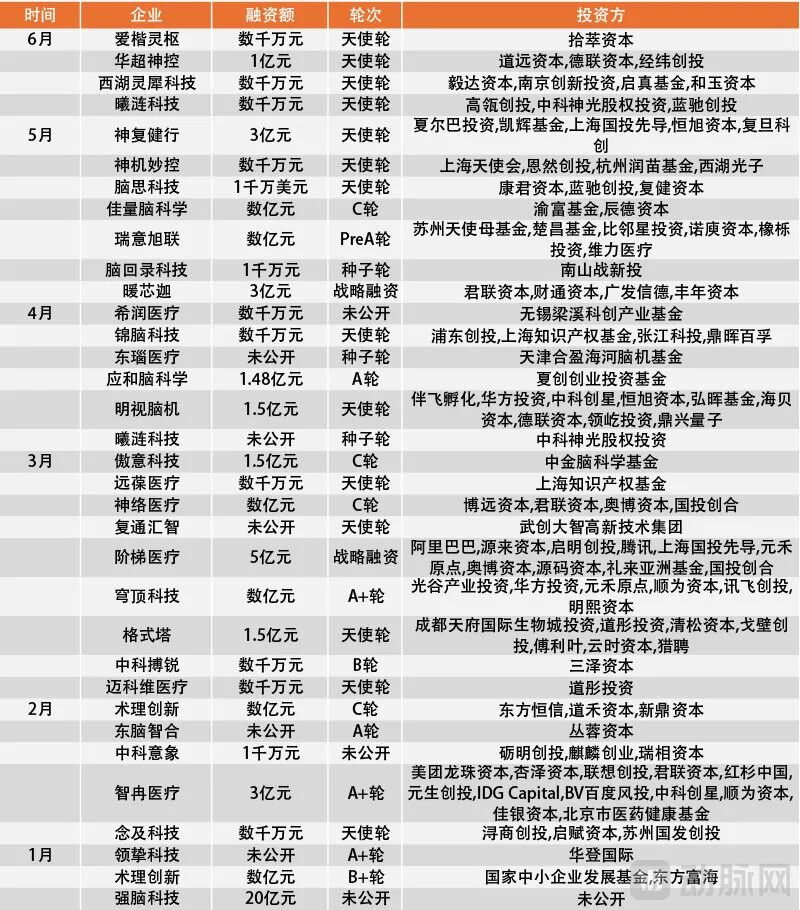
Incomplete statistics of brain-computer interface financing events in 2026 (Charted by Arterial Network)
Since this year, affected by various favorable factors, the enthusiasm in the primary market of the brain-computer interface has remained high. According to incomplete statistics, in the past six months, 34 financing events have been completed in the domestic brain-computer interface field, and the financing scale has further increased. Only counting the financing events with clear financing amounts, the total has exceeded 4 billion yuan, far surpassing the total financing amount of last year. It is a foregone conclusion that the annual financing scale will increase significantly and reach a new historical high.
In addition to the rapid progress in financing, the brain-computer interface has also received strong support from policies. On January 1, 2026, the "Medical Devices Using Brain-Computer Interface Technology - Terminology" officially came into effect. This standard, formulated in the second half of 2025, is the first brain-computer interface medical device standard in China and will lay the foundation for the high - quality development of the brain-computer interface medical device industry.
In terms of supervision, Boraycon's brain-computer interface officially obtained the Class III medical device registration certificate from the NMPA in March, becoming the world's first invasive brain-computer interface medical device to be approved for marketing. The "Implantable Wireless Brain-Computer Interface System" of Jieti Medical and the "Deep Intracranial Electrodes" of Zhiran Medical have also entered the special approval process for innovative medical devices.
In March, at the Fourth Session of the 14th National People's Congress, the brain-computer interface was written into the government work report for the first time and was clearly listed as one of the future industries to be cultivated and developed, alongside quantum technology and embodied intelligence. This provides the highest - level policy endorsement for the entire industry, indicating that the country will increase scientific and technological research and industrial support in this field.
Taking this as an opportunity, many places have launched brain-computer interface development plans. So far, Jiangsu, Guangdong, Hainan, Beijing, Tianjin, Sichuan, etc. have launched provincial action plans.
Taking Jiangsu as an example, nine departments such as the Jiangsu Provincial Department of Industry and Information Technology issued the "Action Plan for the Innovative Development of the Brain-Computer Interface Industry in Jiangsu Province" in March.
The quantitative goals mentioned in the "Plan" include: by 2027, the province will build no less than 2 provincial - level brain-computer interface industrial agglomeration areas. By 2030, the province will promote no less than 20 brain-computer interface products to pass the medical device registration and approval, create 2 - 3 leading brain-computer interface enterprises with domestic and international influence, and build a high - quality data set of no less than 20,000 standard test and patient samples.
On the clinical side, the domestic brain-computer interface has also continuously achieved breakthroughs. Taking Boraycon as an example, its brain-computer interface medical device has started commercial implantation in many hospitals after being approved, and patients can use the brain - controlled grasping assistance function at home after the surgery.
On June 8th, the first high - resolution visual brain-computer interface GCP clinical trial in China, jointly promoted by the team of scientist Yang Jiawei from Wenzhou and Nuoxinjia, was successful. The patient was able to recognize letters the day after the postoperative startup and debugging, and the expected visual acuity can be restored to 0.5. This is also a major breakthrough in the second - largest clinical application direction of brain-computer interfaces, visual reconstruction.
At the end of May, the semi - invasive brain-computer interface system "Beinao No. 1" independently developed in China announced that it had completed 16 implantations at 16 research centers. The longest implantation time exceeded 1 year, and the system has been operating safely for a cumulative total of more than 55,000 hours, helping patients achieve mind - controlled robotic arms and motor function reconstruction.
According to the plan, "Beinao No. 1" will complete 40 implantations this year and promote the clinical verification of "Beinao No. 2" in the second half of the year. In 2027, "Beinao No. 1" will start pilot promotion in qualified tertiary - level A hospitals across the country.
Jieti Medical completed the clinical implantation of the 256 - channel wireless high - throughput invasive brain-computer interface system (WRS02) to be registered with the help of its self - developed surgical robot at the beginning of this year and obtained effective verification of the brain - controlled interaction function. It plans to carry out a large - scale multi - center registration clinical trial in mid - 2026 and complete the enrollment and implantation surgery of about 40 patients within the year, so that the total number of its clinical implantations is expected to approach or even exceed that of Neuralink.
In addition, Zhiran Medical also launched the first domestic prospective, multi - center clinical trial of a full - implantable brain-computer interface system with more than 100 channels in May. This clinical trial, involving 32 patients from 11 hospitals, is also the first domestic 128 - channel full - implantable brain-computer interface GCP clinical trial.
Although the brain-computer interface is