After programmers, finance professionals are about to face their most brutal reshuffle.
Over 100,000 people - this is the number of layoffs in the global technology industry in the first five months of 2026. In the whole year of 2025, this number was 124,000.
Almost achieving last year's annual target in less than half a year, the impact of AI on the technology industry is far more profound than expected. However, if you say that AI is the chief culprit for reducing job opportunities, Jensen Huang, the founder of NVIDIA, would be the first to disagree. Recently, he has publicly stated on multiple occasions that blaming layoffs on AI is "too perfunctory."
Jensen Huang may be right, but we can't deny that AI is indeed structurally changing the industry landscape. The technological wave sweeps across every industry equally, regardless of whether you were once at the top of the pyramid.
After programmers, the next group to face a brutal reshuffle may be those in the financial industry.
I'm not scaremongering. Recently, I had a chat with a friend in the investment circle. He said that the barriers to quantitative investment are rapidly decreasing. In the past, analysts were needed to explain trends and make reports for clients because people didn't have much time to obtain information. But now, you can get it done in an afternoon just by chatting with AI.
Data can better illustrate the problem. In March this year, Morgan Stanley announced about 2,500 layoffs. Standard Chartered Bank plans to cut nearly 8,000 positions by 2030. Goldman Sachs has laid off a cumulative 3,000 people in 2026... Is it because the company's performance is poor? In 2025, Morgan Stanley's revenue and net profit both reached record highs. Standard Chartered and Goldman Sachs also maintained high growth rates.
The better the performance, the more severe the layoffs. Admittedly, the contraction of the financial industry is influenced by the macro - economic cycle and interest rate fluctuations. But in the overall situation of cost - reduction and efficiency - improvement, we have to admit a cruel truth: AI is structurally decomposing the professional value of financial workers. Especially entry - level positions are being replaced by AI in batches. According to a Randstad report, the recruitment volume of entry - level positions (0 - 2 years of experience) in the global financial services industry has declined by 24% compared to the beginning of 2024.
This makes me think of the impact of AI on the content industry. In the past, mature authors needed an "assistant" to collect materials, check data, and transcribe recordings for them. Now, this role has been completely replaced by AI.
Cowork, released at the beginning of the year, also deeply shocked the SaaS industry. It can replace manual operations and autonomously perform repetitive tasks, forcing practitioners to improve their professional abilities.
AI has eliminated many people, but it hasn't eliminated any industry. It just widens the gap between the excellent and the mediocre.
From programmers to editors, similar crises have repeatedly occurred, and now it's the turn of financial analysts. My friend recently looked at resumes and would give priority to candidates with experience of using AI Agents to complete investment research tasks.
After chatting with him, I went home and tried to use AI to make several investment reports. Since Codex was recently blocked, I tested several mainstream Agents, and Kimi Work's performance was the closest to the way analysts work.
If you are an analyst or a consultant, then congratulations, AI will greatly free up your time. Of course, the premise is that you can use it.
The inflection point of the financial industry has arrived. How can you not miss the ticket to the next era?
01. AI is Accelerating the Job - Snatching, and This Time It's the Financial Workers' Turn
When AI flattens the information gap, the biggest difference between you and your peers may be whether you can use AI. Just like in the content industry, the replaced positions are those with repetitive and low - creativity tasks. Smart authors, on the contrary, use AI to improve efficiency and quality.
So, the scariest thing is not that AI can replace human work, but that while your colleagues have boarded the rocket, you are still pedaling a tricycle.
The same goes for the financial industry. A large part of the work in consulting, finance, and strategic analysis is like an assembly line, such as pulling data, cleaning tables, making first drafts, organizing PPTs, and following news flow... These are collectively referred to as "dirty work." In the past, each analyst had to spend a lot of time on these tasks. Now, only one Agent cluster can take over all of them.
You may still have no perception of this. Let me use Kimi Work to demonstrate how far AI has evolved.
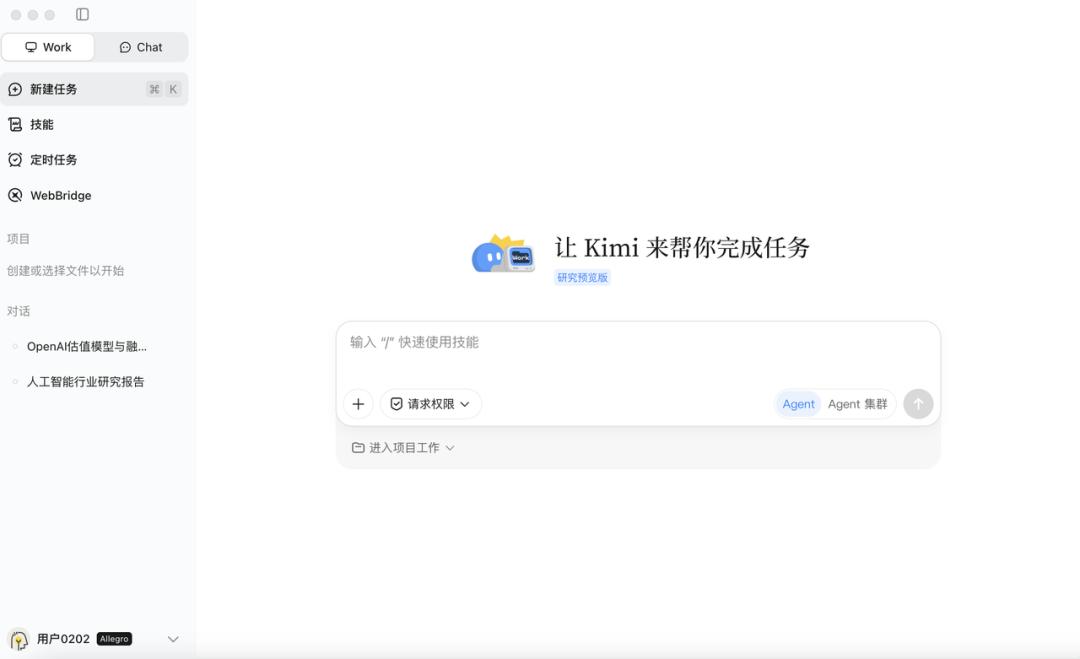
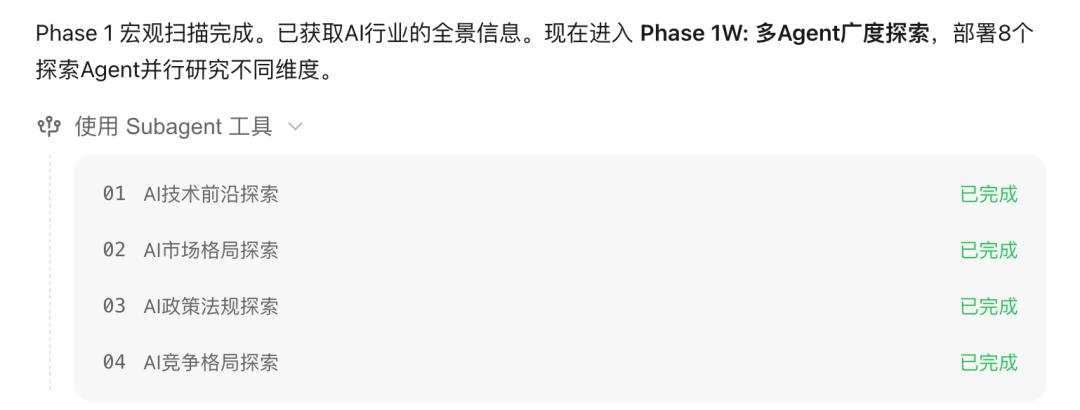
I gave it the task of making an analysis report on the artificial intelligence industry. Instead of directly giving the result like other agents, it first formulated a research plan and then assembled a research team according to the plan, assigning tasks like a manager.
Eight AI researchers were respectively responsible for multi - dimensional research such as technological frontiers, market landscapes, and policies and regulations. Multiple tasks were carried out simultaneously, which not only improved efficiency but also made up for the lack of a single perspective and avoided being one - sided.
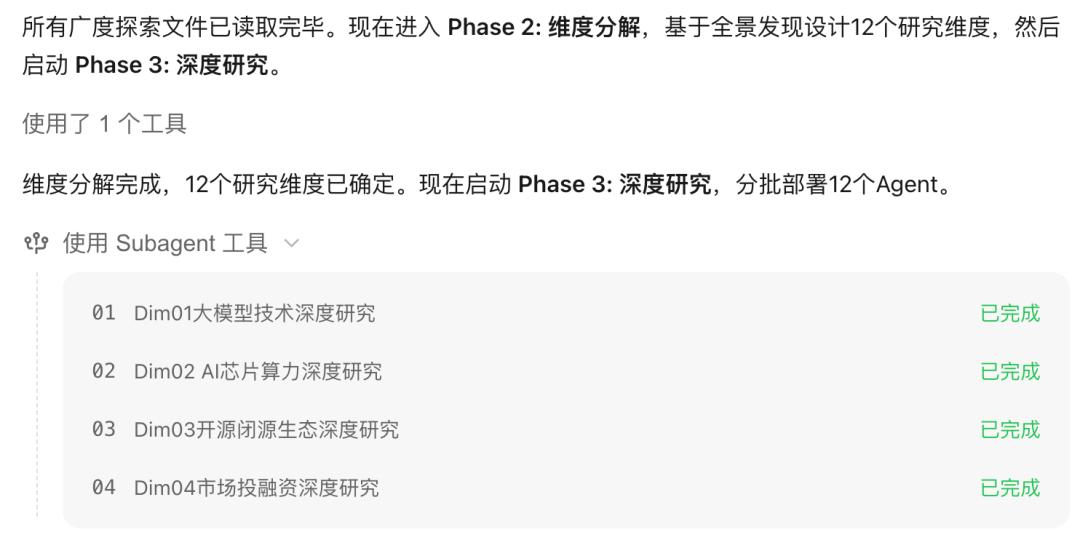
After the first round of research, it further decomposed into 12 more detailed dimensions, including large - model technology, AI chip computing power, open - source and closed - source ecosystems, and market investment and financing structures. At this point, I found that it was not just executing tasks but thinking and coordinating.
After all agents completed their tasks, it would cross - verify the data, and the final delivered document would also indicate all citation sources. The official built - in database also includes professional financial databases such as Tianyancha, Flush, and the World Bank.
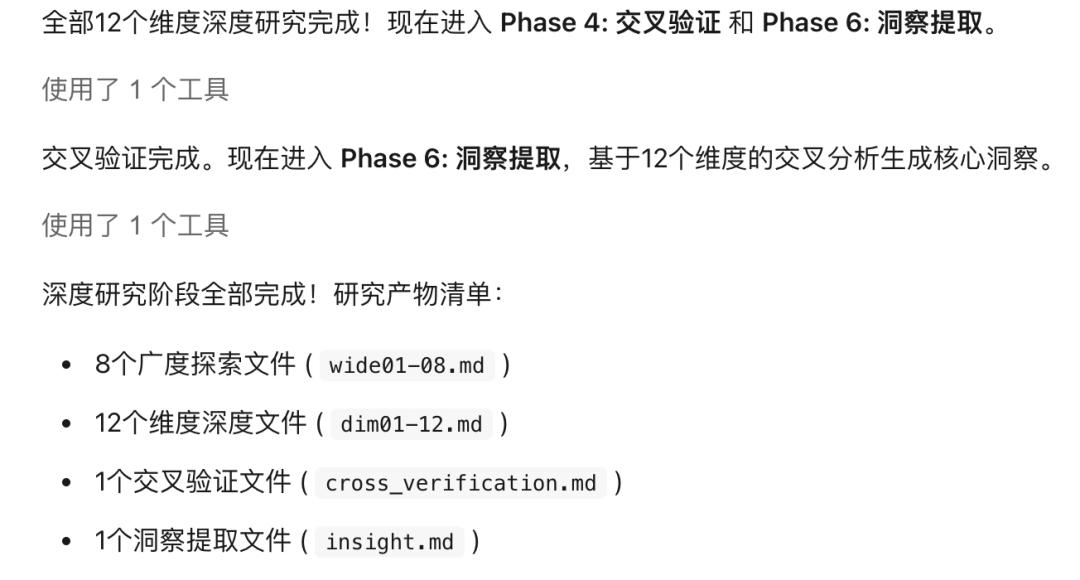
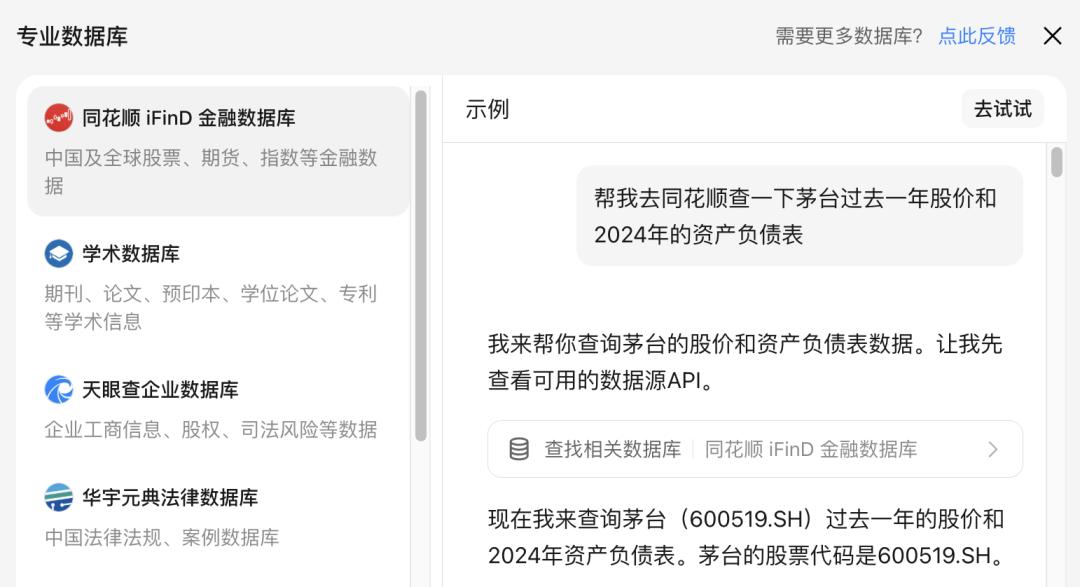
You can feel that Kimi Work has strengthened Kimi's ability in long - text processing, enabling large - scale input and output of long texts in multiple formats.
The output of this agent in 20 minutes may take several junior analysts three days and three nights to complete. I tested it, and whether it's making a valuation model or a financing PPT, the level is very stable.
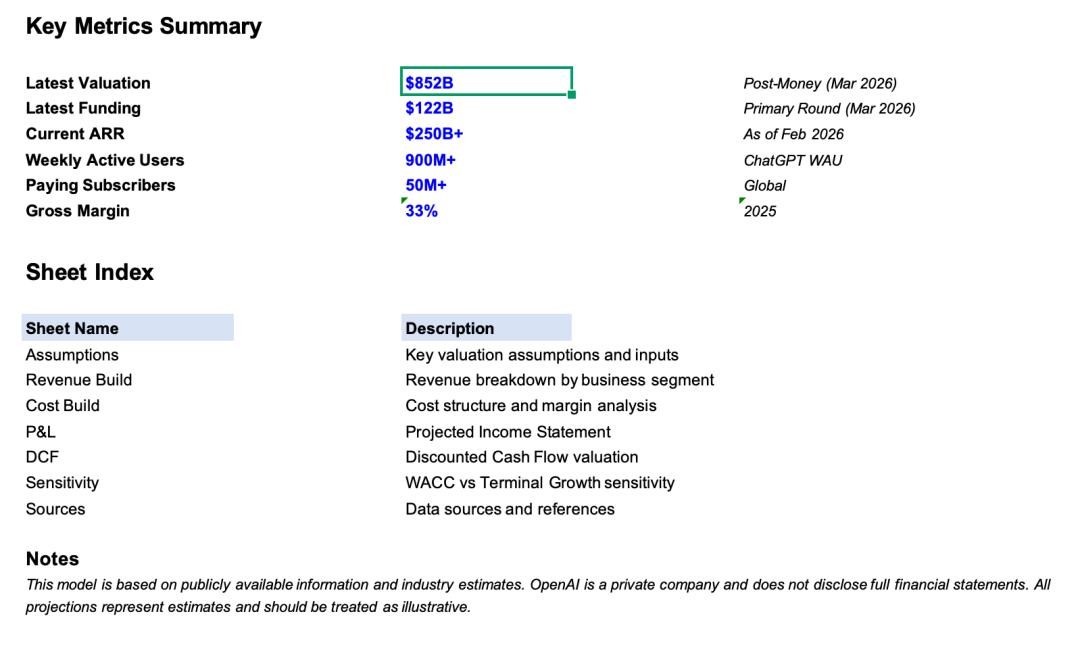
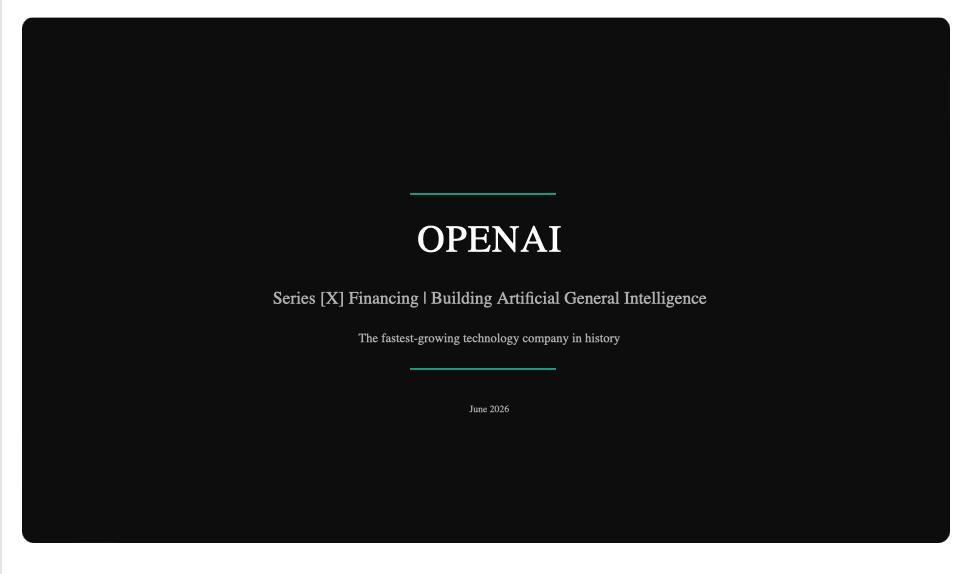
Facing the continuously evolving agents, how can a junior analyst find their place? Telling the boss that AI doesn't work and continuing to do things manually to prove one's value? As someone who has experienced the content industry, I can clearly tell you that this way won't work. In the face of the technological wave, any resistance is fragile.
The best way to stop a car is not to stand in front of it, but to learn to drive it.
02. It's Not People That Are Being Replaced, but Low - Creativity Jobs
Jensen Huang is not lying. All industries need to clarify a fact: AI is not replacing humans, but low - creativity jobs.
Currently, whether it's Codex, CoWork, or KimiWork, they are all lowering their usage thresholds, allowing more people in various industries who can't write code to use them easily.
These agents are not meant to replace analysts, but to automate low - value, cumbersome, and repetitive work, enabling each practitioner to create greater value.
So, the way out for junior analysts is not to fight against AI, but to embrace it and learn human - machine collaboration. Put the released energy into training more valuable abilities such as judgment and decision - making.
In the past, junior analysts spent most of their day on mechanical and repetitive basic work. After dealing with all the trivial matters, they were already physically and mentally exhausted and had no extra energy to calmly sort out industry logic and dig deep into the enterprise's value.
But now, this inefficient work model is being completely rewritten.
Open the agent, clearly issue research instructions, and the work that used to take an entire morning to barely finish can be delivered within half an hour. A large amount of time is released. How to use this time is the key to determining the professional ceiling.
After communicating with several practitioners, I found that analysts in different industries have reached a consensus: Using agents to improve efficiency is only the most superficial benefit. What really sets them apart from their peers is that after getting rid of the role of data porters, they can improve core abilities such as data interpretation, logical reasoning, business insight, and complex communication.
Some people found the deficiencies in their thinking dimensions during the collaboration with agents, and some discovered better industry research angles. For financial workers, agents can be competitors, work partners, or good teachers and friends. Their roles depend on the people using them.
For example, my friend mentioned that after using agents for a long time, the biggest change is that he can "ask questions" better. Many times, accurately expressing one's needs is more difficult than answering questions. Being able to ask questions means being able to think. In the past, people always had many reasons to avoid thinking. Now, AI leaves people with no excuse to escape.
Complex decision - making and judgment abilities, the acquisition and interpretation of first - hand information, creativity and forward - looking insights, and customer relationship management are the core values of financial practitioners. When the trend of AI entering the workflow is irreversible, the value of "people" will be more prominent than ever. For example, agents can generate research reports, but understanding the real needs of communication partners, flexibly adjusting expressions, and establishing long - term trust bonds are unique human abilities.
In the content industry I'm in, human - machine collaboration has become the standard in the workflow. I think it's only a matter of time before the financial industry reaches this stage. But in any case, tools are just amplifiers. Those who can think independently and have a long - term vision will always be the ones who determine the upper limit of practitioners and create irreplaceable core values.
03. In Conclusion
Although two years have passed, I still can't forget the shock when I first used AI to generate an article. The fear of the impending disappearance of professional barriers and the doubt about self - value hit me like a tide. And in places I can't see, countless people are experiencing the same existential crisis.
How should we deal with ourselves?
After being in the self - media industry for so many years, I've found that the world is like a huge Rashomon, and the truth depends on the perspective. Facing the occupational crisis caused by AI, what fate each individual will face also largely depends on the perspective.
Tools like Codex and Kimi Work seem to bring a crisis, but in fact, they are also creating opportunities.
Another statement by Jensen Huang that is rarely quoted by the media is that the number of software engineers globally has increased instead of decreased. From 2023 to 2026, the number of AI programming calls soared from 300 million to 1.4 billion, and the number of developers increased by about 20% - 50%, with the total number exceeding 47 million.
In the financial industry, the impact of AI also has two sides. A Citigroup report shows that about 54% of positions in the US banking industry may be automated, and 12% of positions will be enhanced by AI. Jamie Dimon, the CEO of JPMorgan Chase, also publicly said that the company may hire more AI specialists in the future while cutting traditional banker positions.
These signs all indicate that AI is reconstructing the financial occupation system, eliminating low - value positions, and giving birth to new positions with more technical content and core competitiveness.
Enterprises blaming layoffs on AI cannot cover up the deficiencies in their business strategies. As individuals, what really makes you replaceable is not a lack of ability, but stopping learning and thinking.
Since the era of electricity, every technological wave has accelerated the operation of society and created more abundant and valuable work content. Now, in the AI era, the so - called "occupational crisis" will not stop. As the relationship between AI and humans is constantly reshaped, everyone needs to constantly think about their own value. This is a proposition that we can't escape in the next 10 years or even longer.
So, financial practitioners, it's time to figure out a question: In an era where AI is deeply involved in work, where does your irreplaceability come from? The industry reshuffle has begun. Actively learning and redefining your ability boundaries may be the most reliable way to get through this change.
This article is from the WeChat official account "Jin Jibo Finance," written by the Jin Jibo Big Business Group and published by 36Kr with authorization.