European Market Insights: Regional Divergence, Investment Shifts, and New Compliance Regulations
The four major regions in Europe have distinct characteristics and different development paths
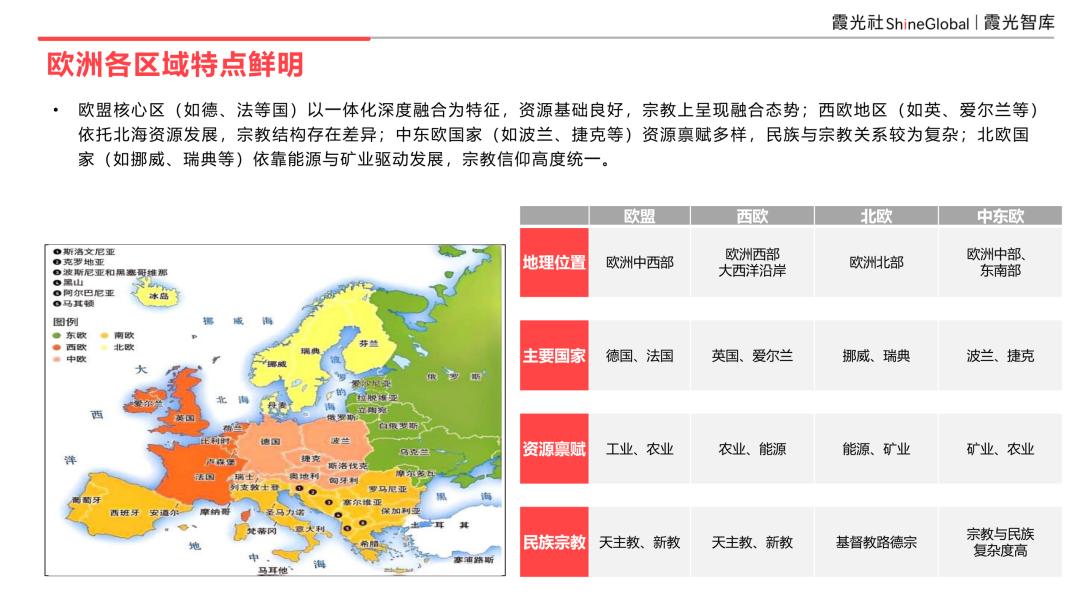
There are significant differences among different regions in Europe in terms of resource endowment, religious beliefs, and development models. The core area of the EU (such as Germany and France) is characterized by in - depth integration. It has a good resource foundation, and religious beliefs show a trend of integration. Western Europe (such as the UK and Ireland) develops relying on North Sea resources, and there are differences in religious structures. Central and Eastern Europe (such as Poland and the Czech Republic) has diverse resource endowments, and the relationship between ethnic groups and religions is complex. Northern Europe (such as Norway and Sweden) is driven by energy and mining industries, and religious beliefs are highly unified. This regional heterogeneity forms the basic premise for understanding the European market pattern.
There is an obvious hierarchical differentiation in regional economies. Northern Europe is wealthy and leading, while there is a significant gap in Central and Eastern Europe
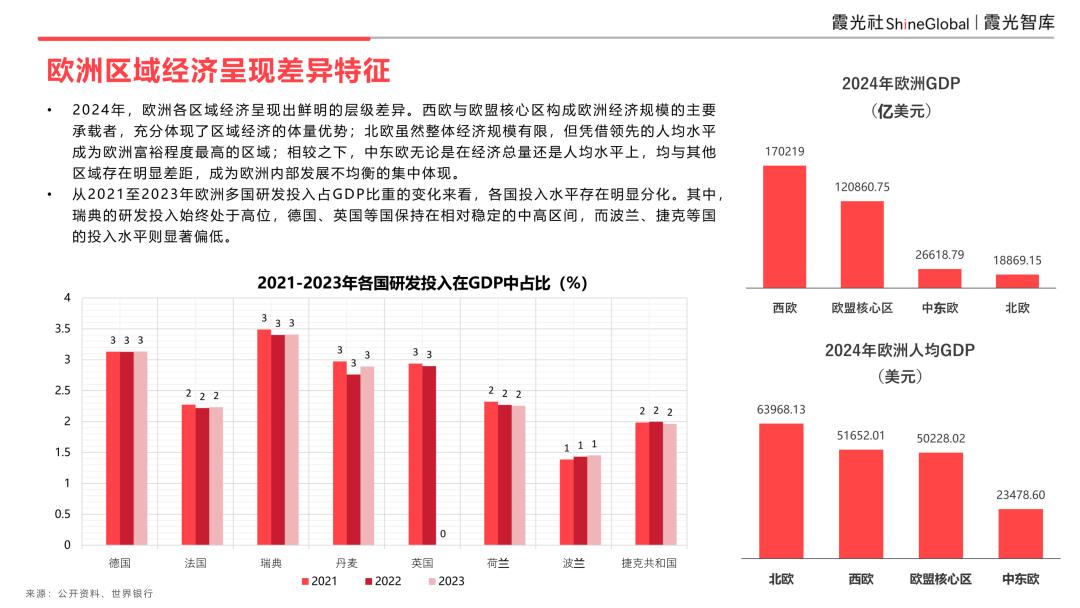
Based on the differences in regional characteristics, the economic performance in Europe also shows a distinct hierarchical differentiation. In 2024, Western Europe and the core area of the EU are the main carriers of the European economic scale, reflecting the volume advantage of the regional economy. Although the overall scale of Northern Europe is limited, it has become the wealthiest region in Europe with its leading per - capita level. Central and Eastern Europe has an obvious gap with other regions in both total economic volume and per - capita level, which is a concentrated manifestation of the unbalanced development within Europe. From the perspective of the proportion of R & D investment in GDP (unit: %) from 2021 to 2023, Sweden has been at a high level, Germany and the UK have remained in a stable medium - high range, while Poland and the Czech Republic are significantly lower, further confirming the gap in innovation ability among regions.
China's investment in Europe has generally increased, and the industry layout shows a differentiation between flow and stock
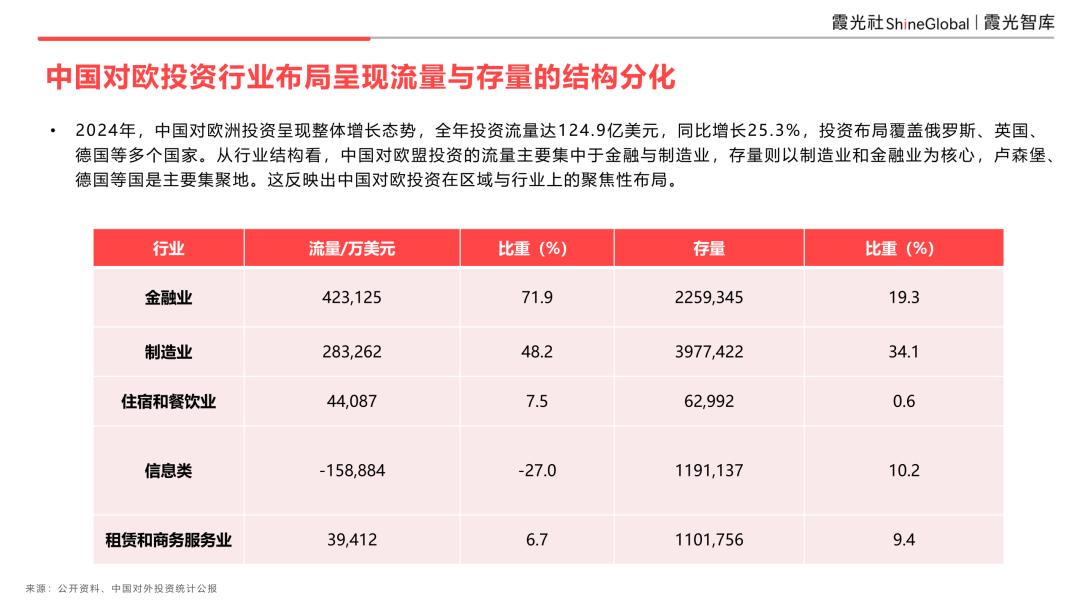
Against the background of this economic differentiation, China's investment in Europe shows structural characteristics. In 2024, the flow of China's investment in Europe reached 1.249 billion US dollars, a year - on - year increase of 25.3%, covering many countries such as Russia, the UK, and Germany. From the perspective of the industry structure, the flow of investment in the EU is mainly concentrated in the financial industry (71.9%) and the manufacturing industry (48.2%), while the stock is centered on the manufacturing industry (34.1%) and the financial industry (19.3%), with Luxembourg, Germany, etc. being the main gathering places. This shows that China's investment in Europe presents a focused layout both regionally and industrially.
The acceleration of population aging has become the core challenge for Europe's macro - development
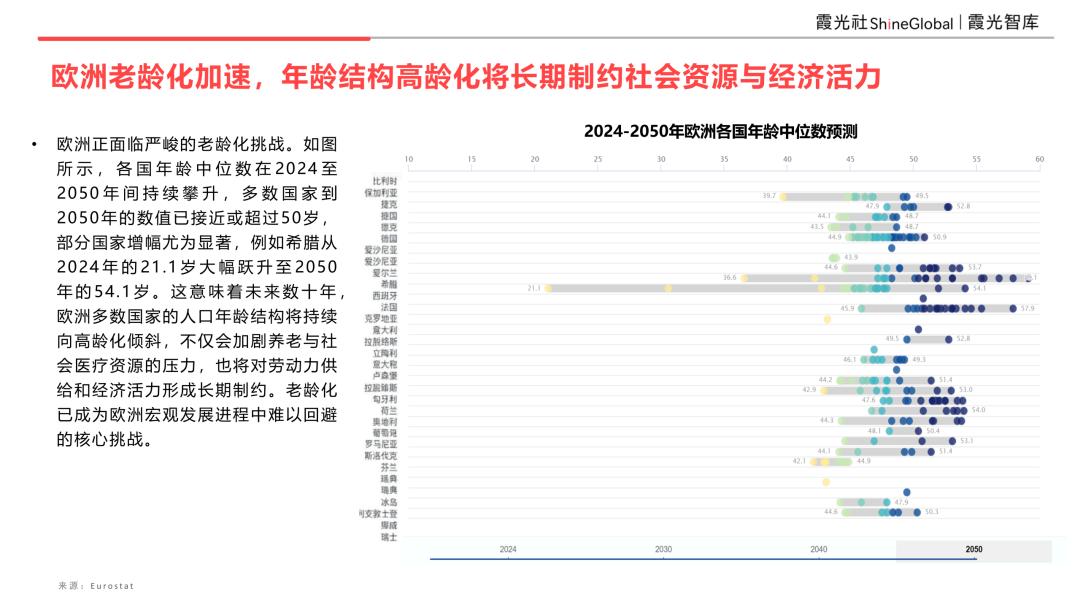
Beyond the economic and investment patterns, the population structure is profoundly reshaping the long - term development foundation of Europe. The median age in European countries has been continuously rising from 2024 to 2050. By 2050, the median age in most countries is close to or exceeds 50 years old, and the increase in some countries is particularly significant. For example, the median age in Greece has increased significantly from 21.1 years old in 2024 to 54.1 years old in 2050. This means that in the next few decades, the population age structure will continue to tilt towards an older age, which will not only increase the pressure on pension and social medical resources but also impose long - term constraints on labor supply and economic vitality.
Driven by both energy transition and the green new deal, the low - carbon system is being accelerated
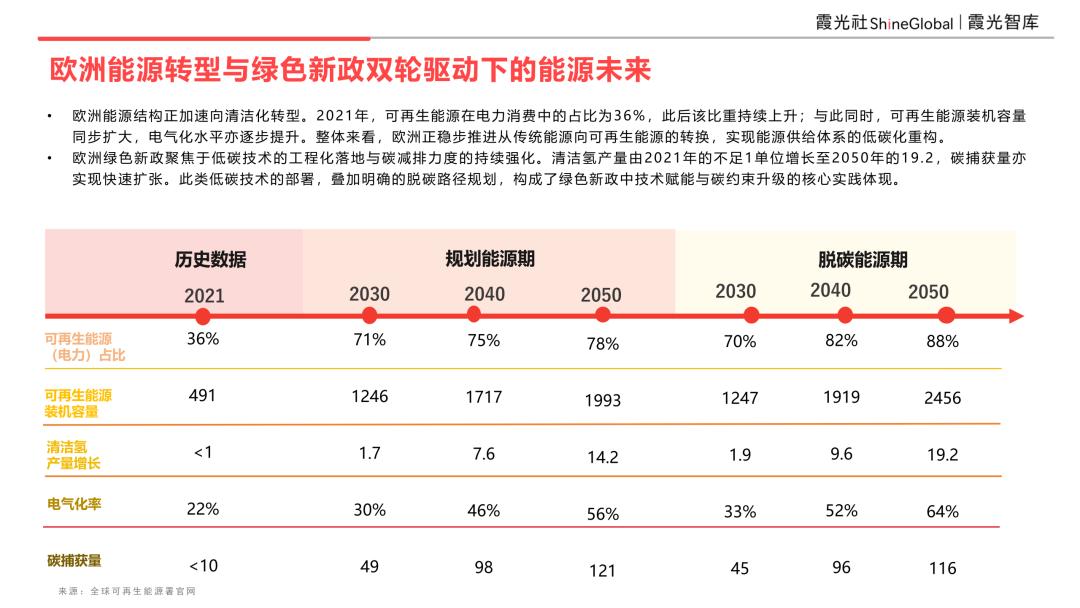
Facing the growth pressure brought by population aging, Europe is reshaping its economic impetus through energy transition. The proportion of renewable energy in electricity consumption has been continuously rising from 36% in 2021. The production of clean hydrogen has increased from less than 1 unit in 2021 to 19.2 in 2050, and the carbon capture volume has also expanded rapidly. Europe is steadily promoting the transformation from traditional energy to renewable energy. The green new deal focuses on the engineering implementation of low - carbon technologies and the continuous strengthening of carbon emission reduction, which constitutes the core practice of technology - enabled and carbon - constraint upgrading.
The energy transition has encountered dual shocks of inflation and employment, and its adaptability is facing challenges
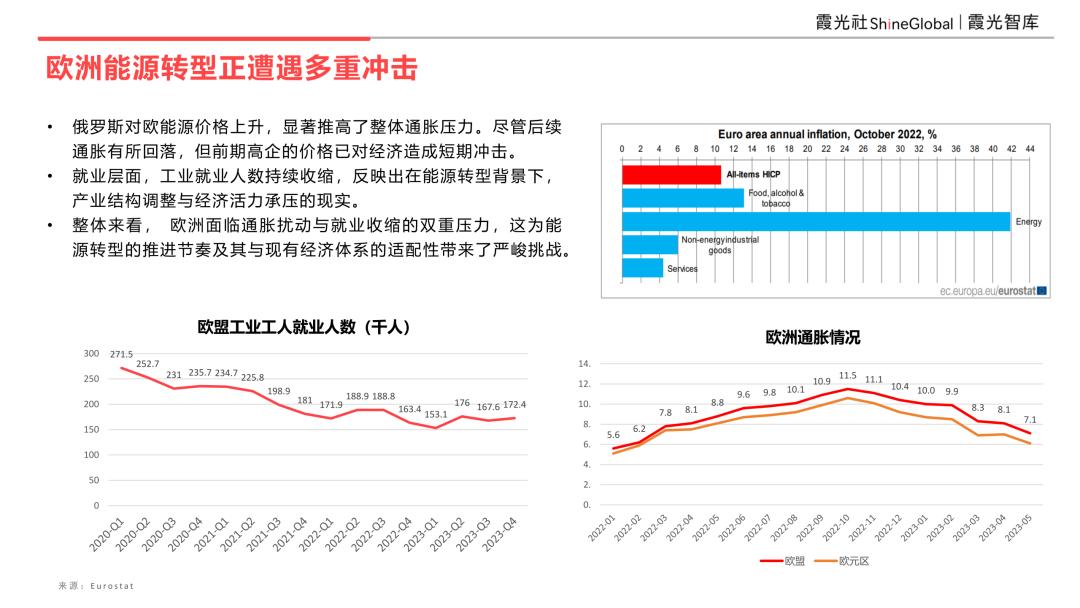
However, the process of energy transition is not smooth. The significant increase in the energy price from Russia to Europe has significantly pushed up the overall inflation pressure. Although the inflation has declined later, the previously high prices have caused a short - term impact on the economy. At the same time, the number of industrial employees has continued to shrink, reflecting the reality of industrial structure adjustment and the pressure on economic vitality. Europe is facing the dual pressures of inflation disturbances and employment contraction, which poses severe challenges to the progress rhythm of energy transition and its adaptability to the existing economic system.
There are significant differences in GDPR law enforcement, and the regulatory pattern among member states is complex
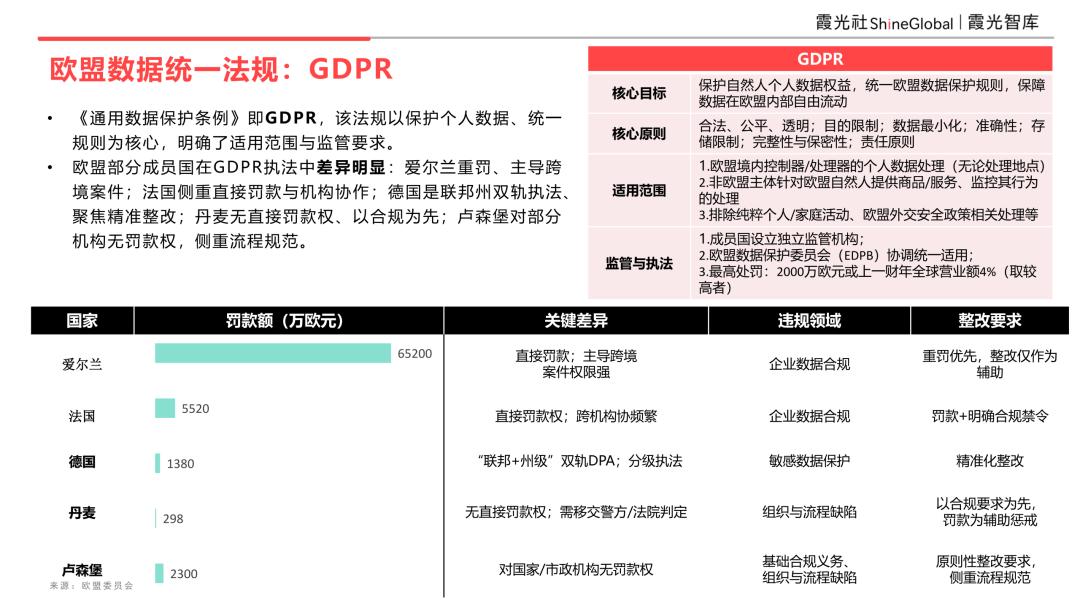
Beyond the transformation pressure, data compliance is another threshold for entering the European market. The EU's General Data Protection Regulation (GDPR) focuses on protecting personal data rights and interests, but there are obvious differences in law enforcement among member states: Ireland imposes heavy fines and dominates cross - border cases (with a fine of about 652 million euros, unit: euro), France focuses on direct fines and institutional cooperation (about 55.2 million euros), Germany implements a dual - track law enforcement system at the federal and state levels (about 13.8 million euros), Denmark has no direct fine - imposing power and prioritizes compliance (about 2.98 million euros), and Luxembourg has no fine - imposing power on some institutions and focuses on process standardization (about 23 million euros). Enterprises need to formulate differentiated compliance strategies according to the law - enforcement characteristics of different countries.
The CBAM will start charging fees officially in 2026, and carbon costs will be fully internalized
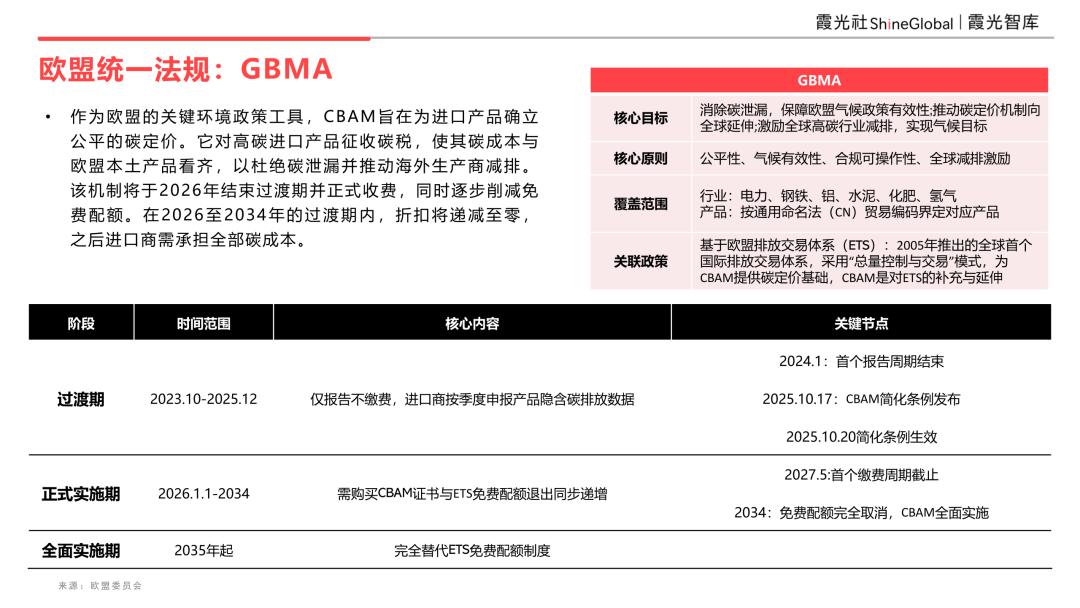
Parallel to data compliance, the Carbon Border Adjustment Mechanism (CBAM) is reshaping trade costs. The CBAM aims to levy carbon taxes on high - carbon imported products to make their carbon costs comparable to those of EU domestic products. This mechanism will end the transition period and start charging fees officially in 2026. The discount will gradually decrease to zero from 2026 to 2034, and after that, importers will have to bear all carbon costs. The covered industries include electricity, steel, aluminum, cement, fertilizers, and hydrogen. Enterprises need to conduct carbon emission accounting and cost assessment in advance.
China's investment focus in Europe is shifting to Eastern Europe, with a concentration in high - end manufacturing
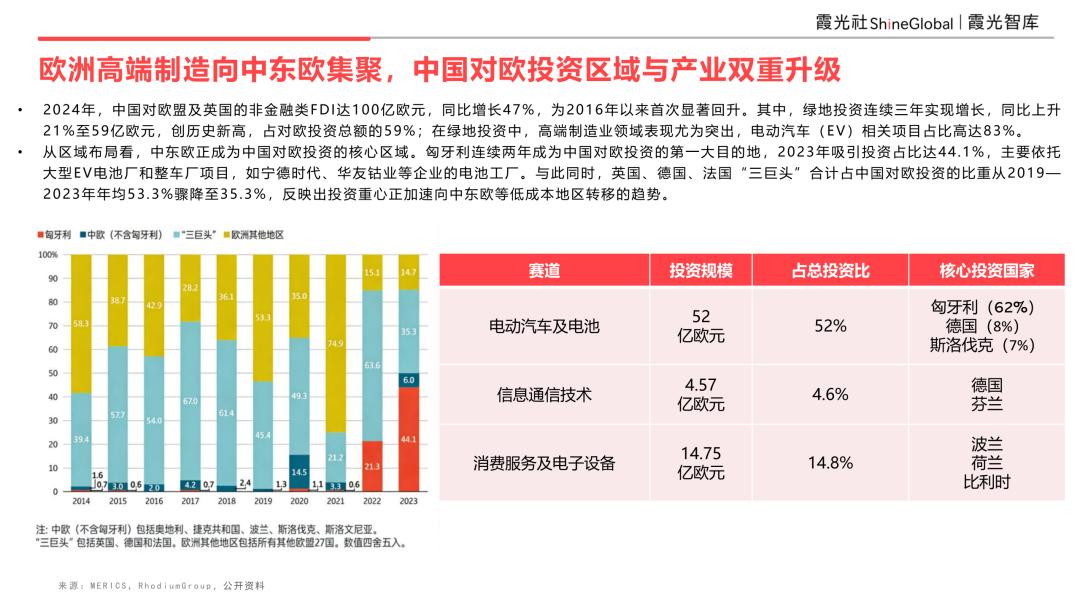
Under the dual constraints of compliance and carbon costs, the regional layout of China's investment in Europe is undergoing a structural shift. In 2024, China's non - financial FDI in the EU and the UK reached 10 billion euros, a year - on - year increase of 47%, the first significant recovery since 2016. Among them, greenfield investment increased by 21% year - on - year to 5.9 billion euros, reaching a record high and accounting for 59% of China's investment in Europe. In the high - end manufacturing industry, projects related to electric vehicles accounted for as high as 83%. Hungary has become the top destination for China's investment in Europe for two consecutive years (accounting for 44.1% in 2023), while the combined share of the UK, Germany, and France has dropped sharply from 53.3% to 35.3%. The investment focus is accelerating the shift to low - cost regions such as Central and Eastern Europe.
The luxury market hedges the weakness of the domestic market with international demand, but macro - pressure still exists
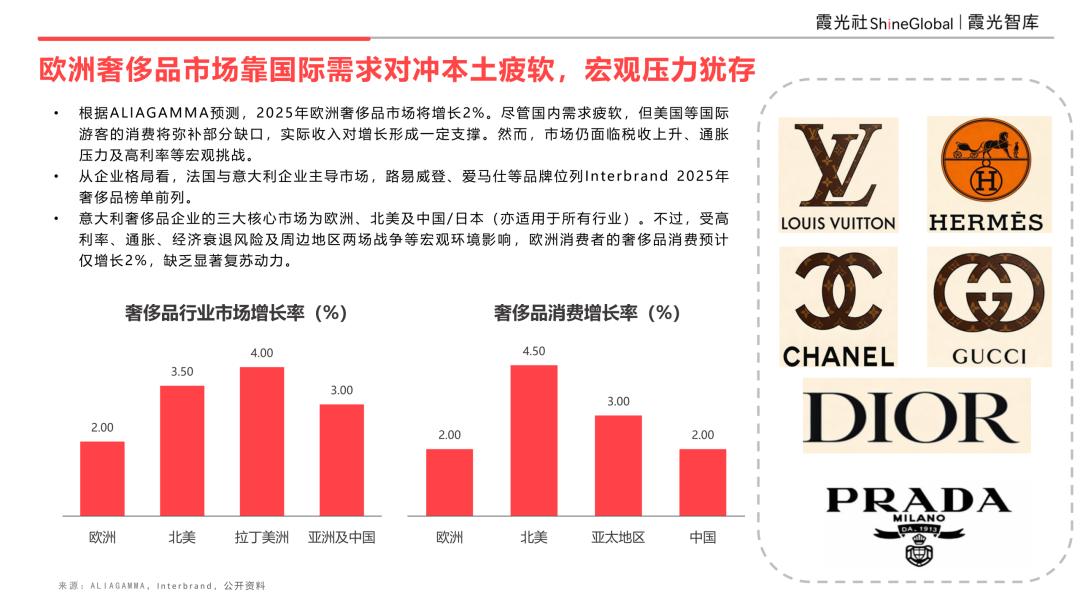
Different from the booming manufacturing investment, the European consumer market is still sluggish. The European luxury market is expected to grow by 2% (unit: %) in 2025. The domestic demand is weak, and it relies on the consumption of international tourists from the US and other countries to make up for it. French and Italian enterprises dominate the market. Brands such as Louis Vuitton and Hermès are among the top in the Interbrand 2025 luxury list. The three core markets of Italian enterprises are Europe, North America, and China/Japan. However, affected by high interest rates, inflation, the risk of economic recession, and the surrounding wars, the luxury consumption of European consumers has only increased by 2%, lacking significant recovery momentum.
The green technology industry is booming, and the development stages of different countries vary
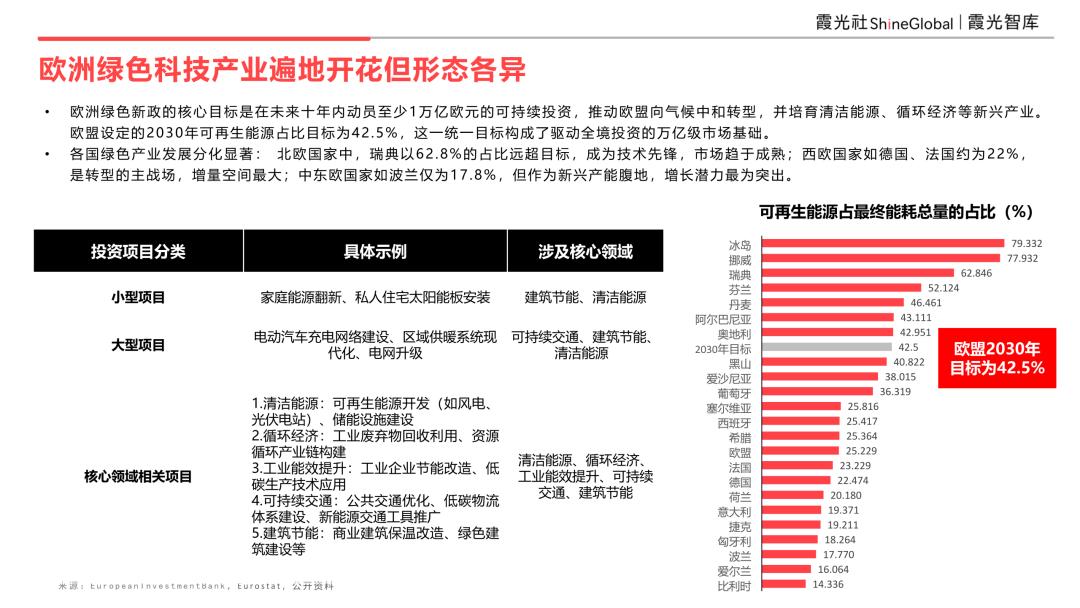
In the field of green transformation, the development stages of European countries are significantly different. The goal of the EU's green new deal is to increase the proportion of renewable energy to 42.5% (unit: %) by 2030 and mobilize at least 1 trillion euros in sustainable investment. Sweden far exceeds the target with 62.8%, becoming a technological pioneer. Germany and France are about 22%, being the main battlefields of transformation. Poland is only 17.8%, but it has prominent growth potential as an emerging production capacity hinterland. Investment projects cover five major fields: clean energy, circular economy, industrial energy efficiency, sustainable transportation, and building energy conservation.
The positioning of the financial service industry is significantly differentiated, and London's hub status is stable
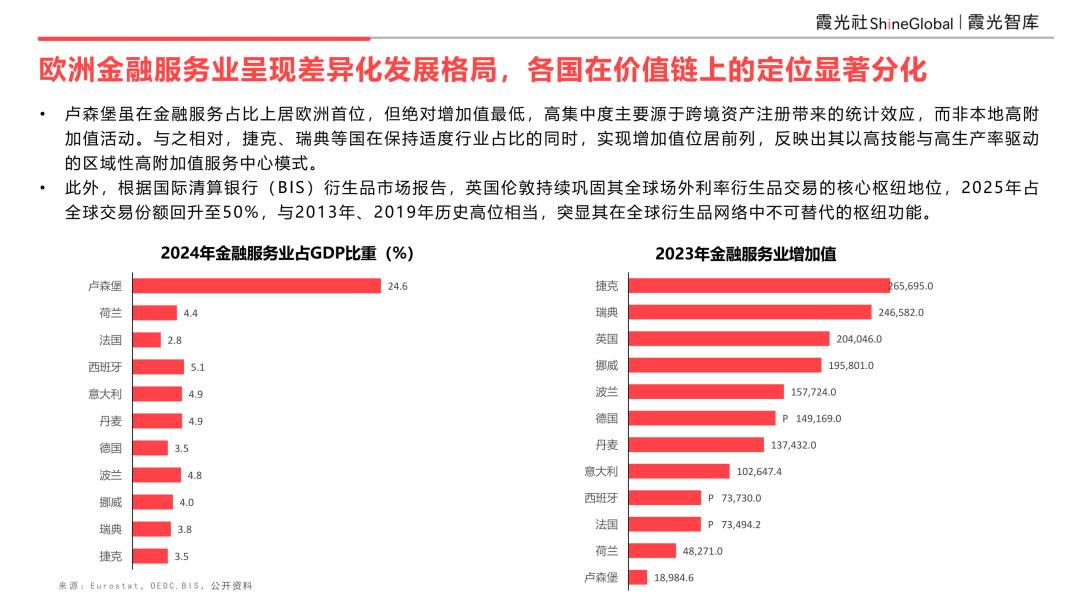
In the service industry, the added - value positioning of the financial industry in European countries is significantly different. Luxembourg has the highest proportion of financial services in Europe, but the absolute added value is the lowest. The high concentration is due to the statistical effect of cross - border asset registration rather than high - value - added local activities. Countries such as the Czech Republic and Sweden have a moderate proportion and rank among the top in terms of added value, reflecting a regional high - value - added service center model driven by high skills and high productivity. In addition, London continues to consolidate its position as the global over - the - counter interest rate derivatives trading hub. In 2025, its share in global trading has rebounded to 50% (unit: %), the same as the historical highs in 2013 and 2019.
Compliance costs are the primary budget item for entering the European market
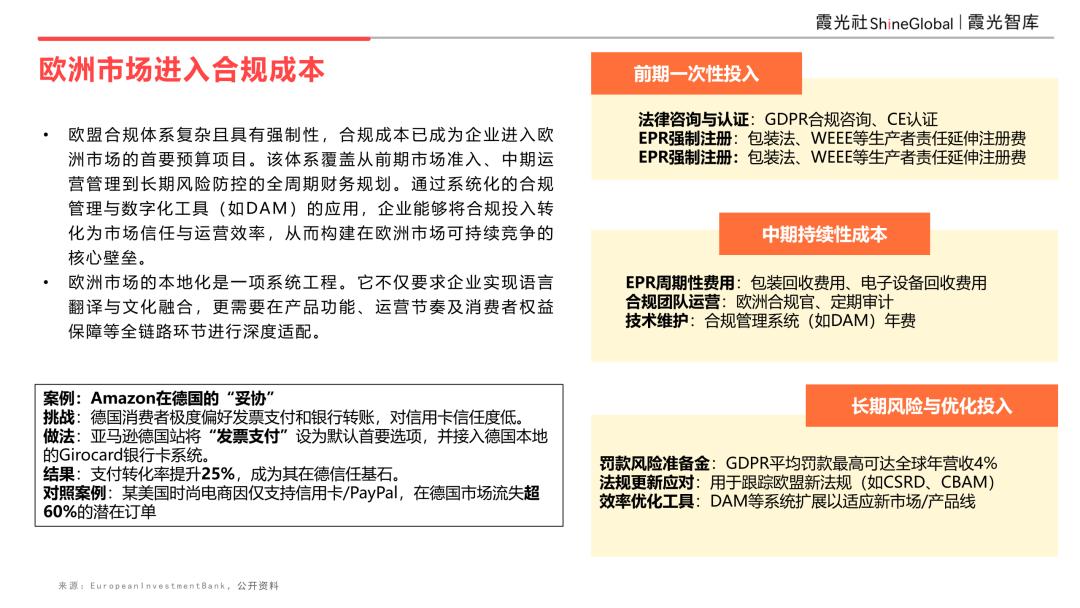
Whether in the manufacturing, consumer market, or financial industry, compliance has become the basic threshold for entering Europe. The EU's compliance system is complex and mandatory, covering the entire - cycle financial planning from pre - entry