To gain the extreme strength comparable to that of arthropods, humans have created their own "exoskeleton".


More than 500 million years ago in the Cambrian period, the evolution of life on Earth reached a critical crossroads. In the subsequent geological years, two distinct skeletal construction paths gradually diverged.
Arthropods, represented by trilobites, chose the "exoskeleton" - a hard carapace wrapped on the outside, safely hiding the skeletal muscles inside.
Vertebrates, which evolved along the other path until humans, chose the "endoskeleton" - the bones form the internal framework of the body, and the skeletal muscles grow closely attached to it, supporting a soft and flexible flesh-and-blood body.
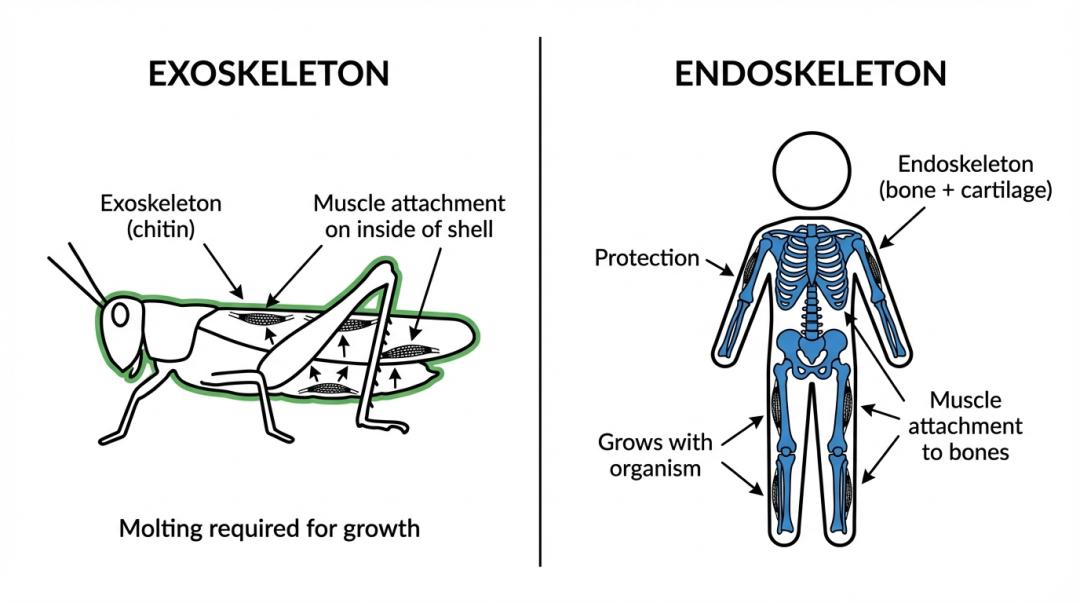
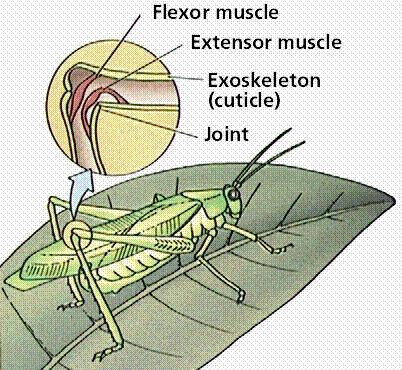
The "reverse-designed" skeletons of arthropods have innate advantages that are difficult for the human body to match even with all its efforts:
Firstly, it serves as a defensive armor, which can perfectly protect the internal fragile organs and effectively buffer the violent impacts from the outside world.
Secondly, it acts as a power lever. The muscles of insects are fixed on the inner wall of the hard hollow shell, forming a highly efficient physical mechanical structure. This is why seemingly weak ants can lift objects 50 times their own body weight, and tiny fleas can jump hundreds of times their own height.
In order to obtain the power beyond the limit like arthropods, humans have created their own exoskeletons through bionics. Therefore, the concept of the human exoskeleton (Exoskeleton) we talk about today is not created out of thin air; it actually originates from biology.

The Mechanical Rhapsody of Power
In recent years, multiple rounds of financing in the exoskeleton track have proven that exoskeletons have become one of the few sub - directions in the embodied intelligence track that have been verified by capital first. Compared with humanoid robots that are still in the technical verification stage, exoskeletons have achieved large - scale implementation in scenarios such as industrial assistance, rehabilitation medicine, outdoor sports, and elderly care walking assistance.
Meanwhile, the acceleration of aging, the rise of outdoor consumption, and the upsurge of embodied intelligence have jointly promoted the warming of the market. More and more investment institutions are beginning to regard exoskeletons as an embodied intelligence product form that can achieve a commercial closed - loop earlier than humanoid robots. Exoskeletons are evolving from a niche rehabilitation equipment track into an important industrial entrance connecting robots, smart wearables, and human enhancement technologies.
In fact, human exploration of exoskeletons began two centuries ago - countless crazy ideas and engineering blueprints collided, forming a long - flowing technological river that continues to this day.
In the 1890s, Russian inventor Nicholas Yagn designed a set of "marching assistance devices". This ingenious idea constructed entirely by compressed air pumps, levers, and springs is recognized as the earliest prototype of the exoskeleton in the world and left the first exoskeleton patent in human history.
Although this exoskeleton ended up without success at that time due to the lack of a real power source, it successfully planted a seed in people's hearts.
In the 20th century, American mechanical engineer Neil J. Mizen created an exoskeleton device called "The Man Amplifier". It was bulky, difficult to put on and take off, and extremely expensive to manufacture. It did not have the practical conditions for implementation and also remained at the rough conceptual stage.
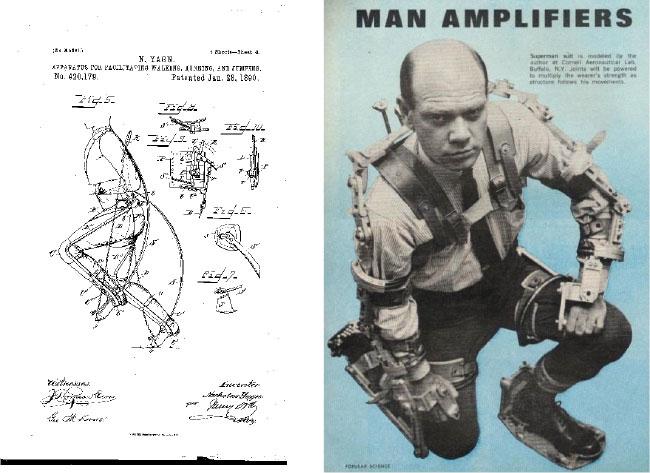
Left: Nicholas Yagn's patent, Right: The Man Amplifier
In the 1960s, under the shadow of the Cold War and the industrial boom, the US military and General Electric (GE) jointly developed the first real powered exoskeleton in history - Hardiman.
This steel behemoth weighed 680 kilograms and was covered with 28 hydraulic joints all over. However, due to the lack of precise algorithms to coordinate the movements of the machine and the human body at that time, Hardiman was too bulky and dangerous to control, and finally fell into the dust of history.
Subsequently, General Electric applied the research results of Hardiman to the quadruped robot "Walking Truck". The driver could directly control the limbs of the machine through a heavy exoskeleton - style frame.
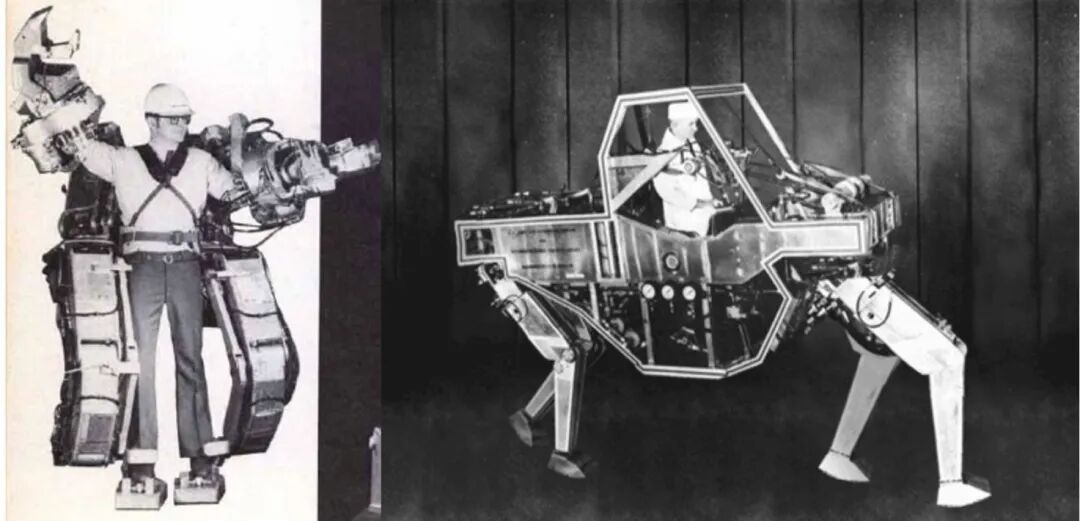
Left: Hardiman, Right: GE Walking Truck
By this period, the exoskeletons invented by humans generally used pneumatic or hydraulic drives. It wasn't until the 1970s that the Mihajlo Pupin Institute in Yugoslavia (now Serbia) developed the "Active Suit". This was the world's first exoskeleton driven by an electric motor and is generally regarded as the pioneer of modern exoskeletons.
The real disruptive breakthrough of exoskeletons occurred after the 1990s when microelectronics and power systems advanced by leaps and bounds. In this technological revolution, the United States and Japan became the representatives of frontier research.
Driven by the Defense Advanced Research Projects Agency (DARPA), a series of exoskeleton products such as Berkeley BLEEX, Lockheed Martin's HULC (Human Universal Load Carrier), and Sarcos XOS were born in the United States.
American - style exoskeletons extremely pursue extreme load - bearing, muddy trekking, and extreme special - operation performance, laying a hardcore industrial tone for the country's early exoskeletons.
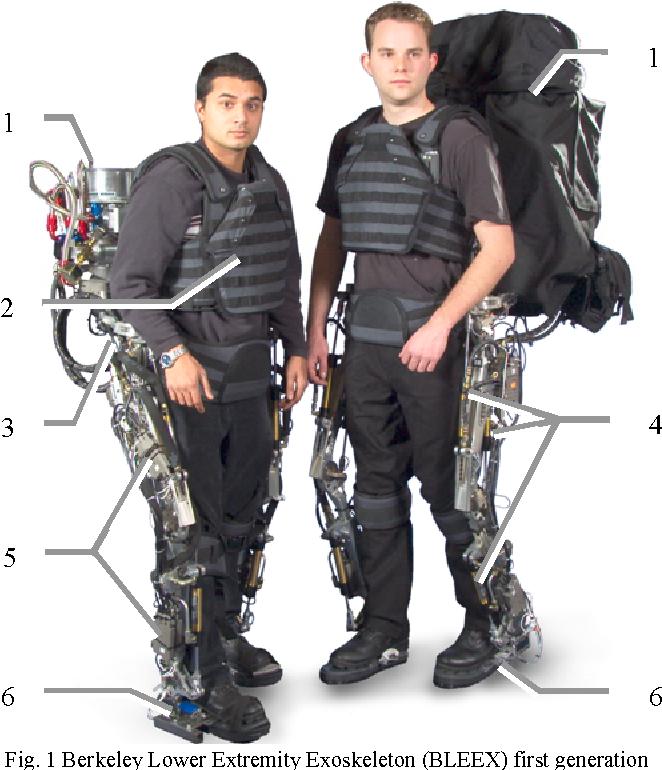
BLEEX First Generation
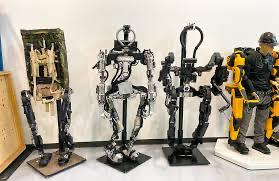
Sarcos Series Products
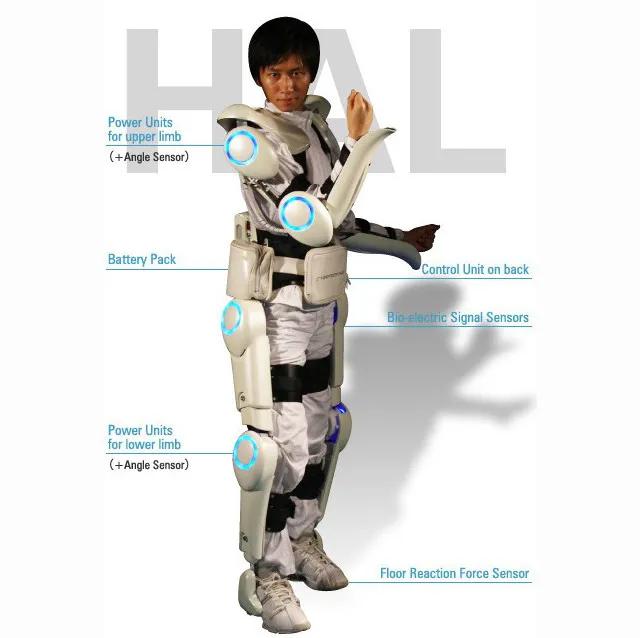
Cyberdyne HAL
In contrast, Japanese manufacturers, facing a deeply aging society, have focused more on commercial medical and rehabilitation scenarios. The most representative one is Cyberdyne.
In 1997, Professor Yoshiyuki Sankai of the University of Tsukuba in Japan successfully controlled mechanical joints through electrical signals on the skin surface and developed the prototype of a medical exoskeleton.
In 2004, Yoshiyuki Sankai officially founded Cyberdyne and launched the HAL (Hybrid Assistive Limb) series of exoskeletons, aiming to help paralyzed patients rebuild neural circuits and walk again.
This round of global exploration, from clinical medical rehabilitation to industrial heavy - duty applications, officially kicked off the prelude to the exoskeleton's journey from the laboratory to the real world.
"Regardless of the type, for an exoskeleton to assist human movement, it needs to go through three steps - perception, intention recognition, and decision - making and action.
At the perception level, the exoskeleton uses sensors to understand both environmental information and human movements.
After receiving the information, the system needs to accurately understand the user's next movement intention, such as the direction of the movement and the amount of force applied, to calculate the torque value and the degree of support to be provided.
Finally, the system sends instructions to the motor to drive the exoskeleton to perform the action, thus completing a control closed - loop."
Li Haojun, the managing partner of GGV Capital, pointed out that "a simple action that seemingly can be completed within microseconds is actually a complex system engineering involving multiple disciplines."
Li Haojun said that, first of all, an exoskeleton is essentially a robot, involving the design of joints, transmissions, and mechanical structures. Secondly, the intention recognition of an exoskeleton is inseparable from ergonomics, perception technology, and data science.
From the perspective of wearable products, its core battery life depends on the upgrade of the battery and power system; in addition, considering the comfort and skin - friendliness of wearing, it is bound to involve materials science.
In essence, exoskeletons pursue the ultimate "human - machine coupling". "Invisibility" is the most perfect experience, and this is precisely the most difficult point in current exoskeleton research and development.

Human - Machine Coupling and Symbiosis
With the development of technology, modern exoskeletons have evolved into two major categories: "rigid" and "flexible".
Traditional rigid exoskeletons contain hard metal or carbon fiber brackets, and their mechanical structures extend all the way to the ground. It is like a stable external "scaffolding" that can bear great force.
The products of Israeli company Lifeward (formerly ReWalk Robotics) are typical representatives, which can help paraplegic patients stand up and take steps again.
However, the drawbacks of rigid exoskeletons are obvious: limited body freedom, strong human - machine confrontation, and the overall equipment is heavy.
In order to break this sense of heaviness, the Biodesign Laboratory at Harvard University developed a flexible exoskeleton that has no hard skeleton and is driven by high - strength fabrics and bionic ropes.
It is like a tight - fitting suit when worn, extremely light and without any sense of restraint. When the human muscles exert force, the motor will tighten the ropes, giving a "pull" along the growth direction of the tendons.
However, due to the lack of a mechanical conduction path directly to the ground, the flexible exoskeleton cannot help people carry huge objects, and the absolute weight still has to be borne by the human body in the end.
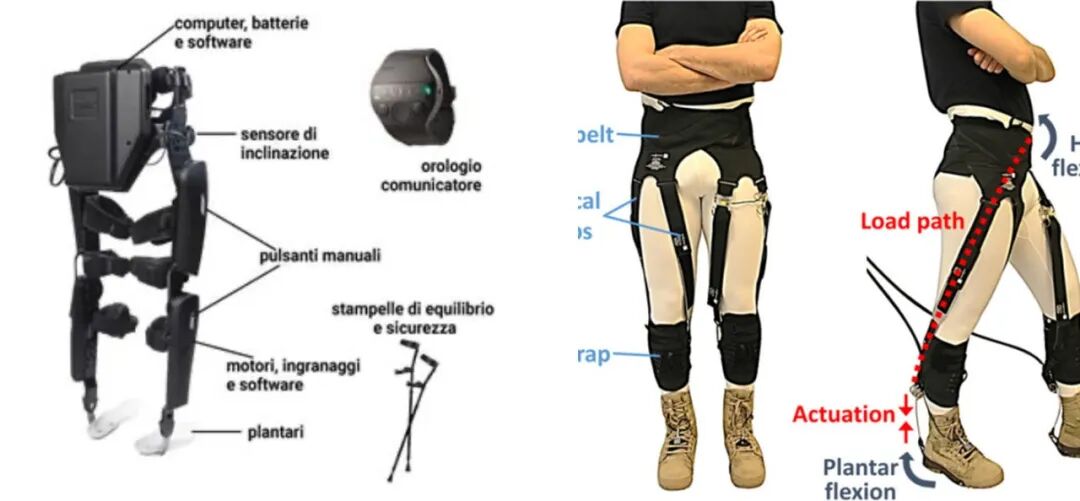
Left: Lifeward, Right: Harvard Biodesign

Scenario Expansion: From Industry to Consumption
As can be seen from the development history of exoskeletons, from the day of its birth, it was designed to solve high - intensity industrial applications.
On the assembly line of automobile manufacturing, overhead operations are an inevitable norm. Workers need to raise their arms for a long time to install chassis components, and exoskeletons can effectively share muscle strain, allowing workers to repeat boring actions in a more relaxed and less injury - prone way.
In the handling scenario of airport ground services, the lumbar - assisting exoskeleton is also a high - frequency and necessary item. It can significantly reduce the weight when porters bend down and stand up. German airports, as well as airlines such as Japan's All Nippon Airways and the United States' Delta Air Lines, have taken the lead in introducing exoskeletons.
