Tencent is determined to regain its ground in the Agent field.
As the core tool for Tencent to help enterprises implement Agents, Tencent Cloud ADP is evolving from a simple intelligent agent development tool into an enterprise-level AgentOps platform tailored for enterprise production environments.
“It was so crowded that I couldn't even get in.”
On June 5th, the Tencent Cloud AI Industry Application Conference brought back the long-lost excitement. Every inch of space in the main venue was packed with people. Even if you managed to find a seat, you'd find your view blocked by the audience standing in the aisle. Even the spare live-streaming meeting rooms nearby were filled with people, and many had to watch the live stream outside the main venue with their phones.
Besides the high-profile offline debut of Yao Shunyu, the outside world also shows great interest in Tencent's AI, especially its progress in Agents. This industry conference, branded as an AI event, almost focused all its attention on Agents.
In the past few years, large models were mainly dominated by ChatBots, and Tencent was questioned for being slower than its competitors. However, in the second half of the large model era dominated by Agents, Tencent is rapidly building its competitiveness in the personal and enterprise markets by enhancing its capabilities in three aspects: model, engineering, and scenarios.
01
Tencent Presses the Accelerator on AI
“Is Tencent lagging behind in AI?”
This was a profound question posed by Tang Daosheng, Tencent's Senior Executive Vice President, to Yao Shunyu, Tencent's Chief Scientist, on-site. It was also an open response from Tencent's top management to external doubts.
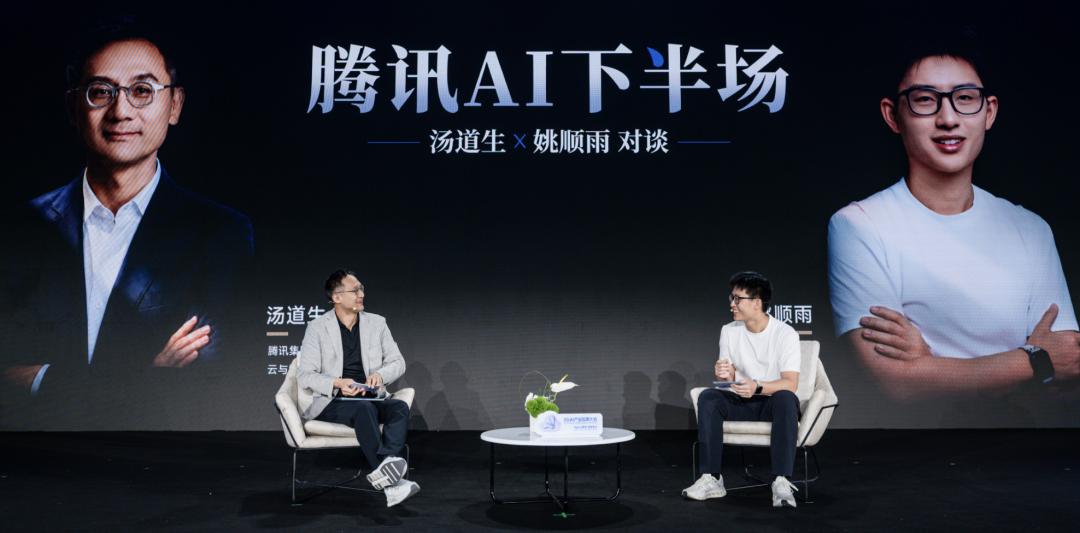
Yao Shunyu's answer was very artful and in line with the current judgment of most people on AI. His general idea was that AI is a long-term and diversified game. The second half has just begun, and there's still a long way to go. Market opportunities won't be limited to current popular products. “There's no doubt that the productivity of Coding Agents will become more important, but there's still a lot of room to be filled.”
Tang Daosheng also admitted that Tencent has a very diversified business model, and it's difficult to ensure that every segment is at the forefront of the industry. So it's normal for different businesses to move faster or slower at different stages. “Tencent's concept of providing services and products is that once you're clear that it's valuable, we can firmly persevere through the cycle.”
However, in the past six months, the outside world has clearly felt that Tencent is showing an all-out offensive stance, with its organization, models, and products all accelerating comprehensively. Tencent is gradually regaining its rhythm in the AI battlefield.
On the day of the AI industry conference, Tencent released more than 20 AI applications in one go. There were not only new Agent products but also AI upgrades to existing products. There were updates to the underlying and platform layers such as storage, security, and ADP, as well as the release of new products at the application layer such as Miora and Ardot.
Intelligent agents are the area where Tencent has performed best in the past six months. At the beginning of the year, affected by the explosion of OpenClaw, Tencent, as the fastest-responding Internet giant in China, launched several “Lobster” products in one go. Besides WorkBuddy for office scenarios, there was also CodeBuddy for R & D and Qclaw for personal efficiency improvement. Moreover, the deployment methods support both cloud and private deployment, meeting the needs of various customers for Lobster products.
Tencent has indeed reaped the first wave of benefits from intelligent agents. According to third-party data, WorkBuddy's monthly visits reached 8.85 million, 2.6 times that of the second place. In the past three months, WorkBuddy has rapidly iterated 43 versions. Facing new user needs, Tencent has significantly accelerated the development pace.
The Hunyuan large model, which has not performed outstandingly, was also reconstructed during this period. Through the reconstruction of basic capabilities such as pre-training, post-training, and high-quality data sets, Tencent's new model, Hy3 preview, has significantly improved its capabilities in context, Agents, and Coding. After its launch, the Token call volume quickly exceeded that of the previous generation model by 10 times, and it topped the weekly and overall charts on the OpenRouter platform for three consecutive weeks.
Of course, behind Tencent's AI acceleration, it is also increasing the introduction of talents and organizational changes. At the end of last year, Tencent newly established the AI Infra Department, AI Data Department, and Data Computing Platform Department to strengthen the large model R & D system and core capabilities. In March this year, Tencent adjusted the AI Lab to a business department directly responsible for commercial value.
What's most eye-catching is the addition of Yao Shunyu. This star in the field of artificial intelligence is the proposer of the ReAct architecture, and his doctoral research focuses on language intelligent agents. The ReAct he proposed has become the most classic execution logic for the current Agent Loop. The Agent Loop is a cyclic mechanism that continuously cycles through reasoning, action, and observation, enabling the Agent to have the ability of self-correction and multi-step planning, and solving the problems of information overload and logical discontinuity in long tasks.
It's not hard to find that Yao Shunyu's research direction is very consistent with Tencent's AI strategy. His addition not only quickly brought Tencent's model capabilities back to the table but also increased the trust within Tencent in its own models and products.
02
From Chatting to Working,
Enterprise-level Agents Are a Tough Nut to Crack
As AI accelerates the transformation from dialogue to execution, the industry's focus has shifted to the implementation of Agents. This is also the current focus of Tencent's AI strategy. It is fully betting on the Agent track and has launched an efficiency intelligent agent toolset for the first time, including CodeBuddy for R & D scenarios, WorkBuddy for office scenarios, and ADP for enterprise-level service scenarios.
However, the industry generally believes that compared with individual users, the enterprise-level scenario is a market where commercial benefits can be seen more quickly and has greater potential.
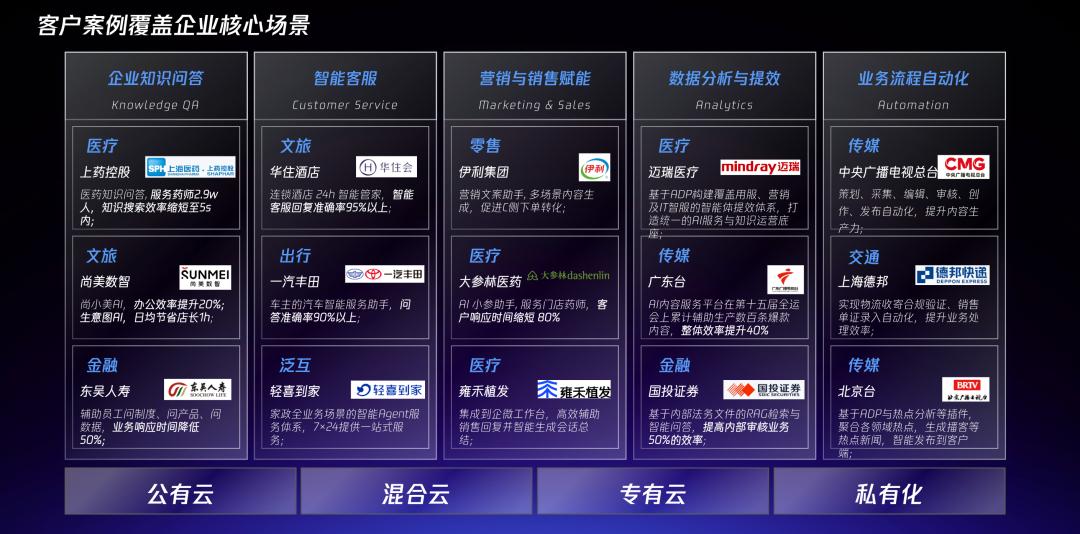
Currently, enterprises are highly enthusiastic about intelligent agents. “Hua Xiao AI” created by Huazhu Group based on Tencent Cloud ADP can automatically handle more than 70% of high-frequency customer service inquiries. It has accumulated nearly 1.5 million task executions in more than 10,000 stores. Yili has developed an AI shopping guide intelligent agent based on ADP, which has increased sales by 26.02% and the payment conversion rate by 2.4 times. Zhaogang.com has created 12 AI digital employees based on ADP.
However, the concerns are also obvious. A Deloitte survey shows that only 25% of enterprises have pushed intelligent agents into the production environment, and the implementation cycle has been extended from the estimated three months to 18 months. Gartner warns that by the end of 2027, more than 40% of Agentic AI projects will be cancelled due to cost control issues, unclear value, and insufficient risk control.
“Enterprise-level Agents are not about who can build them faster, but about who can make Agents run stably, safely, and continuously in the business field.” said Wu Yunsheng, the vice president of Tencent Cloud.
Wu Yongjian, the person in charge of intelligent product R & D at Tencent Cloud, also mentioned that in the past year, many enterprises have tried to use Agents, but not many have truly implemented them in production and completed the business closed-loop.
Behind this is the significant difference between individual users and the enterprise-level market. “Consumers focus on whether the experience is good, while enterprises mainly care about whether the system can be trusted.” Wu Yongjian said. Individual users using Agents are more concerned about the sense of excitement in the experience, but enterprises need stability, security, and sustainability. “A single system failure could lead to the complete loss of status and data, which is unacceptable for enterprises.”
Ultimately, the execution of Agents requires a large amount of context and permissions. The stronger the capabilities, the more permissions are usually required to be opened. However, enterprises cannot simply hand over permissions, data, and key decisions to Agents. A series of work such as multi-tenant isolation, permission control, approval and audit, data desensitization, and compliance access is needed to make enterprises truly dare to use Agents.
As Tencent's most crucial platform for enterprise-level Agents, ADP has become the core tool for Tencent to help enterprises implement Agents.
The newly released ADP 4.0 version of Tencent Cloud has upgraded from a simple intelligent agent development tool to an enterprise-level AgentOps platform for enterprise production environments, covering the entire lifecycle from construction, connection, distribution to governance. It's like providing enterprises with a comprehensive methodology for Agent implementation.
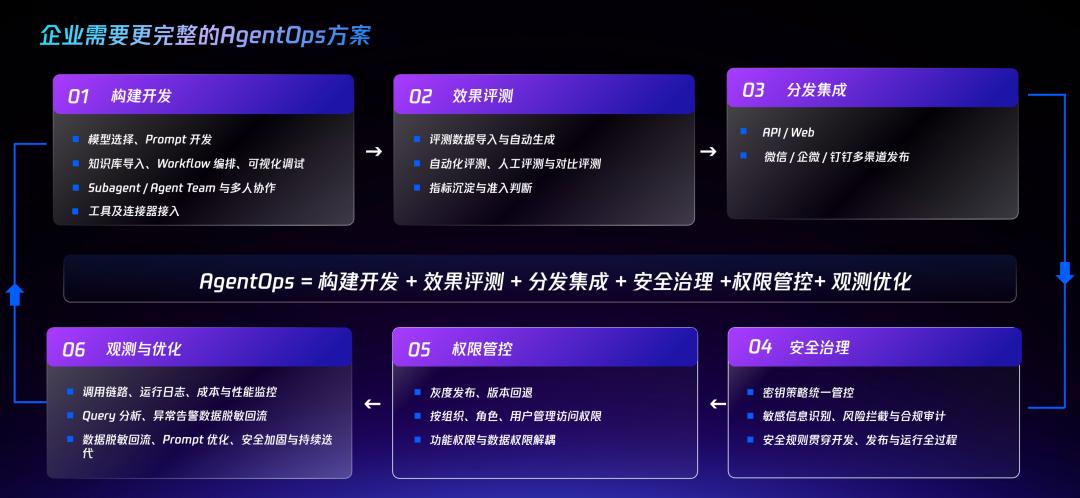
For example, in the initial construction and development stage, the creation of Agents used to rely mainly on manual configuration and manual arrangement. It was necessary to understand business goals, break down task steps, and write execution logic, which was very complex and cumbersome. ADP 4.0 has newly added the Claw mode, supporting the Agentic Loop closed-loop mechanism, enabling the automatic construction of Agents with natural language and reducing the development threshold. Behind this, the Agent autonomously codes and runs in the cloud sandbox and calls enterprise Skills. Moreover, it supports the two-way intercall between Agents and Workflows, enabling enterprises to establish a more flexible collaborative relationship between deterministic processes and intelligent decision-making.
In addition, ADP 4.0 has also precipitated enterprise implementation experience into industry application templates. Enterprises can directly configure knowledge bases, permissions, and business tools according to the templates to quickly generate Agents. Currently, these application templates cover typical scenarios such as finance, culture and tourism, transportation, education, media, and retail.
After the creation of enterprise Agents, it is often necessary to evaluate the effectiveness and security risks of the Agents. In the past, the evaluation relied on manual work, which was subjective and inefficient. ADP 4.0 supports batch comparison of the effects and performance of different models, different prompts, and different versions, realizing a batch and standardized quality access mechanism, helping enterprises to see the effects and control risks before the Agents go live.
The operation of Agents requires connection to the enterprise's internal business systems and various Skills. ADP 4.0 transforms the enterprise's scattered business resources into reusable AI assets through Connectors, Skills, plugins, knowledge bases, and MCP. For example, it supports Agents to integrate with existing enterprise systems such as OA, ERP, and work orders through APIs, and can also be published to channels such as Enterprise WeChat, WeChat, DingTalk, and Agent Portal (Tencent's self-developed cross-platform intelligent agent collaboration platform).
This means that enterprises don't need to manually move data or reorganize materials. Agents can directly read, retrieve, and call information in the business systems and further complete operations such as querying, analyzing, generating, and transferring.
Finally, in the security governance stage. On the one hand, ADP 4.0 has established a complete enterprise-level control closed-loop for Skills, which can output a complete security detection report for Skills imported from the outside or created by users themselves. On the other hand, it has introduced a three-layer permission architecture and combined with the RBAC role permission matrix to achieve two-dimensional isolation of functional permissions and data permissions.
“From 'birth' to 'operation', everything about Agents can be completed on ADP.” Wu Yunsheng told Digital Intelligence Frontline.
Currently, this AgentOps methodology has been applied to the actual business of enterprises. For example, a leading dairy enterprise has incubated more than 70 Agents based on ADP, including a blood sugar health intelligent agent, a business avatar intelligent agent, and a marketing copy intelligent agent, which have fully penetrated into the core business. An IDC report shows that Tencent Cloud ADP ranks first in the market share in the media and medical and life sciences industries.
In addition to enabling enterprises to create and operate intelligent agents on the ADP platform, Tencent Cloud has even opened up this AgentOps base through OpenAPI to enterprises, allowing enterprise customers to enjoy the Claw capabilities and cloud Harness capabilities of ADP 4.0 and develop their own reliable, manageable, and scalable enterprise-level Agents.
In the past, many enterprises had complex feelings about Agents. They wanted to improve the efficiency of employees and organizations through Agents, but issues such as knowledge management, security, and cost made them hesitant to try in real business scenarios. Now, the capability system built by Tencent Cloud ADP around the entire lifecycle of Agents is promoting the large-scale implementation of enterprise-level Agents.
03
Model, Engineering, and Scenarios: Building the Iron Triangle of Agents
Those who attended the Tencent Cloud AI Industry Application Conference will find that Tencent Cloud's exhibition layout this time is very different from the logic of its cloud business in previous years. In the past, it was mostly divided along the IaaS, PaaS, and SaaS segments. This year, it is divided into three parts according to the capabilities required by Agents. From the underlying model capabilities, to the intermediate engineering control capabilities, to the upper-level scenario connection capabilities, they form the iron triangle and advantage set for Tencent's Agent implementation. Enterprise-level Agents are also benefiting from the improvement of these three capabilities.
Model capabilities determine the lower limit of Agents and have always been the focus of large enterprises' active investment. In the past, Tencent's basic model capabilities were not strong, but Hy3 preview didn't just make minor repairs to the original framework. Instead, it chose to reconstruct the pre-training and post-training architectures, and its performance is significantly better than that of previous generations of models.
More importantly, Tencent has found a methodology for improving model capabilities - the Co-Design of models and products. The most fundamental difference between the large model era and the previous AI lies in generalization. This generalization means that an AI product not only needs to have good single-point capabilities but also needs to have capabilities such as chatting, searching, following instructions, and data classification. Tencent's large-scale ToB and ToC systematic products can enable good interaction between models and products.
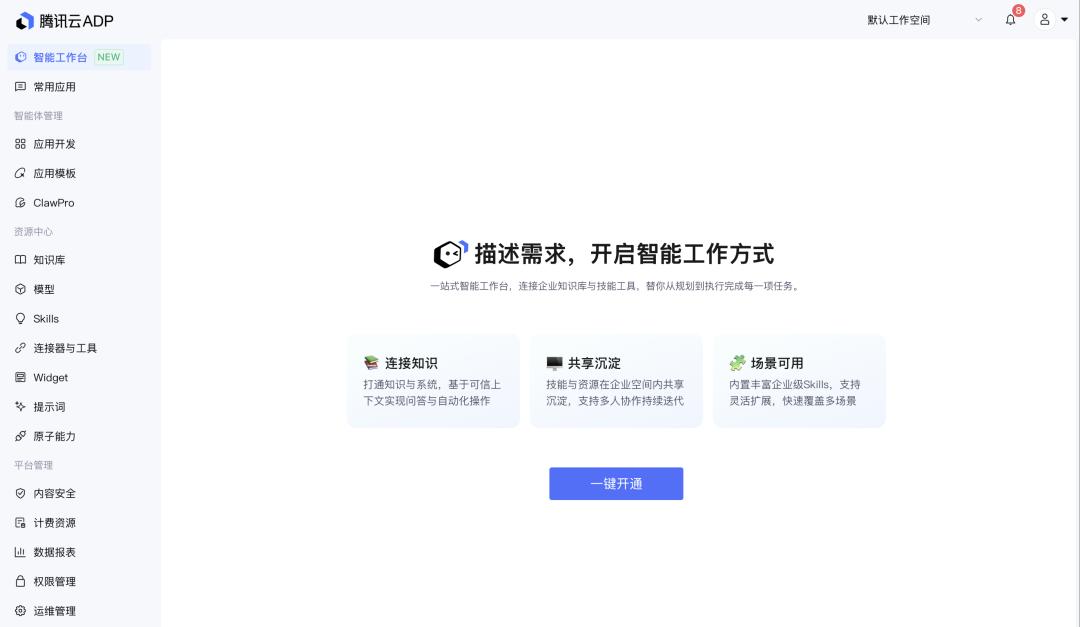
For example, the continuous iteration of the Hunyuan model provides strong underlying capabilities for ADP, which can help customers better build intelligent agents. And ADP serves a large number of industry customers. These enterprises call Hy3 preview in real business, which will also form data and effect feedback and can feed back to the evolution of the Hunyuan model's capabilities.
However, having only models is far from enough for the implementation of Agents. Harness engineering is also a key factor. Tang Daosheng once said that the implementation of AI is not just an algorithm problem but also an engineering problem. As the capabilities of mainstream large models gradually narrow, enterprises are no longer competing on “whose model is stronger” but on who can make better use of models through engineering means.
In March this year, Tencent was the first to propose the Harness engineering, drawing the industry's attention to the field of system engineering. Especially in the enterprise-level scenario, to achieve security observability and permission control, the role of Harness engineering is particularly crucial.