China's viral robots are taking the internet by storm overseas
These days, anyone can become an internet celebrity.
I'm not talking about those cute and quirky cats and dogs that have gained popularity. After all, they are at least living beings.
Nor am I referring to the good - looking men and women generated by large AI models that have recently become a hit. At least they seem somewhat human - like.
What I'm going to talk about are a group of "non - living internet celebrities" in the true sense.
Although they have a human - like form, they have metal as their bones and computing power as their hearts. Collectively known as humanoid robots, they are active in the headlines and hot searches around the world.
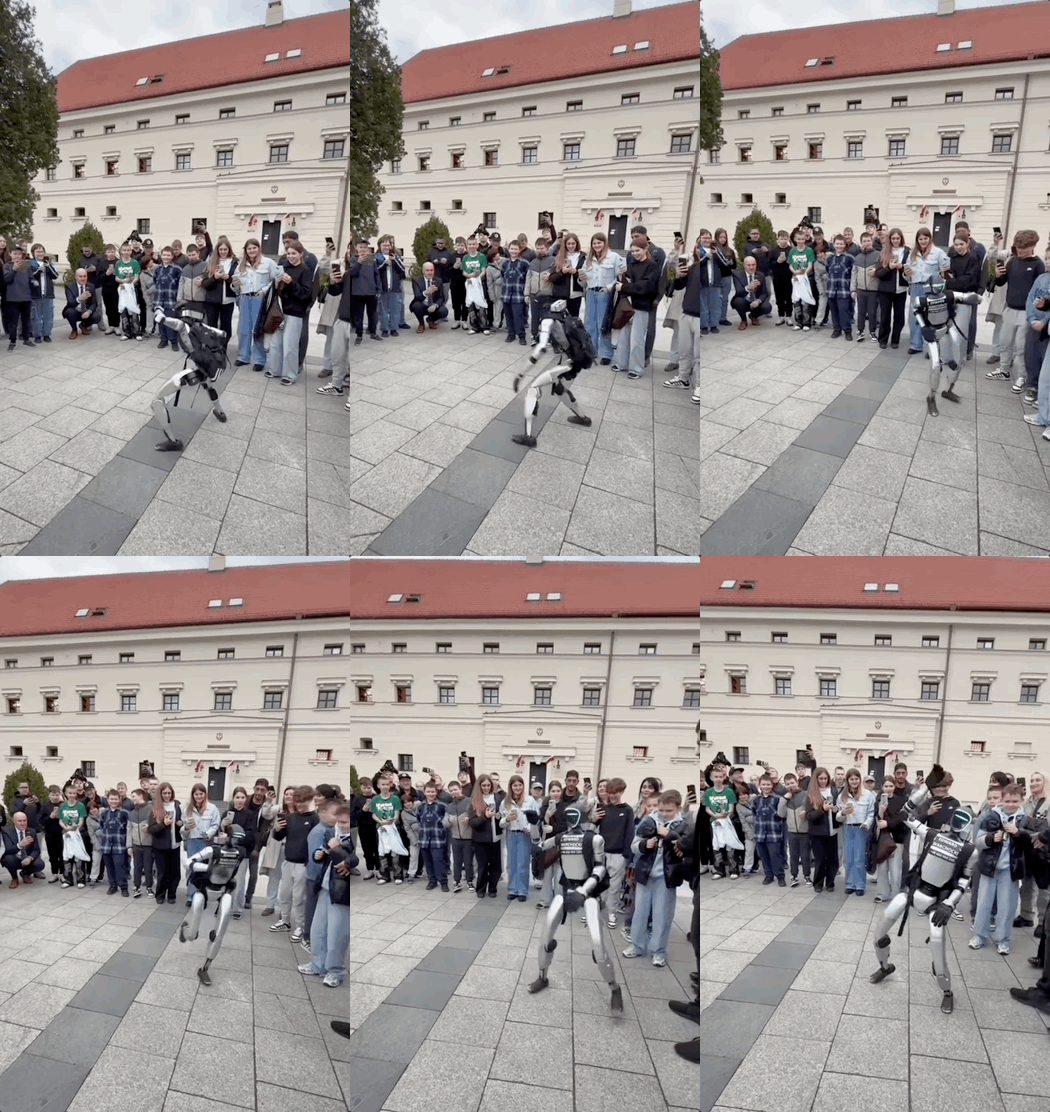
Although most of them "were born" in China, they choose to "debut" in Europe, America, Japan, or South Korea:
Some choose to become Buddhist monks as soon as they enter the world;
Others start causing trouble as soon as they arrive in a foreign country, acting like hooligans on the street.
Although they are still far from true embodied intelligence,
Domestic robots have started to compete with humans for the title of internet celebrity.
01
Chinese robots are going global in batches to become "internet celebrities"
What makes humanoid robots qualified to become internet celebrities?
Let's start with something closer to home.
In Japan and South Korea, Chinese - made humanoid robots can be described as:
As soon as they go abroad, they become Buddhist monks.

A Unitree G1 robot in China usually works at weddings and store openings, making appearances and cutting ribbons.
However, once it sets foot in Japan or South Korea, the G1 no longer cares about these "worldly things". Instead, with its silicon - based body, it converts to the boundless Buddhist faith of carbon - based life.
Some time ago, at the Jogye Temple in Jongno - gu, Seoul, South Korea, a G1 robot was ordained and became the country's first robot monk.
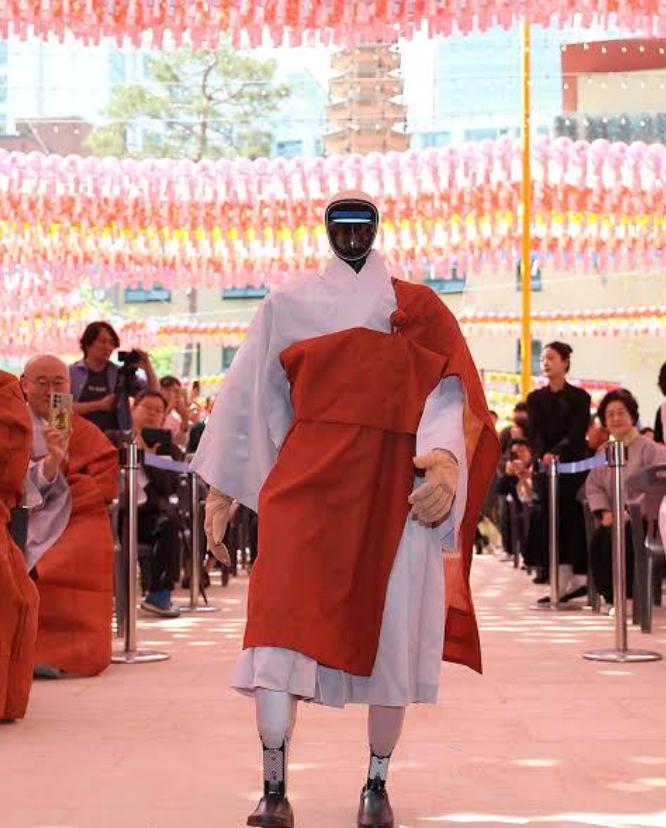
On the day of ordination, this mechanical novice monk wore a helmet resembling a shaved head, a gray - black monk's robe, and a string of Buddhist beads around its neck.
It put its hands together and, with the introduction of the master, officially became a Buddhist, with the Dharma name "Gabi" (가비).

According to the temple, after conversion, although Gabi has a mechanical body, it also needs to abide by the "Five Precepts" of its kind, namely:
Respect life, obey humans, do not damage objects, do not lie, and do not over - charge.
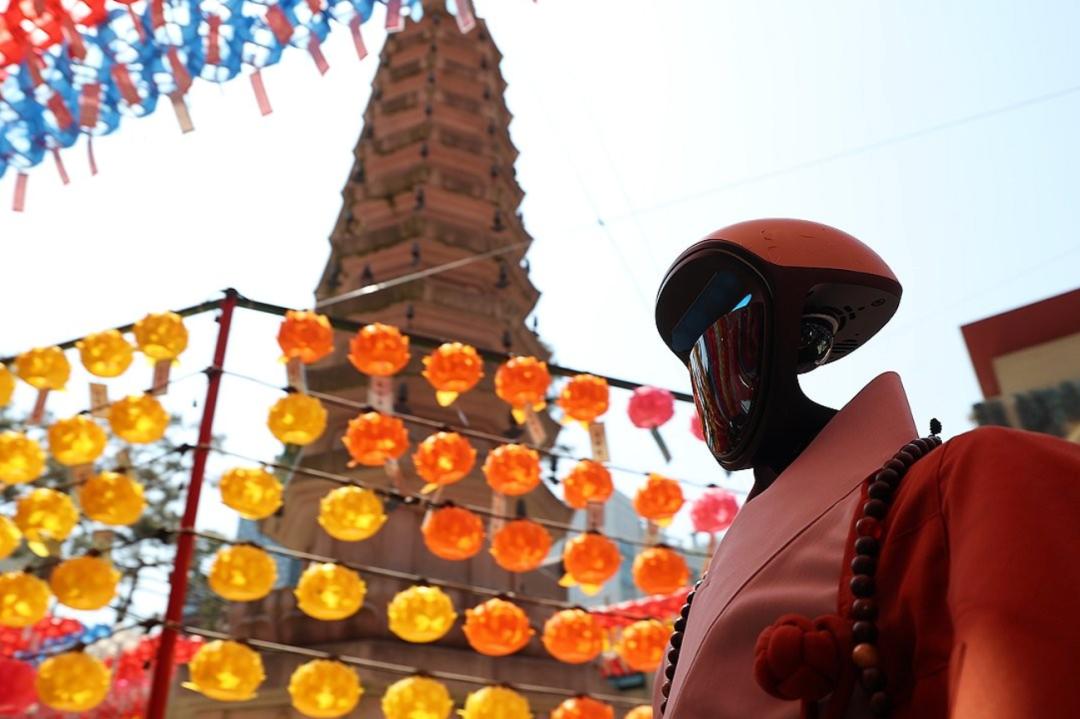
To ensure the feasibility of the last precept, a reporter from the South Korean media "Kyunghyang Shinmun" specially obtained Unitree's battery manual. After studying it, they found that this robot uses an advanced BMS (Battery Management System), which can automatically cut off the power when the battery is over - charged, perfectly abiding by the precept.
It is reported that there are a total of 4 G1 robots that came to South Korea to form a connection with Buddhism, including the novice monk "Gabi".
In addition to being ordained, they also participated in this year's Buddha's Birthday Lantern Festival and became the focus among local believers.

Coincidentally, Japan's "Buddharoid" also uses the Unitree G1's body, but its realm is obviously higher:
Because it is equipped with a large - language model refined by combining ChatGPT with a large number of Buddhist scriptures.
This mechanical monk living in the Shoren - in Temple in Kyoto can not only perform slow but standard Buddhist rituals but also provide on - the - spot one - on - one counseling to believers, helping them let go of their attachments and achieve inner peace.

In East Asia, G1 robots mostly give people a peaceful impression. However, in Europe and America, these 1.3 - meter - tall human - like robots start to become "street - style".
At the beginning of this year, a video went viral on the global internet:
On the streets of Warsaw, Poland, people saw a G1 robot jogging after several lost wild boars and driving them towards the edge of the city.
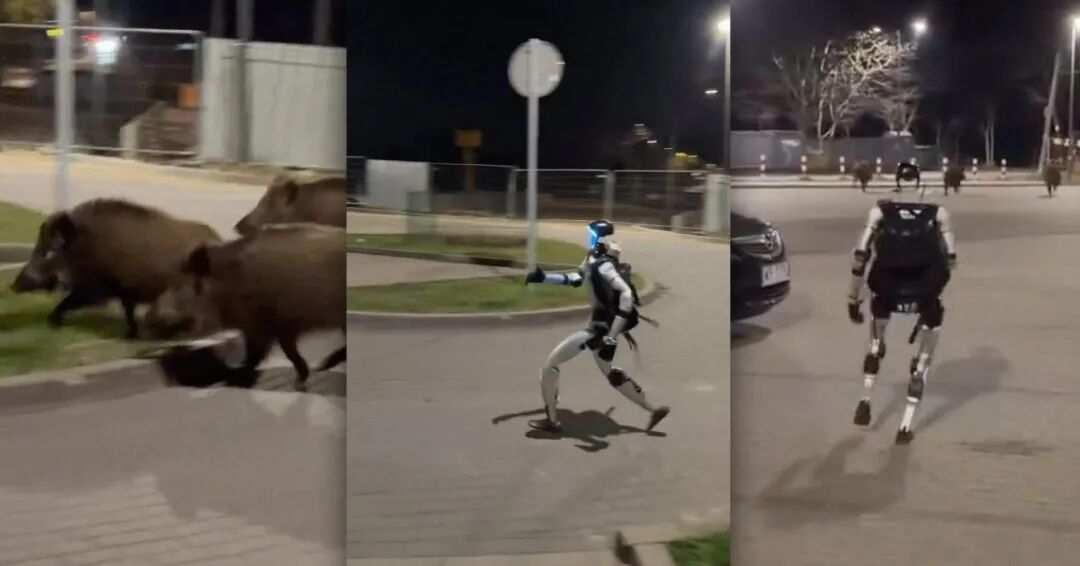
This robot is named Edek, and its occupation can be defined as a "street loafer".
Since opening its social media account in February this year, Edek has carried an Adidas backpack, worn a diamond - studded Rolex on its wrist, and appeared on the streets of Warsaw every day, shooting various videos:
It either pretends to order food at McDonald's, wanders around the street with a wine bottle, curses on the radio, or gives a passionate speech at the Warsaw Parliament...
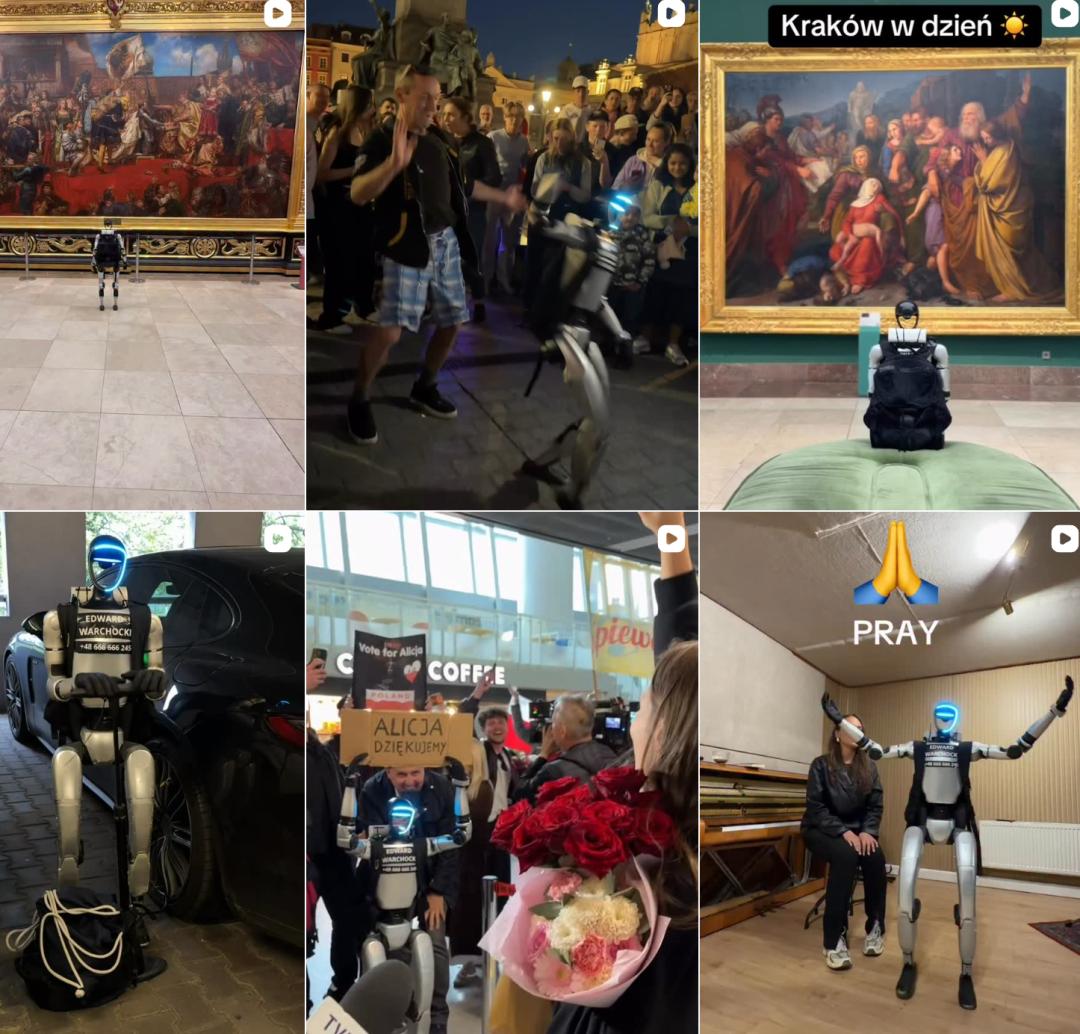
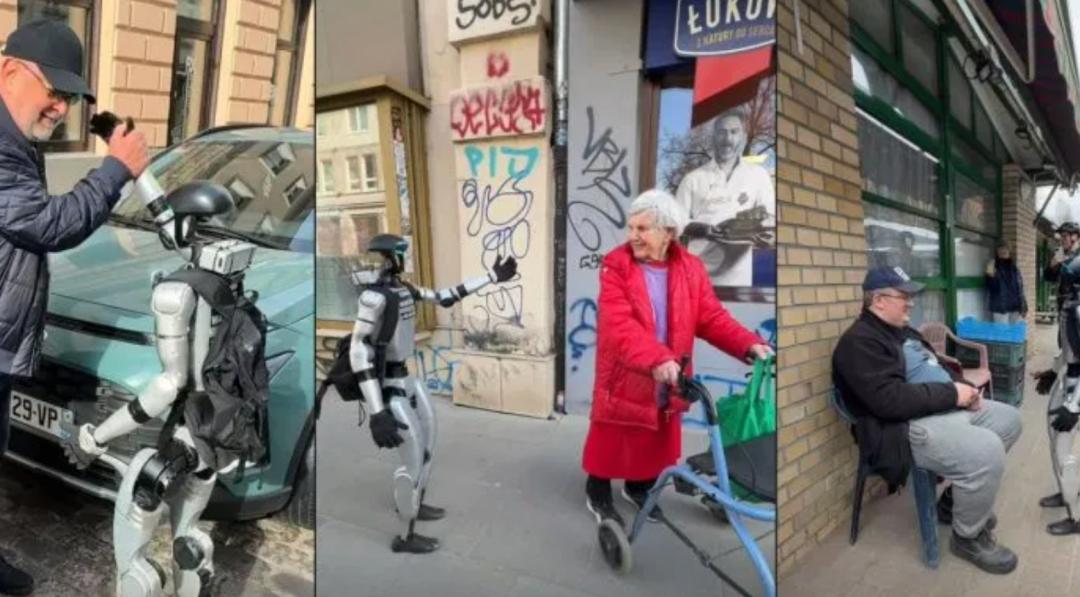
Although Edek's behaviors are exactly those of an idle machine - version "loafer".
However, local residents, especially many elderly Poles, quite like it, perhaps seeing it as their great - grandchild.
Similar to Edek, who follows the street - style internet celebrity route, there is also Jake, an old friend in Austin, USA, whose persona is a "street cowboy" in the AI era.
It wears a cowboy hat, sports shoes, and a large silver chain around its neck. It speaks the abstract language that only Generation Z kids can understand and patrols the streets, complimenting everyone it meets:
"Dude, you're so cool! Your goatee is so stylish, and your white T - shirt is amazing. You have an aura of a big shot all over you."
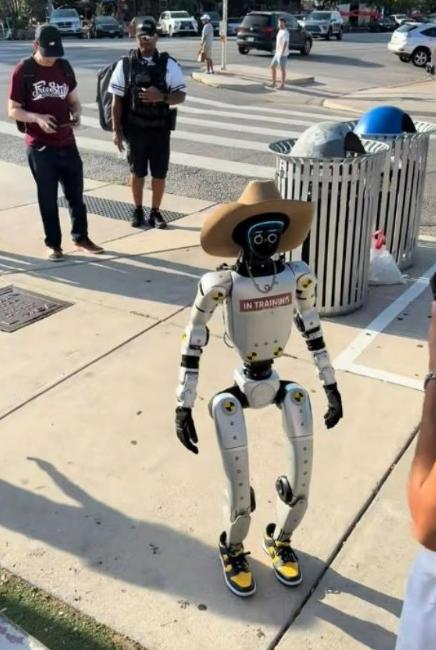
Compared with Edek in Poland, who is still in the early stage of becoming an internet celebrity, Jake in the US can already have a dream collaboration with big streamers like "IShowSpeed".
However, the collaboration process was a bit unpleasant:
IShowSpeed and Jake didn't get along well. Their argument turned into a fight.
Humans performed a series of violent actions such as shoving and choking on the robot, causing serious physical and mental damage to the latter, forcing it to fade out of the entertainment industry for a while.
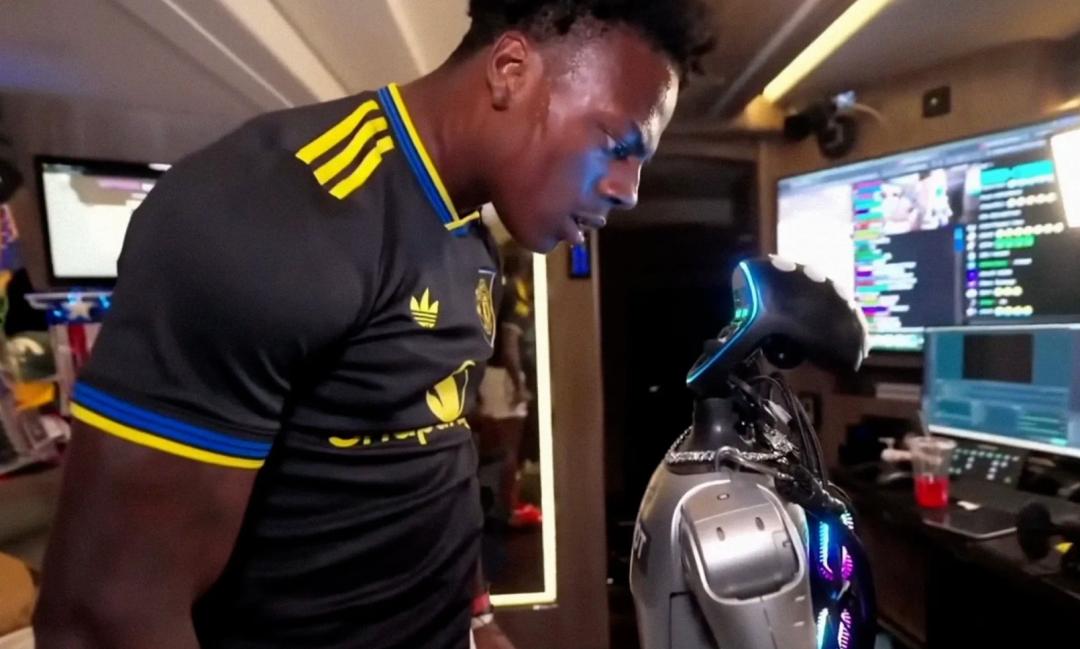
The brokerage company RizzBot behind Jake issued a sky - high compensation claim list of one million US dollars.
What really upset them was not just that their "artist" was beaten, but that IShowSpeed's punch completely messed up Jake's work plan.
Originally, Jake was supposed to collaborate with "MrBeast", appear on the top - level media CBS, and obtain countless business endorsements...
With that punch, it's a minor issue that the robot lost an arm or a leg, but it's a major problem that it delayed human beings from making money.
After all, a robot's arm can be re - made, but a human's chance of getting rich is fleeting. Making Chinese robots into internet celebrities is not a business with high barriers. It's just selling novelty under the guise of technology.
In essence, it's a highly profitable business that makes money from information asymmetry, and anyone can do it.
02
Do Chinese robots represent the "sense of the future" of the world?
The essence of this business is to wholesale the abstract "sense of the future" as a physical product locally.
The core reason why Chinese humanoid robots can sweep the world can be summed up in two words:
Cheap.
Taking the previously mentioned Unitree G1 as an example, the bare - machine price of this classic model in Europe and America is about $13,500 (about 91,000 RMB).
Even with the premium, the total procurement cost is only about $30,000 (about 200,000 RMB).
However, the same products from Western counterparts such as Boston Dynamics are generally priced close to $100,000 (about 677,000 RMB).
In other words, Chinese manufacturers have directly reduced the cost to 30%.
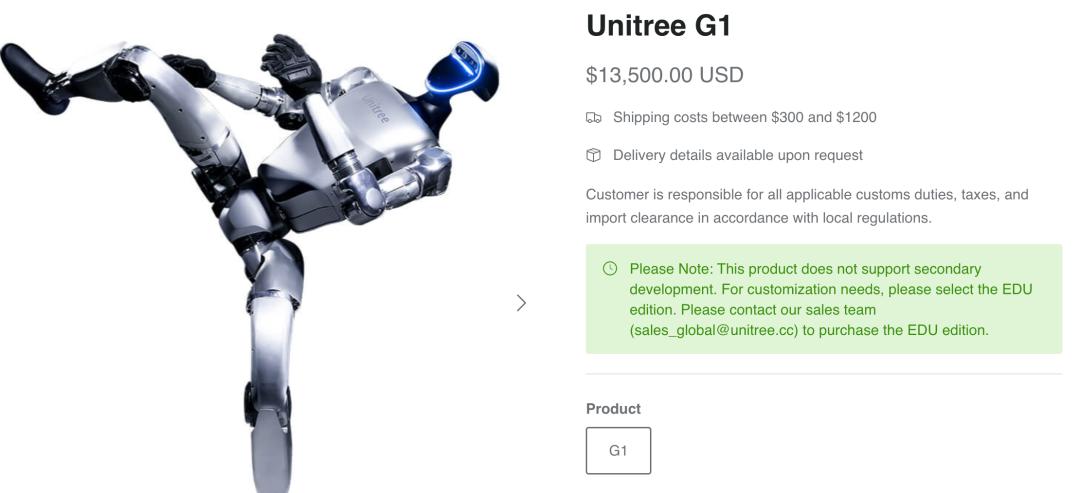
Moreover, considering that this robot is mainly used for performances at present and cannot perform specific tasks in daily life, the price of a few thousand dollars is indeed unacceptable for individual players.
However, it is just right for a company, especially a marketing and advertising company.
Furthermore, domestic speculators in the emerging market have already paved a mature business path for foreigners on how to monetize after buying a G1 several years ago:
First, use the robot to create buzz and attract attention, and then profit from the rental business and related supporting services. While the public's sense of freshness for humanoid silicon - based life has not faded, make a quick profit.
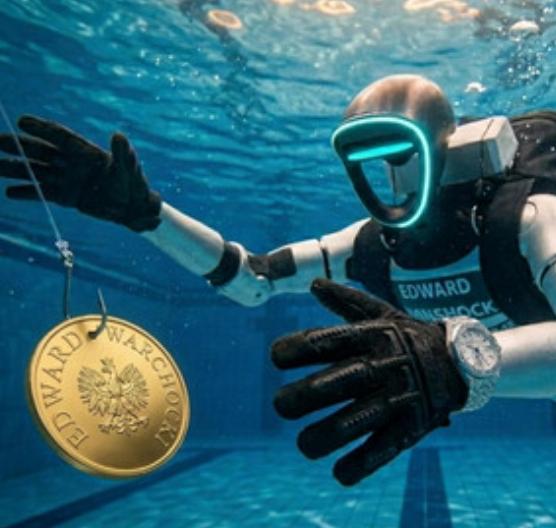
Domestic media are now too lazy to write about such business stories, but foreigners find them extremely valuable.
For example, the company behind Edek, which chases wild boars in Poland, is called MERA. Its boss, Grzegorczyk, came to China for a visit at the end of last year. After investigating the entire process of monetizing humanoid robots, he decided to enter the market.
