On the front line of anti-cheating, game manufacturers have launched an "arms race"
"Those who undermine fairness should be punished." This is almost a consensus in everyone's mind.
However, in the game arenas that gather tens of millions or even hundreds of millions of participants, the boundary of cheating behavior appears blurred.
In the field of online games, cheating has a more well - known name: "using cheats". It includes all behaviors of obtaining information and operational capabilities beyond those of normal players through non - officially permitted external programs or hardware. In game - related scenarios, cheats usually do not include using data modifiers in single - player games, but specifically refer to tools such as wallhacks and aimbots in multiplayer competitive games.
Currently, in addition to cheat developers, some content creators on the Internet also use "cheats" as eye - catching materials for dissemination to gain traffic, and even advertise and promote cheats.
For example, in some late - night live - streaming rooms, streamers of the "treasure - hunting rat" type in tomb - raiding games will continuously show the audience "how they use the wallhack to precisely collect high - value items on the map". This kind of display packages cheating as an entertaining and curious spectacle, weakening the seriousness of anti - cheat efforts and making it difficult for game manufacturers to completely eradicate cheats.
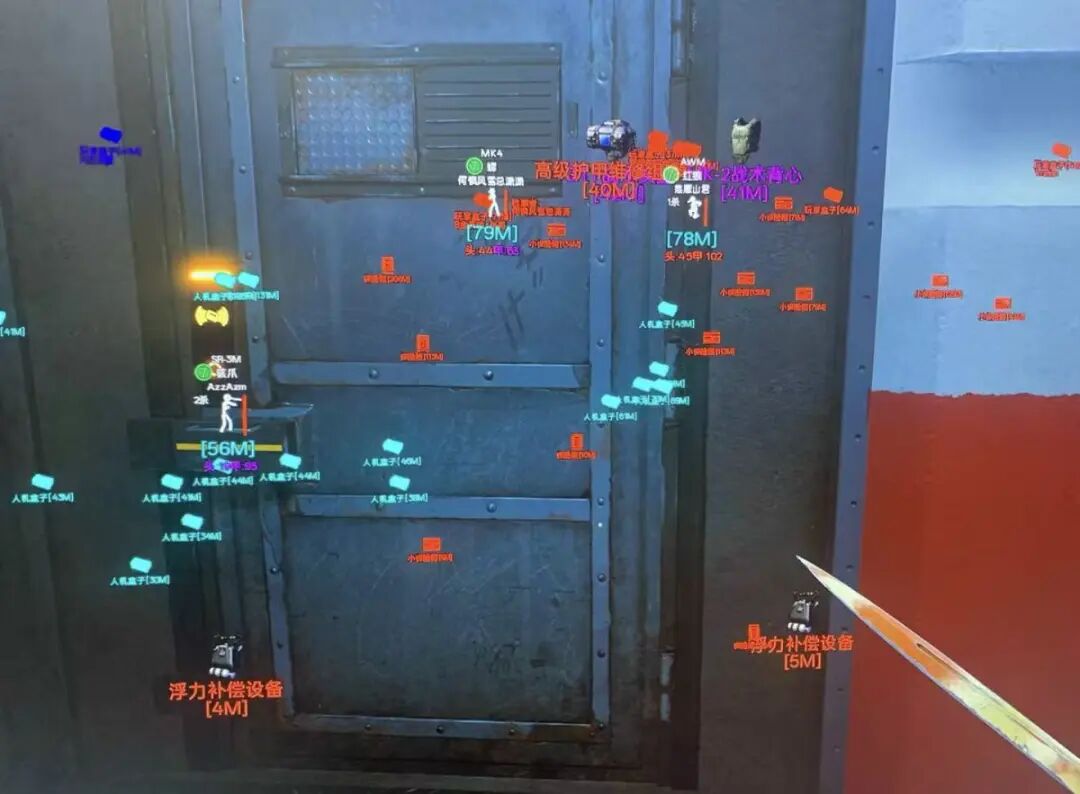
The wallhack can directly display the information of items on the map.
After all, one of the means for cheat developers to continuously acquire customers is to actively lower the psychological threshold of potential users. In addition to creating gimmicks to gain traffic, they often package their products on social platforms, e - commerce channels, and private communities, calling them "assistive tools" or "stable plugins" to blur their illegal nature.
Currently, the number of cheat users is increasing as the total number of domestic players grows. Whenever a phenomenon - level game appears in the market, cheat developers will respond in a very short time and quickly make huge profits. Games like PUBG a few years ago and the current "Delta Force" have basically experienced the situation of "the game becoming extremely popular while the number of cheats surging".
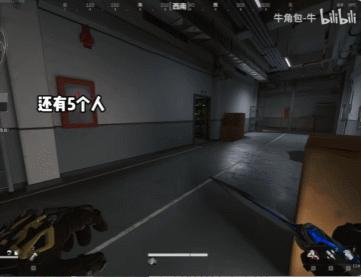
Many UP owners also share their experiences of encountering cheats.
According to the statistics in the "2025 Game Security White Paper", the number of hits on mobile game cheat functions has increased by 148 times in the past eight years. At the same time, the number of cheat samples on the PC side has exceeded 100,000 for the first time in a year, with a year - on - year increase of 124%. That is to say, both the supply and demand of cheats are constantly expanding.
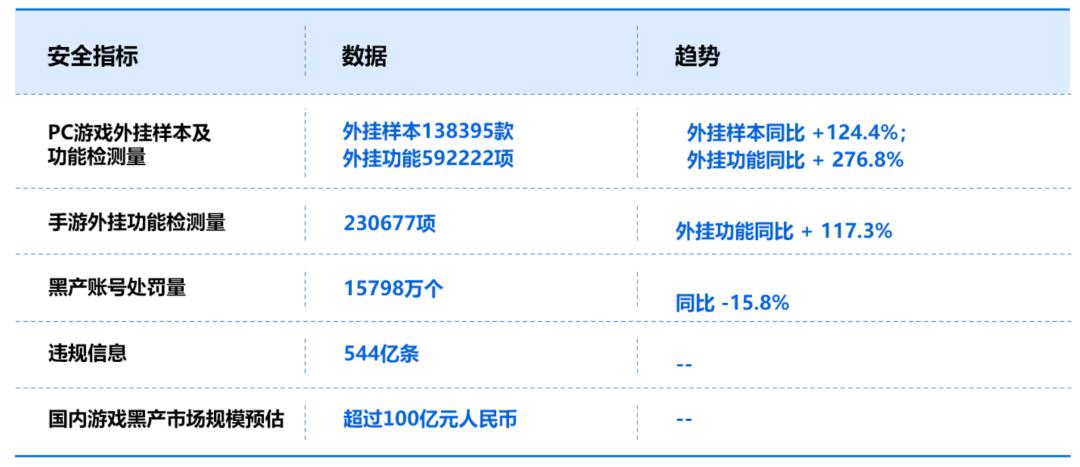
Statistical data from the "2025 Game Security White Paper"
Many users lack an objective understanding of the legal nature of cheats and their connection with the black market. They may not be aware that each use of cheats provides cash flow for the downstream black - market chain, thus objectively maintaining the low - threshold operation of the cheat market.
Nowadays, cheat development is no longer an individual act but a complete black industrial chain involving huge interests. At the Eighth Game Security Industry Summit held on June 8th, Ao Ran, the executive director of the China Audio - Video and Digital Publishing Association, mentioned that "when the number of participants in an industry is calculated in hundreds of millions, its security issue is no longer just a technical problem, but a public issue related to the order of the digital economy, the governance of cyberspace, and the vital interests of a large number of players."
01 A War Without Gunpowder Smoke
The relationship between cheats and anti - cheats has completely deviated from the pure technical dimension and is more like a continuous offensive and defensive battle between game official teams and the black market. The two sides will repeatedly confront each other in multiple dimensions such as technology, operation, law, and even public opinion.
For game manufacturers, anti - cheat work is essentially a "arduous task" with a difficult - to - quantify return on investment. It requires the project team to allocate a certain cost to set up a security team in addition to basic R & D and invest server resources for real - time monitoring and retrospective analysis, so as to establish an independent evidence - collection and handling process.
These costs are difficult to directly convert into revenue and are considered "a matter of course" by players. In short, there is no reward for doing well, but there is punishment for doing poorly.
"Apex Legends" is a typical example of a game that failed due to game security issues. This FPS game developed by Respawn Entertainment and published by EA quickly became popular after its launch in 2019, but was also targeted by cheat developers. At the peak of the game's popularity, players frequently encountered cheats such as speed hacks, aimbots, and wallhacks. In the most extreme cases, they could even encounter flying hacks and bullet - tracking cheats.
What's more serious is the change in players' mentality. As they continuously encounter cheats, the reaction of some players will change from initial anger to the compromising statement of "it's normal to encounter cheats", and they will further lose confidence in the credibility of the product itself.
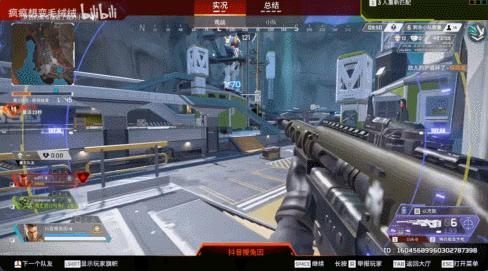
There are still cheats that violently modify numerical values in Apex Legends.
Ultimately, "Apex Legends" fell into a vicious cycle: players left the game due to cheats, and the game's popularity declined, which directly led to a decrease in cheats. When players returned because of the decrease in cheats and the game's popularity rose again, the number of cheats would increase accordingly.
All Respawn Entertainment could do was to make additional investments in a more passive situation to complete the anti - cheat system that should have been established earlier.
On the side of the cheat black market, the pace of evolution has never stopped. The cheat black market has now formed a complete chain with clear division of labor and hidden settlement. Among them, the upstream teams are responsible for the R & D of core functions and usually hide overseas to avoid domestic law enforcement jurisdiction; the middle - stream distributors distribute products to lower - level agents through un - reviewable instant messaging tools and provide teaching and after - sales services at the same time; the payment link generally uses virtual currency settlement, such as Bitcoin and USDT, cutting off the fund - tracing path.
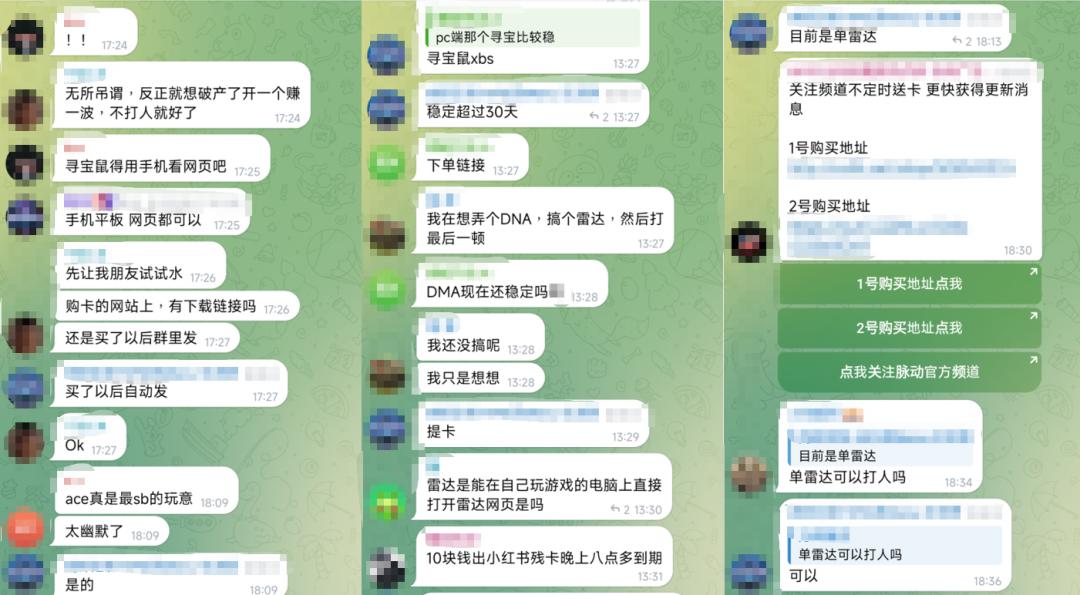
Selling cheats is not a new thing.
The terminals used by users have basically abandoned the one - time purchase model and switched to the subscription system. Users pay on a weekly or monthly basis, continuously providing cash flow for cheat developers. Based on this model, cheat developers can also continuously respond to the anti - cheat updates launched by the official and ensure the availability of their products.
Each node in this chain can be isolated. Even if the official cracks down on a certain distribution link, the cheat black market can quickly change channels and restock. This structural flexibility is also the root cause why cheats have never been completely eradicated.
The official's opponent is not a few hackers, but a commercial black - market group with organization, funds, and the ability to iterate technology.
Of course, in recent years, cheats have also found new breakthroughs at the technical level and have successively launched two new forms that can impact the traditional defense system.
The first is the DMA cheat. The biggest difference between the DMA cheat and traditional cheats in the past is that it essentially reads game memory data directly through an independent hardware device without modifying the client or injecting additional code. Since these processes are completed at the hardware level, traditional anti - cheat software cannot detect its traces.
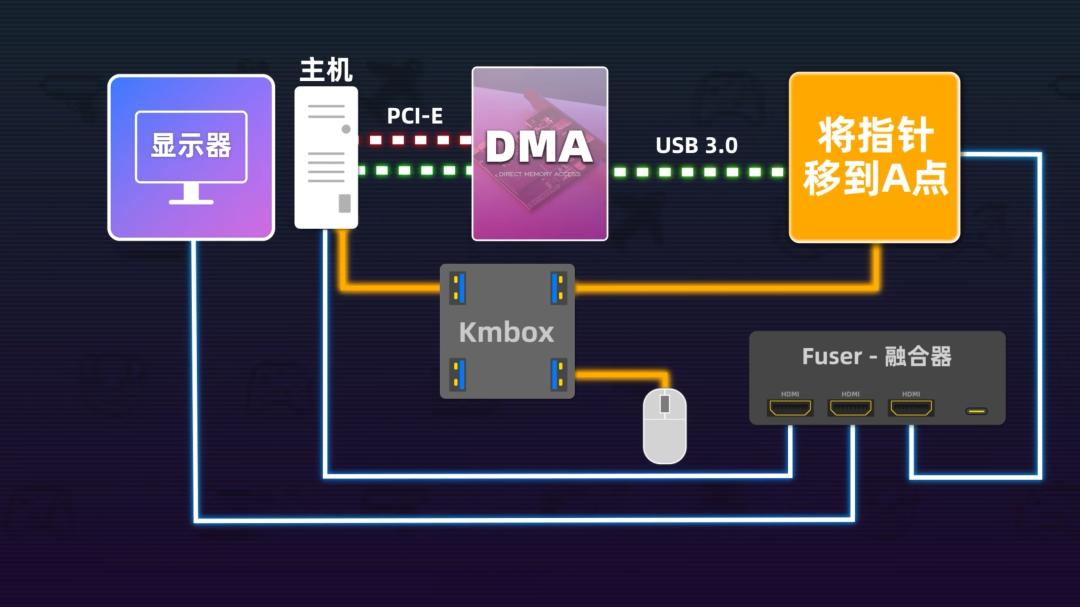
Operation logic diagram of the DMA cheat
The second is the AI vision cheat. This type of cheat also does not read game data. Instead, it collects video signals through third - party compliant software (such as OBS for live - streaming) and uses a trained vision model to analyze the screen in real - time. Finally, it completes operations by simulating input devices. This cheat mode is also the most frequently mentioned by players in self - media.
Of course, from the perspective of the official system, although the current AI vision cheat can skip memory reading, it also makes its operation link cumbersome and inefficient. Therefore, the security team can more easily distinguish cheat features through behavior differences and quickly crack down on them.
These two new forms of cheats have shifted the anti - cheat confrontation from software to hardware and from code observation to behavior differentiation. It may not be possible for the official to completely contain cheats by writing one or a few software programs. They must provide high - frequency updates and engage in repeated battles just like the cheat developers.
That is to say, the current confrontation between cheats and anti - cheats has evolved into an "arms race" for the core interests of the game. The side with a shorter iteration cycle and faster updates will gain the initiative in the current game. In the most extreme cases, this window period may be as short as an hour.
02 To What Extent Should the Anti - Cheat Measures of Cutting - Edge Products Be?
To truly understand the current stage of the confrontation between cheats and anti - cheats, "Delta Force" under Tencent is a cutting - edge sample worthy of reference.
First of all, "Delta Force" has a large enough user base, which makes cheat developers regard it as a key target. Backed by Tencent, the game does not lack technical and cost support, so there will naturally be a high - intensity confrontation between the two sides. Just in the past two game seasons, the official has banned 1.82 million cheating game accounts. Secondly, "Delta Force" is an FPS game, which is in the main battlefield where cheats are most rampant. Therefore, the anti - cheat system has been more fully pressure - tested.
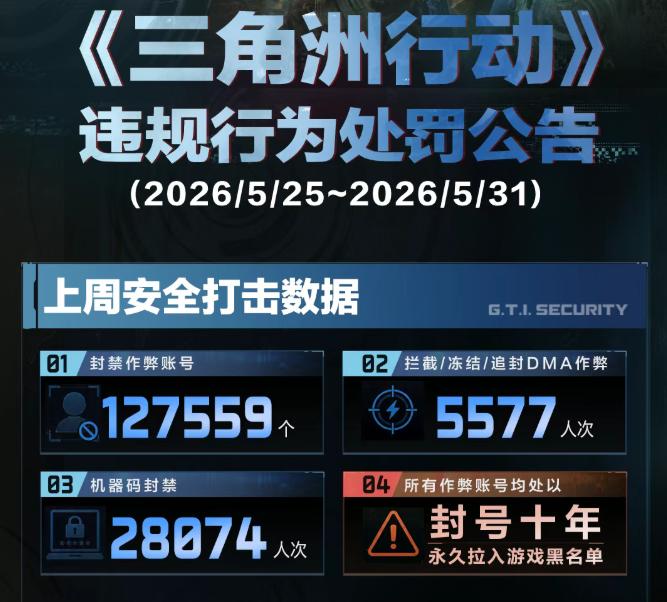
The official punishment notice for violations
More importantly, Tencent's security team has also disclosed relatively complete technical and strategic information on this project, allowing us to see more.
According to the official introduction, the anti - cheat strategy of "Delta Force" basically covers two stages: pre - interception and dynamic confrontation.
In the pre - stage, the security team's approach is to increase the cost of using cheats, such as attaching machine codes and applying multiple data encryption systems. Among them, the measure of banning machine codes is quite common. In essence, it raises the cost of banning cheaters from a single account to core hardware such as the computer motherboard.
In terms of data encryption, Tencent's security team has proposed a model that combines the fog system, personalized encryption, and dynamic encryption. Simply put, the fog system only allows the player's computer to instantly read the data that the player "should know" at present; personalized encryption will dynamically generate an independent algorithm for each player, increasing the cracking threshold for cheats to obtain data and requiring customized solutions; at the same time, dynamic encryption makes the data location of the game constantly change, increasing the cost for cheats to run through the process.
These thresholds do not necessarily need to completely contain the functions of cheats. They only need to slow down the reading speed and make the data lose its timeliness. Once cheats cannot guarantee real - time performance, even with a delay of only a few dozen milliseconds, their functional value in actual combat will be greatly reduced.
In terms of dynamic confrontation, there is a key change in the thinking of the security system: they no longer regard "finding the cheat program" as the only goal, but also take into account "identifying behavior patterns".
No matter what technical means cheaters use, they will ultimately be reflected in operational behaviors. For example, the movement trajectory of the crosshair is too straightforward every time, lacking the necessary fine - tuning in human operations; in the absence of definite information, the pre - aiming position accurately locks the head of the enemy behind the cover; multiple targets are continuously and quickly located, and the acceleration curve of the perspective switch does not conform to the laws of human operation, etc.
The official will input all these behavior characteristic data into the AI model for continuous training and real - time comparison. Even if cheats can avoid detection and crack encryption, they may still be exposed in the final operation link - even more thoroughly.
At the same time, the official will also update the defense plan at a high frequency, using different program contents to "screen" continuously to find cheating accounts. According to the security team, at the peak stage, the anti - cheat system of "Delta Force" has updated the defense plan twice a day at the fastest. They said that the team will continuously follow up on the update dynamics of cheats 24 hours a day. Once a new cheating method is found, it will be immediately written into the detection rules and pushed to the client in the form of a hot update.
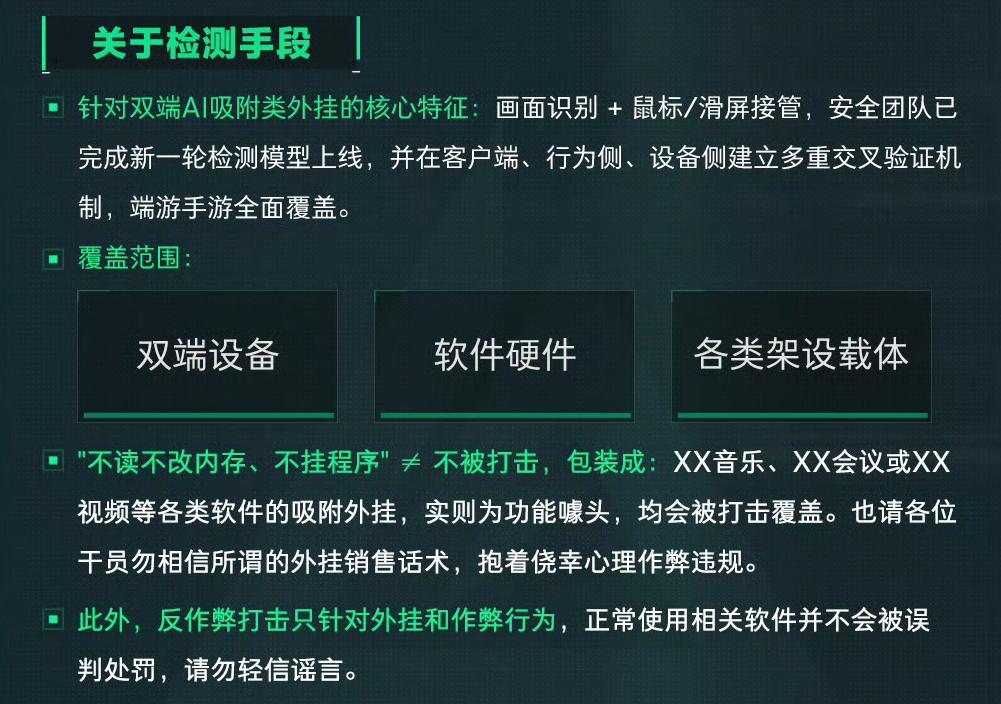
For example, for the recently discussed AI adsorption - type cheats
Overall, the strategies demonstrated by "Delta Force" basically represent the standard and even the highest - intensity configuration of domestic mainstream manufacturers in the FPS field for anti - cheat measures, providing a lot of reference for many games.
03 The Ultimate Goal of Anti - Cheat Is Not Only on the Battlefield
Of course, combating the cheat black market is not an overnight task. It requires continuous verification and optimization from players and the official in multiple dimensions. For example, players should maintain a firm attitude of resisting cheats, and the official should provide more objective means for players to identify cheats. In "Delta Force", the most - demanded function in this regard should be the global replay function. For example, "Delta Force" plans to launch a "player inspection team" to invite players to participate in the anti - cheat work together.