DiDi, JD.com, Alibaba, Meituan Gather Their Strengths: The Accompanying Medical Consultation Track Is About to Undergo Major Changes
Medical escorts are in the spotlight again.
This time, the driving force isn't the "earn over 10,000 yuan a month" job gimmicks peddled on short - video platforms. Instead, it's the top tech giants in the Internet arena. They are integrating this once highly non - standardized and acquaintance - network - dependent "slow business" into their business empires.
The surface - level actions are already quite intense: Didi is actively recruiting medical escort operators and planning an independent mini - program; JD has launched a full - process "AI Medical Assistant"; Alibaba Group is leveraging its intelligent agent to connect directly with over 2,000 hospitals; Meituan is eyeing the online reconstruction of hundreds of senior care institutions.
This scenario seems familiar. In 2015, the O2O medical product "e - Medical Escort" joined hands with Didi and received tens of millions of yuan in angel investment from Hongtai Fund. That was the first time the medical escort industry was illuminated by the spotlight of capital, but after the boom faded, it left a mess.
After more than a decade, the tech giants are returning to the medical escort industry with algorithms, traffic, and a large - scale fulfillment infrastructure.
But this time, it's no longer just a marginal part of Internet healthcare. Instead, it has become the golden intersection of the silver - haired economy, AI healthcare, local life services, and platform fulfillment.
With the giants moving in, the rules of the medical escort game have completely changed.
01
The Real Intention:
The tech giants aren't just after the "tens of yuan in errand fees"
From a purely economic perspective, medical escort isn't a very attractive business.
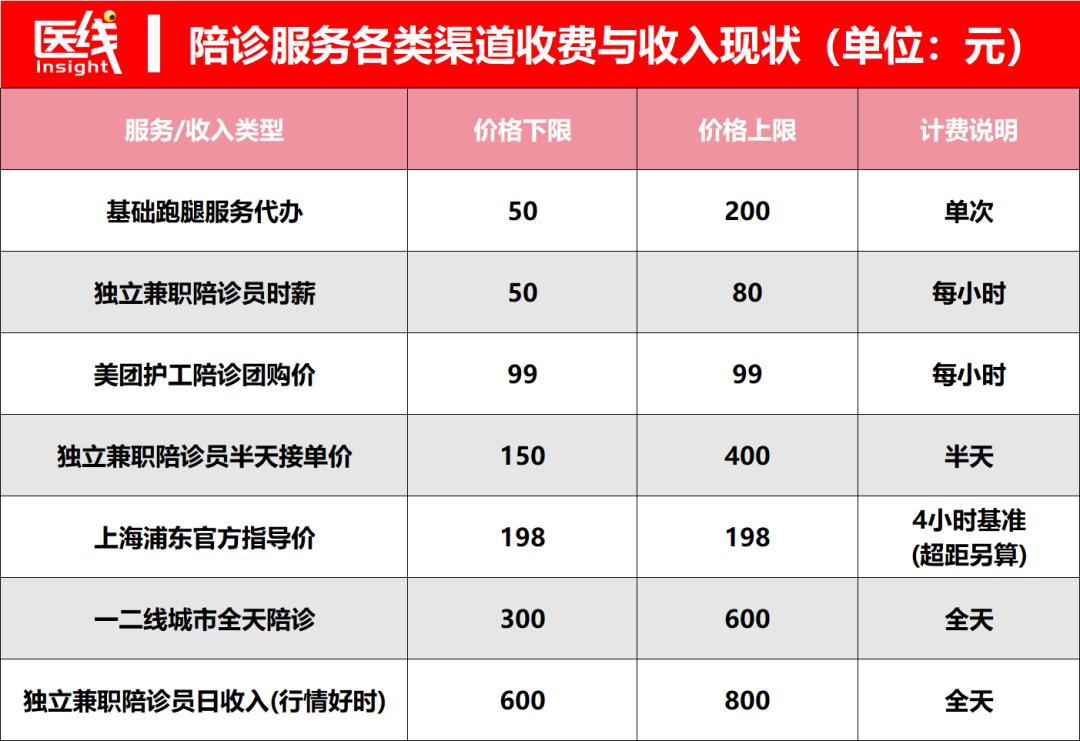
Take the official guidance price in Pudong, Shanghai as an example. The fee for a 4 - hour service is 198 yuan, with an additional 99 yuan for pick - up and drop - off if the distance exceeds 3 kilometers, and 10 yuan per additional kilometer. On the Meituan platform, some senior care institutions offer a group - buying price of 99 yuan per hour for nurse - accompanied medical services.
Low frequency, high - intensity fulfillment, and a strong need for trust - from any angle, this seems like a laborious job of "bending down to pick up coins".
Data source: Public information on the Internet
But the tech giants still choose to enter the market. The reason is simple: The medical escort service itself may not be profitable, but what's truly valuable is the family health consumption chain it unlocks.
Didi is extending its "physical fulfillment chain". It naturally controls the journey "to the hospital". In December 2025, Didi joined hands with multiple parties in Gulou District, Nanjing to establish a "Medical Escort Consortium" and trained 300 certified medical escorts.
In other words, Didi is trying to extend its order - dispatching and scheduling capabilities, which have been developed over the past decade, from outside the hospital to inside, filling in the last piece of the puzzle from "the doorstep to the consulting room".
JD and Alibaba have chosen "digital takeover".
In January 2025, JD launched the "AI Medical Assistant", integrating pre - diagnosis AI department matching, in - diagnosis intelligent queuing, and post - diagnosis record - keeping. Ultimately, it aims to strengthen its dominant pharmaceutical supply chain.
Alibaba's "Anzhen'er" intelligent agent has even greater ambitions: It has connected with over 2,000 medical institutions in Zhejiang and served over 200 million people. In May 2026, after connecting with "Ant Aifu", which answers tens of millions of questions daily, "Anzhen'er" further extended its reach to medical insurance payment and the underlying connection of hospitals.
Meituan is playing the "local life + senior care network" card. In early 2026, Meituan joined hands with the Beijing Civil Affairs Bureau to promote the online entry of hundreds of senior care institutions. Then it launched the "Xiaotuan Health Assistant" and a "health card" covering 50,000 stores nationwide. Its goal is to make medical consultations, medicine purchases, and medical escorts as easy to arrange, match, and fulfill as ordering takeout or booking a hotel.
The four giants have different strategies, but their directions are highly consistent: They aren't competing for the service fees in the same market. Medical escort is just a lever, and the real "prey" is the overall family health consumption market covering pre - diagnosis, in - diagnosis, and post - diagnosis.
02
Question:
Why is the medical escort industry booming again at this time?
Why is the medical escort industry heating up again right now?
The answer lies in three underlying trends: Policy is setting the tone, demand is surging, and the industry has reached a point where standardization is a must.
The first driving force is the clear positioning from top - level design.
In January 2026, eight departments including the Ministry of Civil Affairs issued a policy document to promote the silver - haired economy, explicitly stating "support the cultivation of professional medical escort and assistance institutions".
The significance of this statement is that it officially includes medical escort, which has long hovered between household services, errand - running, and "medical touts", into the national strategic framework.
Since then, medical escort is no longer just a self - developed service in the private sector. It has begun to have an officially recognized identity.
The second driving force is the rigid demand brought by the population structure.
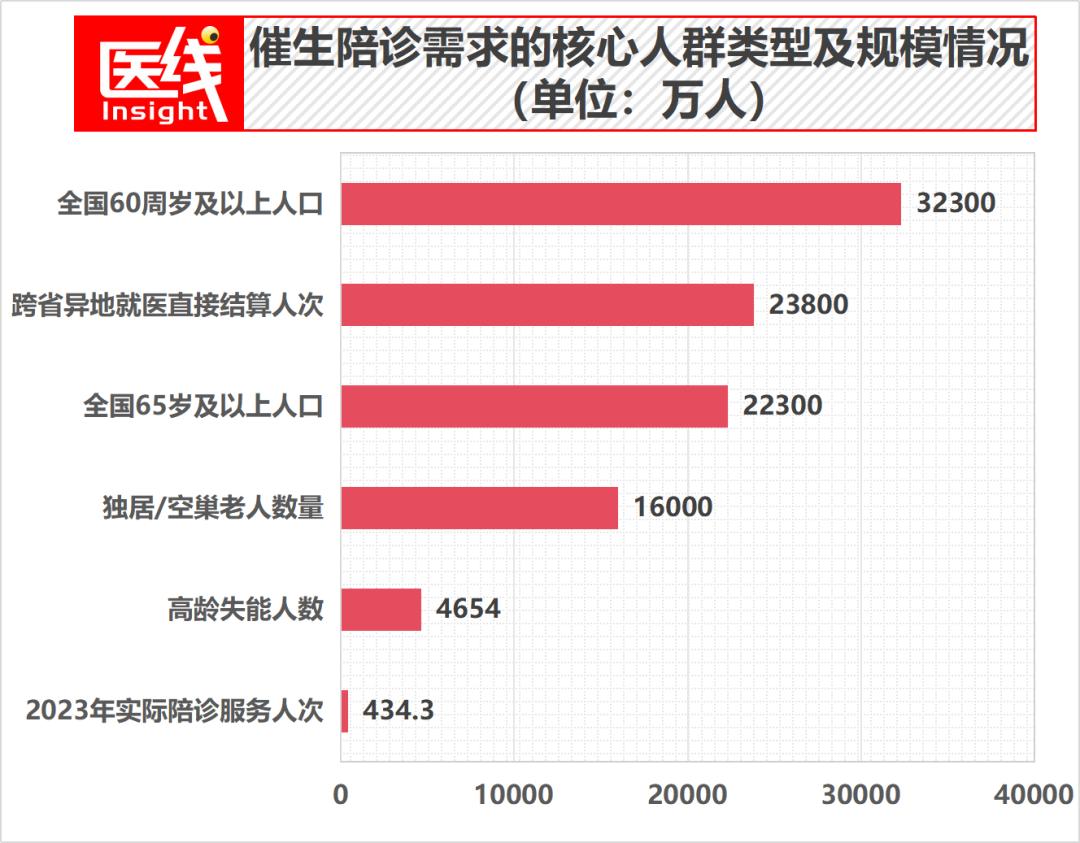
Data from the National Bureau of Statistics shows that by the end of 2025, the population aged 60 and above in China had reached 323 million, accounting for 23.0%; the population aged 65 and above exceeded 223 million.
Meanwhile, hospitals are becoming more digital. Self - service machines, electronic reports, online registration, and medical insurance payment have improved efficiency but also excluded some elderly people.
For elderly people living alone, going to the hospital alone is often not just a simple trip but a "challenge".
In an official survey covering 36 sub - districts in Pudong, Shanghai, "medical escort" topped the list of popular terms in community senior care. Over 1,000 people have received services through government channels, with elderly people living alone being the main beneficiaries.
This detail shows that medical escort isn't just a concept hyped by short - videos. It's a real, detailed, and frequent pain point in an aging society.
Data source: National Bureau of Statistics, "Research Report on the Development of Accompanied Medical Services", "China's Elderly Health Report" (2024)
The third driving force is the end of the wild - west era.
Local governments are accelerating the integration of "regular forces". Shanghai has issued a pilot plan to train at least 100 standardized teams in each of the nine districts, including Pudong and Xuhui, and is exploring the inclusion of medical escort in senior care subsidies. In March 2025, the Chengdu Human Resources and Social Security Department issued standardized "Certificates of Special Professional Ability for Medical Escort Services" to the first batch of 27 workers.
With policy dividends, huge demand, and professional access in place, medical escort finally has the possibility of transforming from "personal errand - running" to a "standardized product".
03
Behind the 2.45 - billion - yuan illusion:
Whoever defines medical escort defines its scale
When a new trend emerges, numbers are often the first to inflate.
The most widely circulated statement in the industry about the medical escort market is that the market size is expected to exceed 2.45 billion yuan in 2026.
However, looking beyond this shiny facade, the estimates from different institutions vary greatly.
Data from Zhiyan Consulting is relatively conservative: In 2025, there were about 7.406 million person - times of "medical escort services" in China, with a market size of 118.5 million yuan.
On the other hand, the "2025 Medical Escort Industry White Paper" cited by China City Daily has a broader scope: The general medical escort market exceeded 8 billion yuan in 2024, with over 500,000 professional practitioners, and is expected to exceed 10 billion yuan in 2025.
The gap between 118.5 million yuan and 10 billion yuan, a difference of two orders of magnitude, hides the most core problem in the medical escort industry: The boundaries haven't been truly defined.
Is medical escort just an artificial service of "accompanying someone to the hospital", or can it include in - hospital care, senior care assistance, commercial insurance claims, and even AI medical assistants?
This is the first battle the tech giants will fight after entering the market: Redefine medical escort.
If it's just the former, the industry will quickly reach its ceiling. If it's the latter, it has the potential to become a trillion - yuan - level family health infrastructure.
Meanwhile, the idea of a "relaxed and well - paid job" on social platforms is being shattered by the reality faced by front - line practitioners.
The co - founder of Lantun Medical Escort once calculated that with an average order income of over 200 yuan on the platform, a medical escort would have to work full - time every day to earn over 10,000 yuan a month.
Independent part - time medical escorts in different regions charge between 50 and 80 yuan per hour, and the price for a half - day service is about 150 to 400 yuan. On a good day, they can earn 600 - 800 yuan.
However, due to the highly fluctuating and low - frequency demand, it's almost impossible to have "stable daily orders".
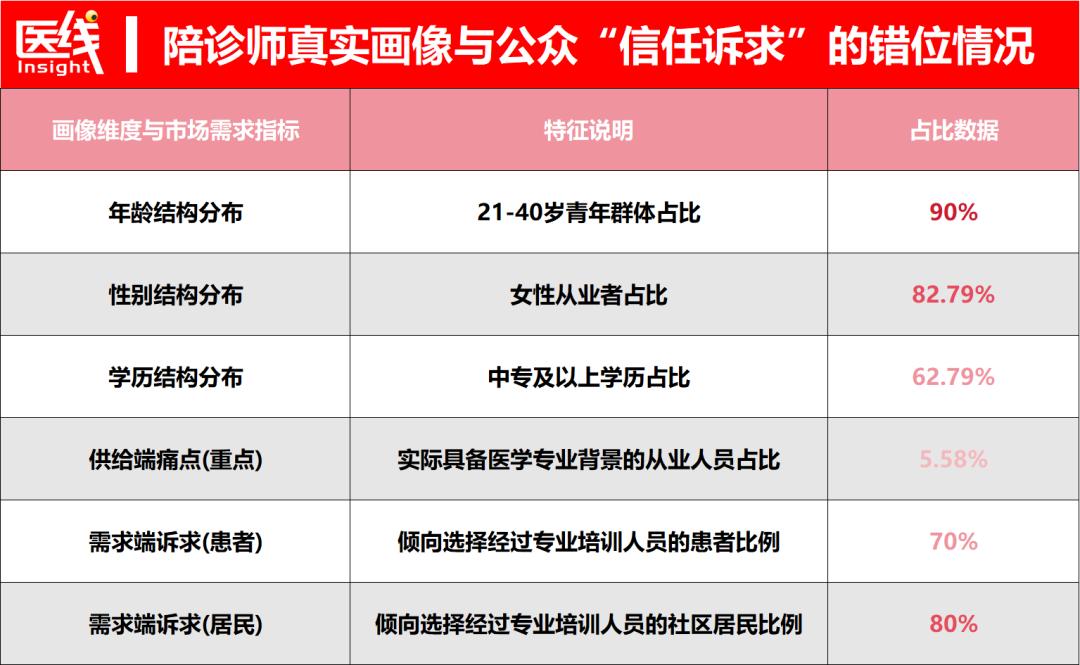
For platforms, the real difficulty has never been "recruiting people willing to run errands", but rather crossing the trust gap: Convincing users to entrust their sick parents, medical records, ID cards, and home addresses to a stranger.
There are at least four challenges in front of the tech giants.
The first is the service boundary.
Can medical escorts conduct consultations on behalf of patients? Can they make medical decisions? Once they cross the line, a life - service may turn into a medical liability accident.
The second is privacy and security.
ID cards, medical records, and home addresses are highly exposed in the medical escort process. A survey by "Worker's Daily" of 50 medical escort product links found that some merchants implicitly offer services such as grabbing appointment numbers and expedited medical treatment, with an 8 - hour fee ranging from 300 to 600 yuan.
How to prevent sensitive data from being exposed and cut off the gray market is a question that platforms can't avoid.
The third is liability attribution.
If an elderly person accidentally falls or has a sudden illness in the hospital, what responsibilities should the platform, the medical escort, and the service institution bear? The Shanghai pilot plan has called for the establishment of an emergency response plan and the introduction of liability insurance.
The fourth is professional qualification.
The industry hasn't been included in the national occupational classification dictionary, and many companies are registered under the names of household services or consulting. How to distinguish the so - called "regular forces" from pharmaceutical representatives, scalpers, and gray - market registration services still requires clearer institutional arrangements.
Data source: Public information on the Internet
This means that medical escort isn't a business that can succeed simply with large - scale traffic.
The larger the market, the heavier the trust cost that platforms have to pay for review, risk control, insurance, and fulfillment standards.
04
The second half:
Trust is the most valuable infrastructure
Around 2016, at least 20 O2O medical escort products emerged in China, but almost all of them failed.
High customer acquisition costs, non - standardized services, and unstable supply were the three major obstacles that crushed the previous generation of entrepreneurs.
But today, the situation is different.
Hospitals have undergone more in - depth digital transformation, and AI assistants have, to some extent, reduced the information gap in hospitals. The payers are no longer just patients paying out - of - pocket. Community senior care, insurance companies' claims, and corporate welfare may become new payers.
More importantly, tech giants like Didi, JD, Alibaba, and Meituan, which have their own traffic and fulfillment infrastructure, don't need to educate the market from scratch. They just need to integrate medical escort into their existing business networks.
Therefore, the competition in the second half of the medical escort industry is no longer a low - level comparison of "which platform has more registered medical escorts". Instead, it's about who can first turn medical escort into a reliable, accountable, and replicable social infrastructure.
Didi needs to verify the seamless connection from off - hospital transportation to in - hospital services; JD needs to integrate the AI medical assistant into the pharmaceutical supply chain; Alibaba needs to cross the data barrier between inside and outside the hospital; Meituan needs to package high - intensity services into the standardized fulfillment system of local life services.
Whether it's the 2.45 - billion - yuan market size or the trillion - yuan imagination space, the numbers are just the criteria for capital to measure the industry's potential.
The real end - game is: In a society with 323 million elderly people, whoever can make the stressed - out younger generation feel confident in entrusting their parents' care will hold the key to the future family health consumption market.
This article is from the WeChat official account "Medical Insight", author: Yushan. Republished by 36Kr with permission.