Top tech firms are scrambling for AI talents: average monthly salary hits 130,000 yuan, professionals aged 35 become highly sought-after
The entry ticket for AI talent has become increasingly expensive. "Cost is no object."
A headhunter with about 20 years of experience told China Entrepreneur that since the beginning of 2026, large companies such as Alibaba, Tencent, and ByteDance have had almost no upper limit on their budgets when competing for AI development talent. "I can feel the long - lost wolfishness of these large companies."
Since 2023, the annual salary ceiling for AI talent has increased from one million yuan, ten million yuan to over one hundred million yuan, adding a zero every year. "The obvious change this year is that senior and junior classmates who graduated recently and joined Tencent, Alibaba, etc., all have a total annual salary of several million yuan." An undergraduate student from Tsinghua University's Yao Class told China Entrepreneur.
The competition for core talent and leaders of large - scale models has become even more frenzied.
According to a report from Maimai, from January to April 2026, the average monthly salary of AI scientists/leaders reached 132,796 yuan, far ahead of the second - ranked algorithm researchers (74,441 yuan). On April 16, Guo Daya was reported by the media to have joined ByteDance's Seed department with an annual salary package in the hundreds of millions. Both Alibaba and Tencent had tried their best to recruit Guo Daya. Alibaba offered him the position of Post - train leader.
The fire of this competition for "the most brilliant minds" is still spreading to product managers and even interns.
"The salaries offered by top - tier companies like ByteDance for AI talent are higher than those of 90% of companies." Lin Fan, the founder and CEO of Maimai, told China Entrepreneur. Recently, ByteDance announced the launch of a global campus recruitment in the field of cutting - edge technologies. Alibaba has allocated 50 billion US dollars for the spring internship recruitment of international students in the class of 2026. Tencent announced the launch of the 2026 Qingyun Plan internship recruitment, with the recruitment channel open throughout the year and no upper limit on the salary policy.
"Since last September, I've received 2 - 3 interview calls from large - company internships every month." A doctoral student majoring in computer science at Tsinghua University told China Entrepreneur. His fellow doctoral students were offered an annual salary of 800,000 yuan by a large company, which he joked was a "bargain price".

Source: AI - generated
The competition for gifted teenagers has started from a young age. "The talent - grabbing front of large companies has extended from graduates to current students and even teenagers." Zhang Kai, the person in charge of campus recruitment at an online education and employment company, told China Entrepreneur. It is understood that many youth training courses for AI and Coding have emerged in Beijing and Shenzhen, with the minimum age as low as 6.
While "grabbing talent", "layoffs" and organizational turmoil are also happening simultaneously. Complaints like "programmers developed AI, but then got laid off themselves" are often heard on social media. "The employee left, but the shrimp he raised is still there." Skills are even transformed into a kind of "spiritual consciousness" of laid - off employees.
However, Lin Fan believes that the intelligent agents that can truly "replace jobs" have not yet emerged. The future disruptive AI products are very likely to come from third - party companies in the industry. "The AI entrepreneurship wave may not be large companies revolutionizing themselves, but third - party companies revolutionizing all companies."
01
"Explosive Growth" and "Hard Landing"
"The demand for AI talent increased by more than 10 times last year, and this year it has increased by 8.7 times," Lin Fan said. At the same time, the focus of the talent competition has also undergone a fundamental shift.
Lin Fan divides AI talent into three levels: The first type is basic model talent, who focus on the underlying R & D such as large - scale model pre - training and algorithm architecture design. The second type is application development talent. "They understand business processes, AI, and how to embed AI into specific work scenarios."
The third type is AI - using talent. They don't need a deep technical background, but with a profound understanding of business and the courage to try, they can use AI to complete tasks far beyond daily work - for example, designing deliverable page code, replacing some of the work of traditional front - end engineers.
In 2023, the focus of the market competition was still on the first - type talent. Doctors from C9 universities with top - tier conference papers from NeurIPS and ICML could easily get top - notch job offers.
"If top - notch talent can save 10% of computing power through algorithm optimization, it means savings of billions or even tens of billions of dollars. So, although the talent is extremely expensive, it's still worth it."
"This year is the year of AI. The success of Lobster has shown the real value of AI implementation to the entire industry, which means that the second - type AI application development talent will become the core of the competition. Doctors from C9 universities are still the first choice of large companies. But with the explosion of AI demand, graduates from computer - related majors of 985 and 211 universities have also become the target of large - company competition - and this group of people is also the main force that invisible large companies are eager to recruit." Lin Fan said.
The so - called invisible large companies refer to technology companies that are less well - known than top - tier large companies but have core technologies, occupy key links in the industrial chain, and have comparable salaries and talent density to large companies.
In April 2026, Maimai released a list of 80 "invisible large companies" and the top 20, covering fields such as chips, intelligent driving, robotics, and AI infrastructure. Typical representatives include Dark Side of the Moon, Tuozhu, and Momenta. These companies don't rely on traffic and scale but build their competitiveness through technological barriers and have an urgent demand for AI application talent.
Among them, the average monthly salary of newly posted positions at Momenta reaches 69,815 yuan, and UBTECH has offered an annual salary of up to 124 million yuan to recruit the chief scientist of embodied intelligence.
Against the background of the AI - led change in the talent structure, Lin Fan predicts that people over 35 in the workplace are facing a re - evaluation of their value.
In the era of mobile Internet, people over 35 were often on the priority list for layoffs due to energy issues. But in the AI era, tedious work can be done by AI, and the industry skills accumulated by people over 35 can be deeply coordinated with AI, which is exactly the most crucial asset for mastering AI and building work processes.
02
The Invisible Battlefield: Leaders, Routes, and Computing Power
In March 2026, the news of Lin Junyang's sudden departure from Alibaba's Tongyi Qianwen still sparked discussions in the industry, magnifying the decisive role of AI leaders in the technological competitiveness of large companies like never before.
A senior industry insider analyzed to China Entrepreneur, "AI leaders in large companies must have both technical strength and mature overall planning ability. They need to fight for resources, computing power, and talent budgets. And the core governance logic of large companies is to avoid 'tying their fate to one person'."
However, Alibaba is trying to regain the rhythm of large - scale model development. Recently, Liu Dayiheng, the core technical leader of Tongyi Qianwen, made his first public appearance at the Alibaba Cloud Summit. It is reported that he is currently in charge of the pre - training, post - training, and Coding teams.
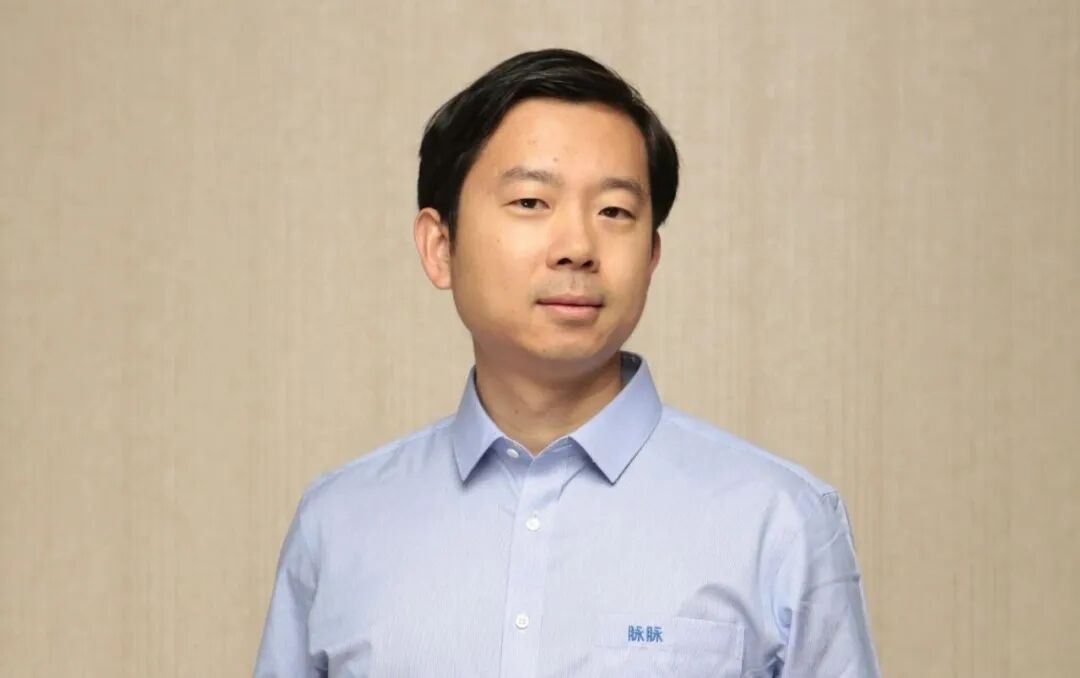
Lin Fan, founder and CEO of Maimai. Photography: Deng Pan
The intensity of the talent war and the differences in organizational genes have also determined that Tencent, ByteDance, and Alibaba have taken different directions in the AI talent - grabbing war.
Tencent has mainly adopted an aggressive "high - salary compensation" strategy. "Since the second half of last year, Tencent has been aggressively recruiting talent, and the senior and junior classmates who joined Tencent have also received frequent salary increases." The aforementioned undergraduate student from Tsinghua University's Yao Class revealed. During the same period, Tencent announced the establishment of the AI Infra Department, AI Data Department, and Data Computing Platform Department, and announced that Yao Shunyu would serve as the "Chief AI Scientist of the President's Office".
Tencent also gave Yao Shunyu special treatment. It was reported that Yao Shunyu appeared in internal meetings wearing shorts and slippers, and his suggestions could be directly reported to President Liu Chiping for solutions.
Zhang Kai revealed that many large companies are now creating a "zero - resistance" research environment for AI talent, breaking conventions, establishing "management special zones", and providing top - notch resource support. "Compared with last year, the biggest change is that it has evolved from simply offering high salaries to creating 'internal entrepreneurship' conditions and granting the 'future pricing power' through shares." For example, ByteDance has provided a "Doubao Stock" plan for model talent.
ByteDance has adopted a "saturation - style offensive". In addition to using all means to compete for top - notch talent, it has also preemptively blocked its competitors' recruitment rhythm from the source. Industry insiders revealed that ByteDance almost has the contact information of all top - notch fresh graduates and requires its HR team to contact them as much as possible. One of the core methods of ByteDance's Top Seed program is to find the authors according to their papers and call them one by one. With ByteDance's all - out effort, the Seed team "has some personnel turnover, but those who leave are not core basic model talent, mostly product - type and application - type people."
Although large companies have repeatedly broken the salary ceiling for top - notch talent, Lin Fan also said that in most cases, salary is not the primary consideration for AI talent. They care about three things: resources (sufficient computing power and data); technical route (the prospect of the business direction); the ability of their direct supervisor (how capable the boss is).
For example, as a core contributor to a series of models such as DeepSeek V3, R1, Coder, and Math, Guo Daya received job offers from various large companies after leaving his previous position. But industry insiders believe that the main reason he finally joined ByteDance is that Guo Daya is good at AI, and the GRPO (Group Relative Policy Optimization) algorithm proposed by his team in DeepSeek - Math can improve speed and accuracy and save memory usage - and AI is also the direction that ByteDance currently values the most.
03
Only Programmers Need to Worry
"Last year was the year of AI in the United States, and this year it has become the year of AI in China." An industry insider told China Entrepreneur. Given the significant salary gap between China and the United States, the salaries of Chinese talent are not over - inflated.
Silicon Valley also shows the co - existence of "explosive growth" and "hard landing". Kevin Kelly revealed in a recent prediction that AI has limited impact on the work of CEOs and senior executives. The efficiency of front - line employees has been improved, but the core functions of middle - level managers - such as information transmission, statistics, and planning - are what AI is best at.
"The recent situation in Silicon Valley is not just simple layoffs, but talent replacement in the name of AI." An industry insider analyzed. "Behind the appearances of 'efficiency improvement' and 'cost - reduction and efficiency - enhancement', there are more complex motivations."
Lin Fan also mentioned that a large part of today's AI anxiety is the panic created by some self - media. He predicts that "currently, the number of jobs that can be truly replaced by AI is very small." He also criticized the current public opinion environment: "Apart from programmers, other occupations don't need to worry about being replaced by AI for now."
But programmers are an exception. Starting from large - scale layoffs of programmers, there will be a very obvious process of white - collar jobs being squeezed into blue - collar jobs. And those programmers who are laid off by large companies are flowing to medium - sized companies or invisible large companies.

Source: AI - generated
Lin Fan believes that the flow of programmers will continue to sink: large companies release C9 talent → invisible large companies release 211/985 talent → medium - sized AI companies → traditional industries. Each level uses AI tools to improve efficiency and then releases the next - level talent.
This will also bring about a new change: in the past, only industries and companies with high profit margins could afford programmers. As AI makes programming efficiency soar, programmers are changing from an expensive occupation to an affordable one and are gradually sinking into industries and companies that couldn't afford them before.
One side of the coin is a cruel elimination mechanism, and the other side is the rise of "super individuals".
Lin Fan described a scenario that is happening: product managers write programs directly, designers generate front - end code directly, and front - end developers write back - end code. "Everyone is becoming a super individual. First, encourage the whole team to become super individuals. Those who don't will be eliminated first - if you don't adapt, the era will eliminate you."
When "super individuals" start to replace traditional positions, the real competition occurs within the organization. Lin Fan predicts that the structural shortage of AI talent in short supply will last for at least three more years.
"In 10 years, 95% of companies may be one - or two - person companies, and human resources may be cloud - based - just like buying cloud servers now. Enterprises will no longer need to hire specific people but rent from the 'human resources cloud' as needed."
Both now and in the future, the top leader is very important. "All changes stem from the top leader's cognition and judgment. Whether he can keep up with the times determines the future of the company."
When 95% of companies may have less than 10 people, what will the future be like? Lin Fan's answer is: AI will do the work for you, and cloud - based human resources services will fill in the gaps. One person can run a company - in the future, everyone will be a CEO.
This article is from the WeChat official account "China Entrepreneur Magazine" (ID: iceo - com - cn), author: Sun Xin, editors: Li Yuan and He Yifan. Republished by 36Kr with permission.