Altman is eager to show his loyalty, and the White House plans to take a stake in OpenAI
Is this the first step towards nationalizing AI in the United States?
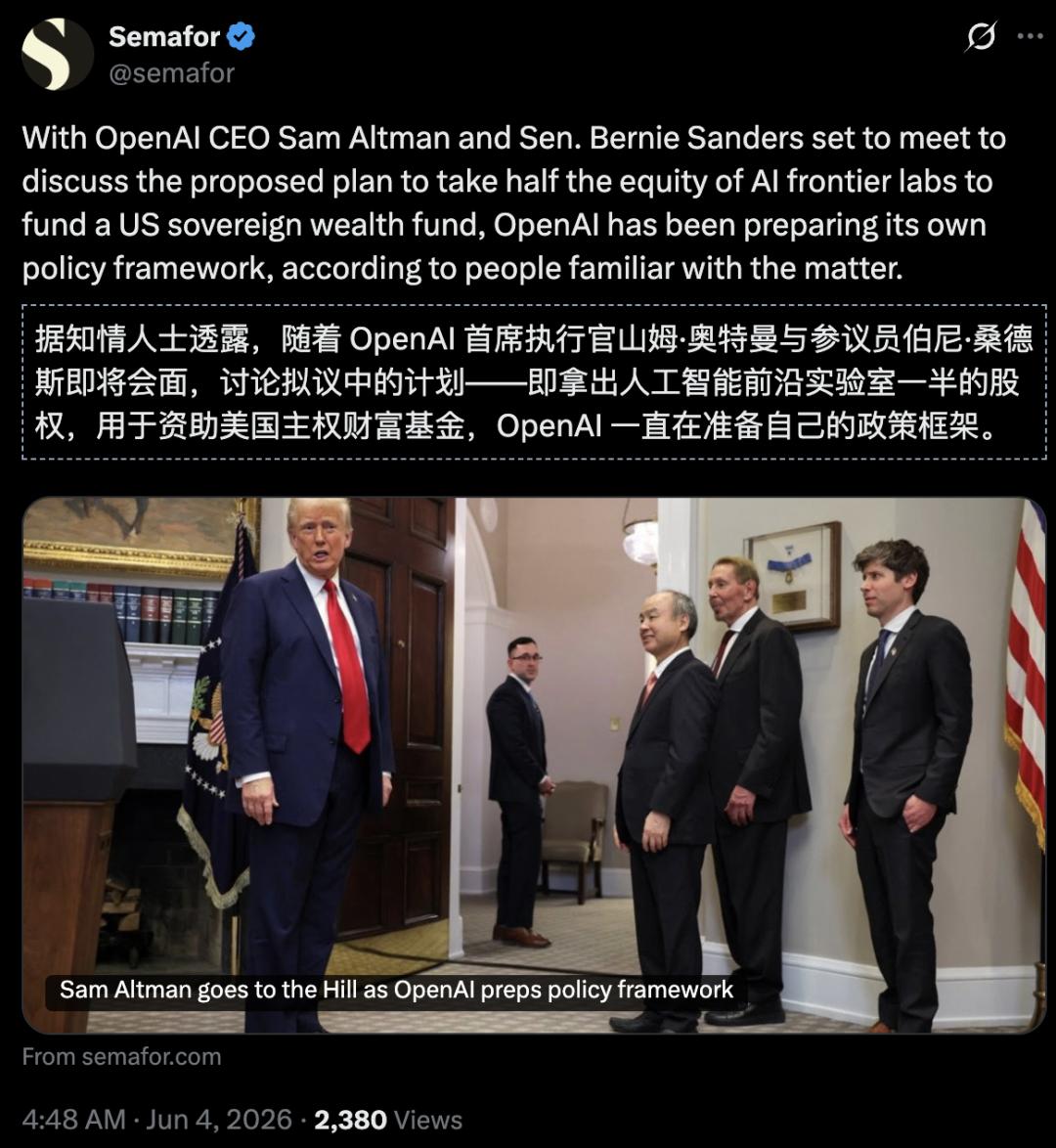
It is reported that Sam Altman met with US senators to discuss how to "give" the equity of OpenAI to the US government.
The AI Revolution: Harvard Commencement
With IPOs of companies like OpenAI and Anthropic on the horizon, why is Sam Altman giving up his equity at this juncture?
The answer lies in the cold, hard data.
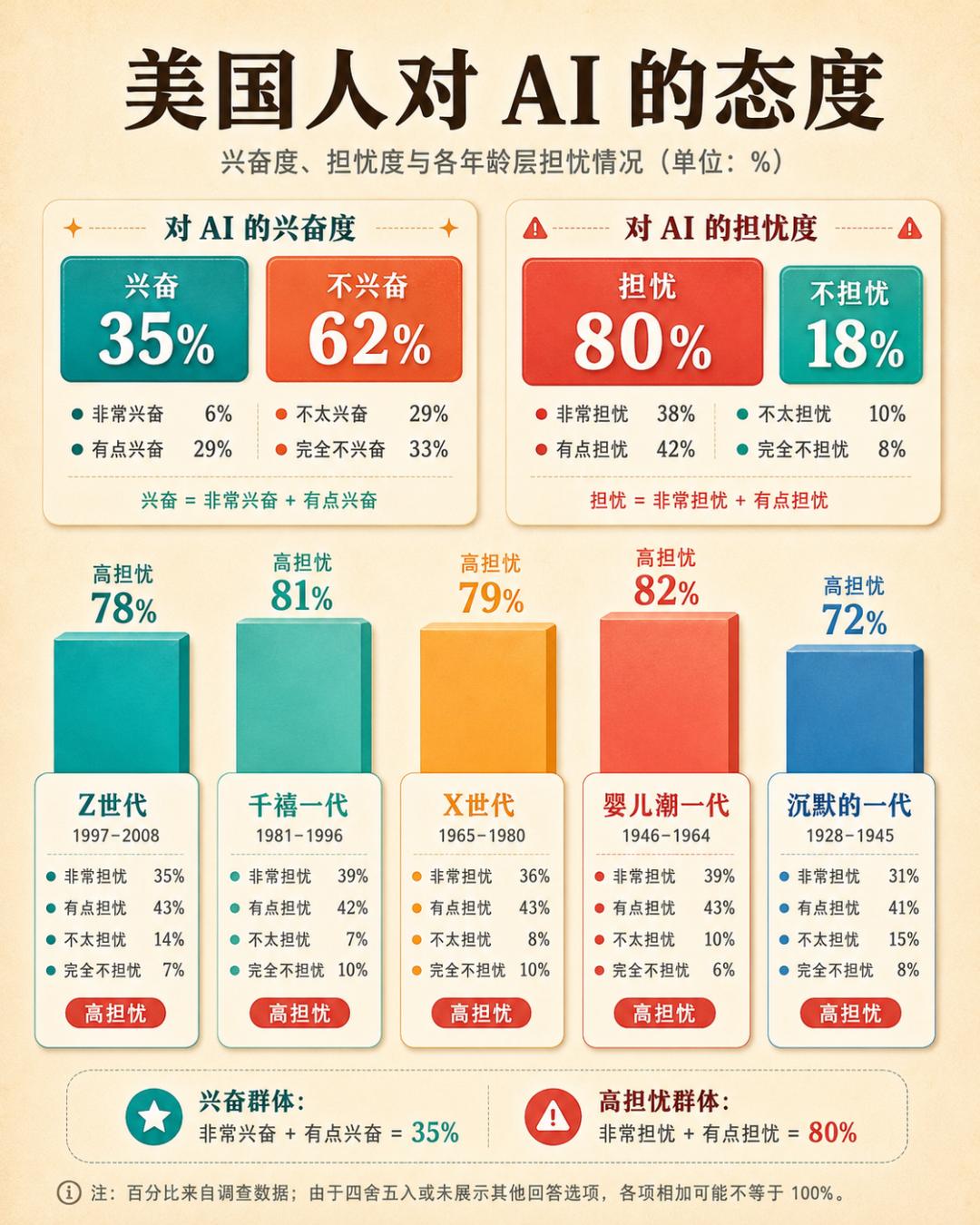
According to the latest poll by Quinnipiac University, 80% of Americans express "concerns" about AI.
American college graduates are well aware that AI is about to reshape the entire world.
But almost everyone hopes to avoid hearing about this topic as much as possible before receiving their diplomas.
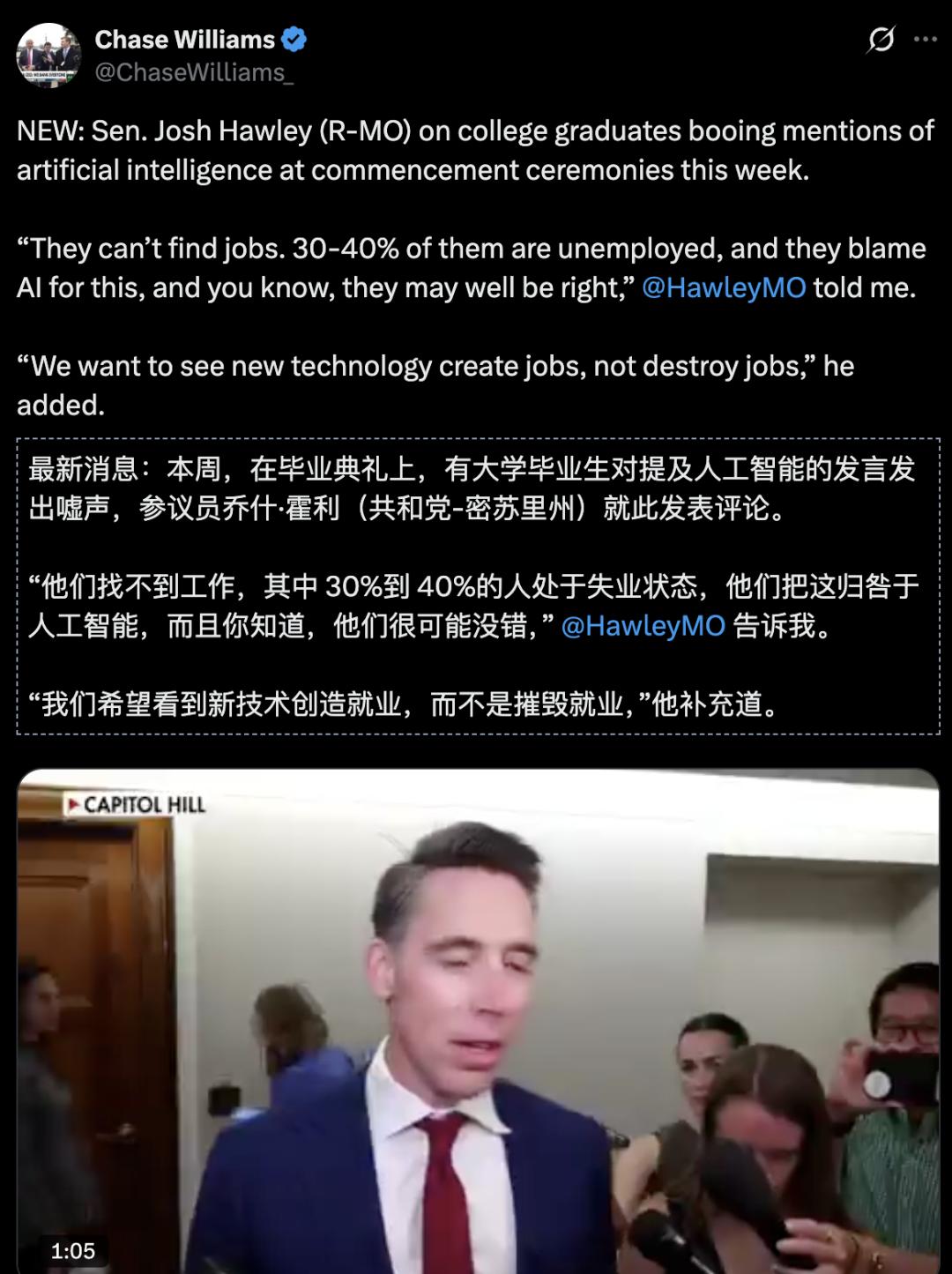
Even at Harvard University, when someone on stage shouted "F*ck AI" three times, the graduates cheered.
The guest speaker publicly criticized AI and called on young people to end neural networks.
AI may have created the biggest "wealth - creation movement" in history, but it has little to do with most people.
Even though AI hasn't entered the workforce on a large scale, the "AI doomsday" narrative has become mainstream, similar to the story of "Three Men Make a Tiger".
A New Consensus in the US: Nationalize AI Giants
Recently, 84 - year - old US Senator Bernie Sanders called for at least 50% of the ownership of US AI giants to be shared by the public.
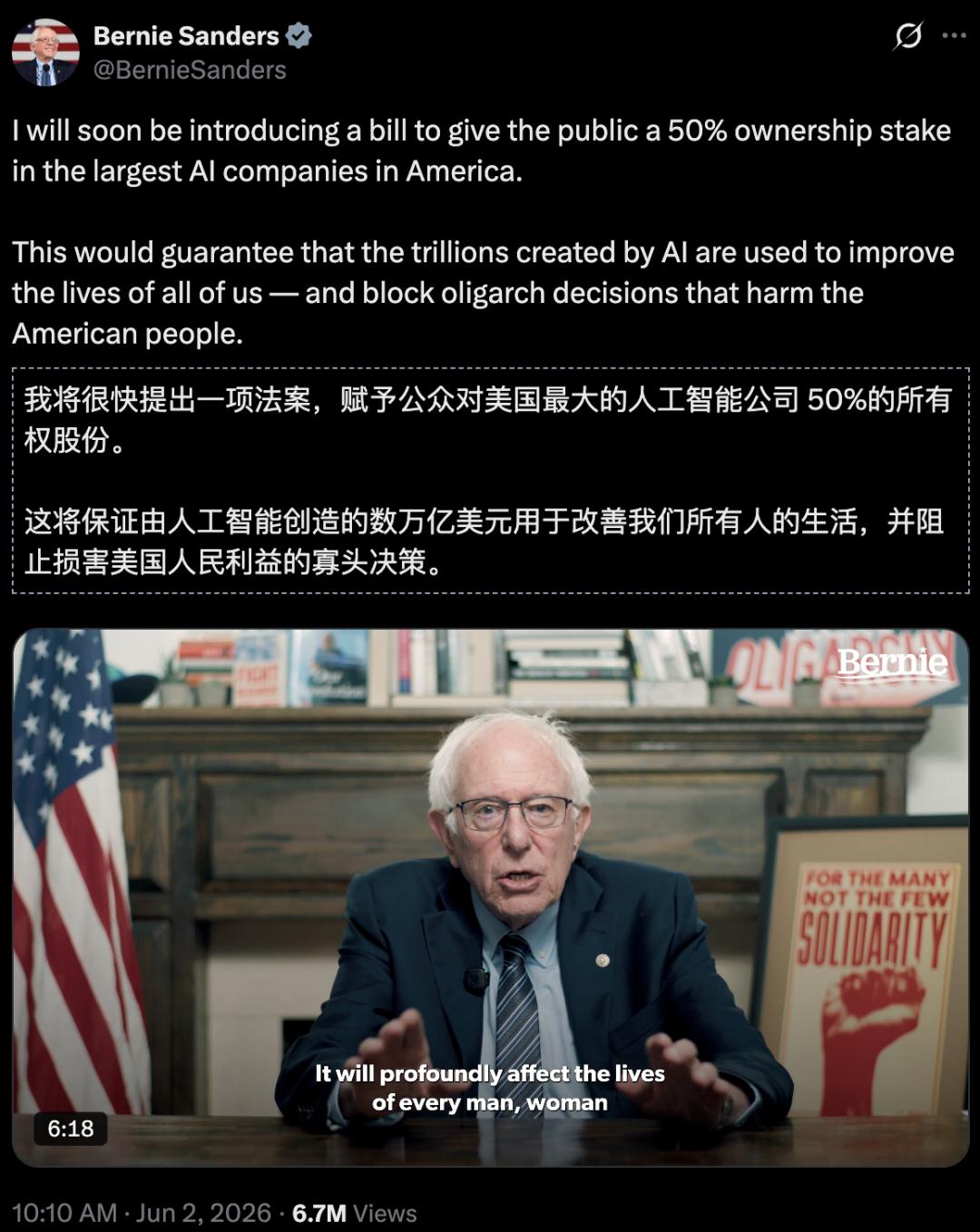
Logically, without the collective knowledge accumulated by humanity over thousands of years, there would be no AI today.
When ordinary people find that their words, paintings, and labor have become the "fuel" for feeding code, while the ultimate trillion - dollar profits only flow to a very small number of shareholders, the social contract begins to collapse.
Senator Sanders wrote, stating bluntly: "AI is a public resource."
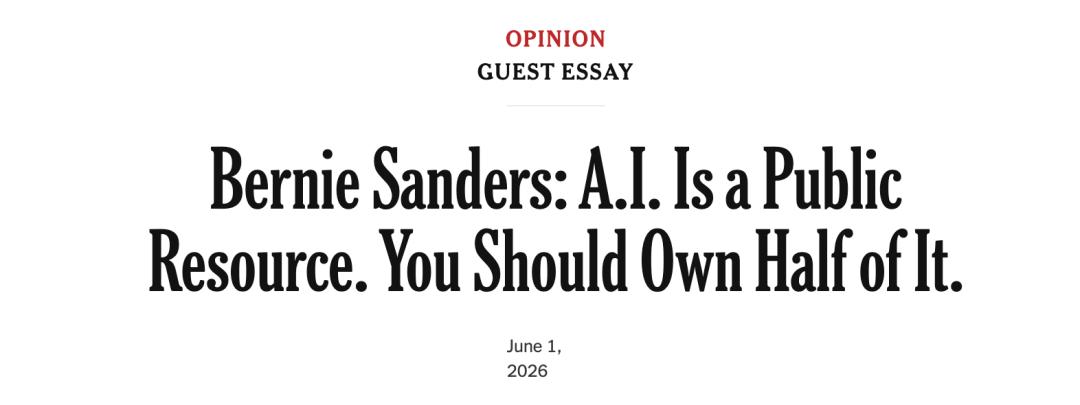

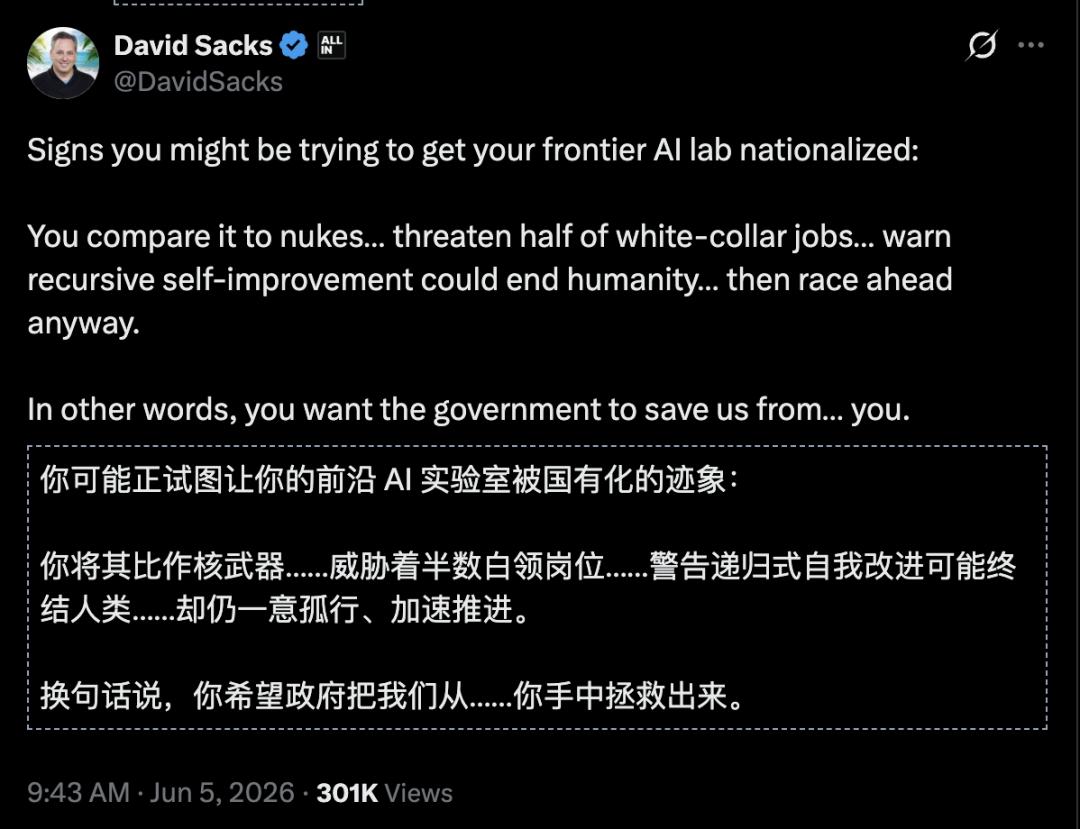
This proposal has been supported by David Sacks, the so - called "AI Czar" in the US.
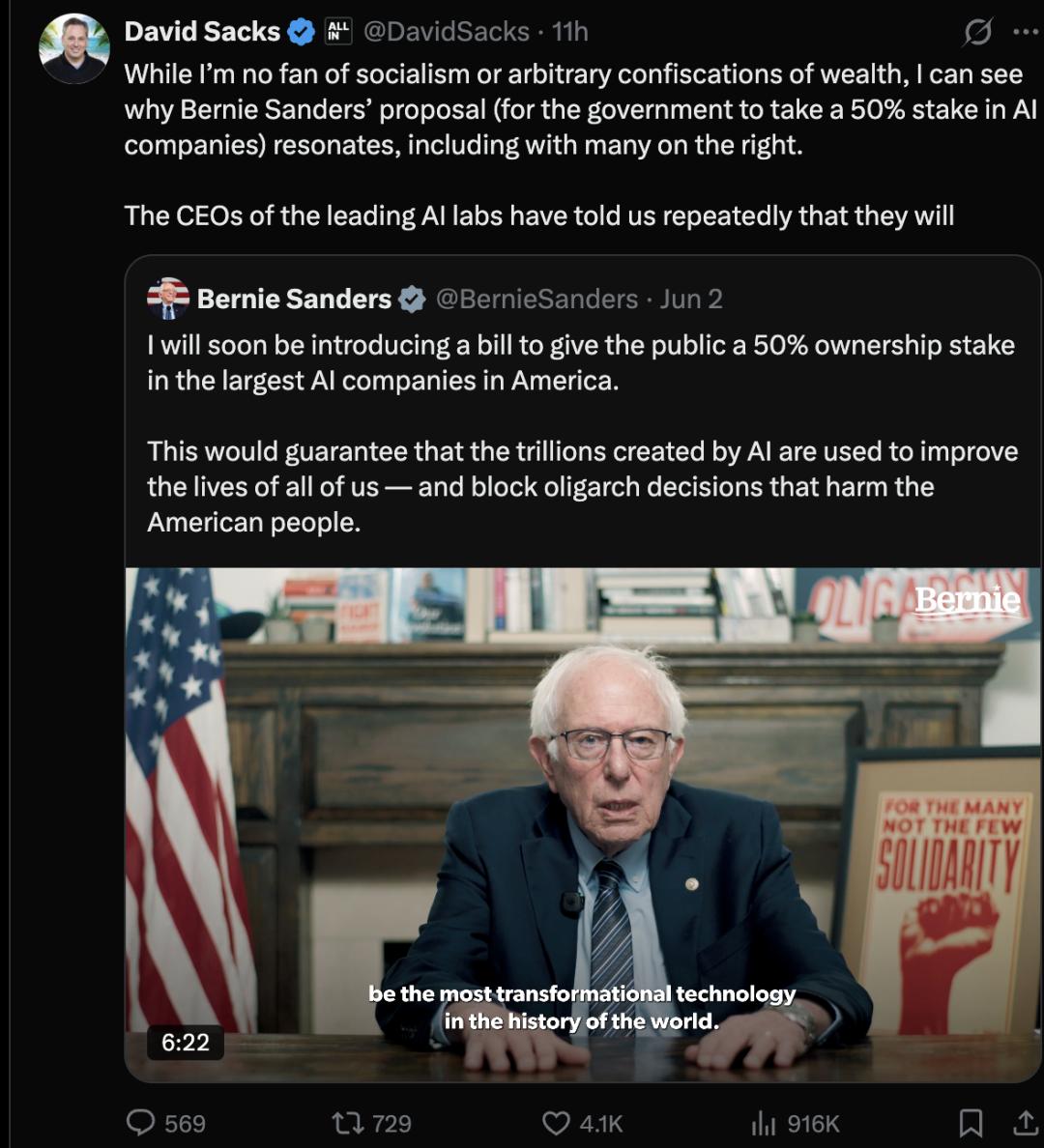
His reasoning is as follows:
Anthropic and OpenAI have established themselves as public - interest companies.
What could better serve the public interest than using half of the wealth created by these companies (which were trained for free using human collective knowledge) to pay off the national debt?
Steve Bannon, the former White House Chief Strategist and advisor to the US President, asserted that AI is a turning point for humanity.
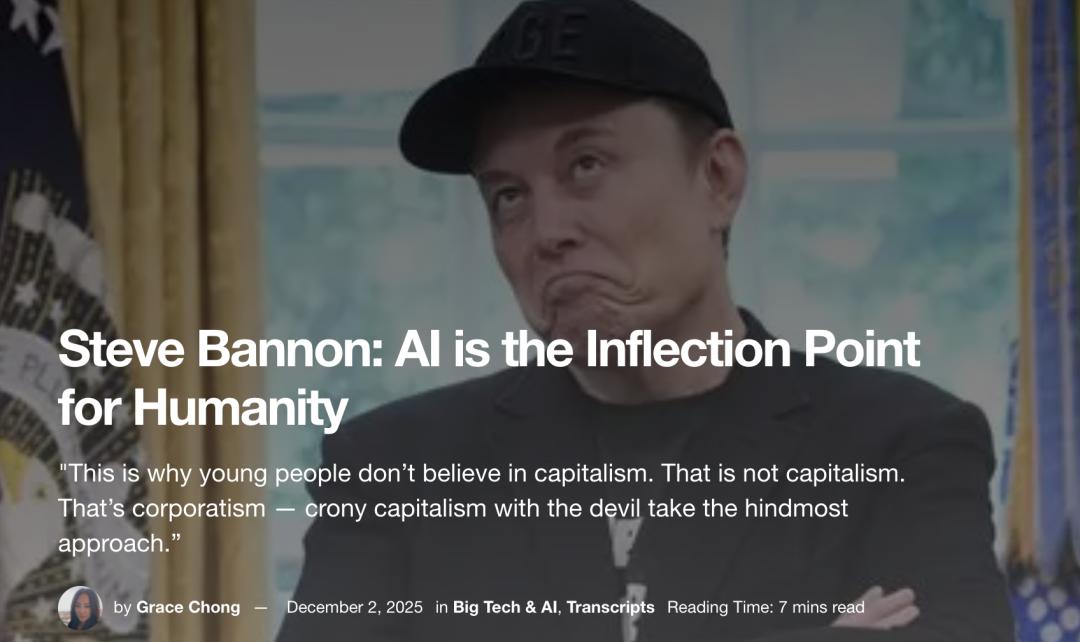
What he dislikes is the collusion between Silicon Valley giants, venture capitalists, platform capital, and government power, which shifts the risks of AI to the public while keeping the profits for a few.

Rarely, there is a "violent consensus" in the US political arena: AI cannot be just private property.
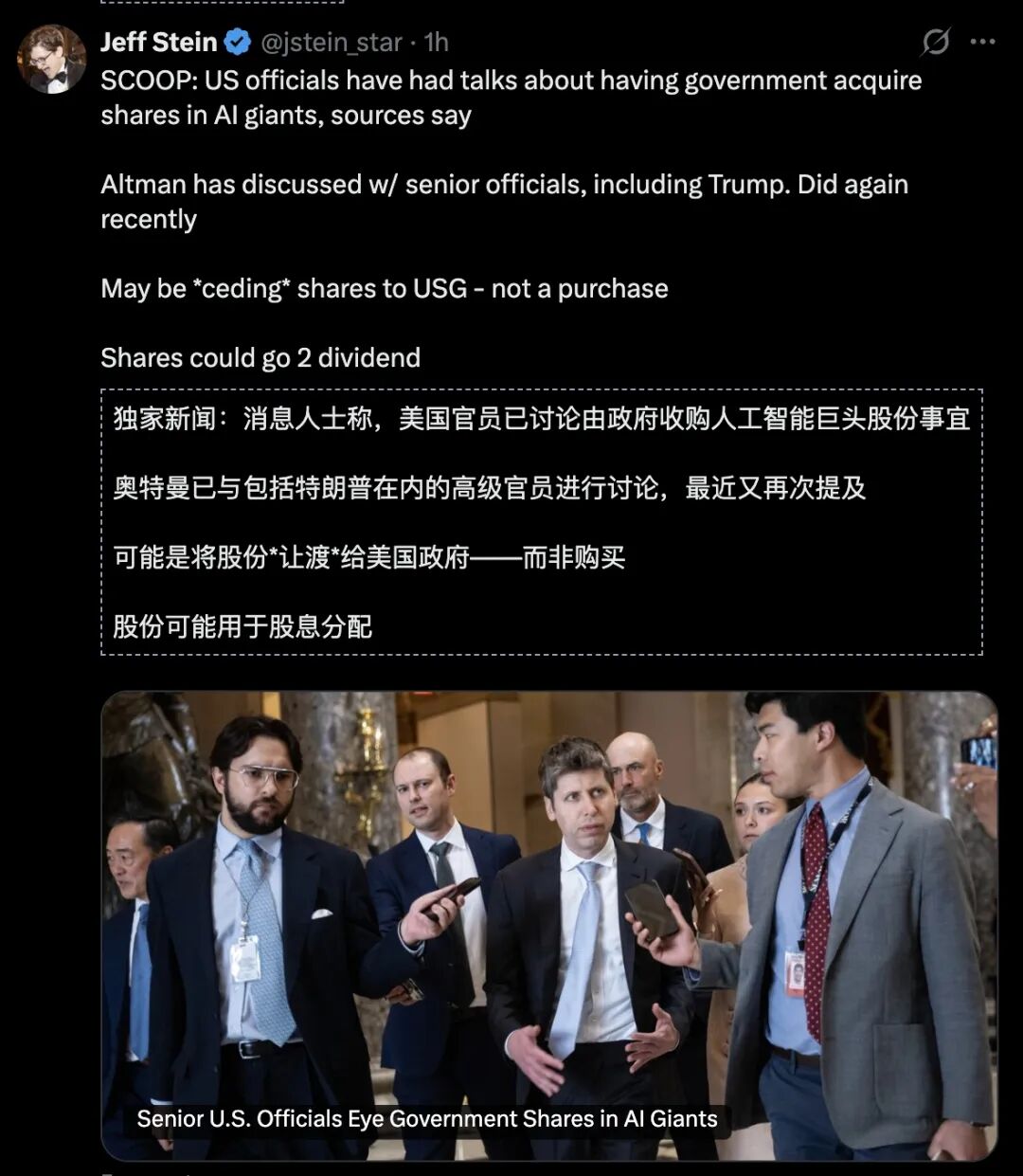
Meanwhile, the White House has the same intention.
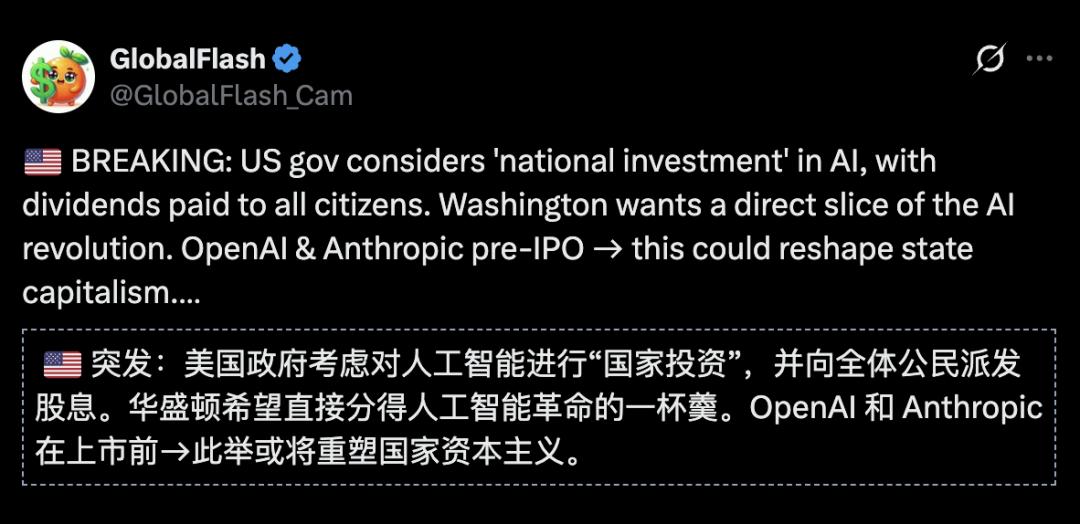
Sam Altman took advantage of the situation and proposed the "Public Wealth Fund".
On Wednesday evening this week, Senator Sanders met with Sam Altman.
This meeting was held at Altman's request to discuss Senator Sanders' proposal to transfer 50% of the ownership shares of the largest US AI companies to the public.
On the surface, this is a generous profit - sharing, but in fact, it is an insurance policy for the survival of the giants.
The Hidden Moat
However, beneath this seemingly warm - hearted "universal money - giving" plan, there lies an extremely profound and counter - intuitive logic: Once the government becomes a shareholder, who will dare to truly regulate AI?
This is Sam Altman's most brilliant political hedge.
Imagine if the federal government holds half of OpenAI's shares, and the returns from these shares are directly related to the "dividend checks" of tens of millions of voters, then:
Disarmament of regulation: When AI safety experts suggest shutting down a risky model, financial officials will step out to oppose it because "it will damage the national treasury revenue".
Consolidation of monopoly: To preserve the value of its investment, the government will naturally tend to support these "too - big - to - fail" AI giants, thereby inadvertently stifling all startup competitors.
Collapse of identity: The US government will simultaneously play the roles of referee (regulator), athlete (shareholder), and beneficiary (national treasury revenue).
This is no longer just a simple economic investment, but a kind of "regulatory immunity technique".
What the giants give up is not only shares, but also the risks of being legally constrained. By tying the country to their chariots, AI companies have completed a perfect "political genetic transformation": from controversial tech dictators to digital assets of national sovereignty.
References:
https://x.com/CNBCtech/status/2062958569654251822?s=20
https://x.com/spacanpanman/status/2062736490279412131?s=20
https://x.com/DropSiteNews/status/2062360135561830831?s=20
https://x.com/DavidSacks/status/2062945826935284011?s=20
https://www.semafor.com/article/06/03/2026/sam-altman-goes-to-the-hill-as-openai-preps-policy-framework
https://www.sanders.senate.gov/op-eds/the-public-should-own-half-of-the-big-a-i-companies/
https://www.businessinsider.com/ai-commencement-speeches-graduation-reactions-class-of-2026-5
This article is from the WeChat official account "New Intelligence Yuan". The author is ASI Apocalypse, and the editor is David. It is published by 36Kr with authorization.