985 universities in Northeast China are packed with robotics investors
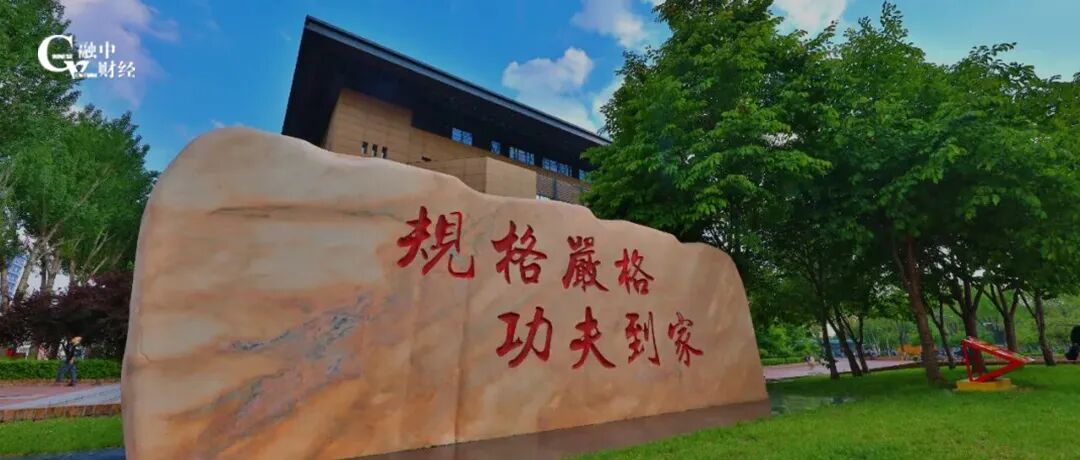
On the fertile Songnen Plain and along the surging Songhua River, today is extremely lively.
On June 7th, Harbin Institute of Technology (HIT) celebrated its 106th anniversary. The campus was filled with festive joy. Echoing this excitement is the bustling scene in China's robotics industry. A group of HIT alumni are leading their respective companies, making frequent moves in the capital market and at the technological forefront.
On May 19th, just before the anniversary, the IPO application of Leju Intelligence on the Growth Enterprise Market was accepted. It is expected to become another listed company in the field of embodied intelligence after Unitree Technology. Stander Robotics submitted another listing application to the Hong Kong Stock Exchange, planning to be listed under Chapter 18C for specialist technology. Woan Robotics was the first to be listed on the Hong Kong Stock Exchange in December 2025, earning the title of "the first share of AI embodied household robots". All three companies share the common background of being "produced by HIT".
Looking further afield: Faoway in the collaborative robot track, Zhiwu Technology in the special robot direction, and Liqun Automation in the field of industrial automation... all originated from the HIT circle. The youngest entrant is Huang Yi, born in 2004. In 2025, while still a junior in college, he founded RoboParty in Shanghai. So far, it has completed multiple rounds of financing.
It is no accident that a university can incubate such a dense robotics startup army. As early as 1986, HIT established the Robotics Research Institute, one of the earliest universities in China to conduct robotics research. Four decades of disciplinary accumulation have made it an important source of robotics engineers in China. Some in the industry even say that it "supports half of the robotics circle".
If there is a "Whampoa Military Academy" for China's robotics industry, it must be HIT.
A University and an Industry
40 Years of Co - growth
The origin of HIT's connection with the robotics industry dates back to 1986.
At that time, most people in China's understanding of robots was still limited to the metallic humanoid figures in science - fiction movies. In the same year, China's "863 Program" was officially launched, and "intelligent robots" were listed as one of the key directions in the field of automation. Almost at the same time, the Robotics Research Institute of Harbin Institute of Technology was quietly established, becoming one of the earliest university research institutions in China to engage in the robotics field.
It is worth mentioning that at the beginning of its establishment, the institute set its goal to build a first - class high - tech robotics research base, teaching base, and industrial base in China, bringing together the advantages of multiple disciplines such as machinery, automation control, and computer science.
In that era of information scarcity, the establishment of the robotics research institute meant far more than the birth of a laboratory. It meant that a group of young engineers and students would for the first time truly touch the core proposition of robotics technology: how to make machines perceive the world, plan actions, and complete tasks like humans. The subsequent research achievements quickly responded to this proposition.
In 1990, the "Open Laboratory for Intelligent Robot Mechanisms" was built in the institute. High - level achievements such as the intelligent robot mechanism simulation system, wall - climbing remote - controlled inspection robots, nano - level micro - drive and micro - operation robots, industrial robots, and robot palletizing production lines were successively developed and applied in engineering practice.
If the 1980s were the pioneering period, the arrival of the new century marked a new stage of systematic development for HIT's robotics research.
In 2007, the Robotics Research Institute of HIT was approved by the Ministry of Science and Technology to build the "State Key Laboratory of Robotics and System". In 2012, Boshi Automation Co., Ltd., incubated by the institute's technology, was listed on the Small and Medium - sized Enterprise Board in Shenzhen. In 2019, the undergraduate major in robotics engineering was approved. In 2021, the recruitment of the intelligent robotics class with an academician as the undergraduate class tutor began... From the research institute to the state - key laboratory, and then to the cultivation system covering undergraduate, master's, and doctoral degrees, HIT has built a complete chain covering basic research, application development, achievement transformation, and talent cultivation in 40 years.
The background of HIT is not just its technical strength in the robotics field.
As early as the 1950s, it was well - known across the country as the "cradle of engineers" and was therefore called the "Little Tsinghua in the Northeast" by the outside world. It established the first aerospace college in a Chinese university and launched the first small satellite led by a university.
Its leading position in the robotics field today is just another report card of this century - old engineering school. In the eyes of investors, the label of "HIT robotics circle" is a highly valuable endorsement. There is even a saying in the market: The entrance of HIT is crowded with robotics investors from all over the country.
The co - growth of a university and an industry continues.