Tech Giants Cashing in on ACGN Fans with "Electronic Badges" and "Watch Offcuts"?
On May 25th, OPPO launched a magnetic external secondary screen at a press conference: the OPPO Bubble trendy selfie screen, with an official price of 499 yuan. This small circular screen, which allows for custom wallpapers, can be used as a bag pendant, and can assist in taking photos, is called an "electronic badge".
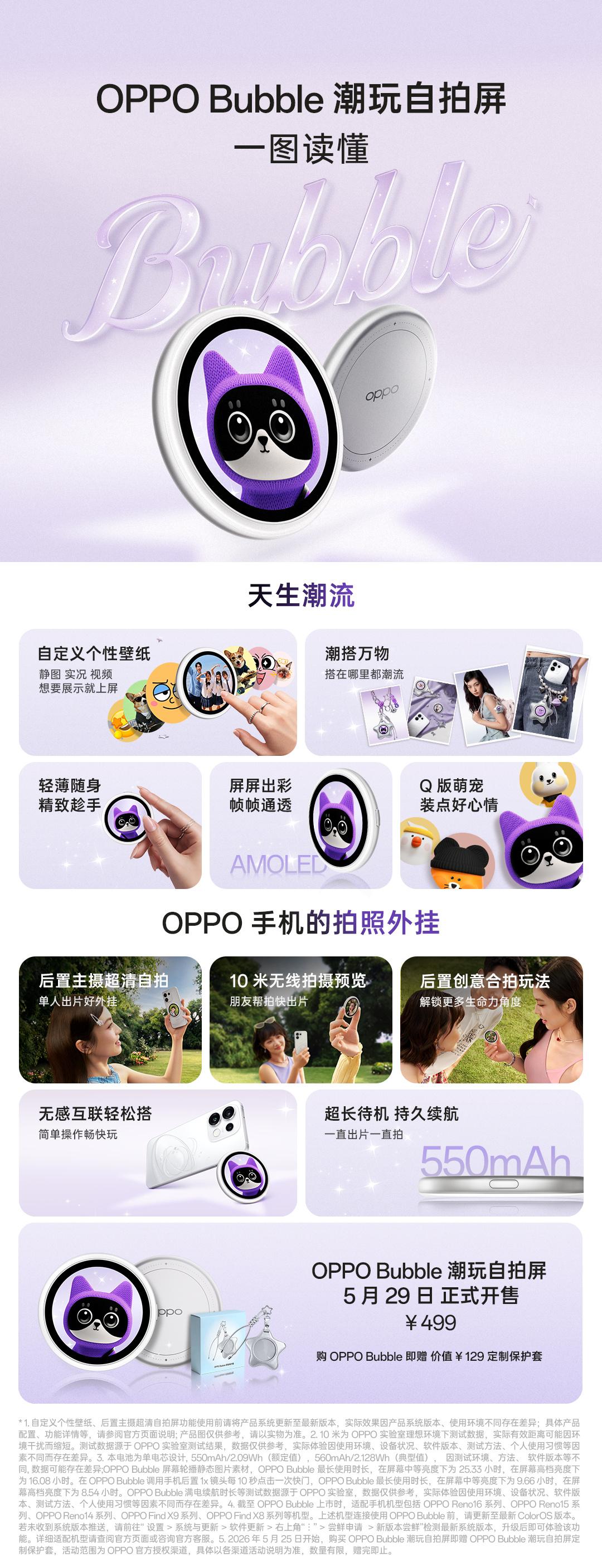
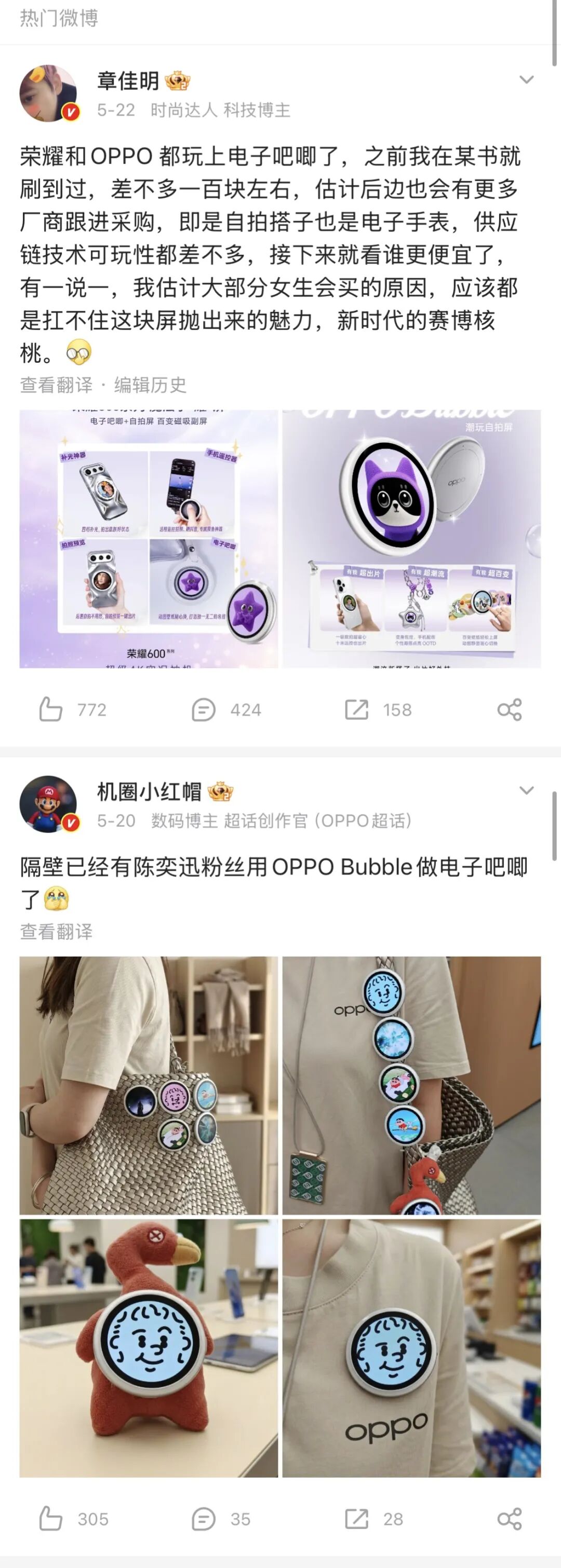
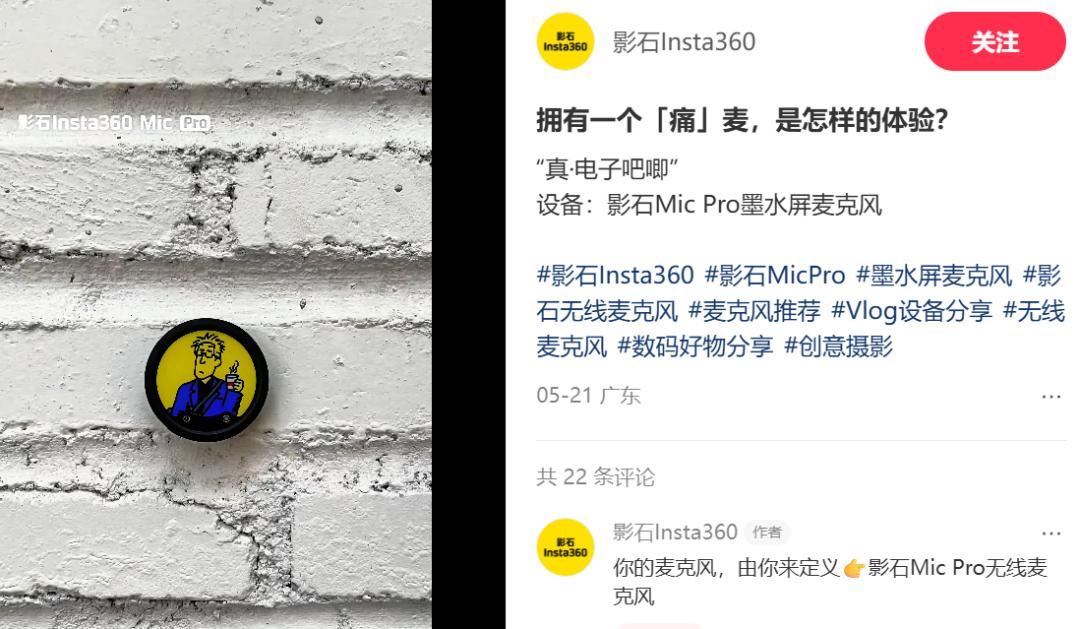
Not long ago, Insta360 also added a similar small circular screen to its newly released wireless microphone, and the official also calls it an "electronic badge".
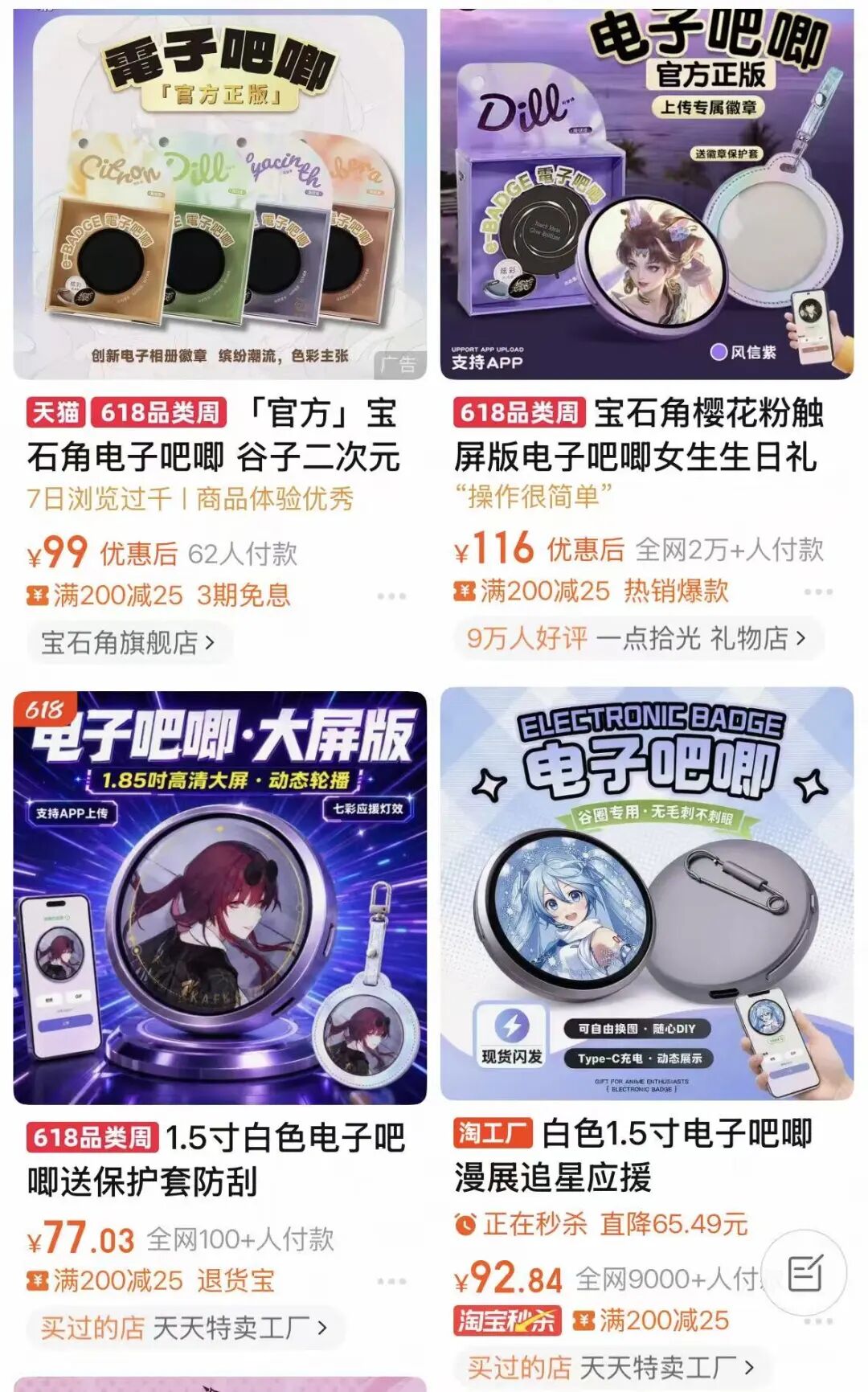
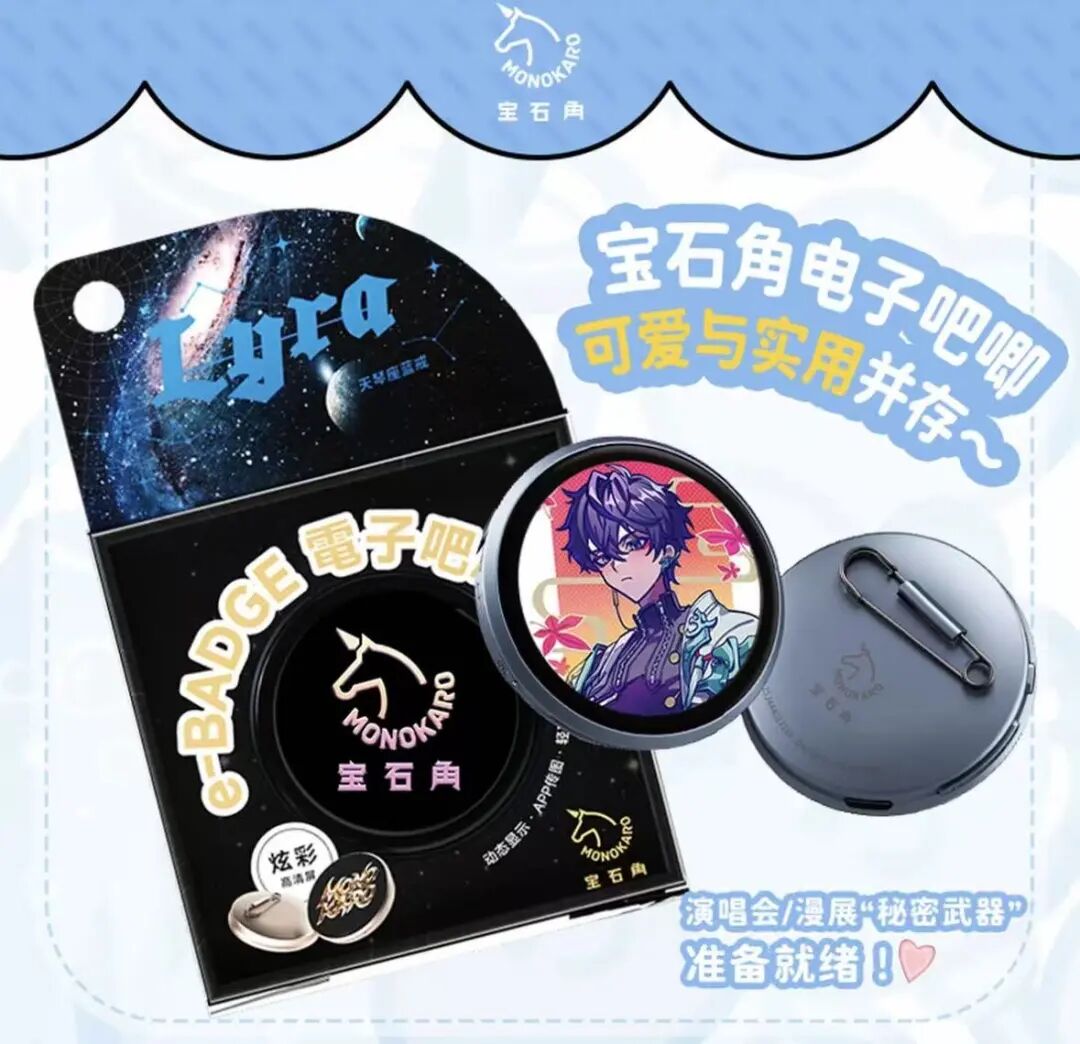
In fact, the "electronic badge" is not something new. Baoshijiao, which claims to be the "pioneer of electronic badges", started posting relevant videos last April. An "electronic badge" is essentially a small wireless display with a diameter of about 58mm. The technical threshold is not high, and there isn't much brand influence. The price is generally around 100 yuan.
To test the effect of the "electronic badges" launched by big manufacturers, Spicy from Duojiao visited several OPPO stores in major commercial areas in Beijing. The clerk told Spicy that "a total of ten units were received, and now there are only three or four left". When Spicy wanted to test the visual effect of changing wallpapers on the "electronic badge", the clerk was a bit surprised and said, "I haven't studied how to change it yet." He spent ten minutes consulting two colleagues but still couldn't operate it successfully. Finally, he suggested that Spicy test the photo - taking function first: "Stick it on the back of the phone, and it can be used as a reference when taking selfies."
This is also the most effective sales pitch he currently thinks. Compared with the keywords such as screen mirroring and remote operation promoted by the brand online, front - line salespeople are more willing to define it as a "selfie assistant": sticking it on the back of the phone allows you to frame selfies with the rear main camera, as the main camera has less distortion and higher image quality. Another frequently mentioned scenario is "remote photo - taking". When a friend helps you take a photo, you can hold this small wireless screen to confirm the composition in real - time.
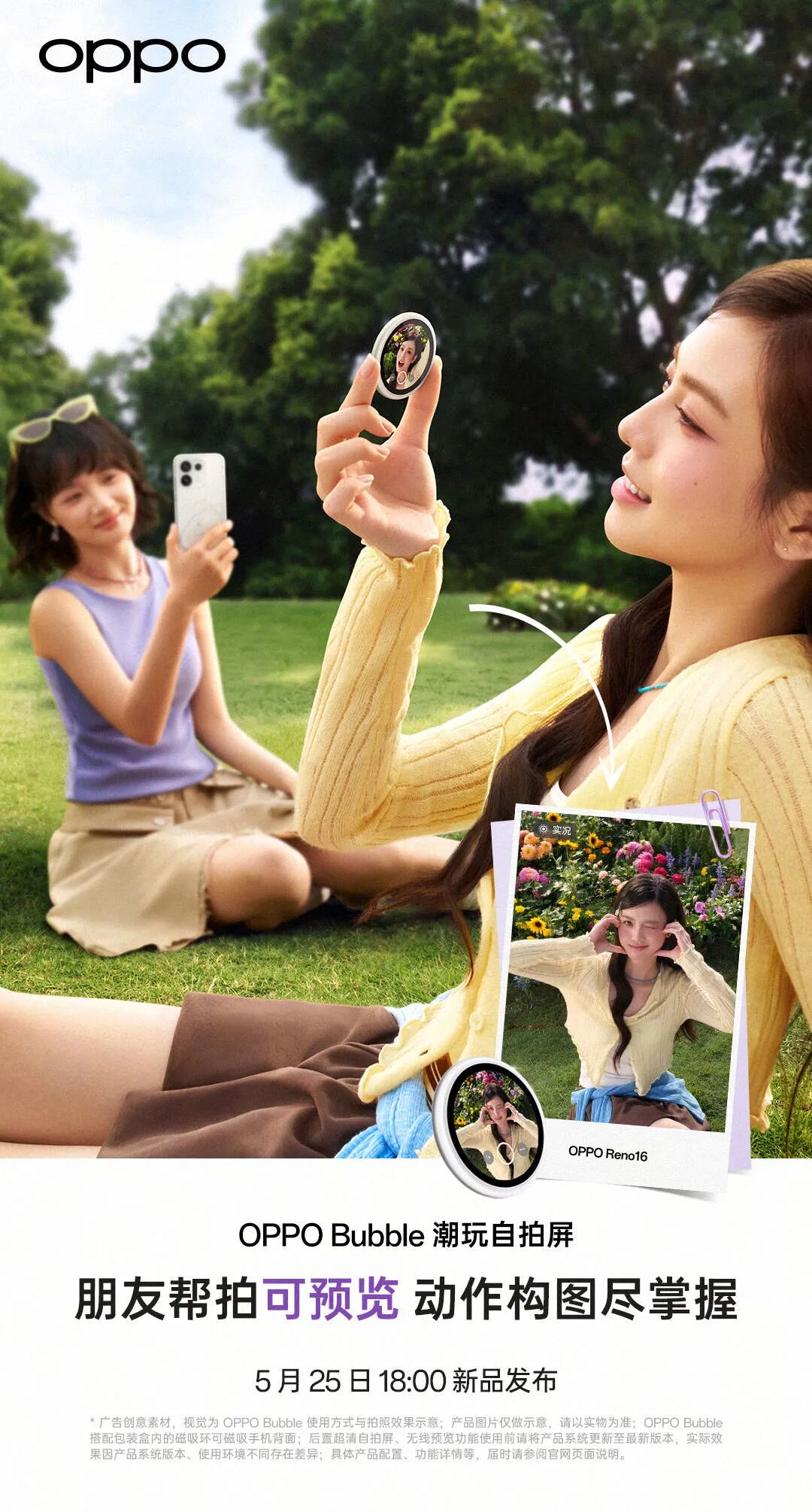
After Spicy's actual experience, it was found that the product does present vivid colors in Live photos, but the operation process in the store was quite bumpy. Besides the clerk's unfamiliarity with the operation, there was also some lag when switching between the camera and system functions.
In addition, the product is very lightweight for portability. Customers experiencing the product in the store would ask the clerk: "Is the magnetic attachment firm? Will it fall off when touched?" The OPPO clerk said that a protective case worth 129 yuan will be given away during the event, and it is best to match it with a magnetic phone case.
The online public opinion is more divided. Digital enthusiasts evaluate it as "electronic junk, only otakus will buy it", but some otakus who collect merchandise also complained to Spicy: "Can big manufacturers be more sincere when using otaku culture as a marketing gimmick? Even without considering copyright issues, if you just upload and play with it yourself, you can print hundreds of them for four or five hundred yuan."
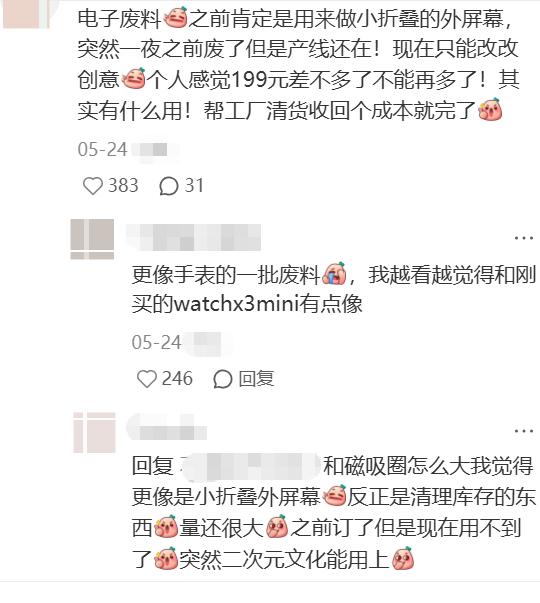
Within a week, this niche demand, which has long been dominated by small white - label manufacturers, was suddenly pushed into the spotlight by digital giants. However, the halo of big manufacturers doesn't seem to immediately brighten up this product category. Is this palm - sized intelligent small circular screen an attempt by big manufacturers to precisely target the sub - culture circle for profit, or is it a marketing misalignment by mobile phone manufacturers under the anxiety of innovation, "shooting first and then drawing the target"?
Why are big manufacturers collectively eyeing this small business?
The past and present of electronic badges
Before being targeted by big terminal hardware manufacturers like OPPO, most electronic badges were produced by small white - label factories in Guangdong. There is no technical barrier for this type of product, and the hardware solution is mature and transparent: a small - sized liquid crystal screen with a common mold, paired with a Bluetooth chip and a small - capacity battery. Due to the small size, consumers' requirements for resolution are not as high as those for mobile phones and other products.
The audience for this business overlaps with, but is not the same as, the so - called "otakus who collect merchandise". More of the people who buy it are hand - lettering players, desk decor enthusiasts, star - chasing fans, and digital early adopters who simply want a small glowing desktop toy. What they value is the ability to play animations and the fact that it doesn't need to be maintained like traditional tin badges to prevent rusting. Essentially, they are after a lightweight mini - display.
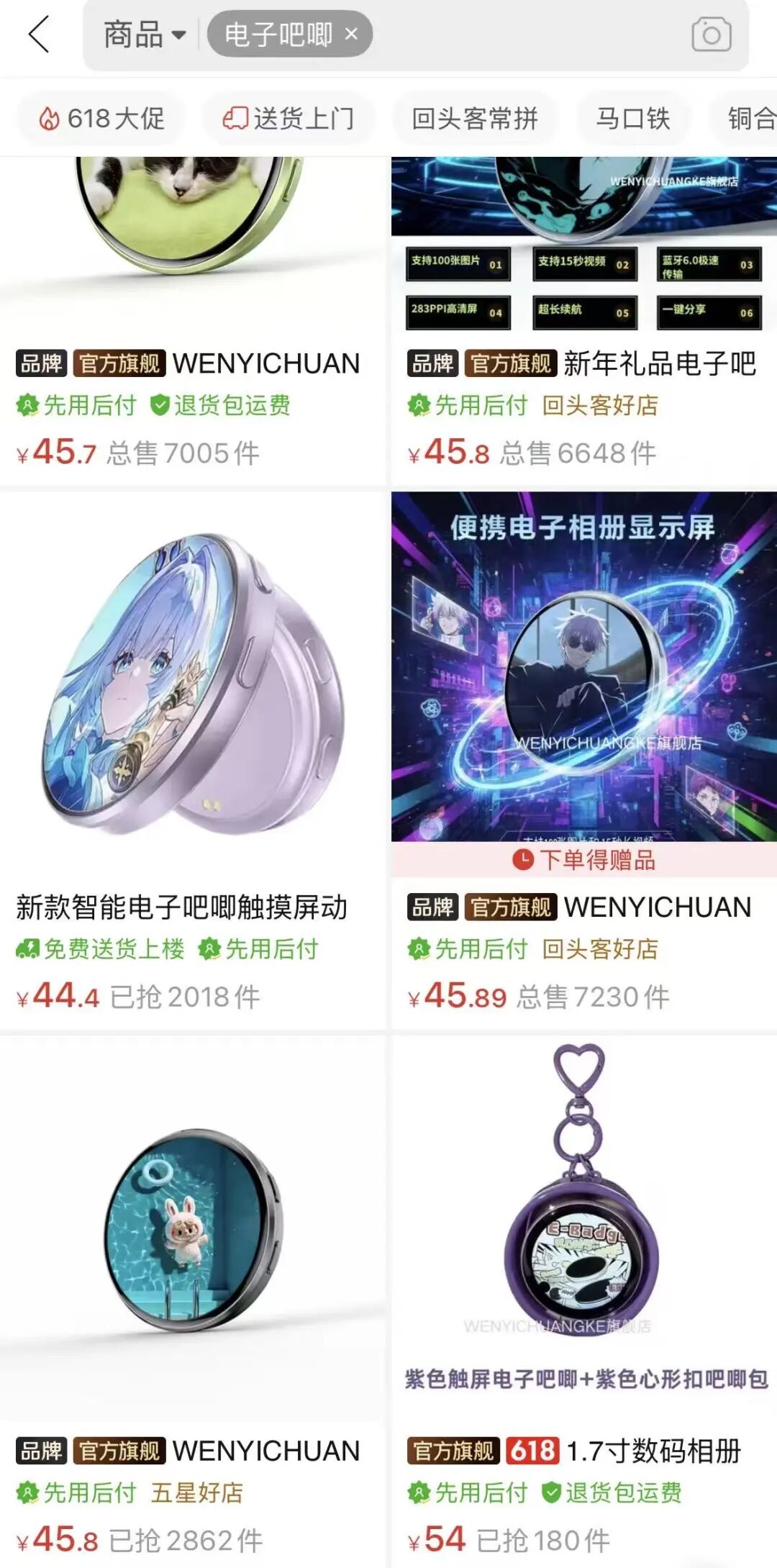
Baoshijiao, a brand that claims to be the "pioneer of electronic badges", has a sales volume of up to 19,000 on a single Douyin link. The best - selling basic button - type model is priced at 99 yuan. The functions of similar products are relatively unified: connect via Bluetooth, open the app to transfer pictures, usually you can choose picture carousel, play short videos for a few seconds, or display a solid color, and you can also adjust the brightness. Most of these products also maintain the common 58mm diameter of badges. In terms of battery life, taking Baoshijiao as an example, the official claims that it can last 7 - 18 hours depending on the brightness and model. To adapt to different scenarios, small factories offer extremely rich mounting solutions such as pins, magnetic attachments, hanging ropes, and airbag brackets.
The price of similar white - label products can drop to forty or fifty yuan, which is basically the lowest price in this category. A consumer who had previously bought a white - label electronic badge straightforwardly told Spicy: "I know these are industrial junk from Huaqiangbei, but anyway, they're not very expensive. There's no need to pay for brand premium. The price is about the same as buying a watch of decent quality."
This is a small business with a limited audience and scale. Baoshijiao, the so - called "leading brand", doesn't only operate in this area. It recently also launched a "wireless intelligent pixel board". So, why do big manufacturers with more hardware resources and premium - pricing power suddenly take an interest in this small business?
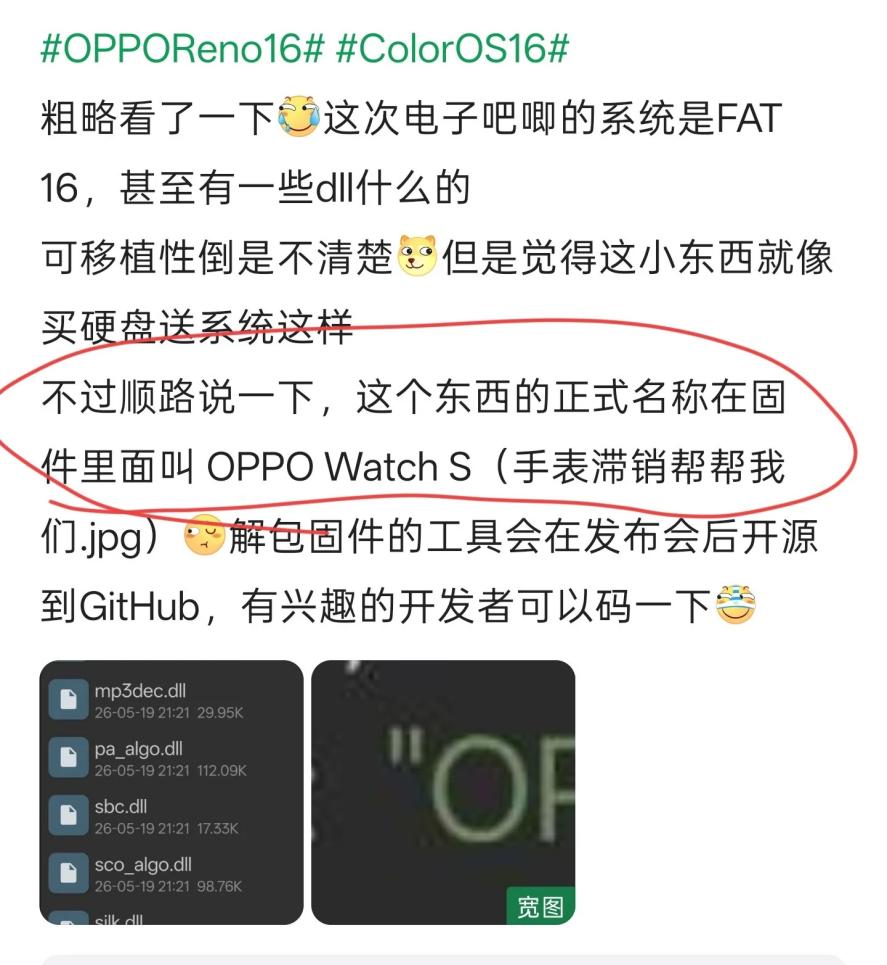
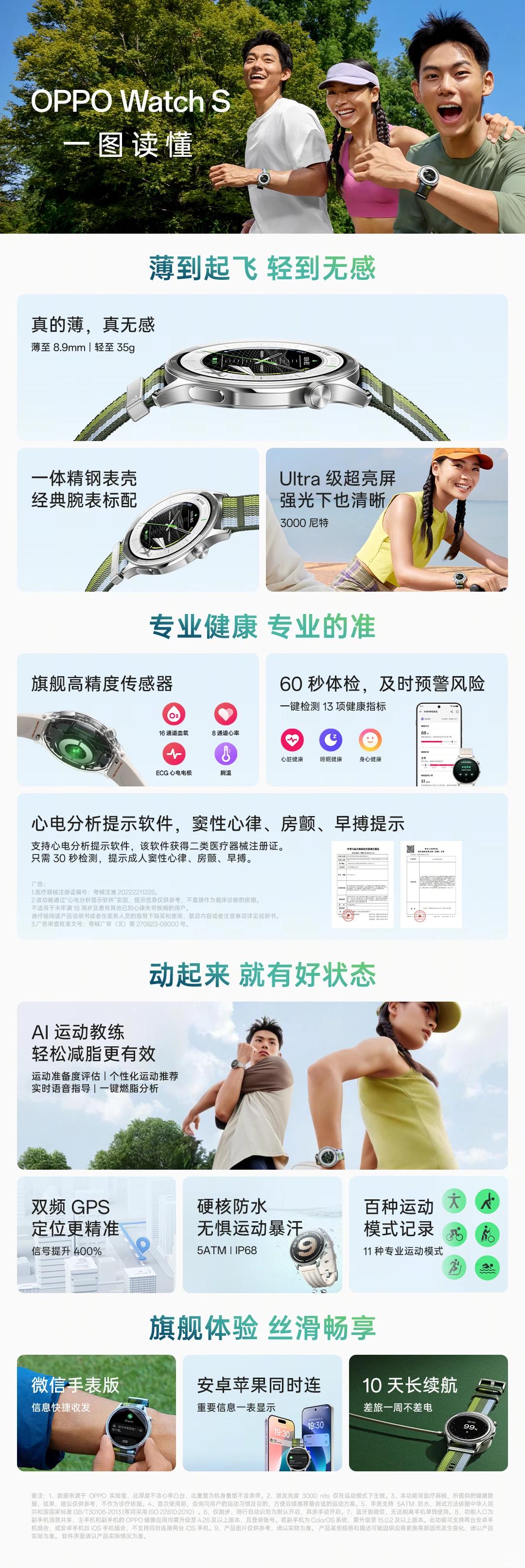
The most direct reason may come from the overflow of the supply chain. There is a view online that the popularity of "electronic badges" this time is essentially the "reuse of waste materials" from the production lines of folding - screen external displays and smart watches in the past two years. Some people claim that by disassembling the system files, they found that the official name of OPPO Bubble in the firmware is OPPO Watch S. This product is a smart watch launched by OPPO in October last year, positioned as the "thinnest watch king". The promotion claimed that it was the thinnest smart circular watch on the market at that time, with functions such as physical examination monitoring and an AI sports coach.
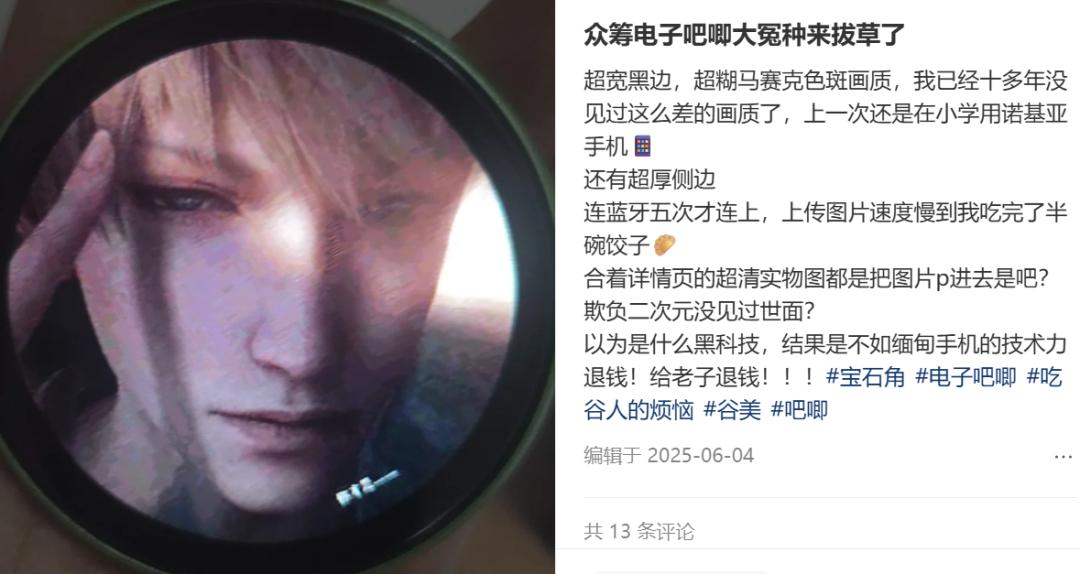
Theoretically, big manufacturers do have the ability to achieve a crushing advantage in this area. Currently, the negative feedback on small - factory electronic badges is mainly concentrated on hardware defects: the body is too heavy, the black border is too wide, the picture quality is poor with strong graininess; the Bluetooth connection is extremely unstable, and it often takes more than 30 seconds to transfer a picture; the touch - screen has a high delay, and the actual battery life is often only 3 - 4 hours, and heavy use may even require charging twice a day. If big manufacturers can leverage the advantages of hardware - system synergy to solve the problems of battery life, clarity, and smoothness, fully develop selling points such as high - refresh rate, low - latency, and lightweight magnetic attachment, and control the price at around 200 yuan, they can precisely capture users who want a "high - quality mini - screen toy".
However, from the current situation, big manufacturers seem to think that a 200 - yuan toy form is too "small".
The concept of "secondary screens" has been around in the mobile phone industry for more than a decade, and so far, no representative scenario with universal applicability has emerged. The label of "electronic badge", which comes with sub - culture traffic, happens to provide a ready - made, youthful packaging for the secondary screen. But when they use the gimmick of "electronic badge" to highly publicize an "external secondary screen" priced at 500 yuan, consumers will naturally compare the 499 - yuan price of big manufacturers with tin badges and 99 - yuan white - label electronic badges. Instead, few people are discussing the question of "whether it's worth spending 500 yuan on a selfie assistant".
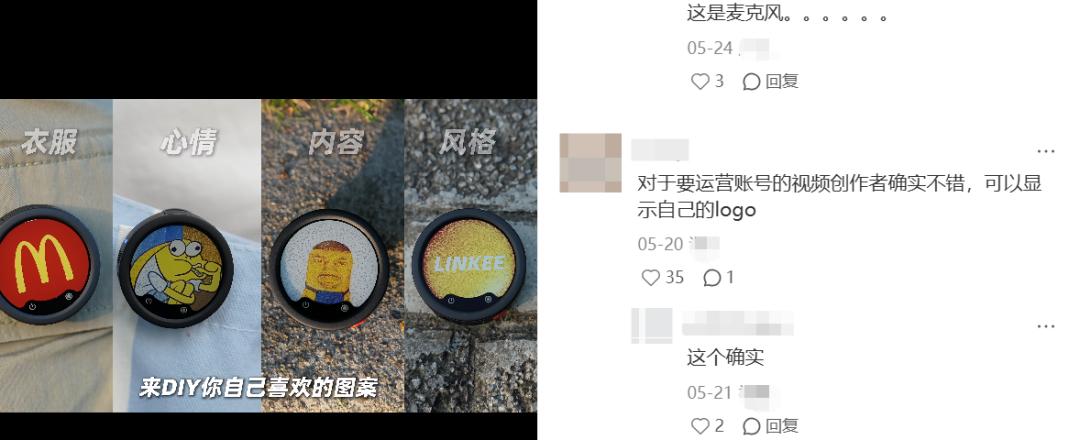
Although Insta360's e - ink screen microphone with a single - transmitter price of 698 yuan also claims to be a "pain microphone", consumers' response is relatively better. Insta360 is a single - function professional equipment brand, and its audience is narrower than the general population targeted by mobile phones. Most of them are professional content creators who have hardware requirements for video and audio. In their eyes, the "electronic badge" is a good display point. Spicy met a blogger who was trying out this product in an Insta360 store. She mentioned that some bloggers think that the equipment logo on the recording device will be repeatedly shown in the video. Sometimes, it's like advertising the equipment for free with their own content, and it may also give the interviewee a feeling of "coming fully prepared with professional equipment", which may make the interviewee nervous. "Projecting your own logo or favorite symbol on the e - ink screen won't make you seem so 'fully armed' when communicating with others."
She clipped the e - ink screen on her collar to test the sound recording: "This side faces outwards, and it doesn't serve the purpose of companionship or appreciation. I think it's still quite different from the scenario of 'badges' that otakus put beside them." For these bloggers, this user insight is a nice bonus.
Who is paying for the four - or five - hundred - yuan electronic badges?
Among the users who have purchased the product that Spicy contacted, the most tolerant ones are star fans. OPPO Reno 16 is endorsed by Song Yuqi, which has attracted a large number of fans who originally intended to support their idol. For them, adding a screen during the event when buying a mobile phone is like "icing on the cake".
Different from the otaku merchandise - collecting circle, official and fan materials in the entertainment industry more often choose forms like trading cards. A fan of Song Yuqi told Spicy that she had previously bought the merchandise when Song Yuqi endorsed Shizuren. She thought that "the badge form is very convenient, and the effect is also good". The feature of this electronic badge that can project short videos and Live photos interested her the most. This group doesn't pay much attention to the premium rate of the product itself and regards it as part of "spending money" on the endorser.