NVIDIA handed a "card" to Lenovo
Over the past three years, edge AI has always been in an awkward state.
Mobile phone manufacturers are talking about edge large models, PC manufacturers are talking about AI PCs, and automobile manufacturers are talking about intelligent cockpits. Almost everyone is depicting the same future: AI will no longer reside in the cloud but run directly on the devices around users.
However, every time it comes to the implementation stage, the story always gets stuck. The models can run, but not fast enough; the functions can be implemented, but not in-depth enough; the demonstrations look amazing, but when they are actually in the hands of users, they turn into a cut-down experience.
The problem doesn't lie in AI itself. The capabilities of large models have advanced by leaps and bounds, and Agents have begun to have the ability to plan, reason, and execute complex tasks. However, the development speed of terminal hardware far lags behind the evolution speed of AI.
At the just-concluded Computex, Jensen Huang announced NVIDIA's PC processor, RTX Spark, which is touted as the world's first Windows PC superchip specifically designed for "personal agents." The first batch of cooperation partners, including Dell, HP, Lenovo, and Microsoft Surface, almost cover the entire Windows PC industry. It is expected to start shipping this fall.
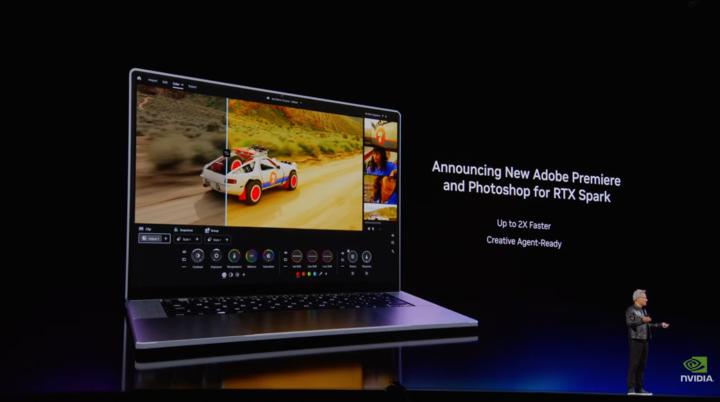
This may not be a product that will immediately change the PC market landscape, but it is an important hardware signal in the three-year development of edge AI. It means that those tasks that could only be completed in the cloud in the past have the opportunity to be moved to local devices for operation.
After three years of talking about the story of AI PCs, we finally have a decent underlying support.
The hardware ceiling of edge AI has been broken
Before talking about RTX Spark, we need to figure out where the development of AI PCs has reached after three years of hype?
From the perspective of the supply side, the industry has actually completed most of the preparatory work. Chip manufacturers have solved the hardware problems of local inference. Intel has launched the Core Ultra series, AMD has released the Ryzen AI platform, and Qualcomm has returned to the PC market with the Snapdragon X Elite. NPU has become the most frequently mentioned keyword at the press conferences of new-generation processors.
Large models such as DeepSeek and Tongyi Qianwen have also begun to launch lightweight versions for the edge side, making it possible to run AI locally.
Whole-machine manufacturers have made almost cost - free investments. Lenovo has successively released the YOGA AI Yuanqi and Xiaoxin AI PC series. Dell has renamed its entire product line to be more AI - oriented. ASUS, HP, and Huawei have also listed AI PCs as their core strategies.
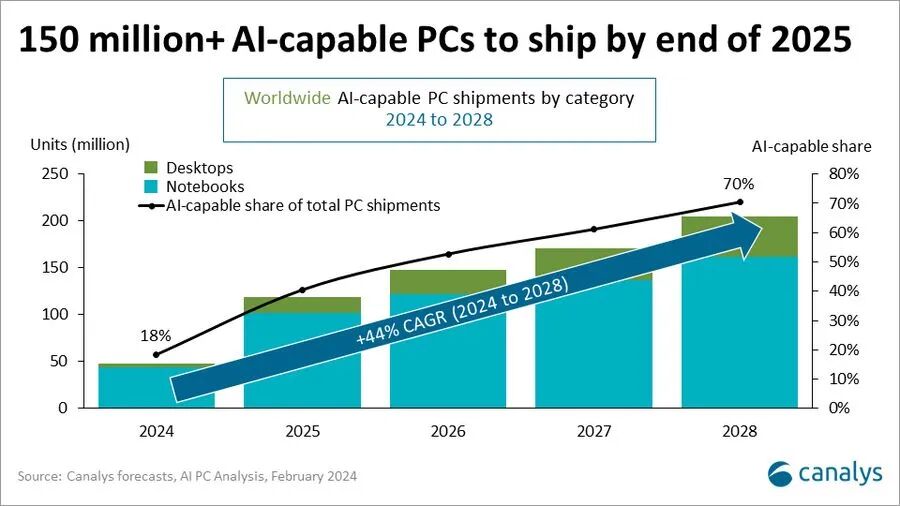
According to Canalys data, the global shipment volume of AI PCs reached approximately 48 million units in 2024, accounting for nearly 20% of the annual PC shipment volume. Institutions predict that this proportion will further increase to over 40% in 2025.
However, the readiness on the supply side has not sparked a corresponding response on the demand side. The industry is answering the question of "whether AI can enter PCs," while users are concerned about what AI can do for them after entering PCs.
Most consumers won't be motivated to replace their computers just because a computer has an NPU computing power of 45 TOPS or 60 TOPS. A Dell executive once mentioned in an interview that consumers don't buy based on AI. In fact, AI may confuse them more rather than help them understand a specific result.
This statement hits the crux of AI PCs. The industry has been emphasizing computing power but has never created a strong enough reason for consumers to replace their computers. Digging deeper, why has the industry never been able to create attractive AI applications?
The root of the problem is that the computing power base itself is insufficient.
When Microsoft proposed the Copilot + PC certification standard in 2024, the core threshold was that the NPU computing power should not be less than 40 TOPS. This standard was reasonable at that time. NPUs have low power consumption and are suitable for handling lightweight local AI tasks, such as real - time subtitles, image recognition, and semantic search.
However, with the prosperity of agents, the development goal of edge AI has changed. In the past, people discussed "how to make AI run on devices," and now they discuss "how to make agents work on devices."
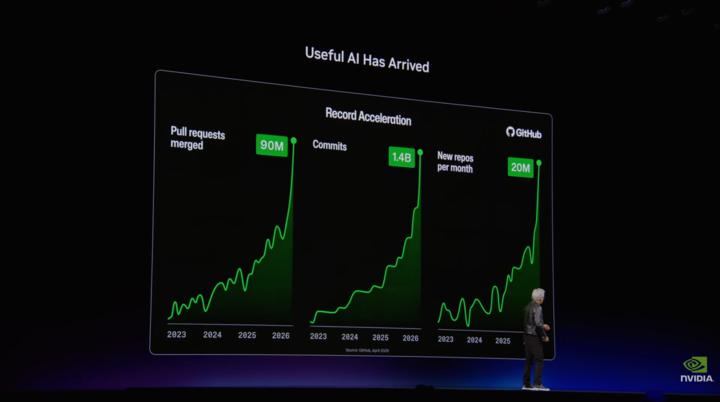
The hardware requirements for these two scenarios are completely different. In essence, NPUs are still highly specialized computing units. They are good at tasks with clear rules and fixed processes. Once they encounter agent tasks that require complex reasoning and multi - step planning, they will be inadequate.
In traditional Windows PCs, the CPU and GPU each have their own independent memory, and the cost of moving data between them is extremely high. When the number of parameters in AI models reaches billions, this fragmented memory design has become a physical bottleneck. It's not that the computing power is insufficient, but that the data simply can't be "fed in."
NVIDIA wants to solve this problem once and for all with RTX Spark.
The core innovation of RTX Spark is to deeply bind the CPU and GPU through NVLink - C2C technology, achieving a bidirectional memory bandwidth of 600GB/s. This technology was originally only available on the Grace Hopper superchip at the data - center level.
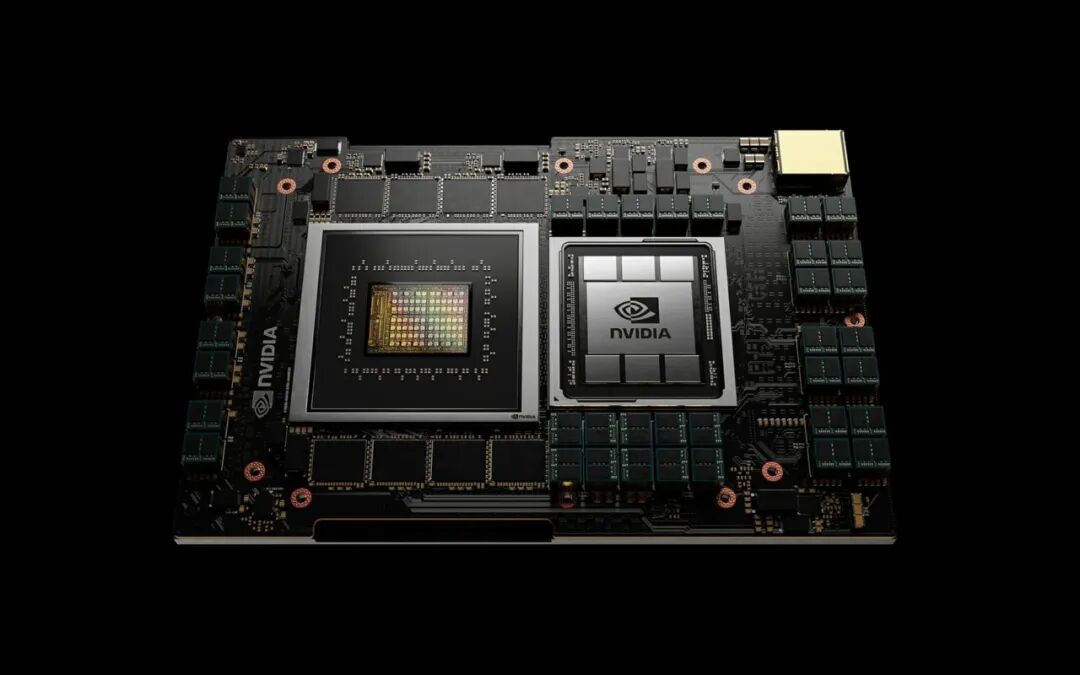
The biggest change brought by the unified memory architecture is that the CPU and GPU can share the same memory pool. So far, only one player in the consumer - grade market has achieved this architecture, which is Apple's M - series chips.
However, NVIDIA has something that Apple doesn't: CUDA.
Many people understand CUDA as a development tool. In fact, it is more like the most important infrastructure in the AI era. In the past two decades, CUDA has become the most familiar development environment for global AI developers. The first - adaptation platforms for mainstream AI development tools such as PyTorch, TensorRT, and llama.cpp are all CUDA. The training and inference pipelines of the vast majority of global AI models are built on CUDA.
Bringing the capabilities originally belonging to the data center to consumer - grade PCs is the killer feature of RTX Spark.
The NPU computing power of Qualcomm's Snapdragon X2 Elite Extreme is higher on paper (about 80 TOPS compared to the neural processing unit of RTX Spark), but Qualcomm doesn't have CUDA. Its AI acceleration relies on the QNN framework, and there is a significant gap between it and the mainstream AI developer ecosystem.
Apple's M5 chip is still the benchmark in terms of edge AI performance and energy efficiency and is the industry standard. However, Apple runs the macOS, not the Windows ecosystem.
For the entire Windows ecosystem, the significance brought by RTX Spark is obviously different.
Moreover, NVIDIA chose a very clever entry time. In the past decade, Qualcomm has almost taken on the pioneering work of the Windows ARM ecosystem. The Prism emulation layer has gradually matured, and Windows ARM has begun to have the ability for daily use.
Meanwhile, Apple's M - series has proved that the ARM architecture can surpass the x86 in terms of both performance and power consumption. NVIDIA waited until the road was built before driving the "heavy truck" of CUDA in.
However, RTX Spark has not been launched yet, and its price is unknown. The market reaction remains to be verified. According to the supply - chain survey by Tianfeng International analyst Guo Mingji, the shipment volume of devices equipped with N1X and N1 chips is expected to be about 10 million units in the next two years, mainly targeting heavy users who have a demand for local edge AI computing power. This is a rather niche start.

The reason why RTX Spark has attracted so much attention is that it sends a signal: Running models with tens of billions of parameters locally on the edge side is no longer an exclusive game for geeks but is about to become a "standard configuration" in the consumer market.
NVIDIA enters the game, and Lenovo awaits the "favorable wind"
It's not surprising to see Lenovo on the list of the first - batch partners for RTX Spark.
Lenovo is currently the whole - machine manufacturer with the largest market share in the global AI PC market. Data disclosed by Microsoft shows that its global share in the Windows AI PC segment has reached 31%. When NVIDIA needs partners to introduce RTX Spark to consumers for the first time, Lenovo is almost the most natural choice.
At the Computex 2026 exhibition, Lenovo showcased the Yoga Pro 9n, a 15 - inch laptop equipped with the RTX Spark platform, targeting creators, AI developers, and professional users.
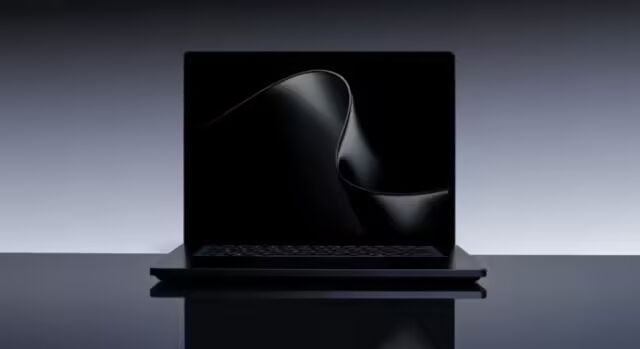
For NVIDIA, RTX Spark is not a data - center product but a new platform for consumers.
No matter how powerful a chip is, it still needs whole - machine manufacturers to deliver it to users. Lenovo is the world's largest PC manufacturer and one of the most aggressive players in the current AI PC layout.
Since 2024, Yang Yuanqing has been emphasizing the concept of "hybrid AI" to the outside world. On the personal side, Lenovo has launched the Tianxi AI agent, hoping to become users' personal assistant across devices; on the enterprise side, it has launched the Qingtian AI platform and an agent matrix covering multiple industry scenarios.
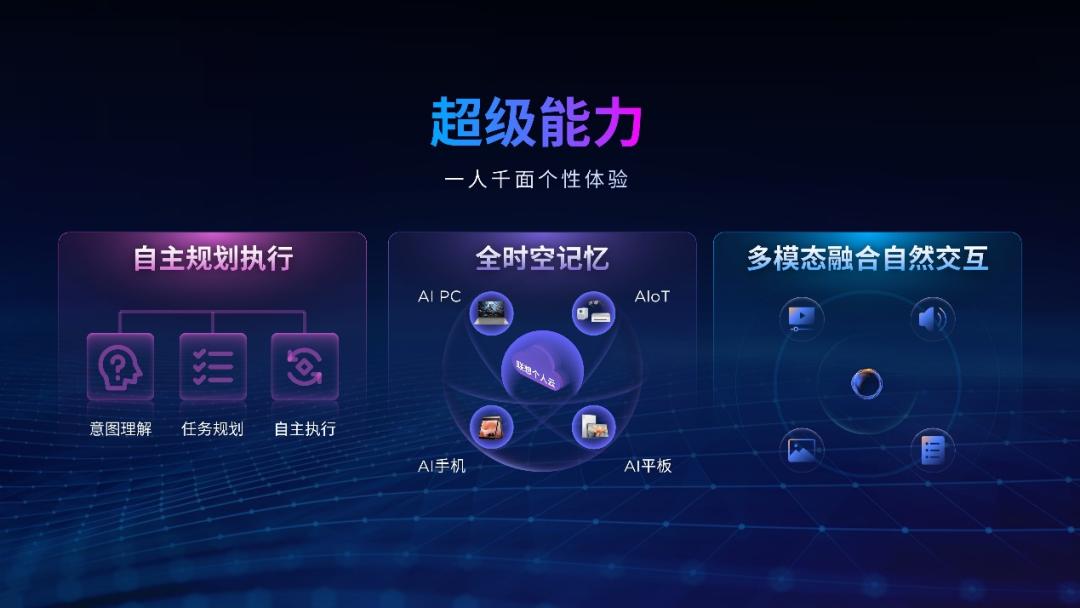
In Lenovo's vision, in the future, users will no longer open individual applications to complete their work but will directly put forward their requirements to the agent, and the AI will autonomously plan tasks, call tools, coordinate resources, and complete the execution.
It can be seen that Lenovo wants to tell the story of the "next - generation human - machine interaction entrance." The premise for this logic to hold is that the edge - side computing power is strong enough. The emergence of RTX Spark makes it possible for this gap to be filled for the first time.
This is why Lenovo deserves more attention than other PC manufacturers. It's not that Lenovo just started to layout AI today. The software and ecological capabilities accumulated over the past few years determine that it has the opportunity to be among the first manufacturers to transform the computing - power upgrade into an upgrade in user experience.
The data also supports this judgment: Lenovo's AI - related business revenue increased by 105% year - on - year in the last fiscal year, and the penetration rate of AI PCs accounted for 30% of its total PC shipments.
Lenovo has invested enough time and resources in AI PCs. When a new computing - power platform emerges, it will naturally be easier than most whole - machine manufacturers to reap the first - wave benefits.
However, opportunities and challenges often come hand in hand. Lenovo is good at supply - chain management, channel capabilities, and large - scale manufacturing. However, in the AI era, the focus of competition is shifting to agent experience, software ecosystem, and user retention.
In addition, Lenovo is a partner of four chip giants: NVIDIA, AMD, Qualcomm, and Intel. Yang Yuanqing said that "different chip manufacturers have different strengths. NVIDIA is strong in the AI cloud, Intel and AMD are strong in PC terminals, and Qualcomm is strong in the mobile side."

This diversified logic is reasonable, but it also means that Lenovo must make simultaneous investments in all directions and quickly adapt to each new generation of chips at the software level.
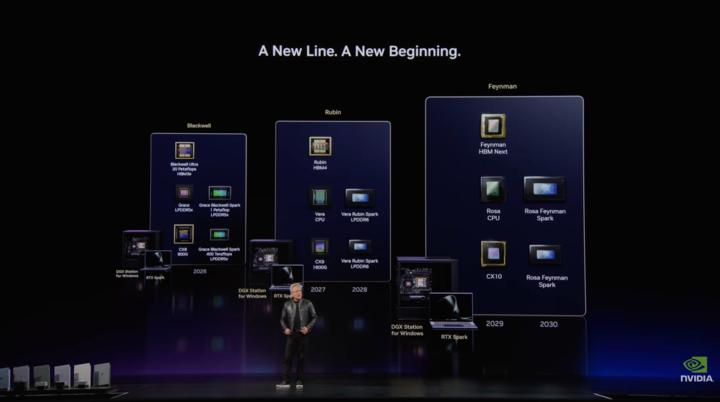
NVIDIA's RTX Spark roadmap has planned three generations of products, and each iteration requires Lenovo's software stack to keep up, which is also a continuous engineering pressure.
After RTX Spark brings a new round of computing - power leap, whether Lenovo can transform this hardware upgrade into an experience upgrade that users can truly perceive is a major test. If we broaden our perspective, this problem actually doesn't only belong to Lenovo.
Beyond the high - end market, a potential battlefield for billions of terminals
RTX Spark can meet the needs of high - end PC users with sufficient purchasing power and local AI computing - power requirements. However, the battlefield of edge AI is much broader than this.
There are more than 40 billion intelligent terminal devices in the world, including mobile phones, cars, wearable devices, and smart home devices. These devices cannot be equipped with chips of the RTX Spark level. Their computing - power budgets are measured in TOPS, not Petaflops; their power - consumption windows are measured in milliwatts, not watts.
However, they also need to run AI locally and complete perception, understanding, and decision - making in offline or weak - network environments.
How to maximize AI capabilities on extremely limited edge devices? This is a battlefield that RTX Spark can't reach and