The offline store narrative of Unitree and Agibot: Embodied intelligence is stepping into the commercial cycle
When the model is not yet perfect and general intelligence has not truly arrived, should enterprises continue to dwell on parameters, demos, and financing stories, or should they first find a niche yet real scenario that can generate immediate revenue and continuous data, allowing revenue and the model to evolve together in the real world?
Offline stores are precisely the "pioneers" for embodied intelligence enterprises to answer this question. In this sense, they are not only the starting point for enterprises to bid farewell to the technical narrative and embark on the business narrative, but also the starting point for AI to shed its science - fiction filter and truly transform into real - world productivity.
Recently, two highly - publicized pieces of news have emerged in the embodied intelligence track.
On June 1st, Unitree Technology opened Asia's first embodied intelligence experience center at Jiuguang Department Store on Nanjing West Road, Shanghai. The store sells products such as G1, R1, and Go2 targeting the consumer market. The store area exceeds 100 square meters, and the on - site selling prices start at approximately 85,000 yuan, 39,900 yuan, and 9,000 yuan respectively.
Meanwhile, ZhiYuan Robotics also announced that it will open the nation's first "retail complex deployment - state" benchmark store in Shanghai on June 13th, emphasizing that the entire process from front - end sales guidance to back - end operation and maintenance will be robot - led, enabling robots to "sell themselves".
In fact, the offline robot store model is not new. As early as 2025, from Yizhuang and Shijingshan in Beijing to Optics Valley in Wuhan and Songjiang in Shanghai, five major humanoid robot 7S stores opened intensively across the country.
These stores are not only sales windows but also ecological platforms integrating technology display, scenario experience, and full - cycle services. Product prices range from over 70,000 yuan to 700,000 yuan, meeting diverse needs.
However, most of these stores rely on industrial parks and local industrial clusters. The main purpose is to accelerate industrial implementation with the help of embodied intelligence and drive and activate the development of local industrial chains.
In addition, enterprises such as Huawei and Xiaomi have also made similar attempts, but they mostly rely on their own ecological systems and mature offline retail channels. For such manufacturers, the relevant layout is more like a value - added service and experience extension on the basis of existing businesses.
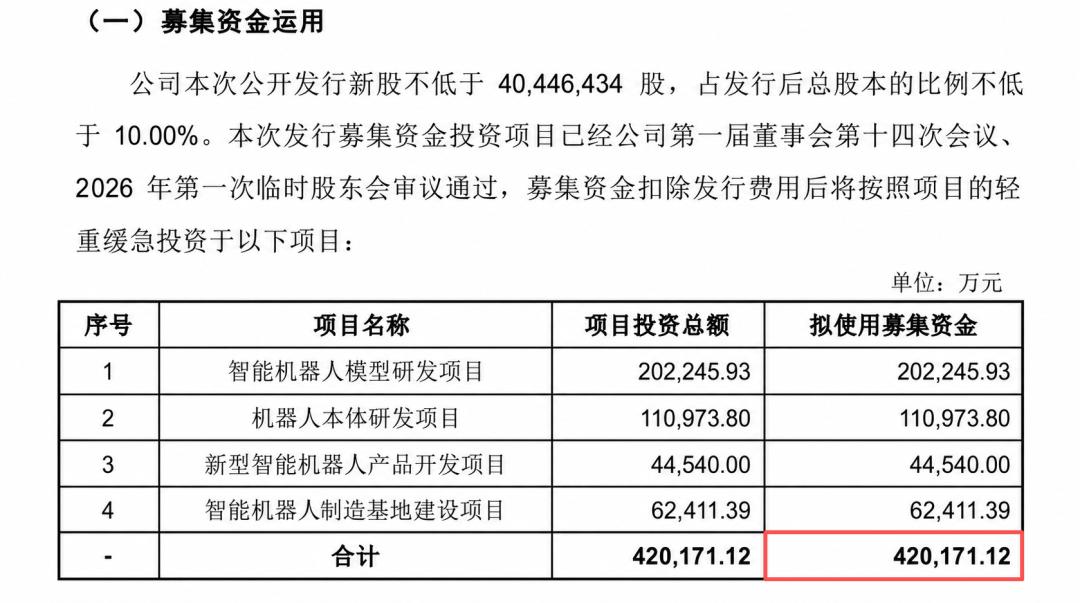
In contrast, it is relatively rare for specialized embodied intelligence manufacturers like Unitree and ZhiYuan to open offline stores specifically for their own products. Both Unitree and ZhiYuan are leading enterprises in the current embodied intelligence field. Data shows that Unitree Technology's market valuation during the IPO stage in 2026 reached approximately 42 billion yuan, and its humanoid robot shipments exceeded 5,500 units in 2025, ranking among the top in the world;
ZhiYuan Robotics is one of the fastest - financing embodied intelligence enterprises in the past two years. The company has completed more than 11 rounds of financing in three years since its establishment, and the cumulative mass production of general embodied robots has exceeded 10,000 units, making it one of the most - watched humanoid robot enterprises in China.
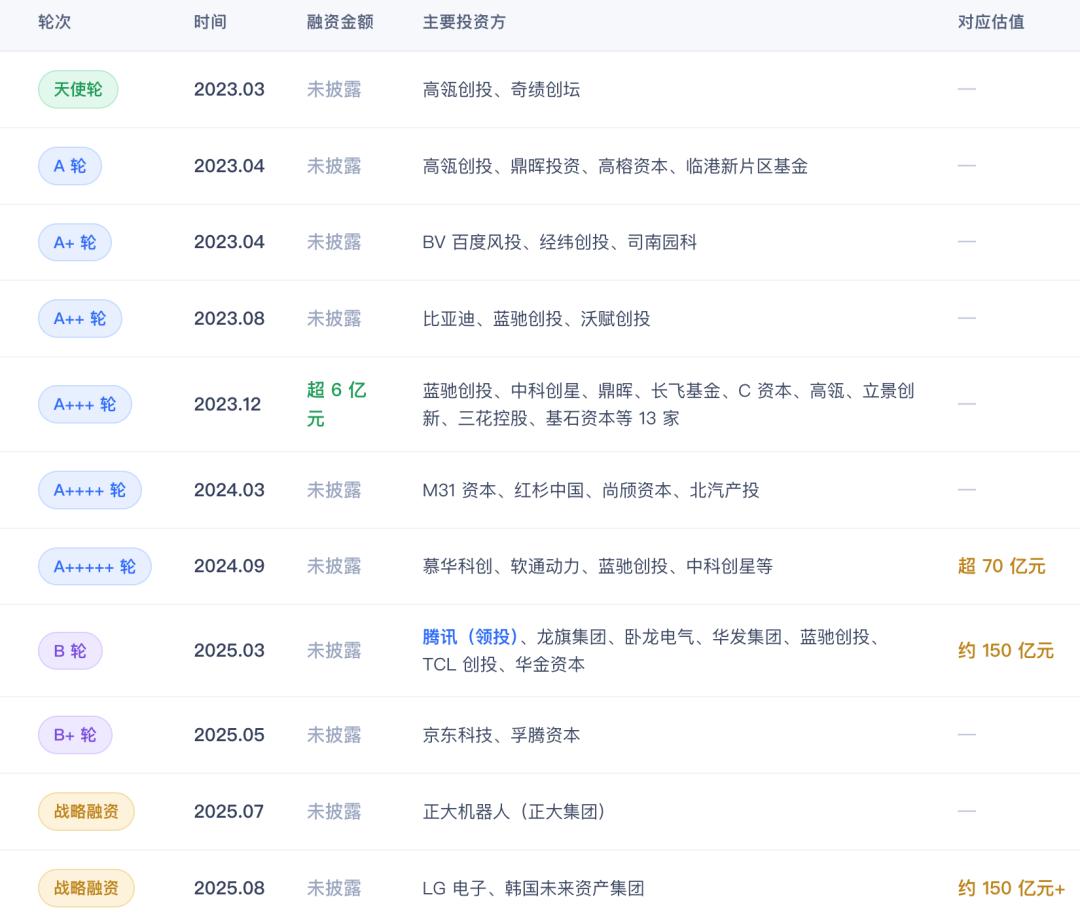
Therefore, their strategic moves are often regarded as a barometer of industry development.
It is worth noting that although the two companies announced their offline store layouts in the same week and the same city, their positioning and goals are different. The former is more like a consumer electronics specialty store, while the latter is more like a showroom for scenario - based applications and robot operation systems.
So, what kind of industry logic and strategic considerations are hidden behind the almost simultaneous offline layout of the two enterprises?
Embodied Intelligence: The "Bottleneck Period" of the Technical Narrative Has Arrived
The "bottleneck period" for embodied intelligence has arrived.
In the past two years, many institutions have made grand predictions about the future of embodied intelligence that far exceed the current industrial development pace. The China Electronics Society predicts that the Chinese humanoid robot market will be approximately 870 billion yuan in 2030; the Development Research Center of the State Council's "China Development Report 2025" estimates that the scale of embodied intelligence is expected to exceed one trillion yuan in 2035.
However, from the perspective of actual delivery, Unitree Technology's humanoid robot shipments exceeded 5,500 units in 2025, ranking first in the world; ZhiYuan Robotics' 5,000th general embodied robot has just been mass - produced. The combined shipments of the two are still only in the "tens of thousands" level.
Obviously, the development progress in the field of embodied intelligence has fallen behind market expectations.
Where does the problem lie? The answer is not single, but the most core bottleneck is still the lack of generalization ability of the embodied intelligence AI model. As Wang Xingxing said, robots can achieve a nearly 100% task success rate in pre - trained scenarios, but once the environment changes, their performance will decline significantly.
Data shows that as of early 2026, the total amount of high - quality real - world physical interaction data globally is only about 500,000 hours, less than one - twentieth of the training data of large language models. In the past two years, in the face of the scarcity of high - quality data and high costs, the industry has explored many paths.
One is to empower through world models. For example, the world model released by Li Feifei's team and NVIDIA's cosmos platform have promoted the implementation of embodied intelligence; the second is to improve data acquisition tools and methods, such as teleoperation + simulation + motion capture; the third is to focus on infrastructure, such as building specialized data collection training grounds; finally, enterprises actively invest by recruiting data collection employees.
There are many methods, but there is still a big question mark over their effectiveness and the extent of their role.
In October 2025, RoboChallenge, the world's first large - scale, multi - task real - robot evaluation platform jointly launched by Dexmal and Hugging Face, was officially launched. In more than 40,000 real - machine tests, even the top three strongest models had an average success rate concentrated in the range of 35% - 51%, indicating the huge gap.
In response to the data collection problem, Zhu Zheng, co - founder of Jijia, also disclosed that "it costs about 200 yuan to collect one hour of high - quality teleoperation data. At this cost, we will never be able to collect the tens of billions of hours of data required to train general humanoid robots."
The direct result is that the autonomous decision - making and environmental adaptation abilities of robots have been slow to achieve a qualitative breakthrough.
IResearch once released a report that divided the autonomy level of embodied intelligence into four levels from L1 to L4. Currently, embodied intelligence is still in the stage of moving from L2 to L3.
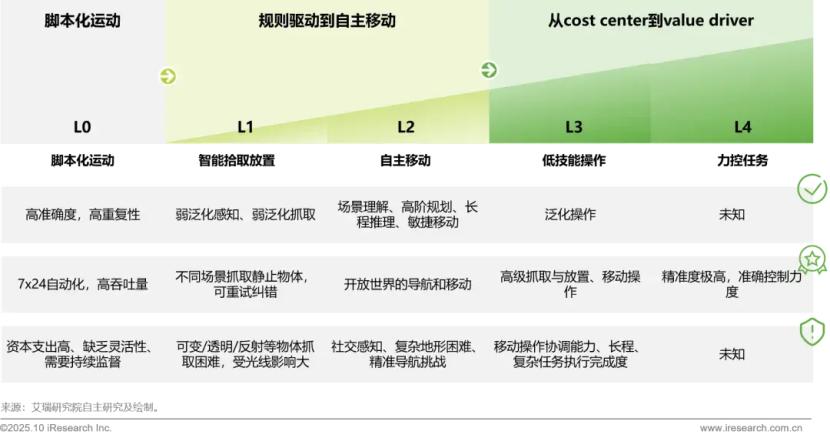
In this context, the industry's development speed cannot keep up with the expectations of capital and the market.
For embodied intelligence manufacturers, especially humanoid robot manufacturers, they have to face the reality that the current bottlenecks cannot be solved in the short term. It is not a wise move to focus solely on model capabilities.
Compared with creating a better robot, it is more urgent to create a real scenario first. This idea can refer to the "gradual" path of autonomous driving back then, that is, first find a scenario where large - scale implementation is possible, obtain orders and implement them, survive, and then gradually move from L2 and L3 to L4.
More importantly, the pressure from the capital side is accelerating this shift.
Unitree Technology is on the verge of going public; although ZhiYuan has not clearly expressed its intention to go public, the company has completed the joint - stock reform, and there have been rumors in the market about its plan to list in Hong Kong. Both companies have reached the stage where they must shift from the technical narrative to the business narrative.
Going to the secondary market means that the underlying logic of valuation will be completely reconstructed. The capital market no longer focuses on "how many degrees of freedom there are and how amazing the demo at the press conference is", but on operating income, gross profit margin, real order conversion rate, and replicable business models.
To support the scale and high valuation of a listed company, manufacturers must prove their ability to achieve large - scale and standardized commercial monetization in a short period.
In summary, under the dual pressures of hitting a wall in the short - term technical route and the acceleration of the capital market, the embodied intelligence industry has reached an inflection point, shifting from the technical narrative to the business narrative.
Stores Become a New Verification Field: The Business Narrative of "Delivery Speaks for Itself"
The question is, what kind of carrier is needed to implement this business narrative?
The answer is stores.
Rogers, an American communication scientist and sociologist, mentioned in his book "Diffusion of Innovations" that new technologies need specific carriers to spread from early adopters to the mass market.
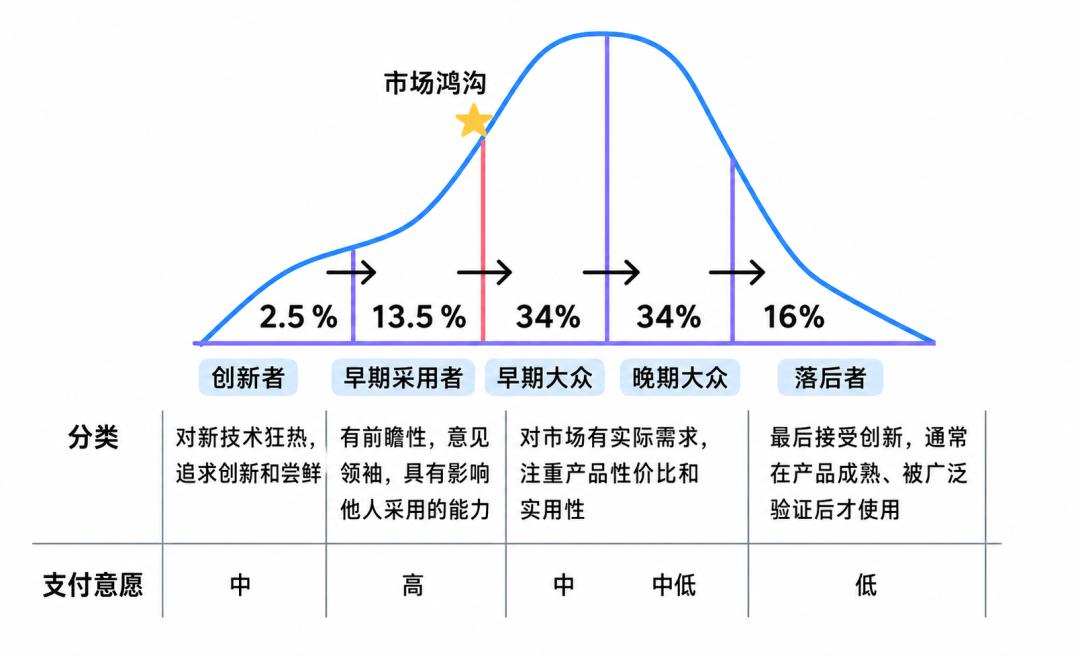
Tesla experience stores, Apple retail stores, and Xiaomi Home have essentially all served similar functions. When Apple opened its first Apple Store in 2001, the outside world did not understand it because computers could be sold through dealers.
However, Steve Jobs believed that consumers did not truly understand the value of Macs, and Apple Stores were designed to solve problems related to experience, education, training, and after - sales service. The same is true for the smart home industry. Consumers are unlikely to spend hundreds of thousands of yuan to renovate their houses just based on promotional pictures, so Xiaomi Home, Huawei Smart Life Hall, and ORVIBO Experience Center have emerged one after another.
For embodied intelligence, the functions undertaken by stores are more complex.
First of all, for most corporate customers and consumers, robots are still a typical new species. Compared with mature products such as mobile phones and home appliances, there is no widespread understanding of their functional boundaries, usage methods, and actual value. In this case, users tend not to place orders directly but prefer to "experience first and then make a decision".
Therefore, stores essentially undertake the pre - education function of "visibility, testability, and comparability" for robots with high customer - unit prices and strong new - species attributes.
Secondly, stores are also simulating a clearer delivery path, proving a "replicable business model" and serving as a delivery showroom.
Take the nation's first "retail complex deployment - state" benchmark store that ZhiYuan will open in Minhang, Shanghai, as an example. It demonstrates a complete closed - loop of "robots + software and hardware workstations + cloud - based operation and maintenance systems".
The robots on - site can complete front - end sales guidance, back - warehouse replenishment, autonomous recharging when the battery is low, and self - inspection of faults on the cloud. In essence, it is proving to B - end customers with large - scale procurement needs and listing audit institutions that the products have high operability and replicability.
More importantly, stores can also make up for the "data scarcity" and turn the store into a training ground.
You know, the tens of thousands of randomly moving people, uncontrollable lighting changes, and complex road surface interferences in the store every day are exactly the physical long - tail scenarios urgently needed by the simulation platform. Every human - robot interaction and every successful obstacle avoidance of the robot in the store provides real - time real - machine operation data for the end - to - end model in the background for free.
Generally speaking, stores are such a "transition device", providing pre - education of "visibility, testability, and comparability"; simulating a clearer delivery path; verifying its deployable, operable, and replicable business model, and also alleviating the data and cost problems, pushing the industry towards the business narrative of "delivery speaks for itself".
From Selling Hardware to Selling Operations: Embodied Intelligence Takes Another "Manufacturing Path"
If opening stores is an active attempt by embodied intelligence enterprises to shift from the technical narrative to the business narrative, what it reflects is actually a deeper - level proposition that the entire Chinese embodied intelligence industry is facing.
In fact, China's greatest advantage lies in its manufacturing capabilities; however, the greatest challenge also comes from this advantage.
In the past two decades, China has demonstrated amazing industrialization capabilities in almost every hardware industry. From smartphones to photovoltaic modules, from lithium - ion batteries to new - energy vehicles, Chinese enterprises have quickly brought originally expensive technological products to the mass market through a complete supply chain, large - scale manufacturing, and extreme cost control.
Embodied intelligence is also following this path. Currently, the price of Huiling's eHand - 6 dexterous hand has dropped to 2,999 yuan, and bottleneck areas such as planetary roller screws are also being gradually broken through by domestic substitution; with the localization of core components, the overall cost of Ubtech's Walker series has decreased by approximately 25% compared to 2024. The rental market has changed from a daily rent of tens of thousands of yuan at the beginning to thousands of yuan, and prices continue to decline.
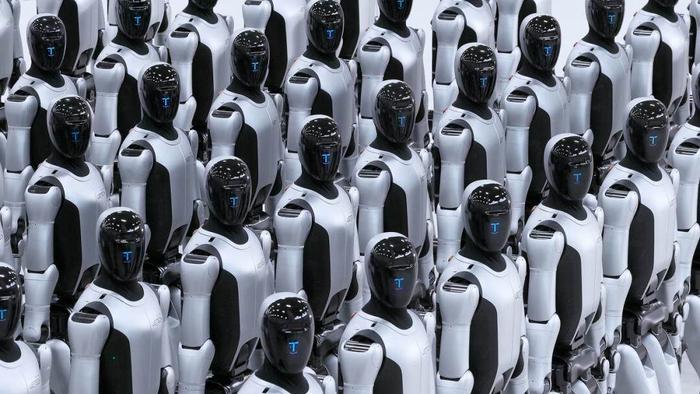
This means that humanoid robots are going through an industrial cycle similar to that of smartphones, new - energy vehicles, and the photovoltaic industry. The technological dividend is gradually being replaced by the manufacturing dividend, and hardware products are rapidly moving towards standardization and commodification.
However, problems have also emerged.
Chinese enterprises are always good at creating cost advantages in hardware but not good at selling services at high premiums. In other words, China's manufacturing industry is naturally stronger in the manufacturing link at the bottom of the value chain but relatively weaker in software, services, and continuous operation capabilities at the top of the value chain.
In overseas markets, more and more robot enterprises are adopting the RaaS (Robotics as a Service) model. Customers do not buy the robots themselves but the continuous service capabilities provided by the robots. In addition to the hardware cost, enterprises can also charge monthly software subscription, operation and maintenance management, and service fees ranging from 2,000 to 5,000 US dollars, thus forming a stable recurring income.
However, China's instinct is still to sell a