After Zhang Xue won the championship, where has motorcycle intelligence gone?
At the end of March 2026, at the Algarve International Circuit in Portugal, a Chinese racing team stood on the top of the podium at the World Superbike Championship (WSBK). Zongshen Motorcycle, a brand that has only been established for a few years, broke the 37 - year monopoly of Europe, America, and Japan on this event with a victory.
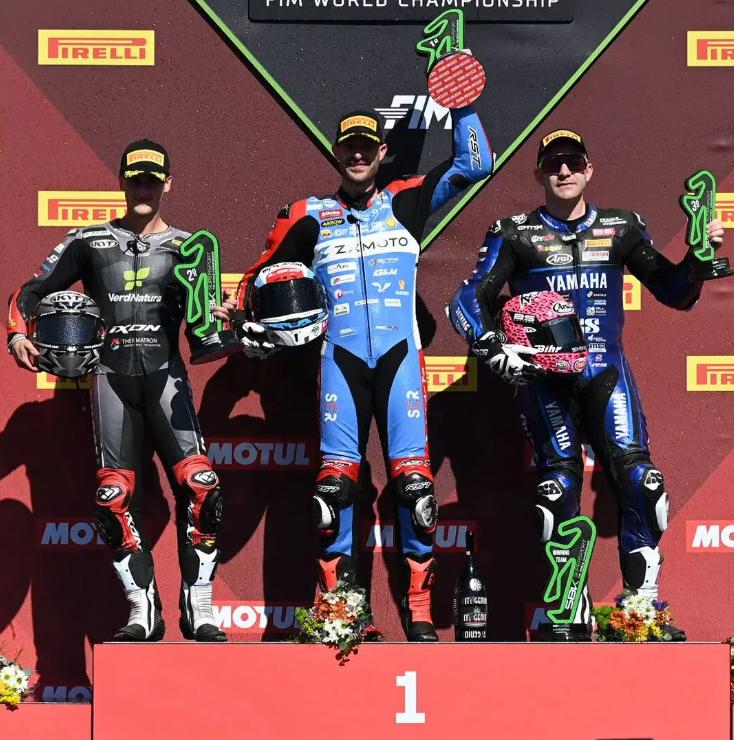
After the race, some people talked about the engine, some discussed the frame, and others analyzed the horsepower curve of the 819cc inline - three - cylinder engine. But few people noticed another question: What's the relationship between this championship - winning motorcycle and AI?
At first glance, this perspective seems a bit abrupt. Motorcycles are mechanical products, a physical system composed of throttles, brakes, and suspensions, which seems far from artificial intelligence, a software - level technology. However, if you carefully examine the technical details behind Zongshen Motorcycle's championship, you'll find that the industry is changing.
It is reported that the electronic control system of the championship - winning motorcycle, the 820RR - RS, is an intelligent electronic control system with the ability of real - time perception, millisecond - level decision - making, and active intervention. On the track, the self - developed data acquisition system equipped on the motorcycle can optimize the vehicle parameters in real - time based on a data volume of 100,000 per lap.
Meanwhile, discussions about motorcycle intelligence on social media are becoming increasingly heated. Many consumers have begun to actively care whether a motorcycle is equipped with intelligent features when choosing a vehicle.
So, what stage has motorcycle intelligence reached now? And how is it different from traditional automobile intelligence?
Can motorcycles be intelligent?
After Zongshen Motorcycle won the championship, a question came into the public view: Isn't intelligence a patent of automobiles? When did motorcycles get involved with AI?
The public's impression of motorcycles still remains at the stage of pure mechanical toys, with an engine, two wheels, and a handlebar. Many people even think that the charm of motorcycles lies in their primitiveness, without the interference of redundant electronic devices. Riders directly communicate with the machinery, and every twist of the throttle and squeeze of the brake can get the most direct feedback.
But in fact, motorcycle intelligence is no longer simply adding a touch screen or mobile phone projection. It is a complete technical system, known in the industry as the Advanced Rider Assistance Systems (ARAS), including intelligence at the levels of perception, decision - making, and execution.
At the perception level, modern intelligent motorcycles use sensors such as six - axis IMU inertial measurement units, millimeter - wave radars, and cameras to perceive their own posture and the surrounding environment in real - time; at the decision - making level, the "brain" composed of AI chips and algorithms quickly processes and judges this data; at the execution level, the system precisely controls the execution mechanisms such as the engine, brakes, and suspensions according to the decision - making results, helping riders ride more safely and efficiently.
Of course, motorcycle intelligence does not stop at the core control link from perception to decision - making, but also covers aspects such as communication, human - machine interaction, and battery management.
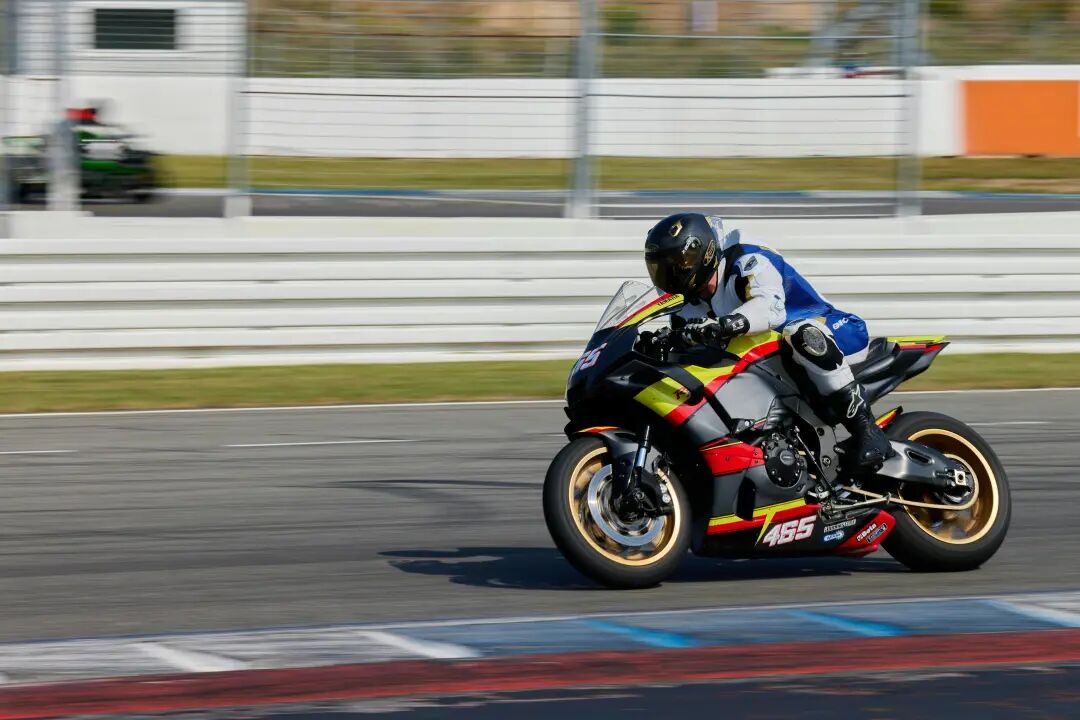
In 2024, the China Electronic Chamber of Commerce released the industry's first group standard, "Classification of Motorcycle and Moped Riding Intelligence", which divides motorcycle intelligence into six levels from L0 to L2 - Ultra and clarifies eight core systems such as communication, interaction, perception, and positioning. This marks that motorcycle intelligence has officially moved from concept to standardization.
The L0 level only supports basic functions such as Bluetooth, keyless unlocking, and mobile phone projection; the L1 level adds vehicle networking, OTA upgrades, and remote monitoring; the L1p level strengthens the attitude - fixing and communication capabilities, supporting precise positioning and emergency rescue; the L2 level is equipped with radars and cameras for the first time, realizing safety prompts such as collision warning and blind - spot monitoring; the L2p level adds single - dimension control assistance such as cruise control and traction control; the highest - level L2 - Ultra achieves full - dimension control, integrating advanced driver - assistance functions such as adaptive cruise and automatic emergency braking.
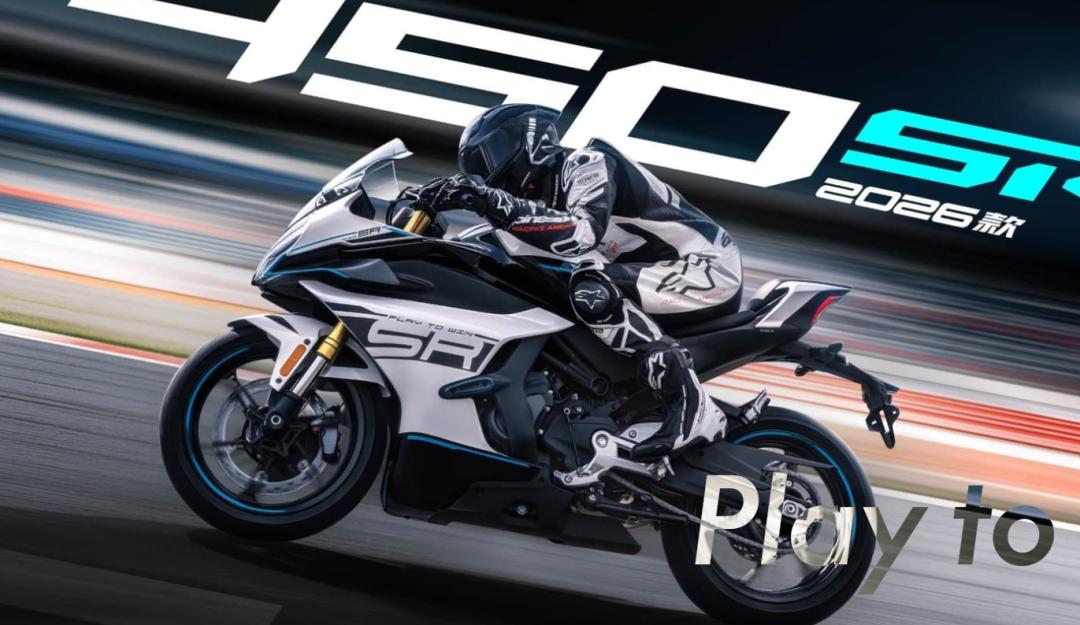
Currently, domestic models in the 20,000 - 30,000 - yuan range (such as the CFMoto 450SR and QJMotor SRK550) are already standard - equipped with TCS. L1 - level functions such as traction control are rapidly spreading to mid - range models, and basic configurations such as cornering ABS and multiple riding modes are also gradually becoming standard. L2 functions have appeared in high - end touring and adventure motorcycles, which are usually equipped with more advanced safety - assistance functions such as forward collision warning, blind - spot monitoring, and adaptive cruise.
However, motorcycle intelligence has also sparked quite a bit of controversy among enthusiasts. Supporters believe that intelligence can significantly improve riding safety, lower the entry threshold for beginners, and allow more people to enjoy the fun of riding. Opponents worry that too much electronic assistance will deprive people of the pure feeling of direct communication with the machinery, turning motorcycles into soulless electronic products.
This controversy precisely reflects the uniqueness of motorcycle intelligence: it cannot pursue full - scale autonomous driving like automobiles, and the process of intelligence is also more cautious.
In comparison, automobile intelligent driving has entered the stage of large - scale popularization of L2+ and the commercial implementation of L3, while the pace of motorcycle intelligence is significantly slower. L1 - level functions are moving from high - end optional features to industry standards, and L2 - level functions are still concentrated in a few high - end models. There is still a long way to go before it becomes truly mature.
As an emerging field, intelligence is still an extremely niche and high - end configuration in the entire motorcycle market, and there is still a long way to go before large - scale commercialization. This naturally makes people wonder: Since the intelligent driving technology of automobiles is already quite mature, why can't motorcycles directly copy it?
Why can't motorcycles copy the intelligent driving route of automobiles?
Motorcycles and automobiles are two completely different means of transportation, with essential differences in their physical characteristics, driving logic, and safety requirements.
The core logic of automobile intelligent driving is control. The steering wheel controls the steering, the brake pedal controls the braking force, the accelerator pedal controls the power... All the execution mechanisms are wire - controlled. The computer issues instructions, and the execution mechanisms respond. There are few mechanical coupling links in the middle, and the controllability is much higher than that of motorcycles. On this basis, the system can plan routes, make decisions, and execute, realizing automated movement from point A to point B.
Motorcycles are completely different. Their turning relies on "leaning into the curve". Riders need to first push the handlebar in the opposite direction to break the balance, tilt the body, and then use the change in the contact surface between the tires and the ground to achieve steering. The whole process depends on the rider's center - of - gravity movement and body posture, which is a typical human - machine coupling system.
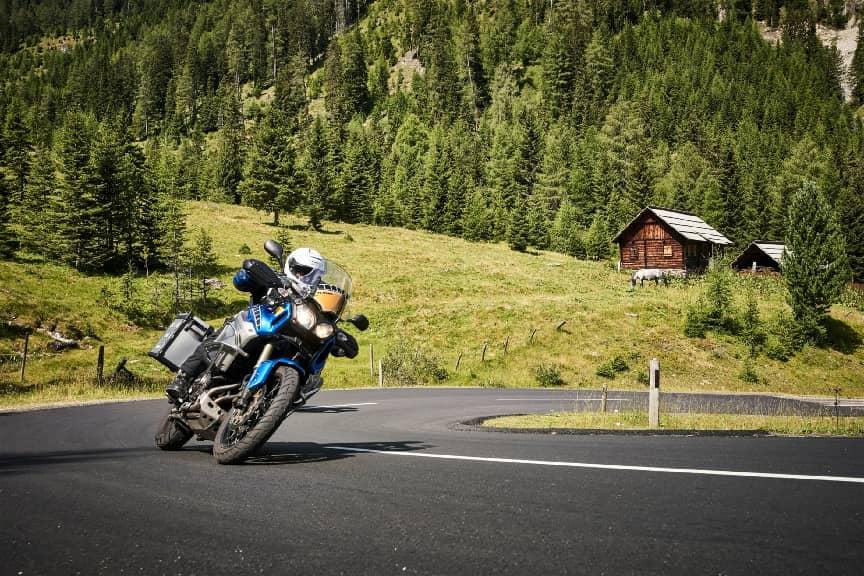
This means that if high - level autonomous driving is to be achieved on motorcycles, the challenges faced by the system are not only to control the throttle and brakes but also to coordinate the human - machine control authority while the rider maintains balance. This is much more difficult than on a four - wheel platform.
Take sensors as an example. The body posture of a motorcycle changes drastically during driving. In a competitive scenario, the lean angle during cornering can reach over 60 degrees, which causes the transformation relationship between the world coordinate system and the body coordinate system to change dynamically. The mature perception fusion algorithms on automobiles must be completely redesigned on motorcycles to achieve real - time dynamic correction. The same millimeter - wave radar can stably detect vehicles 150 meters ahead on an automobile, but on a motorcycle, it may misjudge the target position due to the body's tilt.
For this reason, during the rapid development of automobile intelligent driving, there is still no truly L3 - level autonomous - driving motorcycle globally, and the industry standard is currently only set at L0 - L2U.
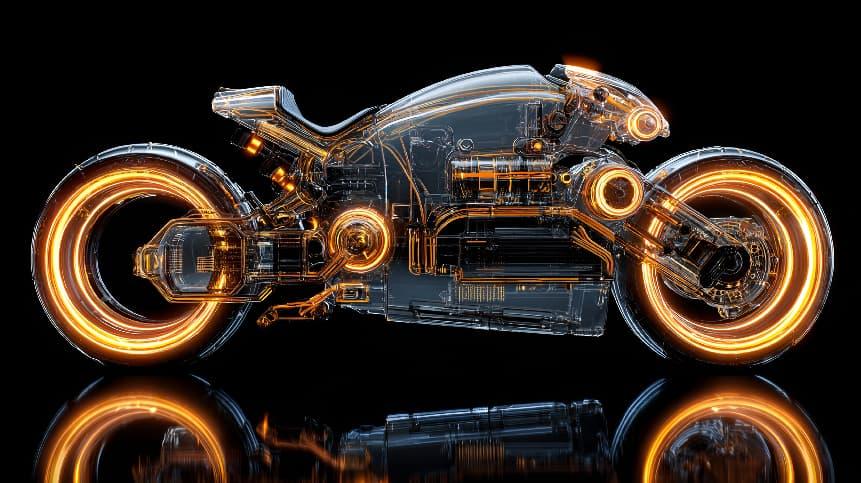
Moreover, in terms of spatial distribution, an intelligent automobile can be equipped with more than a dozen sensors around the body, including forward - facing millimeter - wave radars, lidars, ultrasonic sensors, and surround - view cameras, covering 360 degrees without blind spots. The installation space on a motorcycle is extremely limited: the front area of the motorcycle is already occupied by the headlight, instrument, and wiring harness, and cannot accommodate large - scale sensor modules; the rear is blocked by the rider's body; there are almost no installation planes on both sides. The current mainstream solution is to install a forward - facing radar or camera, and at most add a rear - facing radar at the rear. The perception range and redundancy are far less than those of automobiles, and motorcycles naturally have more perception blind spots.
In terms of safety, when the intelligent driving system of an automobile fails, the vehicle can slow down and pull over. If the electronic system of a motorcycle fails during high - speed cornering, there is almost no room for buffering. Coupled with the fact that motorcycles naturally lack automotive - grade redundant braking circuits and redundant steering mechanisms, the fault - tolerance space is extremely small, and the safety - level requirements are more stringent than those of automobiles.
Due to the completely different system characteristics, perception conditions, and safety baselines, motorcycles naturally cannot fully copy the intelligent driving route of automobiles. So, what are the difficulties in motorcycle intelligence, and where will it go in the future?
The trend of motorcycle intelligence is irreversible
Despite facing many challenges, the trend of motorcycle intelligence is irreversible.
A proven feasible path is from the racetrack to the market. Zongshen Motorcycle first verifies the most advanced electronic control technology in top - level races, uses AI as an "assistant", and then gradually reduces the configuration, optimizes the cost, and applies it to civilian models. This can not only quickly improve the technical level but also build brand influence through race results.
Cao Bin, the angel investor of Zongshen Motorcycle, said in an interview with Yicai Global: "Zongshen Motorcycle is moving towards electrification and intelligence. The company will invest 135 million yuan in R & D this year, and a large part of it will be invested in the electrification and intelligence of motorcycles."
Meanwhile, the technological spill - over from the automobile industry chain is also accelerating the process of motorcycle intelligence. As automotive supply - chain giants such as Huawei, Qualcomm, Aptiv, and Valeo have successively entered the two - wheel market, mature automotive - grade technologies are being systematically introduced into the motorcycle industry. For example, the Qualcomm Snapdragon 8155 chip has been applied to the Great Wall Soul S2000 series of motorcycles, providing powerful computing support for the vehicles.
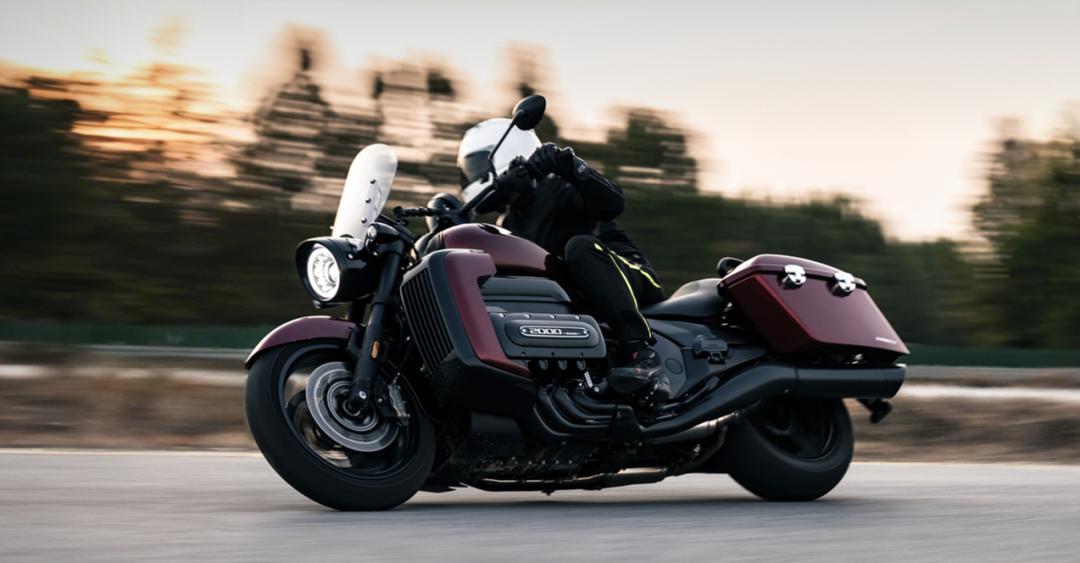
In terms of the technological carrier, electric motorcycles naturally have a better electronic control foundation. The response speed and control accuracy of the motor far exceed those of a fuel engine. Therefore, electric motorcycles have become the best carrier for the implementation of intelligent technologies. High - end electric motorcycles from brands such as Ninebot, Jike, and Yadea are already ahead of fuel motorcycles in the same price range in terms of intelligence. The in - depth integration of electrification and intelligence is reshaping the entire motorcycle industry.
Of course, motorcycle intelligence still faces many challenges. The reliability problem in complex road conditions has not been completely solved. Especially on slippery roads, gravel roads, and in curves, the performance of the intelligent assistance system is still not stable enough. The prices of key components such as millimeter - wave radars and AI chips are still relatively high, making it difficult to be widely popularized in mid - and low - end models.
There is also uncertainty in the technical route. Which one is the main sensor for motorcycles, millimeter - wave radar, camera, or lidar? Is it necessary to do multi - sensor fusion? To what extent should the driver - assistance be considered sufficient? The industry has not reached a consensus, and manufacturers also face the risk of choosing the wrong route when investing in R & D.
How will motorcycle intelligence develop?
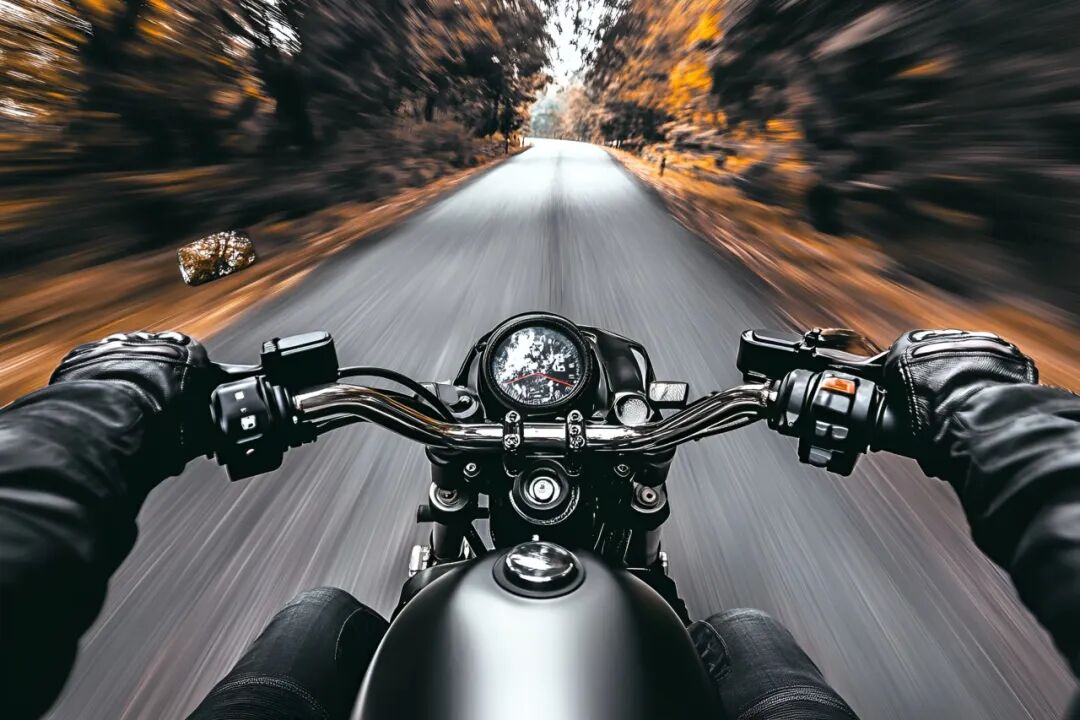
A reasonable judgment is that in the next three to five years, cornering ABS and semi - active suspensions will be rapidly popularized in mid - and high - end models, becoming standard configurations similar to the ESP in automobiles. Radar - assisted blind - spot monitoring and adaptive cruise will appear in a few luxury touring motorcycles, but the price will remain at a relatively high level. As the cost of sensors decreases and the integration of computing platforms improves, entry - level intelligent kits are expected to be available in a wider price range in a longer period.
In the long run, the ultimate form of motorcycle intelligence is probably not simply autonomous driving but will develop a unique human - machine co - driving mode: issuing warnings when the cornering speed is too fast, correcting the route when the rider is fatigued and deviates during long - distance riding, and actively intervening when an unexpected situation exceeds the human reaction limit. It retains the core fun of two - wheel riding and the experience of unity between man and machine, while controlling the accident risk at a lower level.
The championship - winning motorcycle of Zongshen is, to some extent, a precursor of this future. The racetrack environment is more extreme and demanding than the road. Those electronic control strategies verified on the racetrack will, like ABS and TCS, eventually move from the professional racetrack to the mass market and become standard configurations on every ordinary motorcycle.
This article is from the WeChat official account "Brain - opening Cars", author: Shan Hu. It is published by 36Kr with authorization.