Elon Musk aims to build millions of robots, and The Economist points out that the key lies in Ningbo
The humanoid robot market will be extremely competitive in 2026. In China alone, over a hundred companies have emerged in this field. Elon Musk has set a mass - production target of one million humanoid robots, and several leading domestic companies are also vying to deliver products.
Some time ago, The Economist compiled a list of the top 30 global humanoid robot component suppliers and marked them on a map by city.
Before looking at the map, I casually guessed that the top - ranked city should be Shenzhen. I've heard that after American robot startups raise funds, their first move is to fly to Shenzhen. This has almost become an industry norm. Shanghai is also a reasonable guess, and Changzhou makes sense too. Businessmen in Wujin District claim that 90% of robot parts can be sourced locally.
As it turns out, when counted by the number of listed companies, the city with the most inclusions is Ningbo, with 6 companies, ranking first in the country.
Ningbo?
The Ningbo that makes molds, small household appliances, and supplies components to car manufacturers worldwide?
I've studied this issue and found something interesting: Once you understand “Why Ningbo?”, you'll also get a clear picture of how an advanced robot is actually built.

01 Take a Look Inside a Robot
Let's start with an overall impression.
A Tesla Optimus humanoid robot has 28 joint actuators, and the new - generation dexterous hand has 22 degrees of freedom. There are over 80 sensors installed throughout the body. It sounds amazing, but when you take it apart, it's not as sci - fi as it seems.
What's inside an actuator? Motors, gears, screws, and bearings. Take the six - axis force sensor as an example. Its core structure usually consists of a metal elastic body and strain gauges. What about inside the dexterous hand? There are a bunch of micro - screws thinner than a ballpoint pen refill, along with tendon ropes. When you lay them out on the table, it's full of metal parts, all greasy, and none of them look like something from a sci - fi movie.
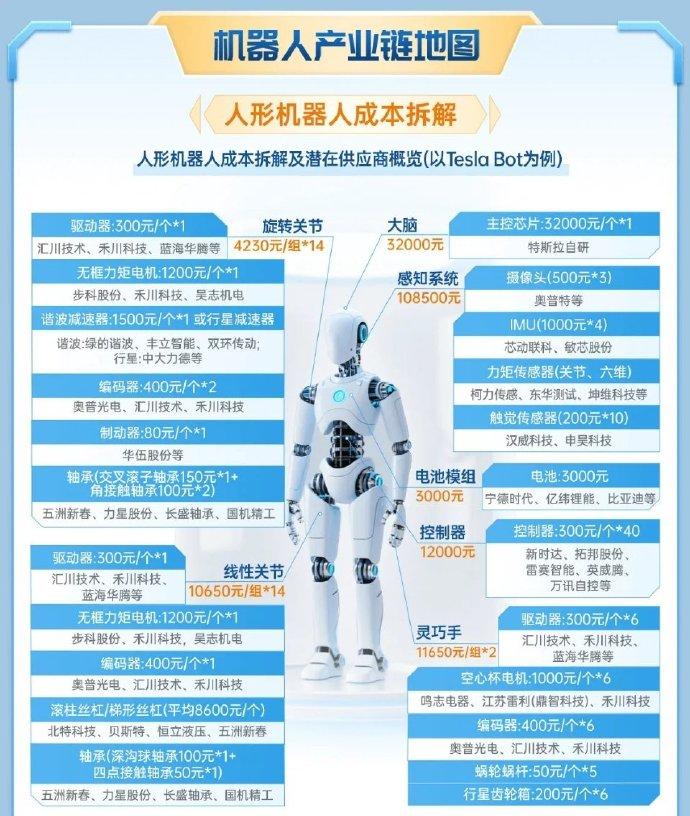
But it's these things that determine whether a robot can walk steadily and pick up an egg without breaking it.
Let's first talk about how the joints move.
The joints of a humanoid robot come in two types: rotational and linear push - pull. Rotational and linear actuators are mixed and configured according to different parts. Although the core parts used for the two motion modes are different, they both face a common challenge: They need to output a large amount of force in a small space without shaking.
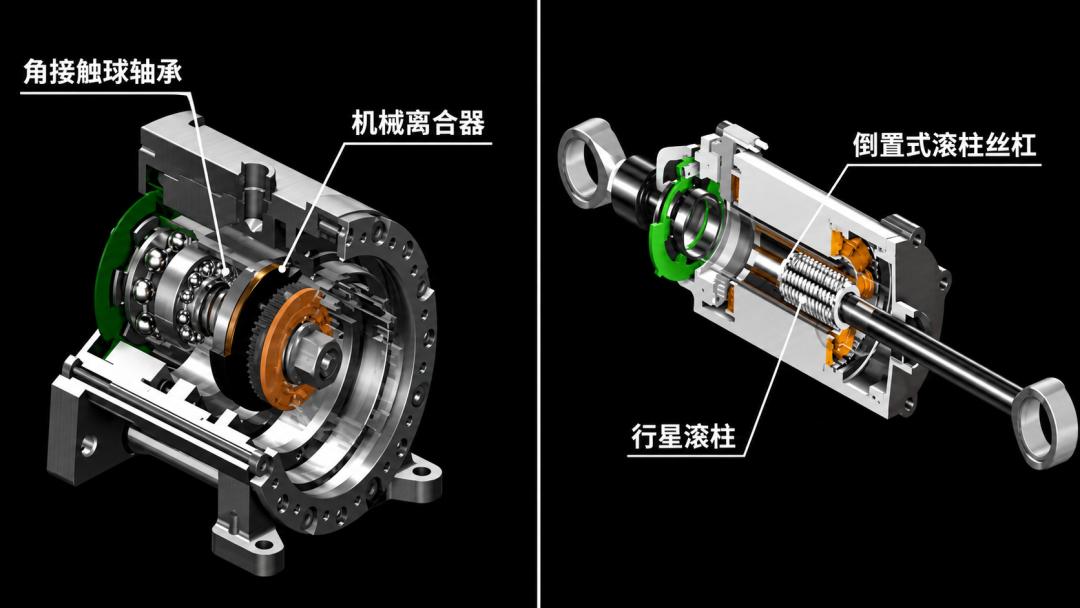
Let's first talk about the core part for linear push - pull, the planetary roller screw. The traditional method uses a ball screw, where a screw is filled with small steel balls. When rotating, the steel balls roll in the grooves, converting rotational motion into linear push - pull. The problem is that the contact between the steel balls and the screw is point - contact, with a small contact area, so the force it can bear is limited. Moreover, when the steel balls reach the end, they have to turn back through a return tube, which causes collisions and noise.
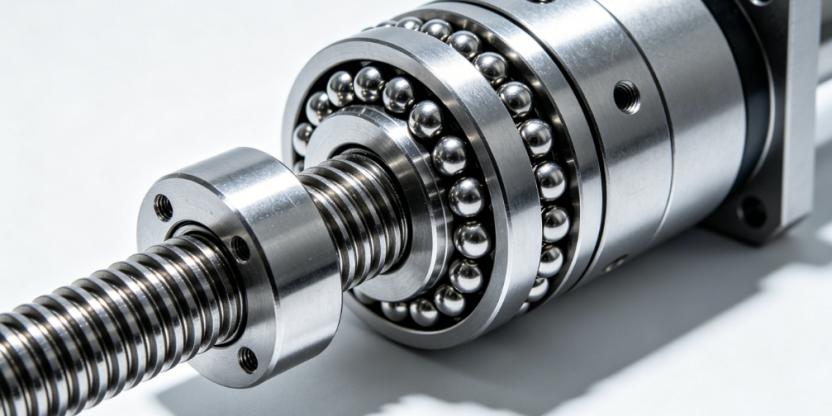
Ball screw
The planetary roller screw takes a different approach and gets rid of all the steel balls. Instead, a circle of slender threaded rollers is evenly arranged around the main shaft. These rollers, like planets orbiting the sun, rotate and revolve at the same time, and the contact between the threads is line - contact. With a larger contact area, a screw of the same thickness can have a bearing capacity more than 3 times higher, and in extreme cases, more than 10 times higher. Its service life is 15 times that of a ball screw.
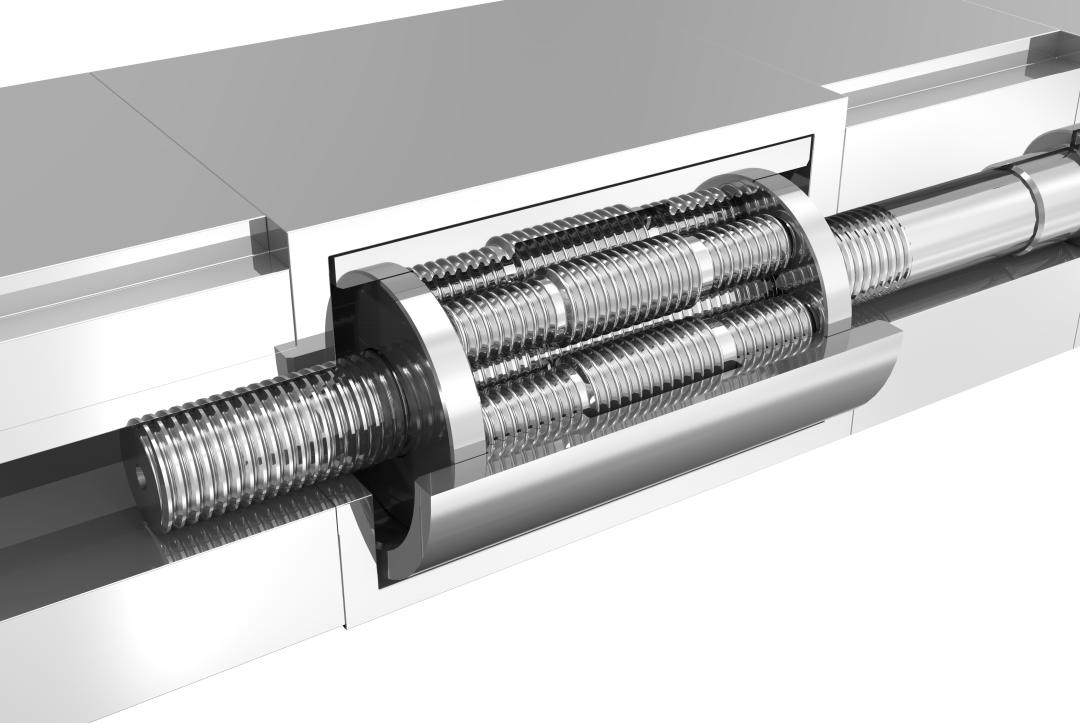
Planetary roller screw
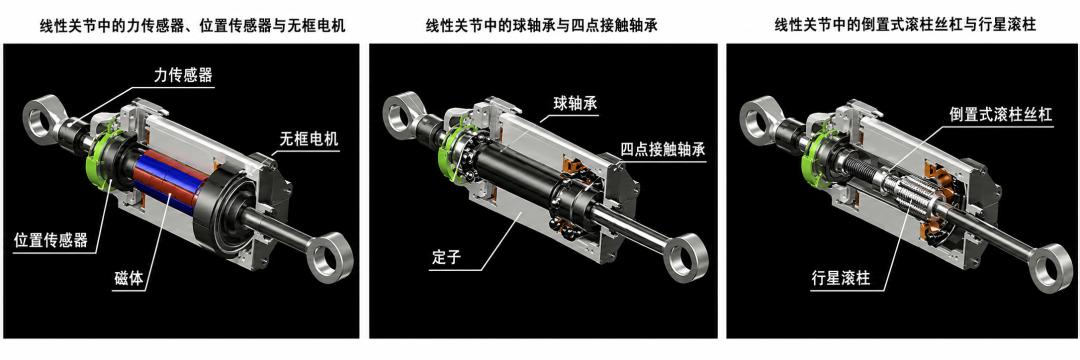
Disassembly of the linear joint: frameless motor + planetary roller screw + sensor + bearing
What's even more amazing is that it can be made very small. Tesla's latest - generation dexterous hand has 22 degrees of freedom, and the new - generation solution may adopt a drive route of micro - screws and tendon ropes. Some domestic enterprises have already produced micro - planetary roller screws with a diameter of 1.5 millimeters, thinner than a ballpoint pen refill, but they can pull about 10 kilograms of weight. A robot's dexterous hand system may require dozens of such micro - screws. During assembly, it has to be done under a microscope, and there can't be a single burr on the metal surface, otherwise, the entire screw will get stuck in the nut cavity, and the fingers will be paralyzed.
There is a listed company in Ningbo called Shuanglin Co., Ltd. In 2025, it released its self - developed planetary roller screw, with an accuracy of 0.003 millimeters, which can help reduce the cost of the dexterous hand by about 20%.
Okay, we've finished talking about linear push - pull. Next is rotation.
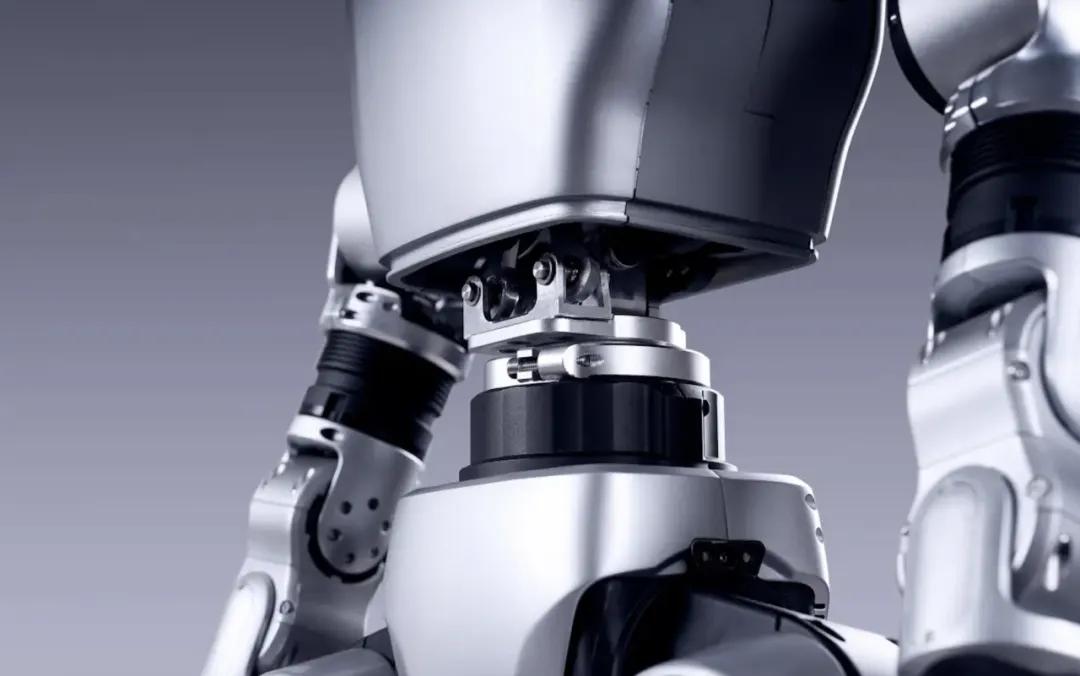
The core part of the rotational joints such as the robot's shoulders and elbows is the harmonic reducer. The motor rotates too fast. If it is directly connected to the joint, the arm will swing like a fan. A speed - reducing device is needed to convert high - speed rotation into low - speed and high - force output.
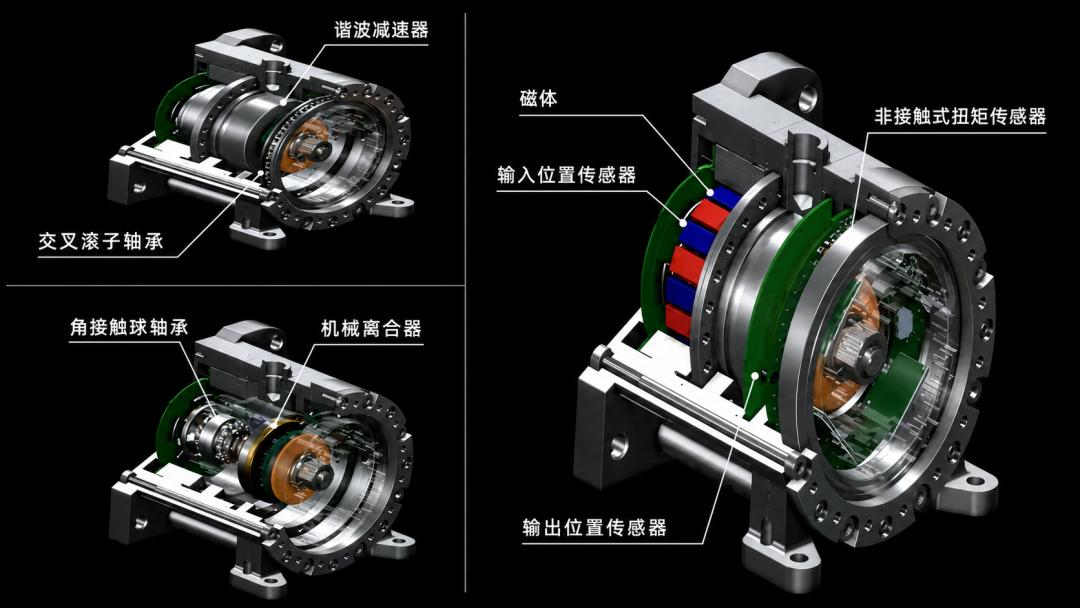
Disassembly of the rotational joint: frameless motor + harmonic reducer + sensor + bearing
The principle of the harmonic reducer is a bit peculiar. It has three key parts: an oval - shaped cam called the wave generator, a thin - walled cup - shaped flexible gear called the flexspline, and an inner - toothed ring called the circular spline.
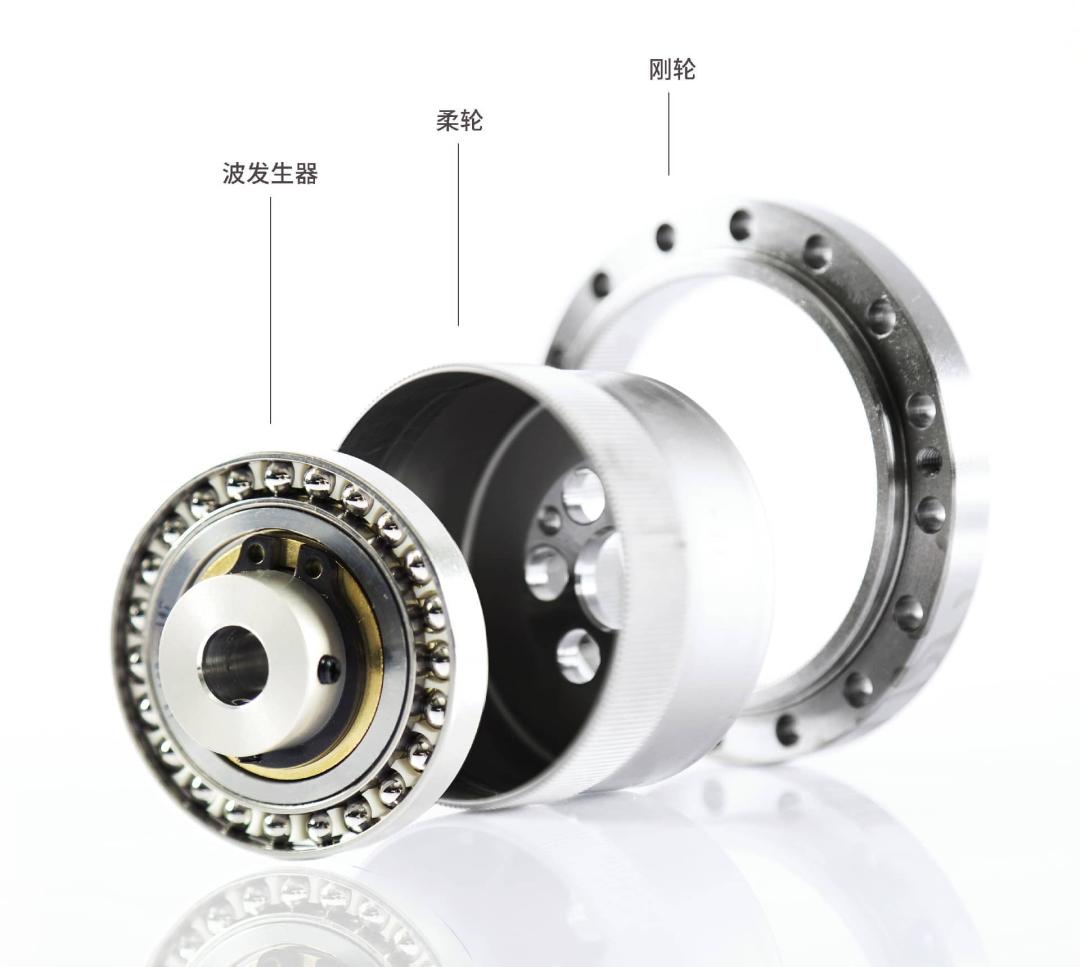
The oval cam is inserted into the thin - walled cup, squeezing the originally circular cup into an oval. The outer teeth at the two ends of the long axis of the oval mesh with the inner teeth of the ring, while the two ends of the short axis are disengaged. When the cam rotates one circle, due to the difference of two teeth between the inner and outer teeth, the flexspline rotates slightly in the opposite direction by an angle of two teeth. It only moves two teeth per circle, so the reduction ratio is very high, and a single - stage reduction can reach 1:50 or even 1:160.
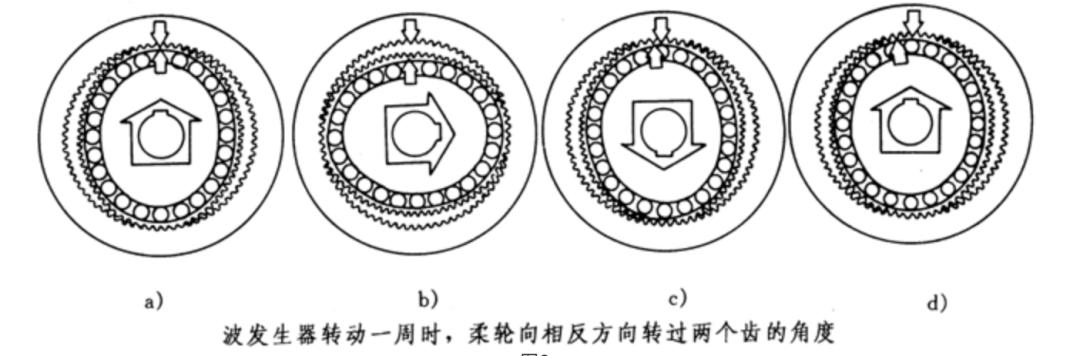
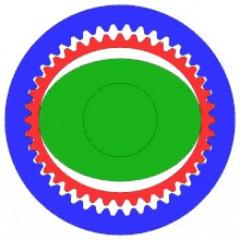
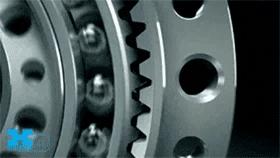
The flexspline is the most fragile and crucial part of the entire reducer. During operation, it has to undergo high - speed oval deformation following the motor, thousands of times per minute. The tolerance of the tooth profile processing must be controlled at the micron level. Japan's Harmonic Drive has long been at the global leading position in this field. The core barrier lies not only in the processing accuracy but also in the smelting formula of special steel. The fewer the microscopic impurities in the steel, the less likely the flexspline is to fatigue and break.
Dongmu Co., Ltd. in Ningbo has taken a different path. Instead of competing with the Japanese in traditional steel, it uses liquid metal to make the flexspline. Liquid metal is an amorphous alloy without the grain boundary defects of traditional metals and is naturally fatigue - resistant. Dongmu's liquid - metal flexspline has passed the 10,000 - hour ultimate life test.
Let's talk about another one: sensors.
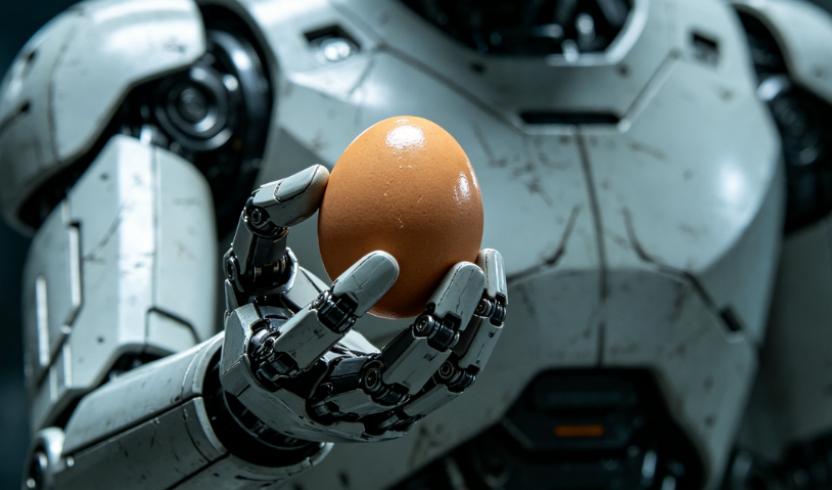
For a robot to pick up an object without breaking it, it needs a six - axis force sensor. An ordinary sensor can only measure the force in one direction. For example, the electronic scale in your kitchen only measures the downward pressure. The six - axis force sensor is installed at the wrist and can measure the push - pull forces in three directions and the torsional moments in three directions simultaneously, a total of six dimensions. When a robot picks up an egg, it not only needs to control the clamping force not to exceed the limit of the eggshell but also needs to sense in real - time whether the egg is slipping. Once a slipping trend is detected, the sensor feeds back a signal within milliseconds, and the control system immediately adjusts the clamping strategy. Without this, the robot hand will either break the egg or watch it slip away.
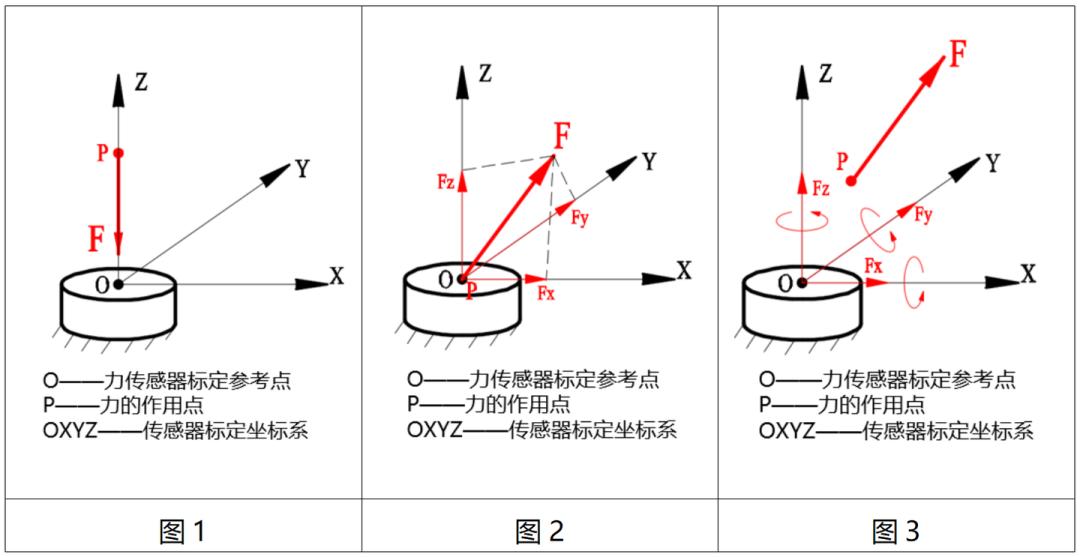
Schematic diagrams of one - axis, three - axis, and six - axis sensors respectively
KeLi Sensing in Ningbo is one of the few domestic enterprises capable of mass - producing six - axis force sensors and has received an order from Unitree Robotics.
In addition to these, there are also frameless torque motors, encoders, drive boards, and various bearings. I won't go into details one by one.
But you may have already realized the problem: Why do the above - mentioned suppliers gather in Ningbo?
02 How Did an Automobile City Become the Heart of the Robot Industry?
Let's go back to the map of the top 30 suppliers in The Economist.
The six listed companies from Ningbo are Tuopu Group, KeLi Sensing, Zhongda Leader, Shuanglin Co., Ltd., Dongmu Co., Ltd., and Xusheng Group. Looking at the main businesses of these companies, it all becomes clear: automotive chassis parts, automotive sensors, automotive reducers, automotive die - castings, powder metallurgy parts. They are all enterprises in the automotive supply chain, and none of them originated as “robot companies.”
To put it simply,