"Foxconn for pet food" Fu Bei Pet Food is making another IPO attempt, but it still lacks a competitive self-owned brand
In the Chinese pet food market, high - end pet food and various freeze - dried snacks are continuously driving up the average customer spending. More and more brands are trying to persuade pet owners to pay a premium for their "furry kids". However, the contract manufacturers behind these brands may not necessarily share the same growth dividends.
Shanghai Fubai Pet Products Co., Ltd. is a typical example. This pet food enterprise, founded in 2005, has long provided R & D and production solutions for leading and emerging pet food brands, and is therefore known as the "Foxconn of the pet industry". On June 1st, Fubai Pet Food once again attempted to enter the capital market and submitted its prospectus to the Hong Kong Stock Exchange.
This is not Fubai Pet Food's first attempt to go public. As early as 2021, the company sought to list on the A - share market but withdrew its application in June 2023, citing uncertainties in the listing schedule and strategic adjustments for future development.
01
On June 4th, Jiemian News requested an interview with Fubai Pet Food regarding its development strategy for its own brands. Fubai Pet Food stated, "The company is one of the few pet food manufacturers that operate both ODM and OBM businesses. However, the company is currently in the regulatory quiet period after submitting the A1 application for listing on the Hong Kong stock market, so it is not convenient to answer the listed questions one by one."
After switching to the Hong Kong stock market three years later, Fubai Pet Food still needs to face the same scrutiny from the capital market: Can a pet food company operating in the contract - manufacturing model, like Zhongchong Co., Ltd. and Guaibao Pet, incubate its own high - premium brands?
Currently, the contract - manufacturing business remains the revenue pillar of Fubai Pet Food, and its own brands have not yet shown a strong enough growth curve.
Judging from the financial data, the company's growth rate is not significant. From 2023 to 2025, Fubai Pet Food's revenues were 1.046 billion yuan, 1.033 billion yuan, and 1.021 billion yuan respectively, showing a decline for two consecutive years. During the same period, the net profits were 164 million yuan, 164 million yuan, and 98.235 million yuan respectively, with a year - on - year decline of about 40% in 2025.
Its future growth potential depends on whether it can shed the label of a "contract manufacturer". Currently, Fubai Pet Food has developed the ODM (Original Design Manufacturer) and OBM (Own Brand Manufacturer) models, but ODM, which is mainly contract - manufacturing, still accounts for the majority of the company's revenue.
From 2023 to 2025, the revenues from Fubai Pet Food's ODM model were 613 million yuan, 624 million yuan, and 630 million yuan respectively, accounting for 58.6%, 60.4%, and 61.7% respectively, showing an increasing trend year by year.
It is not uncommon for Chinese pet food companies to start as contract manufacturers. For example, in the early days, Zhongchong Co., Ltd. and Guaibao Pet mainly exported their products, and their markets were mainly in Europe and the United States. Generally speaking, contract manufacturers with stable large customers can obtain a relatively stable income base by providing integrated solutions for pet food formula design, R & D, and production.
In the latest prospectus for the Hong Kong stock market, Fubai Pet Food did not disclose who its contract - manufacturing customers are, only stating that it provides ODM product solutions for leading and emerging pet food brands. In addition, the company only disclosed the concentration of large customers, that is, the revenue proportions of the top five customers from 2023 to 2025 were 41.5%, 42.4%, and 36.6% respectively, and the proportion of the largest customer was 20.8%, 21.8%, and 17.8% respectively.
In the 2021 prospectus, Fubai Pet Food indicated that its major customers included NetEase Yanxuan, Douchai, Pat, and Weiwei, etc. Based on the description of large - customer information in the latest prospectus, it can be inferred that the companies of the above - mentioned brands are still on the list.
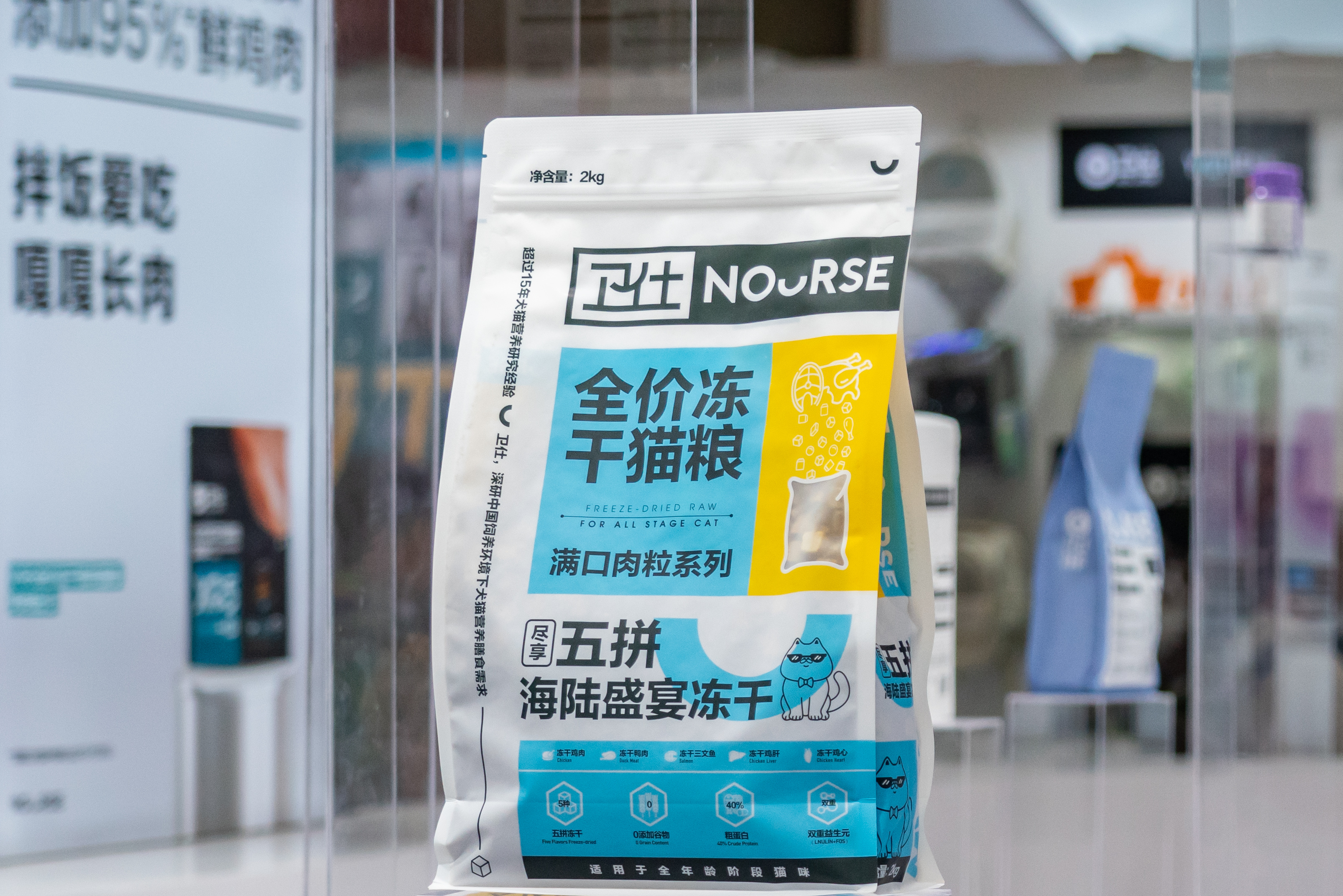
Image source: Jiemian Image Library
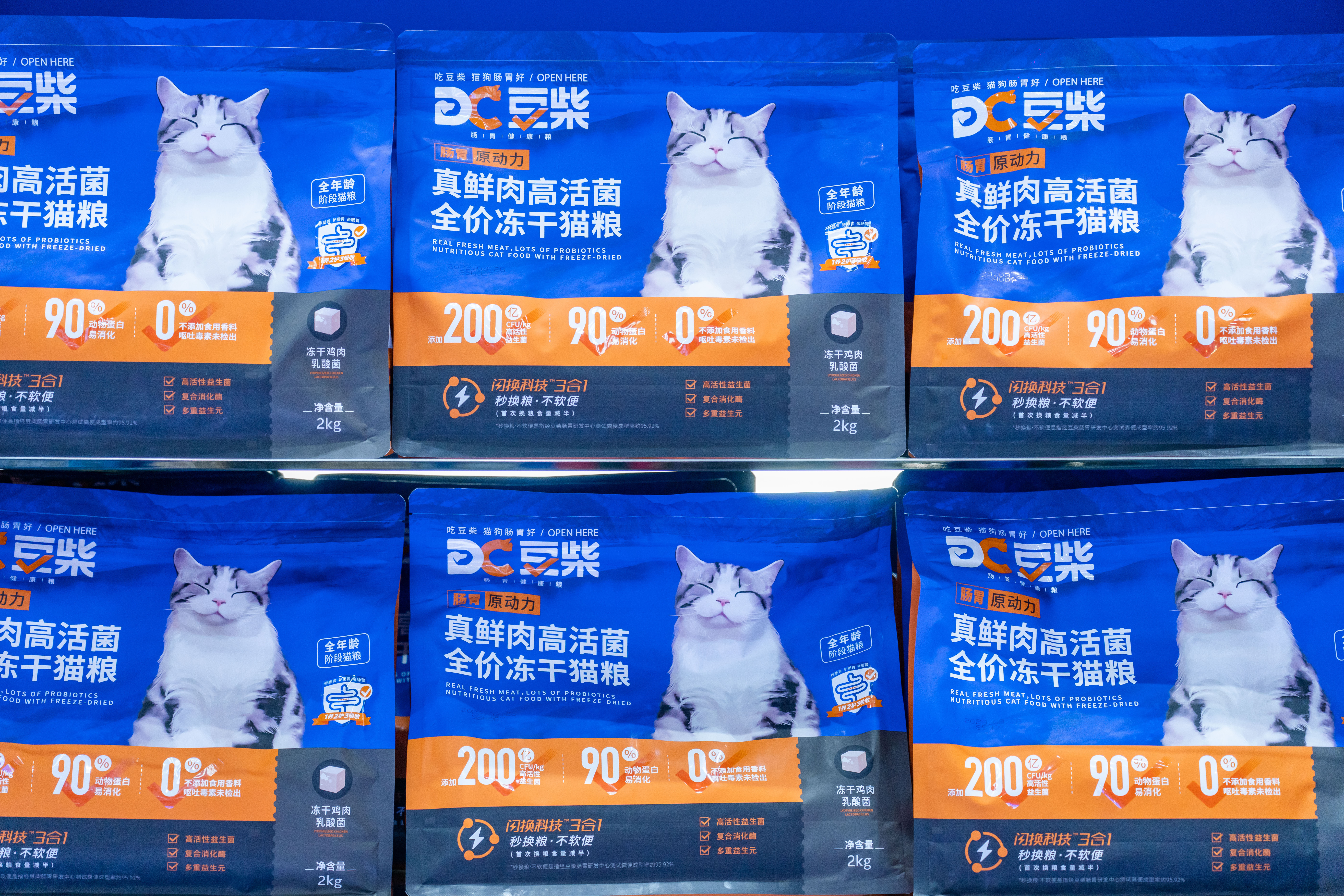
Image source: Jiemian Image Library
Generally speaking, while the contract - manufacturing model for pet products provides stable customers and income, its shortcomings are also obvious. It is difficult to benefit from brand premium, the bargaining power is controlled by large customers, and the business model depends on the stability of large customers. Once a large customer changes suppliers, it will bring risks.
This is also the reason why many companies, including Fubai Pet Food, need to gradually support their own brands. For example, Guaibao Pet is a case of transforming from contract - manufacturing to its own brand and betting on the high - end of domestic brands.
The gross profit margin of Fubai Pet Food's OBM business is significantly higher than that of its ODM business.
From 2023 to 2025, the gross profit margins of ODM were 27.7%, 30.4%, and 23.1% respectively, showing a fluctuating downward trend. During the same period, the gross profit margins of the OBM business were 47.1%, 49.4%, and 49.1% respectively.
The problem is that Fubai Pet Food's contract - manufacturing business with a low gross profit margin is still growing, while its own - brand business with a high gross profit margin and the ability to reflect brand premium is shrinking and has not yet shown its advantages.
From 2023 to 2025, the revenue of the company's OBM business showed a downward trend year by year, dropping from 430 million yuan to 350 million yuan, and its proportion in the total revenue also decreased from 41.3% to 34.3%.
02
Fubai Pet Food's main own brands include Bile, Aibei, and Pinzhuo, among which Bile is the core brand, accounting for nearly 95% of the OBM business revenue. However, the revenue of this leading brand has decreased instead of increasing. From 2023 to 2025, it was 410 million yuan, 390 million yuan, and 330 million yuan respectively.
Bile is positioned as a high - end domestic pet staple food, including dog staple food, cat staple food, and snacks.
Jiemian News noticed in its Tmall official flagship store that taking Bile's dog staple food as an example, the price of entry - level products is about 30 - 40 yuan per kilogram, but the price of its high - end "Xiang Series" dog food reaches over 130 yuan per kilogram, which is similar to the price range of the high - end line of the domestic brand Myfoodie and imported brands like Orijen and Acana.
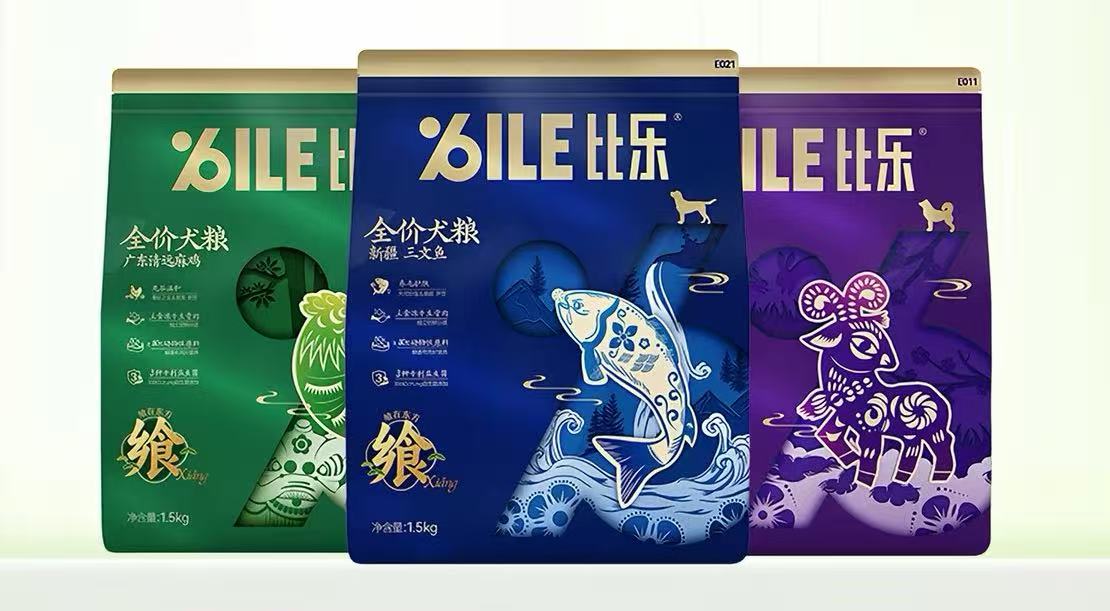
Bile's "Xiang Series" high - end dog food. Image source: Bile Tmall flagship store
However, Bile's brand awareness and market share cannot be compared with those of these leading domestic and imported brands. In contrast, in 2025, the revenue of Guaibao Pet's own brands, including Myfoodie and Freitag, was close to 5 billion yuan, accounting for over 73% of the total revenue and becoming the company's real growth engine.
Jiemian News noticed that one strategy for domestic brands like Myfoodie to open up the market was to increase their online presence and gain more popularity through platform promotion lists.
In the recent 618 battle reports of Douyin Mall, JD.com, and Tmall, brands such as Jinmu, Weiwei, Myfoodie, Lanshi, Xianlang, Chengshiyikou, NetEase Yanxuan, Berner Tianchun, Crazy Puppy, and Acana are frequent names on the lists, while Bile only ranked 10th in the sales list of dog food brands during the opening period of JD Pet's 618 promotion.
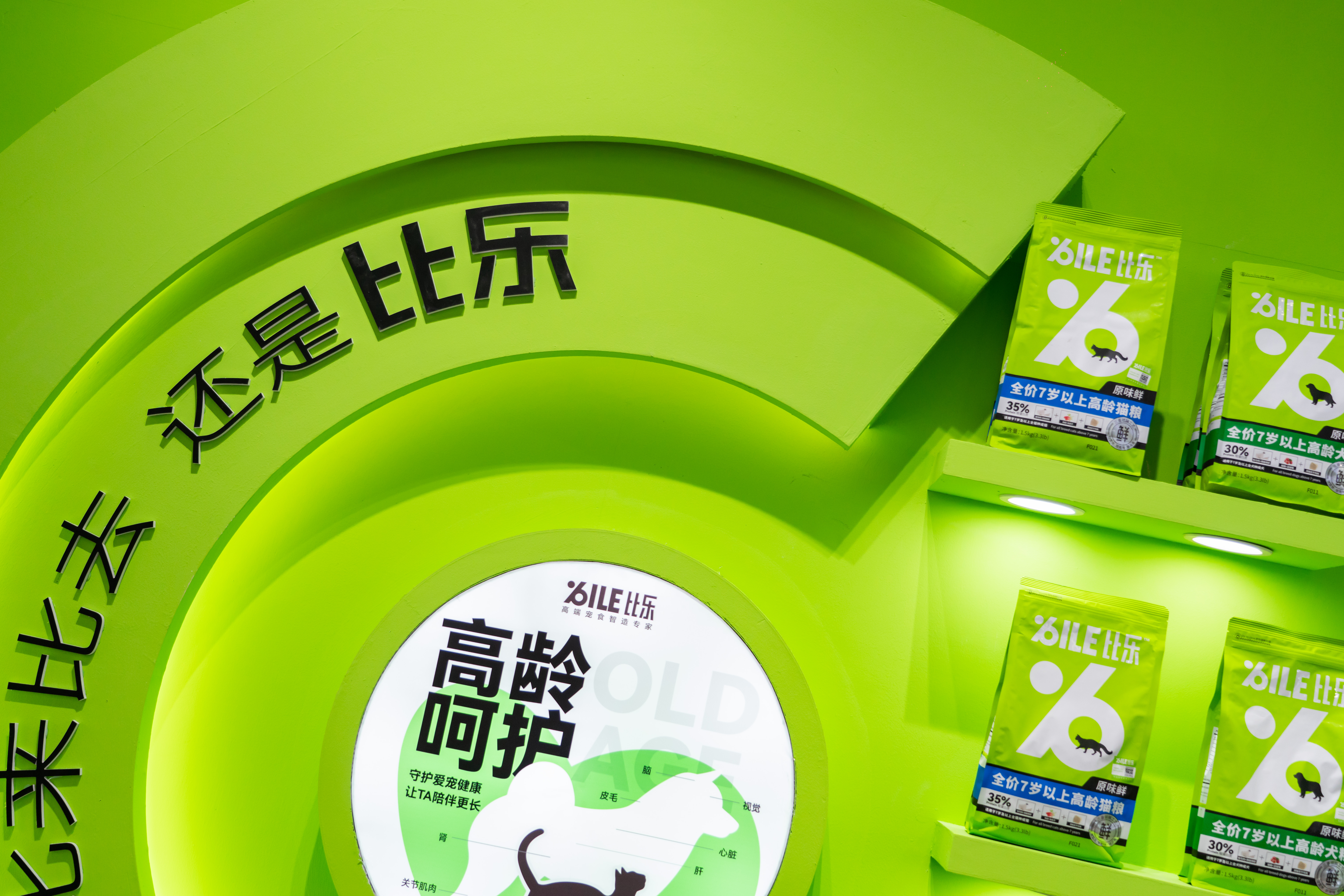
Bile. Image source: Jiemian Image Library
"Bile doesn't invest much in e - commerce platforms. It didn't make it into the top 20 on the Douyin sales list and is even around 35th," a person engaged in pet e - commerce marketing told Jiemian News. On the one hand, it is due to differences in brand marketing strategies, and on the other hand, it is limited by the overall brand awareness and sales situation.
It is not easy to succeed in the domestic high - end pet food market.
On the one hand, high - end customers are more conservative in their choice of pet food and sensitive to the cost of trial and error. Imported brands have long - established popularity and good reputations, so domestic new brands face natural barriers in terms of user perception. On the other hand, high - end pet food has high costs in raw materials and production lines and also depends on marketing and channels. Without brand accumulation, if a brand tries to increase sales by burning a large amount of money, it is easy to erode the gross profit margin and end up "losing money to gain popularity".
For Fubai Pet Food, having its own supply chain and large customers only guarantees a certain business volume. How to transform its contract - manufacturing capabilities into its own brands and drive overall performance growth in the future remains a question that it needs to continuously answer to the capital market.
This article is from "Jiemian News", author: Ma Yue, editor: Ya Hanxiang. Republished by 36Kr with permission.