Exclusive Interview with Yang Meng, CEO of Anker Innovations, and Wang Shaodi, CEO of MetaX: Forging an "Yitian Sword" Starting from Processing-in-Memory Chips
Two years ago, Yang Meng, the founder of Anker Innovations, discussed the concept of "in-memory computing chips" with Lao Shi, a blogger focusing on chips.
The comment section of the video was filled with skeptical voices from netizens. Someone directly left a message saying, "I majored in RRAM for both my undergraduate and postgraduate studies. There won't be any commercially successful cases of in-memory computing in the next 20 years."
Against the backdrop of the von Neumann architecture dominating the semiconductor industry for decades, the in-memory computing approach, which aims to break through the "memory wall," is regarded by most industry insiders as a dead end.
No one expected that Anker Innovations would actually develop a chip one day. It is used in Anker's newly launched noise-canceling headphones. These headphones allow users to achieve the best call quality without having to find a quiet place. They even received the Guinness World Record certification for "the world's clearest wireless Bluetooth headphones for calls."
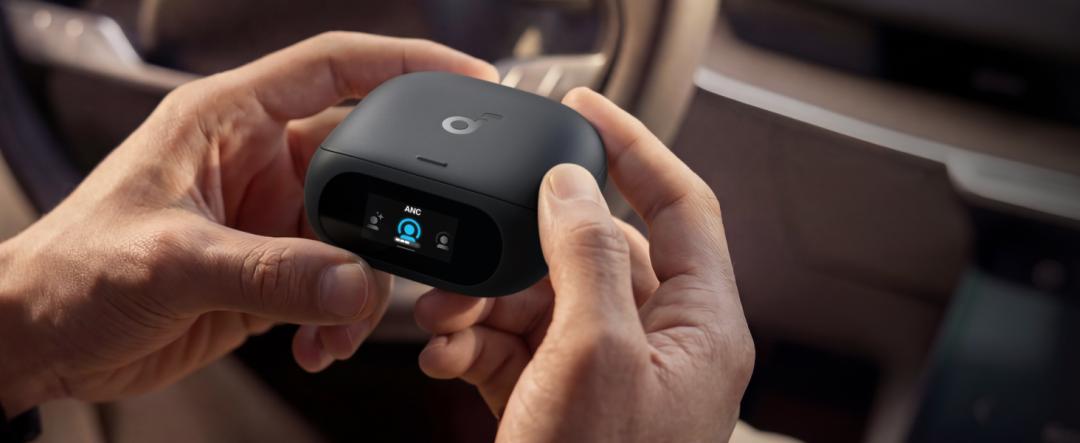
Yang Meng told 36Kr, "This is the dividend brought by technological innovation."
The in-memory computing chip is a crucial milestone for Anker on its path to ultimate innovation. Developing chips is not only a technological breakthrough but also a choice for internal self-transformation within Anker.
In 2023, after failing to compete with market unicorns in newly expanded product categories, Anker began a painful self-reflection. One of the core results of Yang Meng's thinking was to shift from incremental innovation to product development based on the "first principles" - these could be two completely different paths.
This leads to two aspects: in terms of talent and organizational culture, how to find people who pursue the first principles and strive for excellence, and how to create a set of group behavioral guidelines (commonly known as "mission, vision, and values"); in terms of products and technology, not only should we look for scenarios for "ultimate innovation" but also pursue technologies for "ultimate innovation."
In Anker's audio product line, the algorithm team believed that to achieve the ultimate effect, they had to delve into chips. So, they searched the world and found Wang Shaodi, the founder and CEO of Zhicun Technology. A joint research team of 200 people from the two companies spent three years and invested nearly "a small fortune" to develop an in-memory computing chip using 28nm process technology, achieving results that exceeded those of high-end chips using traditional 7nm process technology.
This chip, first launched in headphones, is just the beginning of Anker's technological landscape. Anker Innovations is looking for and trying to establish its own "root technologies," believing in the compound value of technology. It plans to gradually apply its "root technologies" to fields such as video and energy storage, and even conduct pre-research and layout for robotics. Comparing Anker's financial report data from 2022 to 2025, its R & D expenses increased from approximately 1.08 billion yuan to 2.89 billion yuan, and the R & D expense ratio increased from 7.6% to approximately 10.6%.
Of course, Anker still maintains the practical nature of Shenzhen's hardware companies - it doesn't blindly burn money on ivory-tower research or pursue the concept of general-purpose humanoid robots. Instead, it starts from a definite "watchdog" scenario.
In Yang Meng's view, "root technologies" are the "Excalibur" of a company. "Once the Excalibur appears, who can compete?" Judging from the results, it depends on the proportion of "Series 7" products - Yang Meng divides products into several levels from Series 1 to Series 7, and Series 7 products represent the ultimate product performance and price range. In 2020, the revenue of Anker's "Series 7" products accounted for only 3% of the total revenue; last year, this proportion reached 16%.
36Kr had a conversation with Yang Meng, the founder and CEO of Anker Innovations and Wang Shaodi, the founder and CEO of Zhicun Technology, starting from the in-memory computing chip in headphones, to discuss the non-consensus bets, ultimate breakthroughs behind it, and Anker's thinking about root technologies and robotics.
1. The Inevitable Choice from User Pain Points to "In-Memory Computing"
36Kr: How did Anker get into chip development? Can you talk about the background?
Yang Meng: Actually, it all starts from users' needs and pain points. Looking at the timeline, we started to form an audio algorithm and product R & D team in 2021. Now, it has a scale of about 80 people, which is one of the world's leading audio algorithm and product R & D teams.
In ancient Chinese, there are the "six senses" of "eyes, ears, nose, tongue, body, and mind," which are all physical perceptions. Edge devices also need to hear, see, and perceive. In the past, the problems in the perception field were solved by traditional codes written by humans or small models for certain sub-problems through "divide and conquer." However, from the perspective of AI development, these codes and models from the divide-and-conquer approach will inevitably be replaced by an end-to-end large model. In the audio field, we actually trained such a model in 2023.
36Kr: Is there any connection between your model and the explosion of ChatGPT in 2023?
Yang Meng: Our team has been promoting the establishment and training of a unified model since 2021. In 2023, we combined the models for solving multiple sub-problems into one model and found that it showed extremely excellent performance and effects.
However, it's difficult to run this model on a wearable device like a headphone with a very small volume, and the power consumption is very high. We went back to the first principles to think about why there is such high power consumption. Because audio is an algorithm with extremely high inference frequency. It cuts every second of our sound into pieces of 10 milliseconds or 20 milliseconds, and each piece of sound needs to go through a complete calculation by the model.
When you multiply the large model parameters by the extremely high number of inferences per second, it brings huge power consumption for parameter transfer - you need to constantly move several megabytes of parameters from the memory to the NPU (Neural Processing Unit). You keep moving, and all the power is consumed during the transfer.
We actually measured that if we run this model on the current traditional Bluetooth chips, first, it can't handle such a large model; second, even if it can be forced to run, the headphone battery will be completely drained in less than an hour.
To solve this problem, in essence, we must reduce the transfer. To reduce the transfer, we must integrate computing and storage, which is the "in-memory computing" chip. But at that time, we had zero capabilities in chip development. We hoped to find the most professional partners in this field to explore together. So, we searched the world and finally found Shaodi and Zhicun Technology.
2. Handmade Chips in the Uncharted Territory
36Kr: Zhicun was founded in 2017. Can you introduce the background of your in-memory computing chip development?
Wang Shaodi: When we were first founded in 2017, during interviews, we were often said to be developing "science fiction" chips.
This actually relates to the first principles. In 2017, AI models were still very small, but we had already seen the computing power bottleneck caused by the separation of storage and computing - that is, the well-known "memory wall" problem.
The process of AI computing essentially involves constantly moving data from the memory to the computing chip and then moving the calculation results back. The larger the algorithm and the computing scale, the more serious the memory wall problem becomes, and the power consumption and cost are extremely high. So, we judged that once AI is scaled up and the algorithms become larger in the future, the memory wall problem will definitely become an industrial-level challenge. In-memory computing is the optimal solution, but no one was doing it at that time because it was too difficult and it was completely uncharted territory.
36Kr: Is your team trained in this field?
Wang Shaodi: We were the first to research this field, not trained. Before us, there wasn't even a research direction of in-memory computing internationally. When we founded the company in 2017, there was also very little research on in-memory computing in the academic community.
In 2016, we tried to get support from several chip giants to conduct in-memory computing research within their companies. But because the technology was too new and disruptive, no one dared to make such a decision. Finally, we decided to trust our judgment on in-memory computing. At that time, we were young, and I founded Zhicun Technology with my wife to develop in-memory computing chips. My wife is the chief scientist, and she has been on the front line of R & D since the company was founded, leading the core R & D team to tackle the most difficult engineering problems.
36Kr: How long did you walk "alone" in this field? Why was Zhicun able to survive?
Wang Shaodi: Zhicun was one of the earliest companies to be founded. From 2017 to 2019, about a dozen startups in analog in-memory computing were founded successively, and another dozen were founded in 2020. As of now, there are probably no more than 5 in-memory computing companies still in existence globally.
I think the most important reason why we have survived and are doing well is that we have never stopped advancing in technology. We choose our R & D directions from the perspective of first principles rather than applying mature technologies. Since our founding in 2017, we have taped out (fabricated) chips more than 30 times, iterating 30 times. This high level of refinement has made us at least 3 to 5 years ahead of the industry in the entire technical chain of in-memory computing design.
36Kr: Can you explain what tape-out means and why it's so important?
Wang Shaodi: We are working on the most difficult technical route in the in-memory computing field: in-memory computing based on analog signals.
It is completely different from the traditional von Neumann architecture. You can understand it like this: 99% of traditional chip design is completed by EDA (Electronic Design Automation) software. This software system has been in operation for decades and is very mature. However, for analog signal in-memory computing, from production, design to reliability, it is almost impossible to draw on the existing semiconductor industry software and standards.
This means that all the things that were originally done 99% by software and experience standards need to be converted into manual experiments. Without any reference, the possibility of success in one or two manual experiments is almost zero. A technical point may need to be tested five or six times. For dozens of technical breakthrough points, dozens of iterations are required. So, the R & D process is much slower than that of traditional architecture chips. It's a bit like going back to the 1960s when chips were made by hand, "carving" chips manually.
Yang Meng: This is really a company that makes chips by hand. The EDA tool chain mentioned earlier is like a highway. A mature EDA can allow you to use autopilot to quickly get from point A to point B. For Zhicun, there was no road in the mountains at all. They had to carry things on their shoulders and wade through mountains and rivers to carve out a path. This is an excellent example of ultimate innovation.
36Kr: How were you able to persevere until now?
Wang Shaodi: I think the core reason is that we have never stopped investing in technology. We always strive to make the technology more advanced, larger in scale, and higher in precision. Another important factor is timing: first, since 2019, the country has increased its investment in the chip field; then, the explosion of AI large models in 2023 has made the industry's demand and expectations for in-memory computing much higher than before.
36Kr: Having talked about so many advantages of in-memory computing chips, what are their drawbacks?
Wang Shaodi: The drawback is that no one has done it before, and there is no certainty that it can be developed.
Yang Meng: All first-principle directions are paths that no one has walked before, or there is simply no path. When you are walking, first, you must firmly believe that it is a path today; second, you must be able to maintain your inner confidence and keep going. It's really not easy for Shaodi and his team. In 2024, when we were talking about in-memory computing with Lao Shi, many industry practitioners, even doctoral students in this field, commented, "I think this won't be commercially viable in 20 years. It's impossible to calculate. Don't waste your time." Most industry practitioners were not optimistic.
3. A Must-Answer Question for Building a Series 7 Brand
36Kr: Why didn't Anker choose those traditional chips with high computing power and more maturity, but instead use this new technology?
Yang Meng: In the headphone scenario, power consumption needs to be considered first, and within the extremely limited area of headphones, there isn't enough space for large computing power. Under the power consumption and area limitations of headphones, in-memory computing is the best choice. In this scenario, it has outperformed traditional chips.
Call noise cancellation has been talked about for many years. Why can't AI solve this problem? Because to completely eliminate background noise, a large enough model is needed. And to fit this large model into headphones, it must operate under the power consumption limit. To achieve this, data transfer must be avoided, and to avoid data transfer, in-memory computing must be adopted. This is actually a series of consecutive deductions. After the deductions, you will find that this is the only way to go.
We divide our products into Series 1, 3, 5, and 7. Our audio-visual products have been a brand of Series 3 and 5, which are of good quality but more cost-effective, for a long time. But in 2023, we proposed that we want to become a Series 7 brand of ultimate innovation to solve the most painful problems of users that others can't solve well. This is also a must-answer question for us.
36Kr: Why did Anker choose the headphone category for chip cooperation?
Yang Meng: Actually, our main product categories are charging, audio-visual, and home automation. The audio algorithm team for headphones has excellent skills and has developed a good model, but they found that there was no chip that could run it. So, they took the initiative to find and promote the customization of the chip.
To be honest, a company's transformation from making high-quality products to making ultimate products doesn't happen overnight or out of thin air. In fact, there are a group of people in your team with the genes of "first principles" and "pursuing excellence." They put forward ideas, and the company encourages and supports them.
At that time, our meeting to discuss this investment decision was very fast and only took a few minutes. Our company usually has a "Flying Review Meeting" where everyone first reads the meeting materials. If the problem is complex, the discussion may take half an hour or an hour. But at that time, the meeting was decided in a few minutes. After reading the materials, everyone thought that this was what the company should do in the future.
36Kr: How long did it take for this project to go from idea to implementation?
Yang Meng: The idea emerged in early 2023. We contacted Shaodi in May, and the project was officially launched in August. It took about three years to develop. At the most difficult time, they conducted a collective research in Hangzhou and really worked overtime together for many days.
Wang Shaodi: At first, everyone thought it would be a "two-week collective research," but it turned into two months, and then more than three months. This is a joint research team of 200 people (Anker's 80-person audio algorithm and product R & D team + Zhicun's more than 100-person technology deployment and support team). The most difficult points are, first, the noise cancellation effect must meet the standard and far exceed the existing industry level; second, as a product with a brand-new architecture, its quality and reliability cannot have any problems.
Yang Meng: For the algorithm