Ferrari was well prepared for the backlash.
In Italian, Luce means "light". Ferrari named its first all - electric vehicle after it, originally hoping it would light up the road to the future. However, it accidentally sparked the biggest "aesthetic riot" in Ferrari's history.
Die - hard fans think it's "effeminate" and that it has lost the combativeness and ferocity inherent in Ferrari. They joke that it should sit at the same table as the Jaguar Type 00. Car reviewers tease that it looks like "a love child of a Tesla Model 3 and a Honda Accord, and it would look much better with a different logo". Some netizens even taunted on Lamborghini's social media: "Remember, no one wants an electric Lamborghini."
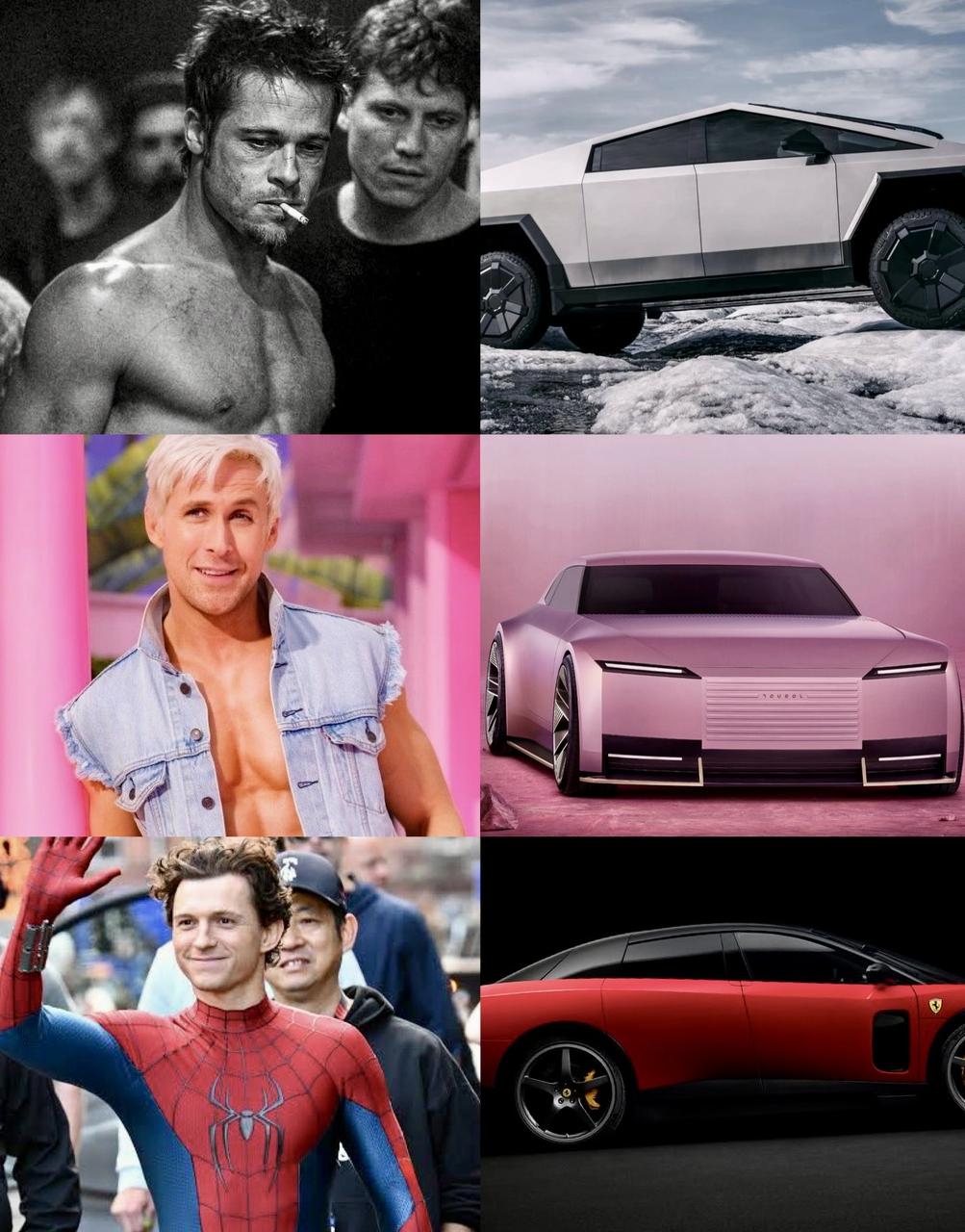
From top to bottom, they are Cybertruck, Type00, and Luce.
Even Luca di Montezemolo, the former chairman who led Ferrari for 23 years and brought the Prancing Horse back to the peak of F1, was furious. Facing the camera, he bluntly said, "They should at least remove the Prancing Horse logo from that car."
Ferrari's executives may have been mentally prepared for the endless jokes and sarcasm. They know very well that when Ferrari decided to build an all - electric vehicle and invited Jony Ive, who had never designed a mass - produced car, to take charge, the split in public opinion was inevitable.
The story began in 2019.
That year, Jony Ive left Apple, where he had long served as the chief designer, and founded the LoveFrom studio in San Francisco with Mark Newson. Coincidentally, Ferrari also started to show interest in electric vehicles at this time.
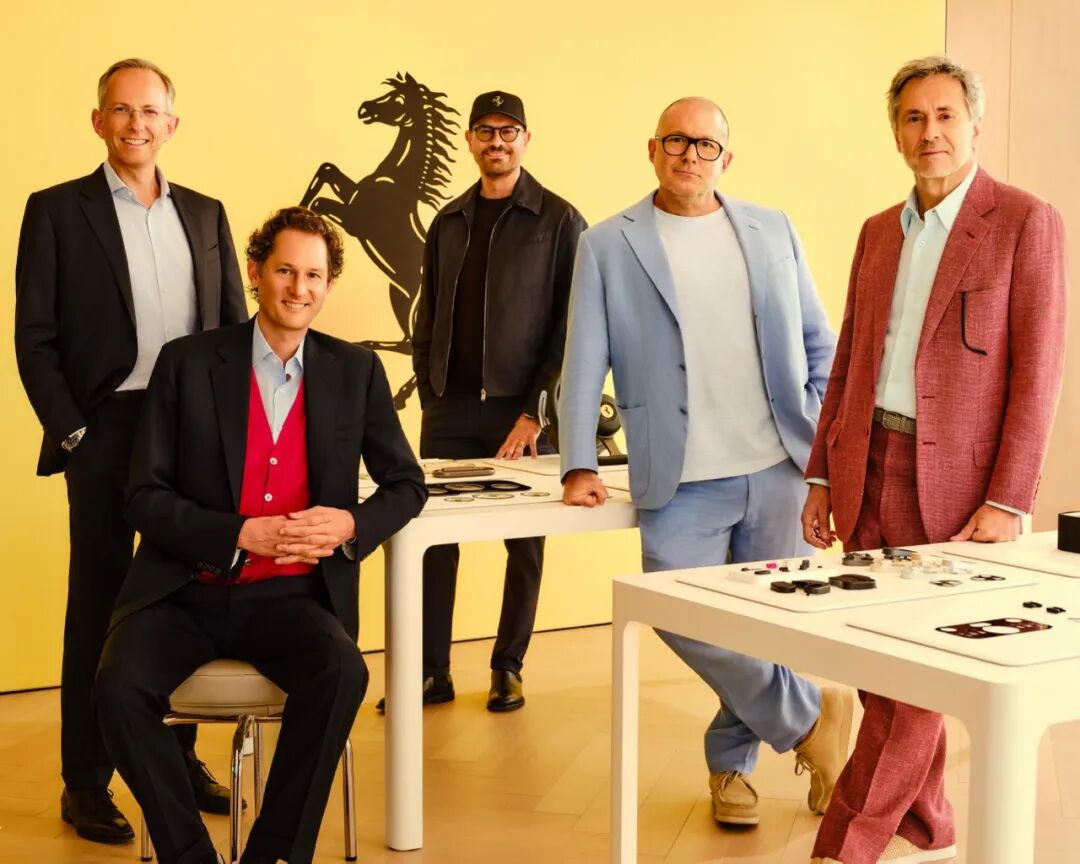
From left to right: Ferrari's CEO, chairman, design director, Jony Ive, and Mark Newson.
Previously, Ferrari's CEOs had always scoffed at electric vehicles because they firmly believed that the roars of V8 and V12 engines were the soul of Ferrari.
Ten years ago, then - CEO Sergio Marchionne test - drove a Tesla once. He turned up the volume because he disliked the silence in the car. In his view at that time, electric vehicles were simply "blasphemy" to Ferrari. He even said harshly: "Rather shoot me than let Ferrari build an electric vehicle [1]."
But after 2018, when Tesla verified the commercial potential of electric vehicles and the super - car newcomer Rimac continued to break the performance limits of electric vehicles, Ferrari's CEOs changed their previous toughness and disdain.
In 2018, Marchionne was the first to set a goal: "If anyone in the world is going to build an electric super - car, Ferrari will be the first." His successor, Louis Camilleri, said, "The current electric vehicle technology is not mature. Ferrari won't launch an all - electric vehicle until after 2025 at least."
At that time, many countries successively issued bans on internal combustion engines. Electrification was an irresistible trend, and many ultra - luxury brands followed suit. Around 2020, Porsche launched the Taycan, Lotus showed off the all - electric beast Evija with 2000 horsepower, Lamborghini announced its electrification strategy, and Rolls - Royce was also intensively developing the Spectre.
For Ferrari, electrification is no longer an option for a single company but a must - answer question to respond to an era. However, compared with building an all - electric sports car with explosive performance, the greater challenge Ferrari faces is how to find customers for it.
All along, Ferrari's customer base mainly consists of three types of people: athletes, successful people in their 50s, and exhibitionists who use sports cars as a way to show off their wealth.
Ferrari's executives know very well that those willing to pay at least 550,000 euros for an all - electric sports car are probably not the "old guys" who are well - versed in Ferrari's glorious history, regard the roar of the V12 engine as the Bible, and have an average age of 52. Instead, they are a new group.
"If I were 25, a founder of a technology company, interested in energy, and wanted to experience something different in a car, I might find Luce very interesting. And this group of people is much larger than our current customer base [2]." John Elkann, the head of the Italian Exor family and the chairman of the Ferrari Group, said in an interview with the Financial Times this year.
In the past few years, this top - level Italian old - money figure seems to have been deliberately getting closer to Silicon Valley. He has conversations with tech giants like Elon Musk, Jeff Bezos, and Sam Altman at technology summits and even became a board member of Meta last year.
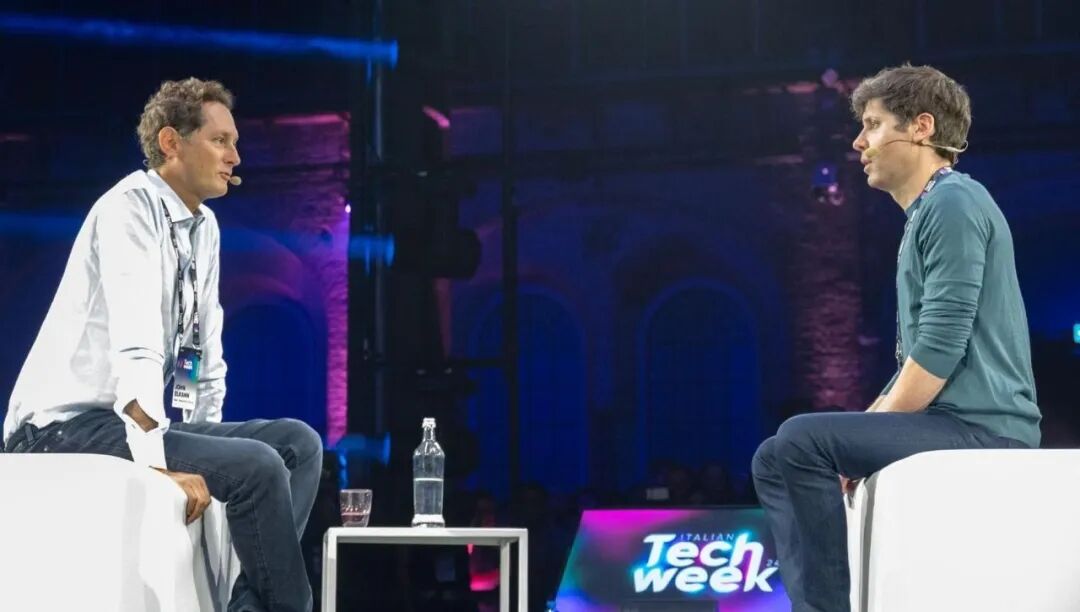
A conversation between top - level old - money and top - level new - money figures.
This also partly explains why Elkann didn't let Ferrari's in - house designers take charge but chose to trust Jony Ive. Although Ive has relatively little experience in the field of car design, his team may be the group of designers in the world who best understand how to interpret "tech luxury" and the aesthetic preferences of "Silicon Valley billionaires".
These tech new - rich people who are more interested in silicon - based civilization are exactly the potential customer group that Ferrari Luce wants to attract. These people may never have owned a fuel - powered Ferrari but are open to owning an electric Ferrari.
Last year, Ferrari delivered more than 13,500 cars, and 81% of them were delivered to existing customers. This highlights the mission of Luce. Elkann said bluntly: "There is no market for Luce now, but if it succeeds, Luce will create a brand - new market. Therefore, inviting Jony and Marc was a wise move."
In addition to inviting these two legendary designers, Elkann made another unconventional decision in 2021 - he invited Benedetto Vigna, who had worked at STMicroelectronics for 26 years, had never built a car, and had never sold luxury goods, to be Ferrari's CEO. And during the interview, he asked Vigna, "What do you think of collaborating with LoveFrom?"
Here's a little - known fact: the MEMS gyroscope sensor first installed on the iPhone 4 was developed by Vigna. So, he is no stranger to Apple's working methods and design style.
Facts have proven that these two newcomers in the automotive circle completely ignored Ferrari's design framework and successfully made Luce break people's stereotypes of Ferrari sports cars and even high - performance electric vehicles.
This may be the chemical reaction that Elkann, who played the match - making role, hoped to see. Because Ferrari has always believed that to create or enter a new market, a new design language must be created.
This concept has run through Ferrari's entire development process and forms a sharp contrast with luxury brands like Porsche. Porsche's design strategy is "evolution" rather than "revolution", which is fully reflected in the more than half - century of iterations of the 911. Even the all - electric sports car Taycan, which was launched in 2019, still bears many similarities to the 911 and the Panamera.
However, Ferrari thinks differently. They believe that since each car has a different engine layout, heat - dissipation requirements, and aerodynamic design, they should look different.
According to Flavio Manzoni, Ferrari's design director: "Just as there are different dialects in different regions, Ferrari's design language also has different branches to correspond to different products."
This "case - by - case" strategy is the fundamental reason why Ferrari's designs have always sparked huge controversies in the past few decades. There are always people who think it's unconventional, that things are getting worse, and that the "basic customer base" won't buy it.
From the California, which was launched in 2008 and was equipped with a front - mounted V8, to the FF, which was launched in 2011 and was positioned as a four - wheel - drive shooting brake, and then to the "FUV" - Purosangue, which was launched in 2022, all of them were severely criticized when they were launched, but they helped Ferrari expand its customer base again and again.
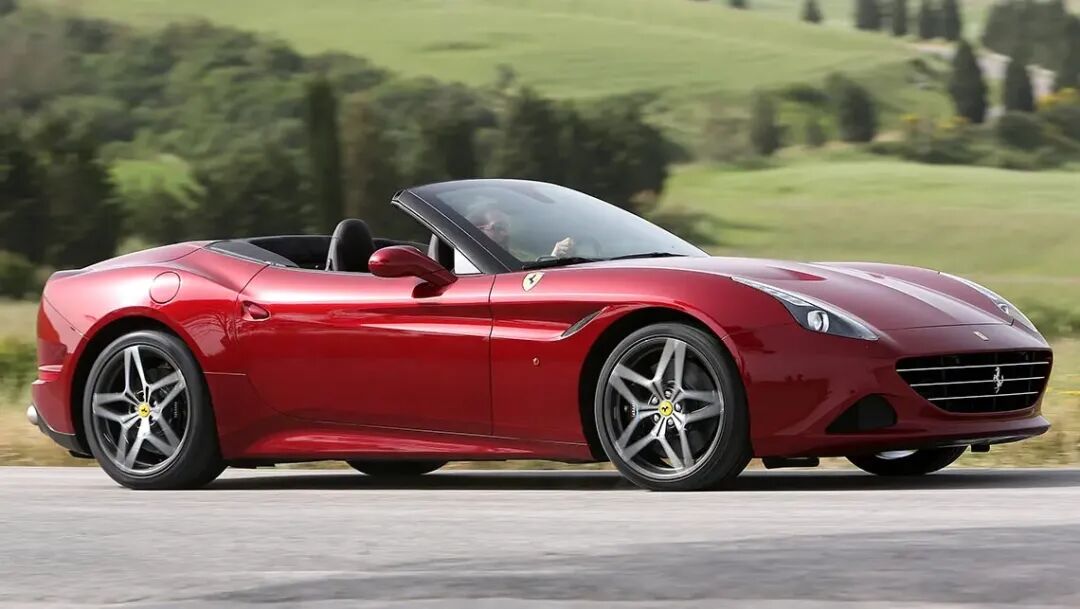
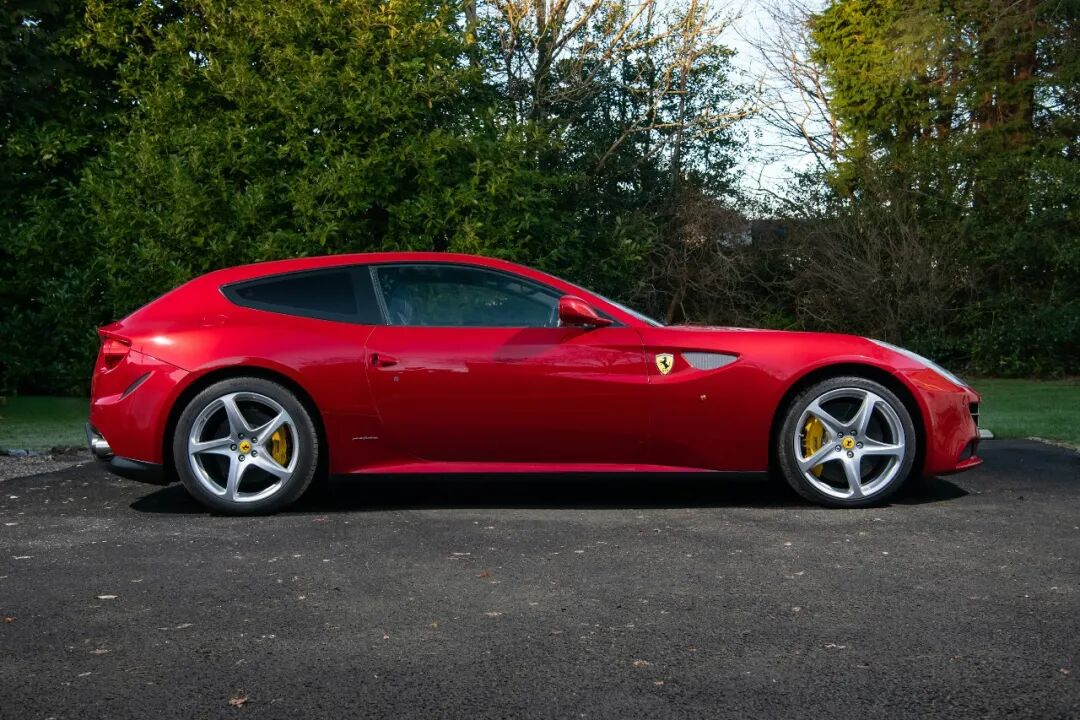
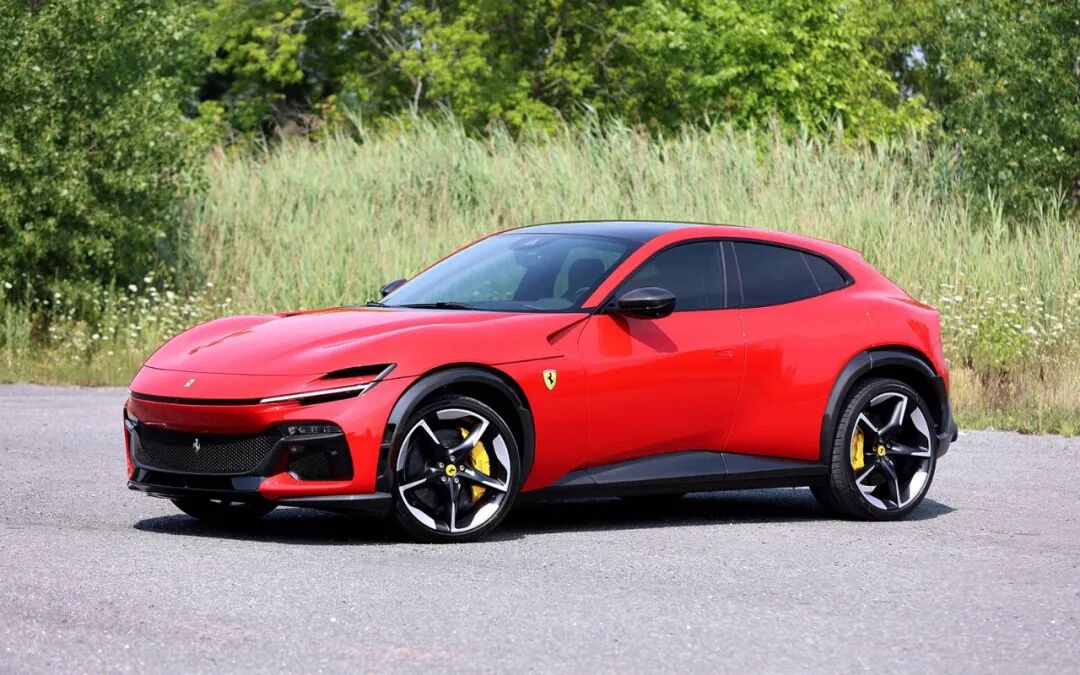
From top to bottom: California, FF, and Purosangue.
Reflected in the financial reports, in the past decade, Ferrari's sales volume has almost doubled, and its net profit has soared from 290 million euros to 1.6 billion euros.
When it comes to Luce, Ferrari's design concept has naturally become:
Since electric vehicles don't have engines, there's no need to design a fake air intake grille and deliberately make the front of the car as long as that of a traditional GT super - car. There's also no need to simulate the jerks of a gearbox and the sound of a V12 engine.
On the other hand, since electric vehicles all aim for lower wind resistance, sharp lines and sharp corners should be abandoned. The cockpit should be designed to be as round and plump as a teardrop, and the windshield wipers should be placed on both sides of the A - pillar.
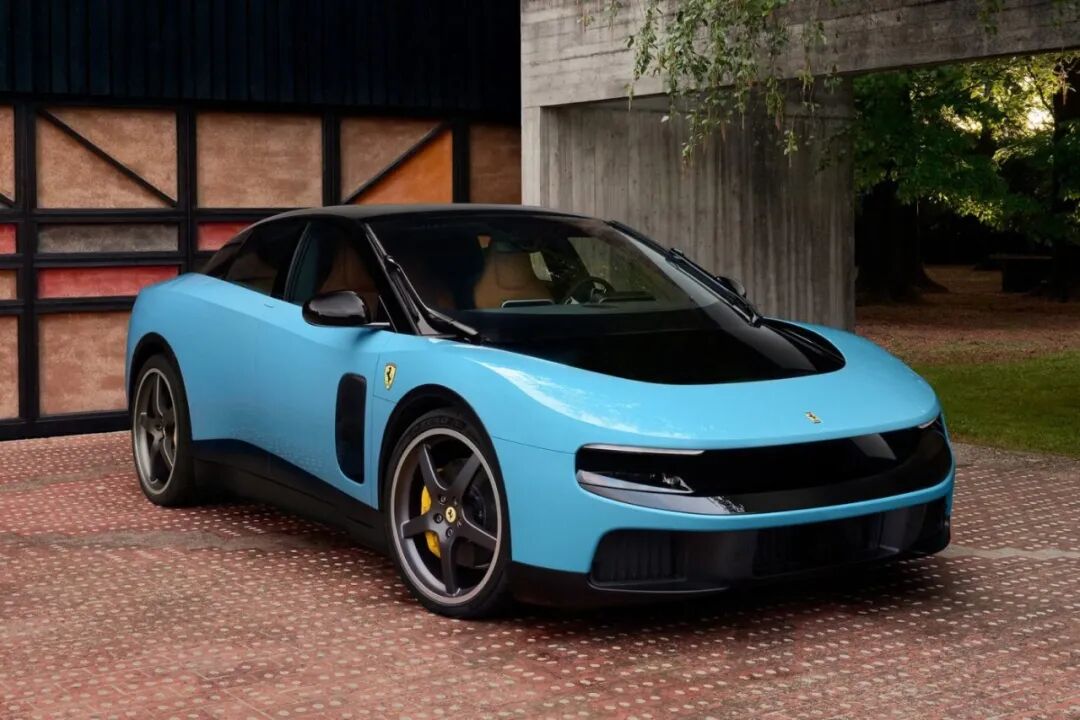
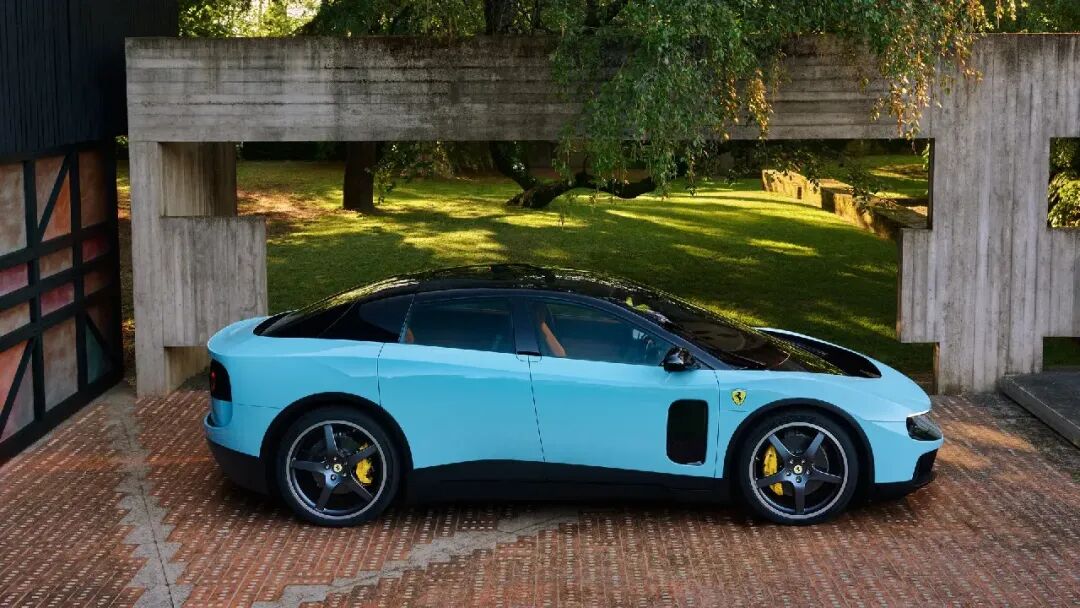
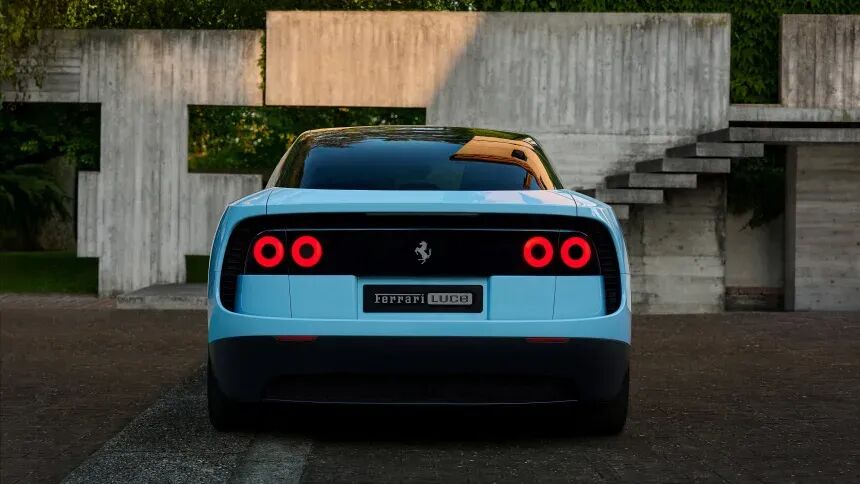
The highly controversial appearance.
In terms of results, Luce has achieved the lowest drag coefficient in Ferrari's history - 0.254Cd. It is equipped with a 122 - kWh ternary lithium battery developed in cooperation with South Korea's SK On, with a pure - electric range of 530 km under the WLTP driving cycle and a top speed of 310 km/h.
In this sense, Luce's design is by no means a betrayal of Ferrari but a respect for electric vehicles themselves and an inheritance of Ferrari's tradition. As Manzoni said: "The so - called tradition is not to worship the ashes but to guard the flame."
Compared with the appearance, Luce's interior better reflects the design goal that Ferrari hopes to achieve by choosing Jony Ive - it must strictly follow the driver - centric principle and show a technological affinity different from traditional cockpits.
In 2012, Tesla officially launched the Model S. Some people said it was "an iPad on four wheels", and more people called it the "iPhone moment" in the intelligent electric vehicle industry. Because Tesla was the first to install a 17 - inch central control screen in a car, and like the first - generation iPhone, it basically eliminated physical buttons and stuffed as many functions as possible into this touch - screen.
Later, this minimalist style of removing physical buttons almost became a standard answer, and screens have become an important area for competition among car manufacturers, especially Chinese car manufacturers.
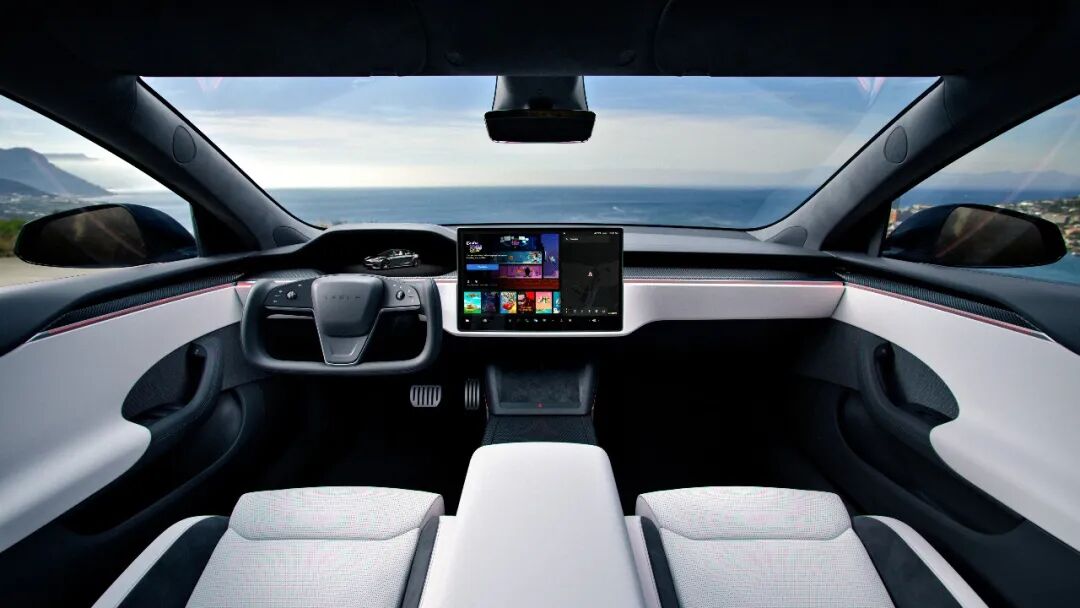
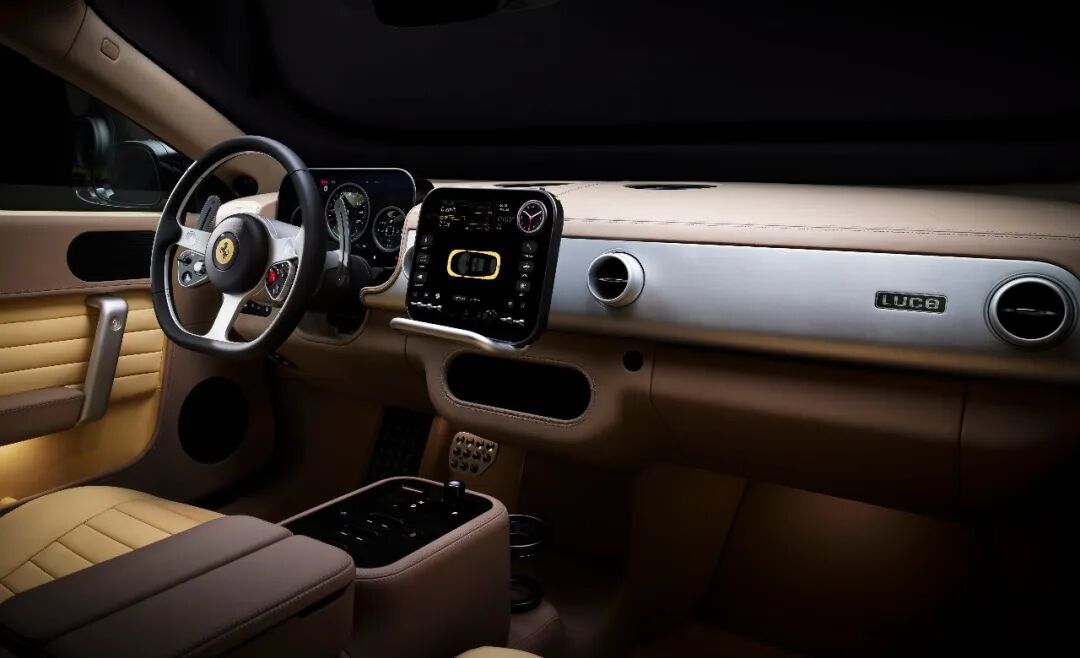
Tesla Model S VS Ferrari Luce: Which cockpit has a stronger "Apple - like" flavor?
They try to demonstrate the technological content in the cockpit with a larger number of screens, larger screen sizes, a more diverse application ecosystem, and more anthropomorphic voice interactions. As a result, products are becoming more and more homogeneous, and people are getting more and more aesthetically fatigued.
Interestingly, as the person who once defined the design philosophy of the iPhone, Jony Ive clearly opposes the current increasingly flamboyant "big