Anhui, the Third Pole of China's AI Industry, is Equipping the Yangtze River Delta with "Five Senses"
When many people talk about the Yangtze River Delta, they think of the speed at which new energy vehicles roll off the production line, the eVTOL aircraft slicing through the sky, and robots moving from the show floor to the factory. What enables these high - end manufacturing industries to "perceive" the world? The answer most likely comes from Bengbu, Anhui.
In the past few years, Anhui has emerged as a dark horse, fully "betting" on artificial intelligence. Bengbu's "China Sensing Valley", Hefei's "China Sound Valley", and Wuhu's "China Vision Valley" are known as the three valleys of Anhui's artificial intelligence industry, leading the province to gallop forward and directly compete with Beijing and Shanghai.
"In addition to the brain, artificial intelligence also has limbs and facial features, all of which come from sensors," said Wang Yuelin, the deputy director of the Chinese Society of Micro - Nano Technology, at the 8th MEMS Intelligent Sensor Industry Ecosystem Development Conference. He said that Bengbu's decision to build the China Sensing Valley is a good choice in terms of industrial direction.
Recently, Urban Evolution visited Bengbu to decode the rise of the city's intelligent sensing industry. It is reported that currently, more than 200 upstream and downstream enterprises have gathered in the China Sensing Valley. By 2025, the output value of Bengbu's intelligent sensing - related industries will exceed 10 billion yuan, a year - on - year increase of 29%.
According to a report by the China Business Industry Research Institute, the market scale of China's intelligent sensor industry will be about 185.51 billion yuan in 2025. Based on this estimate, Bengbu's intelligent sensing industry accounts for about 5% of the national market, and its industrial scale is still relatively small. However, through this niche, Bengbu has carved out its own position on the Yangtze River Delta's high - end manufacturing map.
According to Bengbu's plan, the future intelligent sensing industry cluster is expected to reach a scale of 100 billion yuan. What gives Bengbu the confidence to make the leap from 10 billion to 100 billion?
Equipped with "Facial Features"
Bengbu's sensor industry has an early start.
Back in 1979, the Optoelectronic Integrated Device Research Branch of the 207th Research Institute of the Fifth Ministry of Machine - Building Industry (the predecessor of the 214th Research Institute of China North Industries Group) was established in Bengbu. This marked the beginning of Bengbu's exploration in the field of microelectronics technology research and development.
In the 1990s, China implemented the "Double - Speed Project" to accelerate the development of the sensor industry. Three major production bases for sensitive components and sensors were established in Anhui, Shaanxi, and Heilongjiang. Among them, the Anhui base is located in Bengbu, focusing on the large - scale economy of force and photosensitive sensors.
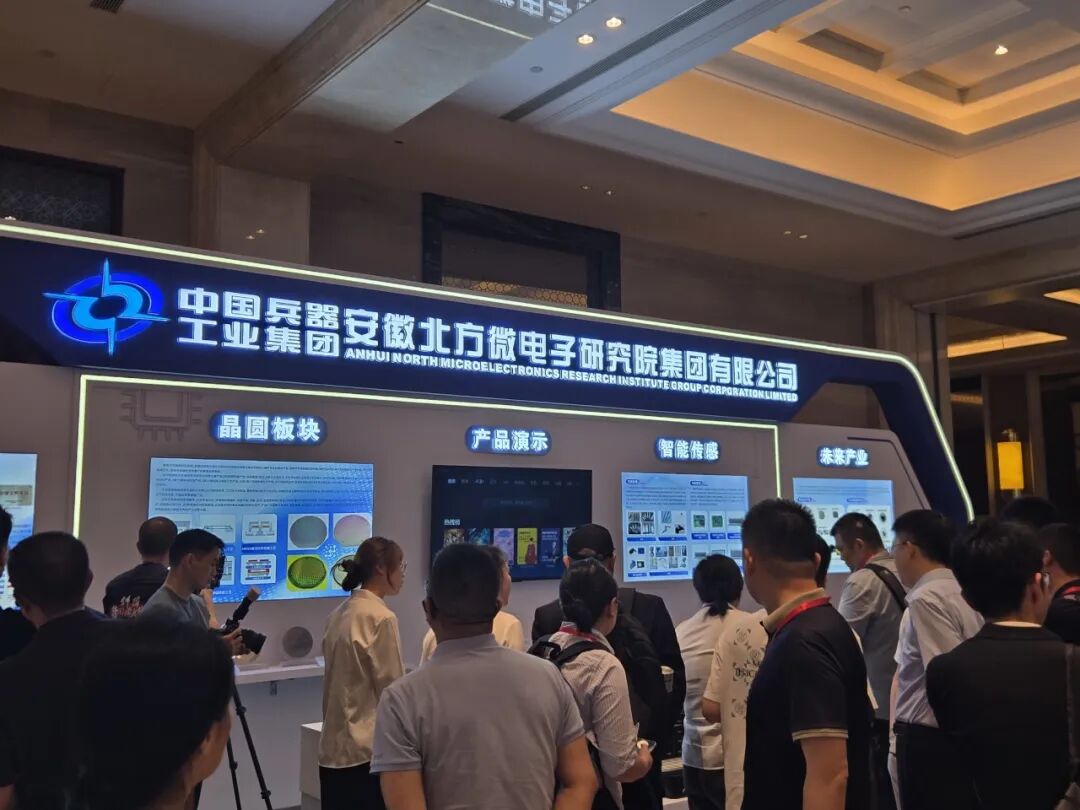
Photo source: Photo by Dan Zhongkui
In recent years, cities such as Shanghai, Hangzhou, and Hefei have been competing in the fields of intelligent connected new energy vehicles, low - altitude economy, and humanoid robots, representing the Yangtze River Delta at the forefront of future industrial competition.
Meanwhile, the intelligent sensing industries in cities like Suzhou and Bengbu, as the "perception entrance", have also welcomed the opportunity for value re - evaluation. A vivid analogy is that sensors are like the sensory organs of an intelligent system, the "electronic facial features and skin", equivalent to the eyes, ears, mouth, nose, and tongue of embodied intelligence.
Walking into the China Sensing Valley, more than a dozen types of sensors are neatly arranged, such as force - sensitive sensors (to sense changes in force), magnetic - sensitive sensors (to sense the intensity and direction of the magnetic field), temperature and humidity sensors (to accurately measure environmental temperature and humidity), displacement sensors (to capture small changes in the position of objects), flow sensors (to measure the flow of fluids), and inertial sensors (to sense the inertial state of objects). Each type corresponds to a varying number of sub - modules, simulating the human senses' perception of the external environment as much as possible.
"We have hundreds or thousands of types of sensing chips, which are designed according to customer requirements and technical characteristics. There are different combinations of mechanical cantilevers and springs, which can measure pressure, temperature, humidity, infrared, etc., with a very wide coverage," Cheng Shihao, the deputy director of the Science, Technology, Economy and Informatization Bureau of Bengbu Economic Development Zone, told Urban Evolution. He said that just as artificial intelligence is combined with everything, intelligent sensing should also be combined with everything.
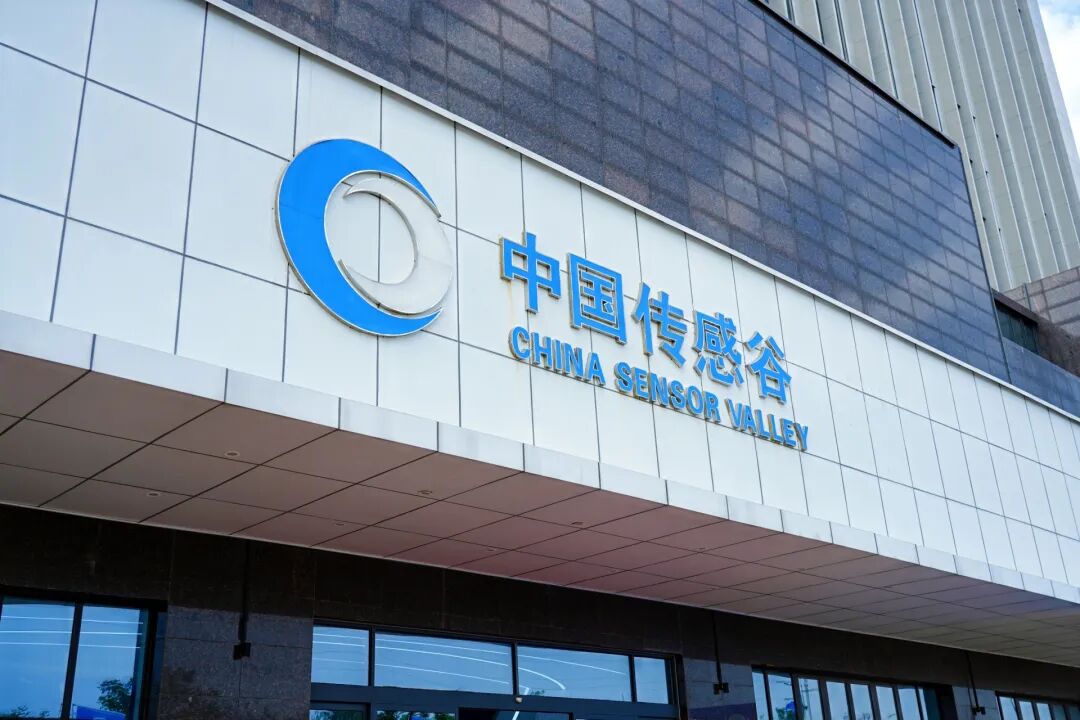
Photo source: Provided by the organizer
As one of the three valleys of Anhui's artificial intelligence industry, the China Sensing Valley is built according to the model of "One Valley, Three Parks, and Multiple Sites" (MEMS Core Device Industrial Park, Central Innovation Industrial Park, and Science and Technology Incubation Park), covering an area of about 2,100 mu. It is the core origin of Bengbu's intelligent sensing industry.
Taking the intelligent connected vehicle field as an example, a group of leading enterprises such as Hismart and XinDongLianKe have played an important leading role, and the industrial scale has been continuously expanding. Their customers include leading enterprises such as Huawei, NIO, BYD, Sungrow, and CATL.
A most intuitive statistic is that one out of every three new energy vehicles in China has a current sensor from Bengbu.
Breaking the Pattern
"Currently, the problem with embodied intelligence is not the brain, but the facial features and limbs. To solve this problem, we need sensors and actuators," Wang Yuelin said at the sensor conference.
The 15th Five - Year Plan of the country clearly lists sensors, instrumentation, and integrated circuits as the core areas for key research and industrial upgrading. This means that the intelligent sensing industry has entered a period of development opportunities -
Currently, China's sensor industry has the problem of "excess low - and medium - end production capacity and severe dependence on imports for high - end products". Whether it is industrial - grade, automotive - medical - grade, or sensors for extreme environments, there are obvious gaps in terms of accuracy and stability.
During the 15th Five - Year Plan period, the focus should be on breaking through core technologies such as high - performance MEMS sensors and intelligent sensing microsystems to consolidate the perception foundation for the Internet of Everything and intelligent manufacturing.
Each wave of industrial transformation is a major opportunity for cities to reshuffle. As one of the three major sensor R & D and manufacturing bases in the country, Bengbu has taken action - proposing to "build a 100 - billion - yuan intelligent sensing industry cluster that is self - controllable, has the most chip cores, and the most comprehensive types of sensors".
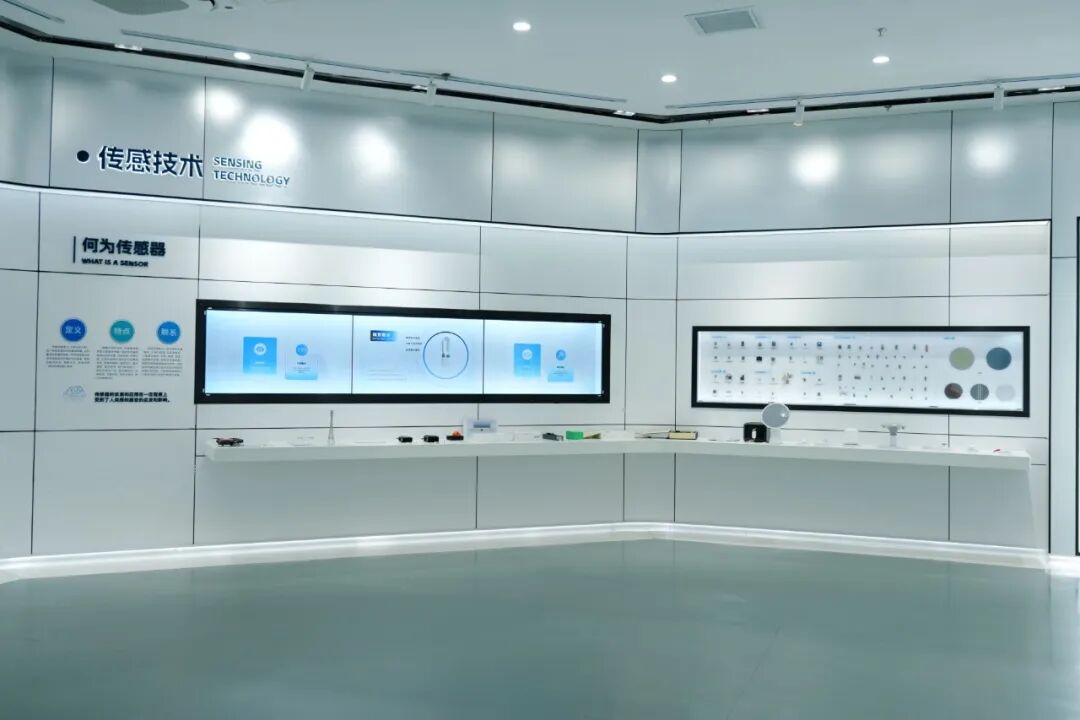
Photo source: Provided by the organizer
Compared with the current output value of tens of billions, this is not an easy task.
"Reaching an output value of over 100 billion yuan in the sensor industry is our goal. This cannot be achieved by relying on the existing stock alone. We need to rely on the increment, that is, continuously attract some leading enterprises from outside," Wen Jianzhong, the deputy director of the Bengbu Science and Technology Bureau, told Urban Evolution.
In his view, the 8 - inch wafer production line is Bengbu's core competitiveness, and some enterprises should be attracted to move downstream. In March 2025, the first 8 - inch MEMS wafer was produced in Bengbu - it only took 16 months from the tender of the first equipment to the production of the product, providing mass - production support for cutting - edge fields such as brain - computer interface flexible electrodes.
This production line is the first fully automated 8 - inch MEMS wafer production line in China, located in Anhui Huaxin Micro - Nano Integrated Circuit Co., Ltd. (hereinafter referred to as "Huaxin Micro - Nano"). Walking into the company's operation command center, key indicators such as the number of online wafers, the number of wafers put into production, the number of wafers produced, the number of wafers out of the warehouse, and the online yield rate are real - time visible on the core data dashboard.
"The MEMS wafers we produce are the'manufacturing base' of intelligent sensors. Previously, we mainly relied on imports, but now we can largely solve the problem of insufficient domestic production capacity," Ding Jingxiu, the deputy general manager of Anhui Huaxin Micro - Nano, said. Since the production started in March last year, more than 30 types of products have been introduced. Currently, the monthly production is 10,000 pieces, and the company is striving to reach the goal of 30,000 pieces per month to ensure the domestic supply of MEMS chips for automotive electronics and high - end equipment.
This is also the key for Bengbu to break through in a differentiated way in the intelligent sensing industry map. Different from the standardization and mass - production of integrated circuits, MEMS is characterized by "one - body - one - research, multiple, complex, scattered, and small". Almost all the dozens of process production lines in China have the problem of "production without research, research without production, and disconnection between research and production". However, Bengbu can effectively shorten the cycle from R & D to mass - production for enterprises by relying on its wafer manufacturing advantage.
Returning to the C - position
Looking at the topographic map of Anhui, Bengbu is like a tenon and mortise, fitting precisely into the transition zone between northern Anhui and the Jianghuai hilly area. The Beijing - Shanghai and Beijing - Fuzhou high - speed railways meet here. Bengbu Port, as the "first port on the Thousand - mile Huaihe River", is a three - dimensional transportation hub of highways, railways, and waterways, making Bengbu the gateway for northern Anhui to connect with the Yangtze River Delta and the central plains.
Not long ago, the 15th Five - Year Plan of Anhui Province proposed to support Bengbu in building a regional central city, placing greater expectations on Bengbu. In the province, Hefei and Wuhu, the leading cities, had GDPs of 1421 billion yuan and 540.269 billion yuan respectively in 2025, while Bengbu is still striving to reach the "300 - billion - yuan" level.
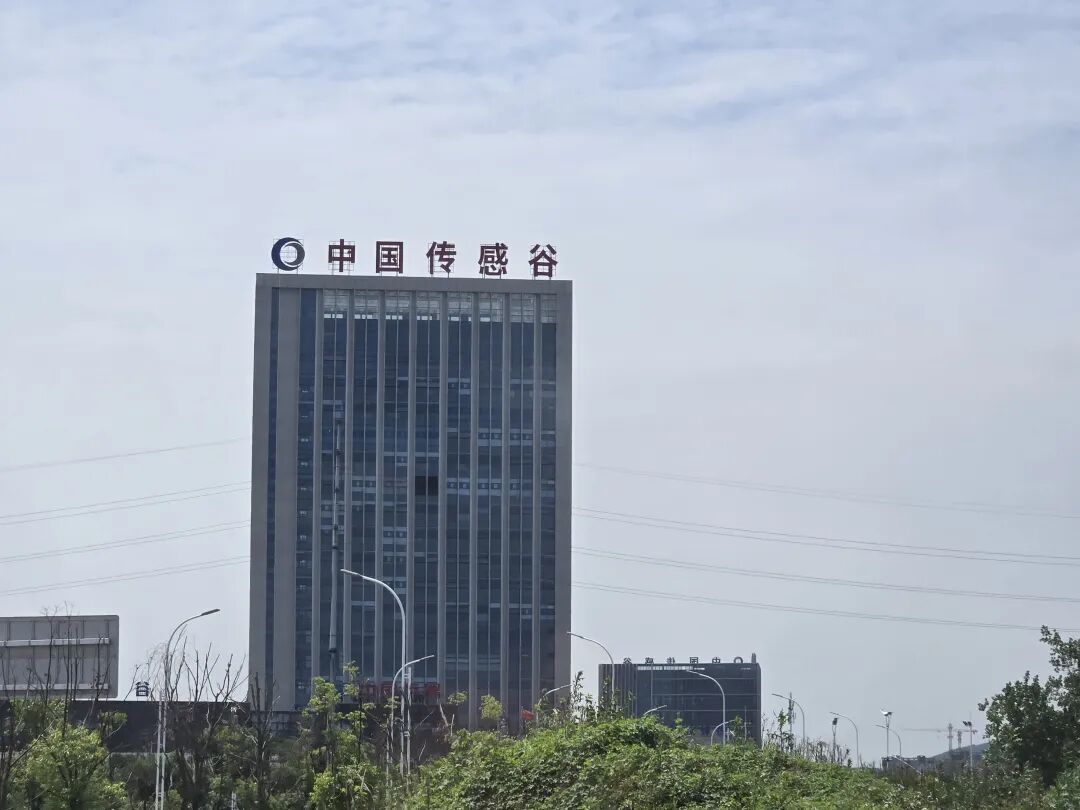
Photo source: Photo by Dan Zhongkui
At the beginning of the 15th Five - Year Plan, Bengbu clearly positioned the next five years as the "key five - year and golden five - year period of all - out efforts" and is making all - out efforts to build a regional central city. "Returning to the regional C - position", at the "First Meeting of the Spring" held in Bengbu at the beginning of this year, Ma Jun, the secretary of the Bengbu Municipal Party Committee, emphasized -
It is necessary to strive for more support from higher - level authorities, actively connect with national and provincial major strategies, capital investment directions, various platforms, and pilot projects, so that more real money and high - quality projects can come to Bengbu.
It is necessary to clearly support local enterprises to grow and strengthen, continuously optimize the business environment, act as the chief service provider, respond to every request and not interfere without cause, and promote more local enterprises to integrate into higher - level industrial chains and supply chains.
This also points out the direction for Bengbu's new round of industrial strengthening.
According to the plan, by 2030, Bengbu's GDP is expected to exceed 330 billion yuan, and the industrial output value is expected to exceed 230 billion yuan. This includes making all - out efforts to extend and supplement the industrial chains of 7 key manufacturing industry clusters such as intelligent sensing and commercial aerospace, and increasing the proportion of strategic emerging industries' output value to over 45%.
It is not only about increasing product output, but also about formulating standards and mastering the right to speak. During this sensor conference, the journal "Integrated Sensing and Microsystems" was officially launched, with Liu Sheng, an academician of the Chinese Academy of Sciences, as the chief editor. The purpose is to build a high - level academic exchange platform to help break through key core technologies.
More importantly, the cluster advantage of Bengbu's intelligent sensing industry has given rise to future industries such as commercial aerospace and brain - computer interface, becoming a provincial - level advantageous industry cluster. Taking the brain - computer interface as an example, Bengbu is relying on the advantages of the Microelectronics Institute and Bengbu Medical University to gradually form a development model of "sensing as the foundation, chip empowerment, and clinical implementation".
Not long ago, Chen Jun, the director of the Anhui Provincial Development and Reform Commission, published an article titled "Countermeasures and Suggestions for Cultivating and Developing Future Industries According to Local Conditions", "naming" and supporting areas with a good foundation in strategic emerging industries such as Wuhu, Tongling, and Bengbu to give play to the industrial spill - over effect and derive new increments in future industries. It was mentioned that "Bengbu has broken into the new brain - computer interface track with its intelligent sensing industry advantage, and its key technologies are leading in the industry".
This is also an external manifestation of the leveraging effect of "intelligent sensing +". Bengbu has taken more than 30 years to accurately position itself in the intelligent sensing industry ecosystem of the Yangtze River Delta, equipping more and more intelligent terminals with "facial features". High - end elements are overflowing into fields such as brain - computer interface and commercial aerospace, and a greater imagination space is just opening up.
This article is from the WeChat official account "Urban Evolution", author: Dan Zhongkui. Republished by 36Kr with permission.