Unitree's IPO approval signals the end of the novice protection period for embodied intelligence.
The focus has shifted from technical verification to commercial implementation, and the competition logic has changed from a comparison of technical parameters to a more complex multi - dimensional contest.
On June 1st, Unitree became the first company in the embodied intelligence track to pass the IPO review.
The significance of this milestone is not just that a prospective listed company has emerged in the track, but also that embodied intelligence is entering a new competitive stage. In the past two years, the industry competition was about who could make robots move first; in the next few years, the core task will be who can make robots truly create value.
Taking Unitree's passing of the IPO review as a time point, embodied intelligence companies will also be divided into two generations.
The early - movers in the same period as Unitree are quickly reaping capital dividends. Deep Robotics and Leju Robotics are also advancing their IPO processes. There is also a long list of embodied intelligence companies that have entered the "billion - yuan club": Unitree, Galaxy Universal, Zhipu Robotics, Xinghaitu, Qianxun Intelligence, Zhipingfang, Independent Variable Robotics, Zhongqing Robotics, Pasini...
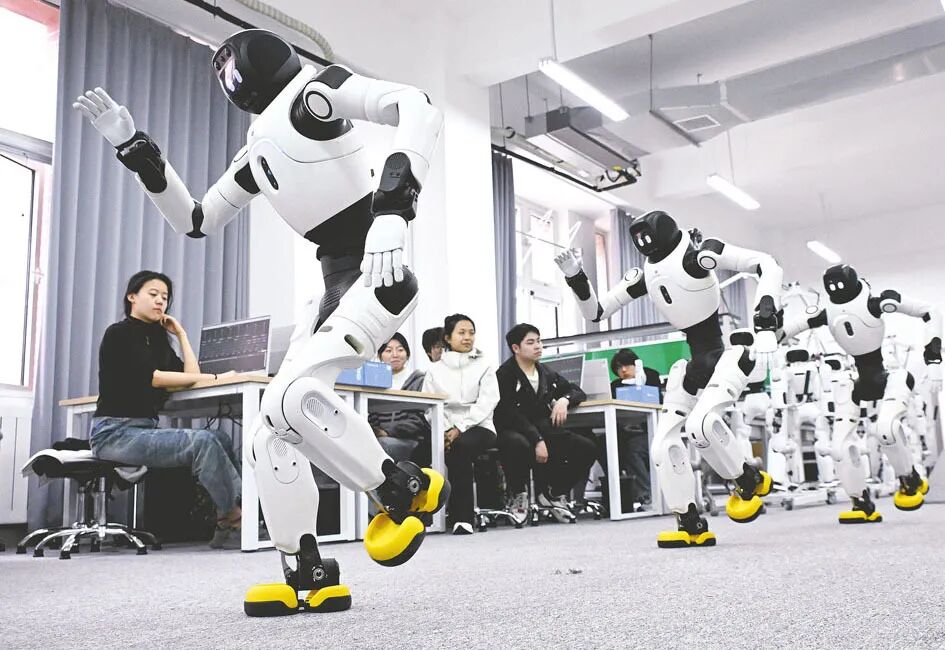
However, the early - movers who participated in concept verification have not completed the leap towards real - world scenarios. They have proven that robots can stand up, walk, and grab, but they have not proven that these abilities can continuously create value in factories, families, and restaurants. While capital is rewarding the early - movers with a billion - yuan valuation, it also has higher expectations for the entire industry - from parameter leadership to commercial implementation.
The late - comers are trying to seize this opportunity, riding on the wave of the early - movers to attract continued capital inflows. Statistics from multiple platforms such as IT Juzi and Qichacha show that the financing enthusiasm for embodied intelligence in Q1 of 2026 was much higher than that in the same period of 2025. The late - comers favored by capital are starting to choose more precise entry points based on "general humanoid robots" to occupy the necessary nodes for embodied intelligence to enter real - world scenarios.
This means that previously, everyone was in the novice village, and the core problem to be solved was "making embodied intelligence more human - like." Now it's time to leave the novice village, and the focus of competition has become "making embodied intelligence create value." The former is a more pure technical challenge, while the latter is a complex business proposition.
This change in competition logic will bring more brutal survival of the fittest.
The criteria for evaluating Unitree have changed
Unitree updated its prospectus before passing the IPO review. The top - ranked risk changed from "the risk of falling short of expectations in technical breakthroughs and product innovation" to "the risk of slowing growth and fluctuating operating performance."
This change in ranking sends a clear signal - the evaluation of Unitree has shifted from a simple technical dimension to a complex business logic consideration. In the past, the market focused on how well Unitree's humanoid robots could walk and whether they could perform smooth combos. Now, the market wants to see if Unitree can find more real - world scenarios for its humanoid robots to drive rapid growth in corporate revenue and product sales.
Unitree's updated revenue data also confirms the authenticity of this anxiety. Unitree expects its operating revenue in the first half of this year to be between 1.052 billion yuan and 1.128 billion yuan, a year - on - year increase of 35.62% to 45.41%. The net profit after deducting non - recurring items is expected to be between 236 million yuan and 283 million yuan, a year - on - year decrease of 6.43% to 21.97%, which is not as impressive as in the same period of 2025. Unitree explained this by saying: The revenue base has increased significantly, the industry's popularity has gradually subsided, and market competition has become increasingly fierce.
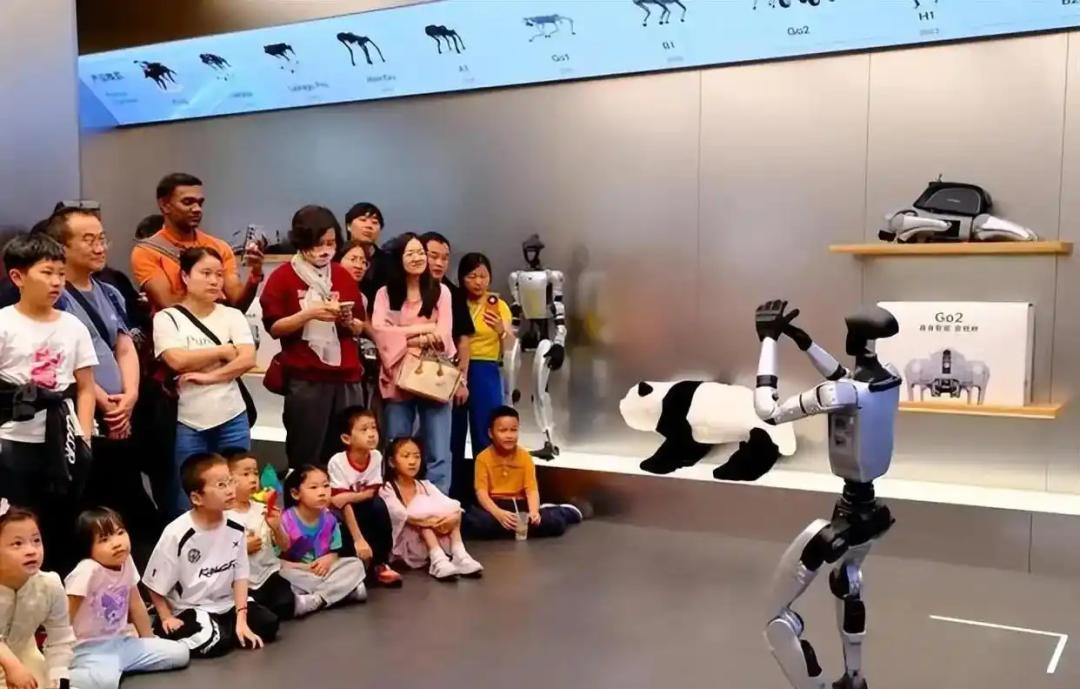
In the future, competition will only become more intense, and the opponents will not only be other embodied intelligence companies but also giant cross - border enterprises. For example, Tesla's Optimus Gen - 3, which has been in small - scale mass production as mentioned in Unitree's prospectus, Xiaomi's CyberOne, which is planned to be deployed in 2000 units in Xiaomi's car factory this year, and XPeng's PX5, which is expected to be mass - produced in Q4 of 2026.
These giants often have more experience. The prospectus shows that during the reporting period, Unitree's product and component assembly production mainly relied on manual labor and used a large - scale labor outsourcing workforce. An important task for Unitree in the future is to invest in building an intelligent robot manufacturing base to achieve large - scale mass production. In this regard, Unitree is on the same starting line as Tesla, Xiaomi, and XPeng, but it obviously lacks experience in production line construction and management.
At the same time, the giants also have their own scenarios for training and using embodied intelligence. Tesla's Optimus and Xiaomi's CyberOne are both trained in their own car factories.
Unitree's advantage is that it developed the robot body earlier, but its disadvantage is the lack of sufficient scenarios to complete the professional training of embodied intelligence. Unitree needs to rely on downstream secondary development customers to meet the needs of the end - market.
Although this secondary development path is lightweight and can quickly realize the value accumulated by Unitree in the robot body, it has a high degree of dependence on scenario partners and a long investment cycle. In May 2026, a third - party customer provided Unitree's products to Japan Airlines for a pilot of ground - handling operations such as luggage handling and cargo transfer. The entire experiment will last until 2028. During this process, Unitree is still selling "development boards" rather than "productivity tools."
From this perspective, Unitree's listing symbolizes that the embodied intelligence industry is leaving the novice village and starting to face more complex competition.
The late - comers are seizing opportunities to make up for shortcomings
The change in competition logic has also created more opportunities for companies like Unitree to make up for their shortcomings and adapt to the battlefield. Capital is no longer just chasing "the next Unitree" or "the next Zhipu," but starting to chase those who can sell weapons to Unitree and Zhipu and those who can occupy the key supply points on their way forward.
This has also become the main theme of the new wave of embodied intelligence financing in 2026. By observing the newly - funded embodied intelligence companies, four main entry points can be summarized:
Firstly, make up for the shortage of training data.
If the most important resource in the era of large models is Internet corpora, then the most important resource in the era of embodied intelligence is real - world data. Robots need to know how to grab objects of different materials, how to move in different scenarios, and understand the intentions behind human actions. All these abilities rely on the accumulation of a large amount of real - world data.
This is one of the most obvious shortcomings in the current industry. Large models can be trained with text, images, and videos accumulated on the Internet over decades; autonomous driving can rely on the continuous return of driving data from fleets every day; but embodied intelligence does not have a similar usage foundation.
Companies such as Guanglun Intelligence, OriginFlow, and Jianzhi Robotics are all making up for the data gap in embodied intelligence. Among them, Guanglun Intelligence's human behavior database has covered more than 25,000 environmental nodes and 100,000 types of tasks, and its new orders in Q1 of 2026 reached 550 million yuan. OriginFlow uses a non - invasive motor nerve interface as the core entry point to collect long - missing physical interaction data for robots. Jianzhi Robotics sells data collection equipment to more robot companies, and its orders for data collection hardware have exceeded 10,000 units.
Secondly, provide more flexible hands for robots.
In the past few years, the biggest focus of humanoid robots has been on their movement ability. However, when entering industrial sites, customers don't care whether the robot looks like a human, but whether it can complete tasks stably. Dongwu Securities believes that in the long run, the proportion of dexterous hands in the total cost of the robot can reach 20% to 30%, second only to the body execution system.
This has led to a large amount of capital flowing into companies focusing on core components such as dexterous hands and force - controlled dual - arms. In February 2026, Lingxin Qiaoshou completed a Series B financing of 1.5 billion yuan. Another dexterous hand company, Heiman Technology, has completed three rounds of financing in the past six months, and its products cover three major directions: underwater operations, general commercial use, and scientific research and teaching.
In addition, Tianji Intelligence, which focuses on force - controlled humanoid dual - arms, had more than 10,000 orders on hand in Q1 of 2026, and its customers cover 45 embodied intelligence companies. Shanghai Xinzhi Embodied Intelligence Company is developing and iterating the "vision - tactile joint embedded world action model" to enable robot grippers to have fine - operation capabilities.
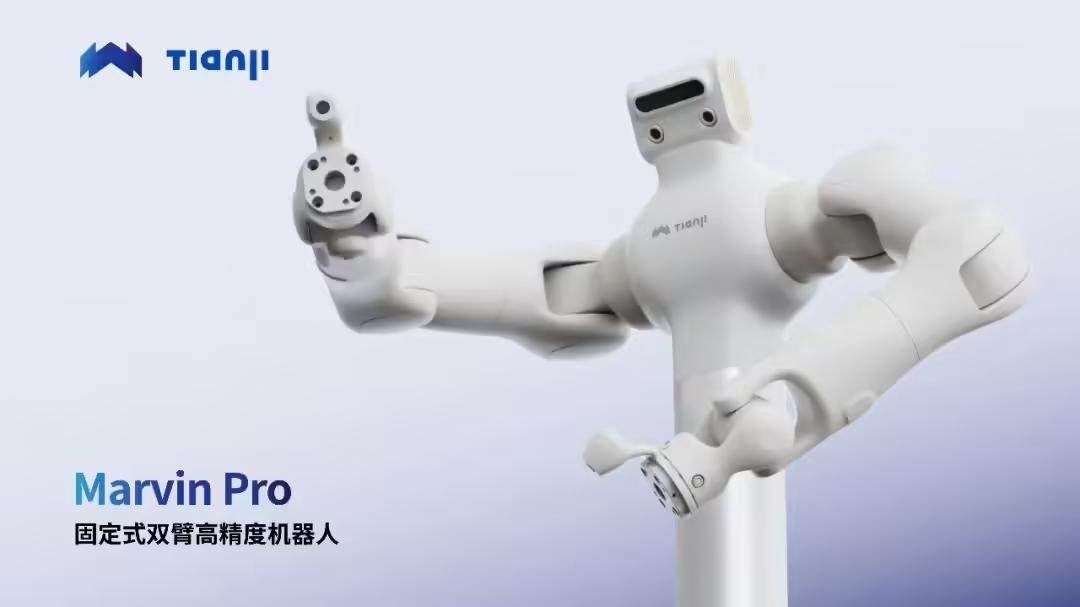
They are all solving problems that robots must face when entering the production environment. For factories, a mechanical hand that can work continuously for thousands of hours, has a stable grabbing success rate, and a low failure rate is far more valuable than a humanoid robot that can perform high - difficulty action demonstrations.
More importantly, make embodied intelligence truly have a "brain."
Unitree stated in its prospectus that its early R & D investment focused on the robot body and the cerebellum, and it only gradually strengthened the R & D of the "brain" (embodied large model) since 2024. In the prospectus for the passed - review version of the IPO, out of the 4.2 billion yuan planned to be raised in this IPO, 2.02 billion yuan will be invested in the R & D of the embodied intelligence brain. The intelligence of the brain determines whether embodied intelligence can have a faster and more flexible ability to take on jobs.
However, the current industry has not yet formed a unified route for the R & D of the embodied intelligence brain. Some choose the VLA route, hoping to directly connect perception and action through large models; some choose the world model route; and some are trying to explore new architectures such as JEPA.
Companies such as Junaopanshi, Delta Intelligence, Tashizhihang, and No. 16 Robotics are all exploring in their respective selected directions.
Junaopanshi was founded by Zhu Senhua, the "No. 1 person in Huawei's embodied brain," and is betting on the JEPA architecture and the cognitive world model. Delta Intelligence was incubated by the Beijing General Artificial Intelligence Research Institute and is committed to combining its self - developed native 3D world engine to achieve general whole - body coordinated operations. Zhongke Fifth Era self - develops an end - to - end ultra - few - sample large model and a world model, providing embodied brain modules to robot body manufacturers and directly delivering complete machines and industry solutions.
After Tashizhihang completed a Pre - A round of financing of over $450 million, it is building a general embodied large model AWE 3.0 that can "do work." No. 16 Robotics was founded by Song Hongyong, the person in charge of pre - training and reinforcement learning at Dark Side of the Moon. It aims at the general humanoid robot base model to achieve the "GPT - 3 moment" in the field of embodied intelligence. Currently, it has received seed - round investment from well - known institutions and is in the process of forming a team.
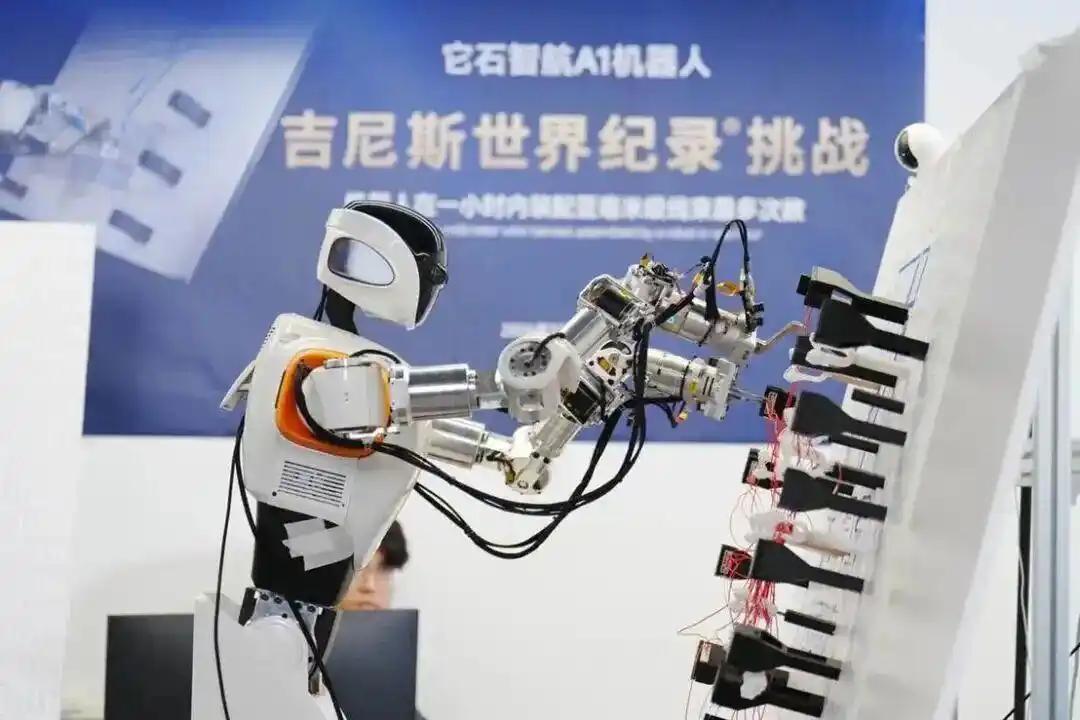
In addition, some are entering the field of embodied intelligence from vertical scenarios.
Compared with technical breakthroughs, entering real - world scenarios is often slower. Because scenarios are not only a technical problem but also an organizational and ability problem. Some companies favored by capital do not try to solve all problems at the beginning but first solve one problem in one industry. This path is not as glamorous, but it is closer to business reality and has the possibility of sneaking up on companies like Unitree.
Luming Robotics received strategic investment from Mitsubishi Electric and focuses on industrial and logistics scenarios. Yuanjie Intelligence completed its first - round financing less than two months after its establishment and chose to enter from the catering scenario, starting with takeaway packing and connection and gradually building a digital twin back - kitchen operating system. Boyinhechuang plans to use the new round of financing for the mass production of its first self - developed industrial embodied intelligent robot, industrial data collection, model platform construction, and market expansion.
The changed competition logic brings more intense competition
Although these late - comers enter the market from different entry points, they show similar characteristics:
Start from specific problems rather than grand narratives. Choose a specific entry point such as data, dexterous hands, brain models, or vertical scenarios to solve a real problem first.
Emphasize orders, mass production, and business paths. These companies place more emphasis on real business progress, and the order volume has become a new bargaining chip for financing.
Have top - notch research backgrounds and engineering experience. The founders of these companies mostly have backgrounds as "senior executives of large companies" or "top academic talents," which is more likely to ensure a balance between technical depth and engineering implementation ability.
All receive support from both Internet strategic investors and industrial capital. We can see that Ant Group led the investment in Guanglun Intelligence and Jianzhi Robotics, Meituan Strategic Investment co - led the investment in Tianji Intelligence and Tashizhihang, and Mitsubishi Electric led the investment in Luming Robotics.
The financing rhythm is faster, and the single - transaction amount is larger. Besides Heiman Technology, Yuanjie Intelligence completed its first - round financing less than two months after its establishment, and OriginFlow completed three rounds of financing in five months. Capital is betting on more certain entry points at a faster pace.
Behind Unitree's passing of the IPO review and the new wave of embodied intelligence financing is the changed competition logic. Before Unitree's listing, the core proposition of embodied intelligence was motor intelligence; after that, the core proposition is productivity intelligence, shifting from technical verification to commercial implementation.
The competition logic has also changed from a comparison of technical parameters to a more complex multi - dimensional contest:
In terms of product form, it has shifted from pursuing "demonstration effects" to pursuing "stability, production line rhythm, and calculable customer ROI"; in terms of business model, it has shifted from "selling the body and development boards" to "selling solutions and productivity"; in terms of customer structure, it has shifted from customers in universities and research institutes to customers in scenarios such as factories, logistics, and families; in terms of capital logic, it has shifted from betting on visions and stories to refined valuation, requiring orders and revenue.
Companies like Unitree, which have reaped the first - batch of dividends, have the opportunity to transform from selling development boards to building an ecosystem. However, it needs to prove that it can continuously create commercial value rather