Interactive Film & Game 2026: Moving Beyond the "Blockbuster Narrative" as AI Takes Over the New Logic
In mid-2026, "Interactive Movies and Games" remains a topic worthy of attention. However, the reasons for this attention are quite different from the past.
In the past, the interactive movie and game industry was mainly driven by blockbusters, and its popularity fluctuated with the release of works. But it has never been like now, where multiple parties enter the market simultaneously with different purposes.
The structural pressure in the film and television industry and the emphasis on the diversified development of IP have pushed more professional resources into the field of interactive movies and games. On June 1st, Bona Group under Stephen Chow announced the completion of a strategic investment in Interactive Star. The two parties will carry out in-depth cooperation in areas such as AI dramas, interactive movies and games, live-action films, and the full industrial chain operation of IP.
Game companies are also entering the market. Tencent's Tianmei Studio Group is supporting "The Prosperous World"; ByteDance's game division is incubating "Unbothered by the Mortal World"; Tencent's DreamNow was exposed, supporting the creation and display of interactive movies and games.
Undoubtedly, the biggest variable is AI. The layout of AI infrastructure for interactive entertainment and the demand for computing power consumption are rewriting the underlying cost structure and project approval logic of this industry.
Although multiple parties have entered the market, the interactive movie and game industry is far from being finalized, which makes it a strategic area worthy of attention.
In the AI era, for listed film and television companies, it is about the efficient utilization of IP assets and a better financial model; for game companies, it is about the boundaries of game categories and the pre-occupation of the interactive platform ecosystem; for AI technology providers and investors, it is one of the few implementation scenarios in the AI application layer with a clear logic of computing power consumption and user willingness to pay; and for industrial policy makers, it represents, to some extent, the possibility of the content entertainment and digital culture industries moving towards sustainable industrialization.
Currently, beyond the blockbuster narrative, deeper problems in the interactive movie and game industry are emerging.
Why has the industry failed to form a scale despite several blockbusters?
Recently, game artist/East-West Entertainment and Culture, in cooperation with Shanghai Lizhen Law Firm, held a seminar on "How to Make Interactive Movies and Games in the AI Era". The event brought together senior interactive movie and game creators, practitioners in the fields of short dramas, games, film and television, IP, platforms, and AI technology, as well as investors and university scholars, which happened to be a microcosm of the current interactive movie and game industry.
The participants focused on different issues, but all reflected one thing - people from different industries need a blockbuster interactive movie or game to lead them to quickly reach a consensus.
From "The Invisible Guardian" to "Oops! I'm Surrounded by Beauties!" and then to "The Prosperous World", a blockbuster interactive movie or game appears every once in a while. However, the intervals between blockbusters are long and irregular, and the industry has not seen significant large-scale growth because of these blockbusters.
In fact, the industry growth driven solely by blockbusters attracts many parties to observe or even enter the market, but they may also leave the market quickly.
The most typical period was around 2024. Many practitioners in the interactive movie and game industry said that the success of "Oops! I'm Surrounded by Beauties!" on Steam first attracted short drama teams. Most of these teams thought that interactive movies and games were "short dramas with options", with similar shooting logic and controllable costs.

They often entered the market with the inertia of the B2B model, accustomed to the business of sharing revenues with platforms. However, the interactive movie and game industry has long adopted the B2C business model. Especially for products released on Steam, users pay directly for the experience and hold the right to refund, and word-of-mouth determines the long-tail revenue.
Many entrants during this period did not pay attention to this inherent threshold and did not really understand who the products were for. As a result, a large number of homogeneous products were launched at once, and the returns were far lower than expected. Some projects might only earn hundreds of thousands or even tens of thousands of yuan. Eventually, these short drama teams came and went quickly.
Around 2025, represented by the launch of "The Prosperous World", interactive movies and games were further included in the discussion framework of IP development, artist management, and film and television project approval. Since 2025, some senior directors and producers of interactive movies and games have received more frequent visits from film and television companies, including some leading companies, which came with large IPs and more generous budgets than the short drama circle.

"Some traditional film and television companies have tightened their budgets and cannot produce long dramas, so they are looking for new forms. Interactive movies and games are a relatively accessible area for them," said a producer of interactive movies and games. Film and television companies have IPs, actors, and production capabilities, and interactive movies and games provide them with three outlets.
Firstly, it is for IP digestion. Especially for some IPs that are about to expire, long dramas cannot start production due to the sharp reduction in the budget, but a budget of tens of millions is sufficient for interactive movies and games. Secondly, it is for actor output. The immersive experience feature makes the user's "empathy" for characters in interactive movies and games stronger than in traditional film and television. Finally, it is about the financial model. In film and television revenue sharing, production companies usually only get 20% - 30%, while in interactive movies and games, they can get 70%, and the payment collection speed is faster.
However, the entry of film and television companies also has two sides. On the one hand, film and television companies have promoted the overall production capacity, investment scale, and market attention of the interactive movie and game industry to a new level. On the other hand, the average project cost has been raised. It used to cost 2 - 3 million yuan in the early stage, but now it has been raised to 4 - 6 million yuan, and even more projects with a cost of over ten million yuan have emerged. Without a corresponding increase in the upper limit of market returns, higher investment means greater pressure to recoup the cost.
Game companies are also entering the market, but in a relatively low-key manner. Among the cases of game companies' investment in interactive movie and game products, the most high-profile one is still "The Prosperous World". Its production team, New One Studio, is one of the studios supported by Tencent's Tianmei Studio Group. Tianmei Studio Group also provided a large amount of promotion resources for it, including joint promotion with several leading games such as "Honor of Kings" and "Delta Force" under its banner. In addition, ByteDance's game division recently revealed that it is incubating a Xianxia-themed RPG, "Unbothered by the Mortal World", which features AI-based film and television performances and a high degree of freedom in interaction.
Game companies still tend to focus on category verification in the incubation of interactive movie and game projects. After all, game companies are used to large-scale business. Some practitioners also said, "While big companies are betting on interactive movies and games, they are also betting on short dramas or AI comic dramas. Concurrent development of multiple content forms is something that a mature content company must do."
What are the bottlenecks for the industry to grow and become stronger?
Generally speaking, although the blockbuster effect has introduced more diverse players and resources into the industry, it has not automatically solved the conditions for the real large-scale development of an industry, including a clear product definition, a replicable business model, a sufficient mass channel and user base, an industry foundation that can be accumulated, and the industry consensus of practitioners.
Currently, the ambiguity of the product positioning and target audience of interactive movies and games is a seemingly basic but actually fundamental problem. Is an interactive movie or game a game or a drama? This simple question still makes some people waver and take detours.
According to the research of East-West Entertainment and Culture, in the past two years, many newly entered teams wanted to "kill two birds with one stone" when formulating projects. They wanted to make games but were reluctant to give up the drama audience, and wanted to make dramas but were unwilling to abandon the game pricing. In the end, they failed to meet either goal. However, for interactive movies and games, the product content form is fixed after the project is approved. If the positioning is unclear from the beginning, it will affect the channel selection, pricing strategy, and user acquisition at the implementation level, and problems will inevitably arise.
This leads to the next problem - the limitation of channels has long restricted the exploration of the commercialization model of interactive movies and games to a few options.
Currently, the core distribution channel for interactive movies and games is still Steam. This platform provides a stable basic user base for the industry, including the buyout model, global distribution, and well-developed user habits. In addition, in early 2025, the number of users who set Simplified Chinese as the main language on the Steam platform exceeded that of English users, ranking first, which means that China has become the largest user market for Steam globally. During the Spring Festival in 2025, driven by popular games, the proportion of Simplified Chinese users on Steam soared to 50.06%.
The growth spillover of Steam itself has also brought an increase in the interactive movie and game industry.
However, Steam has a natural coverage boundary. A producer of interactive movies and games said, "Almost all blockbusters have been asked by users 'Where can I watch it?' When the answer is 'On Steam', the other party will reply 'What is Steam?'."
Domestic platforms have not been without attempts. Some long-video and short-video platforms have launched or still have the interactive drama function, but there has never been a continuous supply of new content. In the view of many front-line practitioners, the signal from the platforms is that "they have not really invested large resources in this."
The differentiation of channels naturally leads to different business paths and corresponding product development focuses.
Steam adopts the paid buyout model, and users pay directly for the experience. The refund mechanism of "refundable within two hours" on Steam forms a strong constraint: traffic can attract attention, but without retaining users, there will be no income. This requires practitioners to put the content experience first and retain users for at least two hours.
Due to the immersive experience feature of interactive movies and games, the decision-making cost for users to purchase and play is higher. Especially on Steam, most users are more sensitive to time than to price. "They are willing to spend money, but not willing to spend time on an unworthy product."

The entrants in the interactive movie and game industry are diverse, and the product strategies for Steam also vary.
Some teams specialize in high-quality blockbusters and take a high-profile approach. Currently, the well-known interactive movie and game products basically follow this path.
Some teams take the route of stable output, producing one work after another, controlling costs, and maintaining the basic user base. The project cost is usually stably controlled at around 2 - 3 million yuan, and the products are made to meet the passing standard. They rely on continuous production to maintain the operation of the team and user recognition.
Compared with the blockbuster effect, companies taking this route form the basic user base for the stable development of the interactive movie and game industry, ensuring that new works always appear in users' vision and maintaining the operation of the interactive movie and game industry supply chain. In the process of continuous creation, they accumulate experience and capabilities for the industry and also reserve more room for trial and error.
Some teams are also making low-cost, high-volume products to make profits through rapid turnover. According to the research of East-West Entertainment and Culture, some teams shoot at extremely low costs. A work may only cost more than 100,000 yuan or even less, and it can be completed in a few days to a week. Finally, the price can be set at 29 yuan, and they can recoup the cost through high volume. Such products were not uncommon on Steam last year. Their themes were mainly on the verge of vulgarity, and the production was relatively rough, but they met the needs of some users. Now, AI is making this path more "efficient" - AI face swapping, AI scene generation, AI voiceover, etc., further lowering the production threshold.
Another path is the free plus advertising model. AI interactive short dramas on platforms such as Tomato Novel and IAA products on the WeChat mini-game channel are testing this path. The logic is in line with the business model of short dramas - free viewing and advertising monetization.
However, there is currently no particularly benchmark case in terms of commercialization on this path. Some practitioners frankly said, "If the goal is to achieve a playback volume of over 100,000, I am confident using AI. But if it comes to making money, I'm not confident yet."
In addition, problems such as the lack of sequels, the shortage of talents, and the weakness of industry infrastructure are very real. For example, few people pay attention to the three fields of entertainment, games, and technology simultaneously. When teams with different backgrounds sit together, the gameplay ideas proposed by screenwriters cannot be understood by planners, and the camera language desired by directors cannot be precisely controlled by AI tools. The discourse system, work process, and evaluation standards all need to be re-adjusted in this cross-field.
How is AI affecting the interactive movie and game industry?
Since this year, AI has been accelerating its penetration into content entertainment scenarios, and the interactive movie and game industry has also been affected by AI - it has partially solved some of the above-mentioned industry structural problems, and at the same time brought some new variables and raised some new problems.
The most direct change has occurred at the production end. According to the research of East-West Entertainment and Culture, for a live-action shooting project with a budget of tens of millions, the cost can be reduced to 6 - 7 million yuan or even lower after the intervention of AI. Some teams have estimated that the production cycle can be compressed from 8 months to 4 months with full-process AI assistance. The intervention of AI is particularly significant in the post-production face retouching and special effects scene setting.
The decrease in the cost threshold has brought about the first chain reaction - the release of themes. In the past, live-action interactive movies and games were highly concentrated in modern urban and romance genres, mainly because the cost of ancient costume themes was often in the tens of millions, and the special effects and scene setting costs of post-apocalyptic science fiction, tomb exploration, and other themes were even higher. With the limited market scale, the investment risk was too great.
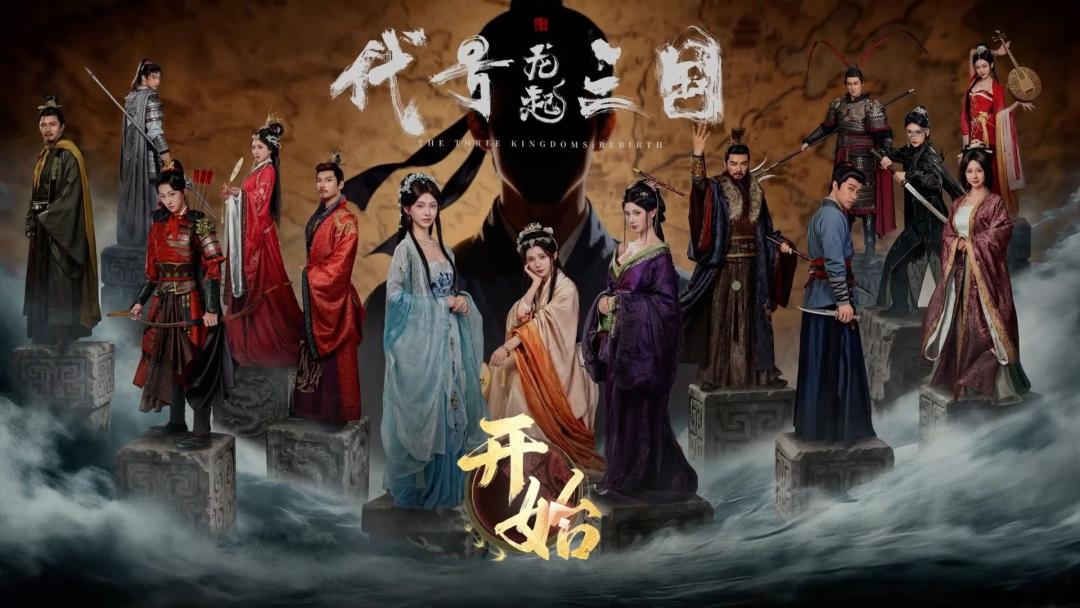
AI is breaking this limitation. Currently, some teams are already trying to create all-AI interactive narrative products in the style of American comics, and some teams are launching science fiction projects that could not be advanced due to cost limitations before.
However, after the cost line is lowered, the focus of competition has also shifted. When the production threshold is no longer the main barrier, the industry needs to further think about where the differentiated competitiveness comes from.
At the creative level, some producers of interactive movies and games have reported that although AI has lowered the production threshold, the threshold for scripts has not decreased at all. Because interactive narrative requires higher logic and branching, the difficulty has even increased. "The script creation of interactive movies and games is the most difficult, requiring both the aesthetics of liberal arts students and the logic of science students."
What is more worthy of attention is the impact of the development of AI infrastructure on the entire application layer.
In fact, part of the driving force for the popularity of interactive movies and games this year does not come from the content industry, but from the upstream of the