In less than a year, this Dreame-related company has secured another major round of financing after two rounds of funding.
While the embodied intelligence industry is still engaged in a fierce competition over "who can be the first to create a humanoid robot", Lingzhi Wujie, a startup spun off from Dreame Technology, has chosen to start with the "eyes".
Less than a year after its establishment, Lingzhi Wujie has achieved break - even. This is not common in the embodied intelligence track, which is still in the early stage of commercial exploration and generally relies on financing for survival.
In Lingzhi Wujie's office in Nanshan, Shenzhen, 36kr observed that the workstation of President Mao Song is closely surrounded by the product team, finance, and legal departments.
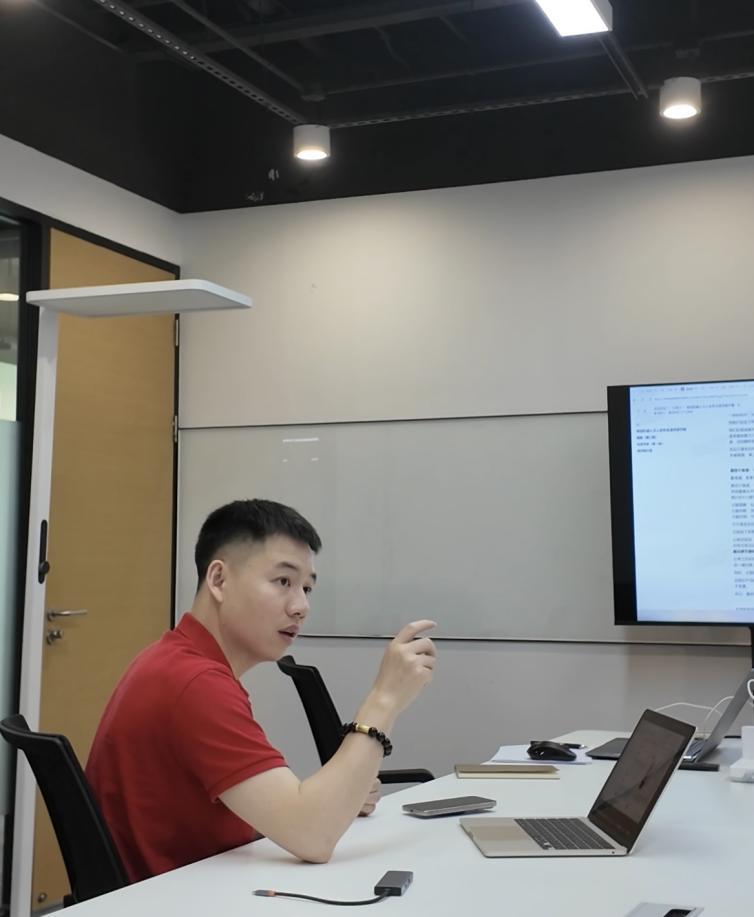
This implies several strategic priorities of this emerging intelligent hardware company. "The product needs to be iterated constantly according to market demand to maintain a stable and healthy cash flow. At the same time, the entire company's operations must be carried out within a compliant framework," said Mao Song, the company's president.
The current core products of Lingzhi Wujie are several models of NAVO intelligent AI cameras for home scenarios. However, in Mao Song's view, the camera is just the product form at the current stage of the company, not the end - goal.
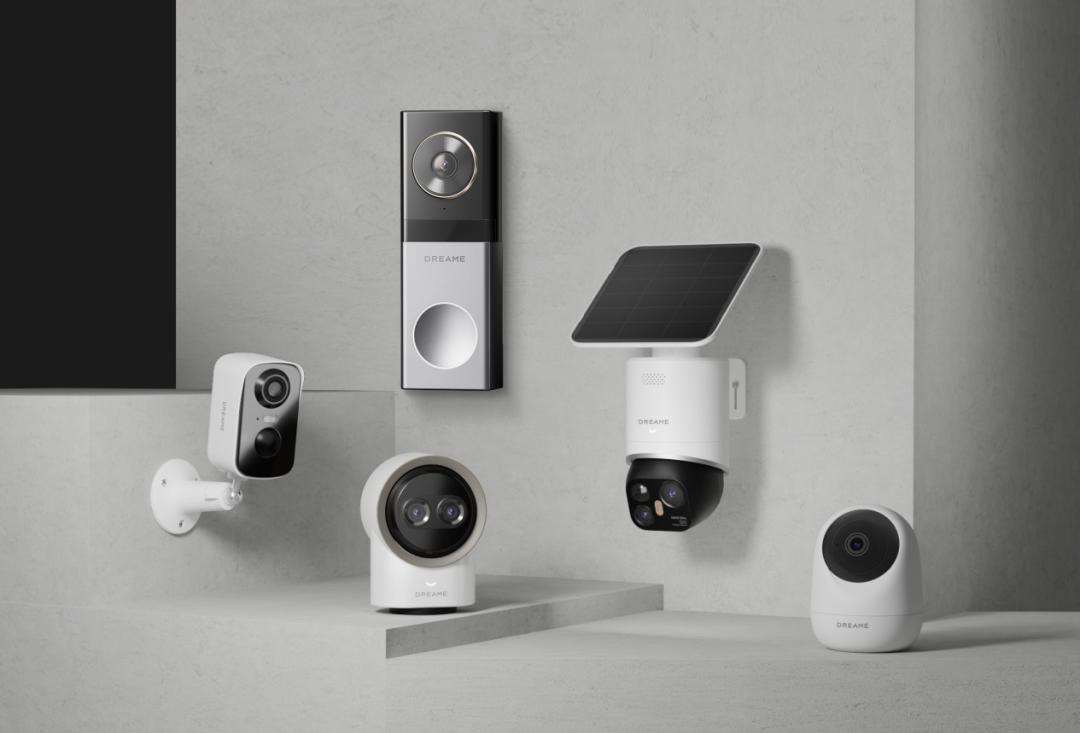
As an independent business unit incubated by Dreame Technology, what it truly represents is a new path for the Dreame ecosystem in the field of embodied intelligence: first, establish the ability to understand the home space through vision, then gradually extend to more complex home interaction capabilities, and finally realize the form of robot products capable of action execution.
This unique path choice comes from Mao Song's underlying judgment on consumer - grade embodied intelligence: "What consumer - grade embodied intelligence truly lacks is not the physical body, but the ability to understand the home space."
Before joining Lingzhi Wujie, Mao Song was responsible for product commercialization at OPPO and Anker successively, with more than a decade of experience in the consumer electronics industry. His work at the back - end of the product chain made him pay more attention to exploring the essence of the business from the first - principles. In his view, compared with the industrial and commercial scenarios that most current embodied intelligence enterprises focus on, the home space is more complex and has greater uncertainties. Therefore, to develop consumer - grade embodied intelligence products, one must start from understanding the home space.
And vision is the most core entry point for understanding the home space.
The Robot War Shifts to the Brain
In the past two years, the most attention in the embodied intelligence industry has been on the robot body. As the motion control ability gradually matures, a new problem has emerged: robots can learn to walk, run, and even dance, but it is still difficult for them to truly understand the scenario.
This shift in industry focus is also reflected in the capital market. Since the second half of last year, the valuations of embodied intelligence enterprises focusing on robot brains have begun to catch up with or even surpass those of hardware body enterprises. A number of embodied brain enterprises, including Xinghaitu and Zhipingfang, have successively announced their entry into the "10 - billion - yuan club". This is not only because the embodied models have greater room for imagination, but more importantly, after the body capabilities of robots have gradually become similar, the industry has begun to realize that the brain is becoming the key variable determining the next - stage competition pattern.
However, in the process of developing the brain, more and more enterprises have discovered another practical problem: without high - quality data, it is impossible for the embodied models to understand the real world.
Especially in the home scenario, it has become the toughest nut to crack for the implementation of embodied intelligence.
Compared with highly standardized scenarios such as factories and warehouses, the home space is full of uncertainties. Different family structures, relationships between family members, behavior habits, and environmental changes can all give the same action completely different meanings.
For example, when someone enters the yard, in a factory scenario, it may only be necessary to determine whether the person is an authorized one; but in a home scenario, the system needs to further understand: who the person is, whether it is a family member, a courier, or a stranger; whether the time of appearance is abnormal; and whether an alarm should be triggered or subsequent responses should be taken.
"The home is actually a very complex environment. It doesn't have a standard process like a factory, nor fixed rules like a warehouse. In many cases, the same action can have completely different meanings in different families," said Mao Song.
For this reason, the difficulty of home - scenario intelligence lies not only in recognition but also in understanding. This understanding ability cannot be achieved through rule pre - setting, but can only be obtained through continuous training with a large amount of real - world home - scenario data.
The value of the camera lies precisely in the fact that it is currently the most accessible terminal for continuously entering the home scenario and stably obtaining spatial information.
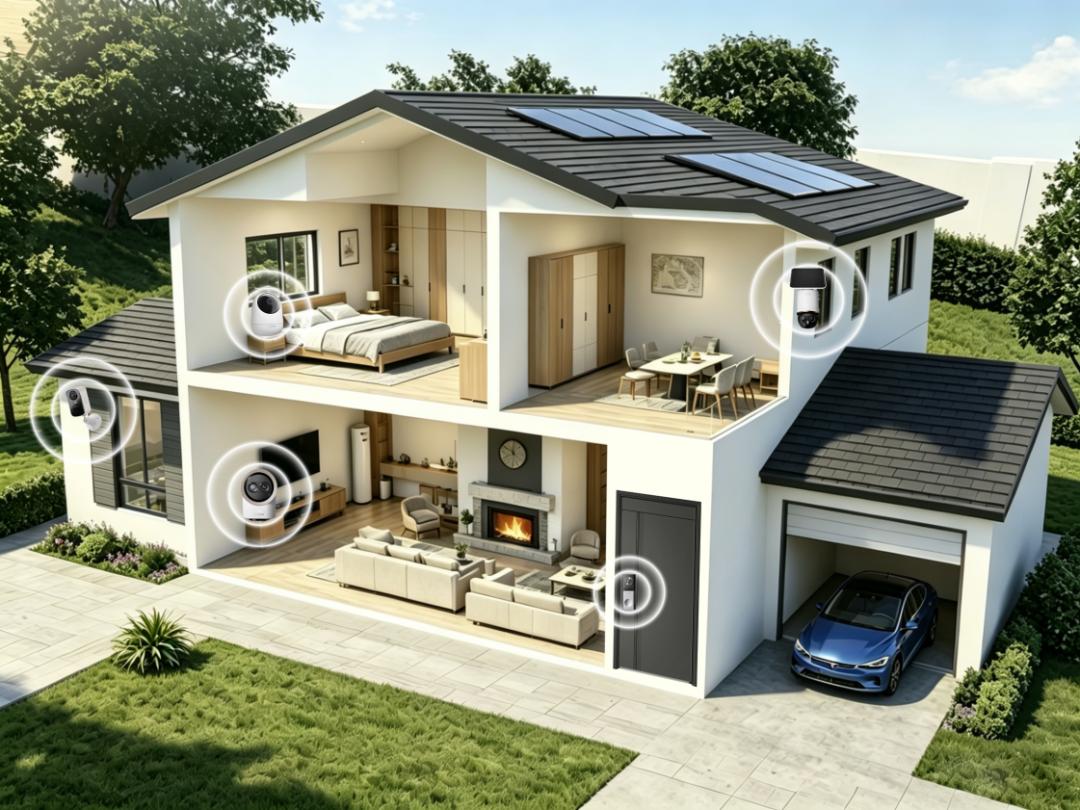
FMI data shows that the global smart home camera market will reach $9.715 billion in 2025, and will continue to maintain a compound annual growth rate of 11.5% until 2035. Compared with home robots, which are still in the early stage, cameras already have a mature product form, a wide - spread home penetration rate, and continuous data - acquisition capabilities.
From this perspective, for NAVO, home intelligent hardware centered around cameras is not only a product market but also a natural high - quality data - collection entry point. This also constitutes the biggest difference between NAVO and traditional home security enterprises. The camera is not the ultimate goal but the beginning of home intelligence.
By continuously accumulating home - scenario data through this entry point, NAVO can gradually establish the ability to understand the home space, family members, and home events, and finally precipitate into a home intelligent agent. Once the home intelligent agent is truly formed, intelligent terminals for home scenarios will have the opportunity to open up broader imagination space. It not only has the opportunity to redefine the collaboration mode among existing home devices, making cameras, sweeping robots, door locks, and other originally fragmented AIoT devices become execution terminals under a unified intelligent agent; but also can ultimately give birth to new terminal product forms with higher execution capabilities, such as care - giving robots.
Based on this end - game judgment, while many embodied intelligence enterprises are still starting from the robot body, NAVO has chosen to start with the "eyes".
Breaking into the Home Embodied Intelligence Entry with Vision
In fact, home cameras have been developed for more than two decades, but the industry has long remained at the stage of "seeing". From the earliest video surveillance, to cloud storage and remote viewing later, and then to the AI recognition function realized by the previous - generation CV companies, in essence, they still remain at the level of recording and reminding.
To make the camera evolve to the stage of "understanding", NAVO did not choose to simply add visual recognition models but reconstructed the product system from the underlying perception ability.
First, it is necessary to strengthen the premise of "seeing clearly". Especially in the night scenario, traditional infrared night vision can only provide black - and - white images, and ordinary full - color night vision is prone to noise and motion blur. This means that even if the visual system accurately identifies people, vehicles, or pets, it is still difficult to further understand the context of the event.
NAVO's solution is to use an F1.0 ultra - large aperture, paired with an AISP chip and visual algorithms. According to the actual test results, the NAVO X10 outdoor series products equipped with this solution have improved their low - light capture ability to 0.001 lux, about 10 times the level of the industry mainstream. Even in an environment with faint starlight, they can still maintain full - color image and detail capture capabilities.

0.001 LUX low - light full - color night vision ability
The next step after the technical implementation is to optimize the product experience. The NAVO product team still remembers an internal meeting before the mass production of the NAVO X10 series. At that time, the team had completed the development of the core capabilities, but the speed of opening the monitoring screen on the APP still did not meet the ideal experience standard. Facing the upcoming mass - production node, Mao Song finally decided: "Then don't ship for now. Make sure the video stream can be loaded within 5 seconds with a pull - stream success rate of over 95%."
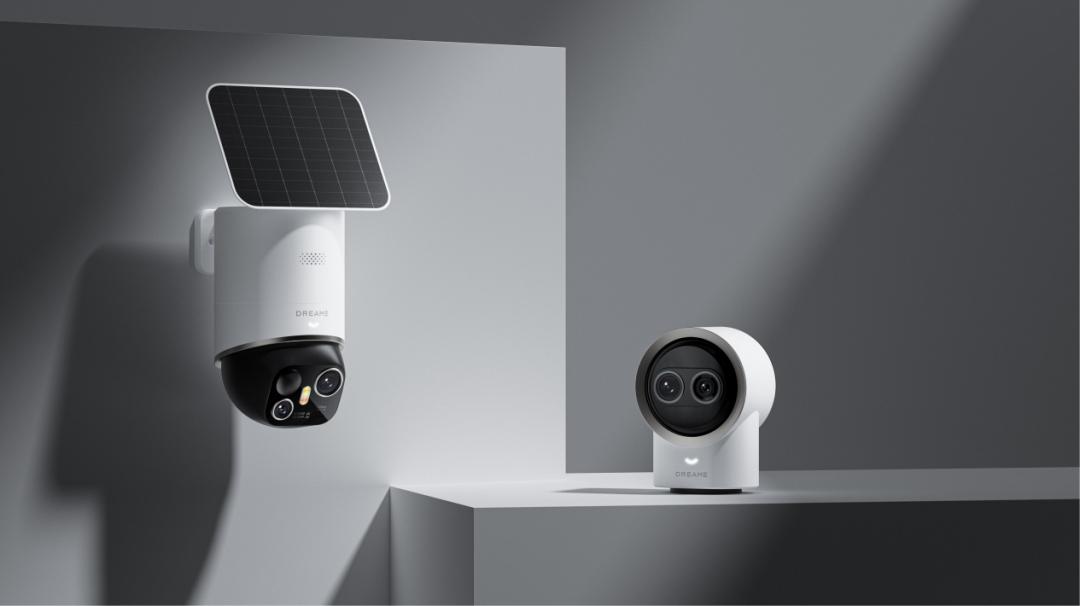
NAVO X10 series
To achieve this goal, the NAVO team needed to build an embedded system from scratch, that is, to integrate the "seeing clearly" algorithm capabilities into a hardware terminal that can be connected to the network stably for a long time, with smooth images and no system crashes. The team spent another month fine - tuning the system before finally achieving a 98% pull - stream success rate and a 5 - second image - loading experience.
To reach the ability of "understanding", NAVO has launched the event - level AI platform AlgoMart. Different from traditional systems that mainly focus on single - target recognition, AlgoMart starts to try to understand the event itself. The core is that it no longer analyzes a single frame in isolation but combines time, behavior patterns, and scenario context for comprehensive judgment. When it comes to the user end, what they receive is no longer a vague abnormal reminder but an event summary with a logical conclusion, moving from "reporting what is seen" to truly "understanding what has happened".
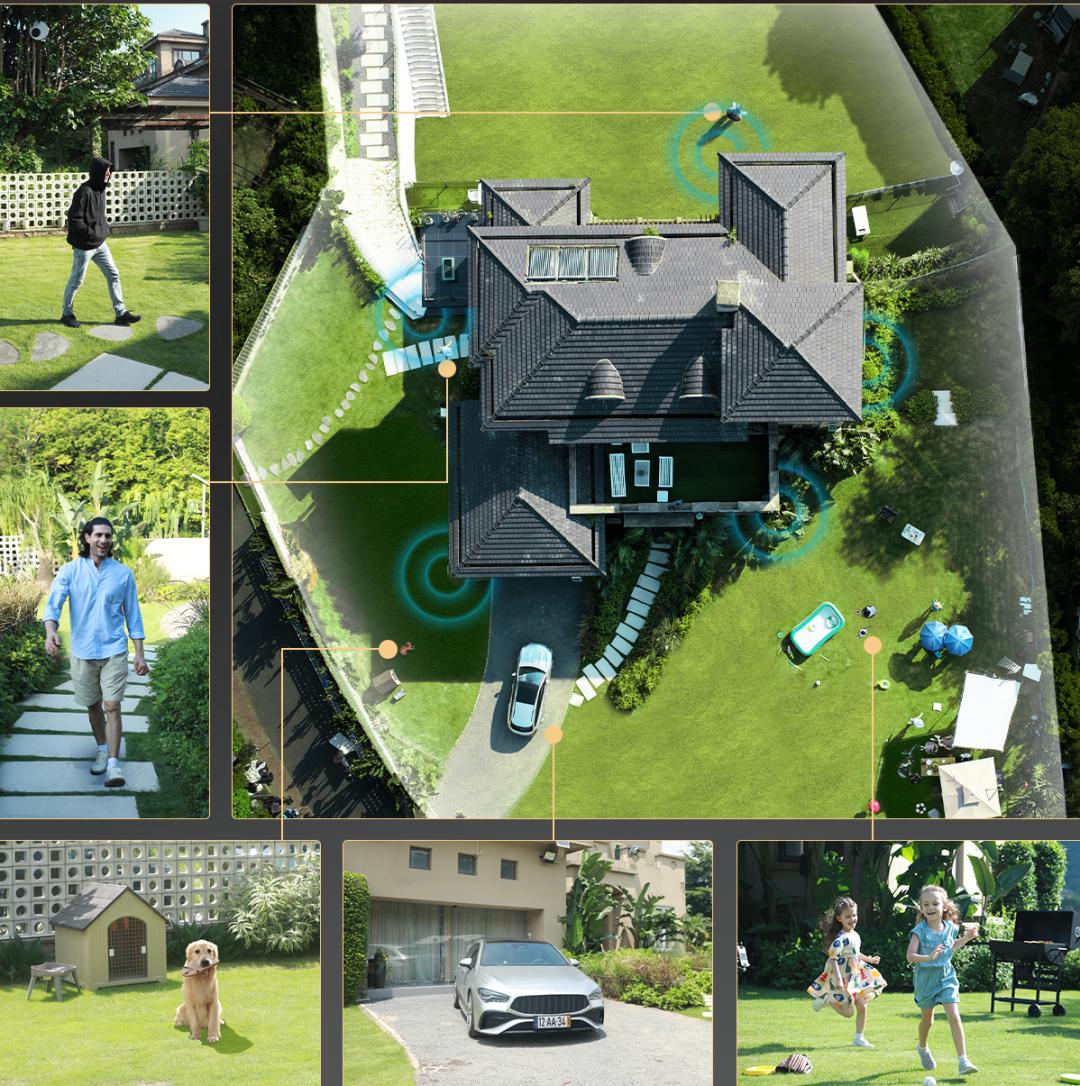
On this basis, NAVO also plans to launch a home security brain in the third quarter of this year. The home security brain will further undertake the capabilities of understanding home events, learning user habits, and long - term memory. That is to say, it can not only remember what has happened in family life but also continuously learn the behavior patterns of family members, gradually growing into an intelligent butler in family life.
From solving the problem of "seeing clearly" with black - light full - color technology, to upgrading the "understanding" ability with AlgoMart, and then to the home security brain further evolving into continuous cognition and autonomous decision - making capabilities, the home intelligent agent created by NAVO will take on a more concrete form. After the home intelligent agent truly understands the home space, it will no longer only record events in the home field but also further participate in family life itself.
A New AI Hardware Species is Born in the Dreame Ecosystem
In fact, prioritizing vision is not only a choice of technical route but also a choice of commercialization path.
"In the end, everyone is moving towards embodied intelligence. But for a startup from scratch, it is necessary to form a small commercial closed - loop first," Mao Song further said. In NAVO's strategic plan, "seeing clearly", "understanding", and "interacting" correspond to three stages respectively. In the first stage, commercialization and self - sufficiency are achieved through camera products; in the second stage, the ability to understand the home space is built through the home security brain; in the third stage, interaction and execution capabilities are realized through product forms such as care - giving robots.
Therefore, NAVO's extension to embodied intelligence is more like a natural leap in capabilities after the camera can "understand".
Once AI gradually gains the ability to understand the home space, the next step will naturally be the stage of interaction and execution: when a package delivery is recognized, the system needs to pick up and transport the package; when an abnormal user emotion is recognized, there may be a further need for companionship and interaction; when the system recognizes the risk of an elderly person falling, it needs to take further actions such as giving a reminder and delivering medicine.
When interaction and execution become the ultimate goals, the physical form that carries these actions becomes less important. "In different scenarios, robots can have different forms. The core is not what they should look like but whether they have the ability to create value for users in a certain scenario," said Mao Song.
It is worth mentioning that, compared with many embodied intelligence startups that are still in the concept - verification stage, NAVO achieved self - sufficiency in less than a year after its establishment.
The success of NAVO's business path is not only due to its technical judgment but also inseparable from the methodology accumulated in the consumer electronics industry for a long time. This consumer electronics gene is reflected in NAVO's emphasis on user feedback. Mao Song mentioned that after the product was launched, the team checks user reviews almost every day. "We receive feedback on the first day, locate the problem on the second day, and solve the problem on the third day." In his view, in many cases, technological leadership does not equal product leadership. What truly determines product competitiveness is whether users can perceive the value created by these technologies.
In addition to this methodology from the consumer electronics industry, NAVO is backed by the Dreame ecosystem, which itself is one of the few domestic consumer electronics enterprises that have completed global verification.
Mao Song believes that the final competition in consumer - grade embodied intelligence is not only about model capabilities but also includes supply - chain capabilities, global channel capabilities, and brand and user - operation capabilities. Dreame has already formed relatively mature accumulations in these fields. "NAVO can reuse the global system established by Dreame, including brand, channels, supply chain, and consumer electronics product capabilities, to quickly complete product mass production and overseas market expansion." According to the company, currently, 90% of NAVO's revenue comes from overseas markets.
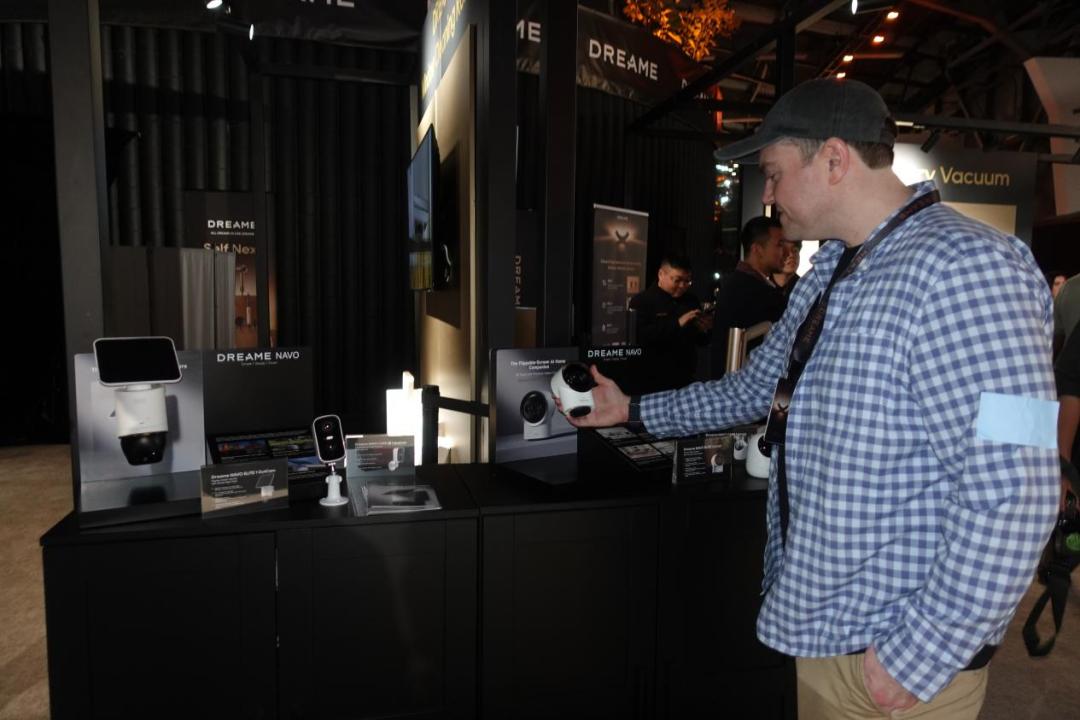
As an independent business unit incubated by the Dreame ecosystem, NAVO still maintains an independent R & D, product, and operation system. While reusing Dreame's global capabilities, it also maintains the independent route and iteration efficiency of a startup. Currently, the company has independently completed two rounds of financing. On the basis of the tens of millions of yuan investment in the Pre - A round last year, the old shareholder, Sky Factory Venture Capital Fund, additional invested tens of millions of yuan in the Pre - A+ round. NAVO's differentiated embodied intelligence implementation route has been initially recognized in the capital market.
Regarding the plan after this round of financing, Mao Song said that part of the funds will continue to be invested in global market expansion to accelerate the growth of overseas channels and scale; the other part will be