The 2026 Gimbal Camera Showdown: Where Did It Come From, and Where Is It Heading?
In September 2016, there was still a year before the release of the iPhone X, which would change the mobile phone industry. However, another industry - changing product, AirPods, made its debut.
Now we all know that the explosion of TWS earphones stems from this product. But in that September, people's comments on it were full of mockery: "Isn't this just an EarPods with the wires cut off?", "They'll fall off after a few shakes. You can pick up several on the playground track in a day...", "Apple has done so many bad things. Cutting the 3.5mm headphone jack is just to make an extra 1,288 yuan from me."
In November 2018, DJI released the Osmo Pocket gimbal camera. Initially, most people didn't think they needed an additional handheld photography device besides their mobile phones, especially considering its small screen.
As we all know what happened later, the DJI Osmo Pocket 3 became a phenomenon - level product in the consumer electronics industry. People really realized that there could be a handheld photography device besides mobile phones.
Just as the AirPods in 2016 really seemed like an EarPods released in 2012 with the wires cut off, the foreshadows of many technologies such as moving the gimbal to a handheld device and the "magic action" of rotating to start shooting have been laid everywhere. There have been many pioneers exploring and sighing, small factories making modifications. Technologies that have been dormant for many years have crossed the cycle and found suitable scenarios. It's a story of technological fantasies and successive efforts of generations of players leading to the success of the final product.
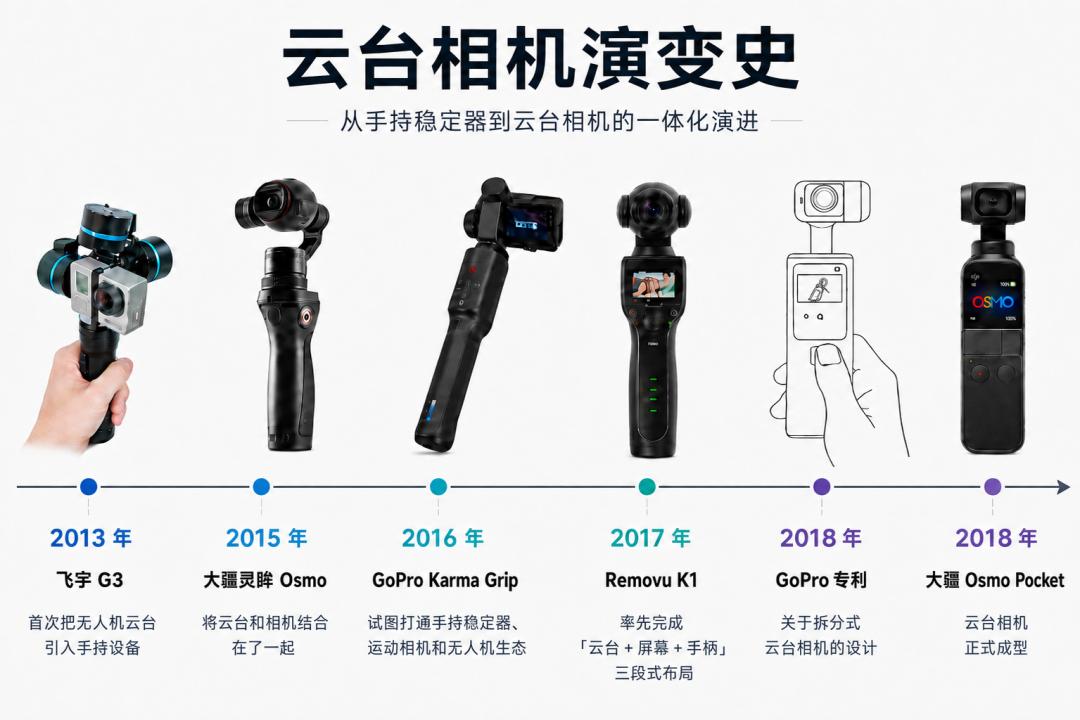
The Gimbal Comes First in Gimbal Cameras
When the first - generation Osmo Pocket gimbal camera was released, people thought such a product was not very necessary because to achieve stable video shooting effects, you could just pair a mobile phone or an action camera with a stabilizer costing a few hundred yuan. Why buy another device?
At that time and even in the following years, this "combination technique" was the best and most cost - effective solution for lightweight video shooting.
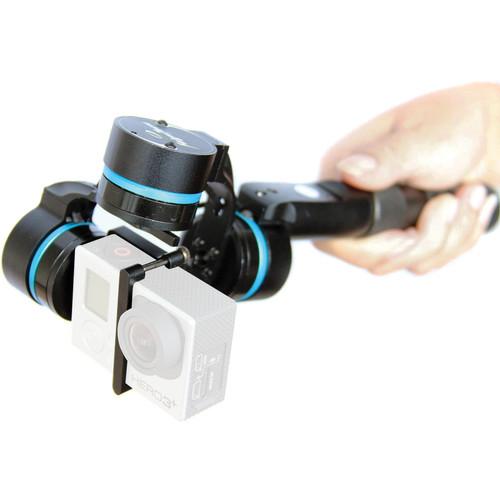
Feiyu G3
In 2013, Feiyu, which had been focusing on drone flight control and aerial photography gimbals, decided to transform and apply its aerial photography gimbal technology to handheld gimbals. It launched the world's first handheld two - axis gimbal, the Feiyu G3, for GoPro.
The sky and the ground were thus connected. The Feiyu G3 provided the handle and the gimbal, and the GoPro action camera provided the camera and the screen. They formed a combination of a handle, a gimbal, a camera, and a screen, becoming the earliest prototype of today's gimbal cameras and kicking off the era of small electronic gimbals.
Perhaps to prove its pioneer status in the field of gimbal cameras, Feiyu classifies both "integrated gimbal cameras" and "handheld action camera stabilizers" under the broad category of "gimbal cameras" on its official website.
Yes, Feiyu also released several handheld gimbal cameras later, also called the Pocket series. In fact, the release of Feiyu Pocket 3 was even a few months earlier than that of DJI Pocket 3.
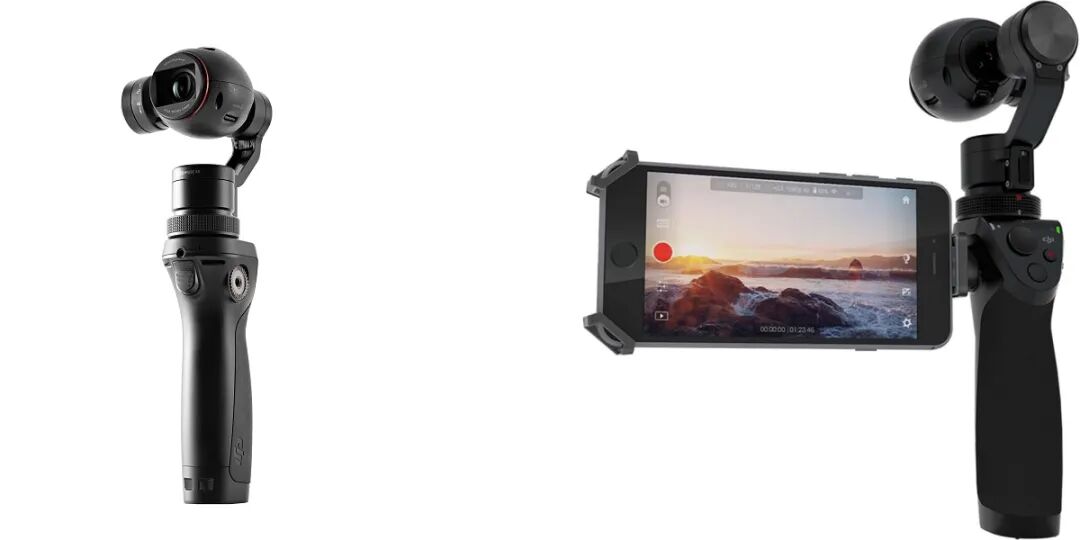
DJI Osmo Camera
Besides Feiyu, Zhiyun also released a GoPro handheld gimbal at that time, which was compatible with almost all Hero action cameras on the market. Two years later, in 2015, DJI, which was also exploring the sky, released the Osmo Camera. It had a handle, a gimbal, and a camera, but no screen. It needed an external mobile phone as a viewfinder. Although the Osmo Camera didn't make much noise in the market, it was of great significance to DJI. It marked the official start of the handheld imaging device product line, which has now become another revenue pillar for DJI.
If you compare the Osmo Pocket gimbal camera released in 2018 with the Osmo Camera released three years earlier, you'll find many similarities in imaging parameters. For example, they both have a 12 - megapixel 1/2.3" CMOS, the same video ISO dynamic range of 100 - 3200, and the same electronic shutter speed of 8s - 1/8000s, etc. The difference is that the Osmo Pocket gimbal camera significantly reduced the volume and weight, and could achieve higher video frame rates and bit rates. For the convenience of video shooting, the equivalent focal length was adjusted to 26mm.
Between 2015 and 2018, which were crucial years for DJI's handheld imaging devices, the industry's thinking about such products didn't stop.

GoPro Karma Grip Handheld Stabilizer
In March 2017, GoPro launched its own stabilizer, the Karma Grip. As an official accessory, the Karma Grip can start/stop the GoPro action camera, adjust the shooting mode, and quickly mark wonderful moments with the HiLight function. In addition, it can be disassembled. It can be connected to various GoPro mounting brackets through a mounting ring, can be worn on the chest or attached to the shoulder strap of a backpack, and can also charge the GoPro.
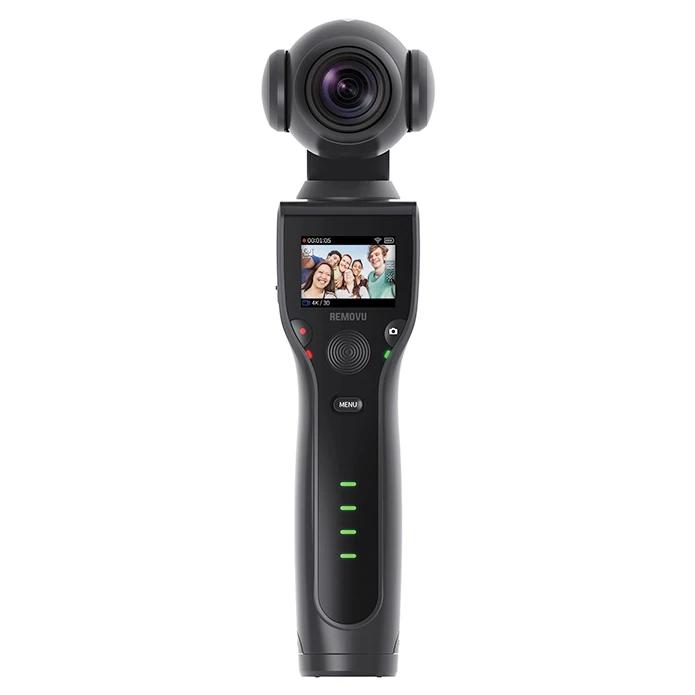
Removu K1 Handheld Gimbal Camera
Also in 2017, Removu, a South Korean brand that mainly made accessories for GoPro action cameras before, perhaps got product inspiration from the design of the Karma Grip. Feeling that it shouldn't remain in the shadow for long, it decided to revolutionize GoPro with a more radical and integrated product. So it launched the Removu K1 handheld gimbal camera and launched a crowdfunding campaign on Indiegogo.
This thing that looks a bit like a razor is a complete handheld gimbal camera product that truly combines a handle, a gimbal (with a built - in three - axis stabilizer), a rotatable camera (capable of shooting 4K 30fps videos and 12 - megapixel photos), and a screen (a 1.5 - inch LCD screen). People no longer need to piece together a set of equipment for the "combination technique".
The reason why history doesn't remember the groundbreaking Removu K1 handheld gimbal camera very well is that although it integrated the modules, it weighed up to 340 grams, almost three times the weight of the first - generation DJI Osmo Pocket gimbal camera, which is 116 grams.
In the consumer electronics industry, people don't remember the first, but only the best.
Is AirPods the inventor of Bluetooth earphones or TWS earphones? Of course not. Before that, there were already split - type Bluetooth earphones like Earin and Onkyo W800BT. However, AirPods achieved a product experience that pioneer products could hardly match through the pre - designed form of EarPods, the low - power W1 chip, multi - sensor induction, Siri connection, and other technologies.
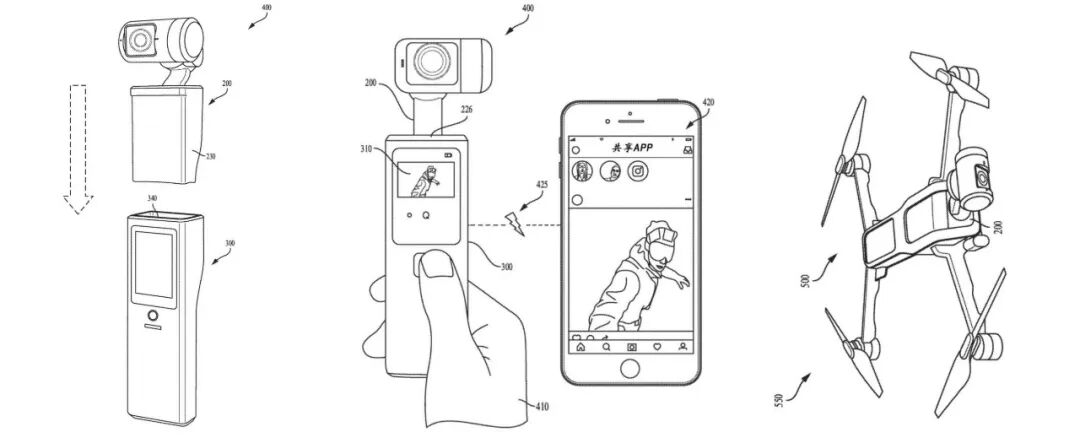
GoPro's Patent Diagram of a Gimbal Camera
GoPro, which was in multi - line competition with DJI and Insta360, also thought about launching a handheld gimbal camera. In January 2018, GoPro submitted a patent document. This was not only a product with a handle, a gimbal camera, and a screen, but it could even be disassembled. The gimbal and the camera part could be installed on a drone.
This is a bold and reasonable idea. After all, the gimbal technology of handheld gimbal cameras originated from the aerial photography gimbals of drones. GoPro hoped that this technology could return to save its then - precarious drone business.
GoPro's first drone, the Karma, was released together with the HERO5 action camera and the Karma Grip handheld stabilizer. The HERO5 action camera could be used independently, could be installed on the Karma Grip to become a gimbal camera, and could also be installed on the Karma drone to become an aerial photography camera. It was an advanced "ecological synergy" concept at that time. Unfortunately, the drone kept crashing and had no future in the sky.
However, the patent design that allows the gimbal camera to move between the sky and the ground remains just a design. Judging from GoPro's recent situation, it's probably impossible to put it into mass production.
In 2020, two years later, DJI launched the second - generation Pocket product. Compared with the first generation, the Pocket 2 upgraded the mini joystick, the 20mm vlog golden focal length, and the all - around handle. Although it didn't become a phenomenon - level product, these three seemingly advanced designs at that time laid the foundation for the popularity of the Pocket 3 later.
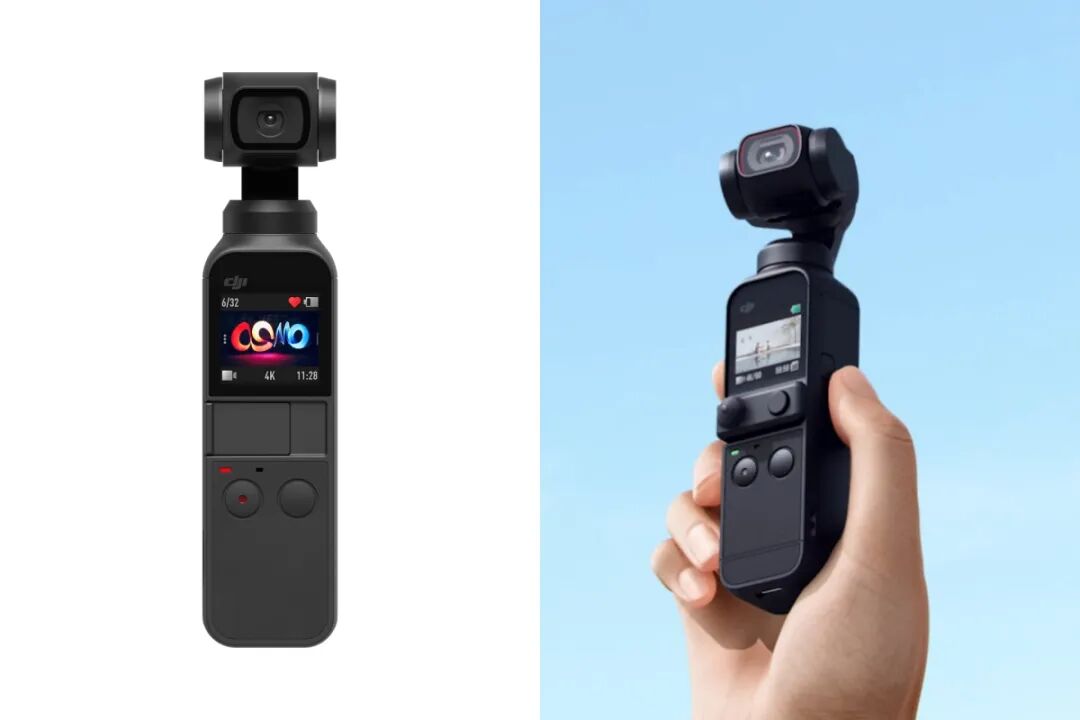
DJI Osmo Pocket and Pocket 2
From a Million - Level Market to a Ten - Million - Level Market
If the integrated gimbal camera got the ticket to enter the mass market, then the rotating screen is its "trump card" to become a hit. This story actually started to be paved a long time ago.
Feiyu is a magical manufacturer. In 2013, they first applied drone gimbal technology to handheld stabilizers. In 2022, they applied for a patent for "a handheld infrared dual - light gimbal camera with a rotatable screen". This was an early concept of a rotating screen in the field of handheld gimbal cameras. The vertical and horizontal screen shooting modes also locked in the trend of short - video creation in advance.
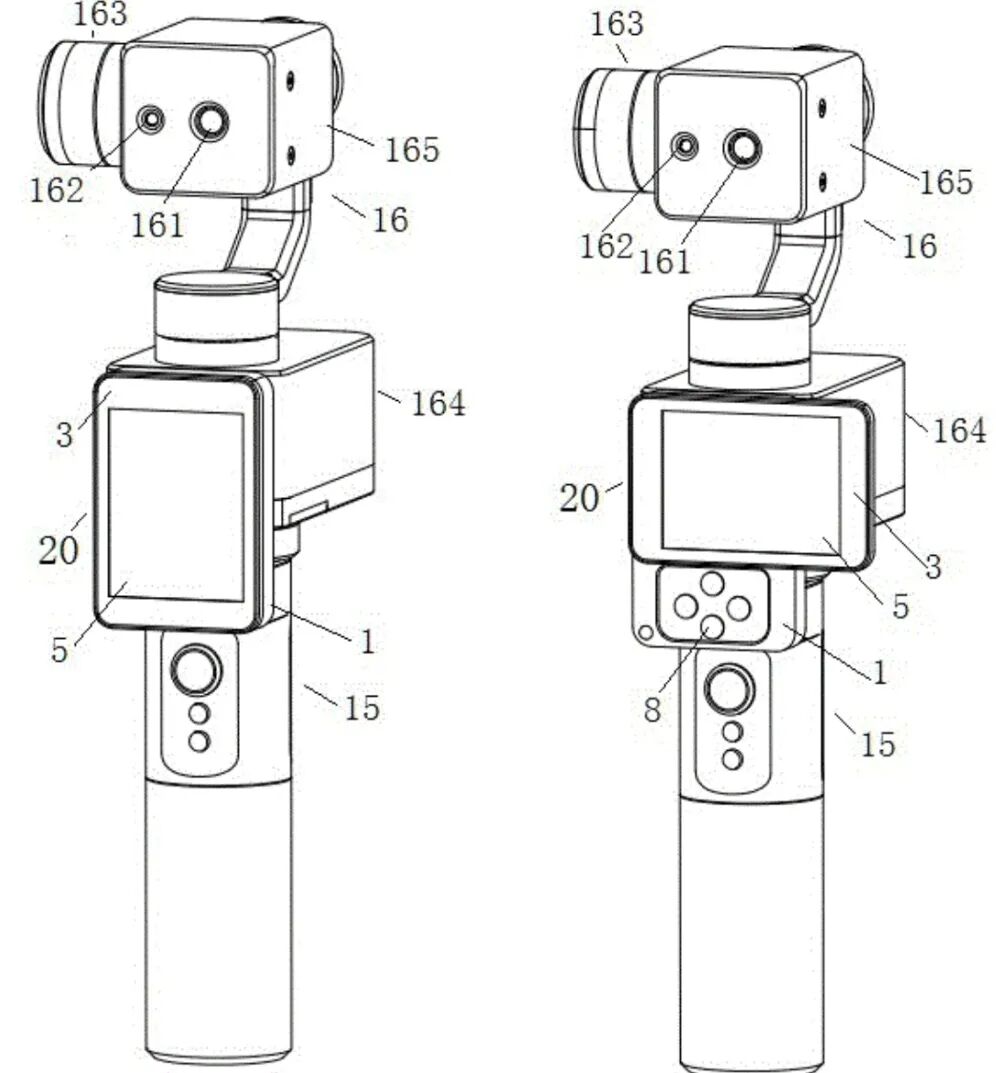
Feiyu's Patent Diagram of a Rotating - Screen Gimbal Camera
A few weeks before the release of the DJI Pocket 3 in