Put professional imaging in your pocket: DJI's twelve-year journey
On the timeline of technology advancing towards the future world, a handheld imaging device named Osmo Pocket 4P stands at a crucial crossroads. One end of it is connected to the strict pursuit of image quality, dynamic range, and color science in professional film sets; the other end is dedicated to lowering the threshold of creation, enabling more individuals with creative ideas to embark on their creative journey with ease.
For a long time, high - quality image creation has been regarded as a systematic project with a very high threshold. This is not only due to the expensive equipment investment but also the complex technical parameters and heavy hardware forms behind it. What DJI is doing is to make this professionalism more accessible through continuous engineering innovation.
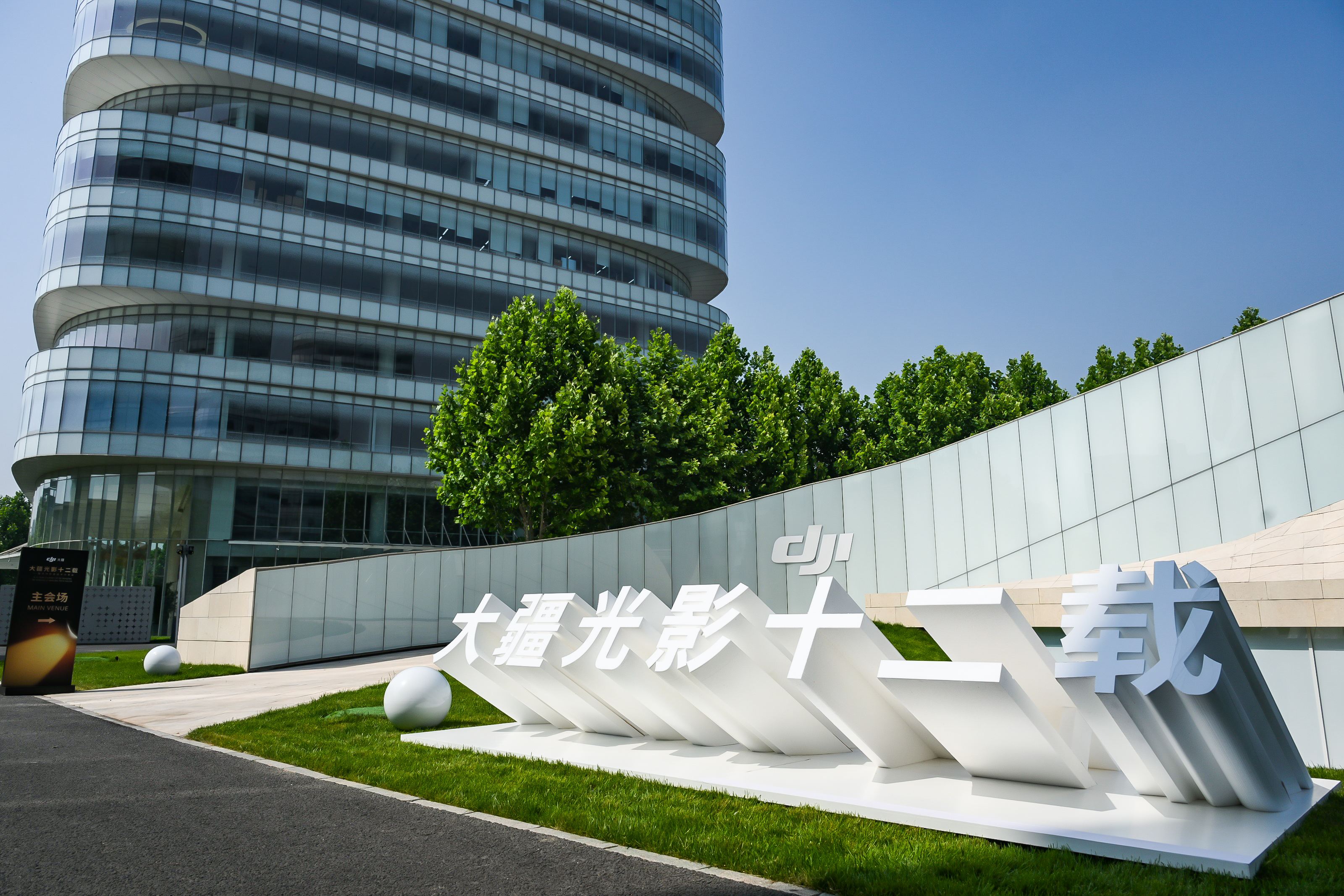
On June 2nd, at a technology sharing session, DJI presented "Twelve Years of DJI Handheld Imaging: Technological Journey". It is more like a technological chronicle: from drones to Ronin, from Ronin 4D to the Pocket series, what DJI has been repeatedly doing in the past twelve years is to break down complex imaging capabilities into transferable engineering modules and then put them into lighter and lighter devices.
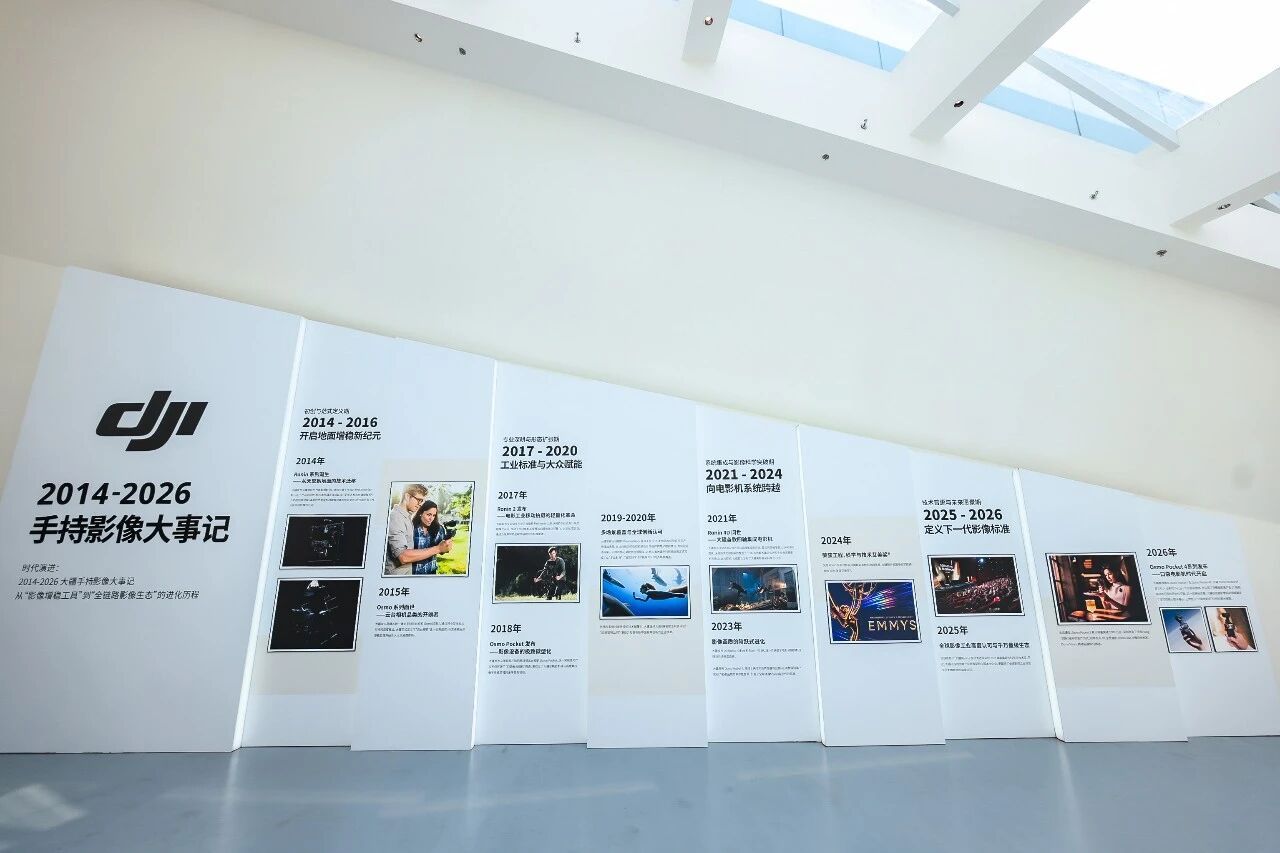
What the outside world can see is the change in product form, but for DJI, the underlying method remains unchanged. In essence, this is a story about equal rights in creation - through a 12 - year product iteration, DJI has completed the long - term migration of imaging technology towards being more lightweight, free, and open.
From the Sky to the Palm: What DJI Truly Accumulated is a Set of Imaging Engineering Capabilities
The twelve - year journey of DJI imaging is more like an exploration process of how to make the picture more stable and clearer.
Going back to 2013, the Phantom series took the camera to the sky, allowing the public to obtain a "bird's - eye view" in a simpler way for the first time. At that time, the core problem DJI needed to solve was straightforward: how to keep the picture stable during high - speed movement and complex postures. Precision mechanical gimbals and control algorithms thus became part of DJI's technological DNA.
This ability was then transferred from the sky to the ground. In 2014, Ronin was released. DJI transformed the gimbal technology originally used for drone aerial photography into a ground - handheld camera movement tool, enabling movie - level moving shots that originally required large equipment and complex collaboration to enter more flexible shooting scenes.
From the RS series supporting mirrorless cameras to the Ronin 4D integrating four - axis stabilization and LiDAR laser focusing, DJI gradually built a foundation around stability, image processing, color science, and professional workflows in the following years. In particular, the CineCore system carried on the Inspire 2 in 2016 began to support Apple ProRes RAW, which marked that DJI began to have more complete image processing and professional workflow capabilities.
The technological accumulation also began to benefit ordinary users from top - to - bottom. DJI's exploration in the consumer - grade imaging market started with the Osmo in 2015. Although the first - generation product was a bit ahead of its time, it established the core idea that imaging devices should be independent entities rather than accessories to mobile phones.
In 2018, the first - generation Osmo Pocket was born. This marked that DJI overcame two major technical challenges: gimbal miniaturization and low - power imaging systems. Engineers reconstructed and compressed the complex mechanical stabilization structure to the size of a lipstick, and at the same time solved the problem of balancing battery life and heat dissipation in a very small volume.
Since then, the Pocket series has continuously introduced larger sensors, the D - Log M color mode, and a more mature post - production space. This product line is no longer just a Vlog tool. It is becoming an independent category between mobile phones, action cameras, and professional cameras.
When talking about the product positioning, the DJI team gave a very crucial judgment: If a product can do things simply and well, there is no need to deliberately make things complicated.
This sentence explains the underlying logic of the Pocket series - DJI does not split "professional" and "mass" into two mutually exclusive directions. Instead, it tries to compress more capabilities into the same device, so that users are less blocked by the stratification of equipment.
This is also the real difficulty for DJI to move from the professional to the consumer market. Professional tools emphasize "suitability", while consumer products test comprehensive capabilities. Professional users are willing to understand complex parameters, while ordinary users only vote with the results. It is often more difficult for a consumer device to undertake professional imaging capabilities because it needs to have an upper limit and be easy to use.
Therefore, the maturity of the Pocket series is not only reflected in sales volume or market share. More importantly, it has brought a once - niche product form into its prime: users know what scenarios it is suitable for, creators are willing to incorporate it into their workflows, and the professional imaging industry has also begun to seriously discuss its boundaries.
This professional accumulation has finally been recognized by the global film and television industry. In 2024, the DJI Ronin series won the Engineering, Science, and Technology Emmy Award from the Television Academy; in 2025, the R & D team of the Ronin 2 gimbal system won the Academy Scientific and Technical Award. The stable technological foundation gives DJI the confidence to continuously penetrate the market downwards.
In 2026, as a product originally positioned for the mass consumer market, the Pocket series began to further penetrate into professional - level shooting scenes. In mid - May in Cannes, France, the Osmo Pocket 4P won the recognition of many Hollywood and Cannes - winning directors, proving that DJI's professional imaging capabilities are being repackaged into lighter and more accessible creative devices.
"Twelve Years of DJI Handheld Imaging: Technological Journey" systematically explains how it integrates the large - scale drone stabilization system and the color science of film cameras into handheld devices step by step through precise mathematical models and physical engineering. A DJI engineer at the scene especially mentioned that an important way for the team to iterate color science over the years is to listen to a large number of front - line voices and have in - depth exchanges with colorists.
At this moment, DJI's long - termism begins to take shape. In the past twelve years, it has not simply chased after trends but has been based on in - depth insights into user needs and long - term decomposition and recombination of underlying technologies. With this spirit of exploration, DJI has continuously lowered the threshold of creation, enabling more diverse expressions of life to be recorded more clearly and stably.
The Limit of Engineering: Bringing Professional Imaging Capabilities to the Palm
The emergence of the Osmo Pocket 4P is precisely the result of the maturity of DJI's imaging technology tree.
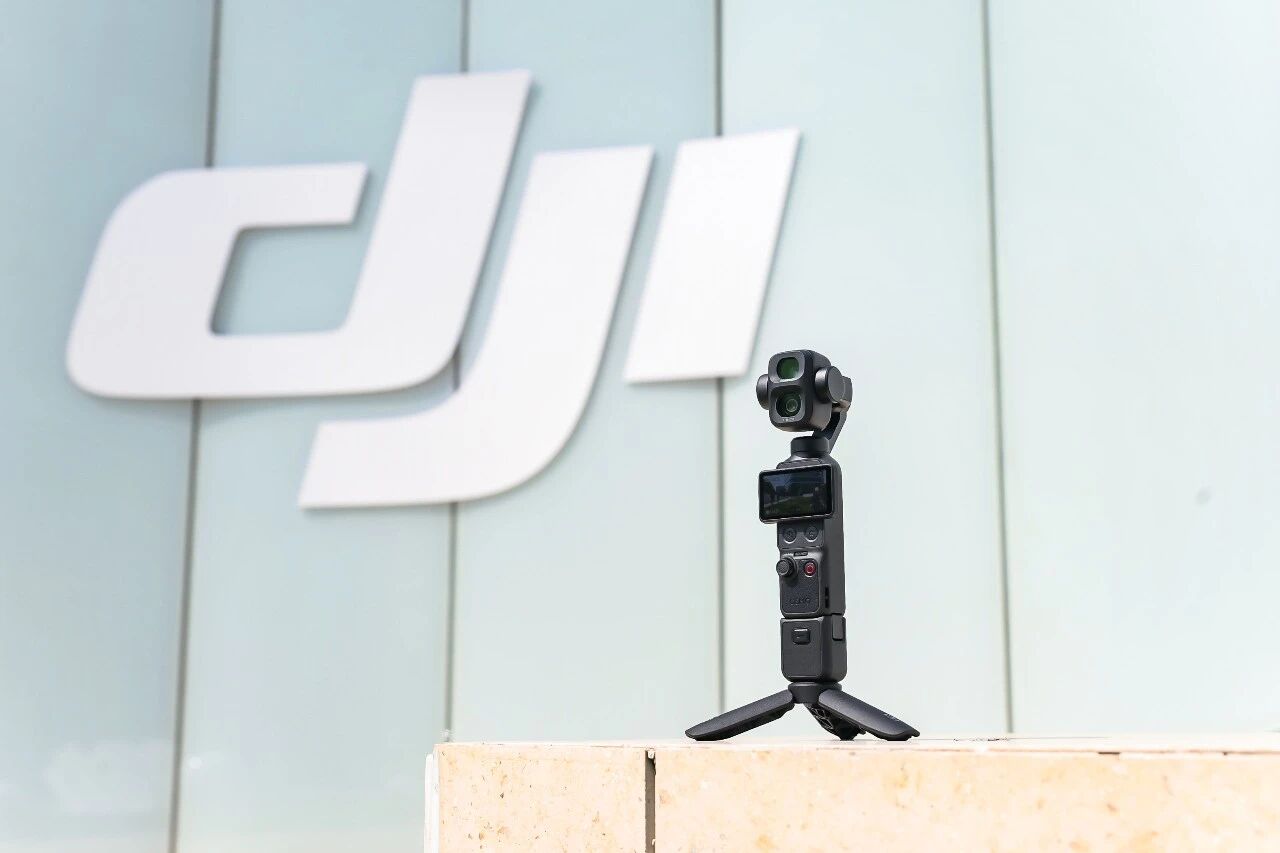
What this product truly challenges is an impossible triangle at the physical level: in a very small volume, it needs to balance high image quality, heat dissipation, and battery life at the same time. If any one of the indicators is raised alone, it may lead to compromises in the other aspects. The larger the sensor, the higher the heat generation; the stronger the image specifications, the higher the power consumption; the smaller the body, the more limited the heat dissipation space.
This is also where the Pocket 4P is more difficult than ordinary consumer electronic products. It cannot rely solely on algorithms to create a good visual experience but must also respect the physical constraints of optics, sensors, and mechanical structures. Computational photography can reduce the probability of user errors, while physical optics determine the upper limit of the picture.
Take the 17 - stop dynamic range and the D - Log 2 color curve as examples. These terms used to appear more in the discussion context of professional cameras. After they are introduced into the Pocket 4P, their core significance lies in improving the plasticity of the footage rather than simply piling up parameters.
The 17 - stop dynamic range solves the problem of whether details can be retained in high - contrast environments. Backlit portraits, sunsets, indoor windowsides, and highlights in night scenes are the scenarios where over - exposed highlights or under - exposed shadows are most likely to occur. A higher dynamic range means that creators have a greater margin of error on - site.
The D - Log 2 solves the problem of how much the footage can enter the post - production process. It maximally retains the brightness and color information of the picture, leaving room for color grading. Its value does not lie in pleasing the eye when the picture is directly output but in making the captured footage more easily match the color of professional systems.
This is exactly the meaning of the "pocket movie camera" - Compress some mature technical rules in the film industry into a portable device, especially dynamic range, color curve, focal length expression, and stable camera movement. It gives individual creators a higher starting point and provides professional teams with a more flexible camera position in special scenarios.
Another key change in the Pocket 4P is the enrichment of lens language. The R & D team also explained the choice of the 60mm focal length: it needs to strike a balance between facial compression, spatial relationship, and the distance used in Vlogs. If it is too short, it cannot form sufficient separation of the subject; if it is too long, it will sacrifice the applicability of handheld self - shooting and mobile shooting.
This means that the 60mm focal length is not just "one more focal length". Coupled with the up - to - 12x zoom capability, it supplements the pocket device with the ability to get closer to portrait close - ups, spatial compression, and shallow depth - of - field expression, allowing creators to obtain a more cinematic perspective switch in addition to wide - angle storytelling.
The most difficult part of product lightweighting is to retain the upper limit of creation after each reduction in size.
This is why the Pocket 4P cannot be simply summarized as "more portable". It represents a more mature engineering ability: extract the most valuable parts from the professional system and then repackage them into tools that ordinary people can use through structural design, sensor capabilities, algorithm collaboration, and interaction logic.
This perseverance in practicing basic skills has finally made the Pocket 4P a "movie camera that can fit in your pocket".
The Arrival of Equal Rights in Creation: How Does the Pocket 4P Change the Creative Workflow?
The industry significance of the Pocket 4P cannot be viewed from the perspective of consumer electronics alone.
It truly enters the imaging workflow. For professional teams, it may not necessarily serve as the main camera, but it can be used in scenarios such as shooting in narrow spaces, long - moving shots, quick reshoots, storyboard pre - rehearsals, and documentary follow - up shooting. Its value lies in reducing on - site scheduling costs and providing a more flexible source of footage.
For individual creators, it provides another threshold for expression. In the past, for a person to obtain a more cinematic picture, they often needed to understand a whole set of systems including cameras, lenses, stabilizers, audio recording, and post - production color grading. The Pocket 4P encapsulates some of this complexity, allowing creators to enter the narrative itself more quickly.
The advanced state of a good product is to let the machine gradually fade into the background and let the creator face the story and characters again.
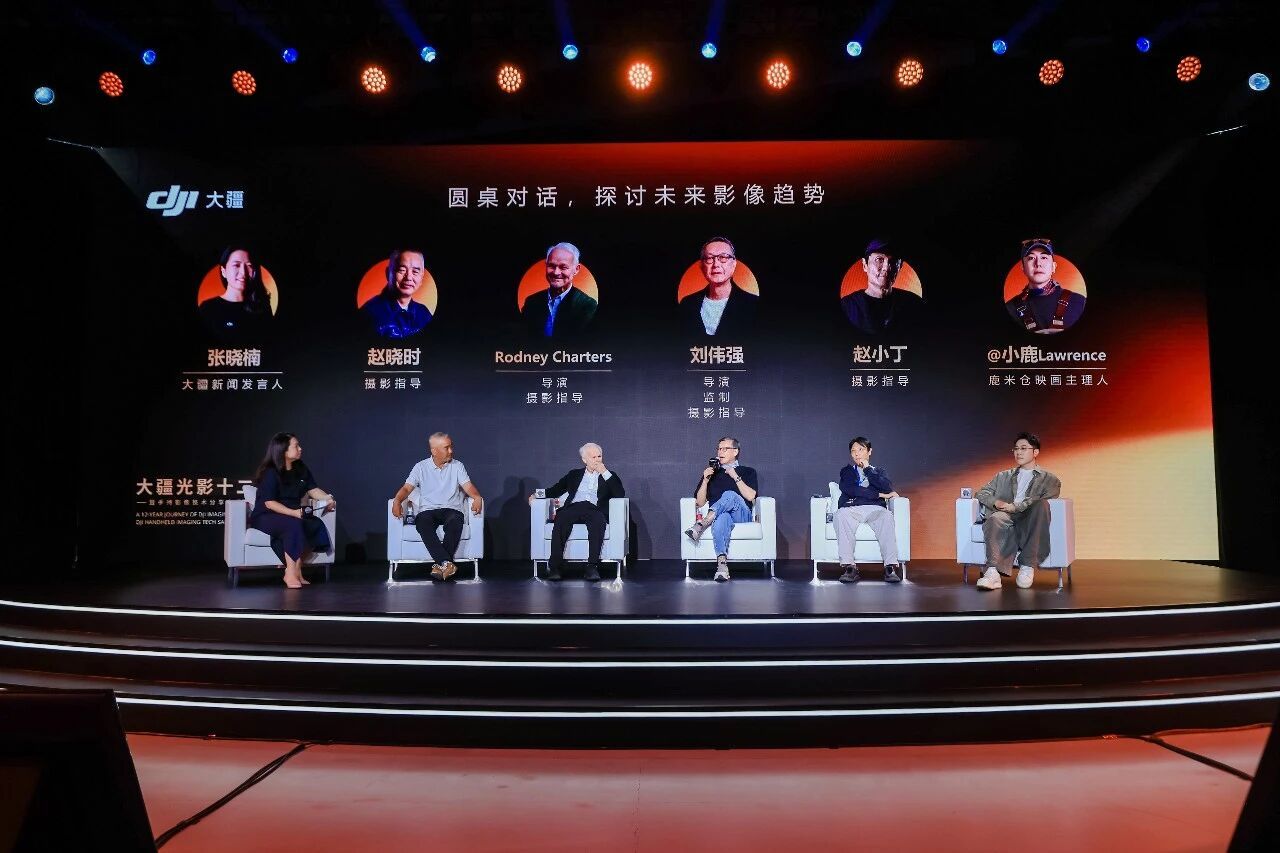
This also explains why professional directors and cinematographers at the press conference talked about "story". The Hong Kong director Andrew Lau, who has directed movies such as Infernal Affairs, Young and Dangerous, and The Captain, reminded young creators that the story and characters are the most important, and the machine is just a tool. This sentence actually defines the most accurate position of the Pocket 4P: the stronger its capabilities, the more it should serve expression rather than let the parameters become the expression itself.
Rodney Charters, a cinematographer who has been active in the front - line of the Hollywood film and television industry and has been nominated for the Emmy Award twice for the TV series 24, also pointed to the same thing when talking about the changes brought about by the reduction in equipment costs: as long as they have ideas, young creators and students can also form teams to shoot works. After the cost of tools is reduced, the first threshold of creation is lowered, and the real test returns to imagination, story organization, and aesthetic judgment.
Xiaolu Lawrence, a self - media creator and one of the top 100 UP owners on Bilibili in 2024/2025, represents another example. For mature medium - and long - form video and short - form video creators, movies are no longer just a distant industrial system but a source of methods that can be learned and borrowed from. Knowledge such as lens language, rhythm control, character scheduling, and color mood, which used to belong to film education and professional film sets, is being absorbed by more content creators.
This is the deeper value of the Pocket 4P: It does not guarantee that everyone can shoot blockbusters, but it gives more people a starting point to train professional imaging expression. The real equal rights in creation lie in giving more people the opportunity to stand on the first starting line of creation rather than promising that everyone will immediately become a director.
Director Andrew Lau, based on his experience, pointed out that the introduction of the 17 - stop dynamic range and the D - Log 2 color curve enables the Pocket 4P to match professional film cameras in core indicators. This means that shots that previously had to rely on professional stabilization equipment and senior cinematographers can now be completed with this pocket device, and dynamic shot shooting is also lighter than before.
Zhao Xiaoding, a cinematographer with representative works such as House of Flying Daggers, Shadow, and The Flowers of War, mentioned at the scene that the miniaturization and lightweighting of digital devices have changed the traditional creative model and also changed the market demand for shooting equipment.
Zhao Xiaoshi, who has served as the cinematographer for movies such as The Founding of a Party, The Founding of a Republic, and Forever Enthralled, also summarized the current evolution of imaging into two paths: one continues to pursue the ultimate viewing experience brought by large - format, IMAX, and Dolby Vision, and the other moves towards professional and lightweight devices with high convenience.
These two paths will coexist for a long time. One direction continues to raise the ceiling of the imaging industry, and the other is responsible for expanding the entrance of professional expression. The significance of the Pocket 4P lies in the latter: it allows more people to access some capabilities that previously required expensive systems at a lower cost.
When professional rules are compressed into consumer - grade devices, industrial changes occur at the moment when the threshold is rewritten.
Conclusion: The End of Technology is to Return the Right of Expression to the Creators
The market where the Pocket 4P is located is different from the early days. Mobile phone manufacturers, action camera brands, and portable imaging device manufacturers are all entering this field. Users' demand for "portable shooting" is getting stronger, and the competition among product categories has become more direct.
However, looking back at the twelve - year journey of DJI imaging, from the sky to the ground, from professional film sets to ordinary users, from large - scale systems to palm - sized devices, it has always been doing the same thing: Transform complex imaging capabilities into lighter, more stable, and easier - to - use creative tools. The Pocket 4P is just the latest node on this path. It provides professional teams with an additional camera position in special scenarios and gives individual creators a higher upper limit for their footage.
The end of imaging tools should be to enable creators to reach the scene faster, capture characters faster, and enter the