Today, ChatGPT and Codex officially announced their integration, and one billion people have obtained the "Super Agent".
[New Intelligence Yuan Introduction] OpenAI's heavyweight Codex and ChatGPT are about to have an epic combination! Three major updates for Codex: Agent plugins, annotations, and Sites are all launched, unlocking an "all - around alter ego" for nearly one billion users overnight.
OpenAI has once again shaken up the game!
Just now, at an online press conference titled "Intelligence at Work", OpenAI's product manager took the stage to make a heavyweight announcement -
In the next few weeks, we're going to integrate Codex into ChatGPT!
The long - rumored "super app" of ChatGPT has finally become a reality.
ChatGPT + Codex, these two AIs with a combined user base of nearly one billion, are going to be fully integrated.
Behind OpenAI's move lies a greater ambition - true "intelligence" should work directly for you!
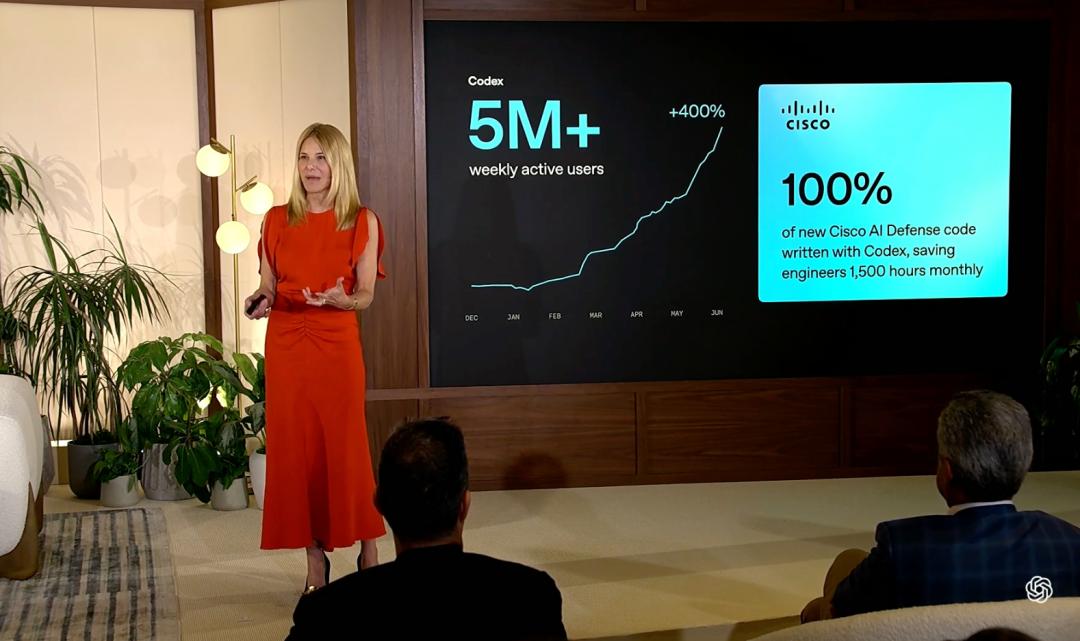
Currently, Codex's weekly active users have exceeded 5 million. It's not just a "toy" for programmers; it has long become everyone's "AI colleague".
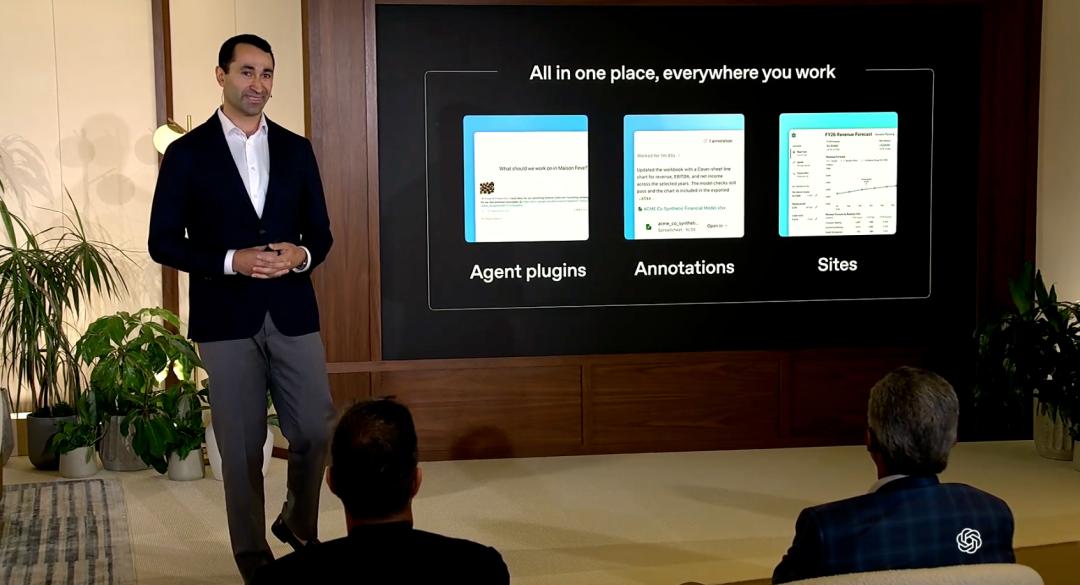
To take the "intelligence" experience to the extreme, this time, three core upgrades of Codex are launched overnight:
Agent plugins: New plugins can deeply customize Codex according to individual roles and commonly used tools;
Annotations: Add annotations directly to Codex's output results to instantly optimize code output;
Sites: Create interactive websites and applications with just one URL and share them seamlessly with the team.
From now on, the era when everyone can use Codex has arrived!
Epic combination of ChatGPT and Codex
The name of this press conference, "Intelligence at Work", is exactly the core message OpenAI wants to convey -
Let intelligence go to work!
ChatGPT has brought AI to everyone, and Codex has brought the "strongest agent" to everyone.
One focuses on thinking, writing, and creation, while the other is responsible for "actually getting the job done".
For a long time, they have been independent apps, operating separately. For users, the most intuitive feeling is a "disrupted experience".
OpenAI is ready to put an end to the ultimate question of "which app should I use for this task".
Therefore, in the next few weeks, a complete integration is about to take place: the exclusive agents will be integrated into a unified ecosystem.
It will be everywhere, whether on desktops, mobile phones, or browsers.
Even in the most familiar Excel, Slack, and the highly - anticipated PPT, it will transform into an all - around office alter ego on standby.
In the words of OpenAI's product manager Alexander Embiricos -
You may not work 24/7, but your cloud - based agent will.
This is the real power of the "super app".
On that day, Altman posted a tweet on X. He didn't mention the press conference or Codex, just quoted a verse from Ecclesiastes 9:10.
Whatever your hand finds to do, do it with all your might.

It took OpenAI a full three months from the internal memo leaked in March this year to the official announcement.
Codex: No longer an AI exclusive to programmers
Last year, Codex skyrocketed with its code - writing ability. This year, with the implantation of a stronger GPT and the launch of a new desktop app, it has witnessed explosive growth.
The latest "The Next Era of Knowledge Work" report revealed a series of figures -
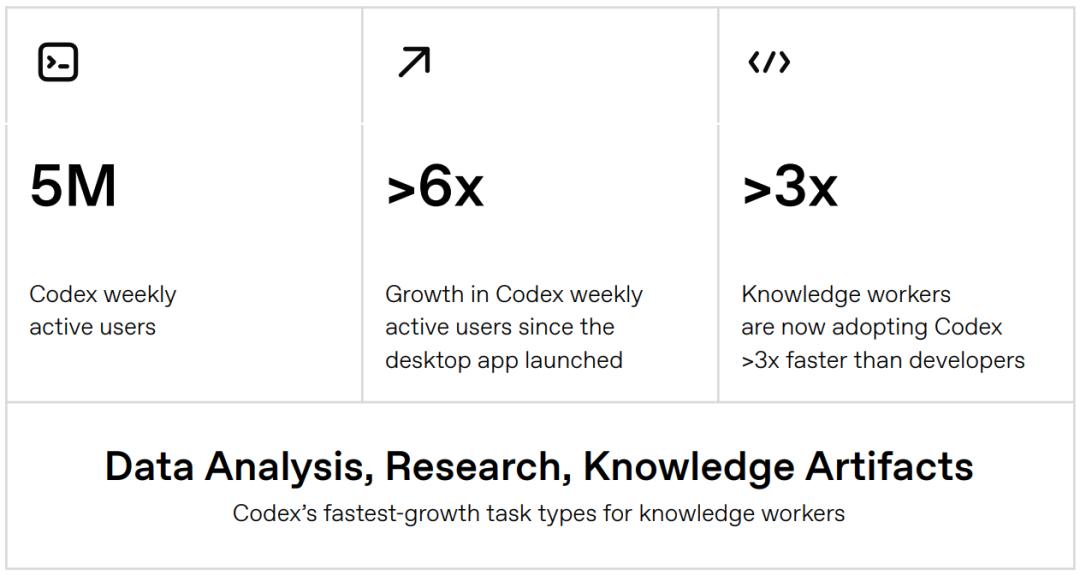
Since February this year, Codex's weekly active users have soared six - fold, exceeding 5 million for the first time.
The most core data: currently, knowledge workers account for 20%, and their growth rate is three times that of developers.
From this, OpenAI discovered an unexpected truth -
The core driving force behind this amazing growth is not code - writing at all, but general office work.
At the beginning of the year, Claude Code had a full - scale explosion and unexpectedly became the public's "daily cheat". Now, Codex is repeating this scenario.

Codex's "Three Killer Weapons" Appear
Revamp the Workflow for Workers
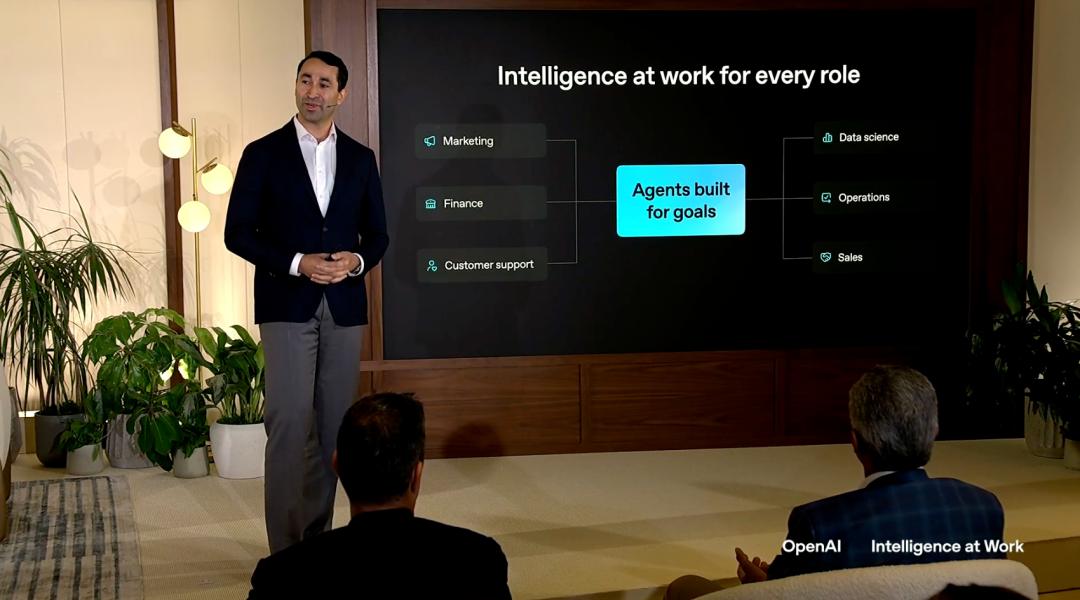
The three upgrades of Agent plugins, annotations, and Sites explain what true "Intelligence at Work" means.
Six "AI Colleagues" Join with 110 Skills
The first batch of six "role - specific plugins" are launched all at once.
It packages the tools, domain knowledge, and skills required for specific positions all at once.
It mainly covers data analysis, creative production, sales, product design, public market investment, and investment banking, with a total of 62 mainstream enterprise applications and 110 skills integrated.
From Salesforce, Snowflake to Figma, Canva, they are all within reach.
It's like a new colleague who has completed the onboarding process and knows the whole workflow, waiting for tasks.
The first is data analysis.
Alexander posed a business question to Codex, "The number of recent subscription cancellations has soared. Find out what's going on."
A few minutes later, the agent understood the semantic data layer on its own, wrote the query, and produced a complete report.
Alexander immediately changed the chart style, checked the underlying SQL, and when he found it okay, he casually asked the agent to turn the whole report into a deck.
The second is creative production.
Alexander first joked that he was kicked out of art class when he was a kid, and then started with a product image and asked the agent to generate a mood board.
He selected the preferred direction, adjusted the lighting and style with remix, used imagegen to create an advertising image, and finally imported it into Canva with one click to turn it into reusable material.
Previously, it would take the creative team at least a few days to complete this process. Now, the whole process can be completed directly -
You don't have to be a data analyst to use the data plugin. Anyone in the company can try any job.
This is the real game - changer. The agent has quietly blurred the boundaries of abilities.
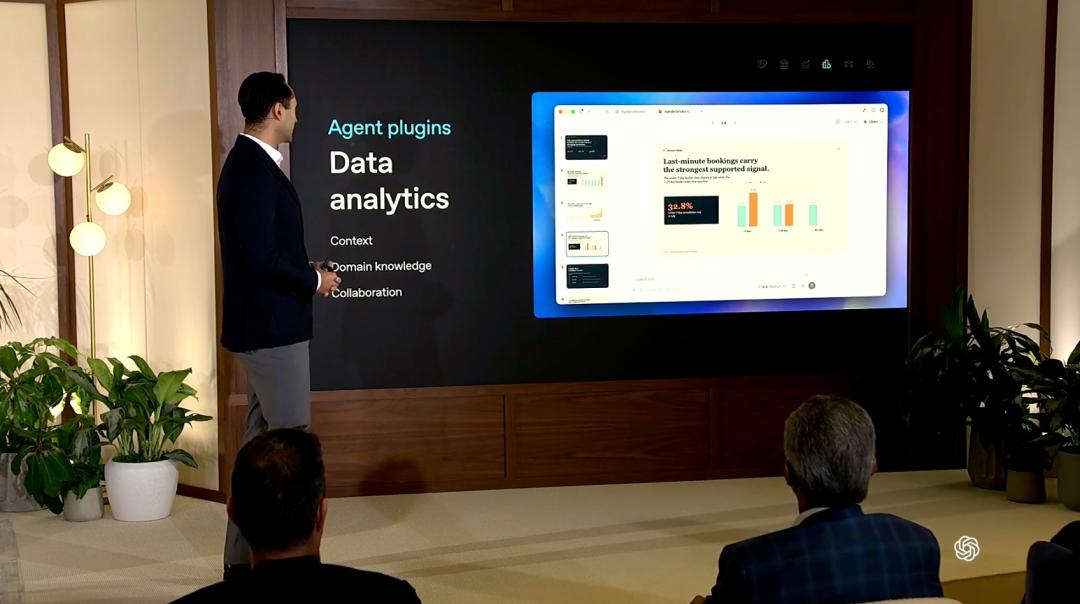
OpenAI also announced that more role - specific plugins such as corporate finance, private equity, marketing strategy, strategic consulting, and law are on the way.
There are currently over 100 plugins in the entire Codex ecosystem.
Annotate and Modify in Real - Time
The agent's work is getting closer to a "finished product", but there's always a tough problem - what if you want to make a small change?
The previous answer was: start over or rewrite the entire requirement.
The second major update, Annotations, solves this "last - mile" problem.
The logic is simple: it modifies where you point.
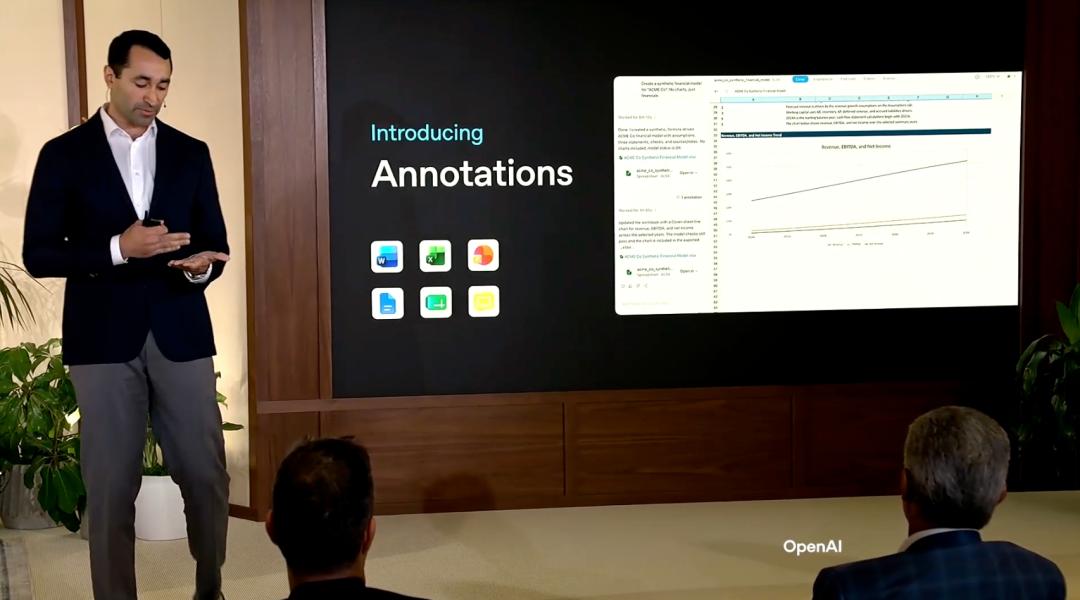
Previously, this function was only available in code and web pages. Now, it has been extended to documents, spreadsheets, and slides.
The operation logic is extremely intuitive. Select the part you want to modify, tell Codex what to change, and the agent will only modify the selected area without touching the rest.
For example, you can select a data area in an analysis spreadsheet and ask Codex to turn it into a chart on the spot, which can be done in a few seconds.
Select the navigation bar of a website and change the font. Select a conclusion in an investment report and ask it to mark the source of information.
Click on the area you're not satisfied with, and the modified part will be seamlessly integrated back into the original text without destroying the other content you're satisfied with.
This changes the collaboration mode between humans and agents from "you finish, then I modify" to "you work, and I adjust on the go".
The difference may seem small, but the continuity of the workflow is completely different.
Create a Shareable App with One Sentence
The third major update, Sites, is the most "futuristic" aspect of this press conference.
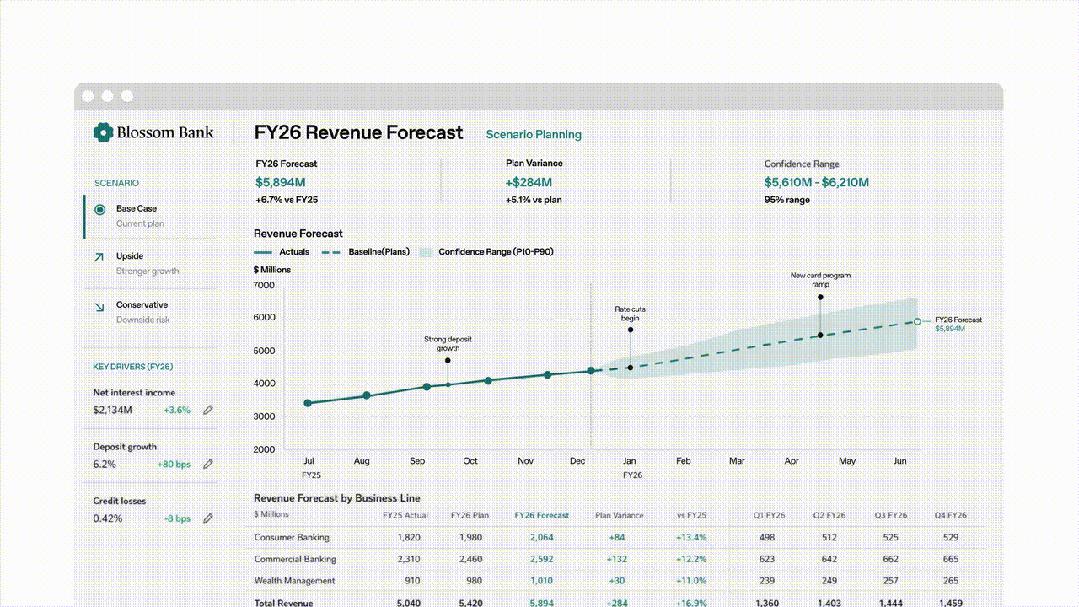
When AI helps you create something valuable, you always have to fit it into a document, a spreadsheet, or a PPT.
However, these formats are optimized for "writing" and "presentation", not for "understanding".
What Sites aims to do is to let information "take on" its most appropriate form.
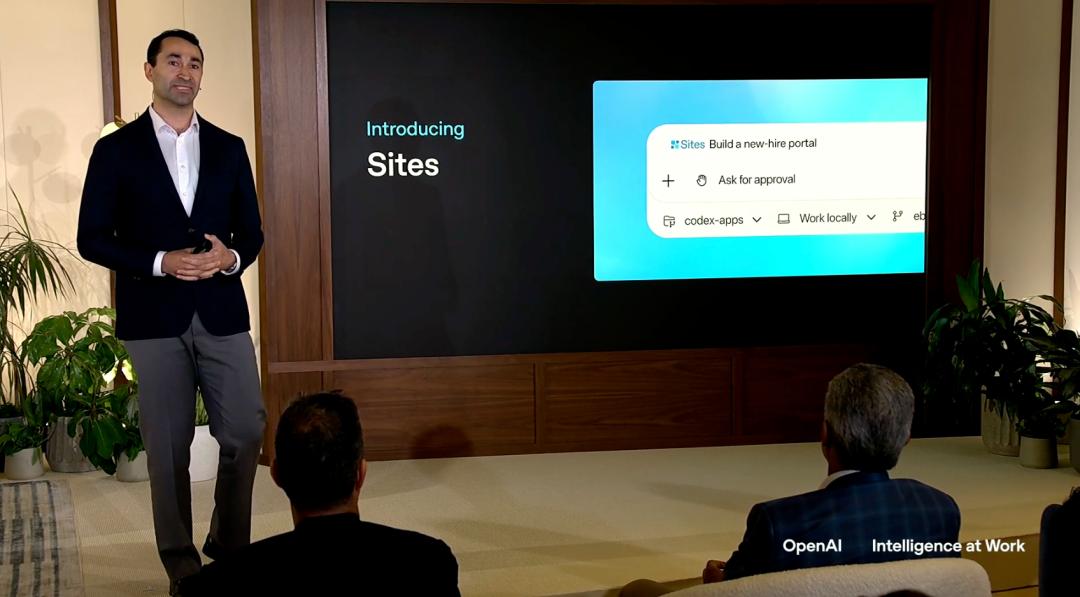
With one prompt, Codex can turn any output into an interactive web application and generate a URL to send to people in the workspace.
Turn financial forecasts into a real - time business dashboard for the whole company;
Turn product plans into a runnable prototype that the team can review together;
Turn release materials into a "living hub" that can be updated at any time.
When OpenAI held this press conference, the marketing team used Sites to build a site to manage the live stream and track follow - ups.
Sharing a customized internal tool is now as easy as sharing an online document.
