The new budget phone from Nokia makes us 90s olds spin.
Great news, friends! There's still hope for our Y2K squad.
At the end of May, Nokia, which hadn't launched a new phone for over a year, released a new small-screen bar phone: the Nokia 200 4G. No Wi-Fi? No short videos? No AI? It lacks all the features the public desires. Oh, right, it doesn't even have a rear camera, so you can't do QR code payments. Remember to bring a wallet when you take this phone out.
Nokia is like a once-famous actress who knows she still has charm. Instead of competing with modern smartphones and tarnishing its style, it embraces the low-end market with a price tag of just $199. Little does it know that even kids in the low-end market are using Doubao these days. In fact, a more suitable competitor for the Nokia 200 4G is the Xiaotiancai phone watch.
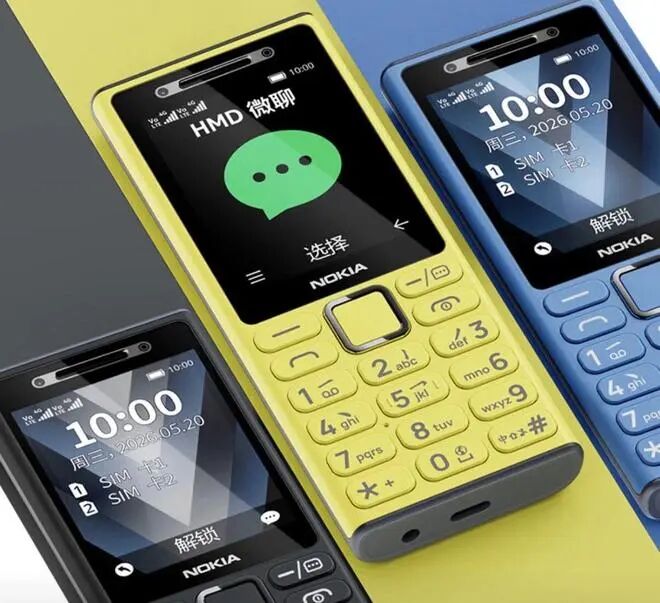
In the dead of night, this phone makes you think of someone. Image source: Nokia service account
However, Nokia does have reasons to be confident. In the past three months, Nokia's stock price has almost doubled. Since NVIDIA invested $1 billion in Nokia last year and announced that they would jointly rebuild base stations and promote AI-RAN technology, Nokia has completely shed the label of a declining company and become a pioneer in the era of AI infrastructure.
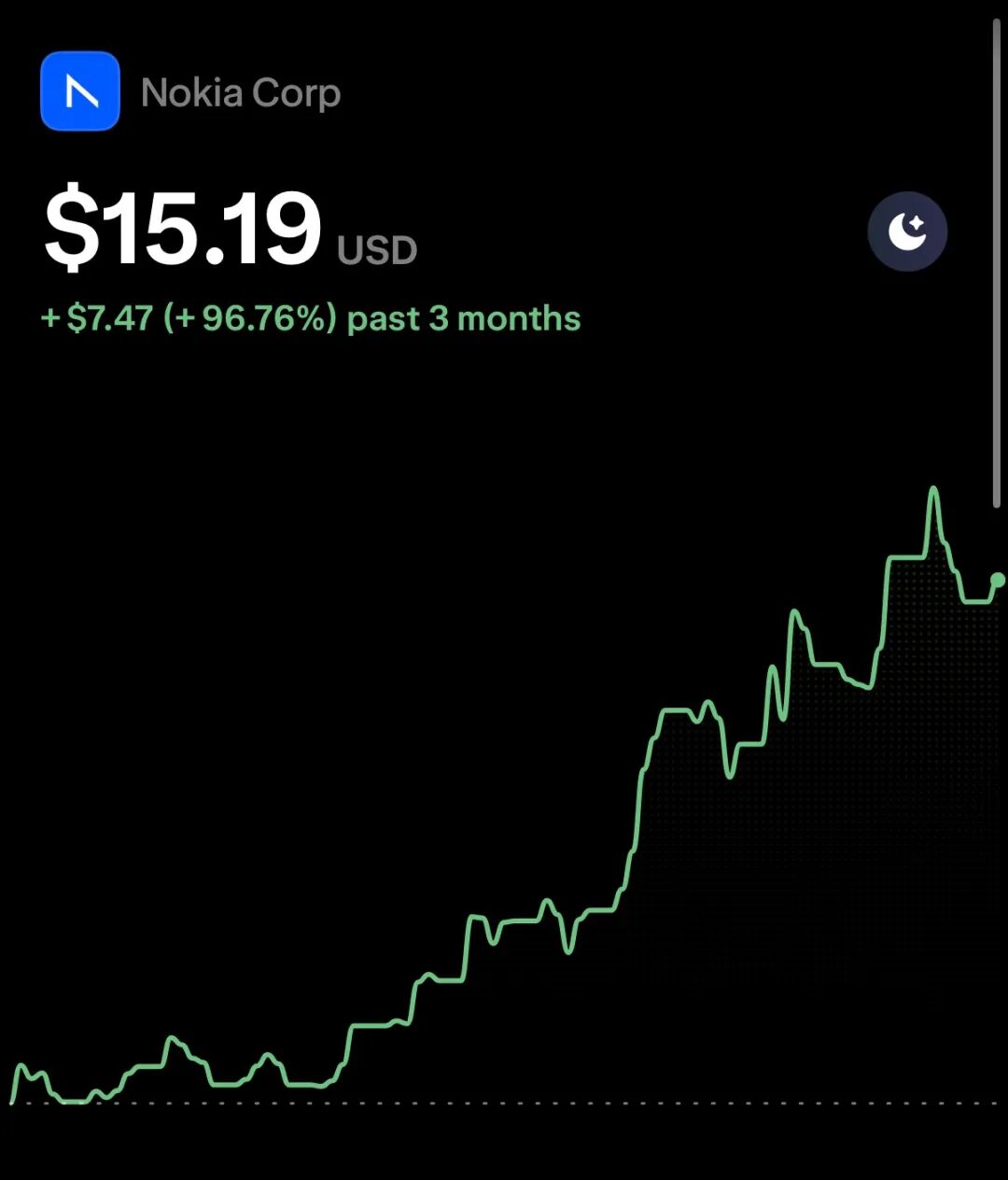
Nokia's stock has been soaring recently. Image source: Wealthsimple
In the past few years, many people used the phrase "a centipede dies but never falls down" to describe Nokia's situation. Essentially, they only regarded Nokia as a mobile phone brand.
From its peak when it once occupied 72.8% of the global mobile phone market and was popular among young users, to becoming a representative brand of feature phones and a totem of retro aesthetics and old-fashioned lifestyles today, Nokia has been on a downward slope for more than a decade.
But in the business world, Nokia as a company has made many strategic moves:
Since 2014, it has gradually sold off its mobile phone business, map business, and submarine cable business, making painful sacrifices. Then it acquired Alcatel-Lucent and became the owner of Bell Labs. Next, it acquired Infinera and invested in optical communication for transporting large-scale data between giant computing terminals in the AI era. Finally, last year, it cooperated with Jensen Huang, the rising star in the tech circle, to lead the transformation to AI-Native 6G networks... Every step Nokia takes is precise and impactful.
Even without all these, the more than 20,000 patents in its hands are already enough for Nokia to live a comfortable life.
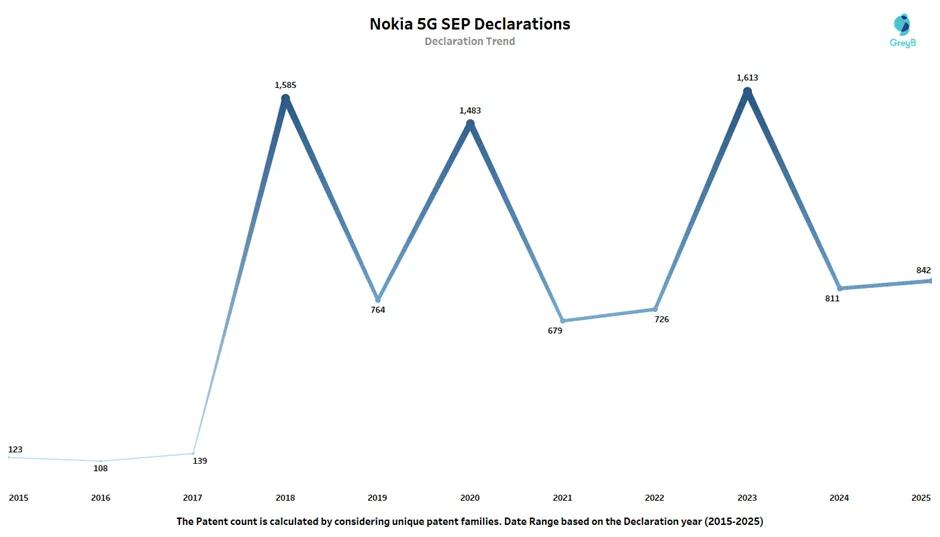
The number of 5G patent families declared by Nokia each year from 2015 to 2025, reaching a cumulative total of 7,000 in January 2025. Image source: GreyB
Adults play with AI, while kids love mobile phones. But why does Nokia, which is both an old-timer in the mobile phone industry and a new player in the AI circle, still make non-smartphones? It can't be unaware that in the current era, a feature phone that can only do simple chatting and where video calling is a selling point will impose significant limitations on itself and its users.
But Nokia still launched the new Nokia 200 4G. Dreaming of 6G while working on 4G. What is this? It's called staying true to its original intention.
Consumers who buy Nokia phones today do so because they love that particular style. Stop talking about work-life balance while using Apple or Android phones. We Nokia users don't even have WeChat after work. If the HR says our company uses Feishu instead of WeChat, Nokia users can innocently ask: What's Feishu? Is it an upgraded version of Fetion?
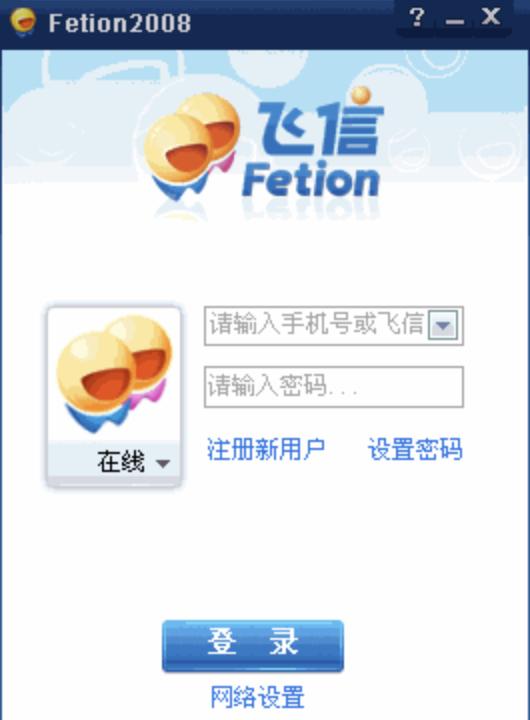
If you know what this is, you're at least 30. Image source: Cnblogs@Tears of Rain
Just like Jay Chou and M-Zone, they only need to capture the hearts of young people in one era and then they can stay put. The same goes for Nokia. Over the years, Nokia's new products have always been like this: no surprises, but fully meeting public expectations.
The biggest selling point of the Nokia 200 4G is the "HMD Micro Chat" function. Smartphone users just need to open WeChat, search for the HMD Micro Chat mini-program, authorize the login (I couldn't log in), and then they can happily chat with friends using Nokia phones! This cross-era communication method sounds as charming as sending a text message to a fax machine.
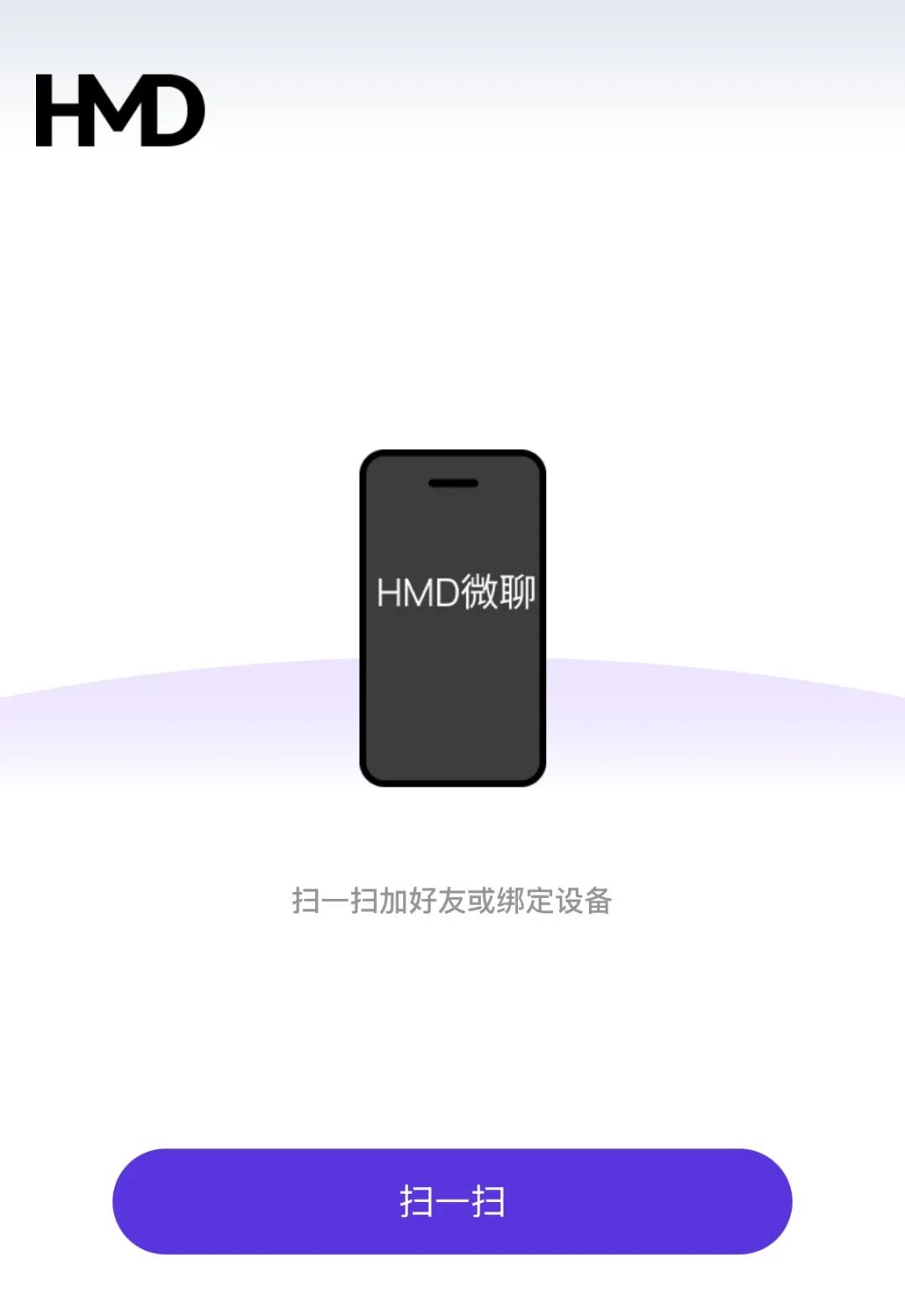
It seems the mini-program was maintained again yesterday. Now I just need a friend with a Nokia phone. Image source: HMD Micro Chat mini-program
The name HMD comes from HMD Global, a Finnish mobile phone company founded by a former Nokia vice president and currently holding the exclusive brand license for Nokia. In 2016, after taking over the troubled Nokia mobile phone business from Microsoft for $350 million, HMD gradually stopped trying to make this classic brand keep up with the times. Nowadays, there are no longer models like the N9 and Lumia that aimed for a one-time success. In essence, this is a model highly dependent on OEM. Perhaps the only "Nokia" thing left in the entire brand is the Nokia logo.
In January 2025, HMD removed all Nokia smartphones from its official website, leaving only feature phones. When everyone is running forward desperately, standing still is also a very noticeable stance. At the beginning of May this year, an overseas blogger revealed that HMD will no longer release any new Nokia phones in the future, and the brand license agreement renewed until 2029 is just for selling the remaining feature phone inventory. Then, the Nokia 200 4G arrived.
No one knows if this phone is the last one from Nokia. At least in terms of public attention, Nokia has won big this time. The collective reposting and interpretation by self-media and mobile phone enthusiasts have turned the low-key launch of this feature phone into a grand event comparable to the release of an iPhone. In the HMD official mall linked directly from Nokia's push page, 1,765 units of the Nokia 200 4G were sold within two days, and it is currently shown as sold out.
It has a 2.4-inch screen, a nine-key keypad, the main key can be pressed 300,000 times, the headphone jack can be plugged and unplugged 3,000 times, and the USB interface can be plugged and unplugged 10,000 times... I don't know when I last saw these hardware specifications. This is a track that almost no one is running on anymore, but the Nokia mobile phone, which has changed hands several times, still adheres to its long-standing brand positioning and continues to make handheld wireless telephones with the same standard as making walnut crushers.
As of last year, Nokia still occupied 26.8% of the domestic feature phone market. Judging from the "electronic fence" and "real-time positioning" functions of its new phone, its target group is still the elderly and teenagers who need to be taken care of and supervised. But consumers with a Nokia nostalgia don't care about these details. It's like a long - loved local diner has a new menu, and those who are nearby will come back to take a look.
The resurgence of Nokia feature phones is not an isolated case. Niche feature phone brands like Punkt., Light Phone, and Mudita Kompakt, which focus on privacy protection or minimalist concepts, have gradually gained a stable user base. The mainstream products of these brands are priced between $299 and $699 overseas, comparable to a mid-range smartphone.
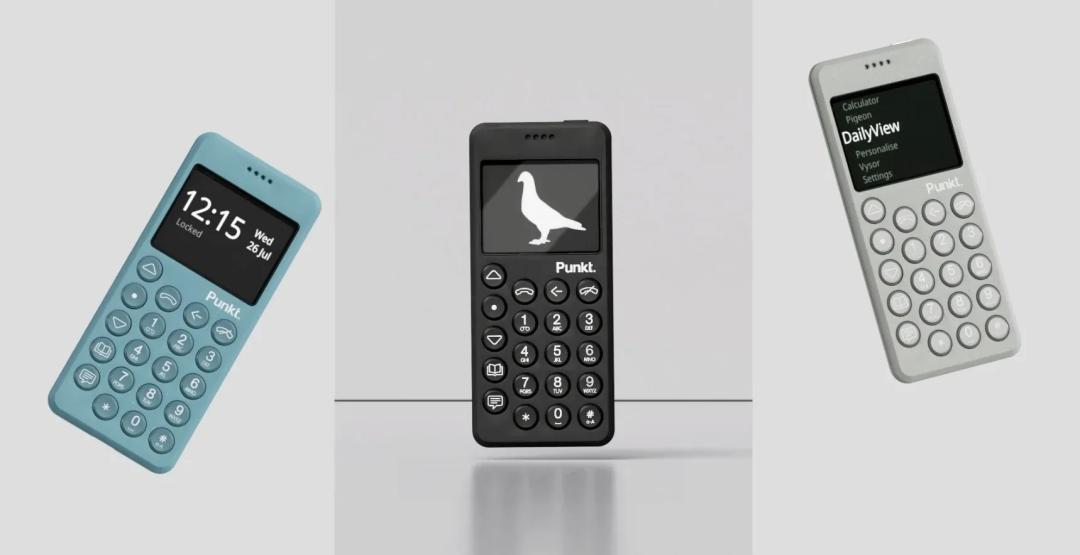
Punkt. also makes smartphones in addition to feature phones, emphasizing user safety.
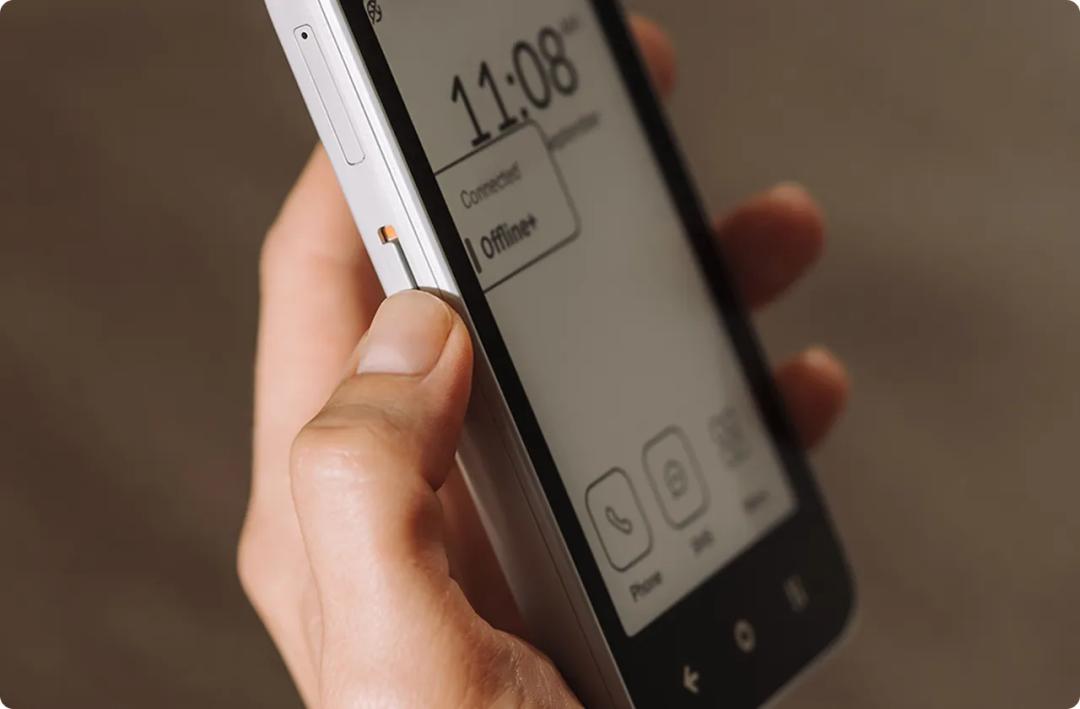
Mudita Kompakt uses an e-ink screen and looks like a Kindle. Image source: official website
But apart from users who really have high - level confidentiality needs or very little need for mobile phones, the current consumers' preference for feature phones is often more like a cultural resistance.
In the AI era, smartphones are following in the footsteps of PCs and transforming from entertainment tools to production tools. People's desire for digital detox is growing day by day. While tech enthusiasts wave new concepts to attract mainstream attention, a collective aversion to emerging technologies is also growing. To some extent, the popularity of Nokia's new phone also stems from this - a feature phone that hasn't joined the AI camp? That's a cool, hippie - punk phone.
Feature phone manufacturers clearly understand consumers' psychology. Light Phone once targeted smartphones that use "smart" as a selling point in its theme marketing "Dumb is Good". Through a set of anti - trend advertising language, it tried to deconstruct the meaning of smartphones. The fundamental marketing goal of brands like Light Phone is to package feature phones from being obsolete technological products into aesthetic preferences and lifestyles of a specific group. While Nokia chooses to be compatible with the low - end market, these brands are building an elite identity symbol.
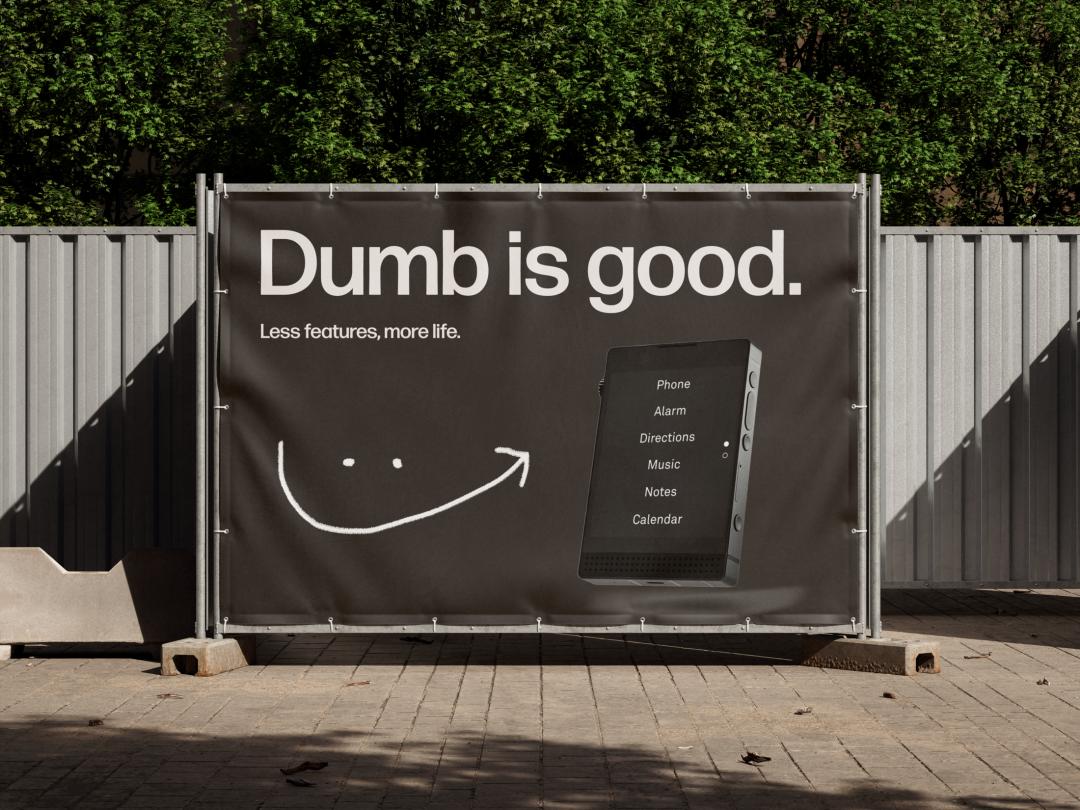
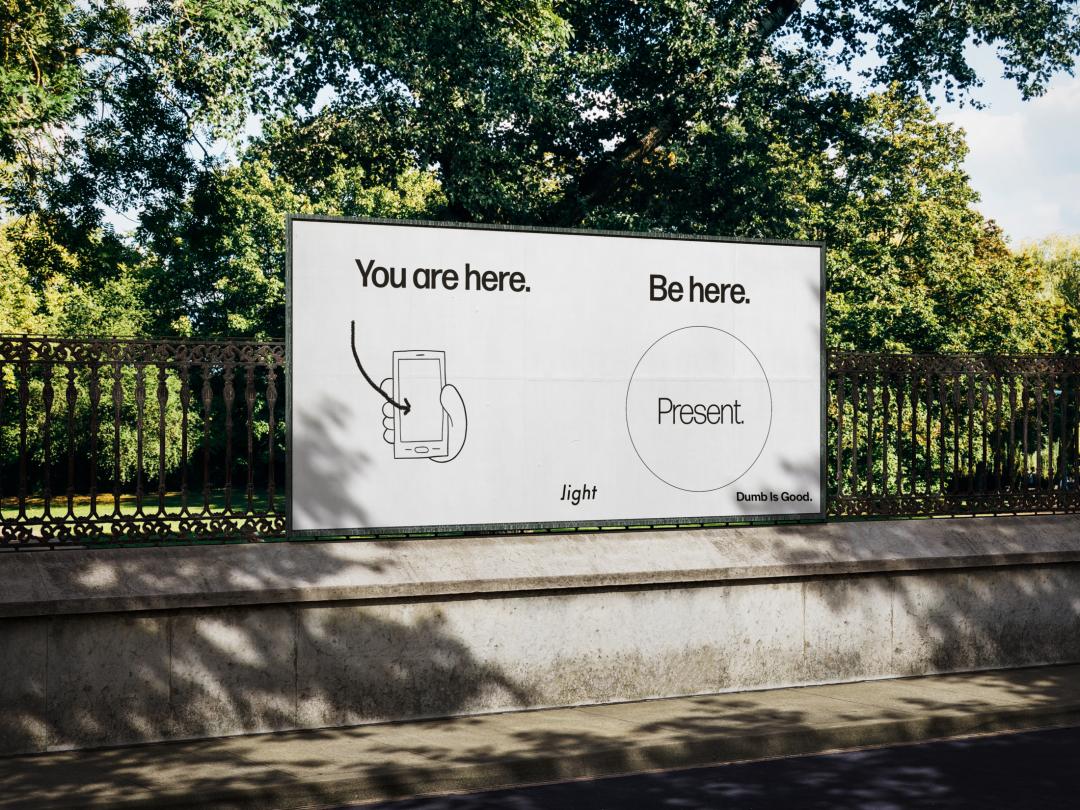
Light Phone's minimalist advertising. Image source: Internet
In the millennium, accessing the Internet was a privilege; more than twenty years later, quitting the Internet is another luxury. Ironically, quitting is often just a gesture. Most feature phone users also own a smartphone, and the feature phone is only used as a secondary device. This means that the feature phone market is a supplementary market. It can no longer compete directly with smartphones but tries to carve out a niche spiritual enclave in the ecosystem dominated by smartphones.
Today's smartphones are becoming more and more like outsourcing companies, handling our increasingly complex and efficiency - oriented daily tasks. Whether a feature phone user can survive independently in this civilization dominated by smartphones is a question mark today (thanks to Li Jian for proving that it's possible). The mainstream users of Nokia, whether the elderly or students, are actually out of the production process. For most people who have to participate in social production, using a feature phone is like career suicide.
Perhaps it's because the burden on smartphones has become too heavy that the significance of feature phones as a spiritual pressure - relief valve has become more prominent. At least in China, Nokia hasn't taken the luxury route like those niche feature phone brands.
For just $199, you can buy a Nokia and give yourself a real psychological comfort for being kidnapped by smartphones: at least I'm trying to resist the information flood. As for the effectiveness of the resistance, we'll talk about it later. When spending seven or eight hours a day staring at an OLED screen is no longer considered phone addiction, isn't it a good option to create an HMD Micro Chat group with friends on a dual - SIM Nokia 200 4G? After all, if everyone is addicted, we can't say everyone is sick; Renren.com just died.
Technological development will never stop at the moment we think is just right. New products will keep emerging, telling the world that they are the necessities of human life at this stage. While writing this article, I asked a friend: What's the smartphone function you can't do without the most? He replied: Doubao Input Method. He replied to me by voice input. Before that, he hadn't typed for a week.
Whenever humans think they've found a new outlet for their souls in the age of technologism, new convenient experiences always slip in through the side door, like a devil's whisper: Darling, you can't live without me.
And Nokia's budget phone, either actively or passively, has been shaped by the public into a spotless electronic angel. Even though its "mother company" is becoming a pioneer in the AI era, it just lies there quietly, not using a single token.
This article is from the WeChat official account "Ciguigongshe" (ID: ciweigongshe), author: Maojin, editor