Steer-by-wire, on the verge of explosive growth
In November 2023, the long - awaited Cybertruck finally hit the market. During the entire press conference, which lasted less than 27 minutes and was watched by over a million people, Tesla introduced a series of cutting - edge technologies, with steer - by - wire being the most impactful.
Compared with traditional steering systems, steer - by - wire eliminates the steering column. The mechanical connection between the steering wheel and the wheels is completely replaced by electrical signals.
As the world's first mass - produced vehicle to remove the steering column and come standard with steer - by - wire across the entire lineup, the Cybertruck, which is 5.6 meters long, can easily achieve what Elon Musk calls the "fighter jet mode": a slight turn of the steering wheel results in a significant turn[1].
To integrate steer - by - wire into the vehicle, Tesla made a bold move by abandoning the 12V low - voltage architecture and switching to a 48V platform, allowing power - hungry components like steer - by - wire to operate at full capacity. Tesla even printed this methodology into a booklet and sent it to the headquarters of major automakers. Ford publicly expressed its gratitude[2].
Unfortunately, Tesla failed to trigger a mass - production wave of steer - by - wire, and the Cybertruck didn't shake up the dominance of pickups in the US market.
It wasn't until 2024 that NIO's ET9 became the first mass - produced vehicle in China to be equipped with steer - by - wire and took the lead in participating in the formulation of new national standards. Only then did this technology start to show signs of a breakthrough.
Since the beginning of this year, many models such as XPeng GX, IM LS8, and Li L9 Livis have clearly stated that they will be equipped with steer - by - wire. Coincidentally, the new Lexus RZ and Mercedes - Benz EQS also promote steer - by - wire as a product selling point.
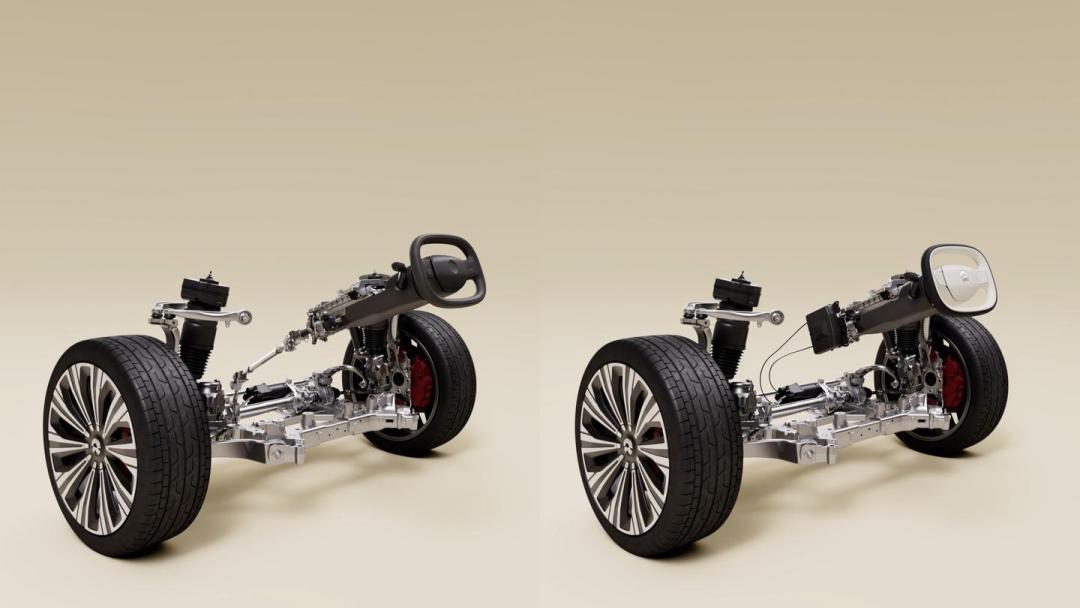
Mechanical steering (left) and steer - by - wire (right); Image source: @NIO
Compared with traditional steering systems, what exactly does steer - by - wire change?
Turning the steering wheel into a game controller
The essence of steer - by - wire lies in the term "by - wire".
In traditional steering systems, the steering wheel and the steering gear are connected by a mechanical structure, commonly known as a "hard connection". As the name suggests, steer - by - wire removes the steering column and replaces it with wires, creating a "soft connection".
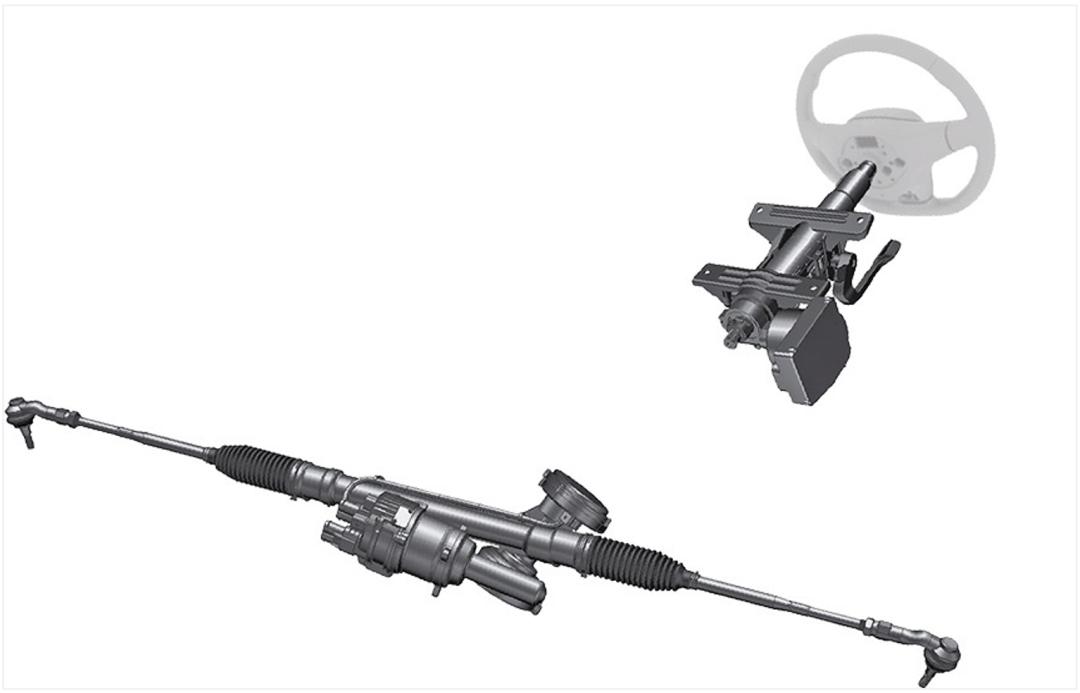
Image source: Nexteer
The working modes are also different: one is like using a wrench to turn a screw, where every movement is precisely transmitted to the wheels; the other is like remotely controlling a robot to turn a screw. The movement of turning the steering wheel is translated into electrical signals by sensors and transmitted to the ECU controller, which then issues commands based on the actual situation.
As a result, the force structure is quite different.
For example, in the early days of the automobile, a purely mechanical steering system was used without a power - steering device, which meant that the driver had to rely entirely on physical strength. Today, the mainstream Electric Power Steering (EPS) system still has the driver as the power source and commander, but most of the force is provided by the motor.
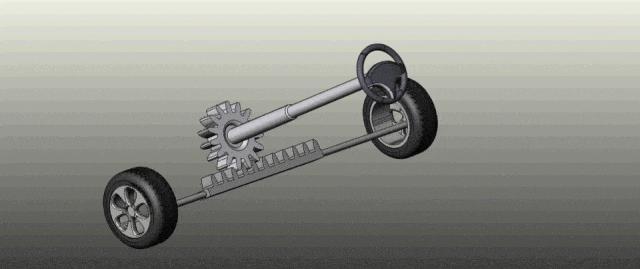
In the early steering systems, human power was the main power source and was amplified through mechanical structures.
In a steer - by - wire system, the force structure is straightforward. The motor is the only "worker". Since the steering wheel and the wheels are completely decoupled, the force exerted by the driver on the steering wheel is no longer transmitted to the wheels. It is the software and the motor that actually make the wheels move.
Based on by - wire technology, the steering wheel is no different from a game controller. However, in real - life driving, it is often necessary to create the illusion that the driver is exerting force.
Since humans are the main drivers of cars, simulating a real - life steering feel helps improve driving safety and handling. A common practice is to integrate a road - feel simulation motor on the steering wheel, using virtual resistance to replace road surface resistance and reduce the feeling of instability.
At present, the steering feel of steer - by - wire is quite close to reality, and the actual driving experience far surpasses that of existing steering systems.
Firstly, steering is more sensitive. With steer - by - wire, the steering ratio of the vehicle can be dynamically adjusted.
The steering ratio is simply the ratio of the steering wheel's rotation angle to the wheels' rotation angle. In most household cars, the steering ratio is generally fixed at around 15:1, meaning that when the steering wheel turns 15 degrees on one side, the wheels turn 1 degree.
A large steering ratio has the advantage of providing more stability during high - speed driving, but the drawback is that it requires more effort when parking or making a U - turn at low speeds.
Imagine a mid - to large - sized SUV that is 5 meters long trying to make a U - turn in a narrow alley. Usually, the driver has to turn the steering wheel one and a half or even two full turns to the left, then reverse. If the first attempt fails, they have to try again. The driver may end up twisting the steering wheel vigorously, and there is no grace in the process.
In contrast, Formula 1 racing cars have a much smaller steering ratio, set at around 6:1 according to the requirements of the track. Drivers only need to turn the steering wheel slightly to easily navigate through corners[2]. This is also why the steering wheels of F1 cars are becoming more and more rectangular.
In comparison, since steer - by - wire has no mechanical hardware connection, the steering ratio is not locked and naturally supports software - defined adjustment.
Among the domestic models equipped with steer - by - wire, the IM LS8 has a steering ratio as low as 4.5:1. The steering wheel only needs to be turned half a circle to reach the full - lock position on one side. In theory, a half - sized steering wheel could be used.
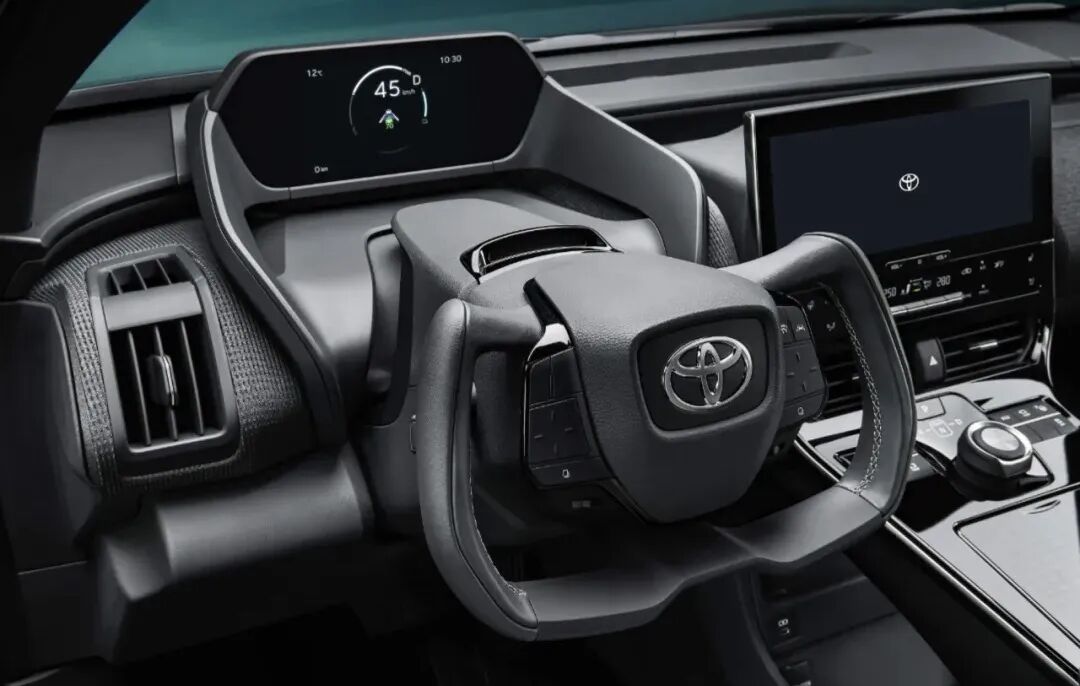
The Yoke steering wheel is also a half - sized steering wheel. This design has been explicitly prohibited in China.
Secondly, when all four wheels are upgraded to steer - by - wire, the turning radius can be reduced, making large - sized vehicles more maneuverable.
Taking the scenario of making a U - turn in a narrow road as an example, a small car is much more maneuverable than a large car in the same - width alley. The reason is that the rear wheels of traditional cars often cannot turn independently, especially at low speeds, and basically remain stationary.
Therefore, for traditional cars with similar front - wheel deflection angles, the longer the wheelbase, the larger the turning radius and the more cumbersome the vehicle's movement.
If the rear wheels are upgraded to steer - by - wire, they can turn in the opposite direction to the front wheels, moving the center of rotation forward from the position of the rear wheels and reducing the turning radius.
Currently, there is a transitional solution of "front - wheel steer - by - wire + rear - wheel active steering". The principle is similar, but the limitation is that the rear wheels are still connected by a mechanical structure, making it difficult to perform complex maneuvers.
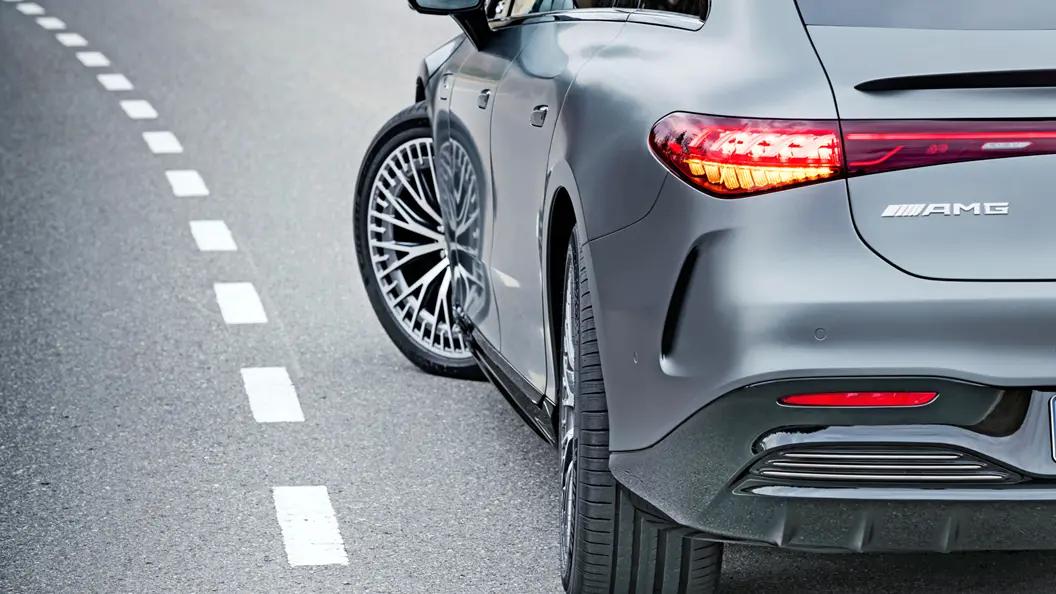
In 2022, the entry - level model of the Mercedes - Benz EQS allowed owners to pay to upgrade the rear - wheel active steering from 4.5° to 10°.
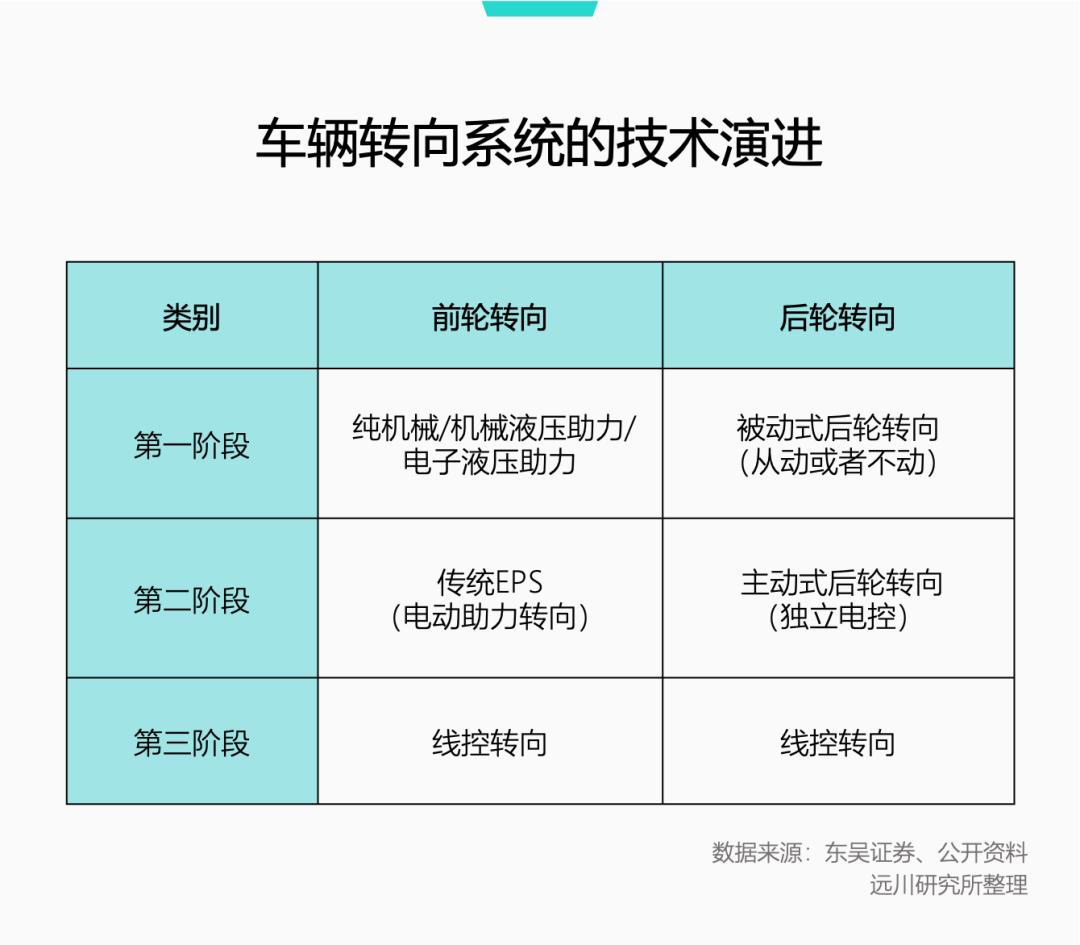
Steer - by - wire solves the practical problems of driving large vehicles. However, this technology was not originally developed with these considerations in mind and was even unrelated to cars.
A piece of the by - wire chassis puzzle
The origin of steer - by - wire is not the automobile but the fighter jet, which represents the pinnacle of industrial technology.
In the aviation field, there is no concept of steer - by - wire. Instead, there is the Fly - by - Wire (FbW) flight control system, which encompasses all "by - wire" technologies.
The original intention of the earliest fly - by - wire flight control system was simple: to simplify the structure and reduce weight. In the 1930s, the Soviet ANT - 20 (also known as the Maxim Gorky), due to its large size, was the first to experiment with by - wire technology to reduce the use of cables. However, this was still far from the concept of "fly - by - wire".
The first pure - blood fly - by - wire aircraft was the Canadian Avro CF - 105 "Arrow" fighter jet. Although the first flight was successful, the government canceled the research and development project due to the high cost. Five prototype aircraft were destroyed, and it is rumored that their remains were sunk in Lake Ontario[4][5].
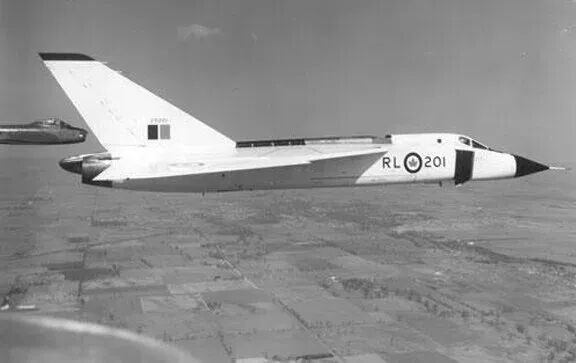
Avro Arrow 201 prototype
It wasn't until the 1970s that, in order to achieve extreme maneuverability and comfort, the F16 fighter jet and the Airbus A320 respectively eliminated the mechanical connection and fully adopted the fly - by - wire flight control system, truly pushing this technology to maturity.
This also provides an important reference for the automotive industry. It can be said that steer - by - wire is an inspiration from fly - by - wire technology in the automotive field.
Early automobile companies tried to remove the steering column from concept cars for two main reasons: safety and leaving room for autonomous driving.
After removing the steering column between the steering wheel and the steering gear, not only is there more space in the front cabin, but it also avoids the risk of the steering column hitting the driver's upper body and causing fractures in the event of a car accident. For autonomous driving, steer - by - wire is also significantly safer.
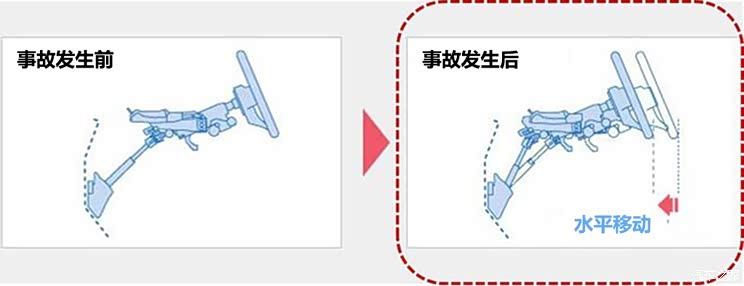
Most cars now use collapsible steering columns.
For example, in terms of response speed, traditional mechanical structures require multi - level transmission, resulting in slow response. Human drivers also have a relatively long average reaction time, increasing the risk.
An early study by MIT showed that it takes about 390 to 600 milliseconds for a driver to detect a hazard and react[6]. Some studies also suggest that 600 milliseconds is only the median of human reaction time.
In contrast, steer - by - wire can break through the mechanical and physiological limits of humans, with a response time as low as tens of milliseconds, preventing risks at the source. This is also an essential ability for high - level autonomous driving.
A typical scenario is a tire blowout at high speed. In traditional cars, the steering wheel and the wheels are connected by mechanical hardware, so the impact force is naturally transmitted to the steering wheel. Especially when the front tire blows out, the grip force decreases instantly, the car will veer towards the side of the blown - out tire, and the steering wheel will also spin rapidly.
If the reaction time of the driver with a traditional steering system is a bit longer, the vehicle is likely to lose control instantly, which can be life - threatening.
With steer - by - wire, the steering wheel and the wheels are decoupled. The impact force generated by a tire blowout remains at the wheel end, and the system can react more quickly, significantly reducing potential risks.
For example, when a NIO ET9 experiences a tire blowout at high speed, the vehicle can be controlled to only deviate slightly, with almost no shaking. The vehicle can also quickly correct its course within 300 milliseconds after the tire blowout[7].
In real - life scenarios, since steer - by - wire is part of the chassis, it often needs to cooperate with other systems such as the suspension in extreme situations. In other words, the significance and value of steer - by - wire can only be maximized when considered within the entire chassis.
For a long time in the past, due to slow progress, steer - by - wire was once regarded as the last piece of the by - wire chassis puzzle.
In addition to the technical difficulties and complex redundant design, steer - by - wire has always been restricted by regulatory requirements. The national standard clearly stipulated that the steering system must retain a mechanical connection. However, the new version of the regulations to be implemented in July this year has removed this requirement, finally clearing the obstacles for the implementation of steer - by - wire.
Behind the steering wheel, a revolution that has been dormant for many years has finally found an opportunity to break out.
References
[1]Cybertruck Unveiled: Bi - Directional Charging, Steer - by - Wire, Largest Battery in Any Tesla, Powered Frunk, 18.5 - Inch Displa, not a tesla app
[2]'Great For The Industry': Ford, Others Get Tesla Cybertruck 48V System Specs, InsideEvs
[2]Why do car steering wheels need to be turned many times to steer? Can it be as easy as in Formula 1 racing cars? A user on Zhihu
[3]This time, Toyota beats Tesla. autocarweekly
[4]MAGNIFICENT FAILURE, Vintage Wings of Canada
[5]From Lift Off to Legend