We haven't fully understood solid-state batteries yet, and now lithium-air batteries are here.
The technical route for the next - generation battery has been determined.
At the recently held 2026 Equipment Power Forum, Wu Kai, an academician of the Chinese Academy of Engineering and the chief scientist of CATL, revealed three significant pieces of news:
Firstly, regarding sodium - ion batteries, Wu Kai stated that sodium - ion batteries are expected to be mass - produced on a large scale this year; secondly, solid - state batteries are expected to enter the small - batch production stage in 2027.
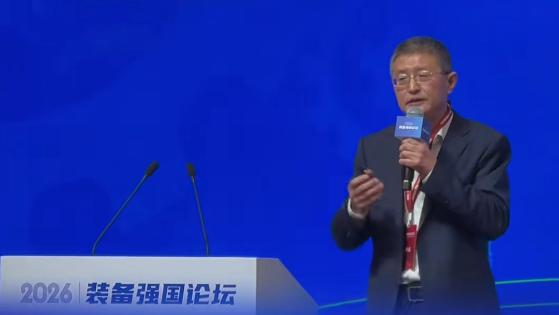
Finally, Wu Kai also talked about his judgment on the next - generation battery technology: Lithium - air batteries will become the future layout direction of CATL and will also be the focus of global competition in the next - generation batteries. This is the first time that CATL has publicly mentioned its prediction of the next - generation battery technology.
In 2020, CATL was also the first to propose the concept of sodium - ion batteries. Subsequently, the industrialization of the entire sodium - ion battery industry chain has accelerated.
Now, the leading company has made another call, and a new round of battery competition is about to begin.
01 Energy Density Comparable to Gasoline
Compared with the mainstream new - type batteries, sodium - ion batteries and solid - state batteries, many people may not have heard of lithium - air batteries.
According to Wu Kai's description, a lithium - air battery is a battery that uses lithium as the negative electrode and oxygen in the air as the positive - electrode reactant. It has an extremely high theoretical energy density and is a competitive technical route for the next - generation batteries.
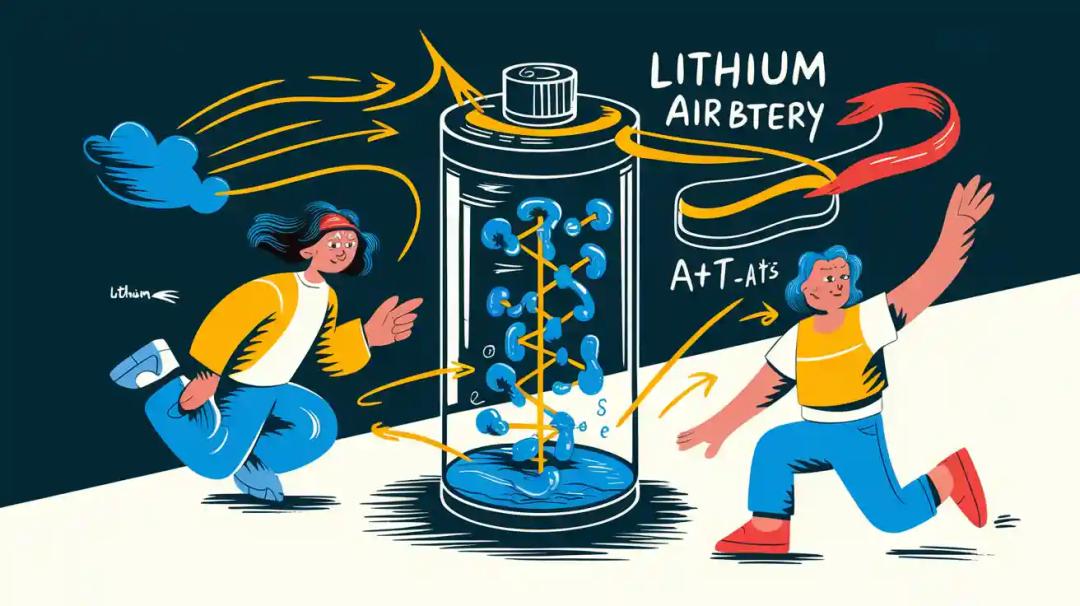
As is well - known, lithium - ion batteries are the most successful rechargeable batteries so far. They are called "lithium - ion batteries" because in the battery, whether charging or discharging, lithium ions (Li+) shuttle back and forth between the two electrodes to form an electric current.
In lithium - ion batteries, although only a lithium ion with a relative atomic mass of only 3 is needed to carry 1 unit of charge, its cathode needs to be composed of compounds formed by atoms such as nickel, cobalt, manganese, iron, phosphorus, and carbon, which are much heavier than lithium, to "accommodate" this lithium ion.
This results in a "huge thing" with a relative molecular mass that may be close to 100 being required at the cathode for this 1 unit of positive charge. Coupled with the weight of the anode and other materials and structures, the energy density of lithium - ion batteries per unit mass has never been effectively improved. It is a typical case of "making a whole meal of dumplings just for a little bit of vinegar."
This is also the reason why an electric vehicle equipped with half a ton of lithium - ion batteries has a much shorter driving range than an ordinary car filled with just a few dozen liters of gasoline.
In contrast, lithium - air batteries solve the "unreachable limits" of existing batteries. They do not need scarce metals such as nickel, cobalt, and manganese as cathode materials, but directly "use" oxygen from the air. They have a lighter structure and a more straightforward principle.
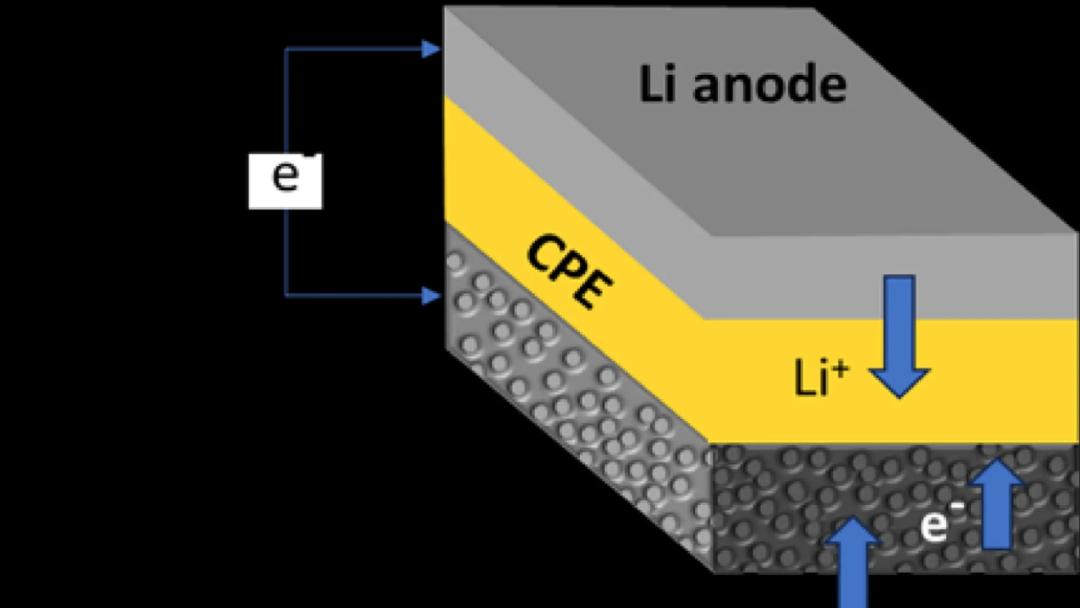
Lithium - air batteries can directly use lithium metal (Li) and oxygen in the air as electrodes. Ideally, during battery discharge, lithium metal is oxidized by oxygen to form lithium peroxide (Li₂O₂), generating an electric current in the external circuit; during charging, lithium peroxide decomposes into lithium and oxygen.
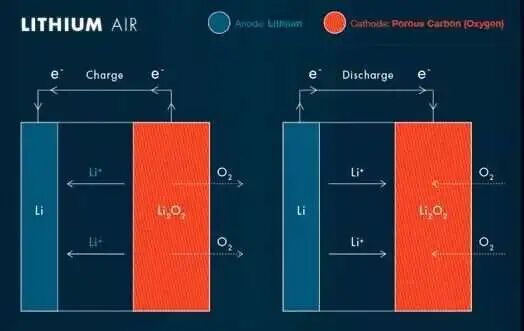
It can be understood as "breathing": it absorbs oxygen during discharge and releases oxygen during charging, so it is also called a "breathable battery". In essence, lithium - air batteries are more like a perfect state of solid - state batteries.
Since lithium is the lightest metal element in the periodic table and oxygen comes from the air, no other elements with large mass are involved in the whole process. Therefore, it has a very prominent advantage: lithium - air batteries can achieve a much higher energy density than lithium - ion batteries.
Put simply, for the same weight and volume, a lithium - air battery can store several times more electricity than current high - end lithium batteries. The energy density of lithium - air batteries in the laboratory has already reached over 1200Wh/kg.
This is not only much higher than the 250 - 270Wh/kg of current mainstream lithium - ion batteries but also far exceeds the 500Wh/kg that current solid - state batteries can achieve, which is more than 4 times that of current lithium batteries. However, this is not the limit of lithium - air batteries. Their theoretical energy density can be as high as 12000Wh/kg.
This data is almost comparable to the energy density of gasoline, which is about 13000Wh/kg.
Larry Curtiss, a researcher specializing in lithium - air batteries, said, "Among all the battery technologies considered for the next - generation batteries, lithium - air batteries have the highest expected energy density."
More importantly, the oxygen it uses comes from the air, and this part of the raw material is almost infinite.
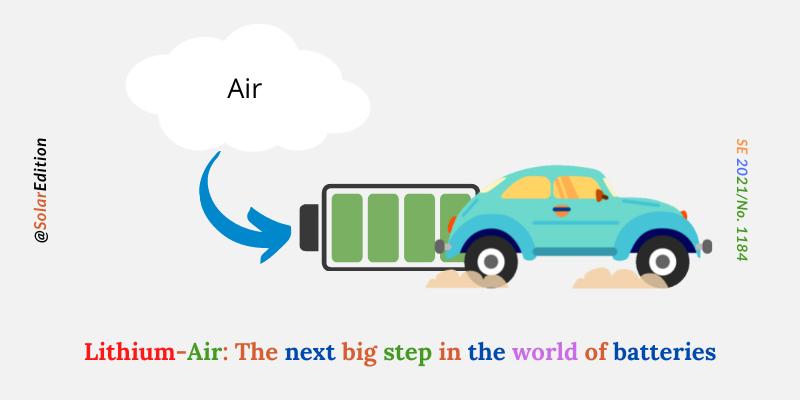
This means that if lithium - air batteries can finally enter the market, it will completely break the driving - range bottleneck caused by the low energy density of lithium - ion batteries. It will be very common for electric vehicles to have a driving range of over 1000 kilometers, and even traditional fuel - powered vehicles will completely fade out of the stage.
When used for energy storage, energy storage stations can occupy less space, store energy for a longer time, and the cost also has the opportunity to decrease.
02 The Technological High - Ground in the Next 10 Years
Of course, the lithium - air battery technology route is not a brand - new technology discovered suddenly. As early as the 1970s, the concept of lithium - air batteries emerged. In 1996, a team used oxygen (O₂) in the air as the active material, and the first rechargeable lithium - oxygen (Li - O₂) battery appeared.
However, like solid - state batteries, the reason why lithium - air batteries have been in the laboratory for so many years is due to numerous unsolved engineering problems.
For example, lithium - air batteries produce lithium superoxide (LiO₂) or lithium peroxide (Li₂O₂), but both of these substances limit energy output. There is water and carbon dioxide in the air, which directly interfere with the battery reaction and affect the battery's lifespan; there are also problems with catalyst materials, interface stability, packaging technology, etc.
IBM in the United States, a top giant in the field of micro - science, once tried to conquer the peak of lithium - air batteries. In 2009, it launched a project called "Battery 500", hoping to develop a lithium - air battery that could allow an electric vehicle to travel 500 kilometers. At the beginning of the project, they planned to build a prototype in 2013 and achieve commercial production in 2020.
However, after 2012, the "Battery 500" project came to an abrupt end, and it is difficult to find project information online. If IBM did not intentionally hide it, it can only mean that the project has been shelved.
However, after years of technological R & D and iteration, the lithium - air battery technology route has become more defined, and there have been key phased achievements in recent years.
In 2024, a joint research team from the University of Illinois at Chicago, Argonne National Laboratory, and California State University, Northridge published an article in the journal "Nature". They successfully developed a lithium - air battery that can cycle more than 700 times in an air - like atmosphere, breaking the previous limitations that lithium - air batteries could only use pure oxygen and had a short cycle life.
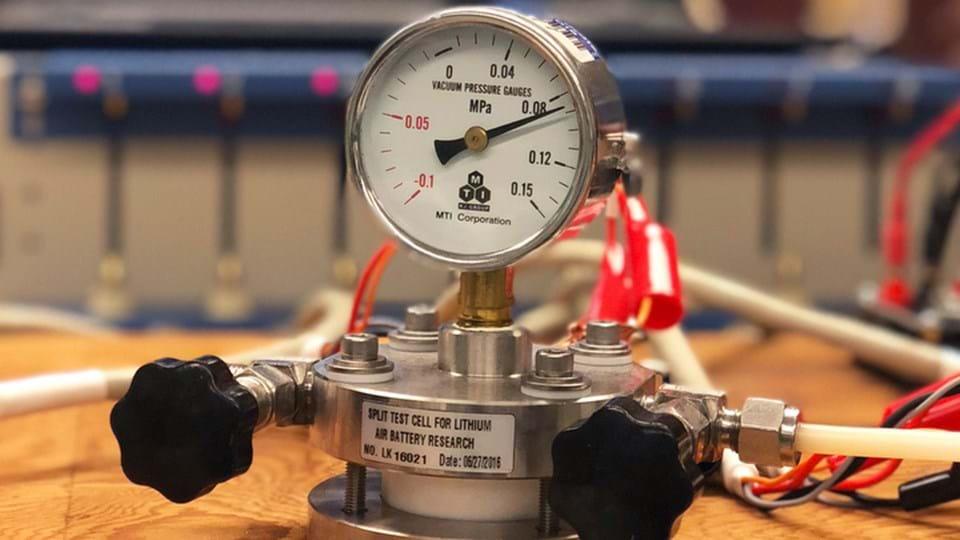
After testing, the lithium - air battery did not show any failure after 700 charge - discharge cycles. This makes many people see the possibility of this battery with extremely high theoretical energy density replacing existing lithium - ion batteries and breaking through the driving - range bottleneck of electric vehicles.
In 2025, still led by Argonne National Laboratory and jointly developed with the Illinois Institute of Technology, a lithium - air battery with an energy density of 1200Wh/kg was developed. It is about 4 times that of current mainstream commercial lithium batteries and is the most promising lithium - air battery among the known rechargeable battery technologies. It can increase the driving range of electric vehicles to over 1000 miles, which is about 1609 kilometers.
Moreover, the experiment was carried out at room temperature, and the number of cycles reached 1000, which has met the practical standard. Even under high - speed charging conditions, this lithium - air battery may become the next - generation battery with the least performance degradation and is expected to be put into use after 2030.
From this time point, it is not much different from the time when the industry generally recognizes that solid - state batteries will be put into large - scale use. This may also be the reason why CATL "suddenly" mentioned its layout for lithium - air batteries for the first time.
Just like sodium - ion batteries, in 2020, CATL proposed to develop sodium - ion batteries. The background was that the price of lithium carbonate, a battery raw material, was rising. It soared from about 50,000 yuan/ton at the beginning of the year to a staggering high of 600,000 yuan/ton. The upstream lithium mines made a fortune, while the downstream manufacturers suffered a lot.
At that time, CATL promised its partners that sodium - ion batteries would be widely used in 2026, covering four major fields: passenger cars, commercial vehicles, battery swapping, and energy storage.
Now, six years have passed, and CATL has fulfilled its promise. This year, CATL will mass - produce a series of sodium - ion battery products. Moreover, CATL has successively installed sodium - ion batteries in many models such as GAC Aion UT, Changan Auchan 520, and Jianghuai Logistics. Models such as Geely Xingyuan, Chery QQ3, and FAW Yueyi 03 are also included in the subsequent promotion plan.
In April this year, CATL also signed a strategic cooperation agreement with Haibo Sichuang, reaching a cooperation on a 60GWh sodium - ion battery order for three years, which is currently the largest sodium - ion battery order in the world.
From the large - scale mass production of sodium - ion batteries this year to the long - term direction of lithium - air batteries, the pattern of the entire battery industry is becoming clearer: In the short term, rely on mature technologies to meet rigid demands; in the medium term, upgrade the experience with solid - state batteries; in the long term, explore the limits with lithium - air batteries.
Lithium - air batteries have opened up the industry's imagination space. However, in the battery field, no single technology will "dominate the world". Instead, multiple routes are pursued simultaneously, and the more practical ones will be adopted first. What really determines the future are the technologies that can be implemented and installed in vehicles.
So what we are really curious about is, when will the first vehicle equipped with a lithium - air battery hit the road?
This article is from the WeChat official account “SuperEV - Lab” (ID: SuperEV - Lab), author: Wang Lei, published by 36Kr with authorization.