A dark horse in the AI field has emerged in Shandong.
A financing deal for Shandong's AI industry is on the way.
Less than half a year has passed since Hengyuan Technology's Series B+ financing. Its brand - new AI products made a high - profile appearance at the Hannover Messe in Germany, attracting attention in the industrial AI circle. Consequently, investors' eyes have turned to the company, and several investment institutions are now keeping an eye on Hengyuan Technology's future developments.
Taking this opportunity, we met Zhang Yongwen, the leader of Hengyuan Technology, in Yantai, Shandong. An 80s - born doctor, Zhang's early career spanned giants like Foxconn and Siemens. In 2016, he embarked on entrepreneurship with years of manufacturing experience and founded Hengyuan Technology, dedicated to empowering the equipment manufacturing industry with industrial AI.
After a decade of in - depth development, Hengyuan Technology has expanded from a corner in Yantai to the whole country. It has established subsidiaries in Beijing, Xi'an, Chengdu, Taiyuan, Shenyang and other places, and set up R & D centers in Xi'an and Chengdu. With over a hundred AI talents, it focuses on original research in artificial intelligence theories, methods and tools, and has built a national layout with multi - point collaboration and in - depth radiation.
Thanks to this layout, Hengyuan Technology has emerged as an undeniable force in the industrial AI field, and now has a long list of investors behind it. Through this, we can see that a turning point for industrial AI is approaching.
Reviewing a Decade of Entrepreneurship: Surviving the Trough and Acquiring 500 Customers
Zhang Yongwen describes himself as a "born entrepreneur".
Zhang was born in a small city in the northwest in 1983 and left his hometown for the first time when he went to college. He majored in mechanical engineering at university and thus entered the industrial manufacturing field. After graduation, he was recruited by Foxconn Group and worked as a process engineer.
After four years at Foxconn, Zhang switched to Siemens Group. Although he still served as a process expert, he deeply felt the difference in positioning. In comparison, Foxconn focuses on large - scale manufacturing, while Siemens is known for world - class high - precision manufacturing. It was here that Zhang conducted a systematic study of Germany's "Industry 4.0" and was exposed to the concept of global business operations.
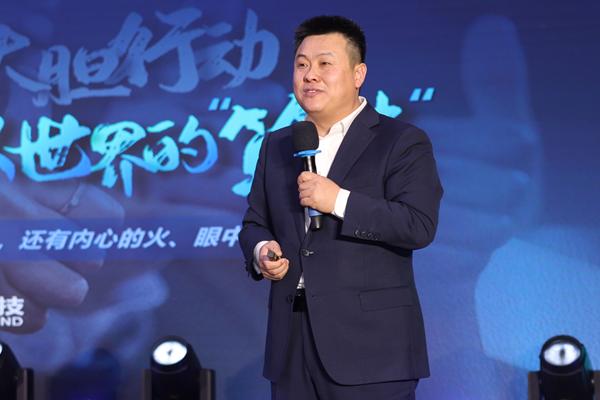
After years of working on the front - line of industrial manufacturing, Zhang witnessed the various changes brought by digitalization to the industry. A belief took root in his heart - Chinese industrial software should not always be a follower. So, he set his sights on the equipment manufacturing industry for his entrepreneurial venture, and Hengyuan Technology was founded in 2016, providing factory - level and production - line - level industrial intelligent services for large - scale equipment manufacturing.
In fact, this was not an easy choice for entrepreneurship. The equipment manufacturing industry has the typical characteristics of "three highs, two longs and one difficulty": highly customized orders, highly complex design and supply chains, highly discrete manufacturing processes, long production and manufacturing cycles, long product life cycles, and difficult data integration and governance. Obviously, this is the most challenging area in the industrial track, and it is quite difficult to implement industrial intelligence.
But for Zhang Yongwen, the logic is simple: "If you want to do something, do the most difficult thing and establish standards in the most challenging place. Only by delving deep into the entire equipment manufacturing industry can the core barrier be strong enough."
However, this means that Hengyuan Technology faced extraordinary challenges. Zhang clearly remembers that in 2019, when Hengyuan Technology was still working in an incubator, its brand awareness was not high, and there were very few orders from the equipment manufacturing industry. This led to some internal disagreements: how should the company choose between its original intention and survival?
Finally, Zhang made a decisive decision and set a red line for the sales team: anyone who brings back orders from industries other than equipment manufacturing will be fined. He told the investment community frankly, "At that time, I only had one belief. Even if the company didn't make money temporarily, I would never touch industries other than equipment manufacturing."
In his opinion, although serving other industries could bring in some orders, the verification path of the company's products would change, the time cost would be high, and most of the energy would be dispersed, which might take the company further away from its original goal. Eventually, the team gritted their teeth and got through the difficult times.
After that, Hengyuan Technology's business development entered the fast lane. Just as the team was aiming for a higher revenue target and seeking a breakthrough, a dramatic situation occurred. It was just after the end of the epidemic in 2023. The team originally expected a significant improvement in the market environment, but unexpectedly, the reality was the opposite. Customer demand was weak, and the order growth rate was far lower than expected.
At this time, Hengyuan Technology had already allocated a large amount of resources to its business. The sudden change put great pressure on Zhang Yongwen, and he felt for the first time that entrepreneurship is a business full of unknown factors. Hengyuan Technology quickly adjusted its strategic direction, focusing on improving the efficiency of production - line workstations, and launched the core product "Production Line Brain". After internal reorganization and business focus, the company quickly returned to the growth track, and the order volume successfully exceeded 100 million yuan in 2024.
To date, Hengyuan Technology has served more than 500 customers in the equipment manufacturing field, including many "national heavyweights" such as China Aerospace, AVIC, CSSC, Norinco, AECC, SPIC, and Taiyuan Heavy Industry Group. It has also undertaken 3 national - level major science and technology projects and participated in the formulation of 2 national standards, achieving full - link integration from data collection, edge computing, collaborative manufacturing to intelligent decision - making.
Looking back on the decade - long entrepreneurial journey, Zhang Yongwen said that he has always been in a state of caution and trepidation. Even when talking about the company's achievements, there is not much excitement on his face. "When you have put in enough effort in the early stage, good results will come naturally."
Redefining Industrial AGI
From the perspective of peers, Hengyuan Technology has quickly caught the wave of the incoming AI trend.
Going back to 2024, which was the "AI Year" for Hengyuan Technology, it released its first AI product, "Production Line Brain". One year later, it launched the "AI Workspace", a unified interaction and collaborative management platform for intelligent agents. Meanwhile, the Hengyuan team also started full - staff AI empowerment training early on. Worried about falling behind, Zhang Yongwen also pursued a full - time doctorate in a relevant major at Xi'an Jiaotong University.
However, Zhang Yongwen is also well aware that the aforementioned products lack a unified AI foundation. In an equipment manufacturing enterprise, they can only solve single - point problems, while the enterprise needs a complete industrial intelligent system.
So, at the Hannover Messe in April this year, an impressive scene took place: a group of European engineers gathered around a screen at Hengyuan Technology's booth. The system on the screen was autonomously reasoning about a new order that had never been scheduled before - without a preset script or manual intervention, it retrieved material constraints, equipment status, and process logic, and provided a feasible production scheduling plan within tens of seconds. The whole process was clear at a glance.
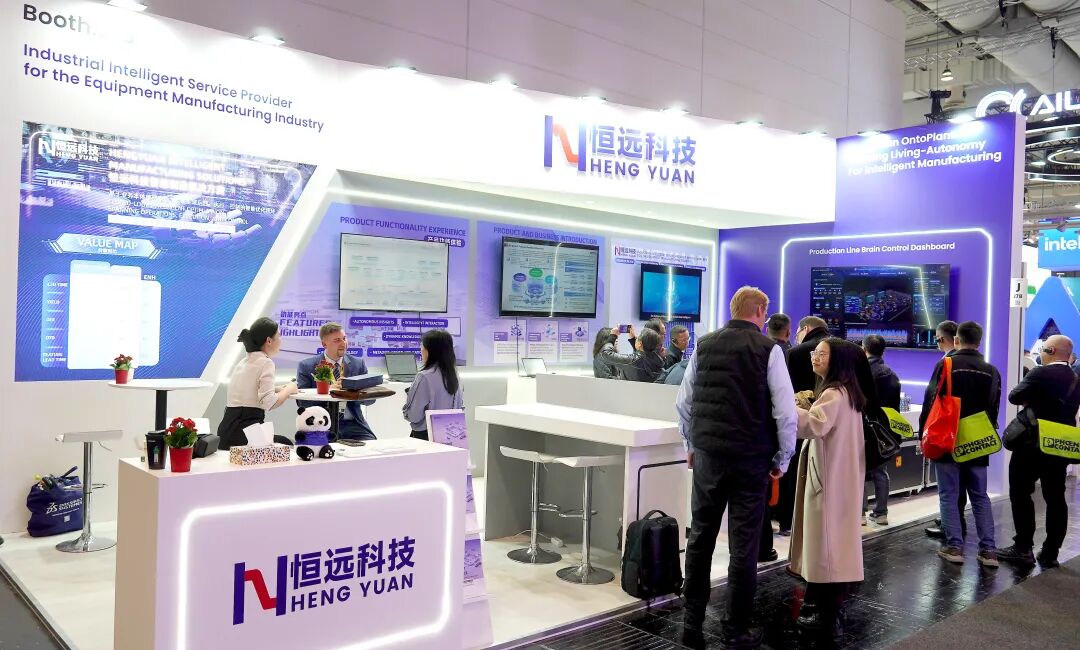
The answer lies in an AI - native ontology - driven industrial large - model engine called "H4 OntoX": based on OntoPlantOS, it is equipped with three major suites, OntoLink IoT Intelligence, OntoPlant Business Intelligence, and OntoMind Data Intelligence, covering the complete chain of "perception - analysis - execution".
In Zhang Yongwen's view, traditional industrial AI has taken many detours in the past. The most prominent one is the fixed process. Encoding the best practices into standard processes was effective in the late 20th century. However, now the equipment manufacturing industry has entered a mode of "multiple varieties, small batches, and fast delivery", with extremely high requirements for efficient and flexible production changeovers. New variables are constantly emerging in the process, and using a fixed system to handle them is a paradox.
In addition, as the production management links in factories increase, industrial intelligent scenarios are becoming more fragmented. Traditional industrial AI is only good at solving problems in single scenarios and is helpless once the scenario changes.
Even with the explosion of general large - models, they cannot gain a foothold in the industrial track because their underlying structure is a probability model. For example, if a large - model is asked to analyze the quality data of a batch of bearings, although the conclusion seems reasonable, it may not hold in the physical world because the large - model does not know the torque range of this type of bearing at a certain temperature, and the final result may be product scrap.
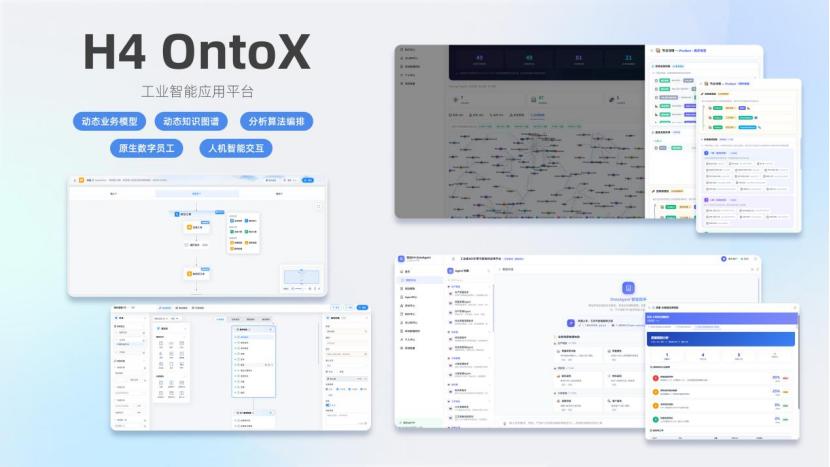
So, why can H4 OntoX stand out? This is inseparable from Hengyuan Technology's decade - long accumulation. By deeply serving hundreds of industry leaders and in thousands of real - world scenarios, it has condensed the scheduling logic, process know - how, and abnormal experience of tens of thousands of engineers over decades into a structured industrial ontology model. It is not a tool trained by data but a cognitive system grown from real manufacturing. What drives it is not the script of a single production line but the industrial common sense accumulated over a decade from hundreds of factories and thousands of production lines. This cognitive ability grown from the production - line soil is difficult for other systems to match.
Zhang Yongwen emphasizes that the so - called ontology is the structuring and representation of the causal relationships in the real world. It abstracts the real equipment, materials, and processes on the physical production line, as well as their constraint relationships and causal chains, into a cognitive framework that can be reasoned by machines.
In this way, on the one hand, H4 OntoX eliminates AI hallucinations and equips general intelligence with the framework of industrial common sense. When a new anomaly occurs on the production line, the system provides "certainty" based on the causal chain rather than "possibility" based on probability, making each step of reasoning traceable, trustworthy, and executable. On the other hand, H4 OntoX can generalize its capabilities, that is, transform an individual's cognition into the assets of the entire organization.
In other words, H4 OntoX defines a new category - an industrial - level general AGI engine. More importantly, this system is "alive". When the business changes, the dynamic modeling changes accordingly; the experience of veteran workers is automatically precipitated into the skills of "digital employees"; the next time there is a production changeover or abnormal situation, digital employees can complete the work autonomously. At the same time, new customers can train the ontology as soon as they go online, which means that the more customers there are, the stronger the engine will be, and the deeper the barrier will become.
Zhang Yongwen calls this "dynamic autonomy", "indicating that the manufacturing system can be like a living organism, capable of adapting, cognizing, and evolving, and can adjust and iterate in real - time with the new variables that appear in the factory every day." Looking back, Hengyuan Technology has made a crucial leap from "being able to talk" to "being able to do" in the field of industrial AGI.
Investors Flock in, and Shandong State - owned Capital Bets on a Potential AI Unicorn
Looking back on its previous financing history, Hengyuan Technology rarely interacted with investors for a long time.
This was an active choice. Zhang Yongwen admitted that although as a startup, the company was limited by regional resources and lacked financing channels, more importantly, there was a consensus within the company - without good products and mature cases, the timing for financing was not right.
The turning point came in 2019. At that time, Hengyuan Technology's Hive Factory H1 was selected as an "Excellent Case of Industrial Internet" by the Ministry of Industry and Information Technology, thus entering the vision of investors. The incubator where Hengyuan Technology was located was affiliated with Kaichuang Group. Zhou Bohu, the chairman of Kaichuang Group, noticed this company early on. After Hengyuan Technology won the award, he was more confident in his investment and decisively made the first Pre - A round of financing of several million yuan.
After the investment, a sentence that Zhou Bohu said to Zhang Yongwen still sticks in his mind: "Mr. Zhou told me to go all out and keep doing what I wanted to do well. At the same time, I should actively reach out to 100 investment institutions, and there will always be a person with discerning eyes."
Soon, investors began to line up.
In March 2021, Hengyuan Technology announced that it had received tens of millions of yuan in Series A financing from Plum Ventures. Talking about this financing, Zhang Yongwen revealed that the opportunity came from an online roadshow during the epidemic. At that time, several institutions showed interest in investing in Hengyuan Technology, and Plum Ventures was the first to act.
Without a break, Hengyuan Technology received tens of millions of yuan in Series A+ financing in November of the same year, led by Fortune Capital with Plum Ventures following. In this round of financing, the professionalism of Fortune Capital's investment team impressed Zhang Yongwen deeply. Several partners of Fortune Capital visited Hengyuan Technology for inspections, and the team also interviewed the company's customers to verify the product's capabilities.
"Fortune Capital hired a third - party consulting company to jointly assess our company's development potential. This rigorous attitude is itself a kind of motivation for us. Getting their recognition has strengthened my confidence in the company's future development," Zhang Yongwen sighed.
Then, Shandong state - owned capital also joined. In June 2022, Hengyuan Technology completed 50 million yuan in Pre - B round of financing, introducing new investors with state - owned backgrounds, Yuanhe Capital and Huashi Investment, and the old shareholder Fortune Capital increased its investment.
Half a year later, Hengyuan Technology received hundreds of millions of yuan in Series B financing from investors such as Yida Capital, Yantai Guofeng Investment Holding Group, and Yantai Yeda Economic Development Group. Subsequently, Dongying Financial Investment Group and Yantai Zhenghai Investment also jointly invested in Hengyuan Technology at the beginning of 2023.
Not long ago, Hengyuan Technology just completed its Series B+ financing, jointly invested by Yantai Financial Group, Jiangsu Phoenix Gaotou Yida Digital Fund, and Yantai Yeda Economic Development Group.
In Zhang Yongwen's view, investors are like the co - pilot of a car for Hengyuan Technology. They have a unique perspective and pattern and play an important role in the rise of Hengyuan Technology.
He shared some impressive details with the investment community: for example, Fortune Capital has put forward higher requirements for the company's financial compliance, which has saved many problems in the subsequent due - diligence process of financing; in the communication with Yida Capital, its industry foresight has strengthened the team's confidence in high - investment R & D in the AI field. Hengyuan started AI in 2023, and its early layout of industrial Agent innovation has entered the core coordinate system of China's AI. Now it is more capable of reconstructing the system from the bottom. In addition, investors also connect Hengyuan with ecological resources such as leading large - model enterprises and introduce it to participate in roadshows at major exchanges, broadening the company's future development prospects.
"Whenever I feel confused and lost, talking to our investors makes me see the light. It is the investors who have turned me from a technical practitioner into a real business manager."
With the convergence of all parties, a potential AI unicorn in the industrial field is emerging.
The Second Half of China's Industrial AI
A super - track is about to explode.
Several institutions predict that by 2030, the market scale of China's intelligent manufacturing equipment is expected to exceed 4.5 trillion yuan, with an annual