Chengdu Robotics Company Aims for Hong Kong IPO
Robot Outlook reported on June 1st that yesterday, Chengdu-based industrial robot startup Kanop officially submitted its prospectus to the Hong Kong Stock Exchange, aiming for a Hong Kong IPO.
Kanop was founded in 2012. Relying on its full-stack self-developed core technologies and multi-scenario intelligent application capabilities, it has built over 70 models of robots in three categories: industrial robots, collaborative robots, and embodied intelligent robots. These robots cover industries such as metal and mechanical processing, automotive and auto parts, electronics, new energy, consumer goods, and healthcare. Its first embodied intelligent robot was launched in 2022.
It is worth mentioning that the company previously submitted its prospectus on November 17, 2025. Since it was not approved within the 180-day application validity period, it submitted the prospectus again.
According to Frost & Sullivan data, based on 2025 revenue, Kanop ranks first in China's welding robot market, with its welding robot revenue reaching 170 million yuan in 2025.
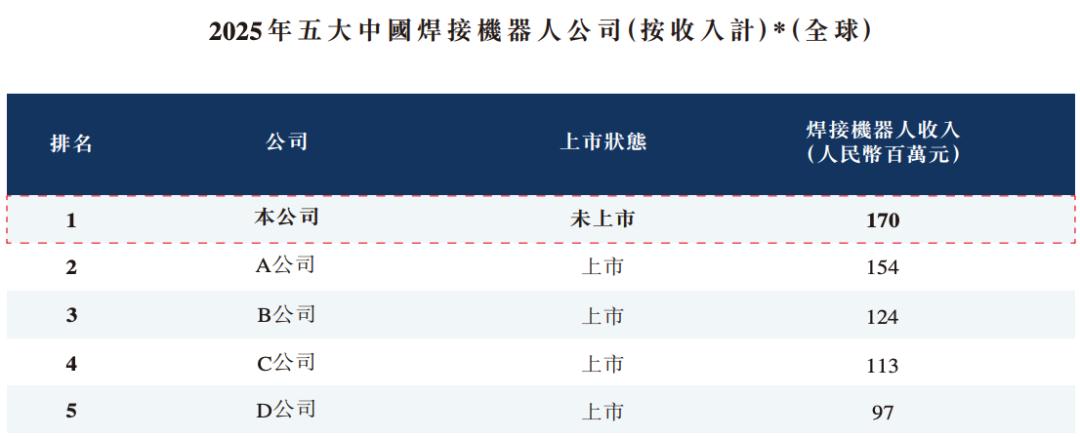
Ranking of the top five welding robot companies in China in 2025 by revenue
In April this year, Kanop's second-generation wheeled humanoid robot RHM-T1W made its debut at the Hannover Messe. The robot is 1.9 meters tall, equipped with its self-developed embodied intelligent brain, and features a design of "wheeled chassis + humanoid upper body". It has a maximum speed of 3 m/s, with each arm capable of carrying a load of 5 kg. Its humanoid cross-axis wrist and 12-degree-of-freedom dexterous hand can perform tasks such as screw locking and part assembly.
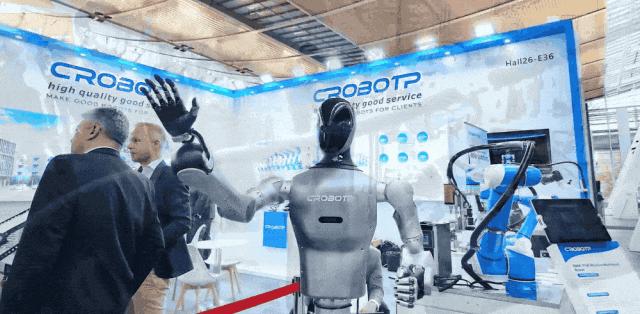
Kanop's second-generation wheeled humanoid robot RHM-T1W (Source: Kanop's WeChat video account)
Since its establishment, Kanop has completed four rounds of financing. After the Series D financing in April 2021, its post-investment valuation reached 2.105 billion yuan.
The prospectus shows that the funds raised from this IPO will be mainly used to expand the R & D team, improve the salaries and rewards of R & D professionals, strengthen R & D infrastructure, purchase raw materials, and pay for third-party R & D-related services.
01. R & D investment of 120 million yuan in three years, net loss of 16 million yuan last year
Kanop's products include industrial robots, collaborative robots, and embodied intelligent robots. It also supplies customized robots for specific industries, robot components, and robot control cabinets.
In 2023, 2024, and 2025, Kanop's revenues reached 222 million yuan, 234 million yuan, and 324 million yuan respectively, with net profits of 1.688 million yuan, -13 million yuan, and -16 million yuan for the year. The prospectus shows that the loss in 2024 was due to a significant increase in sales and distribution expenses and a decrease in government subsidies.
The company's R & D investment was 36 million yuan, 36 million yuan, and 48.9 million yuan, accounting for 16.2%, 15.4%, and 15.1% of the total revenue of the same year respectively. Kanop currently holds 326 patents in China, including 71 invention patents, 127 utility model patents, 128 design patents, and 44 software copyrights, and 114 registered trademarks globally.
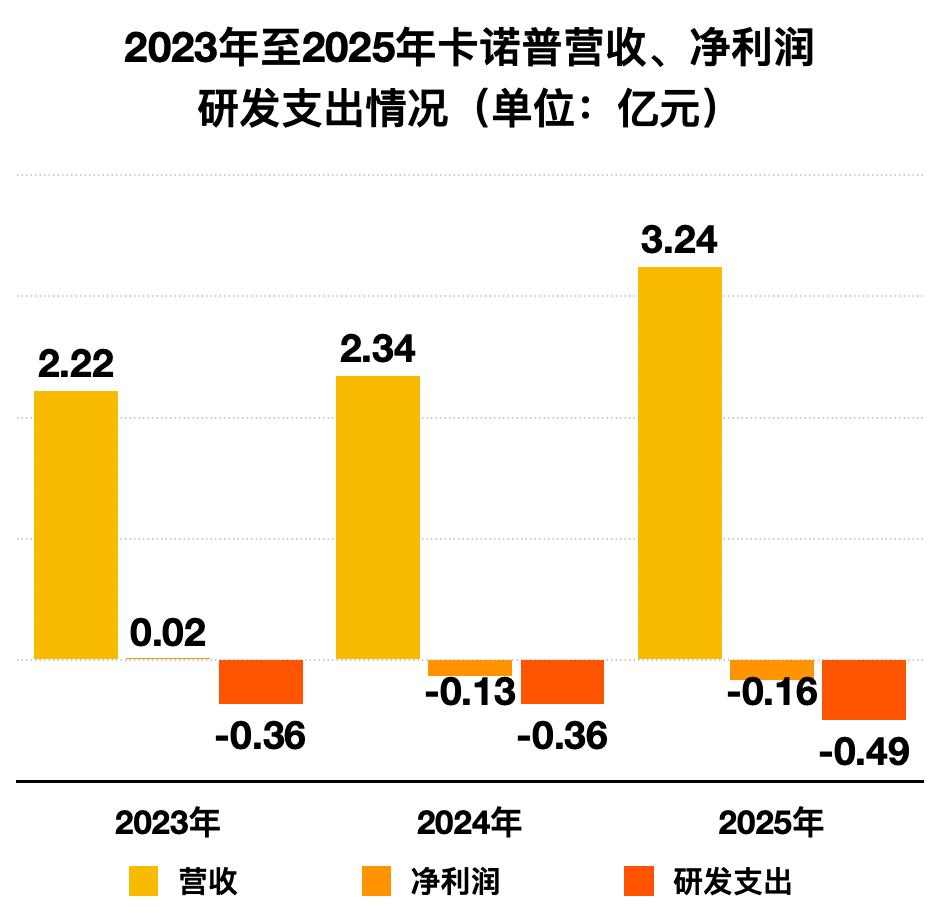
Kanop's revenue, net profit, and R & D expenditure from 2023 to 2025 (Unit: 100 million yuan) (Compiled by Robot Outlook)
The company's gross profit margins in the three years were 27.1%, 30.4%, and 33% respectively. Among the main product lines, the embodied intelligent robot had the highest gross profit margin, reaching 37.7%, 51%, and 41.7% respectively.
Among the revenues of different product lines, in the three years, the revenue proportion of Kanop's embodied intelligent robots increased from 3.7% in 2023 to 6.4% in 2025, while the revenue proportion of industrial robots decreased from 92.7% in 2023 to 81.4%.
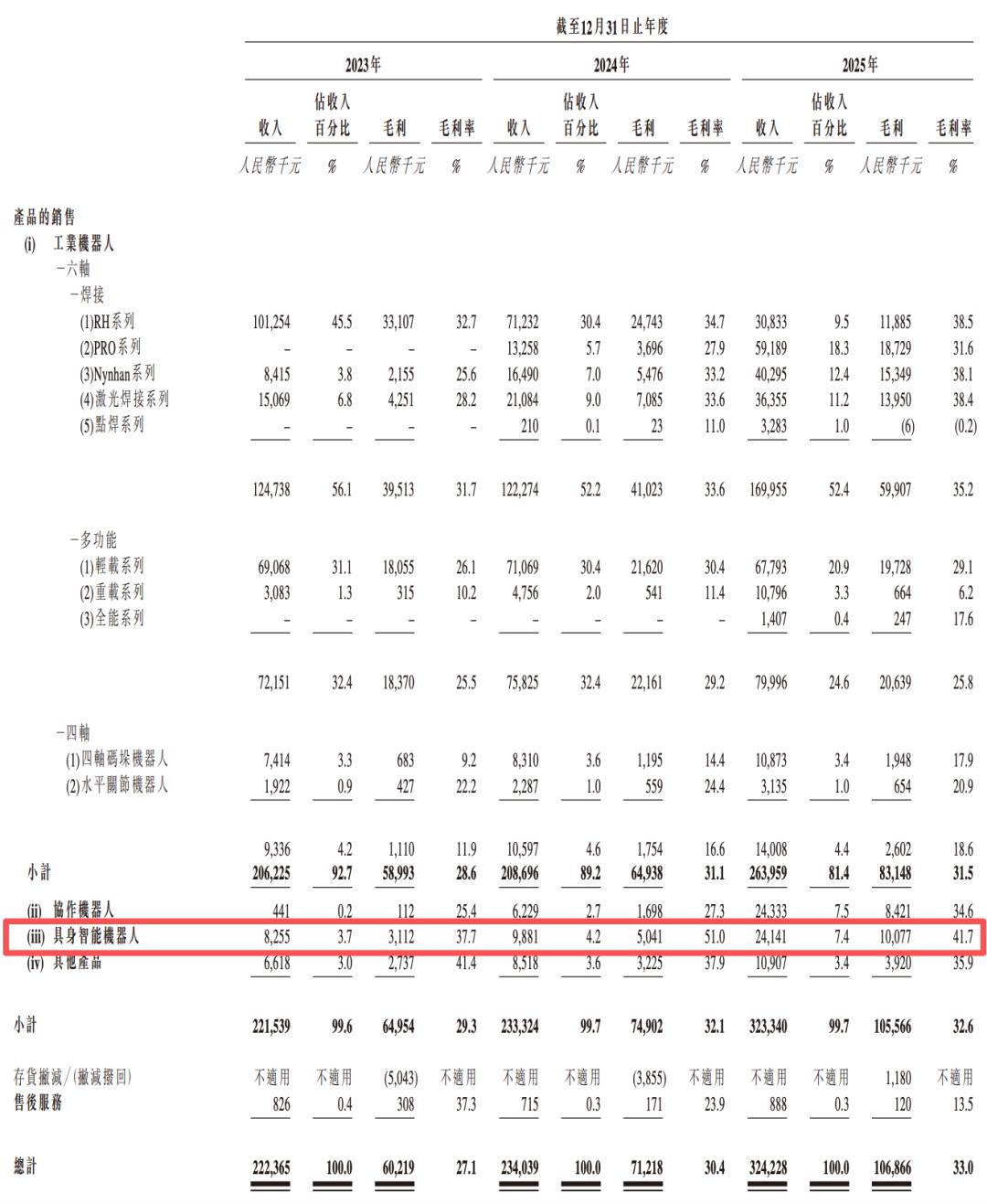
Revenue situation of Kanop's different robot products
In terms of sales volume and average selling price (ASP), the company sold 300 embodied intelligent robots in 2025, with an average selling price of 80,000 yuan per unit. The sales volume of industrial robots was the highest at 4,902 units, with an average selling price of 54,000 yuan.
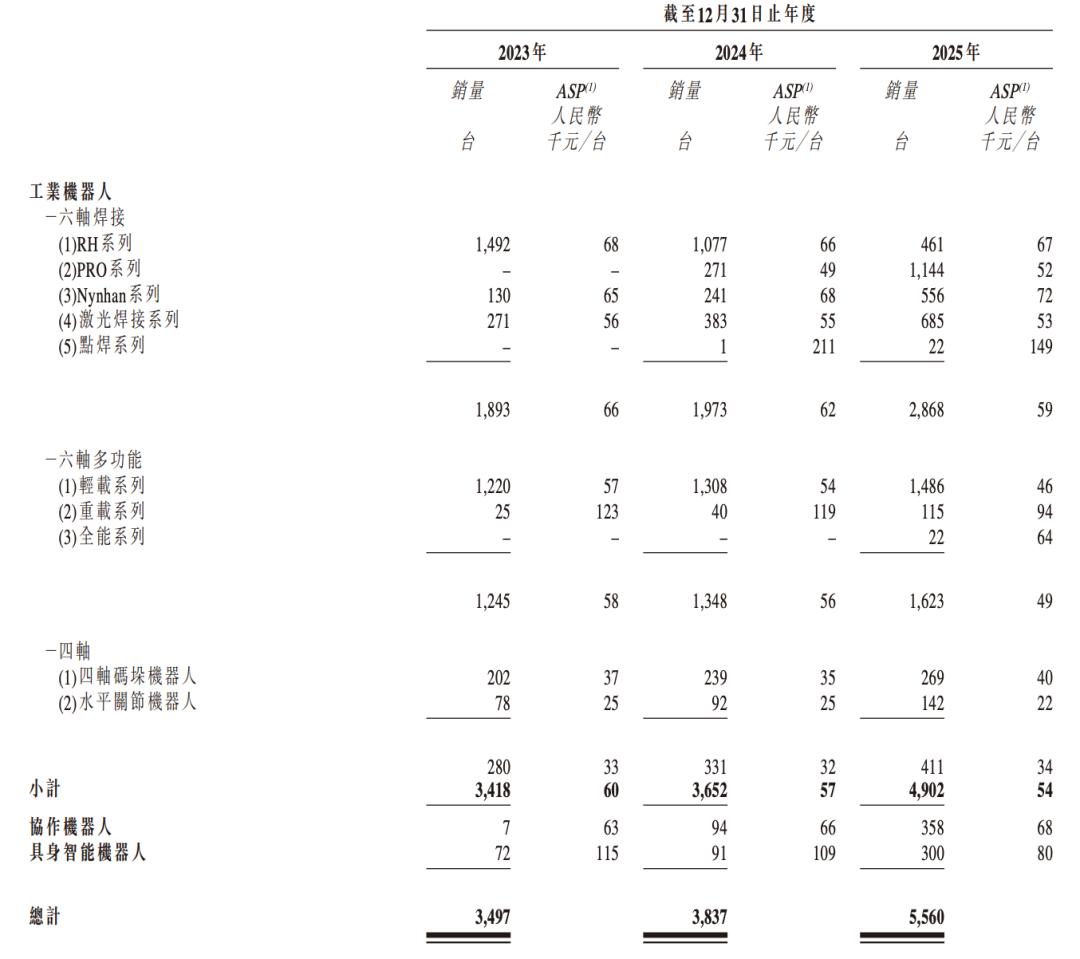
Sales volume and average selling price of Kanop's robots
Divided by industry applications, the application revenue of Kanop's customers in the metal and mechanical processing field accounted for the highest proportion, which was 76.7%, 77%, and 74.3% in the three years respectively.
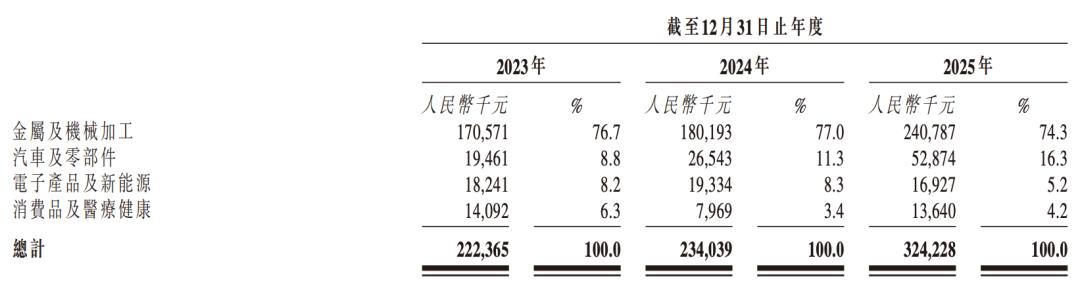
Revenue situation of Kanop's robots by application scenario
In terms of regional distribution, the proportion of the company's domestic customers has remained above 80%. Among them, Guangdong Province had the highest revenue proportion, reaching 18.3% in 2025.
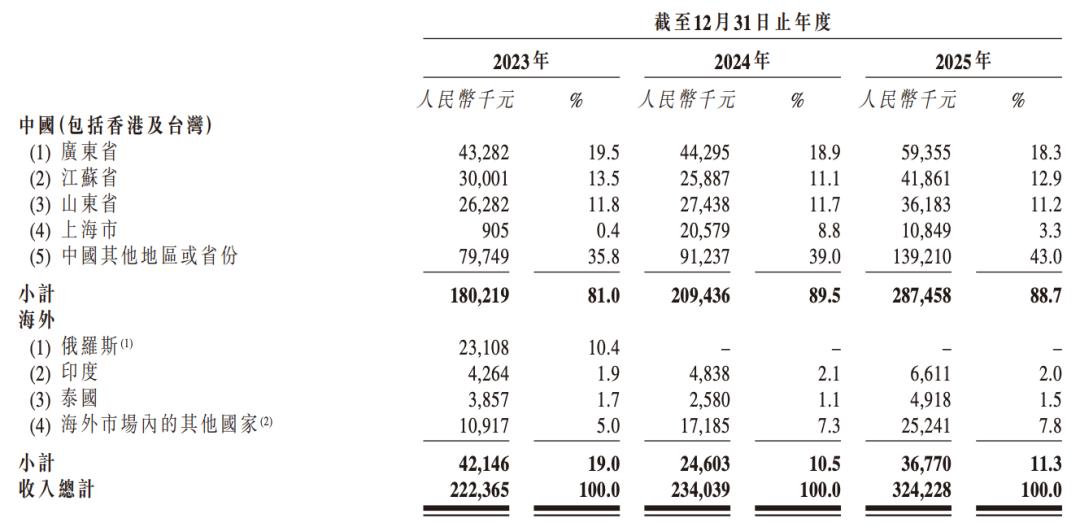
Revenue situation of Kanop's robots by regional distribution
In 2023, 2024, and 2025, the company's revenues from government subsidies were 20.674 million yuan, 10.139 million yuan, and 9.785 million yuan respectively.
At the end of each year, Kanop's cash and cash equivalents were 162 million yuan, 154 million yuan, and 176 million yuan respectively.
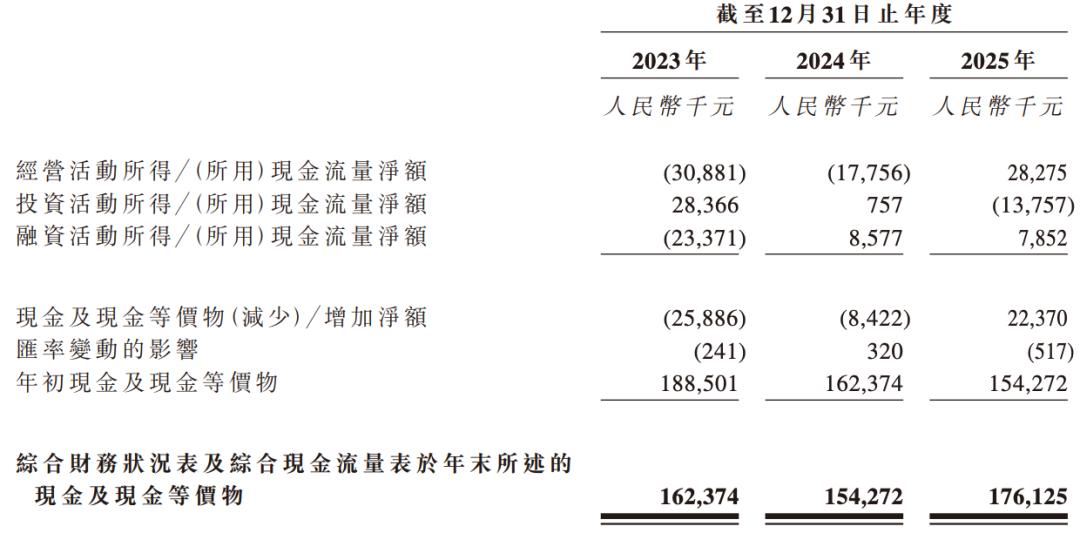
Kanop's cash and cash equivalents at the end of the year
02. Three major product lines of industrial, collaborative, and embodied intelligent robots, with an annual production capacity of 7,000 units in the self-built factory
Kanop's industrial robots are divided into six-axis industrial robots and four-axis industrial robots according to their structures.
Among them, the six-axis industrial robots are designed for welding and multi-functional applications, offering a wide range of load capacities from 6 kg to 360 kg, with a reach ranging from 700 mm to 3,500 mm. The four-axis industrial robots include four-axis palletizing robots and SCARA robots. The rated load of the four-axis palletizing robots is from 15 kg to 180 kg, and that of the SCARA robots is from 3 kg to 60 kg.
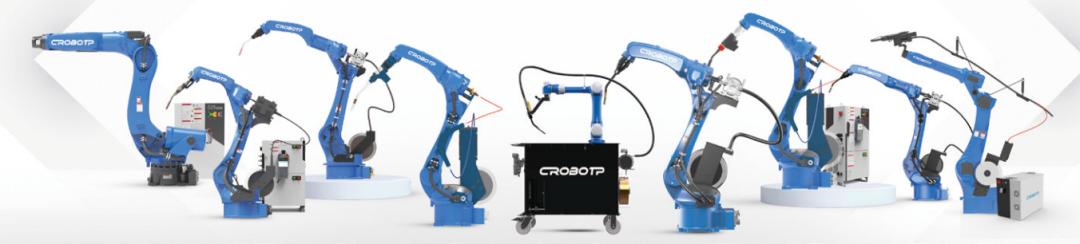
Six-axis welding industrial robot
The collaborative robot adopts a lightweight structural design, with a total weight of about 23 kg. It can be used for tasks that require high flexibility and easy programming, especially for small-scale or customized production.
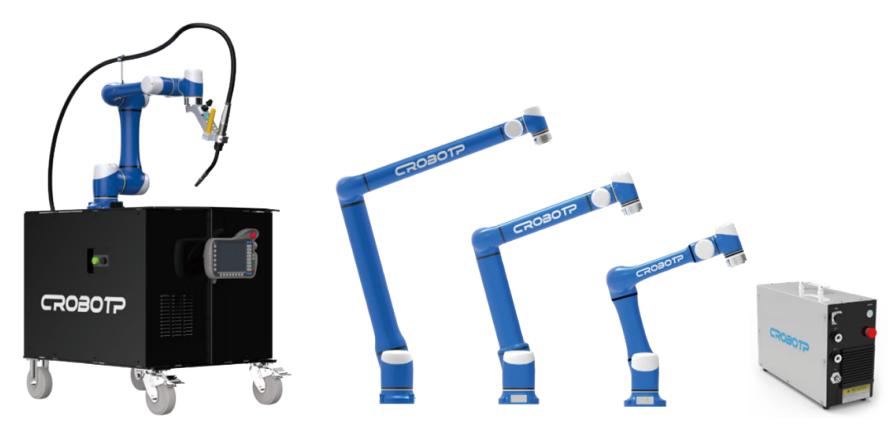
Collaborative robot
The embodied intelligent robots are divided into two major categories: industrial embodied intelligent robots and cold welding series. The industrial embodied intelligent robots include the Lingshuo industrial humanoid robot, Lingxun industrial AI composite robot, and industrial intelligent robot.
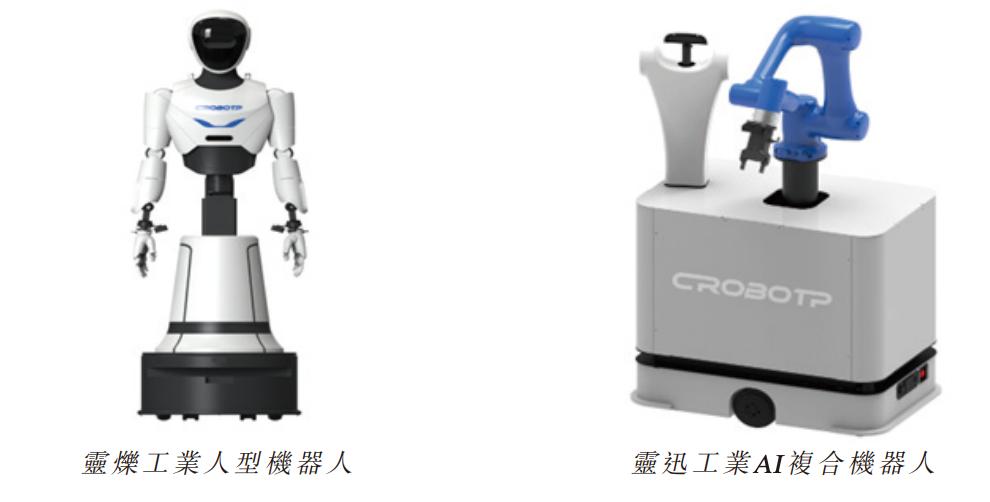
Industrial embodied intelligent robot
The prospectus shows that the reason why Kanop classifies the cold welding series as embodied intelligent robots is that they have a physical body, can interact with the environment in real-time through multi-modal perception, make autonomous decisions and execute physical actions, and can continuously interact and learn for evolution. These robots are mainly used in high-precision welding scenarios and can achieve instant perception through the multi-modal perception signals generated during the welding process and the length and position of the welding wire.
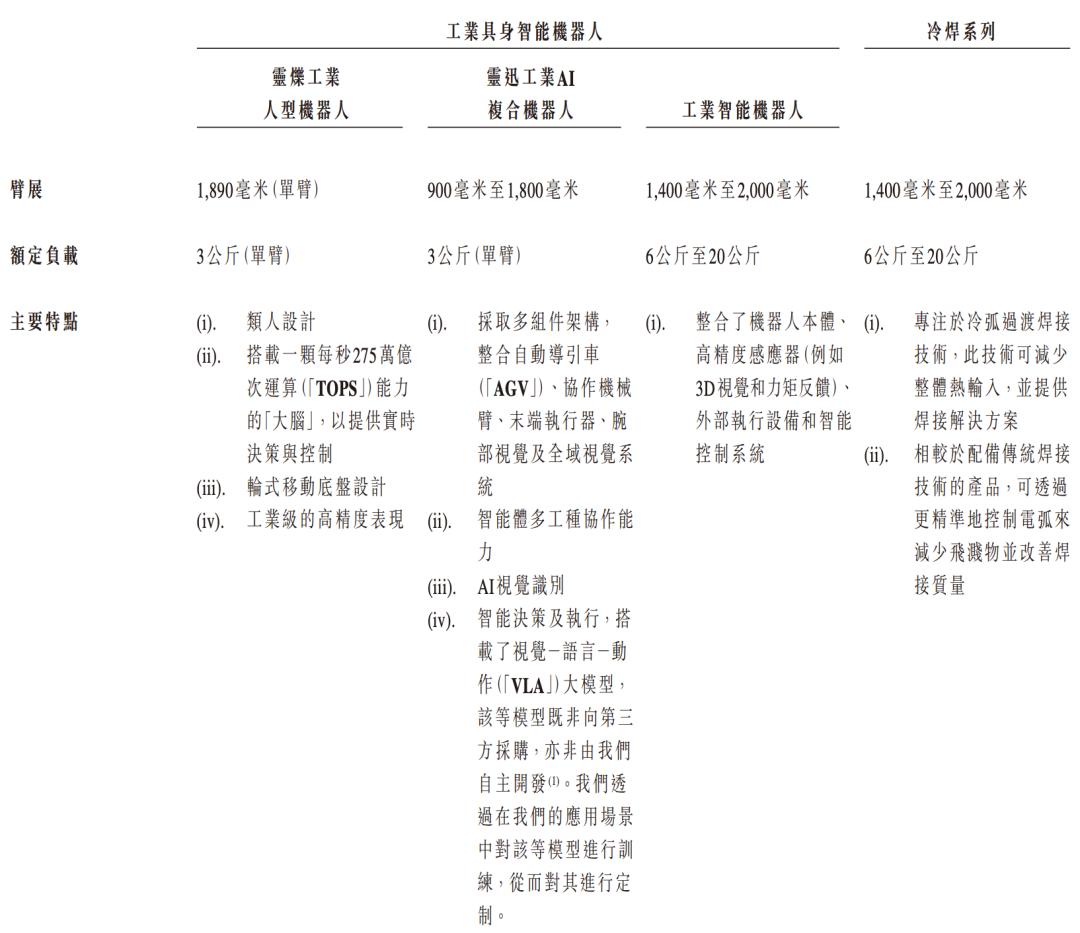
Main features of embodied intelligent robots
In terms of core technologies, Kanop has an extensible robot control software from the bottom layer to the cloud, core technologies to improve positioning accuracy, path accuracy, and cycle time, a hardware control architecture, a full-link technology system for welding power supplies, a collaborative optimization of mechanical performance in terms of stiffness, service life, and cost, and core technological breakthroughs in robot sensor fusion and intelligence.
The three key indicators for evaluating the performance of industrial robots are positioning accuracy, path accuracy, and cycle time performance.
In terms of positioning accuracy, Kanop has developed the "20-point multi-dimensional space mapping algorithm" and combined it with a high-precision calibration system to improve the absolute positioning accuracy by 5 to 10 times, reaching the level of 0.1 mm. For its cold welding and RH series products, the trajectory reproduction error does not exceed 0.05 mm.
The speed-friction correlation model with harmonic injection it built has reduced the trajectory deviation from ±0.29 mm to ±0.15 mm.
Through system-level coordination, researchers have controlled the vibration amplitude of the end effector within 0.1 mm while reducing the cycle time by more than 30% compared with the previous generation of robot series.
Currently, Kanop operates a self-owned production base with a construction area of about 35,000 square meters in Chengdu, Sichuan, for the assembly, integration, and system-level testing of its robot products.
From 2023 to 2025, the company's annual designed production capacities were 4,500 units, 5,000 units, and 7,000 units respectively, with production volumes of 3,500 units, 3,800 units, and 5,900 units, and utilization rates of 77.8%, 76.0%, and 84.3% respectively.
