Dissecting the "2 Trillion": A Manufacturing City's Characteristic Breakthrough
The "myth of getting rich through AI" is surging wave after wave, pushing more and more cities to the forefront of a new round of development in the manufacturing industry.
At the beginning of this year, when the "Three Swordsmen of Optical Modules", who are also known as the "Yi Zhongtian" in the outside world, stirred up the "waves" in the market, many people just realized that the location of Xinyisheng is Chengdu. With the label of "advanced manufacturing", Chengdu has once again come into the public view.
What exactly is "Made in Chengdu"? Today, a conference themed "Accelerating the Construction of a National Advanced Manufacturing Base" was held in Chengdu, providing a specific direction.
As one of the 12 cities in the country given this positioning, Chengdu shows the outside world a unique development path for a major manufacturing city: instead of blindly following the trend, it seeks differential breakthroughs by identifying its own characteristic advantages.
At the conference, Chengdu set a goal: to strive to achieve a revenue of over 2 trillion yuan from industrial enterprises above the designated size by 2030, with a steady increase in the proportion of industry, and the combined proportion of industry and producer services in GDP exceeding 60%.
What makes Chengdu's manufacturing industry "special"? And how will it achieve its new goals?
Breakthrough
Last year, multiple overseas business developments (BD) of innovative drugs brought Chengdu's biomedical industry to the forefront. At the same time, Wo Fei Chang Kong entered the stage of applying for airworthiness certification, representing the development progress of its low - altitude economy. At that time, there was a saying that the aerospace and biomedical industries would be the manufacturing tracks where "Made in Chengdu" is expected to achieve a breakthrough earliest.
As of this year, more and more industries have achieved "breakthroughs", making the image of "Made in Chengdu" more and more complete.
First, the automobile manufacturing industry stepped up its efforts. In January this year, FAW - Volkswagen Jetta Automobile Technology Co., Ltd. was officially launched in Chengdu. It plans to launch 5 new models before 2028, 4 of which are new energy products. The first model is expected to be launched in September this year. Soon after, the 300,000th Lynk & Co 06 rolled off the production line at the Chengdu factory, which is also the first single - model production of Sichuan Lynk & Co to exceed the 300,000 mark since its production.
During today's conference, Chen Jinghong, the deputy general manager of Yijing Automobile brand, brought another new piece of news about "Made in Chengdu" cars: the Yijing X9, jointly developed by Dongfeng Motor and Huawei Qiankun and unveiled at the Huawei Qiankun Technology Conference in April, will be officially launched in the third quarter of this year. This adds another possibility to the outside world's speculation that Chengdu is expected to rank among the top 10 car - making cities in the country in the next two years.
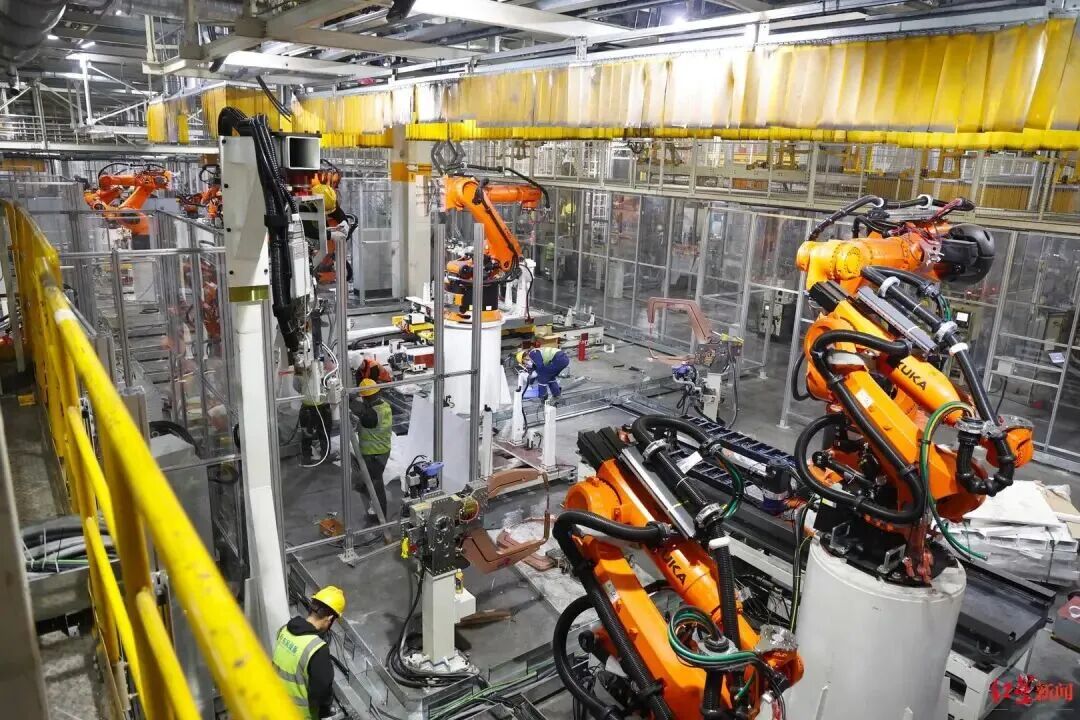
Photo source: Red Star News
If Chengdu's rapid development in the field of new energy intelligent connected vehicles is a reproduction of the past glory of the "Automobile City", then a series of breakthroughs in the field of AI show the booming trend of "blossoming in multiple areas" in emerging future industries in Chengdu, with the continuous emergence of seed enterprises.
Also in January this year, many media reported that the market value of Hygon Information once exceeded 700 billion yuan, which is behind the long - term support of Chengdu's state - owned assets and the enterprise. Ten years ago, when Hygon Information, aiming at domestic CPU research and development, started the design of its first - generation product "Hygon 1", it received capital increase from Chengdu High - tech Investment Group and Chengdu Industrial Investment Group, making Hygon Information a representative enterprise in Chengdu's chip industry today.
Similarly, in the field of optical modules, Xinyisheng's technology has reached the international leading level, and it has taken the lead in achieving mass production and shipment of 1.6T optical modules, lighting up Chengdu's "pursuit of light" path. In the field of new displays, Chenxian Technology has successfully tackled the "ultimate display technology" of Micro - LED and moved towards the "uncharted territory" of display technology.
Why do leading enterprises from different industries emerge "explosively" in Chengdu? One reason lies in Chengdu's promotion of the construction of a modern industrial system and its increased efforts in the forward - looking introduction and gradient cultivation of enterprises.
As Zhao Chungan, the Party secretary, director, and head of the Chengdu Economic and Information Bureau and the New Economy Commission, introduced, in recent years, Chengdu has coordinated the cultivation of 2 trillion - level industrial clusters, 100 - billion - level manufacturing industrial chains, and 40 - billion - level industrial parks. The number of national - level industrial clusters has reached 17, ranking first among sub - provincial cities. In addition, the growth rate of industrial investment has ranked first among sub - provincial cities for two consecutive years, and the proportion of industrial investment in fixed - asset investment has increased by 7.9 percentage points in two years.
The star enterprises emerging in Chengdu all correspond to these industries one by one.
Characteristics
Why can Chengdu accurately "target" these enterprises and the industrial tracks they are in? This is closely related to the characteristics of "Made in Chengdu".
Chengdu Chenguang Boda New Materials Co., Ltd. is a manufacturer of fluorosilicone polymer materials. As an upstream link in manufacturing, its chairman and general manager, Liu Hao, has witnessed the change in the application of fluororubber from automobile engines and fuel systems to lithium - ion batteries, wearable devices, and even computing facilities. In his opinion, scenario application is the most important factor for the development of material enterprises, which will affect how enterprises build industrial chains and how to cooperate with advanced terminals to solve "bottleneck" problems.
In fact, as he said, the emergence of new material enterprises including Chenguang Boda in Chengdu is not only due to the scientific research and talent resources in the material field of universities such as Sichuan University and University of Electronic Science and Technology of China, but also benefits from the local application scenarios. At present, core manufacturers in Chengdu such as BOE and BYD Semiconductor are also the key objects for its development and introduction.
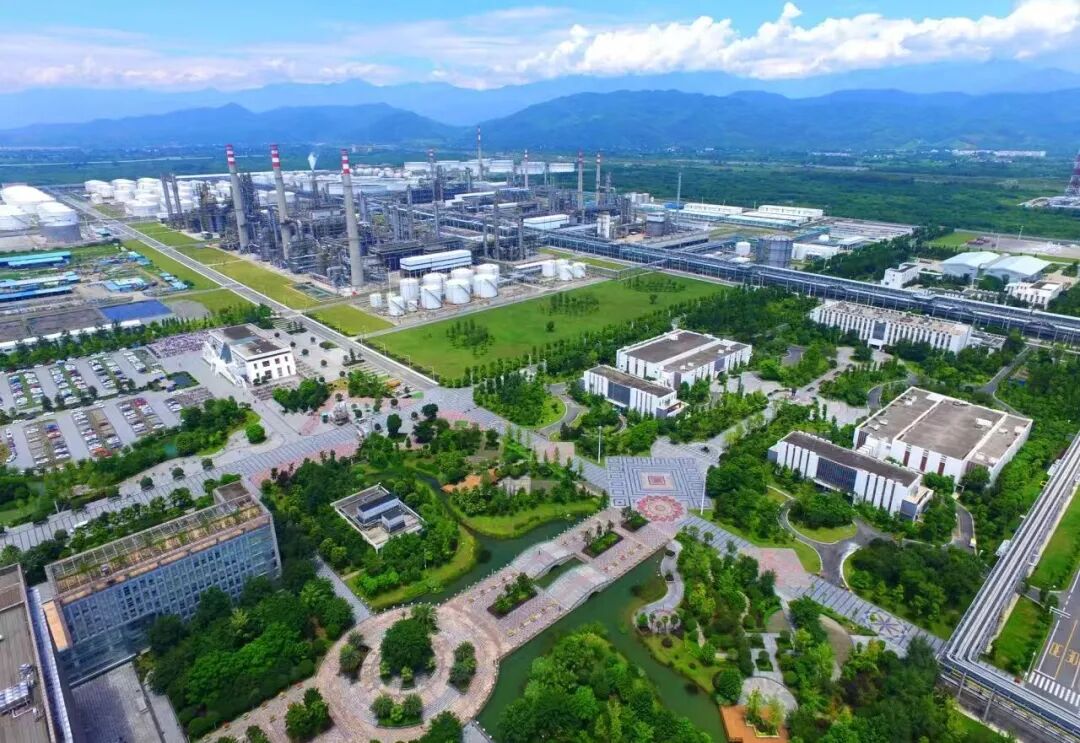
Photo source: File photo
One view is that compared with the eastern first - mover cities, Chengdu has the "late - comer advantage" for overtaking on the curve. Among them, the rich scenario ecosystem is a highlight of "Made in Chengdu".
Scenarios have become the key to the new round of development in the manufacturing industry. Some industry scholars point out that future industrial leaders will no longer rely solely on laboratory research and development, but will dominate the global innovation ecosystem by opening up real scenarios, building open - source communities, and formulating technical standards. As established manufacturing powerhouses, cities like Shanghai and Shenzhen are all promoting scenario construction with the full strength of the whole city.
In Chengdu, the scenario advantage is quite obvious. Here, there is not only a huge market of over 21 million people, but also the diverse and multi - dimensional production and living scenarios bred in the process of building a park - city demonstration area, which may all become the "interfaces" for gathering innovation elements, incubating diverse technology tracks, and building incremental space.
A representative example is the field of low - altitude economy. As Jiang Lilin, the public relations director of Chengdu Zongheng Automation Technology, mentioned, now AI + application is the new "battlefield" for the development of the low - altitude economy. Currently, it is tackling problems in fields such as urban intelligent inspection and high - altitude emergency fire - fighting, and Chengdu's pilot exploration in low - altitude airspace will bring benefits to enterprises.
Facing the "fit" between industrial trends and its own advantages, Chengdu has further increased its efforts in scenario development. It not only took the lead in the country to establish a scenario innovation promotion center, but also put forward a complete set of scenario development ideas.
Generally speaking, it is to reshape the development logic of initiative and passivity through scenarios, shifting from technology seeking scenarios to scenarios defining technology; balancing the value orientation of being good - looking and useful, promoting the transformation of samples and exhibits into products and commodities; breaking through the development bottleneck of volume and increment, realizing the transformation from market scale to competitive advantage; and accelerating the positive feedback between technological innovation and institutional innovation, shifting from single - point innovation to ecological optimization.
In Chengdu's expectation, scenario resources may become the most advantageous resource for future manufacturing development. This advantage has also attracted the attention of many leading enterprises. Just today (June 1st), Huawei held a press conference for the nova 16 series and all - scenario new products in Chengdu.
Overtaking?
Starting from scenarios, the methodology of Chengdu's promotion of manufacturing development can also be re - understood.
Since last year, Chengdu has repeatedly emphasized the importance of "end products", proposing to "drive an industrial chain with one end product" and emphasizing the role of "key sub - chains". That is, through comprehensive analysis of factors such as the actual foundation, policy orientation, and market environment of the development of various industrial chains in Chengdu, 3 - 5 key sub - chains with relative advantages, expansion space, and in urgent need of key breakthroughs are put forward, also aiming to promote the emergence of products with driving force and leadership.
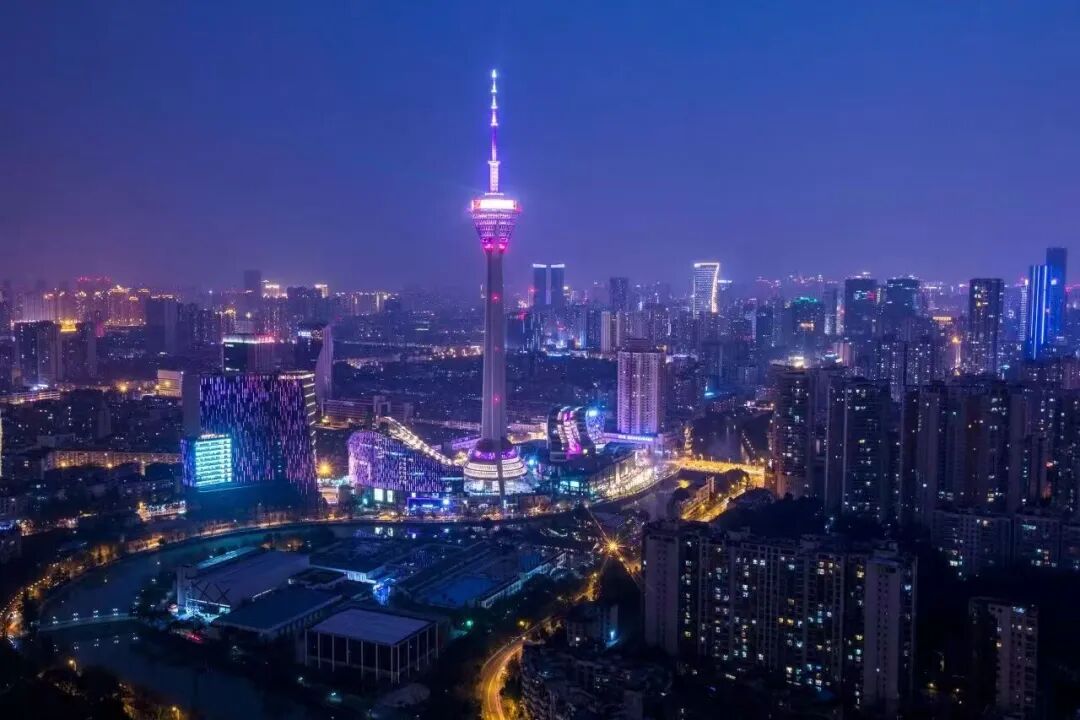
Photo source: Photo by Zhang Jian
The "scenario thinking" further extends the path from the market to the industry. By basing on actual scenarios, selecting technologies and attracting enterprises according to market demand, and at the same time forcing enterprises to optimize technologies, polish products, and improve supporting facilities, products can go out of the laboratory and exhibition hall, adapt to applications, and serve the people's livelihood.
Throughout the conference, various emerging products promoted by scenario innovation were constantly mentioned. For example, in a residential community in Chengdu High - tech Zone, an enterprise is conducting a trial operation of using delivery robots for regular end - delivery. In the past four months, it has delivered nearly 30,000 orders in total, with an average delivery time of less than 5 minutes per order. Another example is that Chengdu has actually operated tens of thousands of "hydrogen motorcycles" and exported them to overseas markets such as Central Asia and the Middle East.
Regarding specific goals, the actions of building industrial circles and strengthening industrial chains, and establishing and filling industrial parks promoted by Chengdu in recent years are more practical and more detailed.
The industrial chain is undoubtedly the key to promoting the aggregation of various factor resources to core industries. At the conference, Chengdu once again emphasized the need to build an advanced manufacturing development system with characteristic support, new - type leadership, future breakthroughs, and service integration. It also specifically mentioned the implementation of the industrial innovation project, focusing on key tracks such as integrated circuits, new displays, artificial intelligence, intelligent connected vehicles, aerospace, low - altitude economy, biomedicine, and green hydrogen, and promoting a number of strategic emerging industries to leap into emerging pillar industries.
The industrial parks serve as the specific carriers for industrial implementation. Data shows that last year, 50 characteristic industrial parks in Chengdu gathered 58% of the industrial enterprises above the designated size in the city, with an operating income of over one trillion yuan, a year - on - year increase of 7.5%. The supporting role of the industry is becoming more and more prominent. At the conference, the "Map of Chengdu's Advanced Manufacturing Characteristic Industrial Parks" was further released to provide more precise guidance for promoting industrial agglomeration, investment attraction, and collaborative supporting in the parks.
A series of measures mean that Chengdu will always adhere to the strategy of "building the city with industry and strengthening the city with manufacturing" and continue to promote the manufacturing industry to a higher level. The star enterprises emerging in recent years are just the beginning. With further ecological agglomeration of industries, the driving role of industrial parks, and the empowerment of scenarios, more enterprises are expected to gather in Chengdu.
The question is, can Chengdu achieve "catch - up" because of this? In response, Chengdu has set its sights on the whole country and even the world. As the goal put forward at this conference, Chengdu's manufacturing industry should significantly improve its ability to serve the national strategy, support urban development, lead industrial innovation, and compete globally.
This article is from the WeChat official account "Urban Evolution Theory", author: Yang Qifei, published by 36Kr with authorization.